Florida's 50% Bar Rule in Comparative Negligence | VLF Flori
Learn how Florida's 50% bar rule in comparative negligence affects personal injury claims. Contact Florida Immigration Lawyers for assistance.

Florida's comparative negligence law, guided by the 50% bar rule under statute 768.81, plays a crucial role in determining personal injury claims. This rule states that if you are found to be 50% or more at fault for your injuries, you may not recover damages. Understanding this rule is essential for anyone involved in a personal injury case in Florida.
- Florida follows a modified comparative negligence system.
- The 50% bar rule prevents recovery if you are equally or more at fault.
- This rule impacts settlement negotiations and trial outcomes.
- Legal advice is recommended for navigating these complexities.
Understanding Florida's 50% Bar Rule in Comparative Negligence
Imagine you're driving through Pembroke Pines, Florida, when suddenly, another vehicle collides with yours. In the aftermath, it is determined that both you and the other driver share some degree of fault. How does Florida law affect your ability to recover damages in such a situation? The answer lies in the state's application of the 50% bar rule under comparative negligence laws.
This article explores the nuances of Florida's comparative negligence statute, particularly the 50% bar rule codified under §768.81, and its implications for personal injury claims. Whether you're a resident of Pembroke Pines or elsewhere in Florida, understanding these legal principles is vital for anyone involved in an accident.
Call Florida Immigration Lawyers at 1-844-967-3536 for a free consultation.
Overview of Comparative Negligence in Florida
Florida operates under a modified comparative negligence system, which affects how damages are awarded in personal injury cases. Under this system, each party's level of fault is assessed, and damages are apportioned accordingly. However, the 50% bar rule imposes a critical limitation: if a plaintiff is found to be 50% or more responsible for their own injuries, they are barred from recovering any damages.
This approach is significant because it directly impacts the strategy and potential outcomes of personal injury claims. For instance, if you're involved in a car accident in Pembroke Pines and found to be 40% at fault, you can still recover 60% of your damages. Conversely, at 50% or more fault, your claim would be denied.
Florida's adoption of this rule is part of a broader legal trend aimed at ensuring that those seeking compensation are not primarily responsible for their injuries. This system contrasts with pure comparative negligence systems, where plaintiffs can recover damages regardless of their fault percentage, albeit reduced.
This modified system aims to strike a balance, allowing injured parties to recover even if they bear some responsibility, but preventing those who are predominantly at fault from benefiting. For example, if a jury determines you were 49% at fault, you could still recover 51% of your damages. However, if that percentage shifts to 50% or higher, your claim is entirely barred, highlighting the critical nature of this threshold.
The determination of fault percentages is a complex process, often involving detailed investigations, accident reconstruction, witness testimonies, and expert analysis. Police reports provide an initial assessment, but they are not always the final word. An experienced personal injury attorney, like those at Florida Immigration Lawyers, can meticulously review all available evidence to build a compelling case that accurately portrays your level of fault, or lack thereof, to protect your right to recovery.
Step-by-Step Guide to Navigating a Claim
- Seek Immediate Medical Attention: Your health is the top priority. Prompt medical evaluation also serves as crucial evidence in your claim.
- Gather Evidence: Collect photos, witness statements, and police reports. This information will be vital in determining fault percentages.
- Consult with a Personal Injury Attorney: An attorney can provide guidance on Florida's comparative negligence laws and help build a strong case.
- File a Claim: Initiate your claim with the at-fault party's insurance company, providing all necessary documentation.
- Negotiate a Settlement: Engage in settlement discussions, keeping the 50% bar rule in mind. Your attorney will play a crucial role here.
- Litigation: If a fair settlement cannot be reached, your attorney will guide you through the litigation process, presenting your case in court.
Following these steps diligently can significantly strengthen your personal injury claim. For instance, seeking immediate medical attention not only prioritizes your health but also creates an undeniable medical record linking your injuries directly to the accident, crucial for demonstrating causation and severity to all parties involved.
When gathering evidence, think broadly. This includes not just photos and police reports, but also dashcam footage, security camera recordings, communication logs, and even relevant social media posts (though caution is advised with personal posts). Your attorney will help you identify and secure all relevant pieces of evidence to accurately establish liability and damages, ensuring the 50% bar rule is applied fairly in your favor.
Document Checklist for Your Claim
- Medical records and bills
- Police and accident reports
- Photographs of the scene and injuries
- Witness contact information
- Insurance policy details
- Correspondence with insurance companies
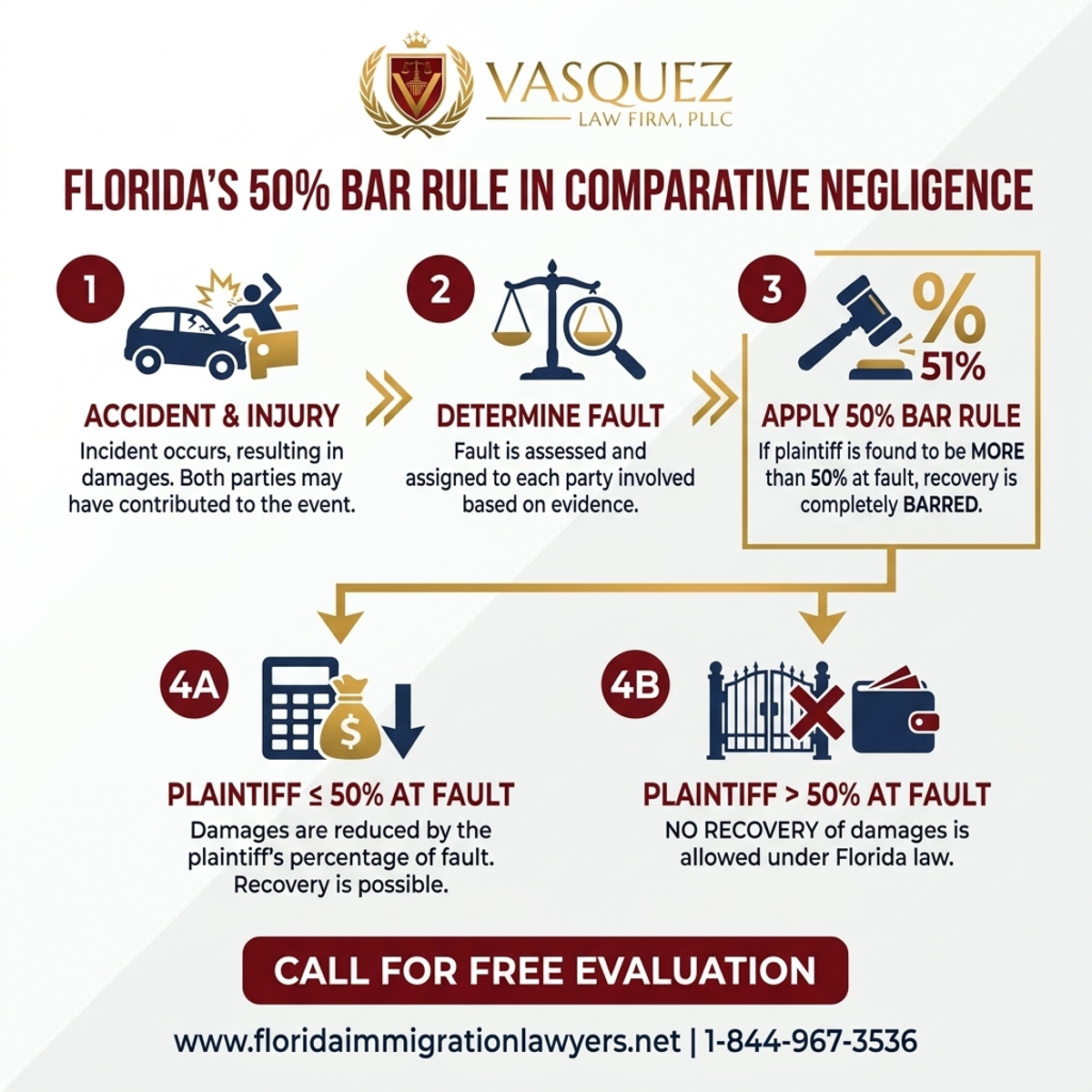
Step-by-Step Process — Florida's 50% Bar Rule in Comparative Negligence
Each document on this checklist serves a vital purpose in establishing the facts of your case. Medical records and bills quantify your physical and financial losses, while police reports offer an official account of the incident. Photographs provide visual evidence of the scene and injuries, which can be far more impactful than descriptions alone in proving negligence.
Beyond these, consider including wage loss statements if your injuries prevented you from working, property damage estimates for your vehicle or other belongings, and any correspondence with insurance companies. A comprehensive collection of documents ensures that no detail is overlooked, allowing your attorney at Florida Immigration Lawyers to present a robust and well-supported claim on your behalf.
Timeline and Processing Expectations
Understanding the timeline for a personal injury claim in Florida can help manage expectations. Typically, the process involves several stages, from initial filing to potential court proceedings. The duration can vary significantly based on the complexity of the case and the willingness of parties to settle.
Initial consultations and evidence gathering may take weeks to months. Negotiations can extend this timeline, especially if liability is disputed. In some cases, reaching a resolution through negotiation can take several months. If the case proceeds to court, it could extend the timeline by a year or more.
Factors such as the clarity of liability, the severity of injuries, and the responsiveness of insurance companies can significantly impact the timeline. A straightforward case with clear liability and minor injuries might settle within a few months, whereas a complex case involving disputed fault, catastrophic injuries, or multiple responsible parties could easily take a year or more to resolve, especially if it proceeds to trial.
Throughout this potentially lengthy process, consistent communication with your legal team is paramount. Your attorney will keep you informed of developments, explain legal procedures, and manage negotiations, always with Florida's 50% bar rule in mind. They will work tirelessly to move your case forward efficiently while ensuring a fair outcome, allowing you to focus on your recovery.
Cost Factors and Fee Breakdown
In personal injury cases, understanding the cost factors involved is essential. Most personal injury attorneys in Florida, including those at Florida Immigration Lawyers, operate on a contingency fee basis. This means you pay no legal fees unless a recovery is made on your behalf.
Additional costs may include court fees, expert witness fees, and charges for obtaining medical records. Discussing these potential expenses with your attorney can provide clarity and help in managing financial expectations.
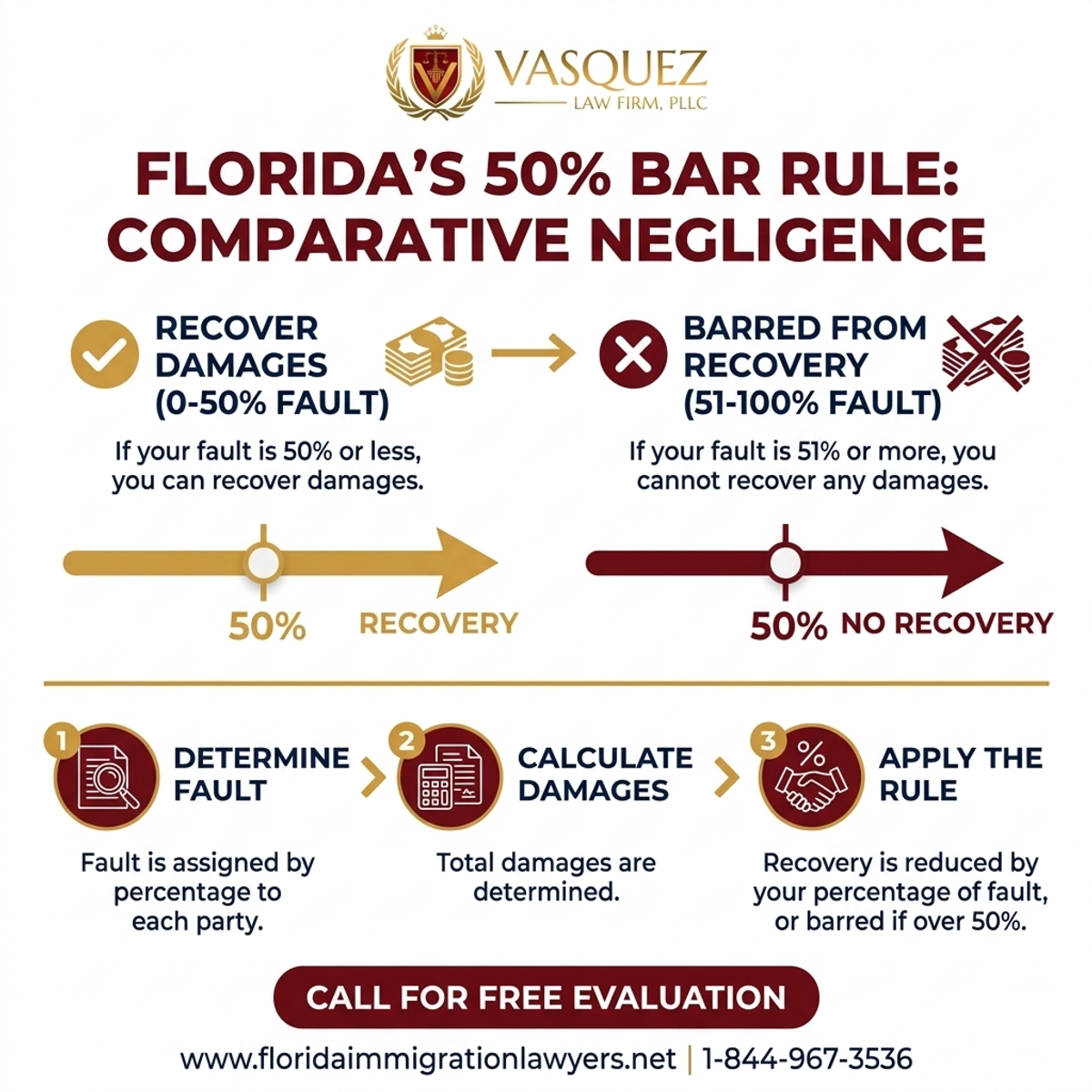
Key Statistics — Florida's 50% Bar Rule in Comparative Negligence
Under a contingency fee arrangement, your attorney's fee is a percentage of the final settlement or court award, typically ranging from 33.3% to 40%. This structure ensures that quality legal representation is accessible to everyone, regardless of their current financial situation, as you only pay if your case is successful, aligning your interests with your attorney's.
It’s also important to distinguish between attorney fees and case costs. Case costs cover expenses like filing fees, deposition costs, expert witness fees (e.g., accident reconstructionists or medical specialists), and the cost of obtaining medical records. These costs are usually advanced by the law firm and then reimbursed from the settlement or award, reinforcing the "no recovery, no fee" promise that Florida Immigration Lawyers upholds.
Do not navigate this process alone. Contact Florida Immigration Lawyers today.
Common Mistakes to Avoid
- Failing to Seek Immediate Medical Attention: Delays can affect your health and weaken your claim.
- Not Gathering Sufficient Evidence: Lack of evidence can lead to an unfavorable fault assessment.
- Underestimating Your Fault: Misjudging your responsibility can impact settlement discussions.
- Delaying Legal Consultation: Early legal advice can provide strategic advantages.
- Settling Too Quickly: Early settlements might not fully cover long-term damages.
- Overlooking Future Damages: Consider long-term impacts and future medical needs.
- Ignoring the 50% Bar Rule: Misunderstanding this rule can lead to unrealistic expectations.
- Not Understanding Insurance Policies: Misinterpretation can affect the claim process.
- Failing to Document All Interactions: Keep records of all communications with insurers and other parties.
- Proceeding Without Legal Representation: An attorney's expertise is invaluable in navigating complex legal systems.
Each of these common mistakes can significantly undermine your personal injury claim and your ability to recover damages under Florida’s 50% bar rule. For instance, failing to seek immediate medical attention can lead the defense to argue that your injuries were not caused by the accident or were not severe enough to warrant substantial compensation, directly impacting fault assessment.
Similarly, underestimating your fault or settling too quickly without fully understanding the long-term impact of your injuries can lead to inadequate compensation. An attorney from Florida Immigration Lawyers can help you avoid these pitfalls by providing expert guidance, thoroughly evaluating your case, and negotiating on your behalf to protect your rights and maximize your recovery.
When to Call a Lawyer
There are specific scenarios where contacting a lawyer is crucial. If you believe your fault might exceed 50%, or if the other party's insurer disputes your claim, legal guidance is imperative. Additionally, complex cases involving multiple parties or severe injuries benefit from professional legal assessment.
The attorneys at Florida Immigration Lawyers are equipped to handle such complexities, offering the expertise needed to navigate Florida's comparative negligence laws effectively.
You should consider contacting an attorney immediately if you've suffered serious injuries, if liability is disputed, if multiple parties are involved, or if the insurance company is offering a quick settlement that seems too low. These are all indicators of a potentially complex case where professional legal expertise will be invaluable in protecting your interests.
The sooner you involve Florida Immigration Lawyers, the better. Early legal intervention allows for prompt evidence collection, proper case strategy development, and timely communication with all involved parties, significantly improving your chances of a favorable outcome and ensuring compliance with Florida’s specific legal requirements. Don't hesitate to call 1-844-967-3536 for a free consultation.
About Florida Immigration Lawyers
Florida Immigration Lawyers is a dedicated firm serving the entire state of Florida, including Pembroke Pines. Our team is committed to providing personalized legal assistance for personal injury claims, ensuring our clients understand their rights and options under Florida law. Contact us at 1-844-967-3536 for a free consultation. We are available 24/7, offering bilingual services in English and Spanish.
While our name reflects a broader legal scope, our personal injury division, led by experienced attorneys like Harold Estrada-Rodriguez, is dedicated specifically to helping accident victims across Florida. We handle a wide range of personal injury matters, including car accidents, slip-and-fall incidents, and wrongful death claims, all while navigating the complexities of Florida's comparative negligence laws.
Our commitment extends beyond legal representation; we aim to provide compassionate support and clear communication throughout your entire legal journey. We understand the stress and uncertainty that follow an accident, which is why we offer 24/7 availability and bilingual services to ensure you always have access to the help you need. Reach out to us at 1-844-967-3536 to discuss your case and understand your legal options.
Sources and References
- U.S. Citizenship and Immigration Services (USCIS)
- Executive Office for Immigration Review (EOIR)
- 8 U.S.C. Chapter 12 - Immigration and Nationality Act
- Florida Statute §768.81 - Comparative Negligence
Related services: Florida car accident claims, slip-and-fall premises liability, Florida wrongful death claims.
This article provides general legal information and is not intended as legal advice. Every case is unique, and outcomes depend on specific facts and circumstances. Contact an attorney for advice about your particular situation.
Reviewed By
This article was reviewed for Florida legal accuracy by Harold Estrada-Rodriguez, Florida Bar No. 1041171, the attorney responsible for personal injury matters at Vasquez Law Firm. Personal injury representation in Florida only. No recovery, no fee.
Se Habla Espanol - Estamos aqui para ayudarle.
If you need legal assistance, learn more about speak with a Florida personal injury attorney, or call us at 1-844-967-3536 for a free consultation.
Do Not Navigate This Process Alone
Our experienced immigration attorneys are ready to fight for you. Get a free, confidential consultation today.
Se Habla Español
Frequently Asked Questions
Florida Immigration Lawyers
Immigration Attorney | Founder, Vasquez Law Firm
U.S. Air Force veteran and immigration attorney with thousands of cases resolved. J.D., NCCU School of Law. AILA member. Admitted to the 4th, 5th, and 11th Circuit Courts.
Available 24/7 - Free Evaluations
Related Legal Services
Our Florida immigration attorneys can help you with Florida car accident claims, slip-and-fall premises liability and Florida wrongful death claims. Call today at 1-844-967-3536 for a free consultation.
Related Links
Related Topics
Free Legal Consultation
Discuss your case with our experienced attorneys. We're available 24/7.
Se Habla Español - Estamos aquí para ayudarle.
Related Articles
Florida Comparative Negligence: 50% Bar Rule Explained
Florida's 50% bar rule, established by HB 837 in 2023, is a critical component of the state's modified comparative negligence system. If you are found to be 50% or more at fault for an accident, you are barred from recovering any damages. For those less than 50% at fault, compensation is reduced proportionally. This significant change impacts all personal injury claims across Florida, including in Orlando, Kissimmee, and Hollywood. Navigating these complex laws requires expert legal guidance to protect your rights and maximize your potential recovery. Learn how this rule affects your injury claim and the steps you should take after an accident.
Understanding Florida PIP No-Fault Medical Benefits
Discover how Florida's PIP no-fault insurance provides medical benefits to car accident victims. Learn about coverage, common mistakes, and when to seek legal help. Call Florida Immigration Lawyers for expert guidance.
Florida Truck Accident: 18-Wheeler Crashes on I-4 | VLF Florida
Truck accidents on I-4 in Florida involving 18-wheelers are complex and often involve multiple parties. Understanding FMCSA regulations and seeking timely legal advice is crucial. Contact Florida Immigration Lawyers for guidance.
Florida Wrongful Death Survivor Damages Explained | VLF Florida
Discover how Florida's wrongful death statutes §§768.16-768.21 help survivors seek compensation. Learn the process, common mistakes, and when to call a lawyer.
