Truck Accident: Navigating 18-Wheeler Crashes in Florida
Learn how to handle truck accidents on Florida's I-4. Understand FMCSA regulations, gather evidence, and seek legal help. Call Florida Immigration Lawyers at 1-844-967-3536 for a free consultation.

Truck Accident: Navigating 18-Wheeler Crashes in Florida
A truck accident involving an 18-wheeler can be a life-altering event, far more devastating than a typical car crash. The sheer size and weight of commercial trucks mean that collisions often result in catastrophic injuries, extensive property damage, and complex legal battles. In Florida, where major interstates like I-4 and I-75 are constantly traversed by commercial vehicles, the risk of such accidents is unfortunately high. If you or a loved one has been involved in an 18-wheeler crash, understanding your rights and the intricate legal landscape is crucial to securing the compensation you deserve. This guide will walk you through the unique challenges of truck accident cases in Florida, from understanding liability to navigating the claims process and the vital role an experienced attorney plays in protecting your future.
The Devastating Impact of 18-Wheeler Accidents
The consequences of a collision with an 18-wheeler are often severe and long-lasting. Unlike passenger vehicles, commercial trucks can weigh up to 80,000 pounds, making the force of impact immense. Victims frequently suffer traumatic brain injuries, spinal cord injuries, multiple fractures, internal organ damage, and even wrongful death. Beyond the physical trauma, the emotional and financial burdens can be overwhelming. Medical bills can quickly accumulate, lost wages can cripple a family's finances, and the psychological toll of such an event can persist for years. These accidents don't just affect the immediate victims; they impact entire families, creating a ripple effect of challenges that require comprehensive legal support to address.
Common Causes of Truck Accidents in Florida
While every truck accident is unique, many share common underlying causes that can often be attributed to negligence. Understanding these factors is key to establishing liability in your case:
- Driver Fatigue: Despite strict Hours of Service (HOS) regulations, truck drivers often push limits, leading to impaired judgment and delayed reaction times.
- Distracted Driving: Cell phone use, GPS navigation, eating, or other distractions can divert a driver's attention from the road, even for a split second, with disastrous results.
- Speeding and Reckless Driving: Driving too fast for conditions or engaging in aggressive maneuvers significantly increases the risk of losing control of a large vehicle.
- Improper Loading or Overloading: Unbalanced or excessively heavy cargo can shift during transit, affecting the truck's stability and making it difficult to control.
- Brake Failure or Poor Maintenance: Negligence in maintaining brakes, tires, lights, or other critical components can lead to mechanical failures on the road.
- Driving Under the Influence: Alcohol or drug impairment, though strictly prohibited, unfortunately remains a factor in some commercial vehicle accidents.
- Lack of Driver Training: Inadequate training or inexperience can lead to poor decision-making, especially in challenging road conditions or emergency situations.
- Adverse Weather Conditions: Rain, fog, or strong winds can exacerbate other issues, making it harder for truck drivers to operate safely.
Understanding FMCSA Regulations and Trucking Company Liability
Trucking is a heavily regulated industry, primarily by the Federal Motor Carrier Safety Administration (FMCSA). These regulations cover everything from driver qualifications and hours of service to vehicle maintenance and cargo securement. A violation of FMCSA rules often points directly to negligence on the part of the driver or the trucking company. For instance, if a driver exceeds their legal driving hours and causes an accident due to fatigue, both the driver and the company that pressured them to violate HOS rules could be held liable.
Establishing liability in a truck accident case is often more complex than in a standard car accident. Multiple parties may share responsibility, including:
- The Truck Driver: For direct negligence like distracted driving, speeding, or fatigue.
- The Trucking Company: For negligent hiring, inadequate training, pressuring drivers to violate HOS, poor vehicle maintenance, or vicarious liability for their driver's actions.
- The Truck Manufacturer or Parts Manufacturer: If a mechanical defect contributed to the accident.
- The Cargo Loader: If improper loading led to shifted weight and loss of control.
- Maintenance Companies: If faulty repairs or neglected service led to a mechanical failure.
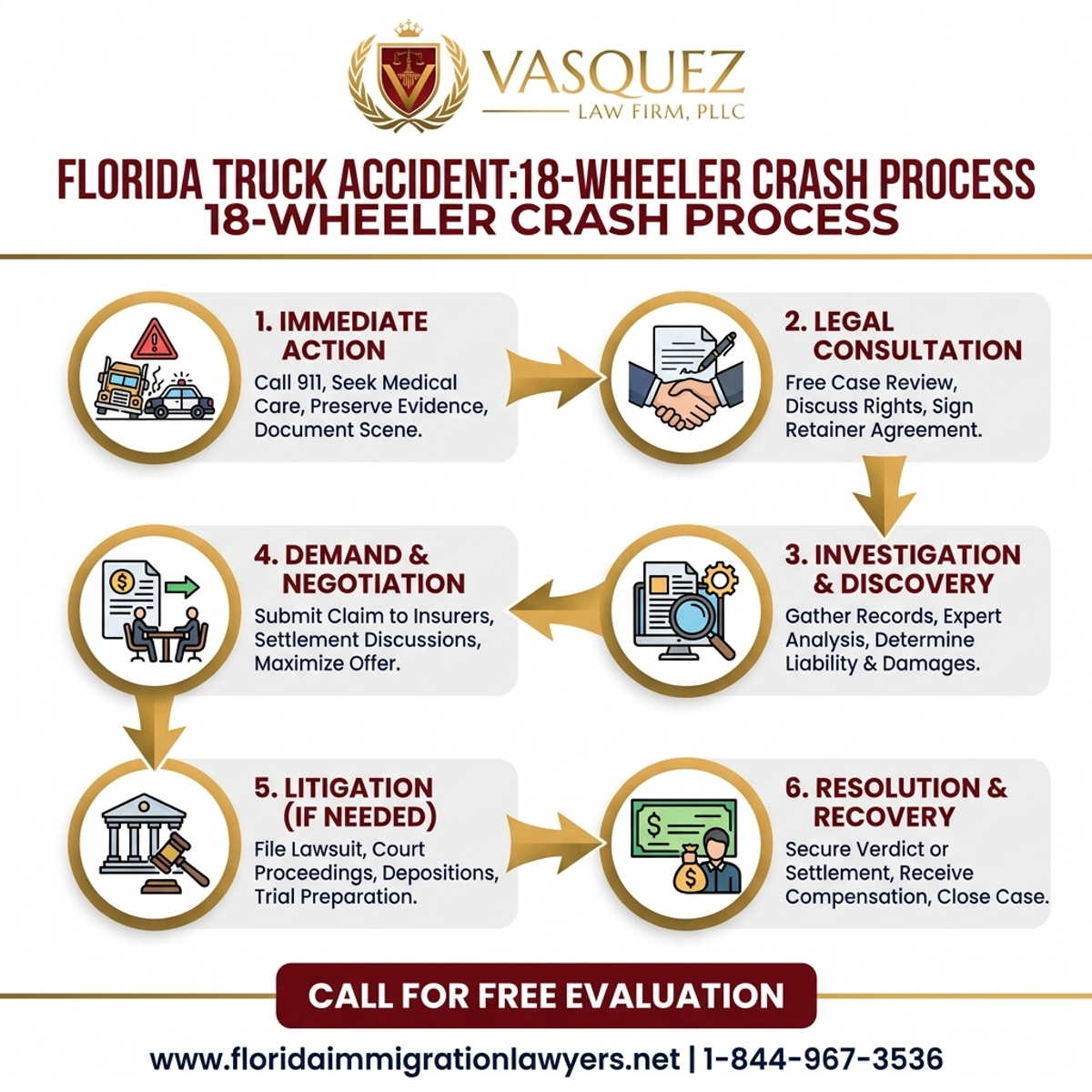
Step-by-Step Process — Truck Accident: Navigating 18-Wheeler Crashes in Florida
Our experienced legal team specializes in unraveling these complex layers of liability, meticulously investigating every detail to identify all responsible parties and hold them accountable.
Steps to Take Immediately After a Florida Truck Accident
The moments following an 18-wheeler crash are critical. Your actions can significantly impact your health and the strength of your future legal claim:
- Ensure Safety: If possible, move your vehicle to a safe location away from traffic. Turn on your hazard lights.
- Call 911: Report the accident to law enforcement and request emergency medical services, even if you don't feel immediately injured. Police reports are vital, and medical attention ensures your well-being.
- Gather Evidence: If it's safe to do so, take photos and videos of the accident scene, vehicle damage, road conditions, traffic signs, and any visible injuries. Note down the truck's company name, license plate, USDOT number, and any other identifying information.
- Exchange Information: Get contact and insurance details from the truck driver and any witnesses. Do not admit fault or make assumptions about the accident.
- Seek Medical Attention: Even if paramedics clear you at the scene, see a doctor as soon as possible. Some serious injuries, like whiplash or internal bleeding, may not manifest symptoms immediately. A medical record creates a crucial link between the accident and your injuries.
- Avoid Speaking to Insurance Companies: Trucking companies and their insurers will likely contact you quickly. Do not give recorded statements or sign anything without consulting an attorney. They are not on your side and may try to minimize your claim.
The Complexities of Truck Accident Litigation in Florida
Navigating a truck accident claim is a multi-faceted legal process that requires specialized knowledge and aggressive representation. Unlike car accident claims, truck accident litigation involves a deeper dive into federal and state regulations, corporate structures, and often, significant financial resources from the defense. The discovery phase is particularly intensive, involving requests for electronic logging device (ELD) data, black box recordings, driver logs, maintenance records, drug test results, and company safety policies. These documents can provide crucial evidence of negligence.
Expert witnesses often play a pivotal role. Accident reconstructionists can analyze physical evidence to determine speed, impact angles, and fault. Medical experts can testify to the extent of your injuries, prognosis, and future medical needs. Economic experts can calculate lost wages, future earning capacity, and other financial damages. The negotiation process with powerful trucking company insurers is also considerably more challenging. They have vast resources and experienced legal teams dedicated to minimizing payouts. If a fair settlement cannot be reached, preparing for trial becomes necessary, which involves extensive legal research, witness preparation, and compelling courtroom presentation. This entire process demands a legal team with a proven track record in complex personal injury litigation. Don't hesitate to contact us today for a free consultation to discuss your case.
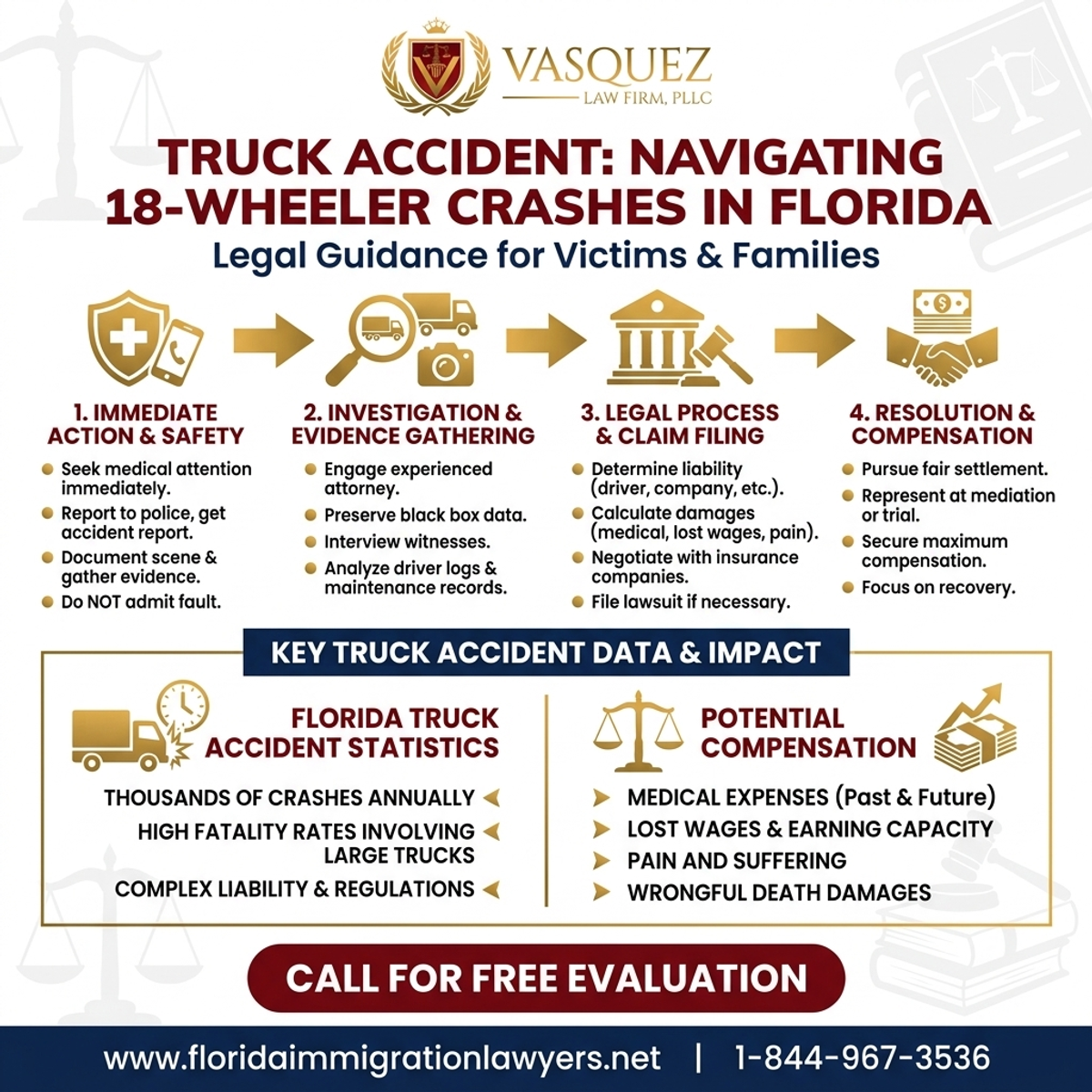
Key Statistics — Truck Accident: Navigating 18-Wheeler Crashes in Florida
Why You Need an Experienced Truck Accident Attorney
After an 18-wheeler crash, you're not just fighting a driver; you're often up against a large trucking corporation and their formidable insurance carriers. These entities have vast resources and sophisticated legal teams whose primary goal is to minimize their liability and pay you as little as possible. Trying to navigate this complex system alone can be overwhelming and detrimental to your claim.
An experienced truck accident attorney will:
- Conduct a Thorough Investigation: They will gather all necessary evidence, including accident reports, witness statements, black box data, driver logs, and maintenance records.
- Determine All Liable Parties: Identifying every responsible party, from the driver to the trucking company, cargo loader, or manufacturer, is crucial for maximizing your compensation.
- Navigate Complex Regulations: They understand the intricate federal and state trucking laws and how to use them to build a strong case.
- Accurately Calculate Damages: Beyond immediate medical bills, an attorney will account for future medical expenses, lost wages, pain and suffering, emotional distress, and other long-term impacts.
- Negotiate with Insurance Companies: They will handle all communications with insurers, protecting you from tactics designed to undermine your claim and fighting for a fair settlement.
- Represent You in Court: If a fair settlement cannot be reached, your attorney will be prepared to take your case to trial, advocating fiercely on your behalf.
Our firm's commitment extends to a broad spectrum of legal challenges. While we specialize in personal injury, our dedicated team also provides comprehensive legal support in areas such as immigration law, including complex asylum claims, and robust deportation defense, reflecting our diverse expertise and commitment to justice across various legal fields.
Frequently Asked Questions (FAQs)
For specific answers related to your unique situation, it's always best to consult directly with a legal professional.
Conclusion:
Being involved in an 18-wheeler accident in Florida is a traumatic experience with far-reaching consequences. The legal complexities involved require the guidance of a skilled and dedicated truck accident attorney. Don't face the powerful trucking companies and their insurers alone. Protecting your rights and securing the compensation you deserve is paramount for your recovery and future. For a free, no-obligation consultation to discuss your specific truck accident case and understand your legal options, please contact us today. Our team is ready to provide the compassionate and effective legal representation you need.
Sources and References
- U.S. Citizenship and Immigration Services (USCIS)
- Executive Office for Immigration Review (EOIR)
- U.S. Department of State - Bureau of Consular Affairs
- Immigration and Nationality Act (INA), 8 U.S.C. Chapter 12
Do Not Navigate This Process Alone
Our experienced immigration attorneys are ready to fight for you. Get a free, confidential consultation today.
Se Habla Español
Frequently Asked Questions
Florida Immigration Lawyers
Immigration Attorney | Founder, Vasquez Law Firm
U.S. Air Force veteran and immigration attorney with thousands of cases resolved. J.D., NCCU School of Law. AILA member. Admitted to the 4th, 5th, and 11th Circuit Courts.
Available 24/7 - Free Evaluations
Related Legal Services
Our Florida immigration attorneys can help you with Florida personal injury representation, Florida car accident claims and slip-and-fall premises liability. Call today at 1-844-967-3536 for a free consultation.
Related Links
Related Topics
Free Legal Consultation
Discuss your case with our experienced attorneys. We're available 24/7.
Se Habla Español - Estamos aquí para ayudarle.
Related Articles
Florida Wrongful Death Survivor Damages Explained | VLF Florida
Discover how Florida's wrongful death statutes §§768.16-768.21 help survivors seek compensation. Learn the process, common mistakes, and when to call a lawyer.
Rear-End Collision Whiplash Claims in Florida | VLF Florida
Rear-end collisions in Florida often lead to serious injuries like whiplash and herniated discs. Learn how to navigate your claim with the help of Florida Immigration Lawyers. Contact us for a free consultation.
Florida Rear-End Collision Claims: Whiplash and Herniated Discs
Rear-end collisions in Florida, especially around Hollywood, can lead to serious injuries like whiplash and herniated discs. Learn how to navigate the claims process effectively and ensure fair compensation. Call Florida Immigration Lawyers at 1-844-967-3536 for a free consultation.
Florida Government Sidewalk Accident Sovereign Immunity
Explore how sovereign immunity affects claims against Florida government entities for sidewalk accidents. Learn about the procedures, challenges, and legal support available to navigate these complex cases.