Rear-End Collision Whiplash Claims in Florida | VLF Florida
Rear-end collisions in Florida often lead to serious injuries like whiplash and herniated discs. Learn how to navigate your claim with the help of Florida Immigration Lawyers. Contact us for a free consultation.

Rear-End Collision Whiplash Claims in Florida | VLF Florida
Rear-end collisions are among the most common types of car accidents, and while they may sometimes seem minor, they frequently result in significant injuries, particularly whiplash. In Florida, navigating the aftermath of such an accident, especially when dealing with whiplash or a herniated disc, can be complex. Understanding your rights, the legal process, and the importance of timely medical and legal action is crucial for securing the compensation you deserve. At VLF Florida, we specialize in helping victims of rear-end collisions recover from their injuries and financial losses.
Understanding Whiplash Injuries from Rear-End Collisions
Whiplash is a common neck injury caused by a sudden, forceful back-and-forth movement of the head, often occurring in rear-end car accidents. This rapid motion can strain the muscles, ligaments, and soft tissues in the neck and upper back. While some symptoms may appear immediately, others can be delayed, sometimes manifesting days or even weeks after the accident. Common symptoms include neck pain and stiffness, headaches (especially at the base of the skull), dizziness, blurred vision, fatigue, and pain or numbness in the arms.
Diagnosing whiplash typically involves a physical examination and imaging tests like X-rays, CT scans, or MRIs to rule out other conditions and assess the extent of soft tissue damage. Treatment often includes pain management, physical therapy, chiropractic care, and in some severe cases, injections or even surgery. The long-term effects of whiplash can vary significantly, ranging from full recovery to chronic pain, reduced range of motion, and persistent headaches, significantly impacting a person's quality of life and ability to work. Documenting every symptom and treatment is vital for any potential legal claim.
The Immediate Aftermath: What to Do After a Rear-End Accident in Florida
The moments immediately following a rear-end collision are critical, not only for your health and safety but also for the strength of any future legal claim. First and foremost, ensure your safety and the safety of others. If possible and safe, move your vehicle to the side of the road. Call the police, even if the damage seems minor, as a police report provides an official record of the incident. Exchange information with the other driver, including names, contact details, insurance information, and vehicle details. Do not admit fault or apologize, as this can be used against you later.
Seeking immediate medical attention is paramount, even if you don't feel injured. Adrenaline can mask pain, and whiplash symptoms often have a delayed onset. A medical professional can diagnose injuries, initiate treatment, and create a medical record that is crucial for your claim. Document everything: take photos of the accident scene, vehicle damage, and any visible injuries. Gather contact information from any witnesses. Finally, notify your insurance company promptly, but be cautious about giving recorded statements without first consulting with an attorney. An experienced car accident attorney can guide you through these initial steps, ensuring your rights are protected from the outset.
Navigating Florida's No-Fault Insurance System and PIP
Florida operates under a no-fault insurance system, which means your own Personal Injury Protection (PIP) insurance typically covers the initial medical expenses and lost wages, regardless of who was at fault for the accident. PIP coverage usually provides up to $10,000 for medical treatment and 60% of lost wages. However, there's a critical catch: you must seek initial medical treatment within 14 days of the accident for your PIP benefits to apply. Failure to do so can result in a complete loss of these benefits.
While PIP covers initial costs, it often isn't enough for serious injuries like severe whiplash or a herniated disc. To step outside the no-fault system and pursue a claim against the at-fault driver for pain and suffering, you must meet Florida's 'serious injury' threshold. This means your injury must involve a significant and permanent loss of an important bodily function, permanent injury within a reasonable degree of medical probability, significant and permanent scarring or disfigurement, or death. Proving a serious injury often requires extensive medical documentation and expert testimony, making legal representation invaluable.
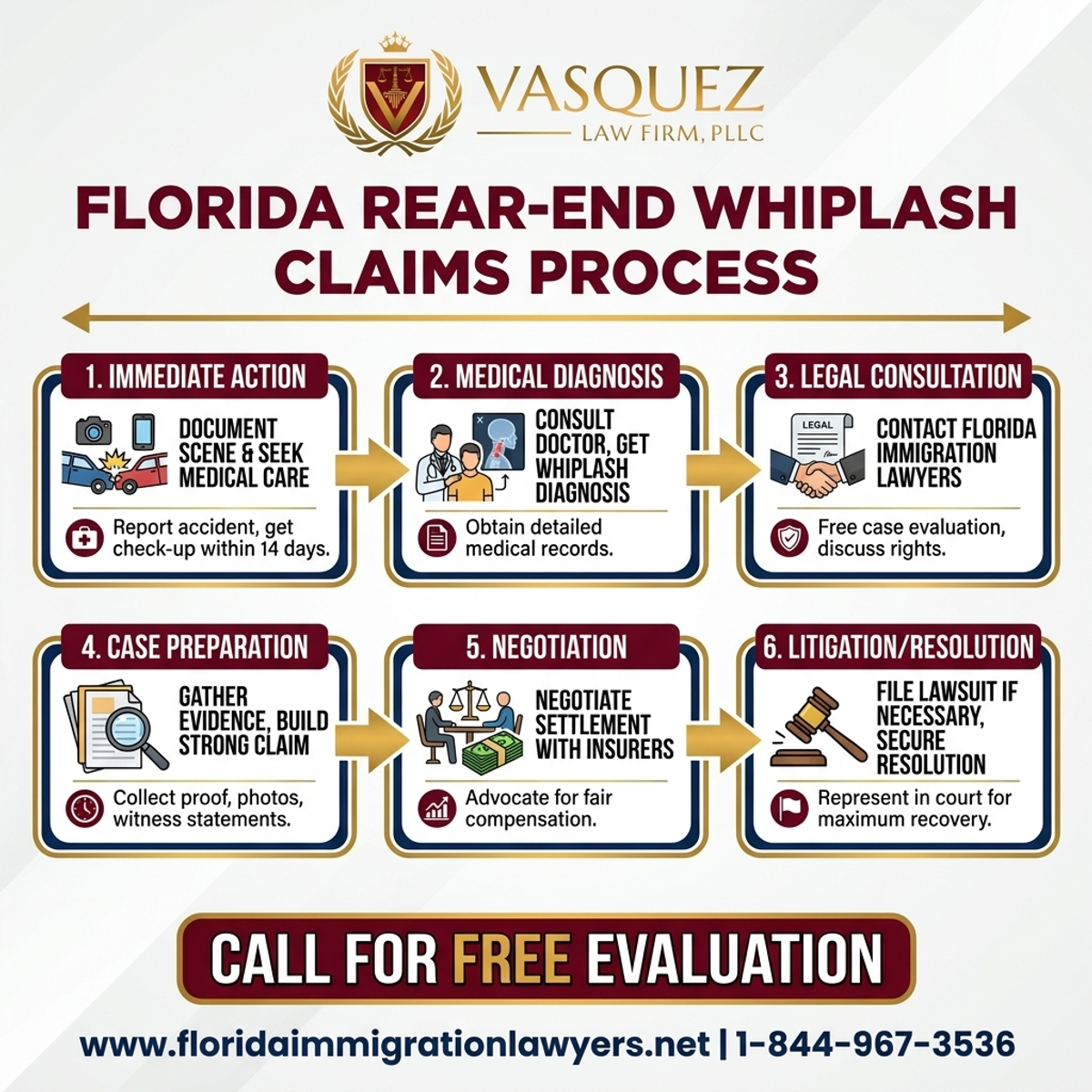
Step-by-Step Process — Rear-End Collision Whiplash Claims in Florida | VLF Florida
Proving Your Whiplash Claim: Evidence and Liability
Successfully proving a whiplash claim in Florida requires compelling evidence that links your injuries directly to the rear-end collision and establishes the other driver's negligence. Key pieces of evidence include the official police report, which details the accident circumstances and often assigns fault. Comprehensive medical records, including initial evaluations, diagnostic imaging (X-rays, MRIs, CT scans), treatment plans, and prognoses from doctors, physical therapists, and chiropractors, are essential to demonstrate the extent and causation of your injuries.
Witness statements can corroborate your account of the accident, and accident reconstruction reports from experts can provide scientific analysis of how the collision occurred and the forces involved. Photos and videos of the accident scene, vehicle damage, and your injuries also serve as powerful visual evidence. Florida's comparative negligence law means that if you are found partially at fault for the accident, your compensation may be reduced proportionally. An attorney will meticulously gather and present all necessary evidence to establish liability, maximize your claim, and defend against any allegations of comparative fault.
Calculating Damages in a Whiplash Injury Claim
When pursuing a whiplash injury claim, the goal is to recover full and fair compensation for all damages incurred due to the accident. These damages generally fall into two categories: economic and non-economic. Economic damages are quantifiable financial losses and include past and future medical expenses (hospital stays, doctor visits, medications, physical therapy, assistive devices), lost wages (income lost due to inability to work), and loss of earning capacity (future income you will lose due to long-term disability or reduced work ability). These are often calculated with the help of medical and vocational experts.
Non-economic damages are more subjective but equally important. They compensate for the intangible losses that significantly impact your life. This includes pain and suffering (physical pain, discomfort, and emotional distress), mental anguish, loss of enjoyment of life (inability to participate in hobbies or activities you once enjoyed), and loss of consortium (impact on marital relationships). In rare cases, if the at-fault driver's conduct was particularly egregious, punitive damages may be awarded to punish the wrongdoer and deter similar behavior. A skilled attorney will work to quantify both economic and non-economic damages to ensure your claim reflects the true impact of your whiplash injury.
Key Statistics — Rear-End Collision Whiplash Claims in Florida | VLF Florida
The Role of Medical Experts and Legal Counsel in Whiplash Cases
Successfully navigating a whiplash claim, especially one involving a herniated disc or other serious injuries, hinges significantly on the collaboration between medical experts and experienced legal counsel. Medical professionals play an indispensable role by providing objective evidence of your injuries. Their detailed diagnoses, treatment records, and prognoses establish the direct link between the rear-end collision and your physical ailments. They can explain the mechanics of whiplash, the severity of nerve impingement from a herniated disc, and the long-term implications of your injury on your daily life and future earning capacity. Often, a treating physician or an independent medical examiner may be called upon to provide expert testimony, clarifying complex medical concepts for a jury or insurance adjuster and validating the extent of your suffering.
Legal counsel, on the other hand, translates this medical evidence into a compelling legal argument. An attorney understands how to present medical records, expert opinions, and diagnostic images in a way that clearly demonstrates negligence, causation, and damages. They know which medical specialists to consult, how to depose doctors effectively, and how to challenge opposing medical opinions from insurance company doctors. Furthermore, your legal team manages all communications with insurance companies, handles complex paperwork, adheres to strict deadlines, and represents your interests vigorously in negotiations or in court. They ensure that all aspects of your injury, from immediate pain to potential lifelong disability, are fully accounted for in your claim, maximizing your chances of a favorable outcome. This synergistic relationship between medical expertise and legal strategy is fundamental to achieving justice and fair compensation in whiplash and herniated disc cases.
Beyond Whiplash: Other Common Injuries in Rear-End Accidents
While whiplash is undeniably the most frequently associated injury with rear-end collisions, these accidents can cause a wide spectrum of other serious physical harm. Herniated discs, often a more severe spinal injury, occur when the soft cushion between vertebrae ruptures, potentially pressing on nerves and causing intense pain, numbness, or weakness in the back, arms, or legs. These injuries frequently require extensive medical intervention, including surgery, and can lead to long-term disability.
Concussions and other traumatic brain injuries (TBIs) are also common, especially if the head strikes a part of the vehicle or experiences a severe jolt. Symptoms can range from headaches and dizziness to cognitive difficulties, memory loss, and mood changes, sometimes with delayed onset. Spinal cord injuries, though less common, are catastrophic and can result in partial or complete paralysis. Fractures, particularly to the wrists, arms, ribs, or facial bones, can occur from impact with the steering wheel, dashboard, or airbags. Soft tissue injuries, beyond whiplash, include sprains, strains, and contusions to other parts of the body. Recognizing and documenting all potential injuries is crucial, as each can significantly impact your medical needs, recovery, and the overall value of your personal injury claim.
The Statute of Limitations in Florida Personal Injury Claims
It is crucial to be aware of Florida's statute of limitations for personal injury claims. Generally, you have four years from the date of the accident to file a lawsuit for personal injury. While this may seem like ample time, delays can significantly weaken your case. Evidence can be lost, witness memories fade, and the connection between the accident and your injuries can become harder to prove. There are some exceptions to this rule, but it is always best to act quickly.
For wrongful death claims, the statute of limitations is typically two years from the date of death. It is imperative to consult with an attorney as soon as possible after a rear-end collision to ensure all deadlines are met and that your legal options remain open. Missing the statute of limitations deadline almost certainly means forfeiting your right to seek compensation, regardless of the severity of your injuries or the clear fault of the other driver.
Why Choose VLF Florida for Your Rear-End Collision Claim
At VLF Florida, we understand the profound impact a rear-end collision and subsequent injuries like whiplash or a herniated disc can have on your life. Our dedicated team of personal injury attorneys brings extensive experience in Florida's complex legal landscape, fighting tirelessly to protect the rights of accident victims. We pride ourselves on our client-focused approach, providing compassionate support while aggressively pursuing the maximum compensation you deserve for medical bills, lost wages, pain and suffering, and other damages.
While our firm is deeply committed to helping victims of car accidents secure the justice they deserve, we understand that life presents many complex legal challenges. Our comprehensive legal services extend to critical areas such as immigration law, including helping individuals navigate the path to residency, assisting those seeking asylum to find safety, and providing robust deportation defense. We believe that everyone deserves dedicated legal representation, no matter the nature of their legal battle. Our team of experienced attorneys is ready to listen to your story and provide tailored legal solutions. Don't hesitate to contact us today for a free consultation.
Contact Us for a Free Consultation
If you or a loved one has suffered whiplash or a herniated disc in a rear-end collision in Florida, don't face the insurance companies alone. The legal team at VLF Florida is here to provide the expert guidance and representation you need. We offer a free, no-obligation consultation to discuss your case, assess your options, and help you understand the path forward. Let us handle the legal complexities so you can focus on your recovery. Call us today at (844) 967-3536 or fill out our online contact form to schedule your free consultation.
Sources and References
- U.S. Citizenship and Immigration Services (USCIS)
- Executive Office for Immigration Review (EOIR)
- U.S. Department of State - Bureau of Consular Affairs
- Immigration and Nationality Act (INA), 8 U.S.C. Chapter 12
Do Not Navigate This Process Alone
Our experienced immigration attorneys are ready to fight for you. Get a free, confidential consultation today.
Se Habla Español
Frequently Asked Questions
Florida Immigration Lawyers
Immigration Attorney | Founder, Vasquez Law Firm
U.S. Air Force veteran and immigration attorney with thousands of cases resolved. J.D., NCCU School of Law. AILA member. Admitted to the 4th, 5th, and 11th Circuit Courts.
Available 24/7 - Free Evaluations
Related Legal Services
Our Florida immigration attorneys can help you with Florida car accident claims, slip-and-fall premises liability and Florida wrongful death claims. Call today at 1-844-967-3536 for a free consultation.
Related Links
Related Topics
Free Legal Consultation
Discuss your case with our experienced attorneys. We're available 24/7.
Se Habla Español - Estamos aquí para ayudarle.
Related Articles
Florida Rear-End Collision Claims: Whiplash and Herniated Discs
Rear-end collisions in Florida, especially around Hollywood, can lead to serious injuries like whiplash and herniated discs. Learn how to navigate the claims process effectively and ensure fair compensation. Call Florida Immigration Lawyers at 1-844-967-3536 for a free consultation.
Florida Government Sidewalk Accident Sovereign Immunity
Explore how sovereign immunity affects claims against Florida government entities for sidewalk accidents. Learn about the procedures, challenges, and legal support available to navigate these complex cases.
Understanding Florida Rideshare Insurance: Uber and Lyft
Learn about the multi-layer insurance requirements for Uber and Lyft drivers in Florida. Understand your rights and protections in case of an accident. Contact us for guidance.
Florida Wrongful Death Survivor Damages: Know Your Rights
When a loved one dies due to negligence in Florida, their surviving family members may be entitled to wrongful death survivor damages. The Florida Wrongful Death Act (§768.16-.26) defines who can seek compensation, including spouses, children, and dependent relatives, and outlines the types of damages available. These can range from economic losses like lost financial support and medical expenses to non-economic losses such as pain and suffering and loss of companionship. The process involves appointing a personal representative, filing a lawsuit within the strict statute of limitations, and potentially engaging in discovery and negotiations. Understanding these complex laws is vital for families in West Palm Beach, Orlando, and Kissimmee seeking justice. Florida Immigration Lawyers offers compassionate legal guidance for personal injury matters, including wrongful death claims, with Harold Estrada-Rodriguez (Florida Bar No. 1041171) leading these cases. Contact us for a free consultation.