Florida's 2-Year Statute of Limitations for PI Claims
Learn about Florida's 2-year statute of limitations for personal injury claims under 95.11, crucial for Jacksonville residents. Contact us for guidance.

Navigating the aftermath of a personal injury can be overwhelming. Beyond the physical and emotional toll, there's a complex legal landscape to contend with, particularly concerning deadlines. In Florida, one of the most critical deadlines you'll face is the statute of limitations for personal injury claims. This crucial legal principle dictates the maximum time you have to file a lawsuit after an injury occurs. Missing this deadline can permanently bar you from seeking compensation, regardless of the merits of your case.
Effective March 24, 2023, Florida law underwent a significant change with the passing of House Bill (HB) 837, drastically reducing the statute of limitations for most personal injury claims from four years to just two years. This change, codified primarily under Florida Statute 95.11, has profound implications for anyone injured due to another's negligence. Understanding this new two-year window is not just important—it's absolutely essential for protecting your rights and securing the justice you deserve.
Understanding Florida's Statute of Limitations for Personal Injury Claims
A statute of limitations is a law that sets the maximum time after an event within which legal proceedings may be initiated. For personal injury cases, it means there's a finite period during which you can file a lawsuit to recover damages for your injuries. Before HB 837, Florida provided a four-year window for most personal injury claims, offering a relatively generous timeframe for victims to gather evidence, seek medical treatment, and consult with legal counsel.
However, the legislative changes introduced by HB 837 have dramatically shortened this period. Now, under Florida Statute 95.11(3)(a), most personal injury actions must be commenced within two years. This includes claims arising from car accidents, slip and falls, dog bites, and other forms of negligence. The clock generally starts ticking from the date the injury occurred or, in some cases, the date the injury was discovered or should have been discovered. This accelerated timeline underscores the urgency for anyone who has suffered an injury to seek legal advice promptly.
The intent behind this legislative shift was to streamline the litigation process and potentially reduce the number of older claims in the system. While the motivations are varied, the practical impact on injured individuals is clear: delay can be devastating. What was once a four-year period for careful consideration and preparation is now a much tighter two-year sprint. This makes the immediate engagement of an experienced personal injury attorney more critical than ever to ensure all necessary steps are taken within the prescribed legal timeframe.
Key Exceptions and Nuances to the 2-Year Rule
While the two-year statute of limitations is the general rule, Florida law recognizes certain exceptions and nuances that can alter when the clock starts or how long it runs. These exceptions are complex and often require a detailed legal analysis, highlighting why professional legal guidance is indispensable.
The Discovery Rule
In some personal injury cases, the injury or its cause may not be immediately apparent. The "discovery rule" provides that the statute of limitations begins to run not from the date of the injury itself, but from the date the injury was discovered or reasonably should have been discovered. This is particularly relevant in cases involving latent injuries, exposure to toxic substances, or certain medical malpractice scenarios where symptoms may not manifest for months or even years. However, even with the discovery rule, there are often ultimate statutes of repose that set an absolute outer limit, regardless of discovery.
Minors and Incapacitated Persons
Florida law offers protections for individuals who are legally unable to pursue their own claims. If the injured party is a minor (under 18 years old) or is legally incapacitated, the statute of limitations may be "tolled," meaning the clock does not start running until the minor reaches the age of majority or the incapacitated person regains capacity (or a guardian is appointed to act on their behalf). This exception ensures that vulnerable individuals are not unfairly penalized for their inability to act within the standard timeframe. However, specific rules apply, and it's not an automatic indefinite extension.
Fraudulent Concealment
If the party responsible for the injury actively and fraudulently conceals their wrongdoing or the existence of the injury, the statute of limitations may be tolled until the fraud is discovered. This exception aims to prevent wrongdoers from benefiting from their deceptive practices by hiding the evidence of their negligence. Proving fraudulent concealment can be challenging and requires strong evidence of intent to deceive.
Specific Case Types with Different Rules
While most personal injury claims fall under the two-year rule, some specific types of actions have their own distinct statutes of limitations:
- Medical Malpractice: Generally, a two-year statute of limitations from the date the malpractice is discovered or should have been discovered, but with a four-year statute of repose (meaning no action can be brought more than four years after the incident, regardless of discovery), and a seven-year statute of repose for cases involving fraud, concealment, or intentional misrepresentation.
- Wrongful Death: Despite HB 837, Florida's statute of limitations for wrongful death claims remains two years from the date of death, as per Florida Statute 95.11(4)(d). This is a critical distinction as the clock starts from the date of death, not the date of the injury that led to death.
- Actions Against Governmental Entities: Claims against state or local government entities often have shorter notice requirements (e.g., six months) before a lawsuit can even be filed, in addition to the two-year statute of limitations for the lawsuit itself.
Understanding these specific rules is paramount, as misinterpreting them can lead to the forfeiture of a valid claim. An attorney specializing in personal injury law can help navigate these intricate details.
Why the Statute of Limitations is Crucial for Your Claim
The statute of limitations is not merely a procedural hurdle; it is a fundamental aspect of civil law designed to promote fairness and efficiency. Its primary purpose is to prevent stale claims from being brought to court, ensuring that evidence is still fresh, witnesses' memories are clear, and defendants are not perpetually exposed to potential lawsuits. For victims, however, it serves as a strict deadline that, once passed, can extinguish their legal rights entirely.
Missing the two-year deadline means that, with very few exceptions, you lose the legal ability to file a lawsuit seeking compensation for your injuries, medical bills, lost wages, pain and suffering, and other damages. Even if your case is incredibly strong, with clear evidence of negligence and severe injuries, a court will likely dismiss your claim if it's filed past the statutory period. This makes the statute of limitations a gatekeeper for justice, and failing to pass through it on time can be a devastating blow to your recovery efforts. It's not something a judge can simply waive because you "didn't know" or "were too busy." The law is unforgiving in this regard.
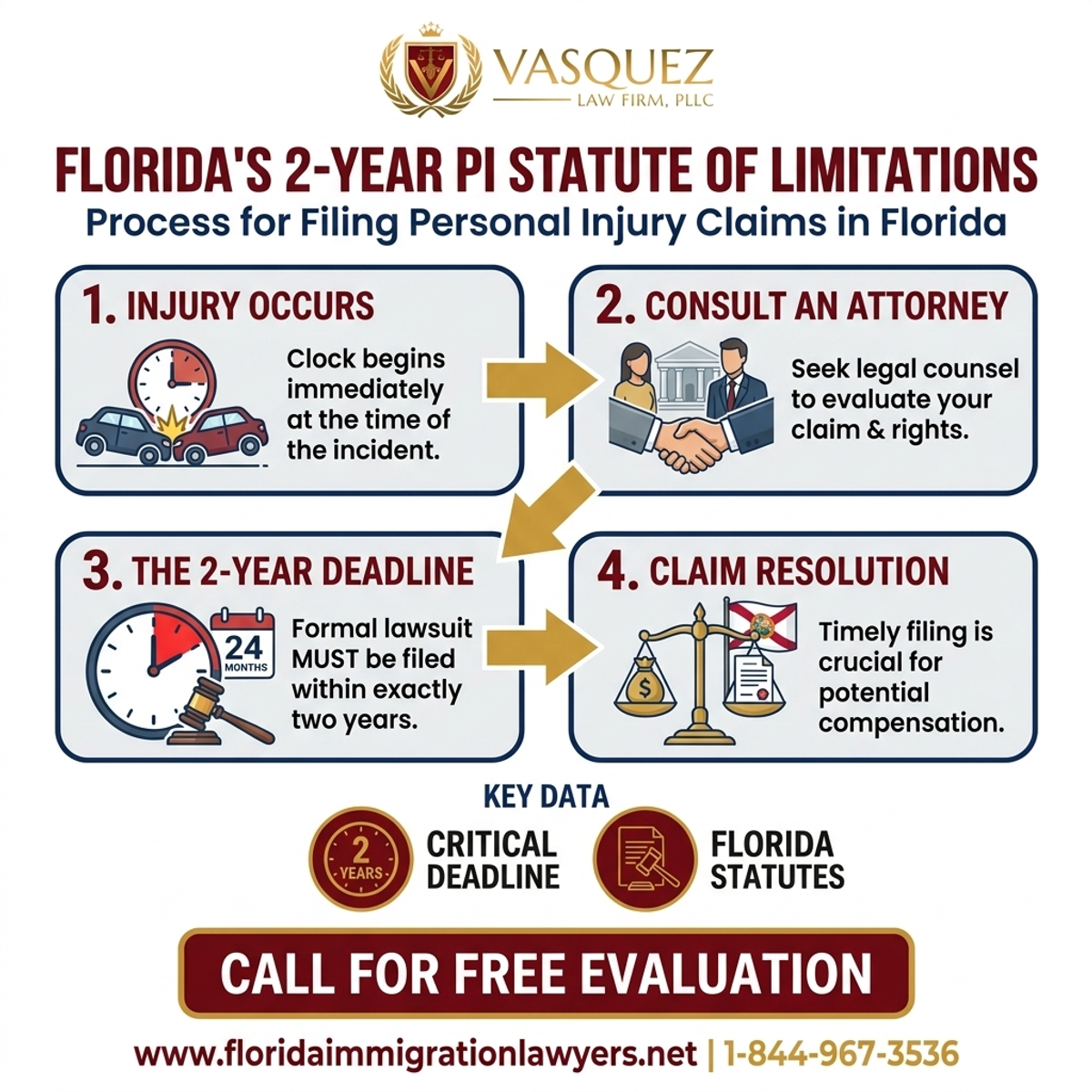
Step-by-Step Process — Florida's 2-Year Statute of Limitations for PI Claims
How HB 837 Changed the Landscape for Personal Injury Victims
House Bill 837, signed into law on March 24, 2023, represents one of the most significant tort reform measures in Florida in decades. While the reduction of the personal injury statute of limitations from four years to two years is a major component, the bill introduced a host of other changes that collectively aim to reshape the personal injury litigation environment in the state. This comprehensive legislation reflects a broader effort to address what proponents describe as an "insurance crisis" and to reduce litigation costs, but its impact on injured individuals is undeniable and often challenging.
Beyond the statute of limitations, HB 837 also altered Florida's comparative negligence standard. Previously, Florida was a "pure comparative negligence" state, meaning an injured party could recover damages even if they were 99% at fault, with their recovery simply reduced by their percentage of fault. HB 837 shifted this to a "modified comparative negligence" standard for most personal injury cases. Now, if a claimant is found to be more than 50% at fault for their injuries, they are completely barred from recovering any damages. This change places a much greater burden on plaintiffs to demonstrate that the defendant was primarily responsible for their harm, adding another layer of complexity and risk to personal injury claims.
Furthermore, the bill introduced significant changes to bad faith insurance claims, making it harder for policyholders to sue their own insurance companies for acting in bad faith. It also modified premises liability laws, offering greater protections to property owners from lawsuits by individuals injured on their property. The cumulative effect of these changes is a more challenging environment for personal injury plaintiffs, making the expertise of a seasoned attorney even more indispensable. The legislative intent was to reduce frivolous lawsuits and lower insurance premiums, but critics argue it disproportionately impacts the rights of accident victims. Understanding the full scope of HB 837 is crucial for anyone involved in a personal injury matter in Florida, as it fundamentally alters the strategic approach required for successful litigation.
Steps to Take After a Personal Injury Accident in Florida
Given the strict two-year statute of limitations and the other complexities introduced by HB 837, taking immediate and decisive action after a personal injury accident is paramount. Your actions in the hours and days following an incident can significantly impact the strength and viability of your future claim.
- Seek Immediate Medical Attention: Your health is the top priority. Even if you feel fine, some serious injuries may not manifest symptoms immediately. A medical evaluation creates an official record of your injuries, linking them directly to the accident, which is crucial for your claim.
- Document Everything: If possible and safe to do so, document the scene of the accident. Take photos and videos of the location, vehicle damage, your injuries, and any contributing factors. Gather contact information from witnesses and any involved parties. Keep a detailed record of all medical appointments, treatments, medications, and expenses.
- Do Not Admit Fault: Avoid making statements that could be interpreted as admitting fault, even if you believe you played a role. Stick to the facts when speaking with police or insurance adjusters. Anything you say can be used against you.
- Do Not Give Recorded Statements to Insurance Companies: The at-fault party's insurance company may contact you quickly. While you must cooperate with your own insurer, you are not obligated to give a recorded statement to the other party's insurer without legal counsel. Their goal is often to minimize their payout.
- Consult with an Attorney Immediately: This is perhaps the most critical step. An experienced personal injury attorney can evaluate your case, explain your rights, investigate the accident, gather evidence, negotiate with insurance companies, and ensure all deadlines, including the two-year statute of limitations, are met. Waiting can jeopardize your ability to build a strong case and secure fair compensation.
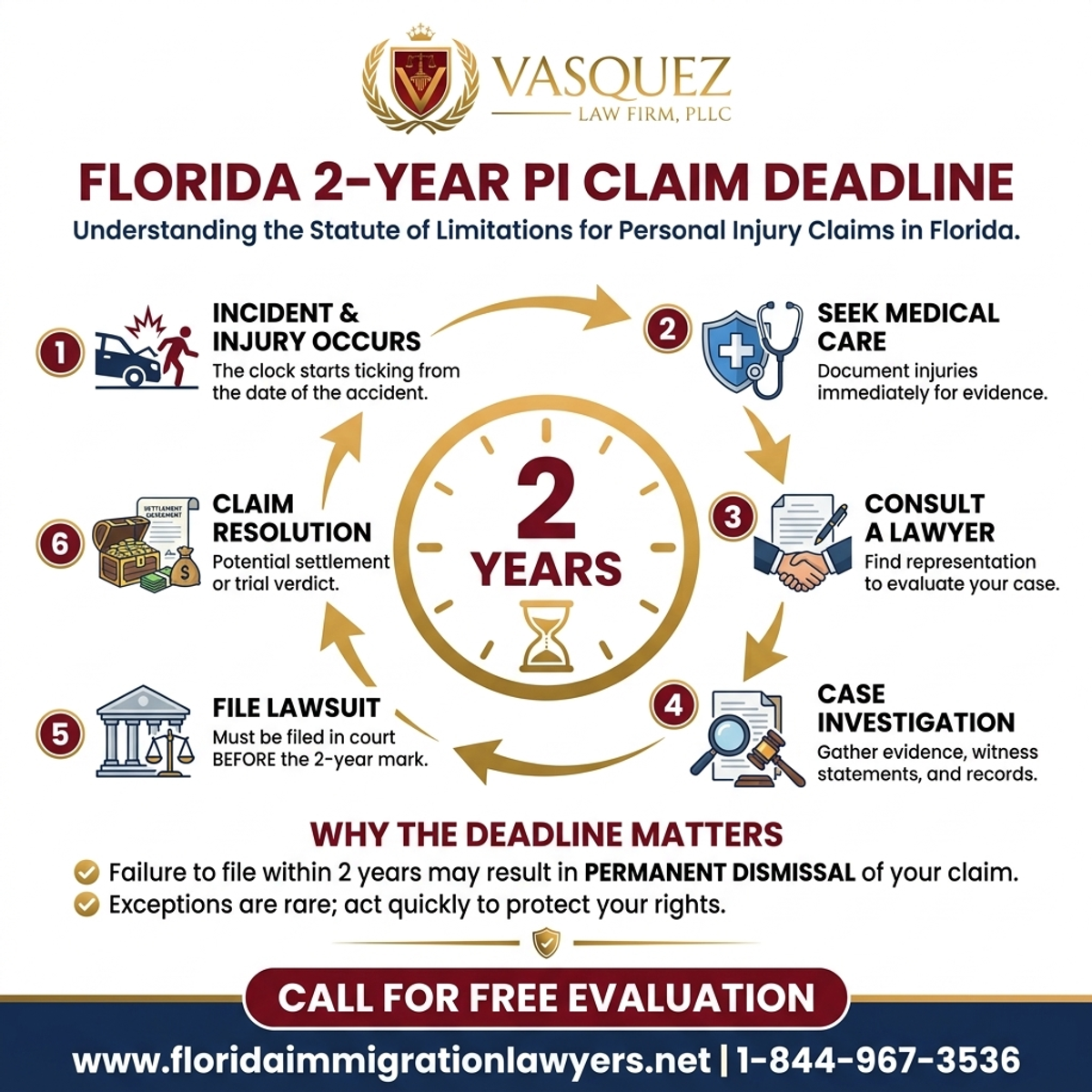
Key Statistics — Florida's 2-Year Statute of Limitations for PI Claims
Choosing the Right Legal Partner: Beyond Personal Injury
When facing the aftermath of a personal injury, selecting the right legal representation is crucial. You need a firm that not only understands the intricacies of Florida's personal injury laws, including the recent changes brought by HB 837 and the strict two-year statute of limitations, but also demonstrates a comprehensive commitment to justice and client advocacy. Our firm is dedicated to providing robust legal support, ensuring that your rights are protected and that you receive the compensation you deserve.
While our focus on personal injury claims is unwavering, our commitment to serving our community extends to a wide array of legal challenges. We believe in providing holistic legal solutions, understanding that life's complexities often require diverse expertise. For instance, our firm also proudly offers dedicated legal services in the intricate field of immigration law. Navigating immigration processes can be daunting, whether you are seeking to establish residency, obtain a visa, or understand your rights in a new country. Our experienced team can guide you through every step, ensuring compliance and advocating tirelessly on your behalf.
Within immigration law, we have a particular focus on protecting those in vulnerable situations. This includes providing compassionate and effective representation for individuals seeking asylum, offering a lifeline to those fleeing persecution and seeking safety in the United States. We understand the profound challenges and emotional toll involved in such cases and are committed to providing the legal support necessary to navigate these critical proceedings. Furthermore, our expertise extends to deportation defense, where we stand firm beside individuals and families facing the threat of removal from the country. We fight vigorously to protect their rights and keep families together, leveraging every available legal strategy
Sources and References
- U.S. Citizenship and Immigration Services (USCIS)
- Executive Office for Immigration Review (EOIR)
- U.S. Department of State - Bureau of Consular Affairs
- Immigration and Nationality Act (INA), 8 U.S.C. Chapter 12
Do Not Navigate This Process Alone
Our experienced immigration attorneys are ready to fight for you. Get a free, confidential consultation today.
Se Habla Español
Frequently Asked Questions
Florida Immigration Lawyers
Immigration Attorney | Founder, Vasquez Law Firm
U.S. Air Force veteran and immigration attorney with thousands of cases resolved. J.D., NCCU School of Law. AILA member. Admitted to the 4th, 5th, and 11th Circuit Courts.
Available 24/7 - Free Evaluations
Related Legal Services
Our Florida immigration attorneys can help you with slip-and-fall premises liability, Florida wrongful death claims and Florida personal injury attorney Harold Estrada-Rodriguez. Call today at 1-844-967-3536 for a free consultation.
Related Links
Related Topics
Free Legal Consultation
Discuss your case with our experienced attorneys. We're available 24/7.
Se Habla Español - Estamos aquí para ayudarle.
Related Articles
Florida Wrongful Death Survivor Damages Explained | VLF Florida
Explore Florida's wrongful death statutes and how they support survivors seeking damages. Learn who qualifies, what compensation is available, and why legal guidance is crucial. Call Florida Immigration Lawyers at 1-844-967-3536 for a free consultation.
Florida Rideshare Accident: Uber/Lyft Insurance | VLF Florida
Involved in a Florida Uber or Lyft rideshare accident? Navigating the multi-layer insurance policies of Transportation Network Companies (TNCs) can be incredibly complex. From understanding Florida Statute §627.748 to dealing with personal injury protection (PIP) and various liability coverages, securing fair compensation requires expert legal guidance. This guide details immediate actions, the claims process, essential evidence, and common mistakes to avoid. Learn how Florida Immigration Lawyers, with attorney Harold Estrada-Rodriguez, can help you fight for your rights and maximize your recovery after a rideshare crash in Hollywood, Orlando, or Kissimmee.
Florida Government Sidewalk Accident: Understanding Sovereign
If you've been injured on a government-maintained sidewalk in Florida, understanding sovereign immunity is crucial. This guide explains §768.28 and the steps required to file a claim. Call Florida Immigration Lawyers at 1-844-967-3536 for a free consultation.
Florida Motorcycle Rider Bias Insurance Strategy | VLF Florida
Motorcycle riders in Florida face unique challenges, including bias in insurance claims. Learn how to counteract these biases with expert advice from Florida Immigration Lawyers. Call 1-844-967-3536 for a free consultation.
