Florida Government Sidewalk Accident: Understanding Sovereig
If you've been injured on a government-maintained sidewalk in Florida, understanding sovereign immunity is crucial. This guide explains §768.28 and the steps required to file a claim. Call Florida Immigration Lawyers at 1-844-967-3536 for a free consultation.

- Damage caps limit recovery amounts.
- Claims must be filed within specific timeframes.
- Consulting a lawyer is advised for navigating these complex claims.
Have you ever tripped on a cracked sidewalk in Orlando, Florida, and wondered who is responsible for your injuries? Navigating the complexities of filing a claim against a government entity can be daunting. Florida's sovereign immunity, particularly under §768.28, sets strict guidelines on how such claims can be pursued. This article unpacks the essentials of filing a claim for a government sidewalk accident in Florida. Call Florida Immigration Lawyers at 1-844-967-3536 for a free consultation.
Understanding Sovereign Immunity and §768.28
Sovereign immunity is a legal doctrine that protects government entities from being sued without their consent. In Florida, §768.28 provides a limited waiver of this immunity, allowing individuals to sue the state for negligence under certain conditions. This statute is critical when dealing with accidents on government-maintained sidewalks, as it defines the procedural steps and limits on compensation.
The statute imposes a $200,000 cap on individual claims and a $300,000 cap for all claims arising from the same incident. These caps are crucial in assessing the potential recovery in such cases. For example, if you suffer injuries due to a poorly maintained sidewalk in downtown Orlando, these caps will apply. Understanding these limitations helps in managing expectations and strategizing the best legal approach.
Step-by-Step Guide to Filing a Claim
- Document the Incident: Take photos of the accident scene, including any visible hazards, and gather witness statements if possible.
- Seek Medical Attention: Visit a healthcare provider promptly to document your injuries, which is essential for your claim.
- File a Notice of Claim: According to §768.28, you must file a notice of claim with the appropriate government agency within three years of the incident.
- Wait for Agency Response: The government has 180 days to investigate your claim and respond before you can file a lawsuit.
- Consult an Attorney: Given the complexities of sovereign immunity, consulting with a qualified attorney is advisable to ensure compliance with all legal requirements.
Document Checklist
- Incident photographs and videos
- Medical reports and bills
- Witness statements
- Filed notice of claim
- Government agency correspondence
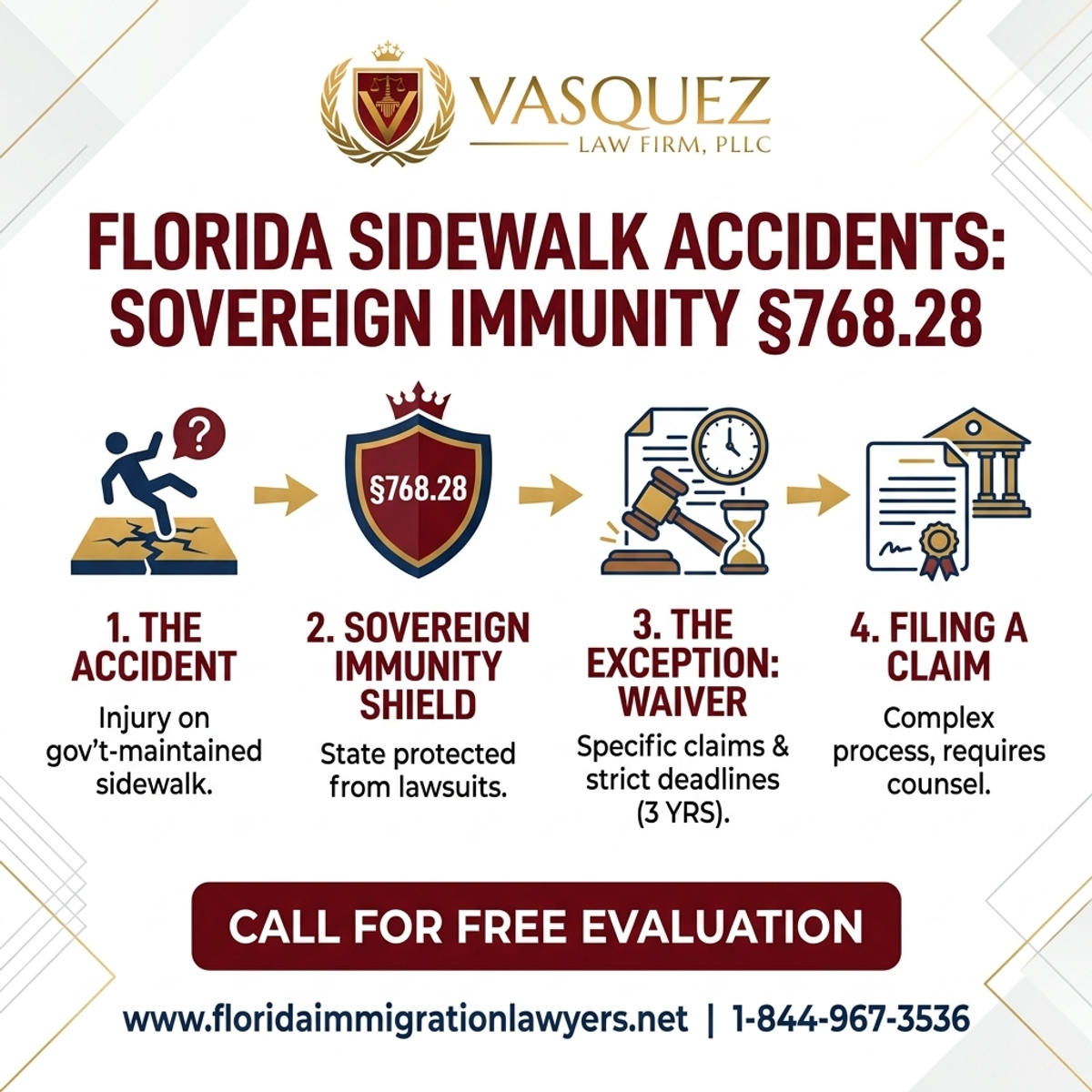
Step-by-Step Process — Florida Government Sidewalk Accident: Understanding Sovereign Immunity §768.28
Timeline and Processing Expectations
Filing a claim against a government entity under §768.28 involves several procedural steps and waiting periods. After submitting the notice of claim, the agency has 180 days to investigate. During this period, it is crucial to keep all documentation organized and maintain communication with your attorney to ensure timely filing of your lawsuit if the claim is denied or unresolved.
Cost Factors and Fee Breakdown
Costs in these cases can include attorney fees, which are often contingent upon winning the case ('no recovery, no fee'), court filing fees, and costs associated with gathering evidence such as expert witness fees. Understanding these costs upfront can help in budgeting and strategizing for your case.
Do not navigate this process alone. Contact Florida Immigration Lawyers today.
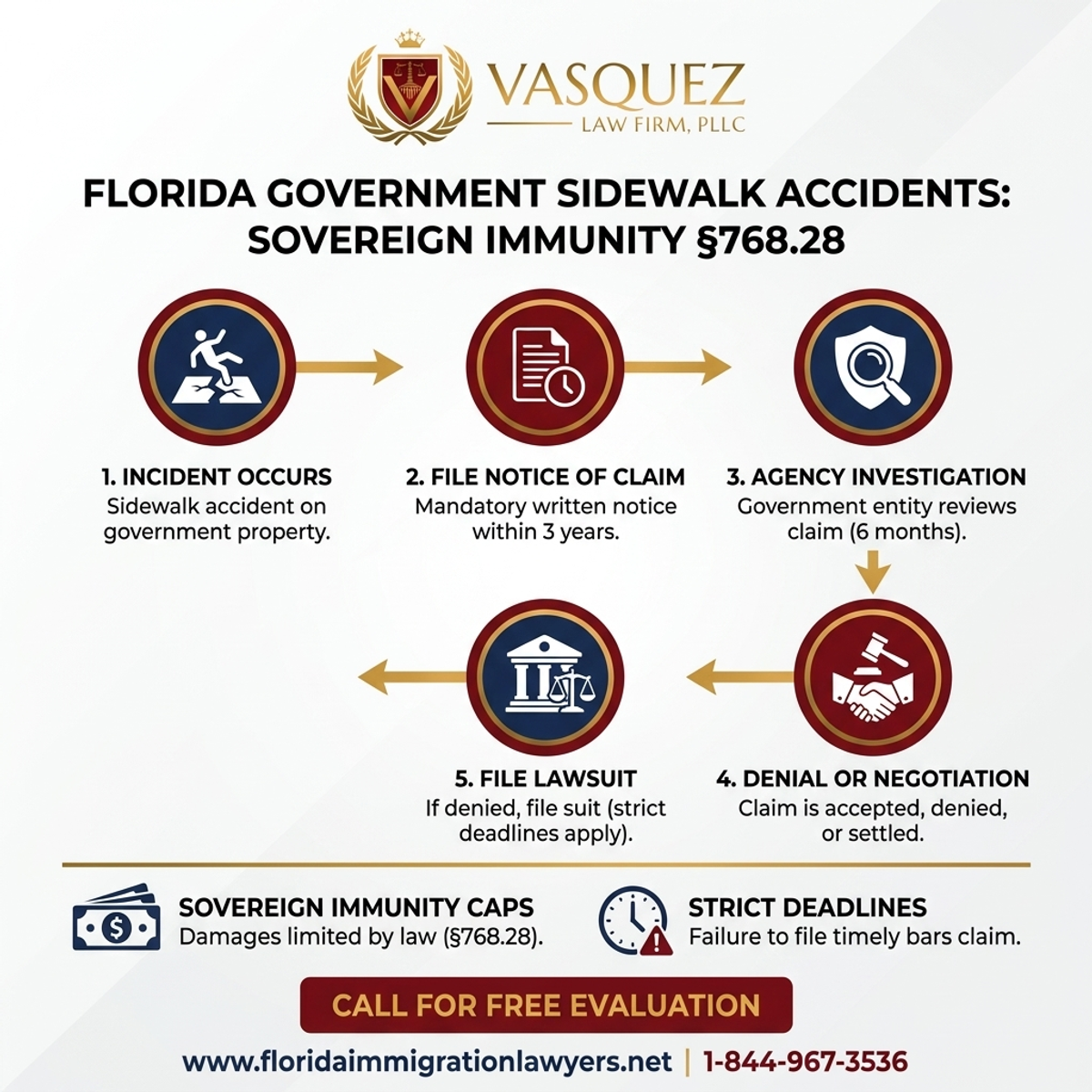
Key Statistics — Florida Government Sidewalk Accident: Understanding Sovereign Immunity §768.28
Common Mistakes to Avoid
- Delaying Medical Treatment: Failing to seek immediate medical attention can undermine your claim.
- Ignoring Filing Deadlines: Missing the notice of claim deadline can bar your claim completely.
- Not Documenting Evidence: Lack of photographic or video evidence makes it harder to prove negligence.
- Settling Without Legal Advice: Accepting an initial settlement offer can prevent you from receiving full compensation.
- Misunderstanding Damage Caps: Not knowing the limits can lead to unrealistic expectations.
- Failing to Follow Up: Not keeping track of the claim status can delay resolution.
- Not Consulting an Attorney: The complexities of sovereign immunity require professional legal guidance.
When to Call a Lawyer
Contact a lawyer immediately if you are involved in an accident on a government sidewalk. Legal representation is crucial due to the intricate nature of sovereign immunity claims. Florida Immigration Lawyers offer expertise in navigating such claims, ensuring all procedural requirements are met and maximizing your potential recovery.
About Florida Immigration Lawyers
Florida Immigration Lawyers provide comprehensive legal services in personal injury cases, specializing in government-related claims such as sidewalk accidents. Our team, led by Harold Estrada-Rodriguez, Florida Bar No. 1041171, offers a strategic approach to handling these complex cases. Call us at 1-844-967-3536 for free consultations, available 24/7.
Sources and References
- U.S. Citizenship and Immigration Services (USCIS)
- Executive Office for Immigration Review (EOIR)
- 8 U.S.C. Chapter 12 - Immigration and Nationality Act
- Florida Statutes §768.28
Related services: Florida premises liability attorney, slip-and-fall claims, personal injury attorney Harold Estrada-Rodriguez, free premises liability consultation.
This article provides general legal information and is not intended as legal advice. Every case is unique, and outcomes depend on specific facts and circumstances. Contact an attorney for advice about your particular situation.
Reviewed By
This article was reviewed for Florida legal accuracy by Harold Estrada-Rodriguez, Florida Bar No. 1041171, the attorney responsible for personal injury matters at Florida Immigration Lawyers. Personal injury representation in Florida only. No recovery, no fee.
For expert legal guidance, call Florida Immigration Lawyers at 1-844-967-3536 for a free consultation. Se Habla Espanol - Estamos aqui para ayudarle.
If you need legal assistance, learn more about our Florida personal injury representation, or call us at 1-844-967-3536 for a free consultation.
Do Not Navigate This Process Alone
Our experienced immigration attorneys are ready to fight for you. Get a free, confidential consultation today.
Se Habla Español
Frequently Asked Questions
Florida Immigration Lawyers
Immigration Attorney | Founder, Vasquez Law Firm
U.S. Air Force veteran and immigration attorney with thousands of cases resolved. J.D., NCCU School of Law. AILA member. Admitted to the 4th, 5th, and 11th Circuit Courts.
Available 24/7 - Free Evaluations
Related Legal Services
Our Florida immigration attorneys can help you with Florida wrongful death claims, Florida personal injury attorney Harold Estrada-Rodriguez and free personal injury consultation. Call today at 1-844-967-3536 for a free consultation.
Related Links
Related Topics
Free Legal Consultation
Discuss your case with our experienced attorneys. We're available 24/7.
Se Habla Español - Estamos aquí para ayudarle.
Related Articles
Florida Rideshare Accident: Uber/Lyft Insurance | VLF Florida
Involved in a Florida Uber or Lyft rideshare accident? Navigating the multi-layer insurance policies of Transportation Network Companies (TNCs) can be incredibly complex. From understanding Florida Statute §627.748 to dealing with personal injury protection (PIP) and various liability coverages, securing fair compensation requires expert legal guidance. This guide details immediate actions, the claims process, essential evidence, and common mistakes to avoid. Learn how Florida Immigration Lawyers, with attorney Harold Estrada-Rodriguez, can help you fight for your rights and maximize your recovery after a rideshare crash in Hollywood, Orlando, or Kissimmee.
Florida Motorcycle Rider Bias Insurance Strategy | VLF Florida
Motorcycle riders in Florida face unique challenges, including bias in insurance claims. Learn how to counteract these biases with expert advice from Florida Immigration Lawyers. Call 1-844-967-3536 for a free consultation.
Florida Wrongful Death Survivor Damages Explained | VLF Florida
Explore Florida's wrongful death statutes 768.16 and 768.21 to understand survivor damages. Learn who can claim, types of compensation, and common mistakes to avoid. Contact us for expert legal guidance.
Understanding Florida PIP No-Fault Medical Benefits
Learn how Florida's PIP no-fault insurance provides essential medical benefits after an accident. Understand coverage, common mistakes, and when to seek legal help. Contact Florida Immigration Lawyers at 1-844-967-3536 today!