Fiance Visa in Miami: The 2026 Florida Process
By William J. Vásquez, immigration attorney
Discover the 2026 process for obtaining a fiancé visa in Miami, Florida. Learn about application steps, required documents, costs, and common mistakes. Contact Florida Immigration Lawyers for expert guidance.
What is a Fiance Visa and How Does It Work?
A fiancé visa, officially known as the K-1 visa, allows a U.S. citizen to bring their foreign partner to the United States for marriage. As of 2026, the process involves several steps including filing a petition, undergoing a background check, and attending an interview. The marriage must take place within 90 days after the fiancé enters the U.S.
The K-1 visa is typically valid for six months and is a single-entry visa. After marriage, the foreign spouse can apply for a green card to remain in the U.S. permanently. The process begins with the U.S. citizen filing Form I-129F, Petition for Alien Fiancé, with the USCIS.
It's important to understand that the K-1 visa is specifically for fiancés who intend to marry within 90 days of entry. It is distinct from a marriage-based green card (CR-1 or IR-1 visa), which is for couples already married. The K-1 visa is a non-immigrant visa, but it is unique because it is issued with the express intent of the recipient adjusting their status to a permanent resident after marriage. This dual nature means that applicants must demonstrate a genuine, bona fide relationship and a clear intention to marry.
Once the foreign fiancé enters the U.S. on a K-1 visa, they are expected to marry the U.S. citizen petitioner within the 90-day window. Following the marriage, the foreign spouse must then file Form I-485, Application to Register Permanent Residence or Adjust Status, along with other supporting documents, to obtain a conditional green card. This subsequent step, known as Adjustment of Status, is critical for securing long-term residency and requires careful attention to detail, much like the initial K-1 application. Florida Immigration Lawyers can assist with both stages of this journey.
How to Apply for a Fiance Visa in Miami, Florida?
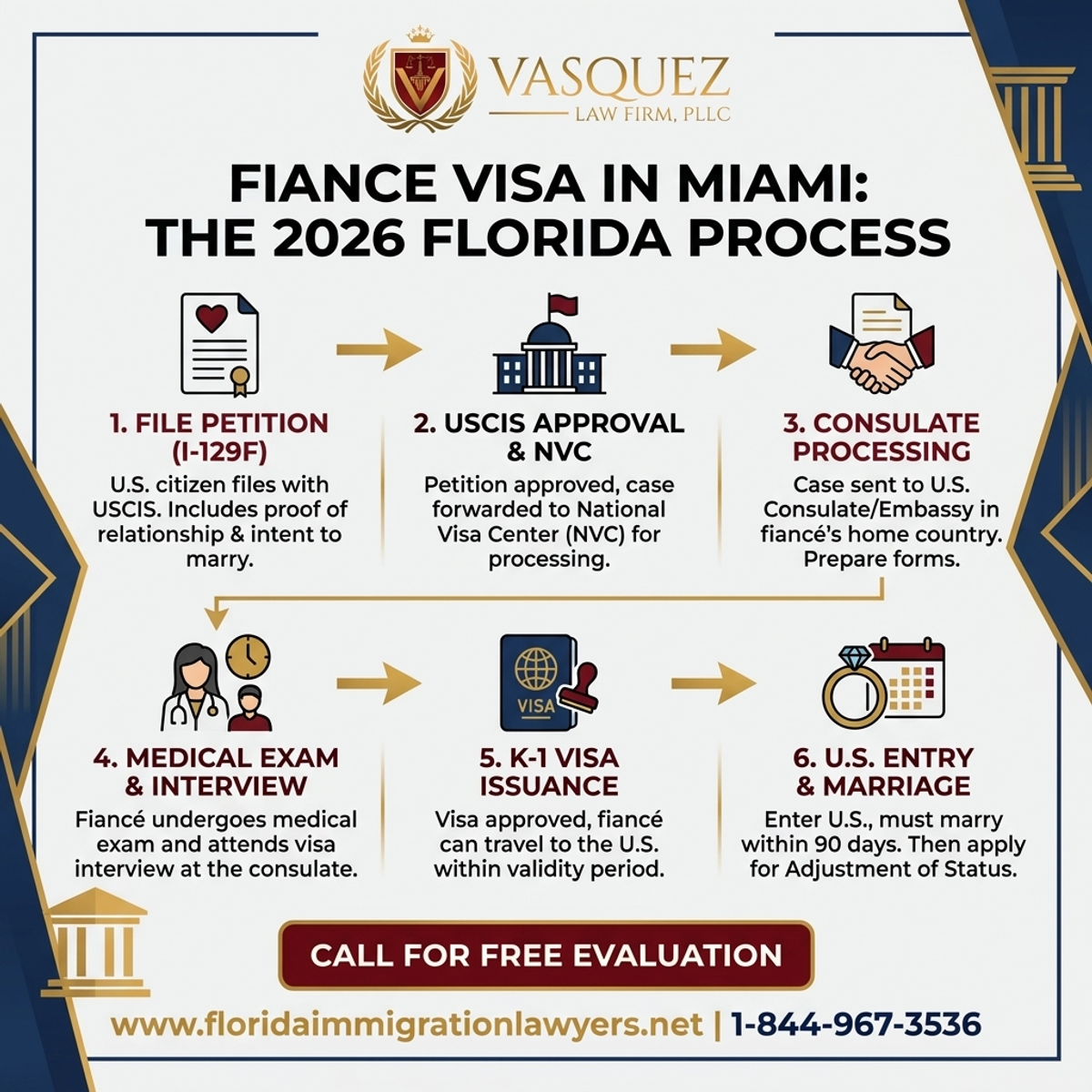
To apply for a fiancé visa in Miami, the U.S. citizen must first file Form I-129F with the United States Citizenship and Immigration Services (USCIS). This form establishes the relationship between the petitioner and the fiancé. Once approved, the case is forwarded to the National Visa Center (NVC) and then to the U.S. Consulate where the fiancé resides.
Upon receiving a notice from the NVC, the foreign fiancé will need to complete Form DS-160 and schedule a visa interview at the designated U.S. Consulate. It's essential to prepare all required documents, including proof of relationship, financial support, and medical examination results.
Step-by-Step Process — Fiance Visa in Miami: The 2026 Florida Process
After the I-129F petition is filed with USCIS, the agency will send a receipt notice. This is followed by a period of review, during which USCIS may issue a Request for Evidence (RFE) if they require additional information to prove the legitimacy of your relationship or eligibility. Responding promptly and thoroughly to an RFE is critical to avoid delays. Once approved, USCIS sends an approval notice (Form I-797) and forwards the case to the National Visa Center (NVC).
The NVC acts as a liaison, ensuring all necessary documents are collected before sending the case to the appropriate U.S. Embassy or Consulate abroad. This includes the foreign fiancé completing the online DS-160 (Nonimmigrant Visa Application), gathering civil documents like birth certificates and police records, and scheduling a medical examination with an authorized physician. The medical exam is a crucial step, assessing health and vaccination status, and must be completed before the interview.
Finally, the foreign fiancé attends the visa interview at the U.S. Consulate. This interview is designed to confirm the bona fide nature of the relationship and the intent to marry. The consular officer will review all submitted documents and ask questions about the couple's relationship history, future plans, and eligibility. Preparing for this interview by organizing documents and practicing answers can significantly increase the chances of a successful outcome. Florida Immigration Lawyers can help you prepare for this vital step.
What Documents Are Needed for a Fiance Visa?
Gathering the correct documents is a vital part of the K-1 visa application. Essential documents include:
- Completed Form I-129F
- Proof of U.S. citizenship
- Proof of relationship and intent to marry
- Passport for the foreign fiancé
- Form DS-160 confirmation page
- Medical examination documents
- Police certificates
The **Completed Form I-129F** is the foundational document, initiating the process. It must be accurately filled out, signed, and submitted with the correct filing fee to USCIS. Any errors or omissions can lead to significant delays or even rejection, making careful review paramount.
**Proof of U.S. citizenship** for the petitioner is essential. This can typically be demonstrated with a copy of your U.S. birth certificate, naturalization certificate, or a valid U.S. passport. This establishes the petitioner's eligibility to sponsor a foreign fiancé.
**Proof of relationship and intent to marry** is perhaps the most critical component. This includes evidence such as photographs together, call logs, chat histories, travel itineraries showing visits, joint financial documents, letters from friends/family, and affidavits of intent to marry signed by both parties. The goal is to convince immigration officials that your relationship is genuine and that you both intend to marry within 90 days of the fiancé's arrival.
The **Passport for the foreign fiancé** must be valid for at least six months beyond the intended period of stay in the U.S. (or beyond the expected date of adjustment of status). It serves as the primary identification document for the foreign national throughout the process.
The **Form DS-160 confirmation page** is generated after the foreign fiancé completes and submits the online nonimmigrant visa application. This barcode-containing page is required for the visa interview and helps the consulate access the submitted application.
**Medical examination documents** are provided by a USCIS-approved panel physician. This exam assesses the applicant's health, ensuring they do not have any communicable diseases of public health significance and are current on required vaccinations. The results are sealed and presented at the visa interview.
**Police certificates** from all countries where the foreign fiancé has lived for more than six months since the age of 16 are required. These documents help confirm the applicant's good moral character and lack of a disqualifying criminal record. Gathering these can sometimes take time, so it's wise to start early.
How Long Does the K-1 Visa Process Take in 2026?
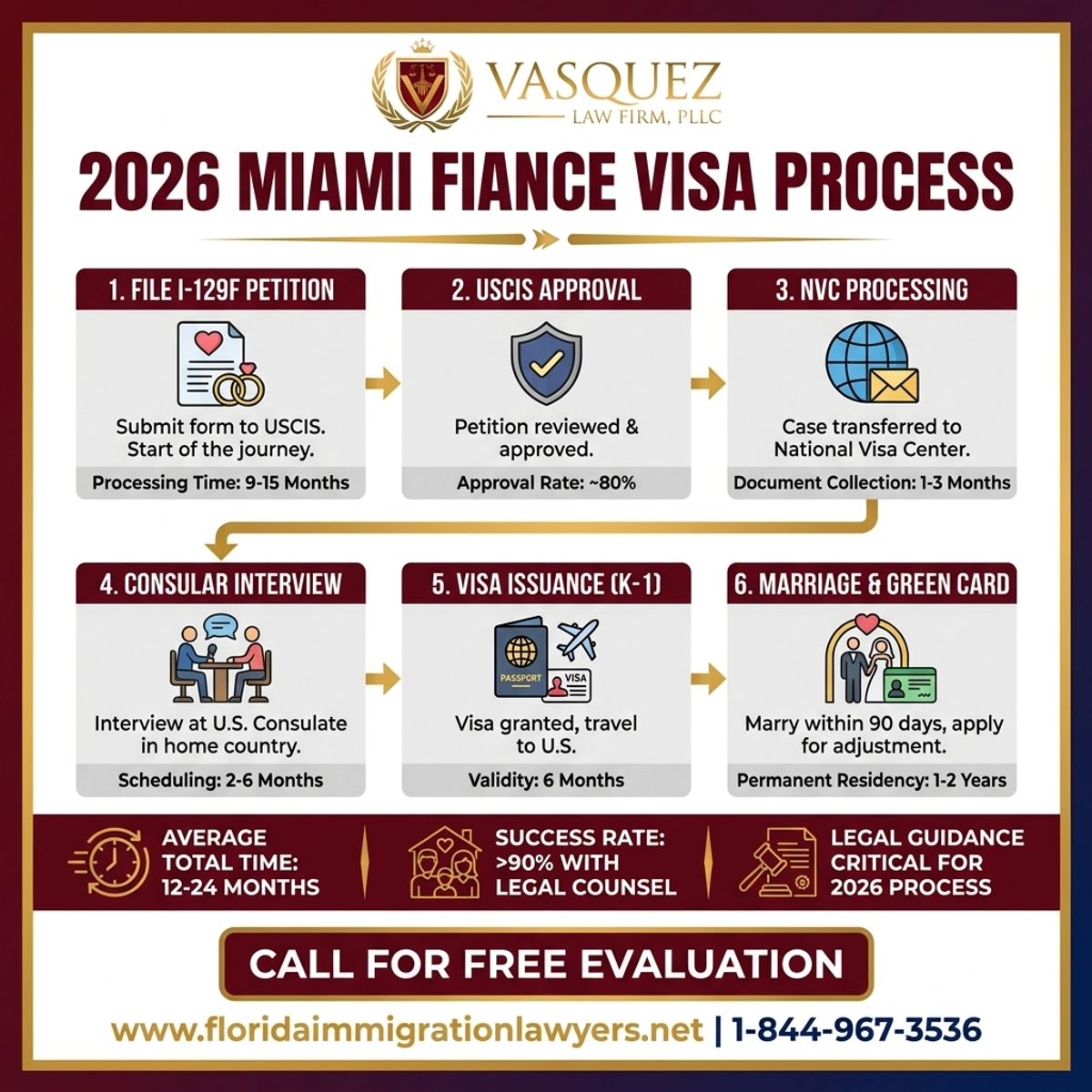
As of 2026, the K-1 visa process typically takes between 8 to 12 months from the initial petition filing to visa issuance. The timeline can vary based on individual circumstances and processing times at various USCIS and consular offices.
| Stage | Typical Timeframe | Notes |
|---|---|---|
| Filing Form I-129F | 2-3 months | USCIS review and approval |
| NVC Processing | 1 month | Transfer to U.S. Consulate |
| Consulate Interview | 1-2 months | Interview and visa issuance |
Key Statistics — Fiance Visa in Miami: The 2026 Florida Process
The stated timeframes are averages, and actual processing times can fluctuate significantly. Factors such as the current USCIS workload, the specific service center handling your I-129F, the efficiency of the National Visa Center, and the caseload at the particular U.S. Embassy or Consulate abroad can all impact how long your application takes. For instance, some consulates in high-demand areas may have longer wait times for interview scheduling.
To monitor your application's progress, you can use the receipt number provided by USCIS to check the status online on their website. For the consular processing stage, some embassies offer online scheduling portals or status checkers. Proactive communication and prompt responses to any requests for information from USCIS or the NVC are crucial to prevent unnecessary delays. Any incomplete documentation or missed deadlines will inevitably prolong the process.
While the K-1 visa process has a general structure, each case is unique. For example, if there are complexities such as previous immigration issues, criminal records, or difficulties in obtaining necessary foreign documents, the timeline can extend beyond the typical estimates. Consulting with Florida Immigration Lawyers can help you anticipate potential delays and strategize to mitigate them, ensuring your application moves as smoothly as possible.
Cost Factors and Fees for the K-1 Visa
The costs associated with obtaining a K-1 visa can vary. Applicants should be prepared for the following expenses:
| Item | Typical Fee | Notes |
|---|---|---|
| Form I-129F Filing Fee | Varies | Payable to USCIS |
| Medical Examination | Varies | Required for visa issuance |
| DS-160 Form Fee | Varies | Consulate fee for visa processing |
The **Form I-129F Filing Fee** payable to USCIS is subject to change, but as of recent updates, it typically falls in the range of $535 to $675. This fee must be paid when the U.S. citizen petitioner submits the initial petition. It's crucial to check the most current fee schedule on the USCIS website before filing to avoid rejection of your application.
The **Medical Examination** fee can vary significantly depending on the country and the specific panel physician. These costs typically range from $200 to $500, and sometimes more, especially if additional vaccinations or tests are required. This fee is paid directly to the examining doctor and is separate from USCIS or consular fees.
The **DS-160 Form Fee**, also known as the Nonimmigrant Visa Application processing fee, is generally around $265. This fee is paid to the U.S. Embassy or Consulate where the foreign fiancé will have their interview. It covers the administrative costs of processing the visa application. Additionally, applicants should budget for potential legal fees if they choose to hire an immigration attorney, which can range from $2,000 to $5,000 or more, depending on the complexity of the case and the services provided. While not mandatory, legal assistance can be invaluable in navigating the complexities and avoiding costly mistakes.
Beyond these primary fees, couples should also consider other potential costs such as travel expenses for the foreign fiancé to attend interviews and medical exams, translation fees for foreign documents, and postage/courier fees for sending applications. These ancillary expenses can add up, so it's wise to create a comprehensive budget from the outset. Florida Immigration Lawyers can help you understand all potential costs involved in your specific case.
Middle CTA
Do not navigate this process alone. Contact Florida Immigration Lawyers today.
Common Mistakes to Avoid
- Failing to provide sufficient proof of relationship can lead to delays or denials.
- Incomplete documentation is one of the most common reasons for application rejection.
- Not attending the scheduled visa interview is a critical error that can delay the process.
- Providing incorrect or inconsistent information may result in a denial.
- Ignoring changes in personal circumstances without informing USCIS can affect the outcome.
- Not understanding the financial requirements for sponsoring a fiancé can result in denial.
- Delaying the marriage beyond 90 days after entry can invalidate the visa.
When to Call a Lawyer
Engaging a lawyer can be crucial if you encounter complications such as previous visa denials, criminal history, or complex family situations. Legal expertise can also be invaluable in navigating the intricate requirements and ensuring all documentation is correctly filed. Florida Immigration Lawyers offer comprehensive support to guide you through each step of the process.
Specifically, you should consider calling an attorney at Florida Immigration Lawyers if your foreign fiancé has any past immigration violations, such as overstaying a previous visa or attempting to enter the U.S. without inspection. These issues can trigger complex inadmissibility grounds that require expert legal arguments and waivers. Similarly, any criminal history for either the petitioner or the beneficiary, no matter how minor, warrants a thorough review by a legal professional to assess its impact on visa eligibility.
Furthermore, if your relationship has unique aspects, such as a significant age difference, cultural barriers, or if you've had limited in-person meetings due to distance or travel restrictions, an attorney can help you compile compelling evidence to prove the bona fide nature of your relationship. Cases involving children from previous marriages who also need to immigrate (K-2 visa) add another layer of complexity that benefits from legal guidance. An attorney can ensure all family members are properly included and processed.
Even in seemingly straightforward cases, the sheer volume of paperwork and the precise nature of immigration law can be overwhelming. A lawyer from Florida Immigration Lawyers can provide peace of mind by meticulously reviewing your application, preparing you for interviews, and acting as a knowledgeable advocate throughout the entire process. Don't hesitate to call 1-844-YO-PELEO for a free case review if you have any doubts or concerns.
About Florida Immigration Lawyers
At Florida Immigration Lawyers, we provide dedicated legal services to those seeking to navigate the complexities of U.S. immigration law. From fiancé visas to green cards, our experienced team is here to assist you every step of the way. Available 24/7, we offer free case reviews to help you understand your options. Serving all of Central Florida, contact us at 1-844-YO-PELEO or explore our immigration practice areas.
Our firm prides itself on a client-centered approach, understanding that each immigration journey is deeply personal and impactful. We combine our extensive legal knowledge with compassionate support, ensuring that you feel informed and confident at every stage. We are not just legal advisors; we are partners in your pursuit of a new life in the United States, committed to achieving the best possible outcome for your family.
With a strong presence across Central Florida, including Miami, we offer localized expertise combined with a broad understanding of federal immigration policies. Our team stays abreast of the latest changes in immigration law, ensuring that our advice is always current and effective. Whether you're just starting your K-1 visa application or facing a challenge, Florida Immigration Lawyers are equipped to provide the strategic guidance you need. Call us today at 1-844-YO-PELEO to begin your journey with confidence.
Frequently Asked Questions About the K-1 Visa in Miami
Can my fiancé work on a K-1 visa?
Upon entering the U.S. with a K-1 visa, your fiancé can apply for work authorization by filing Form I-765, Application for Employment Authorization. This is generally granted for the 90-day period before marriage. After marriage and filing for Adjustment of Status (Form I-485), they can apply for a new Employment Authorization Document (EAD) that is valid while the green card application is pending. It's crucial to obtain this authorization before beginning any employment.
What happens if we don't marry within 90 days?
If you and your fiancé do not marry within 90 days of their entry into the U.S. on a K-1 visa, the visa automatically expires. Your fiancé will then be considered out of status and must depart the U.S. immediately. Overstaying this period can lead to serious immigration consequences, including future bars from re-entering the country. There are very limited exceptions, so adhering to the 90-day rule is paramount.
Can my children come with me on a K-1 visa?
Yes, your unmarried children under the age of 21 can accompany you to the U.S. on a K-2 visa, which is a derivative of the K-1 visa. They must be listed on the Form I-129F petition. They will go through a similar consular processing and medical examination as the K-1 applicant. Once in the U.S., after your marriage and your adjustment of status application, your children can also apply for adjustment of status to obtain their green cards.
What is a "bona fide relationship"?
A "bona fide relationship" refers to a genuine, real, and sincere relationship, not one entered into solely for immigration benefits. USCIS and consular officers look for evidence that the couple intends to build a life together. This includes shared experiences, communication records, joint photos, financial interdependence, and affidavits from friends and family. Demonstrating a strong, legitimate connection is key to K-1 visa approval.
Can I travel outside the U.S. while on a K-1 visa?
Once your fiancé enters the U.S. on a K-1 visa, it is generally not advisable to travel outside the country. The K-1 is a single-entry visa, and re-entry may be denied. After marrying the U.S. citizen and filing for Adjustment of Status (I-485), your fiancé must apply for Advance Parole (Form I-131) before leaving the U.S. Traveling without Advance Parole can be considered abandonment of the I-485 application, leading to severe complications.
Sources and References
- U.S. Citizenship and Immigration Services (USCIS)
- Executive Office for Immigration Review (EOIR)
- 8 U.S.C. Chapter 12 - Immigration and Nationality Act
Related services: family petition process, family-based green cards, fiancé visa (K-1), marriage-based immigration.
This article provides general legal information and is not intended as legal advice. Every case is unique, and outcomes depend on specific facts and circumstances. Contact an attorney for advice about your particular situation.
Final CTA
Ready to take the next step? Contact Florida Immigration Lawyers at 1-844-YO-PELEO for a free consultation. Se Habla Español - Estamos aquí para ayudarle.
If you need legal assistance, learn more about Florida family immigration legal team, or call us at 1-844-967-3536 for a free case review.
Do Not Navigate This Process Alone
Our experienced immigration attorneys are ready to fight for you. Get a free, confidential case review today.
Se Habla Español
Or leave your details and we’ll call you:
We will call you back within 24 hours
Free evaluation · Private and confidential · Se habla español
Helping Florida immigrant families since 2011
Or talk to us right now
AI voice assistant — available 24/7
FreeFrequently Asked Questions

William J. Vásquez
Founding Attorney · Vasquez Law Firm
U.S. Air Force veteran and immigration attorney with years of hands-on U.S. immigration experience. J.D., NCCU School of Law. AILA member. Admitted to the 4th, 5th, and 11th Circuit Courts.
Available 24/7 - Free Evaluations
Reviewed for legal accuracy by William J. Vásquez
Licensed in North Carolina; U.S. immigration is federal practice.
Related Legal Services
Our Florida immigration attorneys can help you with immigration lawyer cost in Florida, experienced immigration attorneys and asylum protection. Call today at 1-844-YO-PELEO for a free case review.
Related Links
Related Topics
Free Legal Case Review
Discuss your case with our experienced attorneys. We're available 24/7.
Se Habla Español - Estamos aquí para ayudarle.
Related Articles
EB-5 Investor Green Card in Florida: A 2026 Guide
Explore how to obtain an EB-5 investor green card in Florida. Learn about the investment requirements, processes, and benefits of participating in this program. Discover how Florida's economic landscape can be an ideal setting for your investment. Contact Florida Immigration Lawyers for a free case review.
What to Expect at Your First Immigration Consultation in Orlando
What happens at a first immigration consultation in Orlando, which documents to bring, and how to prepare for questions about visas, green cards, citizenship and court cases.
Certificate of Eligibility for Expungement in Florida: 2026
Discover how obtaining a certificate of eligibility for expungement in Florida can impact your immigration status. Learn the step-by-step process, understand the timeline, and avoid common mistakes. Contact Florida Immigration Lawyers for assistance.
TPS Eligible Countries in Florida 2026: What to Know
Temporary Protected Status (TPS) provides a vital temporary immigration benefit for eligible individuals from designated countries facing humanitarian crises. As of 2026, understanding the current list of TPS eligible countries, the application process, and specific requirements is crucial for residents in Florida. This comprehensive guide details who qualifies for TPS, the step-by-step application process, necessary documentation, and associated costs. We also highlight common mistakes to avoid and when to seek legal counsel to ensure a successful application. Florida Immigration Lawyers offers expert assistance to help you navigate these complex regulations, providing a free case review to discuss your options and secure your future in the U.S.