Fiance Visa K-1 Process in Florida: Key Steps | VLF Florida
Learn about the K-1 fiancé visa process in Florida, including steps, timeline, and common pitfalls. Contact Florida Immigration Lawyers for expert guidance.

- The petition is filed through USCIS.
- Marriage must occur within 90 days of entry.
- Following marriage, apply for a green card.
Introduction
In Coral Springs, Florida, couples dreaming of marriage face unique challenges when one partner is a foreign national. Navigating the K-1 visa process can be daunting. This article explores the fiance visa process, from petition to marriage, and highlights common pitfalls. Call Florida Immigration Lawyers at 1-844-967-3536 for a free consultation.
The journey to unite with a loved one from another country is often filled with anticipation, excitement, and, inevitably, a complex web of immigration regulations. For U.S. citizens planning to marry a foreign national, the K-1 Fiance Visa stands as a beacon of hope, offering a direct path to building a life together in America. However, the path is rarely straightforward, demanding meticulous attention to detail and a thorough understanding of U.S. immigration law.
This comprehensive guide aims to demystify the K-1 visa process, providing an in-depth look at each stage, from initial petition to the crucial adjustment of status. We'll delve into the necessary documentation, expected timelines, associated costs, and, critically, common missteps that can derail an application. Our goal is to equip you with the knowledge needed to navigate this journey with confidence, emphasizing why expert legal guidance from Florida Immigration Lawyers can be your most valuable asset in securing your future together.
Understanding the Fiance Visa (K-1) Process
The K-1 visa, known as the fiance visa, permits a U.S. citizen to bring their foreign fiance to the United States. This visa is specifically designed for couples planning to marry within 90 days of the foreign partner's arrival. The process starts with the U.S. citizen filing a petition with the USCIS. In Florida, the USCIS Tampa and Miami field offices handle these applications. After approval, the fiance applies for the visa at a U.S. consulate abroad.
The K-1 visa is unique because it's a non-immigrant visa that anticipates an eventual immigrant status. It's predicated on the genuine intent of both parties to marry. This distinction means that while the foreign fiance enters as a non-immigrant, the ultimate goal is for them to become a permanent resident through marriage. The 90-day window is a strict requirement, underscoring the urgency and commitment expected from the couple. Failing to marry within this period can have severe immigration consequences, including potential deportation and future bars from re-entering the U.S.
Eligibility for the K-1 visa hinges on several key criteria. Both the U.S. citizen petitioner and the foreign national beneficiary must be legally free to marry, meaning any previous marriages must have been legally terminated. They must also have met in person at least once within the two years immediately preceding the filing of the petition, though waivers for this requirement exist under specific cultural or extreme hardship circumstances. Most importantly, the relationship must be bona fide, meaning it is real and entered into in good faith, not solely for immigration purposes. USCIS scrutinizes relationships closely, making robust evidence crucial. Florida Immigration Lawyers can help you gather and present compelling evidence to demonstrate the authenticity of your relationship.
Step-by-Step Guide to the K-1 Visa
- File Form I-129F: This petition establishes the relationship. Include evidence such as photographs and communication records.
- Receive USCIS Approval: Processing can take several months. Check the USCIS processing times for updates.
- Consular Processing: After approval, the petition is forwarded to the National Visa Center and then the appropriate U.S. consulate.
- Visa Interview: The foreign fiance attends an interview. Prepare by reviewing the questions and required documents.
- Entry to the U.S.: Once the visa is granted, the fiance travels to the U.S. Marriage must occur within 90 days.
- Apply for Adjustment of Status: Post-marriage, apply for a green card to adjust the fiance's status to a permanent resident.
Embarking on the K-1 visa journey requires precision and a clear understanding of each phase. Any misstep, no matter how small, can lead to delays or even denial. It's not just about filling out forms; it's about building a strong, persuasive case that demonstrates your genuine intent to marry and establish a life together. From the initial paperwork to the final interview, every action contributes to the overall success of your application. For example, when filing Form I-129F, don't just include a few photos; curate a collection that tells the story of your relationship, complete with dates and contexts.
After the K-1 visa is granted and your fiance enters the U.S., the 90-day clock starts ticking immediately. This period is not only for planning your wedding but also for preparing for the next critical step: applying for Adjustment of Status (AoS) to become a lawful permanent resident. This subsequent application, typically involving Form I-485, requires another set of documents, interviews, and fees. It's a continuation of the immigration process, not the end, and requires just as much diligence. Consulting with Florida Immigration Lawyers can ensure a seamless transition from K-1 visa holder to green card recipient, safeguarding your future in the U.S. For assistance, call 1-844-967-3536.
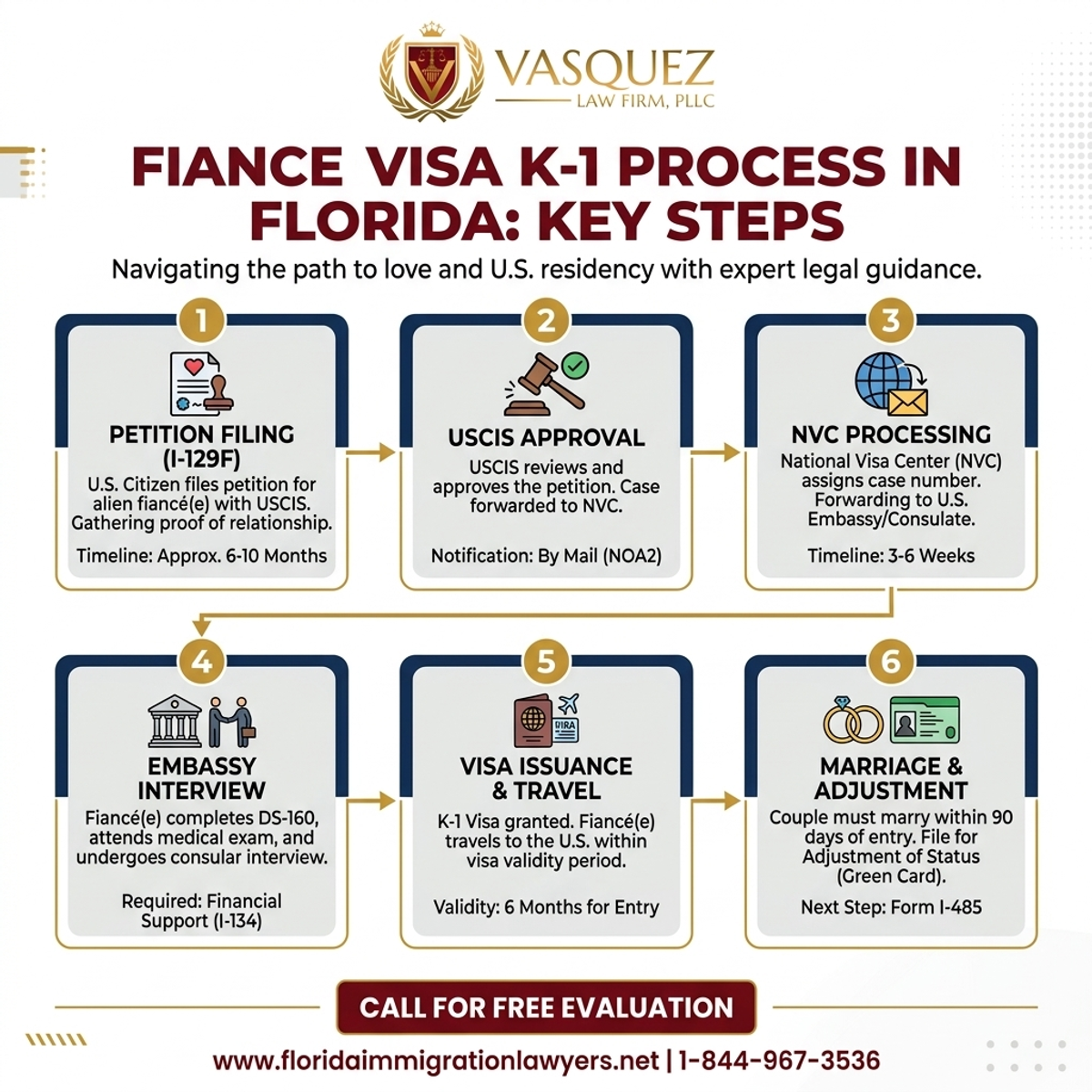
Step-by-Step Process — Fiance Visa K-1 Process in Florida: Key Steps
Document Checklist for the K-1 Visa Application
- Completed Form I-129F
- Proof of U.S. citizenship (passport, birth certificate)
- Evidence of a genuine relationship (photos, communication records)
- Statements of intent to marry
- Passport-style photos
- Medical examination results
- Police clearance certificate
A meticulously organized and complete document package is paramount to avoiding delays and increasing the likelihood of approval for your K-1 visa. Each document serves a specific purpose, from proving your identity and eligibility to substantiating the authenticity of your relationship. For instance, while photos and communication records (like chat logs, emails, call records, and travel itineraries) establish your bona fide relationship, police clearance certificates are essential for demonstrating your foreign fiance's admissibility to the U.S. and ensuring they do not pose a security risk.
Beyond the listed items, you may also need to provide divorce decrees or death certificates for any previous marriages, demonstrating that both parties are legally free to marry. Financial documents, such as tax returns and employment letters, will also be required to show the U.S. citizen petitioner can financially support their fiance, preventing them from becoming a public charge. It's crucial to gather all original documents, along with certified translations for any documents not in English. Presenting a well-prepared application from the outset signals to USCIS and consular officers that you are serious and organized, helping to streamline the process. Florida Immigration Lawyers can provide a tailored checklist and help you organize your documentation efficiently.
Timeline and Processing Expectations
Understanding the timeline helps in planning the process. After filing Form I-129F, expect a processing time of 6-9 months at the USCIS stage. Consular processing can add 2-3 months. Plan for approximately 9-12 months from the petition to the visa issuance. External factors, such as additional background checks or requested evidence, can extend this timeline.
While the 9-12 month estimate provides a general guideline, it's essential to recognize that processing times can fluctuate significantly based on various factors. These include the current caseload at USCIS service centers, the specific U.S. consulate abroad where the interview will take place, and the complexity of your individual case. For example, if either party has a criminal history, previous immigration issues, or if the relationship raises red flags for officers, the process could be extended due to requests for additional evidence (RFEs) or more extensive background checks. Monitoring the USCIS processing times online is crucial, but remember these are averages and your specific case may vary.
Effective planning and proactive communication can help manage expectations and mitigate potential delays. It's advisable to avoid making irreversible plans, such as booking wedding venues or quitting jobs, until the K-1 visa is actually issued. During periods of high demand or unforeseen global events, processing times can surge. Having an experienced immigration attorney from Florida Immigration Lawyers by your side can be invaluable, as they can help anticipate potential issues, respond promptly to RFEs, and communicate with immigration authorities on your behalf, providing peace of mind throughout this often-stressful waiting period. Call us at 1-844-967-3536 for personalized advice.
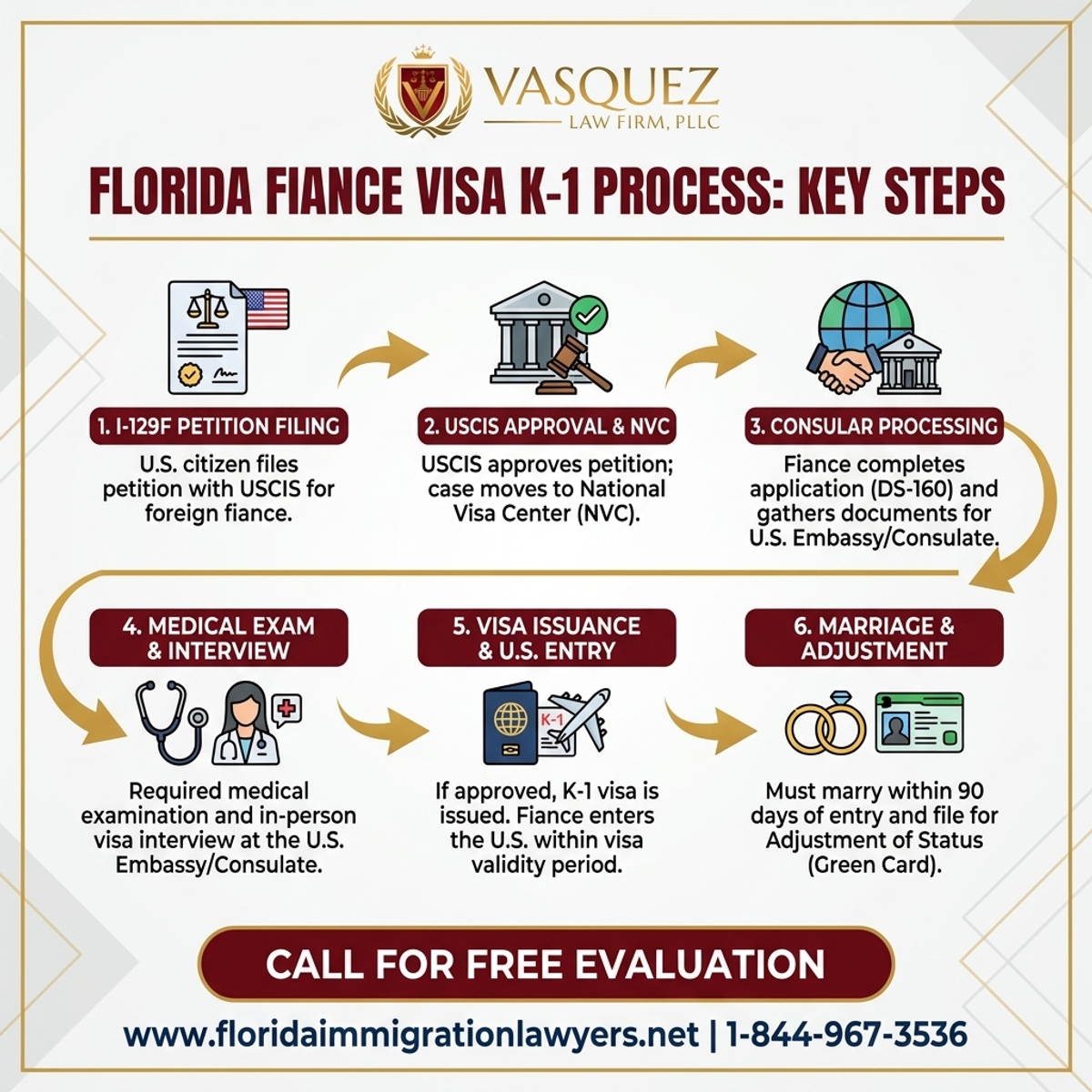
Key Statistics — Fiance Visa K-1 Process in Florida: Key Steps
Cost Factors and Fee Breakdown
While specific fees are subject to change, expect costs for the filing of Form I-129F, medical examinations, and visa applications. Additional costs may include travel expenses for the visa interview. Keep updated with the latest fee schedules from the USCIS and State Department.
Beyond the government filing fees, which can total several hundred dollars for the I-129F and subsequent Adjustment of Status application (I-485), there are numerous other expenses to consider. The mandatory medical examination conducted by a USCIS-approved physician can range from $200-$500, varying by country and provider. Travel costs for the foreign fiance to attend the consular interview in their home country, including flights, accommodation, and local transportation, can be substantial. Furthermore, costs associated with obtaining police certificates, birth certificates, and professional translations of documents can add up.
It's also important to factor in the financial requirements for the U.S. citizen petitioner. They must demonstrate the ability to financially support their foreign fiance upon arrival, typically by meeting 125% of the federal poverty guidelines for their household size. This is usually done through Form I-134 (Affidavit of Support) for the K-1 stage, and later Form I-864 for the Adjustment of Status. If the petitioner's income is insufficient, a joint sponsor may be required. While attorney fees for expert legal guidance from Florida Immigration Lawyers are an additional cost, they represent an investment in a smoother, more secure process, potentially saving you from costly mistakes and delays in the long run. We offer free consultations at 1-844-967-3536 to discuss your options.
Do not navigate this process alone. Contact Florida Immigration Lawyers today.
Common Mistakes to Avoid in the K-1 Visa Process
- Incomplete Documentation: Missing documents can delay the process or result in denial.
- Insufficient Evidence of Relationship: Provide ample evidence to prove the authenticity of the relationship.
- Failure to Meet Income Requirements: The petitioner must meet specific income guidelines to support the fiance.
- Misunderstanding Visa Expiry: The K-1 visa is valid for 90 days. Failure to marry within this period can lead to deportation.
- Neglecting to File Adjustment of Status: After marriage, filing for a green card is essential.
- Ignoring Interview Preparation: Lack of preparation can lead to a negative outcome at the consular interview.
- Incorrect Filing Locations: Ensure all applications are sent to the correct USCIS locations.
Avoiding common pitfalls is as crucial as understanding the steps themselves. Many K-1 visa applications encounter setbacks not due to ineligibility, but due to preventable errors. For example, simply providing a few social media screenshots as evidence of a relationship is often insufficient; a strong case includes a diverse portfolio of evidence such as travel itineraries, joint financial statements, letters from friends and family, and detailed communication logs over time. Similarly, neglecting to prepare for the consular interview can result in inconsistencies in answers, leading to suspicions about the relationship's authenticity.
Another critical mistake is underestimating the financial sponsorship requirements. The U.S. government wants to ensure that the foreign national will not become a public charge. If the U.S. citizen petitioner's income doesn't meet the threshold, exploring options for a joint sponsor or including assets is vital. Furthermore, the 90-day marriage requirement is absolute; there are very few exceptions, and failing to adhere to it can lead to serious immigration consequences. Proactive planning and seeking expert advice from Florida Immigration Lawyers can help you sidestep these common errors, ensuring your application proceeds as smoothly as possible. Our team can review your documents and prepare you for interviews, minimizing risks.
When to Call a Lawyer
If you encounter difficulties in gathering documentation, face unusual delays, or have past immigration issues, consulting an attorney is crucial. Florida Immigration Lawyers provide expert guidance through each step of the K-1 visa process, ensuring compliance with all legal requirements.
While some individuals attempt to navigate the K-1 visa process independently, the complexities of immigration law often warrant professional legal assistance. You should strongly consider contacting an attorney if your case involves unique circumstances such as a previous visa denial, a criminal record for either party, significant age differences, or if you've had a prior marriage that ended in divorce, especially if it was a short marriage. These factors can trigger additional scrutiny from USCIS and consular officers, requiring a nuanced legal strategy to present your case effectively.
Moreover, if you find yourself overwhelmed by the sheer volume of paperwork, confused by the legal jargon, or unsure how to best present your relationship evidence, a lawyer can be an invaluable resource. Florida Immigration Lawyers specialize in these intricate processes, offering peace of mind by ensuring all forms are correctly completed, deadlines are met, and your application is as strong as possible. Don't wait until you receive a Request for Evidence (RFE) or a denial; proactive legal counsel from 1-844-967-3536 can save you time, stress, and potential heartbreak.
About Florida Immigration Lawyers
Florida Immigration Lawyers specialize in helping individuals and families navigate the complex immigration process. Our team is dedicated to providing personalized service, ensuring each client receives the attention they deserve. Call us at 1-844-967-3536 or visit our website at floridaimmigrationlawyers.net. Available 24/7, we offer free consultations and serve all of Florida.
Our commitment extends beyond simply filling out forms; we strive to be a trusted partner in your journey, understanding the emotional significance of uniting families. With deep expertise in family-based immigration, including the K-1 fiance visa, we pride ourselves on our meticulous approach and our ability to anticipate and address potential challenges before they arise. From preparing compelling evidence to coaching you for interviews, our goal is to maximize your chances of success.
We believe that everyone deserves clear, compassionate, and effective legal representation. Our attorneys are well-versed in the latest immigration policies and procedures, ensuring that your case benefits from up-to-date knowledge and strategic insights. Whether you're in Coral Springs, Miami, Tampa, or anywhere else in Florida, our dedicated team is ready to provide the professional support you need to achieve your immigration goals. Contact us today for a free consultation and let us help you build your future in the United States.
Sources and References
- U.S. Citizenship and Immigration Services (USCIS)
- Executive Office for Immigration Review (EOIR)
- 8 U.S.C. Chapter 12 - Immigration and Nationality Act
- State Department
Related services: family petition process, family-based green cards, fiancé visa (K-1), marriage-based immigration.
This article provides general legal information and is not intended as legal advice. Every case is unique, and outcomes depend on specific facts and circumstances. Contact an attorney for advice about your particular situation.
Ready to start your K-1 visa journey? Call Florida Immigration Lawyers at 1-844-967-3536 for a free consultation. Se Habla Espanol - Estamos aqui para ayudarle.
If you need legal assistance, learn more about family immigration lawyers in Florida, or call us at 1-844-967-3536 for a free consultation.
Do Not Navigate This Process Alone
Our experienced immigration attorneys are ready to fight for you. Get a free, confidential consultation today.
Se Habla Español
Frequently Asked Questions
Florida Immigration Lawyers
Immigration Attorney | Founder, Vasquez Law Firm
U.S. Air Force veteran and immigration attorney with thousands of cases resolved. J.D., NCCU School of Law. AILA member. Admitted to the 4th, 5th, and 11th Circuit Courts.
Available 24/7 - Free Evaluations
Related Legal Services
Our Florida immigration attorneys can help you with business immigration, asylum protection and deportation defense. Call today at 1-844-967-3536 for a free consultation.
Related Links
Related Topics
Free Legal Consultation
Discuss your case with our experienced attorneys. We're available 24/7.
Se Habla Español - Estamos aquí para ayudarle.
Related Articles
Understanding U Visa for Crime Victims in Florida | VLF Florida
The U visa provides vital immigration relief for crime victims in Florida. Learn how it works and why legal guidance is crucial for your application. Contact Florida Immigration Lawyers for a free consultation.
Immigration Attorney Orlando Florida: Your Guide | VLF Florida
Navigating immigration laws in Orlando, Florida can be challenging. Whether you're facing visa applications or family-based immigration issues, having a knowledgeable immigration attorney is crucial. Learn how to find the right expert for your needs in our comprehensive guide.
Voluntary Departure vs. Deportation: Florida Guide 2026
Understanding the critical differences between voluntary departure and deportation is essential for anyone in removal proceedings in Florida. Voluntary departure offers a path to leave the U.S. without a formal removal order, preserving future re-entry possibilities. In contrast, a deportation order carries severe, long-lasting consequences, including significant bars to returning legally. This guide details eligibility, the process of requesting voluntary departure, and the grave repercussions of deportation, with a focus on Florida's immigration courts. Learn how to avoid common mistakes and why expert legal counsel from Florida Immigration Lawyers is indispensable for navigating these complex immigration challenges. Contact us for a free consultation to protect your rights and future.
Work Permit EAD Application in Jacksonville, Florida
Learn how to apply for a work permit (EAD) in Jacksonville, Florida. Understand the process, timeline, and common mistakes to avoid. Contact us for a free consultation today!
