DACA Renewal Florida 2026 Guide for Dreamers | VLF Florida
Navigating the DACA renewal process in Florida for 2026 is essential for Dreamers. Learn the steps, avoid common mistakes, and get expert help. Call Florida Immigration Lawyers at 1-844-967-3536 for a free consultation.

DACA Renewal Florida 2026 Guide for Dreamers | VLF Florida
For thousands of young individuals across Florida, the Deferred Action for Childhood Arrivals (DACA) program represents a lifeline, offering temporary protection from deportation and the ability to work legally in the United States. As we look towards 2026, understanding the DACA renewal process in Florida remains paramount for Dreamers to maintain their status. This comprehensive guide from VLF Florida aims to demystify the renewal process, address common concerns, and provide actionable advice to ensure a smooth application.
Navigating U.S. immigration law can be complex and daunting, especially with the ever-changing political landscape surrounding DACA. Our goal is to empower you with the most current and accurate information, helping you prepare for your 2026 DACA renewal. We understand the stakes are incredibly high, and our dedicated team of immigration lawyers is here to support you every step of the way.
Understanding DACA and Its Importance for Florida Dreamers
DACA, established in 2012, provides eligible undocumented immigrants who came to the U.S. as children with deferred action from deportation for a renewable two-year period. It also grants recipients work authorization. For Florida’s Dreamers, DACA has opened doors to higher education, stable employment, and a greater sense of security within the communities they call home. It allows them to contribute meaningfully to Florida's economy and society without the constant fear of removal.
The program has faced numerous legal challenges since its inception, leading to periods of uncertainty. Despite these challenges, DACA renewals have continued, allowing current recipients to maintain their protections. Staying informed about the latest updates from U.S. Citizenship and Immigration Services (USCIS) and seeking expert legal counsel are crucial components of a successful renewal strategy.
Who is Eligible for DACA Renewal?
Eligibility for DACA renewal is generally straightforward for those who have previously been granted deferred action. To be considered for renewal, applicants must:
- Have previously received DACA.
- Not have departed the United States on or after August 15, 2012, without advance parole.
- Have continuously resided in the United States since they submitted their most recent DACA request that was approved.
- Not have been convicted of a felony, a significant misdemeanor, or three or more other misdemeanors, and not otherwise pose a threat to national security or public safety.
It's important to note that even minor infractions or arrests can impact your eligibility. If you have any criminal history, no matter how minor it seems, it is imperative to consult with an experienced deportation defense attorney or an immigration lawyer before submitting your renewal application. They can assess your specific situation and advise on the best course of action to avoid potential complications or even denial.
The DACA Renewal Process Step-by-Step for 2026
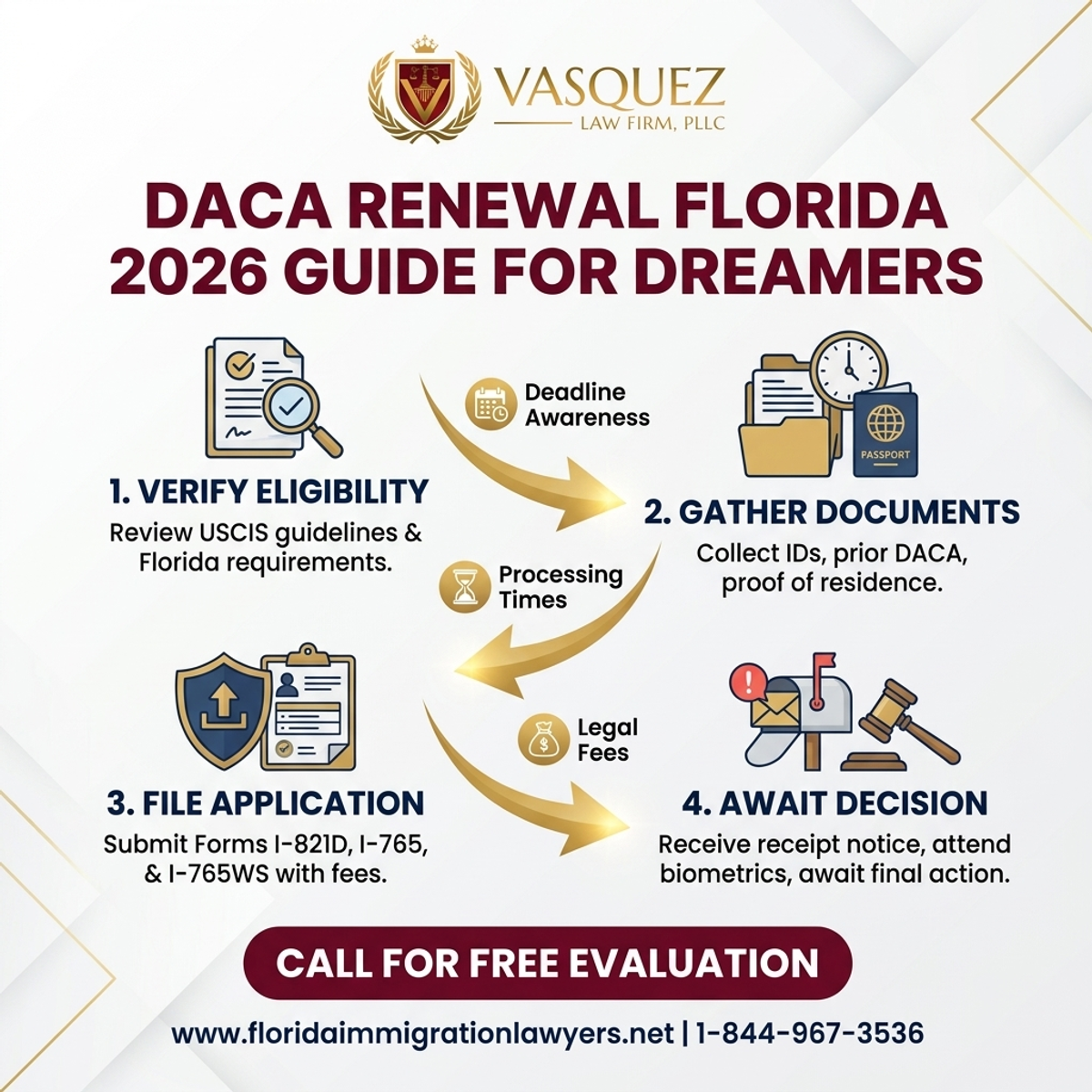
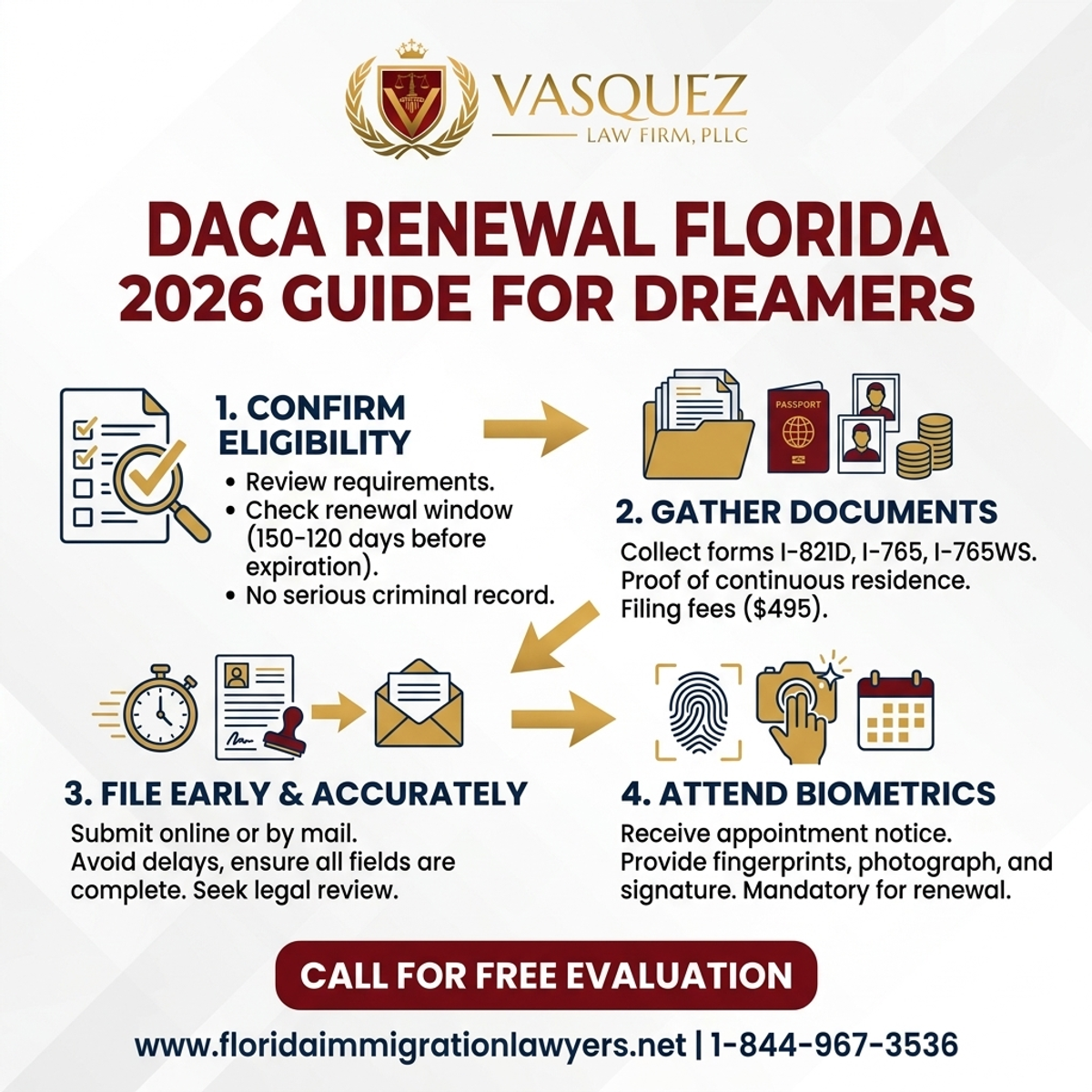
The DACA renewal process involves several key steps. Adhering to these steps meticulously and submitting all required documentation is critical for a timely and successful renewal:
-
Gather Required Documents:
Before you begin filling out forms, compile all necessary documents. This includes your previous DACA approval notices, any employment authorization documents (EADs), proof of continuous residence (e.g., utility bills, bank statements, school records, pay stubs), and any updated personal identification. If you've had any encounters with law enforcement, gather all relevant court dispositions and police reports.
-
Complete Forms I-821D, I-765, and I-765 Worksheet:
You will need to accurately complete Form I-821D (Consideration for Deferred Action for Childhood Arrivals), Form I-765 (Application for Employment Authorization), and the I-765 Worksheet. Pay close attention to every question and ensure all information is consistent with your previous applications. Any discrepancies could lead to delays or requests for further evidence.
-
Pay the Filing Fees:
As of the latest updates, the total fee for DACA renewal is $495, which includes the $410 fee for Form I-765 and the $85 biometrics services fee. USCIS does not accept fee waivers for DACA applications. Ensure your payment is made via check, money order, or credit card (using Form G-1450, Authorization for Credit Card Transactions). Incorrect payment amounts or methods can cause significant delays.
-
Submit Your Application:
Mail your completed application package to the correct USCIS lockbox facility. The mailing address depends on your state of residence. For Florida residents, it is typically the USCIS Chicago Lockbox. Always send your application via certified mail with a return receipt requested so you have proof of submission and delivery.
Step-by-Step Process — DACA Renewal Florida 2026 Guide for Dreamers | VLF Florida
-
Attend Biometrics Appointment:
After USCIS accepts your application, you will receive a notice for a biometrics appointment at an Application Support Center (ASC). This appointment is mandatory for fingerprinting, photographs, and a signature. Ensure you attend on time with the required identification.
-
Receive Decision:
USCIS will review your application and notify you of their decision. Processing times can vary, but it's advisable to submit your renewal application approximately 120 to 150 days before your current DACA and EAD expire to avoid any lapse in coverage.
Required Documents for DACA Renewal
While the forms are critical, the supporting documentation is equally important. Here’s a checklist of documents you should prepare:
- Copies of your previous DACA approval notices (Form I-797).
- Copies of your current Employment Authorization Document (EAD).
- Copies of any previous EADs.
- Proof of continuous residence in the U.S. since your last DACA approval (e.g., school transcripts, employment records, tax returns, medical records, utility bills, bank statements, lease agreements).
- Two passport-style photos taken within 30 days of filing.
- If applicable, certified copies of any court dispositions for arrests or convictions, even if expunged or dismissed.
- Copy of your birth certificate with translation (if not in English).
- Copy of your passport or national identity document from your country of origin.
Organizing these documents thoroughly will streamline the application process and reduce the likelihood of USCIS issuing a Request for Evidence (RFE), which can prolong processing times.
Common Challenges and Pitfalls in DACA Renewal
Even with a clear process, DACA renewal applicants often encounter challenges. Being aware of these can help you mitigate risks:
-
Expired DACA:
If your DACA has expired, you can still apply for renewal. However, if it has been expired for more than a year, USCIS may treat it as an initial DACA request, requiring you to meet the original DACA criteria. This is a critical distinction that can significantly impact your application.
-
Criminal History:
Any interaction with law enforcement, even minor traffic violations, can be scrutinized. Felony convictions, significant misdemeanors (e.g., domestic violence, DUI), or three or more other misdemeanors will disqualify you. It's crucial to disclose all incidents and provide certified court documents. Consult with our deportation defense lawyers immediately if you have any criminal record.
-
Travel Outside the U.S.:
If you traveled outside the U.S. without advance parole after August 15, 2012, you are generally ineligible for DACA renewal. Advance parole allows DACA recipients to travel internationally for specific humanitarian, educational, or employment purposes. Unauthorized travel can lead to denial of your renewal.
Key Statistics — DACA Renewal Florida 2026 Guide for Dreamers | VLF Florida
-
Incomplete or Inaccurate Applications:
Errors, omissions, or inconsistencies in your application forms or supporting documents are a leading cause of delays or denials. Double-check everything, and consider having a legal professional review your package.
-
Changes in Personal Information:
If you've changed your name, address, or other personal details since your last application, ensure these updates are reflected accurately and consistently across all forms and documents.
The Evolving Landscape of Immigration Law and DACA's Future
The legal and political environment surrounding DACA is constantly in flux. While renewals continue, the program's long-term future remains uncertain, primarily due to ongoing litigation and the lack of a permanent legislative solution from Congress. Various court rulings have impacted DACA, leading to periods where new applications were halted or specific guidelines were altered. For instance, in 2021, a federal judge in Texas ruled DACA unlawful, preventing USCIS from approving new initial DACA requests, though renewals for existing recipients were allowed to continue. This legal back-and-forth underscores the precarious nature of DACA and highlights the urgent need for comprehensive immigration reform.
Dreamers and their advocates continue to push for a pathway to permanent residency and citizenship, which would provide the stability and security that DACA currently offers only on a temporary basis. Understanding these broader developments is important, as they can influence policy changes or even the renewal process itself. Staying informed through reputable legal sources and immigrant rights organizations is vital. Furthermore, exploring other potential avenues for immigration relief, such as asylum or family-based petitions, might be a prudent step for some individuals, especially if their eligibility for DACA becomes compromised or if they seek a more permanent status.
The political climate, including presidential elections and shifts in congressional power, can also significantly impact the program. Each administration has approached DACA differently, leading to varying levels of enforcement and support. As 2026 approaches, the outcomes of upcoming elections could introduce new policies or legislative efforts that either strengthen or further challenge DACA. For this reason, it is more important than ever to have a robust legal strategy and to consult with experienced immigration attorneys who can provide guidance tailored to the current legal landscape. They can help you understand not just the DACA renewal process, but also your broader immigration options and rights.
Why Choose VLF Florida for Your DACA Renewal?
At VLF Florida, we understand the profound impact DACA has on the lives of Dreamers and their families. Our team of experienced immigration attorneys is dedicated to providing compassionate, knowledgeable, and effective legal representation. When you choose VLF Florida, you benefit from:
-
Expert Guidance:
Our lawyers are well-versed in the intricacies of DACA policy and the broader U.S. immigration system. We stay updated on all legal developments to provide you with the most current advice.
-
Personalized Attention:
We treat each case with the individual attention it deserves, understanding that every Dreamer's situation is unique. We will thoroughly review your history and documents to identify any potential issues and address them proactively.
-
Comprehensive Support:
From gathering documents and completing forms to preparing for biometrics and responding to USCIS requests, we guide you through every stage of the renewal process.
-
Peace of Mind:
Knowing that your application is being handled by legal professionals can alleviate stress and increase the likelihood of a successful outcome. We aim to provide you with peace of mind throughout this critical process.
Frequently Asked Questions About DACA Renewal
1. How early should I apply for DACA renewal?
It is recommended to submit your DACA renewal application 120 to 150 days (approximately 4 to 5 months) before your current DACA and Employment Authorization Document (EAD) expire. This timeframe helps account for USCIS processing times and reduces the risk of a lapse in your work authorization and deferred action.
2. What happens if my DACA expires before I renew it?
If your DACA expires, you can still apply for renewal. However, if it has been expired for more than a year, USCIS may require you to file as an 'initial' DACA request, which means you would need to meet the original DACA criteria, including the continuous residence requirement from June 15, 2007. It's best to avoid any lapse.
3. Can I travel outside the U.S. with DACA?
DACA recipients can travel outside the U.S. only if they apply for and receive Advance Parole (Form I-131) before their departure. Traveling without Advance Parole can result in being denied re-entry into the U.S. and losing your DACA status. Advance Parole is typically granted for humanitarian, educational, or employment purposes.
4. Are there fee waivers available for DACA renewal?
No, USCIS does not accept fee waiver requests for DACA applications. The full filing fee of $495 (as of current guidelines, subject to change) must be submitted with your application.
5. What if I have a criminal record? Can I still renew DACA?
Your eligibility for DACA renewal can be significantly impacted by a criminal record. Convictions for felonies, significant misdemeanors, or three or more other misdemeanors will disqualify you. Even minor offenses should be reviewed by an attorney. It is crucial to consult with an immigration attorney specializing in deportation defense to assess your specific situation and understand your options.
6. How long does DACA renewal take to process?
Processing times for DACA renewal vary, typically ranging from 3 to 6 months. You can check the current processing times on the USCIS website. It's another reason to apply well in advance of your expiration date.
7. What documents do I need to prove continuous residence for DACA renewal?
To prove continuous residence, you can submit a variety of documents, including school records (transcripts, report cards), employment records (pay stubs, W-2s), tax returns, medical records, utility bills, bank statements, lease agreements, and affidavits from individuals who can attest to your presence in the U.S.
8. What if I move to a different state? Does it affect my DACA?
Moving to a different state does not directly affect your DACA status, as it is a federal program. However, you must update your address with USCIS within 10 days of moving by filing Form AR-11, Alien's Change of Address Card, and also update your address online through your USCIS account if you have one. This ensures you receive all important notices from USCIS.
Contact VLF Florida Today for Your DACA Renewal
The DACA renewal process, while familiar to many Dreamers, still requires careful attention to detail and a thorough understanding of current immigration policies. Don't leave your future to chance. Our experienced attorneys at VLF Florida are ready to assist you with your 2026 DACA renewal application, ensuring accuracy and completeness.
We offer free consultations to discuss your specific circumstances and provide the expert guidance you need. Take the proactive step to secure your future. Contact VLF Florida today at 1-844-967-3536 to schedule your free consultation. Let us help you navigate the complexities of DACA renewal with confidence and peace of mind.
Sources and References
- U.S. Citizenship and Immigration Services (USCIS)
- Executive Office for Immigration Review (EOIR)
- U.S. Department of State - Bureau of Consular Affairs
- Immigration and Nationality Act (INA), 8 U.S.C. Chapter 12
Do Not Navigate This Process Alone
Our experienced immigration attorneys are ready to fight for you. Get a free, confidential consultation today.
Se Habla Español
Frequently Asked Questions
Florida Immigration Lawyers
Immigration Attorney | Founder, Vasquez Law Firm
U.S. Air Force veteran and immigration attorney with thousands of cases resolved. J.D., NCCU School of Law. AILA member. Admitted to the 4th, 5th, and 11th Circuit Courts.
Available 24/7 - Free Evaluations
Related Legal Services
Our Florida immigration attorneys can help you with deportation defense, citizenship and naturalization and family immigration services. Call today at 1-844-967-3536 for a free consultation.
Related Links
Related Topics
Free Legal Consultation
Discuss your case with our experienced attorneys. We're available 24/7.
Se Habla Español - Estamos aquí para ayudarle.
Related Articles
H-2A Visa for Agricultural Workers in Florida | VLF Florida
Explore the H-2A visa process for agricultural workers in Florida, focusing on the needs of Kissimmee growers. Learn about the application steps, common mistakes, and when to seek legal help. Contact Florida Immigration Lawyers for expert assistance.
Premium Processing I-140 Florida: Timelines & Guidance
Navigating the I-140 Immigrant Petition for Alien Worker, especially with premium processing, is a critical step for many professionals and employers in Florida seeking an employment-based Green Card. This comprehensive guide from Florida Immigration Lawyers details the benefits of expedited processing for EB-2 and EB-3 categories, explaining the 15-day or 45-day timelines, associated costs, and essential documentation. We provide a step-by-step overview of the process, from PERM Labor Certification to post-approval adjustment of status, with specific insights relevant to Florida applicants. Learn about common mistakes to avoid and when it is crucial to seek legal counsel to ensure a smooth and timely application. With an approved I-140, professionals in Naples and across Florida can accelerate their path to permanent residency, allowing for greater stability and career opportunities. Contact Florida Immigration Lawyers for a free consultation to discuss your specific needs and ensure your petition is handled with precision and expertise.
Immigration Services in Naples, Collier County | VLF Florida
Explore immigration services in Naples, Collier County, with this comprehensive guide. Learn about accessing local resources, common mistakes to avoid, and when to seek legal advice. Contact Florida Immigration Lawyers for a free consultation today.
Asylum Application Process in Florida: A Guide | VLF Florida
Explore the asylum application process in Florida with this comprehensive guide. Learn essential steps, common pitfalls, and when to seek legal assistance. Call Florida Immigration Lawyers at 1-844-967-3536 for expert help.