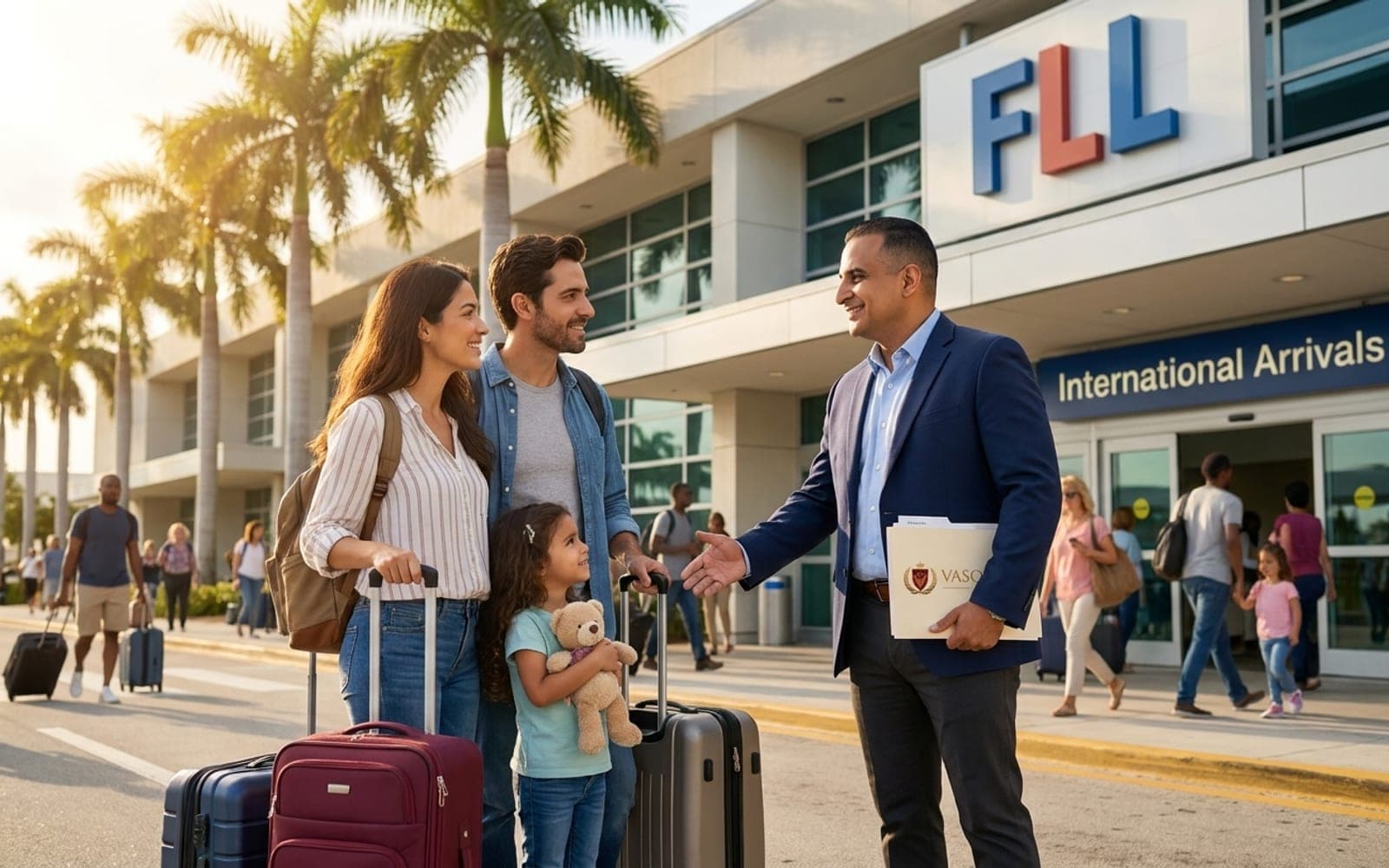
Families in Fort Lauderdale often need help with several immigration matters at once, such as a petition for a parent, a naturalization application, or protection for a relative who survived a crime or fled persecution. Family-based cases usually start with Form I-130. Immediate relatives of U.S. citizens are not subject to annual limits, while preference categories wait for a visa number. Our Orlando office serves Fort Lauderdale and Wilton Manors families by video and phone, with in-person meetings in Orlando for anyone who prefers them.
- Family cases usually start with Form I-130 filed by a citizen or permanent resident.
- Immediate relatives of citizens are not subject to annual preference limits.
- Preference categories wait for a visa number, and waits vary by category and country.
- Naturalization, U visas, VAWA and asylum may also come up for the same family.
Introduction
Families in Fort Lauderdale often need help with more than one immigration matter at once: a petition for a parent, a naturalization application for a spouse, or protection for a relative who survived a crime or fled persecution. This guide explains how family petitions, citizenship, U visas, VAWA and asylum generally work for Fort Lauderdale and Wilton Manors families, and when a lawyer adds real value. To talk about your family's situation, call 1-844-YO-PELEO or contact us.
Vasquez Law Firm does not have an office in Fort Lauderdale or Wilton Manors. Our only office is in Orlando, and we serve clients in Fort Lauderdale and Wilton Manors by video and phone, with in-person meetings in Orlando for anyone who prefers them.
This article is general information, not legal advice. Waiting times, fees and procedures change, so the details below should be confirmed for your own case before you file anything.
Immigration Help for Fort Lauderdale Residents: Family Petitions
A family based immigration lawyer fort lauderdale fl residents hire usually starts with Form I-130, the petition a U.S. citizen or permanent resident files to show the family relationship. Who you can petition for, and how long the wait may be, depends on your status and the relationship:
- Immediate relatives of U.S. citizens (spouses, unmarried children under 21, and parents of citizens who are at least 21) are not subject to annual preference limits.
- Preference categories include adult sons and daughters of citizens, spouses and children of permanent residents, and brothers and sisters of adult citizens. These categories wait for a visa number, and waits vary by category and country of birth.
After the I-130, the relative either adjusts status inside the United States, if eligible, or completes consular processing abroad. A fort lauderdale family based immigration attorney reviews entry history, prior immigration filings and any criminal record before choosing the path, because a problem missed at the start can lead to a denial or a long separation. Learn more on our family petition services page.
Clients often ask a family immigration lawyer fort lauderdale relatives recommended whether a waiver will be needed. If a relative has unlawful presence, a prior removal or certain criminal history, a waiver may be required, and some waivers can be requested before the relative leaves the country. A lawyer can tell you whether that applies to your family.
How a Family Petition Case Works
Although each case is different, most family petitions follow a similar order:
- Confirm the petitioner's status and the relationship, and decide whether the relative is an immediate relative or in a preference category.
- Gather proof of status and the relationship, such as birth, marriage and naturalization records.
- File the I-130 with USCIS and, where allowed, any related applications.
- Wait for a visa number if the case is in a preference category.
- Complete adjustment of status in the United States or consular processing abroad, including the affidavit of support.
- Attend the interview and respond to any request for evidence.
Each stage has its own risks. A relative who entered without inspection, for instance, may not be able to adjust status inside the United States, and leaving to process abroad can trigger a bar to return. Planning this before anyone travels is one of the most important things a lawyer does.
Families also ask about work permits and travel while a green card application is pending. In many adjustment cases, a work permit and a travel document can be requested together with the green card application, but leaving the country without the right document can cause the application to be treated as abandoned in some situations. Check with a lawyer before any trip, even a short one, so that a vacation or a family emergency does not create a new problem.
The affidavit of support is another step where families benefit from planning. The petitioner must generally show enough income or assets to support the relative, and a joint sponsor may be used if needed. Gathering tax returns and proof of income early helps avoid a delay at the end of the case.
Citizenship and Naturalization
Permanent residents generally become eligible to apply for naturalization after five years as a resident, or after three years if they have been married to and living with a U.S. citizen spouse during that time. Applicants must also meet continuous residence and physical presence requirements, show good moral character, and pass English and civics tests, unless an exception applies.
A citizenship attorney fort lauderdale clients consult is especially useful when something in the file is not simple: long trips abroad, an arrest, unpaid taxes or child support, a prior removal, or a question about how the green card was obtained. USCIS reviews the whole history again at naturalization, and some problems can put permanent residence itself at risk. A naturalization attorney fort lauderdale residents trust will review those issues before Form N-400 is filed, not after.
People search for a citizenship lawyer fort lauderdale for different reasons. Some want help with the whole application; others want a lawyer to review a criminal record first, or to attend the interview with them. Clients who live in nearby Wilton Manors often ask whether the process is different, and it is not: the process is the same across Broward County. See our naturalization services for more.
A lawyer should also explain derived citizenship, since some children of naturalized parents may already be citizens without filing an N-400.
U Visas and VAWA for Survivors
The U visa is for victims of certain qualifying crimes who suffered substantial harm and who have been, are being, or are likely to be helpful to law enforcement in investigating or prosecuting the crime. The application includes a certification form signed by a qualifying agency, such as a police department or prosecutor's office. A fort lauderdale u visa lawyer helps the survivor request that certification and prepare the rest of the application, including any waiver the person needs.
The Violence Against Women Act (VAWA) lets certain spouses, children and parents abused by a U.S. citizen or permanent resident file their own petition, without the abuser's knowledge or involvement. Despite the name, VAWA protects people of any gender. A fort lauderdale vawa lawyer gathers evidence of the relationship, the abuse and good moral character, and keeps the case confidential. If you are in danger now, call 911 first.
Both the U visa and VAWA involve sensitive evidence. Survivors should tell their lawyer what documents they can safely obtain, such as police reports, medical records, protective orders or statements from people who know about the situation, and should say if they are worried about being found. These cases are handled confidentially, and a lawyer can help plan how to communicate safely.
Asylum
Asylum protects people who have suffered persecution, or fear future persecution, in their home country because of race, religion, nationality, political opinion, or membership in a particular social group. In general, an application must be filed within one year of the last arrival in the United States, with limited exceptions. An asylum lawyer fort lauderdale applicants work with helps build the declaration, gather country-condition evidence and supporting documents, and prepares the applicant for the interview with an asylum officer or the hearing before an immigration judge. See our asylum services.
Asylum cases depend on credibility, so consistency between the written declaration, the supporting evidence and the testimony is important. Applicants should be ready to explain their story clearly, and should tell their lawyer about any prior statements to immigration officers, since differences can be raised later. Because the one-year filing rule has only limited exceptions, speaking with a lawyer soon after arrival is wise.
How We Work With Fort Lauderdale Families
Our office is at 1111 E Amelia Street, Orlando, and it is our only office. Fort Lauderdale and Wilton Manors clients meet with us by secure video and phone, share documents electronically, and can meet in Orlando whenever they prefer. Consultations are in English and Spanish. To get started, contact us with a short description of your situation.
Interviews for family, green card and naturalization cases are usually scheduled at the USCIS field office that serves your county. Defensive asylum cases and other removal matters are heard by the immigration court with jurisdiction over the case. We tell each client where the appointment will be, what to bring and how to prepare, and we hold preparation sessions by video.
Document Checklist for Family and Citizenship Cases
- Proof of the petitioner's status: U.S. passport, naturalization certificate or green card
- Birth certificates showing the parent-child relationship, and marriage and divorce records
- The relative's passport and any prior U.S. visas, entries or applications
- Prior petitions, notices or approvals for the same relative
- For naturalization: a list of every trip outside the United States since you became a resident
- Court records for any arrest or citation, even if the case was dismissed
- Recent tax returns and proof of income for the affidavit of support
Bring what you have, and make a note of what you cannot find. Missing records can often be replaced, but it helps to start the request early.
Timeline and Processing Expectations
Family and citizenship cases move at very different speeds. Immediate relative petitions, preference category waits, naturalization applications and U visas are each affected by agency workload and annual limits. USCIS, the Department of State and the courts publish current processing and visa information, and those figures change, so we do not quote timelines here.
What families can control is preparation. Complete evidence, accurate answers and prompt responses to notices avoid delays that have nothing to do with the government's queue. The table shows the general stages.
| Stage | What happens | Who acts |
|---|
| Case review | Status, relationship and history are reviewed and a path is chosen | Family and lawyer |
| Evidence gathering | Civil documents, proof of status and supporting records are collected | Family, with lawyer guidance |
| Filing | The petition or application is filed with USCIS or the correct agency | Lawyer and petitioner or applicant |
| Wait or review | The agency reviews, may request evidence, or the case waits for a visa number | USCIS, State Department or court |
| Interview and decision | The applicant attends an interview and the agency decides | Applicant, lawyer and officer |
Preparing for the USCIS Interview
For most family, green card and naturalization cases, an interview is the point where the officer reviews the application under oath. Preparation helps people answer clearly and consistently with their written filings. We review the forms with the client, go over likely questions, and explain what documents to bring and what to do if something unexpected comes up.
After the interview, the officer may approve the case, issue a request for evidence or take other steps. A request for evidence is not a denial, but it has a firm deadline, so share it with your lawyer immediately. If a case is denied, the options may include a motion, an appeal or a new filing, depending on the reason.
Cost Factors and Fee Breakdown
The cost of a family or citizenship matter includes government fees, attorney fees and supporting costs. The table lists the usual components without figures.
| Item | Amount | Notes |
|---|
| Form I-130 filing fee | Check USCIS for the current fee | Paid by the petitioner for each relative |
| Adjustment of status or consular fees | Check USCIS for the current fee | Vary by path; paid for each applicant |
| Form N-400 filing fee | Check USCIS for the current fee | Some applicants may qualify for reduced fees or waivers; check current rules |
| Asylum, U visa or VAWA filings | Check USCIS for the current fee | Fee rules differ by type of filing |
| Attorney fees | Varies by case | Depends on the number of applicants and complexity |
Ask for a written agreement that explains what is included and what is paid separately to the government.
Families with several relatives to petition should ask how costs add up and which filings are most urgent. Keep copies of every receipt and notice.
Common Mistakes to Avoid
- Leaving the United States to process a case abroad without checking whether a waiver or bar applies.
- Filing for naturalization without reviewing arrests, travel, taxes or child support.
- Assuming a dismissed charge does not matter without getting the court records.
- Waiting more than a year after arrival to ask about asylum.
- Using a notario or consultant who is not a licensed lawyer.
- Assuming a lawyer must have an office in your city to help you.
When to Call a Lawyer
Call before you file, especially if a relative has unlawful presence, a past removal or an arrest, or if you have been out of the country for long periods. Reach out right away if you received a notice, an interview date or a hearing date. If you are in danger, call 911 first. Be cautious about any lawyer who guarantees an outcome.
About Vasquez Law Firm
Vasquez Law Firm practices immigration law only. Our only office is at 1111 E Amelia Street in Orlando, and we serve clients throughout Florida by phone and secure video, with in-person meetings in Orlando. William J. Vásquez is the founding attorney. Consultations are available in English and Spanish, so you can describe your situation in the language you are most comfortable using. To talk about your case, call 1-844-YO-PELEO or contact us to schedule a consultation.
Sources and References
Related services: family petition services, immigration lawyers in Florida
Other ways people search for this
People look for this help under different names. Related searches include fort lauderdale immigration lawyers; best immigration lawyer fort lauderdale; haitian immigration lawyer fort lauderdale; fort lauderdale family immigration lawyer; citizenship lawyer fort lauderdale fl; naturalization lawyer fort lauderdale florida; fort lauderdale naturalization lawyer; naturalization lawyer fort lauderdale; citizenship lawyer wilton manors; family based immigration attorney near me; family based immigration lawyer fort lauderdale fl; family-based immigration attorney near me.
This article is general information, not legal advice. Every case is different; speak with an immigration lawyer about your situation.