F-1 Visa Guide for Florida Universities | VLF Florida
Explore the F-1 visa process for studying at Florida universities, including Orlando's top institutions. Learn about application steps, documentation, and common pitfalls. Contact Florida Immigration Lawyers for a free consultation.

The F-1 visa is a non-immigrant student visa that allows international students to study at accredited institutions in the United States. Key points include:
- Eligibility requires enrollment in an academic program.
- Maintaining full-time student status is crucial.
- Work is limited to on-campus employment.
- In Orlando, numerous universities offer programs for international students.
- Contact Florida Immigration Lawyers at 1-844-967-3536 for guidance.
Introduction
Choosing to study in the United States is a significant decision, especially in vibrant cities like Orlando, Florida. Known for its renowned universities and diverse culture, Orlando attracts thousands of international students each year. This article will guide you through the F-1 student visa process, requirements, and what to expect when planning to study in Florida. If you're considering this path, call Florida Immigration Lawyers at 1-844-967-3536 for a free consultation.
Orlando offers more than just academic excellence; it's a dynamic hub with a thriving economy, particularly in tourism, technology, and healthcare, providing unique opportunities for students to gain practical experience through programs like Optional Practical Training (OPT). The city's multicultural environment and year-round pleasant weather also contribute to a rich student life experience. Navigating the complexities of U.S. immigration law, however, requires careful attention to detail and a thorough understanding of the F-1 visa regulations. Early preparation and expert guidance are paramount to a successful application.
Embarking on an international education journey can be life-changing, opening doors to global careers and diverse networks. Florida, with its strategic location and growing industries, serves as an ideal launchpad for these aspirations. From securing your acceptance letter to attending your visa interview, every step of the F-1 visa process is critical. Florida Immigration Lawyers are here to simplify this journey, ensuring you meet all requirements and avoid common pitfalls. Our goal is to help you achieve your dream of studying in the Sunshine State.
Understanding the F-1 Visa
The F-1 visa is designed for students seeking to pursue an academic program in the United States. This visa is essential for those planning to enroll in universities, colleges, high schools, language training programs, or other academic institutions. To qualify, you must be accepted by a Student and Exchange Visitor Program (SEVP)-approved school in the U.S.
In Florida, universities like the University of Central Florida and Rollins College offer a wide range of programs for F-1 students. Understanding the visa requirements is crucial to ensure a smooth application process. The primary purpose of the F-1 visa is full-time education, with limited work options restricted to on-campus employment.
A core principle of the F-1 visa is the concept of "non-immigrant intent." This means applicants must demonstrate to consular officers that their primary purpose for coming to the U.S. is temporary education, and they intend to return to their home country upon completion of their studies. While opportunities for post-graduation work (like OPT) and even pathways to permanent residency exist, the initial visa application must clearly establish this temporary intent. Providing strong ties to your home country, such as family, property, or future job prospects, is crucial in demonstrating this intent during your visa interview.
The Student and Exchange Visitor Program (SEVP) plays a vital role in the F-1 visa framework. It is a government program that manages schools and non-immigrant students and exchange visitors. Only schools certified by SEVP can enroll international students, ensuring they meet specific standards for academic quality and student support. Your chosen institution will issue a Form I-20, "Certificate of Eligibility for Nonimmigrant Student Status," which is your official invitation to study and a key document for your visa application. Florida boasts numerous SEVP-approved institutions, offering diverse academic and cultural experiences for international students.
Eligibility Requirements
To apply for an F-1 visa, you must demonstrate sufficient financial resources, proficiency in English (or enroll in courses leading to proficiency), and a residence abroad you intend to return to. The application process involves obtaining a Form I-20 from your chosen institution.
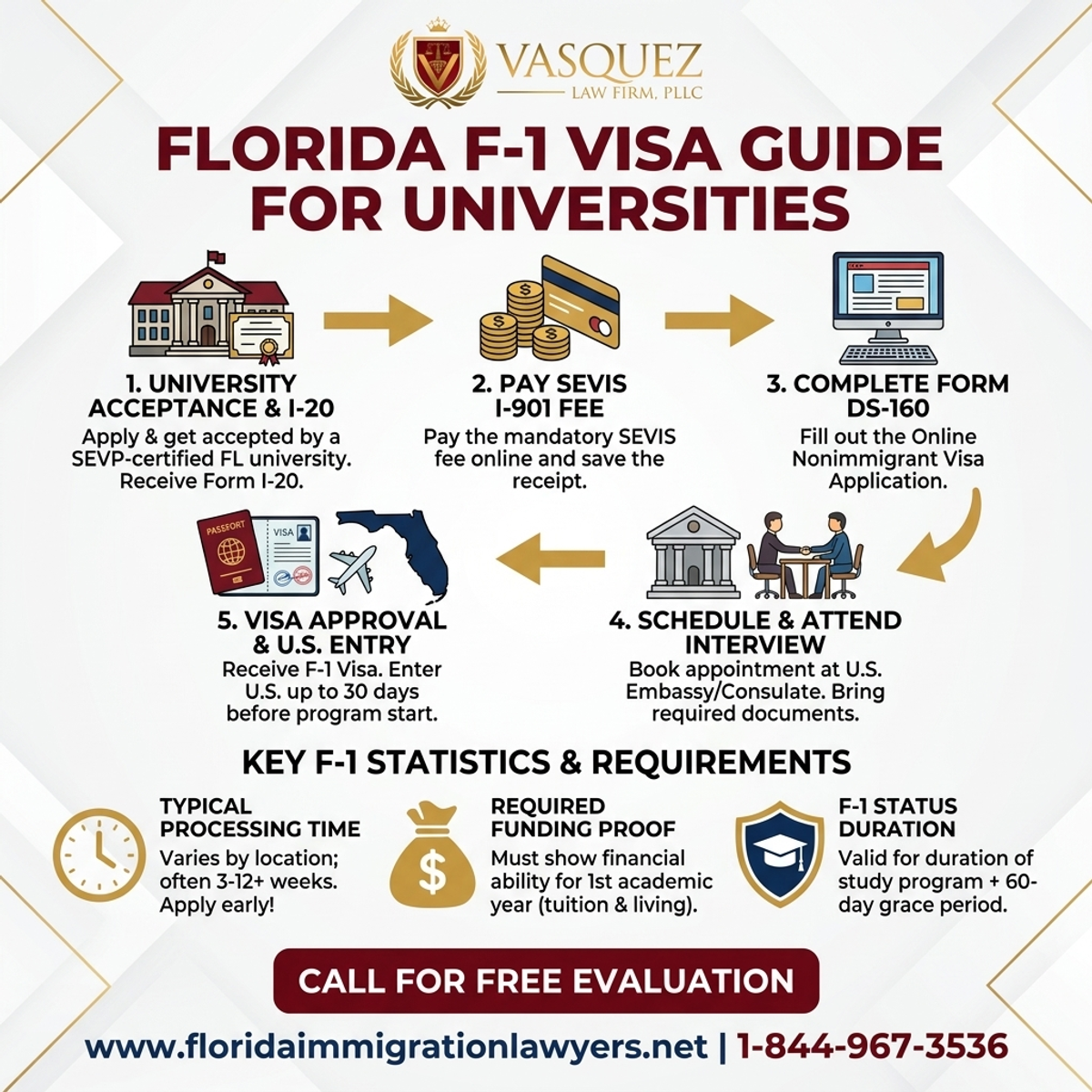
Demonstrating sufficient financial resources is one of the most critical aspects of your F-1 visa application. You must prove that you have enough funds to cover your tuition, living expenses, and other associated costs for at least your first year of study, and that you have access to funds for subsequent years. This evidence can include personal bank statements, scholarship letters, or affidavits of support from sponsors, along with their financial documentation. Consular officers need to be confident that you will not become a public charge and can sustain yourself throughout your academic program without unauthorized employment.
English proficiency is another key requirement, typically demonstrated through standardized tests like the TOEFL (Test of English as a Foreign Language) or IELTS (International English Language Testing System). Many universities specify minimum scores. However, some institutions offer conditional admission, allowing students to enroll in intensive English language programs before beginning their main academic curriculum. If your native language is English or you have completed previous education in an English-speaking country, you might be exempt from this requirement. Always check your chosen school's specific guidelines.
Establishing your intent to return to a residence abroad is fundamental to proving your non-immigrant status. This requires presenting evidence of strong ties to your home country. Such ties can include family relationships (parents, siblings, spouse, children residing there), ownership of property or businesses, bank accounts, or even a letter from an employer indicating a job offer upon your return. The consular officer must be convinced that your stay in the U.S. is temporary and solely for educational purposes, and that you have compelling reasons to leave the U.S. after completing your studies.
Step-by-Step F-1 Visa Application Guide
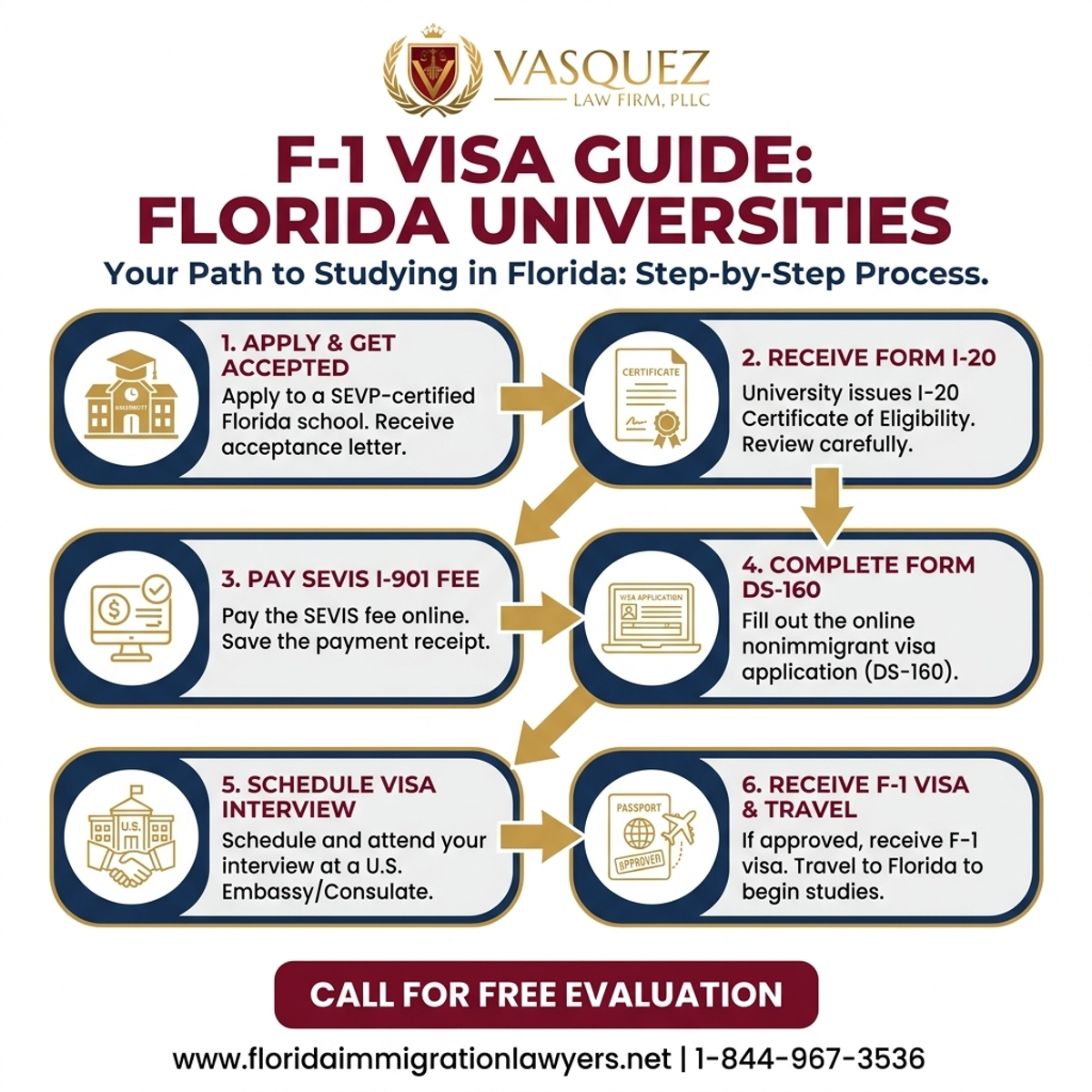
- Acceptance by a SEVP-Approved School: Secure admission to a recognized institution and receive your Form I-20. This document is your official invitation to study in the U.S. and contains crucial information, including your SEVIS ID number, the start and end dates of your program, and estimated costs. Ensure all details on your I-20 are accurate and match your passport.
- Pay the SEVIS Fee: Complete the SEVIS I-901 form and retain the receipt for your records. The SEVIS fee supports the Student and Exchange Visitor Information System, which tracks F and M non-immigrant students and J exchange visitors. You must pay this fee before your visa interview, as proof of payment is required.
- Complete the DS-160 Form: This online application is crucial for your visa interview. Ensure all information is accurate and truthful. The DS-160, or Online Nonimmigrant Visa Application, collects personal, educational, and travel history details. Take your time, save your application frequently, and review all sections carefully before submission to avoid errors that could lead to delays or denial.
- Schedule Your Visa Interview: Arrange your appointment at a U.S. Embassy or Consulate. For Floridians, the Miami or Orlando locations are common choices. Schedule your interview as early as possible, as wait times can vary significantly depending on the location and time of year. Be prepared for potential security checks or administrative processing that might extend your wait.
- Attend the Visa Interview: Be prepared with all required documentation, including your Form I-20, DS-160 confirmation, SEVIS fee receipt, and financial evidence. Dress professionally, be polite, and answer all questions honestly and concisely. The consular officer will assess your eligibility, your intent to return home, and your ability to fund your education. Practice answering common questions about your academic goals, choice of school, and post-graduation plans.
Documentation Checklist
- Valid passport: Must be valid for at least six months beyond your intended period of stay in the U.S.
- Form I-20 from your institution: The Certificate of Eligibility for Nonimmigrant Student Status, signed by both you and your Designated School Official (DSO).
- DS-160 confirmation page: The printout confirming your submission of the online visa application.
- SEVIS fee receipt: Proof of payment for the I-901 SEVIS fee.
- Financial evidence to support your studies: Original bank statements, scholarship letters, sponsor affidavits, and any other documents proving you can cover your educational and living expenses.
- Passport-sized photographs: Recent photos meeting U.S. visa photo requirements (typically 2x2 inches, white background, no glasses).
- Academic transcripts and diplomas: Proof of your previous academic qualifications.
- Test scores: Original copies of English proficiency tests (TOEFL, IELTS) or standardized tests (SAT, GRE, GMAT) if applicable.
- Ties to home country: Documents like property deeds, family certificates, or letters of employment to demonstrate your intent to return home.
Step-by-Step Process — F-1 Visa Guide for Florida Universities
Timeline and Processing Expectations
Typically, the F-1 visa process takes several weeks. It is advisable to apply at least three months before your program start date to avoid delays. Processing times can vary based on the U.S. Embassy or Consulate's workload, so early preparation is crucial.
While the actual visa stamp processing often takes a few days to a few weeks after a successful interview, the entire journey from receiving your I-20 to holding your visa can extend over several months. This includes time for gathering financial documents, completing the DS-160, paying the SEVIS fee, and most significantly, securing an interview appointment at a U.S. Embassy or Consulate, which can have significant wait times, especially during peak seasons (e.g., summer before fall semesters). It's not uncommon for interview wait times to be several weeks or even months in some locations.
Factors that can influence your processing timeline include the volume of applications at a specific embassy, the time of year you apply, and whether your application requires additional administrative processing (often referred to as a 221(g) review). Administrative processing can add weeks or even months to your application, as it involves further background checks. To mitigate potential delays, apply as soon as you receive your Form I-20, ideally up to 120 days before your program start date. Consistently check the embassy's website for current wait times and be prepared for all contingencies. For personalized advice on managing your application timeline, consider consulting with Florida Immigration Lawyers.
Cost Factors and Fee Breakdown
Several costs are associated with the F-1 visa application, including the SEVIS fee, visa application fee, and potentially travel expenses for interviews. Each fee serves a specific purpose, such as maintaining the SEVIS database or processing your application.
The primary fees you'll encounter include the SEVIS I-901 fee, which is currently $350 (as of early 2024), and the DS-160 nonimmigrant visa application fee (also known as the MRV fee), which is $185. These fees are non-refundable, even if your visa is denied. Beyond these mandatory government fees, you should also budget for other associated costs. These can include travel expenses to and from the U.S. Embassy or Consulate for your interview, potential courier fees for passport return, and costs for translating any required documents into English by certified translators.
Furthermore, consider the costs of obtaining official academic transcripts, taking English proficiency tests like TOEFL or IELTS, and any fees associated with obtaining financial documents from banks or sponsors. While not direct visa application fees, these are integral to a complete and strong application. For those who seek professional assistance, legal fees for immigration lawyers, like Florida Immigration Lawyers, provide invaluable guidance, helping to ensure your application is thoroughly prepared and submitted correctly, potentially saving you from costly mistakes or delays in the long run.
Do not navigate this process alone. Contact Florida Immigration Lawyers today.
Key Statistics — F-1 Visa Guide for Florida Universities
Common Mistakes to Avoid
- Incomplete Documentation: Missing paperwork can delay or deny your visa. Always use a comprehensive checklist and double-check every document before your interview. A single missing form or piece of evidence can lead to significant setbacks.
- Incorrect or Misleading Information: Any discrepancies, whether intentional or accidental, can lead to visa denial or future immigration problems, including potential bans from entering the U.S. Honesty and accuracy are paramount throughout the entire application process.
- Overlooking SEVIS Fee Payment: This is mandatory and must be paid before your interview. Without a valid SEVIS I-901 receipt, your interview will not proceed, causing frustrating delays and requiring you to reschedule.
- Scheduling Interviews Late: Delays in securing a convenient interview date can impact your study plans. Consular interview slots fill up quickly, especially during peak seasons, so book your appointment as soon as you receive your I-20 and pay your SEVIS fee.
- Insufficient Financial Proof: Failing to demonstrate financial stability can result in application rejection. You must clearly show you have sufficient funds for your tuition and living expenses for at least the first year, and access to funds for the entire program duration.
- Ignoring Visa Conditions: Working off-campus without authorization can lead to visa revocation. F-1 visa holders have strict limitations on employment; always consult your Designated School Official (DSO) or an immigration attorney before engaging in any work outside of authorized on-campus employment, CPT, or OPT.
- Not Maintaining Full-Time Status: Falling below full-time enrollment can jeopardize your stay. F-1 students are generally required to maintain a full course of study, typically 12 credit hours per semester for undergraduate students, unless a specific exception is authorized by your DSO.
- Late Application: Applying too close to the start of the academic term can cause unnecessary stress and potentially force you to defer your admission. Begin the visa application process as soon as possible after receiving your I-20 to allow ample time for processing and unforeseen delays.
- Failing to Demonstrate Non-Immigrant Intent: During the interview, you must convince the consular officer that you intend to return to your home country after completing your studies. Lack of strong ties to your home country or an inability to articulate your post-graduation plans can lead to a denial.
- Poor Interview Preparation: Appearing unprepared, nervous, or unable to clearly answer questions about your academic plans, financial support, or reasons for choosing the U.S. can negatively impact the outcome. Practice your answers and be confident in your responses.
When to Call a Lawyer
If you encounter issues such as visa denials, need assistance with reinstatement after status violations, or face deportation threats, it's crucial to seek legal help. Florida Immigration Lawyers are equipped to handle these complex situations and offer guidance tailored to your needs.
Beyond critical issues like denials or deportation, an immigration lawyer can provide invaluable assistance at various stages of your F-1 journey. For instance, if you have a complex financial situation or previous immigration history that might raise red flags, a lawyer can help you prepare a stronger case and address potential concerns proactively. They can also guide you through the process of changing your status from another visa category to F-1, ensuring all requirements are met precisely.
Furthermore, legal counsel becomes essential when navigating post-graduation pathways. Understanding the intricacies of Curricular Practical Training (CPT), Optional Practical Training (OPT), and potential transitions to work visas like the H-1B can be overwhelming. A lawyer from Florida Immigration Lawyers can advise on eligibility, application procedures, and strategies to maximize your opportunities while maintaining legal status. Don't hesitate to reach out for any complex questions regarding your F-1 status, transfers, or even bringing F-2 dependents to the U.S.
About Florida Immigration Lawyers
Florida Immigration Lawyers are dedicated to assisting individuals and families with all aspects of immigration law. We offer personalized service, are available 24/7, and provide free consultations. Our team is experienced in F-1 visa applications, family immigration, and deportation defense. Call us at 1-844-967-3536 or visit our website at floridaimmigrationlawyers.net.
Sources and References
- U.S. Citizenship and Immigration Services (USCIS)
- Executive Office for Immigration Review (EOIR)
- U.S. Department of State - Bureau of Consular Affairs
- Immigration and Nationality Act (INA), 8 U.S.C. Chapter 12
Do Not Navigate This Process Alone
Our experienced immigration attorneys are ready to fight for you. Get a free, confidential consultation today.
Se Habla Español
Frequently Asked Questions
Florida Immigration Lawyers
Immigration Attorney | Founder, Vasquez Law Firm
U.S. Air Force veteran and immigration attorney with thousands of cases resolved. J.D., NCCU School of Law. AILA member. Admitted to the 4th, 5th, and 11th Circuit Courts.
Available 24/7 - Free Evaluations
Related Legal Services
Our Florida immigration attorneys can help you with family immigration services, immigration practice areas and free immigration consultation. Call today at 1-844-967-3536 for a free consultation.
Related Links
Related Topics
Free Legal Consultation
Discuss your case with our experienced attorneys. We're available 24/7.
Se Habla Español - Estamos aquí para ayudarle.
Related Articles
Complete Guide to I-601 Waiver in Florida | VLF Florida
Learn about the I-601 waiver process in Florida to overcome inadmissibility challenges. Our guide provides essential steps, common mistakes to avoid, and when to seek legal help. Contact Florida Immigration Lawyers for expert assistance.
Withholding of Removal Florida Defense: Your Guide
If you are facing deportation in Florida and fear persecution or torture upon return to your home country, you may be eligible for withholding of removal or protection under the Convention Against Torture (CAT). These forms of relief are crucial for individuals who cannot return safely. Understanding the strict eligibility requirements, the complex legal process, and the high burden of proof is vital for a successful defense. Florida Immigration Lawyers specializes in deportation defense, offering expert guidance to navigate these challenging cases in courts across Florida. We are here to help you protect your future and explore every possible defense.
Voluntary Departure vs Deportation in Florida | VLF Florida
Explore the differences between voluntary departure and deportation in Florida. Understand the implications for immigrants and learn when to seek legal help. Call Florida Immigration Lawyers at 1-844-967-3536.
Consular Return After Visa Denial in Florida | VLF Florida
Facing a visa denial in Florida can be daunting. Learn about the consular return process after a 221(g) notice and get professional help.