Consular Return After Visa Denial in Florida | VLF Florida
Facing a visa denial in Florida can be daunting. Learn about the consular return process after a 221(g) notice and get professional help.

- Section 221(g) visa denials occur due to missing information or documents.
- Consular return is an opportunity to provide additional evidence.
- Consulting an immigration attorney can streamline the process.
Introduction
Facing a visa denial can be frustrating and confusing, especially when you're unsure of the next steps. If you're in West Palm Beach, Florida, and have experienced a denial under section 221(g), understanding consular return procedures is crucial. This article will guide you through the essentials of consular processing, explain common reasons for visa denials, and provide actionable steps to improve your chances of success. It's a critical moment where correct action can turn a temporary setback into a successful visa issuance. Don't let uncertainty derail your immigration goals; empower yourself with knowledge and professional guidance. Call Florida Immigration Lawyers at 1-844-967-3536 for a free consultation to discuss your case.
Understanding Consular Processing and 221(g) Visa Denials
Consular processing involves applying for a U.S. visa outside the United States, typically at a U.S. Embassy or Consulate. When an applicant receives a 221(g) refusal, it often means that the consular officer requires additional documentation or information before a final decision can be made. This is not an outright denial but a temporary hold.
Section 221(g) of the Immigration and Nationality Act (INA) is used when an application is incomplete or requires further administrative processing. Common reasons include missing documents, incomplete forms, or the need for additional security checks. Understanding these reasons can help you prepare better for a successful visa application.
It's vital to recognize that a 221(g) notice is an opportunity, not a final rejection. Consular officers issue these notices when they believe the applicant *could* be eligible for a visa if certain conditions are met or further information is provided. This could range from simple requests like a missing bank statement to more complex demands for detailed business plans, proof of ties to a home country, or additional security clearances that require time for administrative processing. The specifics of your 221(g) notice are paramount, as they dictate the exact nature of the deficiency.
Administrative processing, often indicated in a 221(g) refusal, can be particularly opaque and time-consuming. It typically involves background checks, inter-agency consultations, or security reviews that are beyond the immediate control of the applicant or even the consular officer. While frustrating, it's a standard part of the process for certain visa categories or individuals. During this period, patience and careful adherence to any subsequent instructions from the consulate are key. Florida Immigration Lawyers can help you understand the nuances of administrative processing and manage expectations.
A common misconception is equating a 221(g) refusal with a permanent visa ban or an inadmissibility finding under other sections of the INA, such as 212(a). This is incorrect. A 221(g) refusal simply means the application is temporarily suspended, whereas an inadmissibility finding suggests a more fundamental barrier to visa issuance, often requiring a waiver. By diligently addressing the issues outlined in your 221(g) notice, you are actively working towards overcoming the temporary hold and moving closer to visa approval, rather than facing an insurmountable obstacle.
Step-by-Step Guide to Consular Return
Navigating the consular return process effectively requires a methodical and precise approach. Each step is crucial, and overlooking any detail can lead to further delays or even a final denial. Consider this guide your roadmap to successfully addressing a 221(g) refusal.
- Review the Denial Notice: Carefully read the 221(g) notice to understand what additional information or documents are required. Pay close attention to any specific instructions regarding submission methods, deadlines, and contact information. Misinterpreting the request is a common pitfall.
- Gather Required Documents: Collect the necessary documents listed in the notice. This may include financial records, proof of relationship, or employment verification. Ensure all documents are current, authentic, and complete. If a document is in a language other than English, a certified translation will likely be required.
- Submit Documents to the Consulate: Follow the instructions on how to submit the additional documents. This can often be done via mail or in-person drop-off. Some consulates use specific courier services or online portals. Always obtain proof of submission, such as a tracking number or a stamped receipt.
- Wait for Processing: Once submitted, the consulate will review the additional information. Processing times can vary. It's important to understand that submitting documents does not guarantee immediate approval; the consulate may still require further clarification or even another interview.
- Receive Final Decision: The consulate will notify you of the final decision. If approved, you'll receive your visa; if not, consider seeking legal advice. If a visa is approved, ensure all details on the visa stamp are correct before leaving the consulate or receiving your passport back.
Throughout this process, maintaining meticulous records of all communications, submitted documents, and tracking numbers is paramount. This diligence will prove invaluable if you need to follow up with the consulate or if further complications arise. Remember, the goal is to provide the consular officer with everything they need to make a favorable decision, leaving no room for doubt or missing information.
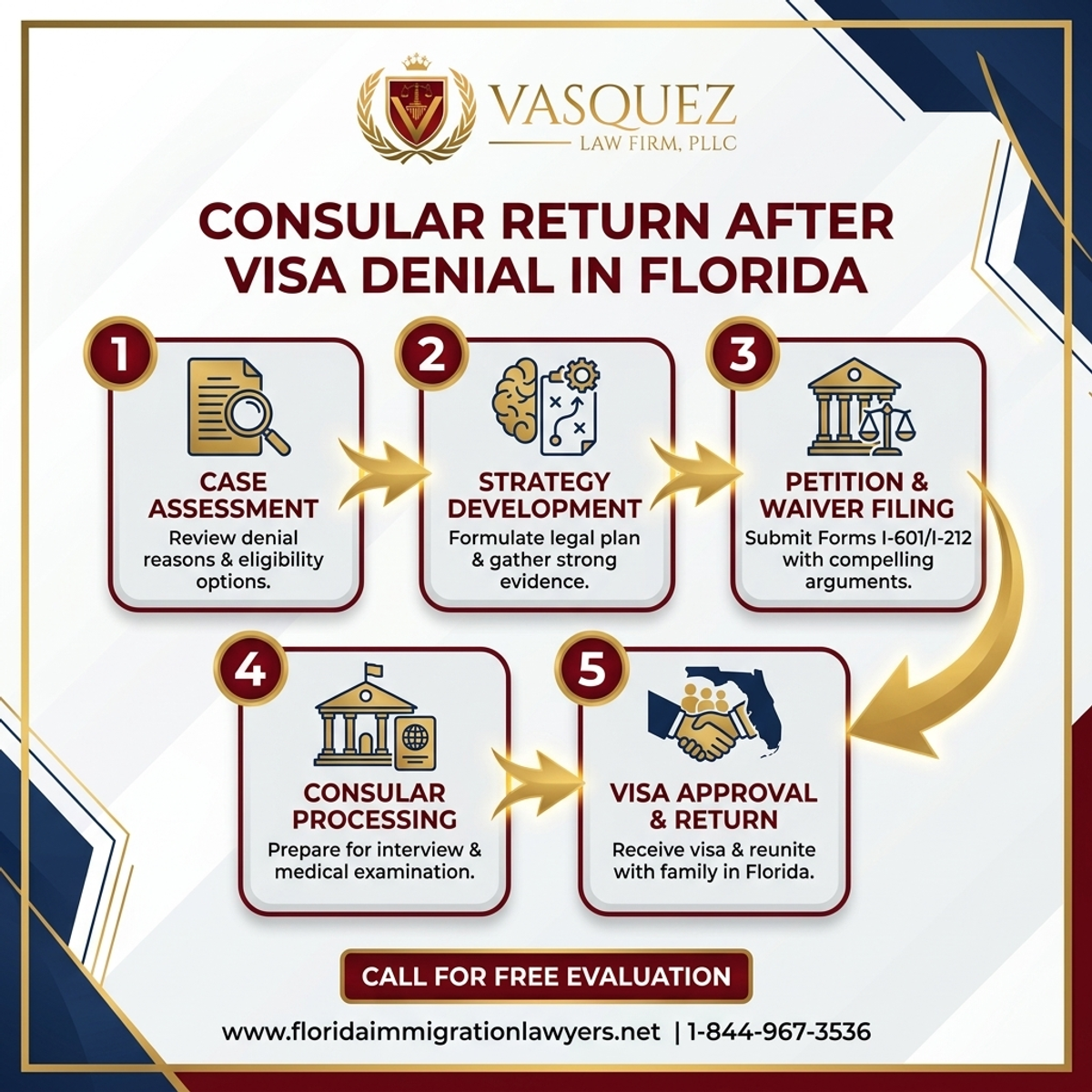
Step-by-Step Process — Consular Return After Visa Denial in Florida
Document Checklist for Consular Return
The success of your consular return hinges significantly on the completeness and accuracy of the documents you submit. The 221(g) notice will provide a specific list, but generally, applicants should be prepared to provide a comprehensive package that addresses any potential concerns about their eligibility or intent.
- Original 221(g) denial notice
- Passport with visa application number
- Financial documents (bank statements, tax returns, proof of income, sponsor's affidavits of support)
- Proof of relationship (marriage certificate, birth certificate, family photos, correspondence)
- Employment verification (job offer letters, pay stubs, employment contracts, business registration if self-employed)
- Any additional documents requested, such as educational transcripts, police certificates, detailed travel itineraries, or letters from U.S. petitioners.
Beyond simply gathering the documents, ensure they are organized clearly and professionally. Create a cover letter referencing your case number and listing the documents enclosed. For any documents not in English, always provide a certified translation. This means a professional translator must certify that the translation is accurate and complete, and they are competent to translate from the foreign language into English. Failing to provide proper translations is a common mistake that can lead to further delays.
Furthermore, it's advisable to keep a complete copy of everything you submit to the consulate for your records. This includes the original 221(g) notice, your passport details, all supporting documents, and proof of submission. This meticulous record-keeping can be invaluable if you need to refer back to your application or if any questions arise during the processing period. Consulting with Florida Immigration Lawyers can help ensure your documentation is flawless.
Timeline and Processing Expectations
Processing times for consular returns can vary greatly depending on the complexity of your case and the specific consulate's workload. Generally, once you submit the required documents, it may take several weeks to a few months to receive a final decision. During this time, it's crucial to remain patient and responsive to any additional requests from the consulate.
Several factors influence the timeline. The type of visa you applied for, the specific nature of the information requested in your 221(g) notice, and the individual consulate's operational efficiency all play a role. For instance, a simple request for a missing bank statement might be resolved in a few weeks, whereas a case requiring extensive administrative processing, such as security checks or inter-agency consultations, could take several months, or even longer in rare circumstances. There are no fixed timelines for administrative processing, and updates can be infrequent.
It's important to manage your expectations and avoid making irreversible travel plans until you have your visa in hand. While you can typically check the status of your application online using the consulate's tracking system, frequent inquiries directly to the consulate are generally discouraged unless a significant amount of time has passed beyond typical processing estimates. If you find yourself waiting for an unusually long period, or if you haven't received any updates, this might be a good time to consult with Florida Immigration Lawyers to explore appropriate follow-up strategies.
Understanding these variables can help alleviate some of the stress associated with waiting. While the process can be unpredictable, your best strategy is to submit all requested documents accurately and promptly, and then monitor your application status periodically. Being prepared for potential delays allows you to plan accordingly and reduces anxiety during this critical phase of your immigration journey.
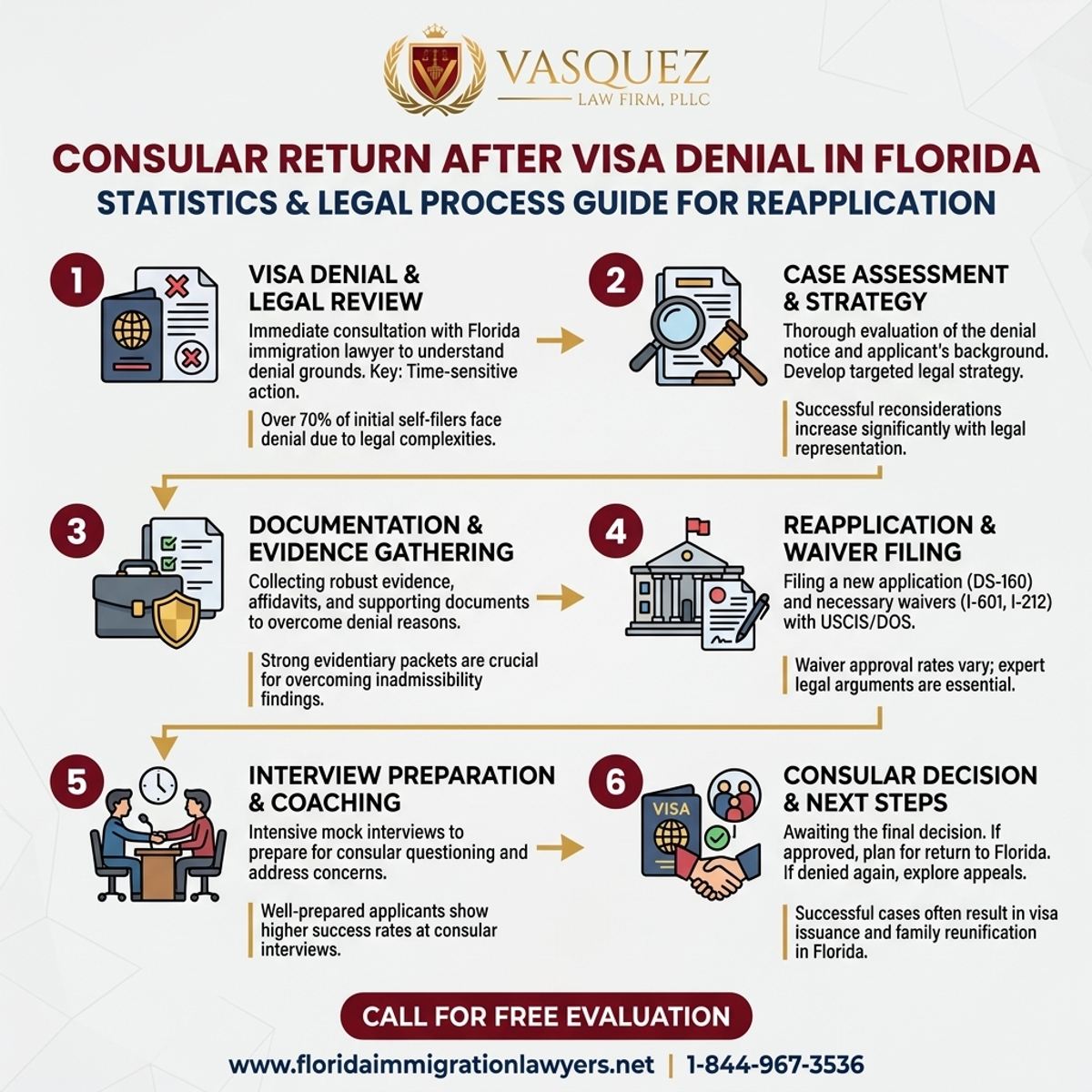
Key Statistics — Consular Return After Visa Denial in Florida
Cost Factors and Fee Breakdown
While there are no additional fees for the consular return process itself, applicants should be prepared for potential costs associated with gathering required documents and travel expenses. It's important to budget for these potential costs and seek advice from an immigration attorney to understand any other applicable fees.
The indirect costs can add up quickly. These might include fees for obtaining new copies of birth certificates, marriage licenses, police clearances, or academic transcripts. If your documents are not in English, you will incur costs for certified translations, which are typically required for all foreign-language documents. Additionally, courier services for secure document submission, potential travel expenses for follow-up interviews, and communication costs with the consulate can all contribute to the overall expenditure.
Perhaps the most significant, yet often overlooked, cost factor is the potential for legal fees. While not mandatory, engaging an experienced immigration attorney like Florida Immigration Lawyers can be a wise investment. Their expertise can help you avoid critical errors, ensure all documents are properly prepared and submitted, and provide strategic advice, potentially saving you from further delays or even a final denial that could necessitate new application fees and prolonged separation from family or career opportunities. A free consultation at 1-844-967-3536 can help you understand these potential costs and the value of professional guidance.
Do not navigate this process alone. Contact Florida Immigration Lawyers today to help you through your consular processing journey.
Common Mistakes to Avoid
- Not reading the 221(g) notice carefully, leading to missed document submissions.
- Submitting incomplete or incorrect documents, causing further delays.
- Ignoring deadlines for document submission, risking denial.
- Failing to follow up with the consulate if there is no response after the expected time.
- Not keeping copies of all submitted documents for your records.
- Assuming a 221(g) notice is a final denial and not taking further action.
- Trying to handle complex cases without professional legal help, leading to mistakes.
- Not providing certified translations for non-English documents.
- Overlooking the importance of detailed financial documentation.
- Neglecting to update personal information if there are changes during the process.
Avoiding these common pitfalls is paramount to a successful consular return. Each mistake, no matter how minor it seems, can prolong the process, incur additional costs, or even jeopardize your visa application. It's a testament to the complexity of immigration law that seemingly small errors can have significant consequences. Take the time to meticulously review every instruction and document.
For example, failing to provide certified translations for non-English documents is a frequent oversight that can immediately halt processing. Similarly, submitting outdated financial statements when current ones are requested will only lead to a request for more information, restarting part of the waiting game. When in doubt, it is always better to over-prepare and seek clarification, rather than make assumptions that could prove costly.
When to Call a Lawyer
If you've received a 221(g) notice, it's often beneficial to consult with an immigration lawyer. Legal expertise can help you understand complex requirements and avoid common pitfalls. Consider calling a lawyer if you're unsure of which documents to submit, facing repeated denials, or dealing with a complicated personal situation. Florida Immigration Lawyers can guide you through the process, ensuring you have the best chance of success.
There are specific scenarios where legal intervention becomes not just beneficial, but crucial. If your 221(g) notice is vague or unclear, making it difficult to ascertain exactly what information is required, an attorney can help interpret the consulate's demands. Similarly, if your case involves a history of previous immigration issues, criminal records, or complex family relationships, a lawyer can strategically present your case to mitigate potential concerns and navigate intricate legal precedents.
Furthermore, if your application has been stuck in administrative processing for an unusually long time without updates, or if you've faced multiple 221(g) refusals for the same application, an attorney can intervene on your behalf. They can communicate with the consulate, inquire about the status, and potentially expedite the process by providing additional legal arguments or documentation that you might not have considered. Don't hesitate to reach out to Florida Immigration Lawyers at 1-844-967-3536 for expert guidance.
Ultimately, a lawyer provides peace of mind and significantly increases your chances of a favorable outcome. They understand the intricacies of immigration law, the specific requirements of different consulates, and how to present your case in the most compelling manner. Investing in legal counsel means you have an advocate who is dedicated to protecting your interests and guiding you through every step of this challenging process, from document preparation to strategic follow-up.
Frequently Asked Questions (FAQs)
Q: What is the difference between a 221(g) denial and an outright denial?
A: A 221(g) is a temporary refusal, meaning your application is incomplete or requires further administrative processing. It's an opportunity to provide additional information to resolve the issue. An outright denial, often under other INA sections (like 212(a)), means you've been found ineligible for the visa, potentially requiring a waiver or making reapplication difficult. Don't mistake a 221(g) for a final rejection; it's a chance to rectify deficiencies.
Q: How long do I have to submit the requested documents after a 221(g) notice?
A: The 221(g) notice itself usually specifies a deadline, typically one year from the date of refusal. However, it's crucial to submit the documents as soon as possible to avoid further delays or the risk of your application being closed. Always prioritize prompt and accurate submission. If you're unsure about the deadline or need an extension, consult Florida Immigration Lawyers immediately.
Q: Can I appeal a 221(g) decision?
A: There is no formal appeal process for a 221(g) refusal. Your primary course of action is to provide the requested documents or information. If, after submitting the documents, your visa is still denied, you might need to reapply or explore other immigration options. Consulting an attorney can help you understand the specific reasons for denial and strategize your next steps effectively.
Q: What if I can't get a specific document requested by the consulate?
A: If a requested document is genuinely unobtainable, you should provide a detailed written explanation to the consulate outlining why you cannot obtain it and include any alternative evidence that might satisfy the underlying concern. For instance, if a birth certificate is unavailable, you might provide baptismal records or school enrollment forms. An immigration lawyer can help you craft this explanation and identify acceptable alternative documents.
Q: Will my visa fee be refunded if my 221(g) ultimately leads to a denial?
A: Visa application fees are generally non-refundable, regardless of the outcome of your application. This fee covers the cost of processing your application, not the issuance of a visa. Therefore, if your 221(g) refusal eventually leads to a final denial, the fee you paid will not be returned. This underscores the importance of a thorough initial application and diligent response to a 221(g) notice.
Q: Can I travel internationally while my 221(g) case is pending?
A: While your 221(g) case is pending, your passport may be held by the consulate, making international travel impossible. If your passport is returned to you, you can technically travel, but you will not have a valid U.S. visa. It's generally advisable to avoid non-essential international travel until your visa application is resolved to prevent further complications or delays in receiving your passport with the visa.
Q: What are some common reasons for administrative processing under 221(g)?
A: Administrative processing often occurs due to security checks, inter-agency consultations, or when more in-depth review of an applicant's background is deemed necessary. This can include cases involving specific nationalities, certain fields of study or work (e.g., sensitive technologies), prior immigration violations, or individuals who match certain watch list criteria. It's a standard procedure for some cases and doesn't necessarily indicate a problem with your application, but it does require patience.
About Florida Immigration Lawyers
Florida Immigration Lawyers is a leading firm dedicated to assisting individuals with their immigration needs. We offer comprehensive services including visa applications, deportation defense, and family immigration support. With our experienced team and commitment to client success, we provide 24/7 support and free consultations. Contact us at 1-844-967-3536 or visit our website at www.floridaimmigrationlawyers.net.
Sources and References
- U.S. Citizenship and Immigration Services (USCIS)
- Executive Office for Immigration Review (EOIR)
- 8 U.S.C. Chapter 12 - Immigration and Nationality Act
Related services: immigration practice areas, family immigration services, citizenship and naturalization.
This article provides general legal information and is not intended as legal advice. Every case is unique, and outcomes depend on specific facts
Do Not Navigate This Process Alone
Our experienced immigration attorneys are ready to fight for you. Get a free, confidential consultation today.
Se Habla Español
Frequently Asked Questions
Florida Immigration Lawyers
Immigration Attorney | Founder, Vasquez Law Firm
U.S. Air Force veteran and immigration attorney with thousands of cases resolved. J.D., NCCU School of Law. AILA member. Admitted to the 4th, 5th, and 11th Circuit Courts.
Available 24/7 - Free Evaluations
Related Legal Services
Our Florida immigration attorneys can help you with experienced immigration attorneys, business immigration and asylum protection. Call today at 1-844-967-3536 for a free consultation.
Related Links
Related Topics
Free Legal Consultation
Discuss your case with our experienced attorneys. We're available 24/7.
Se Habla Español - Estamos aquí para ayudarle.
Related Articles
Voluntary Departure vs Deportation in Florida | VLF Florida
Explore the differences between voluntary departure and deportation in Florida. Understand the implications for immigrants and learn when to seek legal help. Call Florida Immigration Lawyers at 1-844-967-3536.
Immigration Lawyer Fort Lauderdale: Your Florida Guide 2026
Navigating immigration law in Fort Lauderdale, Florida, requires expert guidance. Our comprehensive guide for 2026 delves into why securing a skilled immigration lawyer Fort Lauderdale is essential. We cover key immigration pathways such as family-based visas, employment-based petitions, asylum claims, and crucial deportation defense strategies specific to Broward County. Learn about the step-by-step process of working with our firm, understanding the costs involved, and setting realistic expectations for timelines. We also highlight common mistakes to avoid and critical scenarios when legal counsel from Florida Immigration Lawyers becomes indispensable. Our firm offers dedicated support for individuals and families across Florida, including Hialeah, ensuring your rights are protected throughout the complex immigration system. Contact us for a free consultation to start your journey with confidence.
Fiance Visa K-1 Process in Florida: Key Steps | VLF Florida
Learn about the K-1 fiancé visa process in Florida, including steps, timeline, and common pitfalls. Contact Florida Immigration Lawyers for expert guidance.
Understanding U Visa for Crime Victims in Florida | VLF Florida
The U visa provides vital immigration relief for crime victims in Florida. Learn how it works and why legal guidance is crucial for your application. Contact Florida Immigration Lawyers for a free consultation.