Cynthia Goodman Immigration Judge: Good Moral Character
Cynthia Goodman, an immigration judge in Florida, plays a pivotal role in assessing good moral character for naturalization. Learn how to navigate the process, understand common pitfalls, and when to seek legal assistance in Tallahassee, Florida.
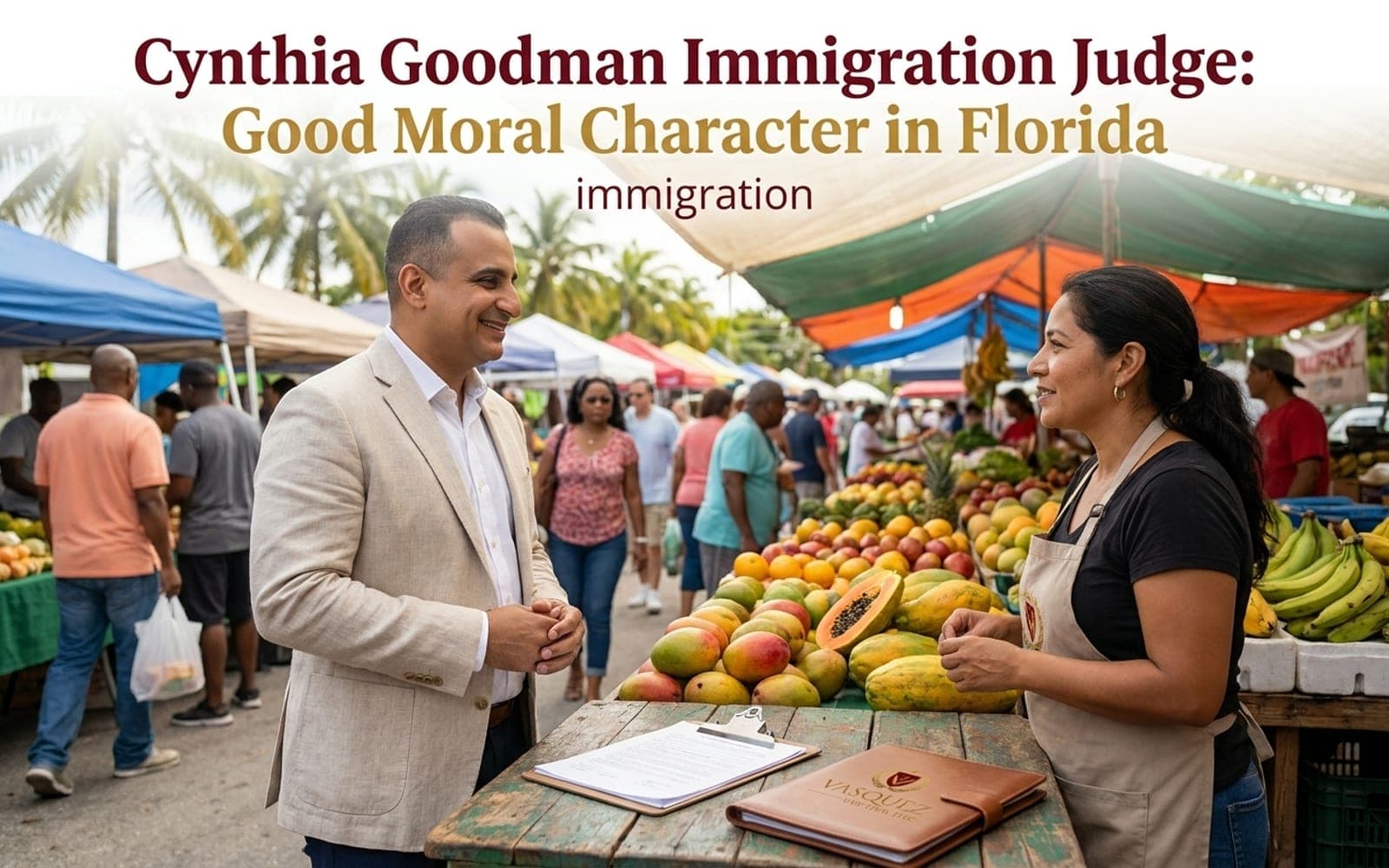
- Good moral character is assessed over a set period, typically five years.
- Criminal history can affect your naturalization eligibility.
- Consult with an immigration attorney for guidance and representation.
Introduction
For many aspiring U.S. citizens in Florida, the path to naturalization involves navigating complex legal requirements, including the demonstration of good moral character. Cynthia Goodman, a prominent immigration judge in Florida, plays a significant role in these proceedings. This article will explore the intricacies of proving good moral character, particularly in Tallahassee, Florida. We will also cover essential steps, common pitfalls, and when to seek legal assistance. Call Florida Immigration Lawyers at 1-844-YO-PELEO for a free consultation.
The concept of "good moral character" (GMC) is not merely a formality; it is a fundamental pillar of U.S. citizenship, reflecting the values and expectations the nation holds for its new citizens. In Florida, where a diverse population seeks naturalization, understanding how this requirement is interpreted and applied by judges like Cynthia Goodman is paramount. Her decisions, and those of other immigration judges, often set precedents or provide insight into the nuanced application of immigration law in the state.
Demonstrating good moral character requires more than just a clean record; it involves showcasing a consistent pattern of behavior that aligns with societal norms and legal obligations. This includes everything from timely tax payments to community engagement and adherence to traffic laws. For applicants in Tallahassee and across Florida, preparing a robust case that highlights these aspects of their life is critical for a successful naturalization outcome. Florida Immigration Lawyers are well-versed in these specific local considerations and can provide invaluable support.
What Does Good Moral Character Mean for Naturalization?
Good moral character is a requirement for naturalization and is assessed over the statutory period, usually five years. This assessment evaluates the applicant's behavior and background, ensuring they meet the moral standards expected of U.S. citizens.
As of 2026, applicants must demonstrate a history free from serious legal and moral issues, such as criminal convictions or false testimony. USCIS considers factors like honesty, integrity, and respect for the law.
In Florida, and particularly in Tallahassee, applicants must be aware of local immigration court practices and how judges like Cynthia Goodman interpret these standards. A strong record of community involvement and adherence to the law can support your application.
The statutory period for good moral character is typically five years immediately preceding the filing of the N-400 application, or three years if applying based on marriage to a U.S. citizen. However, USCIS can look beyond this period if there's evidence of a pattern of behavior that suggests a lack of good moral character. This "look-back" provision means that even older offenses or actions could potentially impact an applicant's eligibility, making a thorough review of one's entire history essential.
Disqualifying acts for good moral character are broad and can include, but are not limited to, habitual drunkenness, engaging in prostitution, smuggling illegal aliens, unlawful gambling, or committing certain crimes like murder, aggravated felonies, or offenses involving moral turpitude. Even seemingly minor infractions, if numerous or recent, can raise questions. For instance, repeated traffic violations, while not typically a bar to naturalization, could contribute to a perception of disrespect for the law if not properly addressed and explained. Judges like Cynthia Goodman often weigh the severity, recency, and frequency of such issues.
Ultimately, the determination of good moral character is discretionary and made on a case-by-case basis. USCIS officers and immigration judges consider the totality of the circumstances. This means that while a specific act might be a negative factor, strong positive factors – such as extensive community service, a stable employment history, and family ties – can sometimes mitigate its impact. Preparing a comprehensive application that highlights all positive aspects of your character is key. Florida Immigration Lawyers possess the experience to help you present the strongest possible case, navigating these discretionary assessments effectively.
How to Prove Good Moral Character in Florida
Proving good moral character involves a comprehensive review of your history. Start by gathering documents that support your claim, including police clearance certificates and personal references.
- Obtain a police clearance certificate from all jurisdictions where you've lived during the statutory period.
- Provide character references from community leaders, employers, or religious figures.
- Submit tax returns proving compliance with tax obligations.
- Prepare for a USCIS interview where you may discuss your character and background.
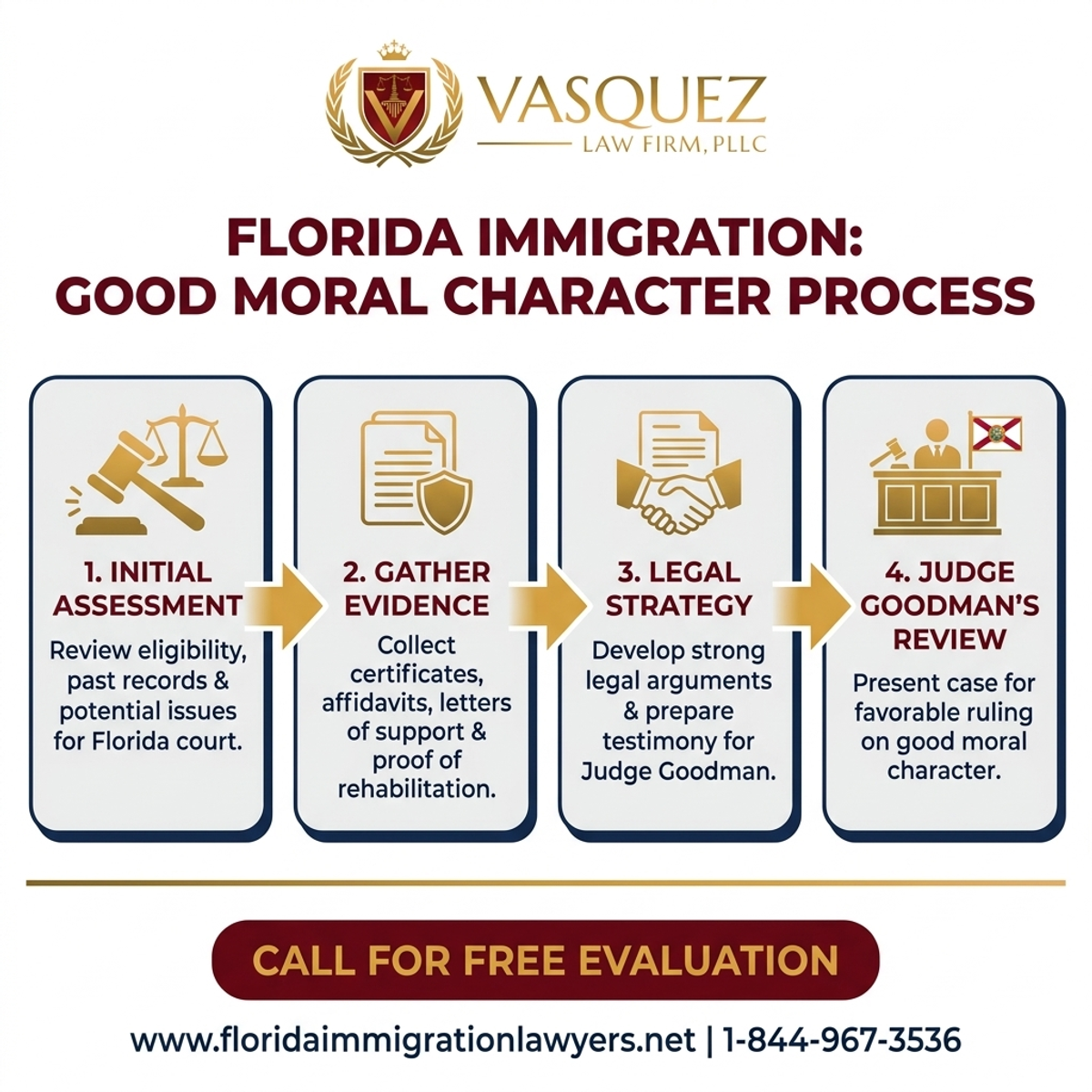
Step-by-Step Process — Cynthia Goodman Immigration Judge: Good Moral Character in Florida
Consulting an attorney can ensure your documents are complete and persuasive, especially in complex cases involving past legal issues.
Beyond these core requirements, consider providing additional evidence that showcases your positive contributions to society. This could include certificates of volunteer work, awards for community service, or proof of membership in civic organizations. For example, an applicant who volunteers regularly at a local food bank in Tallahassee, or participates in neighborhood clean-up initiatives, demonstrates a commitment to their community that can significantly strengthen their good moral character claim. Such evidence helps paint a picture of an engaged and responsible individual.
Preparing for the USCIS interview is another critical step. This is your opportunity to personally demonstrate your honesty, integrity, and understanding of U.S. civics. Be prepared to answer questions about your entire life history, including any past mistakes, and articulate how you have learned from them. Honesty is paramount; attempting to conceal information can be more detrimental than the original issue itself. A skilled attorney from Florida Immigration Lawyers can conduct mock interviews, helping you practice your responses and build confidence, ensuring you are ready for any questions an officer or judge like Cynthia Goodman might ask.
For applicants in Florida, it's also wise to be aware of any local nuances in how good moral character is assessed. While federal law provides the framework, individual USCIS field offices and immigration courts may have specific unwritten expectations or tendencies. Staying informed about these local practices, often through the insights of experienced local counsel, can give you a significant advantage. Our team at Florida Immigration Lawyers is deeply familiar with the local immigration landscape, providing tailored advice for your naturalization journey.
Document Checklist for Naturalization
Understanding the Importance of Each Document
A meticulous approach to documentation is fundamental for a successful naturalization application. Each item on the checklist serves a specific purpose in demonstrating your eligibility and good moral character. Ensuring that all documents are accurate, complete, and properly organized can prevent delays and strengthen your case significantly. This proactive preparation is where the expertise of Florida Immigration Lawyers truly shines, as they can help you compile a comprehensive and compelling package.
- Completed N-400 form
- Police clearance certificates
- Character reference letters
- Tax returns for the statutory period
- Evidence of community involvement
- Legal documentation for any past offenses
Timeline and Processing Expectations
Factors Influencing Your Naturalization Journey
While the table below provides general timeframes, it's important to understand that several factors can influence the actual processing time for your naturalization application. These can include the volume of applications at your specific USCIS field office in Florida, unforeseen administrative backlogs, or the complexity of your individual case, especially if it involves extensive background checks or a need for additional evidence regarding good moral character. Staying informed and prepared for potential variations is crucial for managing expectations.
| Stage | Typical Timeframe | Notes |
|---|---|---|
| Application Submission | 2-3 months | Includes initial review and biometrics appointment. |
| Interview Scheduling | 3-5 months | Waiting period for the naturalization interview. |
| Oath Ceremony | 1-3 months | Final step if approved. |
As of 2026, naturalization processing times can vary based on caseloads and local USCIS office efficiency. Check the USCIS website for current processing times.
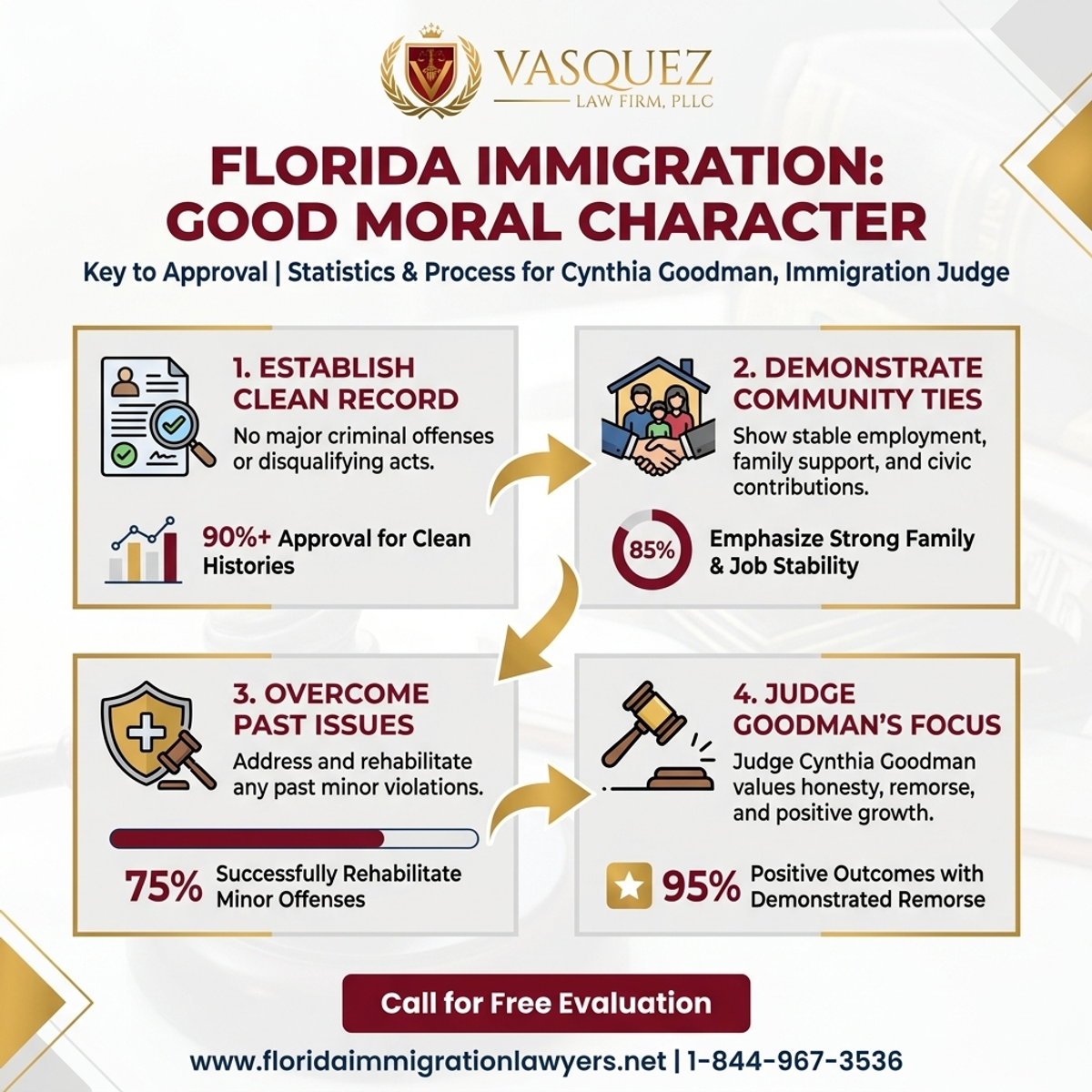
Key Statistics — Cynthia Goodman Immigration Judge: Good Moral Character in Florida
Cost Factors and Fee Breakdown
Beyond the Basic Fees: Understanding All Potential Expenses
While the N-400 filing fee and biometrics fee are standard, applicants should be aware of other potential costs associated with the naturalization process. These can include expenses for obtaining necessary documents like birth certificates, marriage licenses, or police records, especially if they require translation into English by a certified translator. Travel costs for interviews or biometrics appointments, as well as mailing fees for submitting your application, should also be factored into your budget. Consulting with Florida Immigration Lawyers can help you anticipate and plan for all potential expenses, providing transparency from the outset.
| Item | Typical Fee | Notes |
|---|---|---|
| N-400 Filing Fee | Varies | Check USCIS for current fee details. |
| Biometrics Fee | Varies | Required for fingerprinting and background checks. |
| Legal Fees | Varies | Depends on complexity and attorney rates. |
Do not navigate this process alone. Contact Florida Immigration Lawyers today.
Common Mistakes to Avoid
The High Stakes of Errors in Your Naturalization Application
Making mistakes during the naturalization process can have severe consequences, ranging from significant delays to outright denial of your application. Even seemingly minor oversights can be interpreted negatively by USCIS officers or immigration judges like Cynthia Goodman, especially when assessing good moral character. Understanding these common pitfalls and taking proactive steps to avoid them is paramount. This is precisely where the guidance of an experienced legal team, such as Florida Immigration Lawyers, becomes indispensable, helping you navigate the process without costly errors.
<Sources and References
- U.S. Citizenship and Immigration Services (USCIS)
- Executive Office for Immigration Review (EOIR)
- U.S. Department of State - Bureau of Consular Affairs
- Immigration and Nationality Act (INA), 8 U.S.C. Chapter 12
Do Not Navigate This Process Alone
Our experienced immigration attorneys are ready to fight for you. Get a free, confidential case review today.
Se Habla Español
Or leave your details and we’ll call you:
Free Evaluation in 24 Hours
Or talk to us right now
AI voice assistant — available 24/7
FreeFrequently Asked Questions

William J. Vásquez
Founding Attorney · Vasquez Law Firm
U.S. Air Force veteran and immigration attorney with years of hands-on U.S. immigration experience. J.D., NCCU School of Law. AILA member. Admitted to the 4th, 5th, and 11th Circuit Courts.
Available 24/7 - Free Evaluations
Reviewed for legal accuracy by William J. Vásquez
Licensed in North Carolina; U.S. immigration is federal practice.
Related Legal Services
Our Florida immigration attorneys can help you with immigration practice areas, free immigration consultation and business immigration. Call today at 1-844-YO-PELEO for a free case review.
Related Links
Related Topics
Free Legal Case Review
Discuss your case with our experienced attorneys. We're available 24/7.
Se Habla Español - Estamos aquí para ayudarle.
Related Articles
Immigration Lawyer Orlando Free Consultation in Florida
For individuals and families in Orlando, Florida, navigating the complexities of U.S. immigration law requires expert guidance. An immigration lawyer in Orlando offers crucial support for everything from visa applications and green card processes to naturalization and deportation defense. This comprehensive guide details what a free consultation covers, providing a step-by-step overview of immigration pathways, essential document checklists, and expected timelines in 2026. We also highlight common mistakes to avoid, discuss the critical role of legal counsel in deportation and asylum cases, and explain why choosing a local Orlando immigration attorney is beneficial. Florida Immigration Lawyers is dedicated to serving the diverse community of Orlando with compassionate, effective legal solutions, ensuring you receive personalized advice and robust representation for a successful immigration journey.
EAD Advance Parole Combo Card in Florida 2026
For individuals with a pending Form I-485, Application to Register Permanent Residence or Adjust Status, the EAD Advance Parole Combo Card is an essential document. This single card combines the authorization to work legally in the U.S. (Employment Authorization Document - EAD) with permission to travel internationally and re-enter without abandoning your green card application (Advance Parole). This guide from Florida Immigration Lawyers provides a comprehensive overview for applicants in Florida in 2026, covering eligibility, the step-by-step application process, required documents, expected processing times, and associated costs. We also highlight common mistakes to avoid and when to seek legal counsel to ensure a smooth and successful immigration journey. Understanding this vital card is key to maintaining stability while awaiting your permanent residency approval.
Immigration Lawyer Services in Gulf Coast Florida
Navigating the U.S. immigration system can be complex, especially with recent policy changes. This article explores how immigration lawyers in Gulf Coast Florida can assist with visa applications, deportation defense, and more. For personalized assistance, contact Florida Immigration Lawyers at 1-844-YO-PELEO for a free case review.
Removal Proceedings Defense Lawyer Florida: 2026 Guide
Receiving a Notice to Appear (NTA) for immigration removal proceedings in Florida can be terrifying, signaling the start of a complex legal battle to avoid deportation. This comprehensive 2026 guide provides essential information on what removal proceedings entail, the step-by-step process in Florida immigration courts, and the critical role of a skilled defense lawyer. Learn about key defense strategies like Cancellation of Removal, asylum, and waivers, and understand the crucial documents and evidence required for your case. We also detail typical timelines and cost factors, as well as common mistakes to avoid that could jeopardize your ability to remain in the U.S. Florida Immigration Lawyers are dedicated to protecting your rights and fighting for your future. Don't navigate this challenging journey alone; understand your options and secure expert legal representation.