Consular Return After Visa Denial in Florida 2026
A 221(g) visa denial is a temporary refusal, not a final rejection, indicating that your application requires additional documents or administrative processing before a final decision. This often leads to a 'consular return' for further review by the U.S. Embassy or Consulate. Understanding the specific reasons for this refusal and how to respond accurately and promptly is vital for applicants in Florida. This comprehensive guide from Florida Immigration Lawyers explains the 221(g) process, outlines necessary documentation, details typical processing timelines, and highlights common mistakes to avoid. We also discuss when legal counsel is essential to navigate complex issues, address potential inadmissibility grounds, and ensure your response is complete and compelling. Our dedicated attorneys in Central Florida are ready to assist you in overcoming these challenges and advancing your immigration journey.
A 221(g) visa denial, often referred to as a refusal, means your visa application was not fully approved or denied at your interview. Instead, the consular officer requires additional documents or administrative processing before making a final decision. This often involves a 'consular return' of your application for further review. For individuals in Florida, understanding this process is crucial, as it can significantly delay your immigration journey. It is not a final denial but rather a temporary hold, requiring you to provide more information or undergo further checks. Seeking legal guidance from Florida Immigration Lawyers can help clarify the requirements and streamline this complex process.
- A 221(g) is a temporary refusal, not a final denial.
- It requires additional documents or administrative processing.
- Processing times vary greatly, from weeks to many months.
- Legal assistance can significantly help navigate the requirements.
- Your passport may be returned, or held, depending on the consulate.
Navigating the complex world of U.S. immigration law can be challenging, especially when you encounter unexpected hurdles like a visa denial or refusal. For many aspiring immigrants and visitors seeking to come to the United States, a 221(g) visa denial can be a source of confusion and frustration. This particular type of refusal means your application requires further steps before a final decision can be made, often leading to what is known as 'consular return' for administrative processing. Understanding what a 221(g) entails and how to respond effectively is paramount to keeping your immigration dreams alive.
At Florida Immigration Lawyers, we understand the anxieties that come with any delay in your immigration journey. Our dedicated team is committed to providing clear, empathetic guidance to individuals and families across Florida facing these situations. This comprehensive guide will demystify the 221(g) process, explain common reasons for refusal, outline the steps for resolution, and highlight how our experienced attorneys can advocate for you. Do not let a temporary setback become a permanent barrier. Call Florida Immigration Lawyers at 1-844-YO-PELEO for a free case review and let us help you understand your options.
What Does a 221(g) Visa Denial Mean for Your Case in Florida?
A 221(g) visa denial, or more accurately, a refusal, indicates that a consular officer has temporarily suspended your visa application. This action is taken because certain information is missing from your application, or further administrative processing is required to determine your eligibility. It is crucial to understand that a 221(g) is not a permanent rejection; instead, it is an invitation to provide additional evidence or await further review by the U.S. government. For individuals in Florida, especially those with family or business ties here, this distinction is vital. It means your case is still active, but pending. This section of the Immigration and Nationality Act (INA) is broad, allowing consular officers discretion when they need more time or information.
Common reasons for a 221(g) refusal can range from simple administrative omissions to more complex security checks. For instance, you might be asked to provide additional financial documents, clarify employment history, submit specific police certificates, or undergo a medical examination if an initial one was deemed insufficient. Sometimes, the refusal is due to a security advisory opinion or a background check that requires more time. Understanding the specific reason cited by the consular officer is the first step toward resolution. The notice you receive should specify the documents or information needed. If you are in Central Florida, an experienced attorney can help you decipher this notice and strategize your next steps, ensuring you respond accurately and promptly.
The impact of a 221(g) refusal on your plans can be significant, causing delays in travel, work, or family reunification. However, it also presents an opportunity to strengthen your application by providing all necessary information. It is important to act quickly and accurately to address the consular officer's concerns. Failing to respond or providing incomplete information can eventually lead to a more definitive visa denial under other sections of the INA. Consult with Florida Immigration Lawyers to ensure your response is comprehensive and addresses all aspects of the 221(g) request.
How Does Consular Processing Work After a 221(g) Refusal?
After receiving a 221(g) refusal, consular processing requires you to submit the requested documents or await the completion of administrative processing. This process typically begins with the consular officer providing you with a written notice detailing why your application was refused and what steps you need to take. For many, this means gathering and submitting additional paperwork to the U.S. Embassy or Consulate where your interview took place. It is essential to follow the instructions precisely, as any deviation can cause further delays. Once the requested information is received, the consulate will resume reviewing your application, which may lead to approval or, in some cases, further inquiries.
The process of responding to a 221(g) can be outlined in these key steps:
- Review the 221(g) Refusal Slip: Carefully read the document provided by the consular officer. It will specify the exact reason for the refusal and list any additional documents or actions required. Understand if it's a request for more information or if your case is undergoing administrative processing.
- Gather Requested Documents: Collect all documents explicitly asked for in the refusal slip. This might include updated financial records, educational certificates, employment letters, police clearances, or detailed travel histories. Ensure all documents are authentic and, if necessary, translated into English by a certified translator.
- Submit Documents as Instructed: Follow the consulate's instructions for submitting the documents. This often involves uploading them to a specific online portal, mailing them, or hand-delivering them to the consulate. Pay close attention to any reference numbers or barcodes that need to be included.
- Await Administrative Processing (if applicable): If your 221(g) notice indicates administrative processing, there may be no further action required from you immediately. This often involves background checks or security reviews that can take an unpredictable amount of time. You may monitor your case status online via the Department of State's Consular Electronic Application Center (CEAC) website.
- Attend Follow-Up Interviews (if requested): In some cases, after reviewing the submitted documents or completing administrative processing, the consulate may request a second interview. Prepare for this interview as thoroughly as the first, bringing all relevant documents and being ready to answer any questions.
Timely and accurate submission of documents is crucial. Any errors or delays can prolong the processing time. If you are uncertain about any aspect of the instructions or the types of documents required, seeking legal counsel can prevent costly mistakes and ensure your application proceeds as smoothly as possible. Our team in Central Florida frequently assists clients with these detailed responses.
What Documents Are Needed for 221(g) Administrative Processing?
The specific documents needed for 221(g) administrative processing depend entirely on the reason for your visa refusal. The consular officer's refusal slip will typically provide a detailed list of the required items. However, some categories of documents are commonly requested during this process. It is paramount to provide accurate, complete, and authentic documentation to avoid further delays or complications. Any document not in English must be accompanied by a certified English translation. Preparing these documents meticulously is a critical step in overcoming a 221(g) refusal.
Commonly requested documents include:
- Updated Employment or Financial Records: Pay stubs, tax returns, bank statements, or letters from employers confirming job details and salary.
- Educational Transcripts and Diplomas: Proof of academic qualifications, especially for employment-based visas.
- Police Certificates: From countries where you have lived for a certain period, to demonstrate good moral character.
- Medical Examination Results: If your initial medical exam was incomplete or raised concerns, a follow-up or a new exam may be required.
- Detailed Itineraries: For tourist visas, a more comprehensive plan of your visit, including accommodation and activities.
- Letters of Invitation: For family or visitor visas, a more detailed letter from your host in the U.S.
- Proof of Ties to Home Country: Documents demonstrating your intent to return, such as property deeds, family commitments, or long-term employment.
- Additional Forms: Sometimes specific forms like a DS-5535 (Supplemental Questions for Visa Applicants) or other questionnaires.
- Passport and Previous Visas: Your passport may be held by the consulate, or you might need to resubmit it once processing is complete.
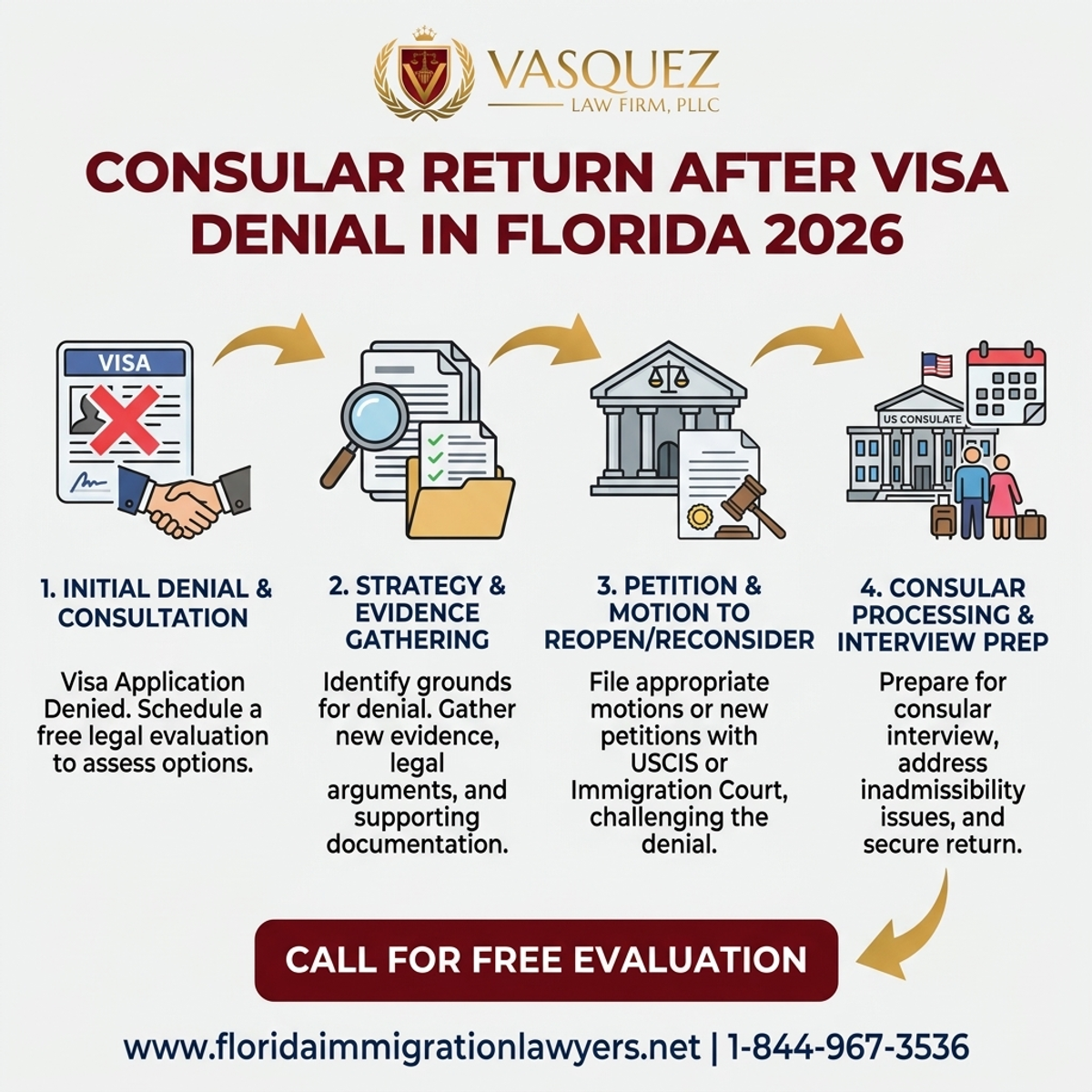
Step-by-Step Process — Consular Return After Visa Denial in Florida 2026
Compiling these documents can be overwhelming, particularly if you are unfamiliar with the specific requirements of U.S. immigration law. Florida Immigration Lawyers can help you understand exactly what is needed, review your documents for accuracy, and assist in their proper submission to the consulate. This meticulous approach can significantly reduce the risk of further delays and improve your chances of a positive outcome. We ensure that every piece of evidence supports your eligibility, effectively addressing the consular officer's concerns.
How Long Does 221(g) Administrative Processing Typically Take in 2026?
The duration of 221(g) administrative processing can vary significantly, ranging from a few weeks to several months, and in some rare cases, over a year. As of 2026, there is no fixed timeline for these cases, as each one is unique and depends on the complexity of the issues, the specific country involved, and the workload of the processing consulate or agency. Factors such as the type of visa, the nature of the requested information, and whether security checks are involved all play a role in determining the processing time. Applicants should be prepared for potential delays and plan accordingly.
While specific timelines are difficult to predict, here is a general overview of what to expect:
| Stage | Typical Timeframe | Notes |
|---|---|---|
| Submission of Documents | 1-4 weeks | Time for consulate to acknowledge receipt and begin review. |
| Administrative Processing (Simple) | 2-8 weeks | For straightforward missing documents or minor clarifications. |
| Administrative Processing (Complex) | 3-12+ months | Involves background checks, security clearances, inter-agency consultations. Cases may be sent to USCIS or other agencies. |
| Follow-up Interview (if needed) | Variable | Scheduling depends on consulate availability and case status. |
| Final Decision | Days to weeks after processing/interview | If approved, visa stamping occurs shortly after. |
It is important to regularly check your application status online through the CEAC website using your case number. While frustrating, patience is often required. There are usually no avenues to expedite administrative processing unless there is a clear humanitarian emergency, which must be proven with strong evidence. Our attorneys can help you understand the potential duration for your specific circumstances and advise on how best to monitor your case.
Do not navigate this process alone. Contact Florida Immigration Lawyers today to ensure your 221(g) response is handled professionally and efficiently. Our team is ready to provide the guidance you need.
Understanding the Costs Associated with a 221(g) Visa Denial
While a 221(g) visa refusal itself does not typically incur new government filing fees, the process of resolving it can lead to various indirect costs. These expenses can add up, making it important for applicants in Florida to budget accordingly. Understanding these potential costs upfront can help you prepare financially and avoid unexpected burdens during this already stressful period. The focus is often on gathering additional evidence, which itself can generate costs.
Here’s a breakdown of potential cost factors:
| Item | Typical Fee | Notes |
|---|---|---|
| Medical Examination | Varies by country/clinic | If a new or updated exam is required by an authorized panel physician. |
| Document Translation | Per page/document | For any non-English documents requiring certified translation. |
| Police Certificates | Varies by country/agency | Fees for obtaining criminal record checks from various jurisdictions. |
| Travel Expenses | Variable | For additional trips to the consulate for interviews or document submission. |
| Postage/Courier Services | Per shipment | For securely sending documents to the consulate. |
| Legal Fees | Consultation/retainer | For legal advice, document review, and representation by an immigration attorney. |
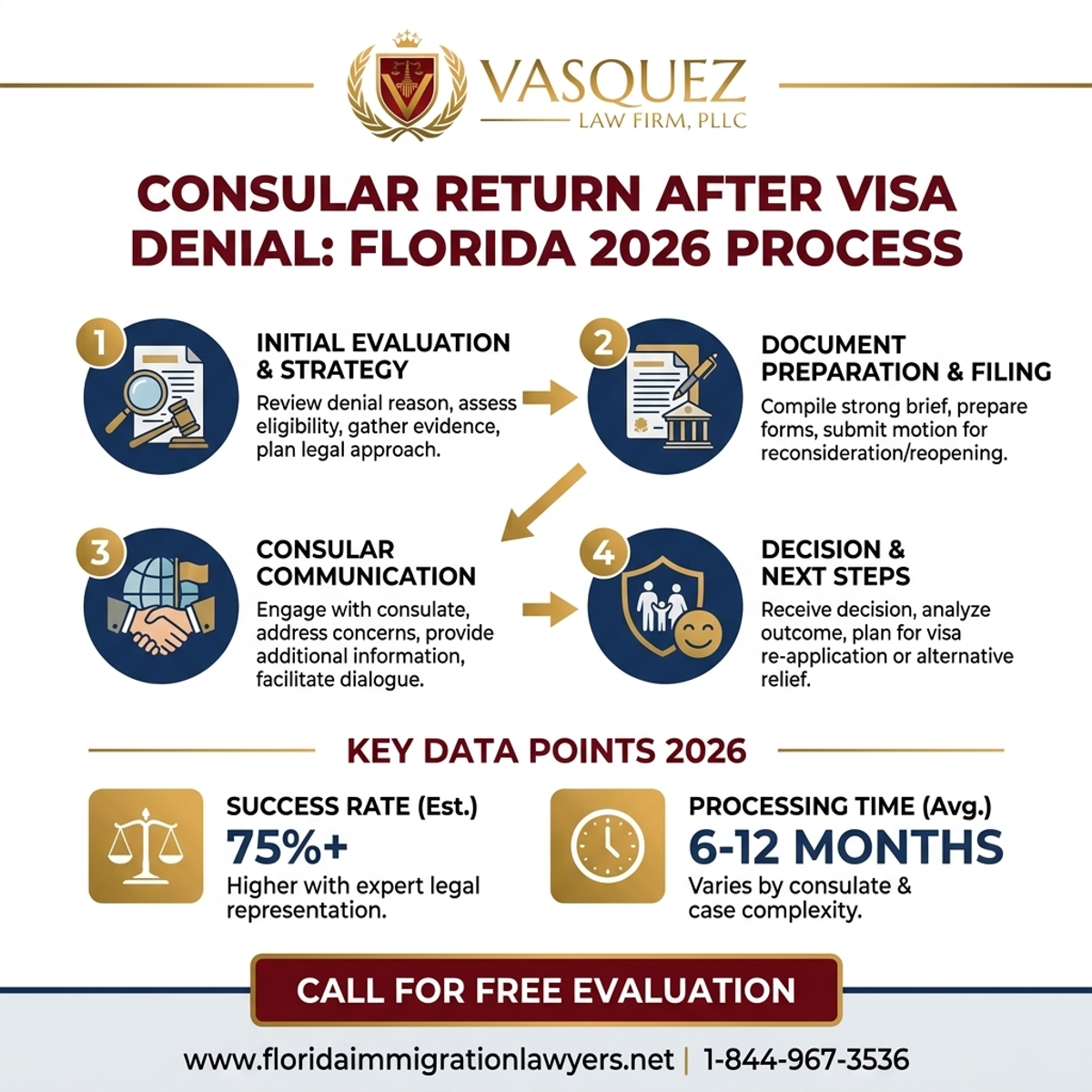
Key Statistics — Consular Return After Visa Denial in Florida 2026
The most significant variable cost often comes from legal representation. While it is an investment, the expertise of an immigration lawyer can be invaluable in saving time, avoiding errors, and ultimately increasing the likelihood of a successful outcome. An attorney can help identify exactly what is needed, ensure all documents are properly prepared and submitted, and communicate with the consulate on your behalf. For those navigating complex 221(g) issues from Orlando or other parts of Central Florida, the peace of mind and strategic advantage offered by legal counsel can be well worth the expense. Florida Immigration Lawyers offers free case reviews to help you understand potential costs and how we can assist.
Navigating Visa Refusal Reasons and Waivers in Florida
Understanding the underlying reasons for a visa refusal, even a temporary 221(g), is crucial for effective resolution. Beyond simply missing documents, a 221(g) can sometimes hint at deeper concerns regarding your eligibility under U.S. immigration law. These concerns might involve security issues, past immigration violations, or a perceived lack of strong ties to your home country. While a 221(g) is not a final denial, it is a signal that the consular officer requires more assurance about your admissibility. Recognizing these potential issues early allows for a more strategic response.
Some common ineligibility grounds that might lead to or be investigated during a 221(g) process include:
- Section 212(a)(4) - Public Charge: Concerns that you might become a financial burden on the U.S. government.
- Section 212(a)(6)(C)(i) - Misrepresentation: If the consular officer believes you misrepresented a material fact in your application or interview.
- Section 212(a)(3)(A) - Security and Related Grounds: If there are concerns about national security, terrorism, or foreign policy.
- Section 212(a)(9)(B) - Unlawful Presence: If you have previously overstayed a visa in the U.S. for a significant period.
In cases where an actual ground of ineligibility (beyond a simple 221(g) document request) is identified, you might require a waiver to overcome the refusal. Waivers, such as Form I-601 (Application for Waiver of Grounds of Inadmissibility) or Form I-212 (Application for Permission to Reapply for Admission into the United States After Deportation or Removal), are complex legal applications that require demonstrating extreme hardship to a qualifying U.S. citizen or lawful permanent resident relative. These are typically sought after a final finding of inadmissibility, not usually during a 221(g) administrative processing phase, but it's important to be aware of the potential for such issues. If your 221(g) leads to a more serious ineligibility finding, you will need expert legal help.
An experienced immigration attorney can assess your situation, identify potential grounds of inadmissibility, and advise whether a waiver is necessary or feasible. For residents of Florida, especially those navigating complex issues related to deportation defense or asylum claims, understanding these nuances is critical. Florida Immigration Lawyers has extensive experience in analyzing difficult cases and developing effective strategies to address complex visa refusal reasons, ensuring your rights are protected throughout the process.
Common Mistakes to Avoid in 221(g) Administrative Processing
Navigating a 221(g) visa refusal can be tricky, and making certain mistakes can significantly prolong the process or even lead to a permanent visa denial. Being aware of these common pitfalls can help you avoid unnecessary complications and improve your chances of a successful outcome.
- Ignoring the 221(g) Notice: Failing to respond to the consular officer's request for additional information within the specified timeframe can lead to your application being considered abandoned or ultimately denied. Always acknowledge and address the notice promptly.
- Submitting Incomplete or Incorrect Documents: Providing only some of the requested documents or submitting documents that are inaccurate or outdated will not resolve the 221(g) and will likely lead to further delays or a final denial. Double-check everything.
- Providing Fraudulent or Misleading Information: Attempting to deceive the consular officer with false documents or statements can result in a permanent bar from entering the U.S. This is a severe immigration violation with lasting consequences.
- Not Understanding the Reason for Refusal: If the 221(g) notice is unclear, guessing at the underlying issue can lead to submitting irrelevant documents. Seek clarification if needed, ideally with legal assistance.
- Repeatedly Contacting the Consulate Without Cause: While monitoring your status is advised, excessive inquiries without new information can be counterproductive and may not expedite your case.
- Traveling Before Resolution: If your passport was returned, do not assume your case is resolved. Traveling internationally during administrative processing can complicate matters, especially if your visa status is still pending.
- Failing to Seek Legal Counsel: Many applicants try to handle 221(g) issues on their own, only to realize the complexity too late. An attorney can provide strategic guidance and ensure compliance.
- Neglecting Certified Translations: Any document not in English must be accompanied by a certified English translation. Failing to provide this can cause immediate rejection of the document.
- Not Keeping Copies of All Submissions: Always retain copies of all documents you submit to the consulate, including the 221(g) notice itself. This is crucial for your records and for any future legal consultations.
- Misinterpreting Administrative Processing: Assuming 'administrative processing' means your case is automatically approved is a mistake. It simply means it's undergoing further review, which can still lead to a denial.
When to Call a Lawyer for Your 221(g) Visa Denial in Florida
While some straightforward 221(g) requests might be manageable on your own, many situations warrant the immediate attention of an experienced immigration attorney. The complexities of U.S. immigration law, coupled with the potential for long-term consequences, make legal guidance invaluable. If you are in Florida and facing a 221(g) visa refusal, knowing when to seek professional help can make all the difference in your case's outcome.
You should consider contacting Florida Immigration Lawyers if any of the following apply to your situation:
- Unclear 221(g) Request: If the refusal notice is vague, confusing, or you are unsure what specific documents or information are being requested.
- Complex Background: If your immigration history includes previous denials, overstays, criminal records, or other factors that could complicate your eligibility.
- Security Concerns: If the 221(g) seems to stem from security checks, background investigations, or potential inadmissibility grounds rather than simple missing documents.
- Waiver May Be Needed: If you suspect that a ground of inadmissibility might apply to your case, requiring a waiver.
- Language Barrier: If you struggle with English and need assistance understanding official documents and communicating with the consulate.
- Previous Denials: If you have faced previous visa denials or 221(g) refusals, indicating a persistent issue that needs expert analysis.
- Significant Delays: If your administrative processing has extended far beyond typical timeframes without clear communication.
- Fear of Misrepresentation: If you are concerned that any information in your application could be misinterpreted as a misrepresentation.
Florida Immigration Lawyers has extensive experience in addressing 221(g) issues and other visa complexities. Our attorneys understand the nuances of consular processing and can provide strategic advice, help prepare your response, and advocate on your behalf. We serve clients throughout Florida, including those in Orlando and the wider Central Florida region, ensuring you receive personalized and effective legal support.
About Florida Immigration Lawyers
Florida Immigration Lawyers is a leading law firm dedicated to providing comprehensive and compassionate immigration legal services to individuals and families across the entire state of Florida. With a deep understanding of U.S. immigration law and its ever-evolving landscape, our experienced attorneys are committed to guiding clients through every step of their immigration journey. From visa applications to citizenship, family-based petitions, and complex deportation defense cases, we offer personalized strategies tailored to your unique needs.
Our firm prides itself on its client-centered approach, offering transparent communication and zealous advocacy. We understand that immigration matters are often life-changing, which is why we strive to provide peace of mind through expert legal counsel. Located in Orlando, we are proud to serve the diverse communities of Central Florida and beyond, ensuring that everyone has access to high-quality legal representation. We are available 24/7 for urgent matters and offer free case reviews to help you understand your options without financial commitment. Let Florida Immigration Lawyers be your trusted partner in achieving your immigration goals. Schedule a free consultation today.
Sources and References
- U.S. Citizenship and Immigration Services (USCIS)
- U.S. Department of State
- Executive Office for Immigration Review (EOIR)
- Immigration and Nationality Act, Section 221(g) - 8 U.S.C. § 1201(g)
- 8 Code of Federal Regulations (CFR)
Related services: immigration practice areas, business immigration, experienced immigration attorneys, immigration lawyer cost in Florida.
This article provides general legal information and is not intended as legal advice. Every case is unique, and outcomes depend on specific facts and circumstances. Contact an attorney for advice about your particular situation.
Do not let a 221(g) visa denial derail your immigration aspirations. Take proactive steps and seek experienced legal guidance. Contact Florida Immigration Lawyers today for a free case review at 1-844-YO-PELEO. Se Habla Espanol - Estamos aqui para ayudarle.
Do Not Navigate This Process Alone
Our experienced immigration attorneys are ready to fight for you. Get a free, confidential case review today.
Se Habla Español
Or leave your details and we’ll call you:
Free Evaluation in 24 Hours
Or talk to us right now

AI voice assistant — available 24/7
FreeFrequently Asked Questions

William J. Vásquez
Founding Attorney · Vasquez Law Firm
U.S. Air Force veteran and immigration attorney with years of hands-on U.S. immigration experience. J.D., NCCU School of Law. AILA member. Admitted to the 4th, 5th, and 11th Circuit Courts.
Available 24/7 - Free Evaluations
Reviewed for legal accuracy by William J. Vásquez
Licensed in North Carolina; U.S. immigration is federal practice.
Related Legal Services
Our Florida immigration attorneys can help you with business immigration, deportation defense and family immigration services. Call today at 1-844-YO-PELEO for a free case review.
Related Links
Related Topics
Free Legal Case Review
Discuss your case with our experienced attorneys. We're available 24/7.
Se Habla Español - Estamos aquí para ayudarle.
Related Articles
EB-5 Investor Green Card in Florida: A 2026 Guide
Explore how to obtain an EB-5 investor green card in Florida. Learn about the investment requirements, processes, and benefits of participating in this program. Discover how Florida's economic landscape can be an ideal setting for your investment. Contact Florida Immigration Lawyers for a free case review.
Certificate of Eligibility for Expungement in Florida 2026
For non-U.S. citizens in Florida, understanding how a state expungement impacts immigration status is critical. A certificate of eligibility for expungement in Florida allows a criminal record to be sealed or expunged under state law. However, federal immigration agencies often disregard such state-level relief, still considering the original criminal offense as a conviction for immigration purposes. This can have severe implications for visa applications, green card eligibility, naturalization, and even lead to deportation. This guide clarifies the Florida expungement process, its limited effect on federal immigration law, and key steps to protect your status in 2026. Learn about common mistakes, required documents, timelines, and when to seek expert legal counsel from Florida Immigration Lawyers to navigate these complex issues effectively.
Immigration Lawyer Orlando Free Consultation in Florida
For individuals and families in Orlando, Florida, navigating the complexities of U.S. immigration law requires expert guidance. An immigration lawyer in Orlando offers crucial support for everything from visa applications and green card processes to naturalization and deportation defense. This comprehensive guide details what a free consultation covers, providing a step-by-step overview of immigration pathways, essential document checklists, and expected timelines in 2026. We also highlight common mistakes to avoid, discuss the critical role of legal counsel in deportation and asylum cases, and explain why choosing a local Orlando immigration attorney is beneficial. Florida Immigration Lawyers is dedicated to serving the diverse community of Orlando with compassionate, effective legal solutions, ensuring you receive personalized advice and robust representation for a successful immigration journey.
Fiance Visa in Miami: Your 2026 Florida K-1 Guide
For U.S. citizens in Florida, including Miami and Orlando, who wish to bring their foreign fiance(e) to the U.S. for marriage, the K-1 fiance visa is the primary immigration pathway. This comprehensive guide details the K-1 visa process for 2026, covering eligibility requirements for both the petitioner and beneficiary, the necessary documentation, expected timelines, and associated costs. We break down the stages from filing Form I-129F with USCIS to consular processing and the subsequent Adjustment of Status after marriage. Learn about common mistakes to avoid and understand when to seek professional legal assistance. Florida Immigration Lawyers offers expert guidance to help you navigate this complex journey, ensuring a smooth and successful application. Call us for a free case review.