Citizenship Interview Tips in Florida: What You Need to Know
Prepare for your citizenship interview in Florida with essential tips and guidance. Learn about the necessary documents, common mistakes to avoid, and when to seek legal advice. This article focuses on the USCIS naturalization interview process in 2026, offering practical insights for applicants in Orlando and beyond.
- Understand the interview process
- Prepare necessary documents
- Practice common questions
- Stay updated on policy changes
Introduction
Deciding to apply for U.S. citizenship is a monumental step for many immigrants, especially those with family ties in the country. If you have family, like your father's family, already established in the U.S., your decision to become a citizen can strengthen those bonds. The naturalization interview is a critical part of this journey. This article provides essential tips to help you prepare for your citizenship interview in Florida, focusing on the requirements and expectations set by the USCIS in 2026. Whether you live in Orlando or another part of Central Florida, these insights will guide you through the process. For personalized assistance, call Florida Immigration Lawyers at 1-844-YO-PELEO for a free case review.
Becoming a U.S. citizen offers a multitude of benefits, from the right to vote and hold public office to enhanced travel freedom and the ability to sponsor more family members for immigration. For many, it represents the culmination of years of hard work, dedication, and a deep commitment to their new home. Understanding the journey ahead, particularly the naturalization interview, is paramount to achieving this significant milestone. This interview is not merely a formality; it's a comprehensive assessment of your eligibility and understanding of American civics.
Florida, with its diverse population and numerous immigrant communities, is a common hub for naturalization applicants. The USCIS field offices across the state, including those in Orlando, Miami, and Tampa, process thousands of applications annually. Navigating the specific nuances of the process in Florida, while adhering to national USCIS guidelines, can be challenging. That's why thorough preparation, combined with expert legal advice from professionals like Florida Immigration Lawyers, can make all the difference in ensuring a smooth and successful interview experience.
How Can I Prepare for the Citizenship Interview in Florida?
Preparing for your citizenship interview involves understanding the process and gathering necessary documents. As of 2026, the USCIS requires applicants to demonstrate English proficiency and knowledge of U.S. history and government. Practice these subjects and review your application thoroughly before the interview.
A critical component of your preparation should be mastering the English language requirements. This includes the ability to read, write, and speak basic English. For the reading test, you will be asked to read one out of three sentences correctly. For the writing test, you will write one out of three sentences accurately. The speaking test is integrated throughout the interview as the officer asks questions about your N-400 application. Practicing conversations in English, listening to English news, and writing simple sentences daily can significantly boost your confidence and performance.
Equally important is your knowledge of U.S. history and government, known as civics. USCIS provides a list of 100 civics questions, from which you will be asked up to 10 questions during your interview. You must answer at least six correctly to pass. Don't just memorize the answers; try to understand the concepts behind them. For example, knowing who the current Speaker of the House is, or understanding the Bill of Rights, demonstrates a deeper engagement with American democracy. Many applicants find success using flashcards, mobile apps, or attending free citizenship classes offered by community organizations in Central Florida.
Start by reviewing the USCIS naturalization interview guide and sample questions available on the USCIS website. Familiarize yourself with the format and typical questions, and consider attending a citizenship preparation class. Remember to bring all required documents, such as your green card, passport, and any evidence supporting your application. Furthermore, meticulously review your Form N-400, Application for Naturalization. The USCIS officer will refer to this document extensively, and your answers should be consistent with the information you provided. Any discrepancies could lead to delays or further scrutiny. If you've made any updates or changes since filing, be prepared to explain them clearly and concisely. For complex situations or to ensure your application is flawless, consulting with Florida Immigration Lawyers can provide invaluable peace of mind.
What Documents Are Required for the Citizenship Interview?
Bringing the correct documents is vital for a smooth interview. Ensure you have the following items ready:
- Permanent Resident Card (Green Card)
- Passport and any travel documents
- State-issued ID
- Any documents related to your application (marriage certificates, tax returns)
- A list of your trips outside the U.S. in the past five years
Beyond the basic list, it's crucial to understand the purpose of each document. Your Green Card confirms your lawful permanent resident status. Passports and travel documents verify your identity and international travel history, ensuring you meet continuous residence requirements. State-issued IDs like a driver's license serve as a secondary form of identification. For example, if you've changed your name, bring the legal documentation, such as a marriage certificate or court order, that supports this change. Similarly, if you have dependents, bring their birth certificates. Being over-prepared with documentation is always better than being under-prepared.
Consider any life events that have occurred since you submitted your N-400 application. This could include new employment, a change of address, divorce decrees, child support orders, or even minor traffic citations. Bring original copies of these documents, along with photocopies, as the officer may wish to keep the copies for your file. Organizing these documents in a clear, labeled folder can streamline the interview process and demonstrate your meticulousness to the USCIS officer. For instance, an applicant named Roberto from Orlando successfully navigated his interview by having all his tax returns from the past five years neatly organized, quickly answering the officer's questions about his financial history.
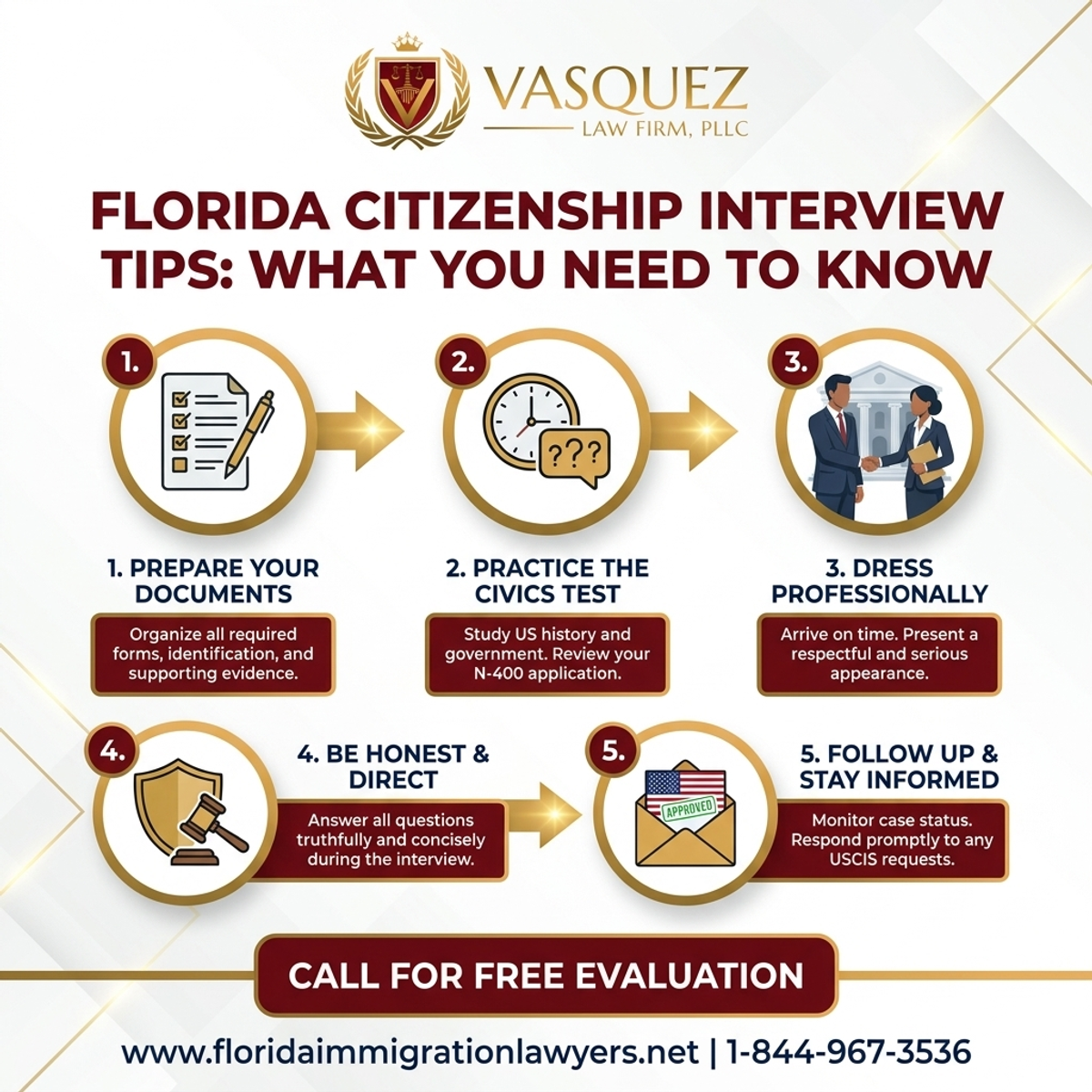
Step-by-Step Process — Citizenship Interview Tips in Florida: What You Need to Know
Having these documents organized and readily available can prevent delays and demonstrate your readiness to the officer.
What Should I Expect During the Naturalization Interview?
The naturalization interview typically involves questions about your application and background. As of 2026, you will also take an English language test and a civics test. The interview is conducted in English, so practice speaking and understanding the language beforehand.
Upon arriving at the USCIS office in Florida, you will check in and wait for your name to be called. The interview itself usually takes 20-30 minutes, though it can vary based on the complexity of your case. You will be sworn in, promising to tell the truth. The officer will then review your N-400 application with you, asking questions to confirm the information and clarify any inconsistencies. These questions cover everything from your name, address, and employment history to your marital status, children, and any past interactions with law enforcement. Be prepared to answer honestly and directly, without volunteering unnecessary information.
Following the review of your N-400, the officer will administer the English and civics tests. The English test involves reading a simple sentence aloud and writing a simple sentence dictated by the officer. The civics test will consist of up to 10 questions from the official list of 100 questions. It's vital to remain calm and focused during these tests. If you don't understand a question, politely ask the officer to repeat or rephrase it. Remember, the officer is assessing your eligibility and suitability for citizenship. A polite, confident, and well-prepared demeanor can leave a positive impression. If you feel overwhelmed or have specific concerns about the interview, Florida Immigration Lawyers can offer guidance and even accompany you to the interview in certain circumstances.
How Long Does the Citizenship Interview Process Take?
The timeline for the citizenship interview process can vary, but here's a general overview:
| Stage | Typical Timeframe | Notes |
|---|---|---|
| Application Submission | 6-9 months | Initial processing and background checks |
| Interview Scheduling | 4-6 weeks | After application approval |
| Interview Day | 1 day | Includes testing and officer review |
| Decision Notification | 1-2 weeks | Notice of approval or request for additional information |
While the table provides typical timeframes, it's important to understand that these are estimates. Various factors can influence the actual duration of your naturalization journey. The workload at your specific USCIS field office in Florida, the completeness and complexity of your application, and any unforeseen background check issues can all extend processing times. For instance, an applicant with a complex travel history or a minor legal infraction might experience longer processing times due to additional review requirements.
After your interview, the officer might make a decision on the spot, or they might issue a "Decision Cannot Be Made" notice, indicating that further review or documentation is needed. If approved, you will typically receive a notice for your Oath of Allegiance ceremony within a few weeks. This final step, where you take the oath and receive your Certificate of Naturalization, officially makes you a U.S. citizen. Staying informed about your case status through the USCIS online tool and being prepared for potential delays can help manage expectations throughout this significant process. Florida Immigration Lawyers can assist in monitoring your case and addressing any unexpected delays.
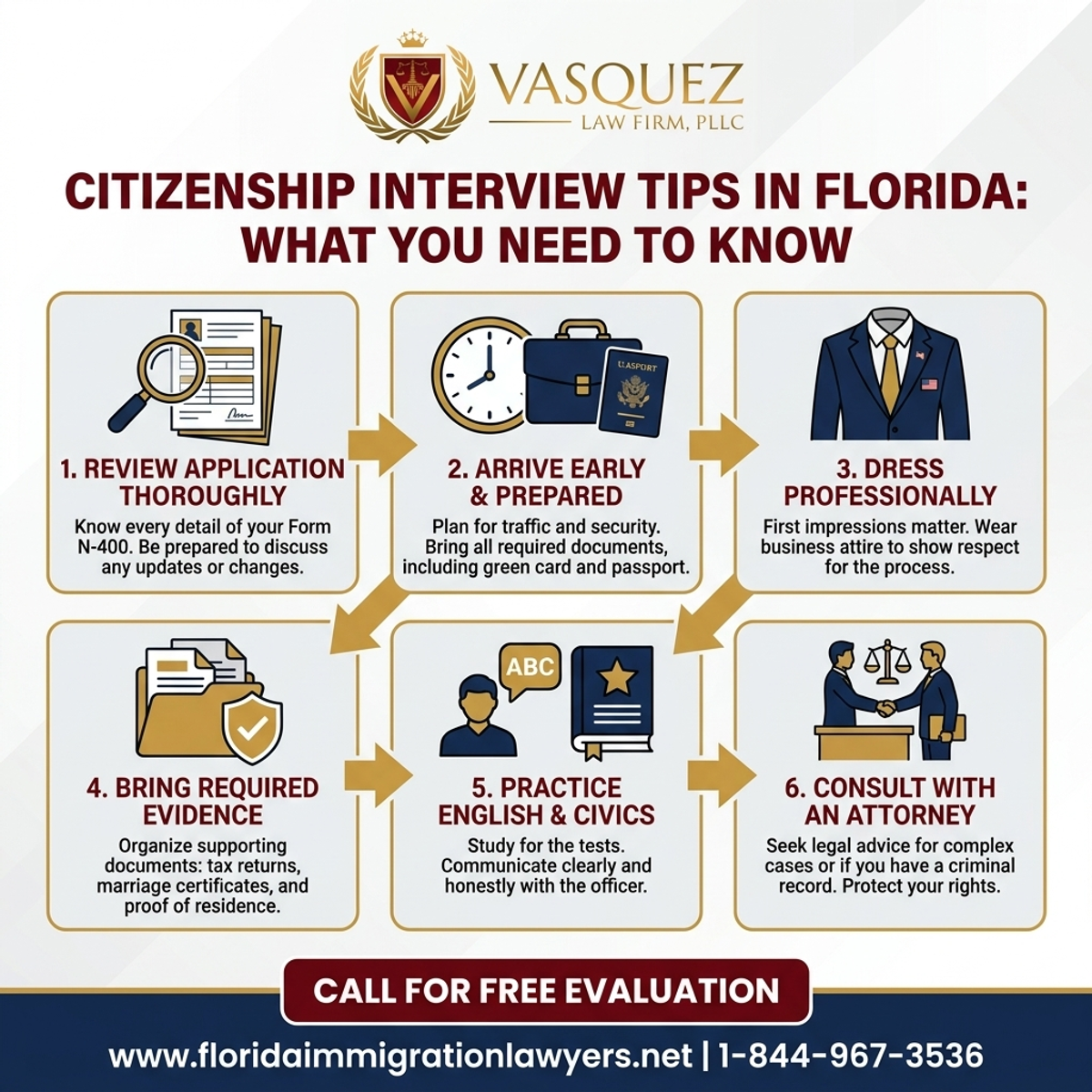
Key Statistics — Citizenship Interview Tips in Florida: What You Need to Know
Keep in mind that processing times can vary based on your local USCIS office's workload.
What Are the Costs Involved in the Citizenship Process?
The costs associated with the citizenship process include application fees and potential legal fees if you choose to hire an attorney. Here's a breakdown:
| Item | Typical Fee | Notes |
|---|---|---|
| Application Fee | Check current USCIS fee | Subject to change, check USCIS for updates |
| Biometrics Fee | Check current USCIS fee | Fingerprinting and background check |
| Attorney Fees | Varies | Optional, for legal assistance |
The USCIS application and biometrics fees are non-refundable and must be paid at the time of filing your N-400. It's critical to check the official USCIS website for the most current fee schedule, as these amounts can change. For eligible low-income applicants, USCIS offers fee waivers. Determining your eligibility for a fee waiver can help reduce the financial burden of the application process, making citizenship more accessible. Always ensure you are using the correct payment method and submitting the exact fee amount to avoid delays in your application processing.
While attorney fees are an additional expense, they often represent a valuable investment, especially for individuals with complex immigration histories, criminal records, or those who simply desire expert guidance. An immigration attorney from Florida Immigration Lawyers can help prepare and review your application, gather necessary documentation, and even represent you during the interview. Their expertise can significantly increase your chances of a smooth and successful naturalization process, potentially saving you time and stress in the long run. Don't hesitate to inquire about fee structures during your initial consultation.
Always verify the latest fees on the USCIS website before applying.
Do not navigate this process alone. Contact Florida Immigration Lawyers today.
Common Mistakes to Avoid
- **Not reviewing your application thoroughly before the interview, leading to inconsistent answers.** Your N-400 is the foundation of your interview. Any discrepancies between your verbal answers and the written application can raise red flags and cause delays. Take the time to read through every question and answer, ensuring accuracy and consistency.
- **Failing to bring all necessary documents, which can delay the process.** A missing document can halt your interview and require you to reschedule, prolonging your path to citizenship. Create a checklist well in advance and double-check everything before you leave for your appointment.
- **Lack of preparation for the English and civics tests, resulting in failure.** These tests are mandatory. Underestimating their difficulty or relying solely on last-minute cramming can lead to failure, necessitating a re-interview. Consistent practice is key.
- **Providing inaccurate information or guesses during the interview.** Always be truthful. If you don't know an answer, it's better to state that you don't recall or don't know, rather than fabricating information. Inaccurate statements can have severe consequences.
- **Not updating the USCIS about changes in your address or personal circumstances.** USCIS requires you to update them on any significant changes. Failing to do so can result in missed notices, interview appointments, or even a denial of your application.
- **Ignoring communication from USCIS, such as interview rescheduling notices.** USCIS communications are time-sensitive. Always open and respond to official mail promptly. Missing a crucial notice could jeopardize your application.
- **Arriving late to the interview, which can result in rescheduling or denial.** Punctuality is essential. Plan to arrive at least 30 minutes early to account for traffic, parking, and security checks at the USCIS office.
- **Not seeking legal advice if your case has complexities, like past legal issues.** Complex cases often require expert interpretation of immigration law. An attorney can help present your case effectively and mitigate potential issues.
- **Forgetting to bring a translator if needed, leading to communication issues.** If you are exempt from the English test and require a translator, you must bring your own. Failing to do so will result in the interview being rescheduled.
- **Overlooking practice opportunities for the civics test questions.** While there are 100 questions, only 10 will be asked. Consistent practice with all 100 questions ensures you are prepared for any combination.
Avoiding these common pitfalls is crucial for a smooth naturalization process. Many applicants, especially those in Florida, find that a little extra effort in preparation can save a lot of stress and potential delays down the line. For example, regularly checking the USCIS website for policy updates, as well as maintaining an organized folder of all immigration-related documents, are simple yet effective strategies.
Furthermore, understanding the gravity of the interview environment can help mitigate nerves. The USCIS officer is there to assess your eligibility, and your demeanor, honesty, and preparedness are all factored in. If you have any doubts about a specific aspect of your application or fear making a mistake, it is always advisable to seek counsel from experienced professionals like Florida Immigration Lawyers. Their expertise can help you anticipate potential issues and prepare robust responses, ensuring your journey to citizenship is as straightforward as possible.
When to Call a Lawyer
Consider contacting an immigration lawyer if you face any of these situations:
- **Uncertain about your eligibility for citizenship:** An attorney can review your entire immigration history and personal circumstances to determine if you meet all the requirements for naturalization, including continuous residence and good moral character.
- **Complicated personal history, such as past arrests:** Even minor legal infractions can impact your eligibility. A lawyer can assess the severity of the issue, advise on its impact, and help prepare necessary documentation or explanations.
- **Language barrier concerns:** While some applicants are exempt from the English test, navigating the interview in a language you're not fully comfortable with can be daunting. A lawyer can provide strategies or discuss translator options if applicable.
- **Need help understanding USCIS communications:** USCIS notices can be complex and confusing. An attorney can interpret these documents, explain what actions are required, and ensure you respond appropriately and on time.
- **Facing delays or requests for additional evidence:** If your application is taking longer than expected, or if USCIS requests more information (RFE), a lawyer can investigate the cause, help compile the requested evidence, and advocate on your behalf.
Florida Immigration Lawyers offer comprehensive support for your citizenship process. Reach out to us for a consultation. Our team understands the intricacies of immigration law in Florida and can provide tailored advice for your unique situation. We can help you identify potential challenges before they arise and develop a strategy to address them effectively, ensuring your application is as strong as possible.
Engaging legal counsel is not just for problematic cases; it's also for peace of mind. Knowing that an expert is guiding you through each step, from reviewing your N-400 to preparing you for the interview, can significantly reduce stress. Whether you're in Orlando, Miami, or anywhere else in Central Florida, our attorneys are equipped to provide the personalized assistance you need to navigate the path to U.S. citizenship successfully. Don't hesitate to call 1-844-YO-PELEO for a free case review and take the first step towards securing your future.
About Florida Immigration Lawyers
Florida Immigration Lawyers is dedicated to assisting clients throughout Central Florida with their immigration needs. Our experienced attorneys provide personalized services in various areas, including citizenship, asylum, deportation defense, and more. We offer free case reviews and are available 24/7. Call us at 1-844-YO-PELEO to schedule a free consultation.
Our commitment extends beyond just legal advice; we strive to be a trusted partner in your immigration journey. With deep roots in the Florida community, we understand the unique challenges and opportunities that immigrants face. We pride ourselves on clear communication, compassionate support, and a proactive approach to every case. Our goal is to empower you with the knowledge and resources needed to achieve your immigration goals, from initial application to final approval.
Whether you are pursuing naturalization, seeking protection through asylum, or defending against deportation, our firm is equipped with the expertise to guide you. We believe that
Sources and References
- U.S. Citizenship and Immigration Services (USCIS)
- Executive Office for Immigration Review (EOIR)
- U.S. Department of State
- Immigration and Nationality Act (INA), 8 U.S.C. Chapter 12
Do Not Navigate This Process Alone
Our experienced immigration attorneys are ready to fight for you. Get a free, confidential case review today.
Se Habla Español
Or leave your details and we’ll call you:
Free Evaluation in 24 Hours
Or talk to us right now
AI voice assistant — available 24/7
FreeFrequently Asked Questions

William J. Vásquez
Founding Attorney · Vasquez Law Firm
U.S. Air Force veteran and immigration attorney with years of hands-on U.S. immigration experience. J.D., NCCU School of Law. AILA member. Admitted to the 4th, 5th, and 11th Circuit Courts.
Available 24/7 - Free Evaluations
Reviewed for legal accuracy by William J. Vásquez
Licensed in North Carolina; U.S. immigration is federal practice.
Related Legal Services
Our Florida immigration attorneys can help you with immigration lawyer cost in Florida, experienced immigration attorneys and asylum protection. Call today at 1-844-YO-PELEO for a free case review.
Related Links
Related Topics
Free Legal Case Review
Discuss your case with our experienced attorneys. We're available 24/7.
Se Habla Español - Estamos aquí para ayudarle.
Related Articles
DUI Immigration Consequences in Florida 2026
A DUI conviction in Florida can have severe immigration consequences, potentially leading to inadmissibility, deportation, or denial of immigration benefits. For non-citizens, a DUI is not just a traffic offense but a serious criminal matter that federal immigration law scrutinizes closely. Factors like multiple offenses, injury, or property damage can escalate a simple DUI to a Crime Involving Moral Turpitude (CIMT) or even an aggravated felony, triggering mandatory detention and removal proceedings. Understanding the specific nature of your Florida conviction and its interpretation under the Immigration and Nationality Act (INA) is crucial. This article outlines how DUIs impact immigration status, the grounds for inadmissibility and deportation, a step-by-step guide to navigating the process, essential documentation, and expected timelines for 2026. We also highlight common mistakes to avoid and when to seek legal counsel from an experienced immigration attorney. Florida Immigration Lawyers offers comprehensive support for individuals facing these challenging situations, providing expert guidance through complex legal landscapes.
Immigration Lawyer Orlando Free Consultation in Florida
For individuals and families in Orlando, Florida, navigating the complexities of U.S. immigration law requires expert guidance. An immigration lawyer in Orlando offers crucial support for everything from visa applications and green card processes to naturalization and deportation defense. This comprehensive guide details what a free consultation covers, providing a step-by-step overview of immigration pathways, essential document checklists, and expected timelines in 2026. We also highlight common mistakes to avoid, discuss the critical role of legal counsel in deportation and asylum cases, and explain why choosing a local Orlando immigration attorney is beneficial. Florida Immigration Lawyers is dedicated to serving the diverse community of Orlando with compassionate, effective legal solutions, ensuring you receive personalized advice and robust representation for a successful immigration journey.
EAD Advance Parole Combo Card in Florida 2026
For individuals with a pending Form I-485, Application to Register Permanent Residence or Adjust Status, the EAD Advance Parole Combo Card is an essential document. This single card combines the authorization to work legally in the U.S. (Employment Authorization Document - EAD) with permission to travel internationally and re-enter without abandoning your green card application (Advance Parole). This guide from Florida Immigration Lawyers provides a comprehensive overview for applicants in Florida in 2026, covering eligibility, the step-by-step application process, required documents, expected processing times, and associated costs. We also highlight common mistakes to avoid and when to seek legal counsel to ensure a smooth and successful immigration journey. Understanding this vital card is key to maintaining stability while awaiting your permanent residency approval.
EAD Advance Parole Combo Card in Florida: What You Need
An EAD advance parole combo card allows individuals with pending adjustment applications to both work and travel abroad without jeopardizing their green card application. Learn how to apply in Florida, what documents you need, and common mistakes to avoid.