Citizenship Delay in West Palm Beach: What to Know
Facing a citizenship application delay in Florida? Learn about N-400 processing challenges and what steps to take. Call Florida Immigration Lawyers for a free consultation.
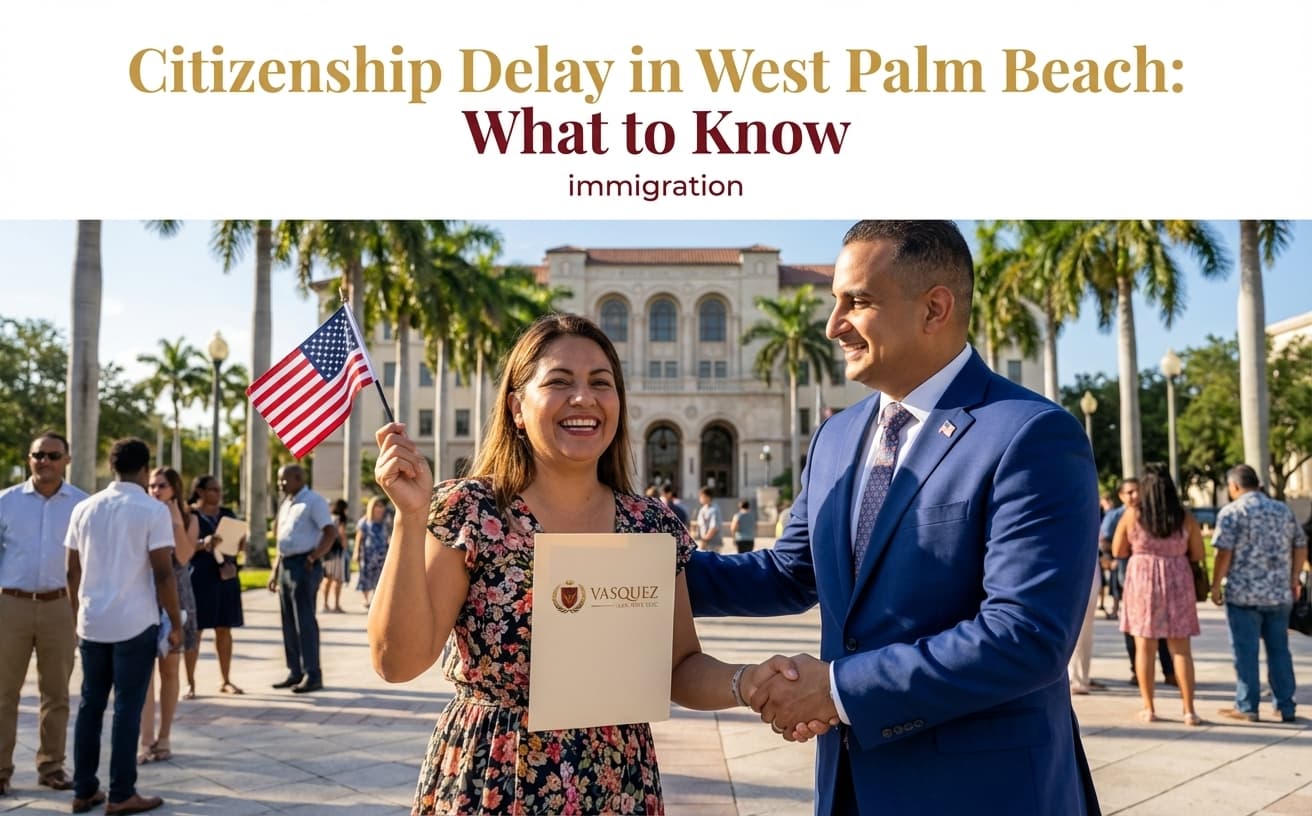
Citizenship Delay in West Palm Beach: What to Know
Are you an aspiring U.S. citizen in West Palm Beach, Florida, experiencing frustrating delays with your N-400 naturalization application? You're not alone. Thousands of applicants across the country, including many in the Sunshine State, face unexpected hurdles and extended waiting times during their naturalization process. Understanding the reasons behind these citizenship delays and knowing your options is crucial. This comprehensive guide will walk you through the common causes of N-400 processing backlogs, what steps you can take, and how experienced Florida Immigration Lawyers can help expedite your journey to U.S. citizenship.
Understanding N-400 Processing Delays
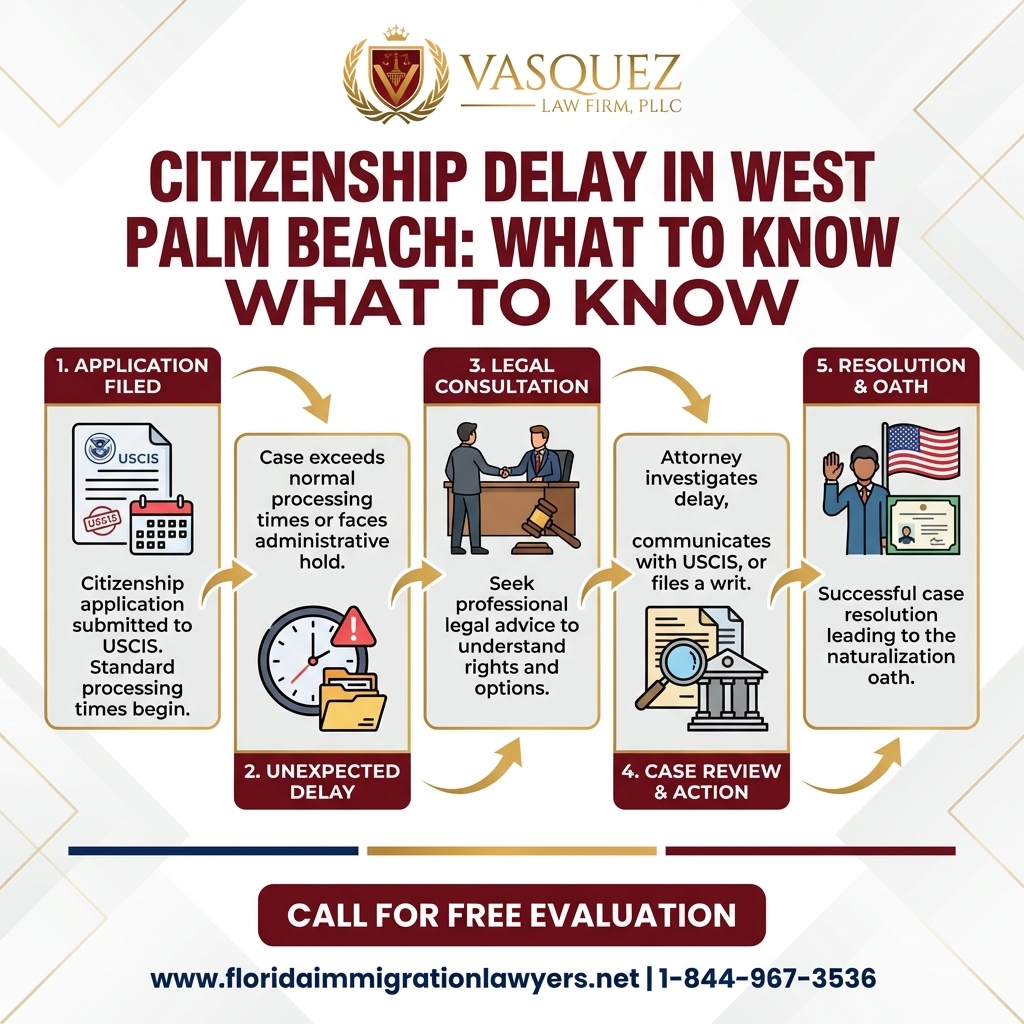
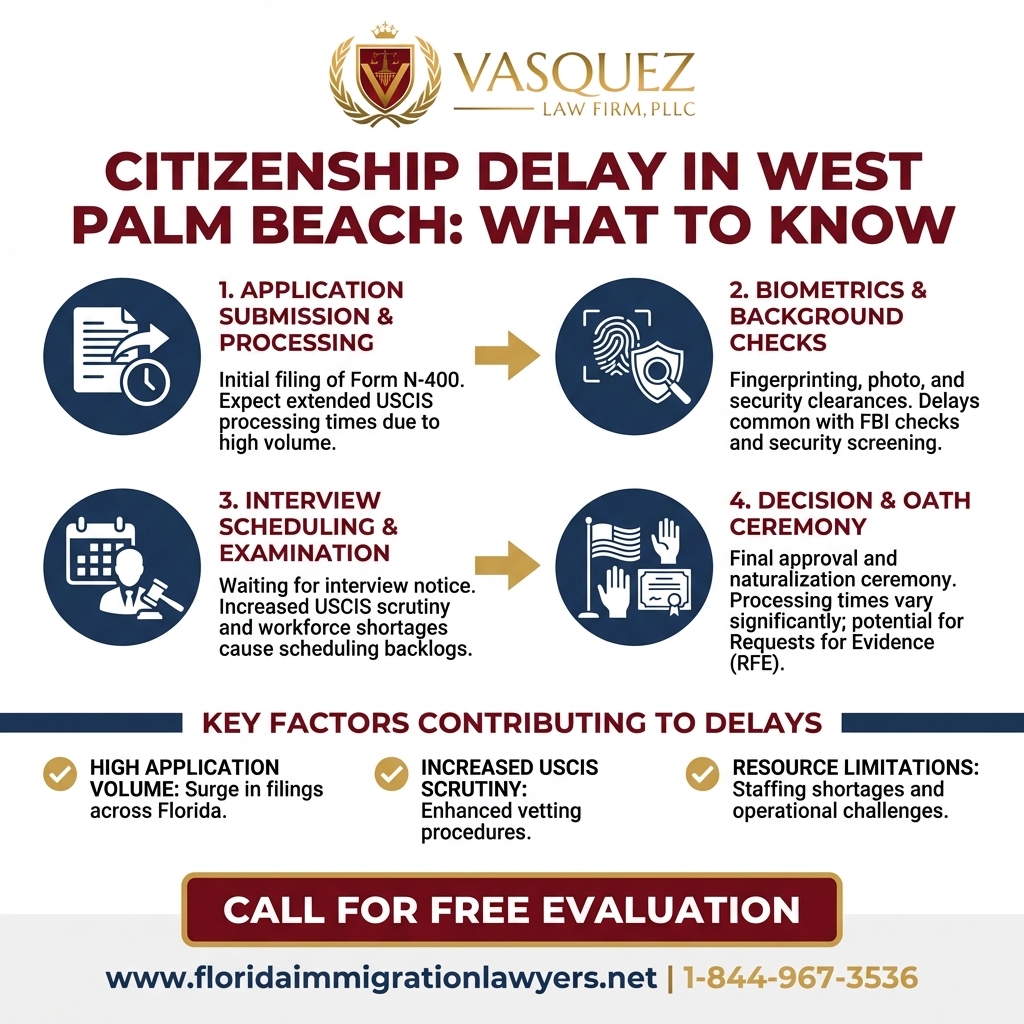
The path to U.S. citizenship, while rewarding, can be complex and lengthy. While USCIS aims for a timely process, various factors can contribute to significant citizenship delay. One of the most frequently cited reasons is the sheer volume of applications, leading to a substantial USCIS backlog. This issue is not new and affects processing centers nationwide, including those serving Florida residents.
Beyond the general backlog, individual cases can face specific delays. These often include:
- Request for Evidence (RFE): If USCIS requires additional documentation or clarification on your application, they will issue an RFE. Responding promptly and thoroughly is vital, but the RFE itself adds time to the N-400 processing timeline.
- Background Checks: Comprehensive security and background checks are mandatory for all naturalization applicants. Any discrepancies, common names, or past issues (even minor ones) can trigger extended reviews by various government agencies, including the FBI.
- Interview Rescheduling: Sometimes, USCIS may reschedule your naturalization interview due to unforeseen circumstances, staffing issues, or if they require further review of your case.
- Administrative Processing: Certain complex cases, especially those involving past legal issues, travel history, or specific country of origin factors, may be placed under administrative processing, which can be notoriously slow.
- Lack of Interview Slots: Even if your case is ready, local field offices might have limited capacity for interviews, leading to further waiting.
If you're experiencing an unusual citizenship delay and feel your case is stuck, don't despair. It's important to remain proactive and informed. For personalized guidance on your specific situation, contact Florida Immigration Lawyers at 1-844-YO-PELEO for a free consultation.
What Steps Can You Take to Address Your N-400 Delay?
When faced with a prolonged N-400 processing time, there are several avenues you can explore:
1. Check Your Case Status Online
The first and most straightforward step is to regularly check your case status on the USCIS website. You'll need your receipt number. This online tool provides updates on your application's progress, including when documents were received, when an RFE was issued, or if an interview has been scheduled.
2. Contact USCIS Directly
If the online status hasn't updated for an extended period, or if your case is significantly outside the normal processing times for your field office, you can contact the USCIS Contact Center. While they can provide general information, their ability to resolve specific case issues might be limited. However, it's a necessary first step to document your efforts.
3. Schedule an InfoPass Appointment (if available)
Historically, InfoPass appointments allowed applicants to meet directly with a USCIS officer at a local field office. While the InfoPass system has largely been replaced by the USCIS Contact Center for initial inquiries, some local offices may still offer limited in-person assistance for complex issues. Check your local USCIS field office's procedures for current options.
4. Reach Out to the USCIS Ombudsman
The DHS Office of the Citizenship and Immigration Services Ombudsman is an independent office within the Department of Homeland Security designed to assist individuals and employers with problems they are having with USCIS. If your case is significantly delayed and you've exhausted other avenues, the Ombudsman's office can intervene to help resolve issues. This is often a good step when processing times are exceeded or there's an apparent error.
5. Consider a Writ of Mandamus Lawsuit
In extreme cases, where USCIS has failed to act on an application within a reasonable timeframe, and all administrative remedies have been exhausted, a lawsuit known as a "Writ of Mandamus" can be filed in federal court. This legal action compels a government agency to perform its duty. This is a complex legal strategy and should only be pursued with the guidance of experienced Florida Immigration Lawyers. If you believe your case warrants such action, call us today at 1-844-YO-PELEO.
The Role of Florida Immigration Lawyers in Expediting Your Naturalization
Navigating the intricacies of immigration law, especially when facing a citizenship delay, can be overwhelming. An experienced immigration attorney can be an invaluable asset in several ways:
- Expert Case Review: Lawyers can review your entire application package to identify potential issues that might be causing delays or could lead to future RFEs.
- Communication with USCIS: Attorneys can communicate directly with USCIS on your behalf, often getting more direct answers or escalating issues more effectively than an individual applicant.
- Responding to RFEs: They ensure that any Request for Evidence is responded to comprehensively and accurately, preventing further delays.
- Preparing for Interviews: Your attorney can help prepare you for your naturalization interview, ensuring you understand the process and can confidently answer questions about your application and U.S. civics.
- Monitoring Processing Times: Lawyers stay updated on current N-400 processing times and can advise you on when it's appropriate to take further action, such as contacting the Ombudsman or considering a Writ of Mandamus.
- Legal Representation: If your case involves complex legal issues, past immigration challenges, or requires a federal lawsuit, an attorney provides essential legal representation.
For residents of West Palm Beach and across Florida, our dedicated team of immigration lawyers understands the local USCIS field office procedures and challenges. We are committed to helping you overcome obstacles in your naturalization journey. Don't let a USCIS backlog or administrative hurdle derail your dreams. Contact Florida Immigration Lawyers at 1-844-YO-PELEO for a confidential consultation.
Navigating Complexities: Advanced Strategies for Addressing Delays
While the basic steps for addressing citizenship delay are crucial, some situations call for more advanced or nuanced strategies. For individuals with particularly complex cases, or those who have exhausted standard avenues, a deeper understanding of legal and administrative options is essential. This is where the expertise of seasoned Florida Immigration Lawyers becomes indispensable.
One advanced strategy involves a meticulous review of your entire immigration history, not just the N-400 application. Sometimes, issues from prior visa applications, adjustments of status, or even past interactions with immigration authorities (such as an asylum claim or a deportation defense case) can resurface and cause delays in the naturalization process. An attorney can identify these potential red flags and proactively address them with USCIS, often through legal arguments or by providing additional context that an applicant might not realize is relevant. For instance, if there were any minor infractions or misunderstandings in your past, presenting a clear, well-documented explanation can prevent an RFE or even a denial.
Another often-overlooked strategy is leveraging congressional inquiries. While not a direct legal remedy, contacting your local congressional representative's office can sometimes prompt USCIS to review a stalled case. Congressional staff have dedicated liaison channels with federal agencies and can make inquiries on behalf of their constituents. This can be particularly effective when a case has been pending for an unreasonable amount of time without clear explanation. However, it's important to use this avenue judiciously and to have already attempted standard communication with USCIS. Your immigration attorney can guide you on when and how to best utilize this option, ensuring all necessary documentation is provided to the congressional office.
Furthermore, understanding the nuances of the Administrative Procedure Act (APA) can be critical. The APA governs how federal agencies develop and issue regulations and outlines procedures for judicial review of agency actions. While a Writ of Mandamus specifically compels an agency to act, other APA-based challenges can be made if USCIS's actions (or inactions) are deemed arbitrary, capricious, an abuse of discretion, or otherwise not in accordance with the law. These are highly technical legal arguments that require a deep understanding of administrative law and immigration statutes, underscoring the necessity of legal counsel. For complex cases requiring such sophisticated legal intervention, don't hesitate to reach out to our team of Florida Immigration Lawyers at 1-844-YO-PELEO.
Finally, staying informed about broader immigration policy changes and processing priorities at USCIS.gov and even general legal trends from the Department of Justice can offer insights into why delays might be occurring. While you cannot control these macro factors, being aware allows your legal team to anticipate potential issues and strategize accordingly. For example, shifts in national security priorities might lead to increased scrutiny in certain background checks, or changes in budget allocations could impact staffing levels at service centers. A proactive legal approach, informed by current events and deep legal knowledge, is often the most effective way to navigate prolonged citizenship delay.
Common Questions About Citizenship Delays in Florida
Here are some frequently asked questions regarding citizenship delay and naturalization in Florida:
- How long does N-400 processing typically take in West Palm Beach?
Processing times vary significantly by field office and can fluctuate. While USCIS provides estimated ranges on its website, actual times can exceed these. It's best to check the USCIS processing times page for the most current data for your specific field office.
- Can I travel internationally while my N-400 is pending?
Generally, you can travel internationally while your N-400 is pending, provided you have a valid green card and any necessary re-entry permits. However, excessive or lengthy travel could raise questions about your continuous residence or intent to reside permanently in the U.S. Always consult with an immigration attorney before making significant travel plans during the naturalization process.
- What if my interview is delayed multiple times?
Do Not Navigate This Process Alone
Our experienced immigration attorneys are ready to fight for you. Get a free, confidential case review today.
Se Habla Español
Or leave your details and we’ll call you:
Free Evaluation in 24 Hours
Or talk to us right now
AI voice assistant — available 24/7
FreeFrequently Asked Questions

William J. Vásquez
Founding Attorney · Vasquez Law Firm
U.S. Air Force veteran and immigration attorney with years of hands-on U.S. immigration experience. J.D., NCCU School of Law. AILA member. Admitted to the 4th, 5th, and 11th Circuit Courts.
Available 24/7 - Free Evaluations
Reviewed for legal accuracy by William J. Vásquez
Licensed in North Carolina; U.S. immigration is federal practice.
Related Legal Services
Our Florida immigration attorneys can help you with family immigration services, immigration lawyer cost in Florida and experienced immigration attorneys. Call today at 1-844-YO-PELEO for a free case review.
Related Links
Related Topics
Free Legal Case Review
Discuss your case with our experienced attorneys. We're available 24/7.
Se Habla Español - Estamos aquí para ayudarle.
Related Articles
DUI Immigration Consequences in Florida 2026
A DUI conviction in Florida can have severe immigration consequences, potentially leading to inadmissibility, deportation, or denial of immigration benefits. For non-citizens, a DUI is not just a traffic offense but a serious criminal matter that federal immigration law scrutinizes closely. Factors like multiple offenses, injury, or property damage can escalate a simple DUI to a Crime Involving Moral Turpitude (CIMT) or even an aggravated felony, triggering mandatory detention and removal proceedings. Understanding the specific nature of your Florida conviction and its interpretation under the Immigration and Nationality Act (INA) is crucial. This article outlines how DUIs impact immigration status, the grounds for inadmissibility and deportation, a step-by-step guide to navigating the process, essential documentation, and expected timelines for 2026. We also highlight common mistakes to avoid and when to seek legal counsel from an experienced immigration attorney. Florida Immigration Lawyers offers comprehensive support for individuals facing these challenging situations, providing expert guidance through complex legal landscapes.
PERM Labor Certification in Florida: A 2026 Guide
Learn all about the PERM labor certification process in Florida, essential for employers sponsoring green card applicants. Understand the steps, document requirements, and common mistakes to avoid in this 2026 guide.
Immigration Lawyer Orlando Free Consultation in Florida
For individuals and families in Orlando, Florida, navigating the complexities of U.S. immigration law requires expert guidance. An immigration lawyer in Orlando offers crucial support for everything from visa applications and green card processes to naturalization and deportation defense. This comprehensive guide details what a free consultation covers, providing a step-by-step overview of immigration pathways, essential document checklists, and expected timelines in 2026. We also highlight common mistakes to avoid, discuss the critical role of legal counsel in deportation and asylum cases, and explain why choosing a local Orlando immigration attorney is beneficial. Florida Immigration Lawyers is dedicated to serving the diverse community of Orlando with compassionate, effective legal solutions, ensuring you receive personalized advice and robust representation for a successful immigration journey.
EAD Advance Parole Combo Card in Florida: What You Need
An EAD advance parole combo card allows individuals with pending adjustment applications to both work and travel abroad without jeopardizing their green card application. Learn how to apply in Florida, what documents you need, and common mistakes to avoid.