BIA Remand in Immigration Appeal: Florida Guide
Facing a BIA remand in Florida? Discover the process and avoid common mistakes with expert guidance. Call Florida Immigration Lawyers for a free consultation.

Understanding the BIA remand process in Florida is crucial if you're facing an immigration appeal. A BIA remand occurs when the Board of Immigration Appeals sends a case back to the immigration judge for further action. Key points include:
- Reasons for a BIA remand can include procedural errors or new evidence.
- The remand process can significantly impact your immigration status.
- Consulting with an experienced immigration lawyer is critical.
Introduction
Facing an immigration appeal can be daunting, especially when dealing with a BIA remand. This process involves the Board of Immigration Appeals sending your case back to the immigration judge for further action. For many in Hollywood, Florida, understanding this process is vital to ensuring the best possible outcome. In this article, we will explore the BIA remand process, common mistakes to avoid, and when you should seek legal assistance. Call Florida Immigration Lawyers at 1-844-967-3536 for a free consultation to discuss your specific case.
The journey through immigration appeals can be complex and emotionally taxing. A BIA remand, while seemingly a step backward, often represents a critical opportunity to present a stronger case or correct previous errors. It’s a chance for a fresh look at your situation by the immigration judge, guided by the BIA's directives. Navigating this intricate legal landscape without expert guidance can lead to missed opportunities or detrimental outcomes, making informed action paramount for anyone seeking to protect their immigration status.
This comprehensive guide aims to demystify the BIA remand process, specifically tailored for individuals in Florida. We will delve into the nuances of why remands occur, what steps you need to take, and the critical role legal representation plays. By understanding the intricacies, you can approach the remanded hearing with confidence and a clear strategy. Remember, your future hinges on a thorough understanding and execution of each step, and Florida Immigration Lawyers are here to provide that essential support.
What is a BIA Remand?
A BIA remand occurs when the Board of Immigration Appeals (BIA) sends a case back to the original immigration judge. This typically happens when the BIA finds that further proceedings are necessary. Common reasons for a remand include procedural errors, new evidence, or legal issues that require reconsideration. Understanding the BIA remand process is crucial for individuals in Florida facing immigration challenges.
Essentially, a remand is not a final decision but rather an instruction from the BIA to the Immigration Judge (IJ) to revisit certain aspects of a case. It signifies that the BIA found an issue with the initial decision or the way the case was handled, and believes further review or action is required at the lower court level. This could be anything from gathering more facts to applying a new legal standard, or correcting a procedural misstep that occurred during the original hearing.
For individuals whose cases are remanded, this means the appeal process is not over, but rather redirected. While it can extend the overall timeline, a remand provides a valuable opportunity to strengthen your position. It allows for the introduction of new, relevant evidence or arguments that might have been overlooked or unavailable previously. Working closely with an experienced attorney, such as those at Florida Immigration Lawyers, can help you strategically leverage this opportunity to present the most compelling case possible upon its return to the immigration judge.
Reasons for Remand
There are several reasons why a BIA remand might occur:
- **Procedural Errors**: Errors during the initial hearing could necessitate a remand.
- **New Evidence**: New information that wasn't available during the initial hearing could impact the case.
- **Legal Issues**: Changes or clarifications in the law might require the case to be reconsidered.
Delving deeper into procedural errors, these can range from the immigration judge failing to properly inform the respondent of their rights, to issues with the admission or exclusion of evidence, or even a lack of proper interpretation services. For example, if a key witness was not allowed to testify, or if critical documents were not considered due to an oversight, the BIA might send the case back to rectify such procedural shortcomings. Such errors can significantly prejudice a respondent's case, and a remand ensures fairness and due process.
The emergence of new evidence is another compelling reason for a remand. This isn't just about presenting something you forgot; it often involves evidence that genuinely wasn't available or couldn't have been reasonably discovered at the time of the initial hearing. For instance, new country conditions reports supporting an asylum claim, medical records proving a severe illness, or updated family circumstances might arise. The BIA will assess if this new evidence is material and whether it could change the outcome of the case, warranting a remand for the immigration judge to consider it first.
Lastly, legal issues, particularly changes or clarifications in immigration law or precedent, frequently trigger remands. Immigration law is dynamic, with new court decisions and policy changes constantly shaping its application. If the BIA determines that the immigration judge applied an outdated legal standard or misinterpreted a new ruling, they will remand the case. This ensures that the most current and correct legal framework is applied to your situation, which can be critical for the success of your appeal. Your attorney from Florida Immigration Lawyers will stay abreast of these legal developments to advocate effectively on your behalf.
Step-by-Step Guide to the BIA Remand Process
- Identify the Reason for Remand: Determine why the BIA remanded the case. This will guide the next steps in your appeal.
- Gather Evidence: Collect all relevant documents and evidence that support your case.
- Legal Representation: Secure an experienced immigration attorney to guide you through the process.
- Prepare for Hearing: Work with your attorney to prepare for the new hearing, addressing any issues highlighted by the BIA.
- Attend the Hearing: Present your case clearly and concisely with your attorney's assistance.
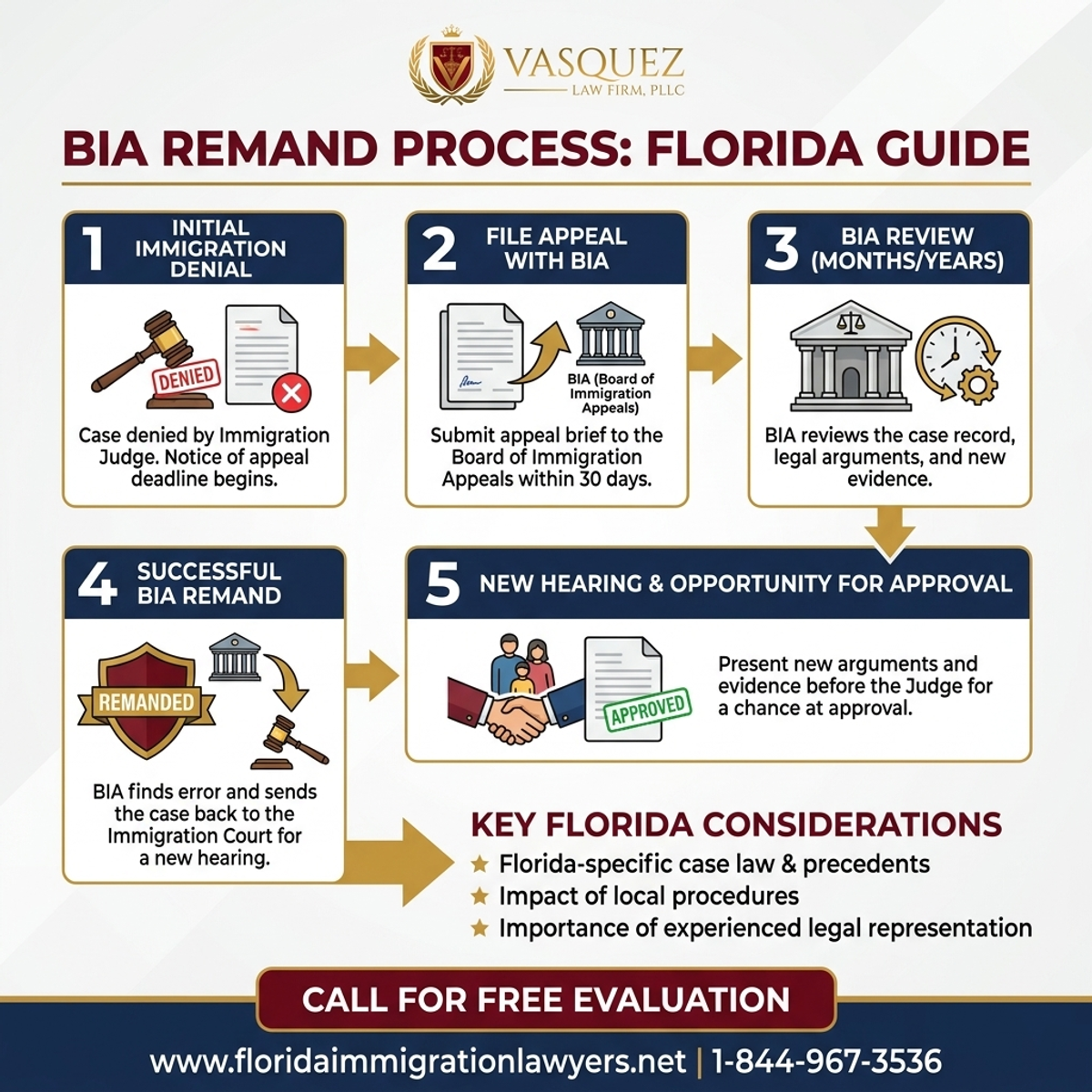
Step-by-Step Process — BIA Remand in Immigration Appeal: Florida Guide
Embarking on the BIA remand process requires a structured approach to maximize your chances of a favorable outcome. Each step is interconnected and crucial for building a robust defense. Understanding the specific directives from the BIA is the foundation upon which all subsequent actions are built. This foundational understanding will allow your legal team, like the experts at Florida Immigration Lawyers, to craft a targeted strategy.
Once the reason for remand is clear, the focus shifts to meticulous preparation. Gathering evidence is not merely collecting documents; it involves strategically identifying what new or supplemental information will best address the BIA's concerns. This might include obtaining expert affidavits, updated country reports, medical evaluations, or witness testimonies. Organizing this evidence logically and ensuring its admissibility will be a key task for your attorney.
Throughout this entire process, the importance of legal representation cannot be overstated. An experienced immigration attorney understands the intricacies of BIA decisions, immigration court procedures, and how to effectively present your case. They will guide you through evidence collection, prepare you thoroughly for your hearing by conducting mock questioning, and represent you vigorously before the immigration judge. Their expertise can transform a daunting challenge into a manageable and potentially successful endeavor.
Document Checklist for BIA Remand
- Notice of BIA Decision
- Original Immigration Court Decision
- Any New Evidence or Documentation
- Legal Briefs Submitted
- Correspondence with Legal Counsel
Having a comprehensive document checklist is vital for a smooth BIA remand process. The Notice of BIA Decision, for instance, is your official directive, outlining precisely why your case was remanded and what the immigration judge needs to address. This document serves as a roadmap for your attorney from Florida Immigration Lawyers to strategize effectively, ensuring no point raised by the BIA is overlooked during the subsequent proceedings.
The Original Immigration Court Decision is equally critical, as it provides the context and background of your initial hearing. By reviewing this alongside the BIA's decision, your legal team can pinpoint any discrepancies, errors, or areas that require further development. This comparative analysis helps in understanding the evolution of your case and preparing targeted arguments for the remanded hearing.
Furthermore, any New Evidence or Documentation you've gathered since the initial hearing, or specifically in response to the BIA's remand, will be central to your case. This could include updated personal circumstances, new legal precedents, or additional support for your claims. Keeping a meticulous record of all Legal Briefs Submitted and Correspondence with Legal Counsel ensures that your entire case history is readily accessible, providing a clear narrative and preventing any last-minute scrambling for information. Organization is key to success in a BIA remand, and your attorney will help you manage this crucial aspect.
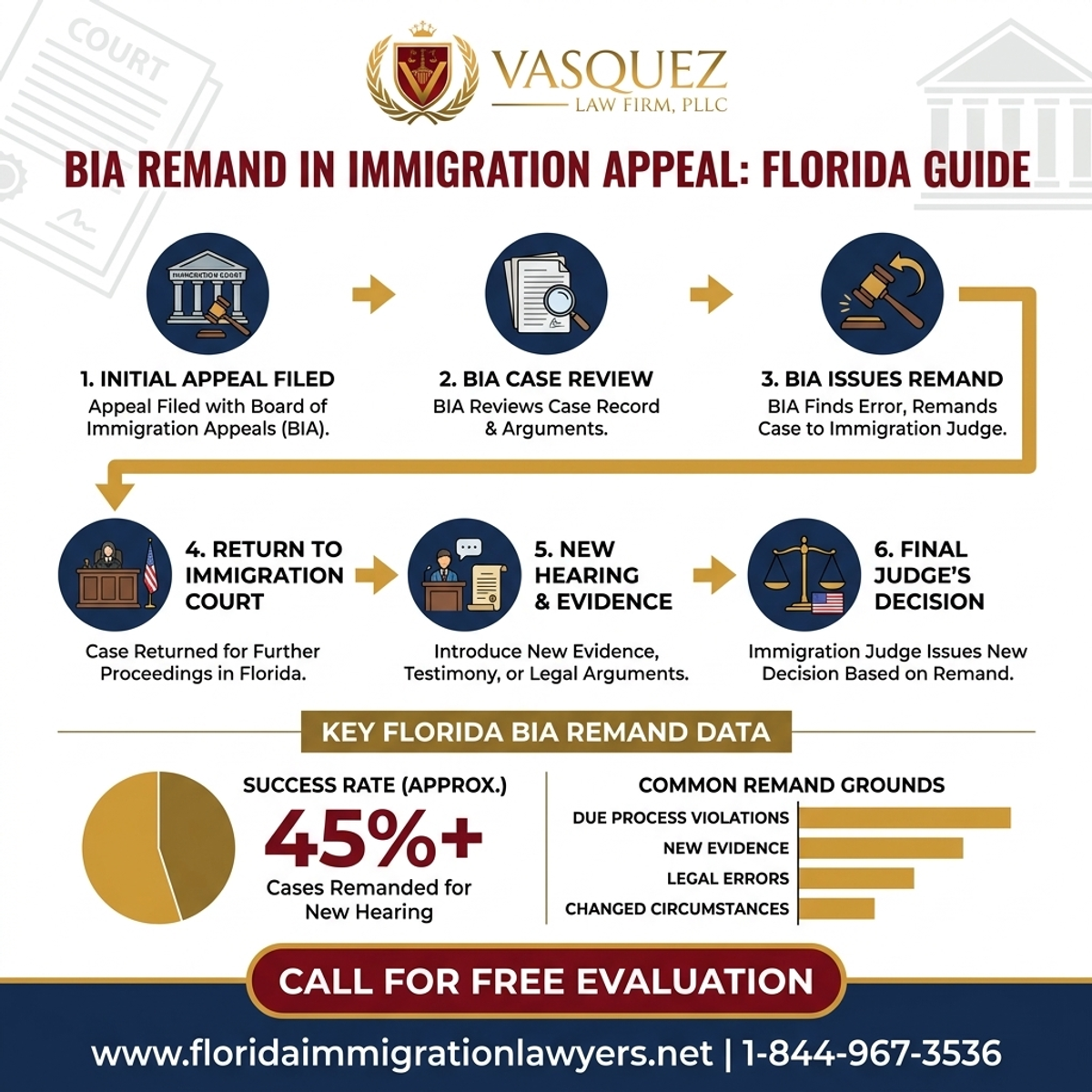
Key Statistics — BIA Remand in Immigration Appeal: Florida Guide
Timeline and Processing Expectations
The timeline for a BIA remand can vary based on the specific circumstances of your case. Generally, the process can take several months. After receiving the BIA's decision, the immigration judge will schedule a new hearing. Preparation is key, and working with an experienced attorney can help expedite the process.
Several factors influence the duration of a BIA remand. The caseload of the specific immigration court and judge, the complexity of the legal issues involved, and the volume of new evidence to be presented all play a significant role. While some straightforward remands might be resolved in a few months, more intricate cases involving extensive fact-finding or novel legal arguments could extend beyond a year. It's important to set realistic expectations and maintain patience throughout this period.
While you cannot directly control the court's schedule, proactive preparation can significantly help in managing the timeline. This includes promptly gathering all requested documents, responding swiftly to attorney communications, and being available for necessary meetings. Your attorney from Florida Immigration Lawyers will keep you informed of any developments and estimated timelines, helping you navigate potential delays. Regular communication with your legal team is crucial to ensure all deadlines are met and your case progresses as efficiently as possible.
Cost Factors and Fee Breakdown
Costs associated with a BIA remand can include legal fees, filing fees, and costs for gathering evidence. While specific amounts can vary, it is essential to budget for these expenses. Many immigration attorneys offer payment plans or initial consultations to discuss potential costs.
Legal fees constitute the primary cost factor in a BIA remand. These fees cover the attorney's time spent analyzing the BIA's decision, preparing new legal briefs, gathering and organizing evidence, preparing you for testimony, and representing you at the remanded hearing. Depending on the law firm and the complexity of your case, attorneys may charge hourly rates or offer flat fees for specific stages of the remand process. It's always advisable to have a clear understanding of the fee structure upfront.
Beyond legal fees, you might encounter various filing fees imposed by government agencies, although these are less common for a remand itself compared to initial applications. However, costs for gathering evidence can accumulate. This might include fees for obtaining certified records, translation services for foreign documents, expert witness fees, or travel expenses if witnesses need to appear. Florida Immigration Lawyers are transparent about their fee structures and will discuss all potential costs during your initial consultation, helping you plan financially for the journey ahead. Don't let financial concerns prevent you from seeking the expert legal help you need.
Do not navigate this process alone. Contact Florida Immigration Lawyers today.
Common Mistakes to Avoid
- Ignoring Deadlines: Missing deadlines can result in the dismissal of your appeal.
- Inadequate Legal Representation: Failing to hire an experienced attorney can jeopardize your case.
- Incomplete Documentation: Not providing all necessary documents can lead to unfavorable outcomes.
- Overlooking New Evidence: Failing to present new evidence can result in a missed opportunity.
- Misunderstanding the Process: A lack of understanding of the remand process can lead to mistakes.
- Failing to Prepare for Hearings: Not adequately preparing for your hearing can negatively affect your case.
- Ignoring Legal Advice: Not following your attorney's guidance can have serious consequences.
- Submitting Incorrect Information: Providing incorrect information can damage your credibility.
- Neglecting to Monitor Changes in Law: Immigration laws change frequently; staying informed is crucial.
- Overconfidence: Underestimating the complexity of the process can lead to errors.
Avoiding common pitfalls is as crucial as understanding the correct steps in a BIA remand. One of the most detrimental mistakes is ignoring deadlines. Immigration courts operate under strict timelines, and a missed deadline for filing a response, submitting evidence, or appearing in court can lead to an automatic denial or dismissal of your case. Your attorney from Florida Immigration Lawyers will meticulously track all deadlines, ensuring timely compliance.
Another significant error is inadequate legal representation. While it might be tempting to save costs by representing yourself or hiring an inexperienced attorney, the complexities of immigration law, particularly after a BIA remand, demand specialized expertise. An attorney who lacks experience in appeals and remands might miss critical legal arguments, fail to identify crucial new evidence, or mishandle court procedures, ultimately compromising your chances of success. Investing in a qualified legal team is an investment in your future.
Furthermore, failing to adequately prepare for hearings or ignoring legal advice can severely undermine your case. Your attorney provides guidance based on years of experience and knowledge of immigration law. This includes advice on how to present your testimony, what to expect during cross-examination, and the importance of consistency in your statements. Disregarding this advice, or submitting incomplete or incorrect information, can damage your credibility with the immigration judge and lead to an unfavorable outcome. Trust your legal counsel and work collaboratively to present the strongest possible case.
When to Call a Lawyer
Consulting with an immigration attorney is crucial when facing a BIA remand. If you are unsure about the reasons for your remand or how to proceed, legal assistance is essential. An attorney can help gather evidence, prepare for hearings, and provide critical guidance throughout the process. Florida Immigration Lawyers offer comprehensive services to assist you in achieving the best possible outcome. Call us at 1-844-967-3536 for assistance.
The moment you receive a BIA remand notice is precisely when you should contact an immigration lawyer. The notice itself can be complex, filled with legal jargon and specific instructions that might be difficult for a layperson to interpret. An attorney can immediately clarify the BIA's directives, assess the strengths and weaknesses of your case post-remand, and outline a clear, actionable strategy. This initial assessment is critical for setting the right course for the subsequent proceedings.
Beyond initial interpretation, an experienced attorney provides invaluable expertise in navigating the procedural intricacies of the immigration court system. They understand how to properly submit new evidence, file necessary motions, and effectively argue your case before the immigration judge, addressing the specific issues raised by the BIA. Attempting to manage these complex legal requirements on your own significantly increases the risk of making errors that could lead to a final denial of your immigration relief. Florida Immigration Lawyers are equipped to handle these challenges on your behalf, offering peace of mind and expert advocacy.
About Florida Immigration Lawyers
Florida Immigration Lawyers is a leading law firm dedicated to serving clients across Florida. Our experienced attorneys specialize in immigration appeals, BIA remands, and a wide range of immigration services. We are available 24/7 to provide support and free consultations. Why choose us? We offer personalized service, expert legal advice, and a commitment to achieving positive outcomes. Contact us at 1-844-967-3536 or visit our website at www.floridaimmigrationlawyers.net.
At Florida Immigration Lawyers, our dedication goes beyond just legal representation; we are committed to providing compassionate and client-centered service. We understand the profound impact immigration decisions have on individuals and families, and we approach each case with the seriousness and personalized attention it deserves. Our team comprises highly skilled attorneys who are not only knowledgeable in the nuanced field of immigration law but are also passionate advocates for our clients' rights and futures.
Our firm prides itself on a proven track record of successfully guiding clients through complex immigration challenges, including BIA remands. We leverage our deep understanding of federal immigration statutes, regulations, and court precedents to craft compelling arguments and strategies tailored to each unique situation. When you choose Florida Immigration Lawyers, you're not just hiring an attorney; you're gaining a dedicated partner who will stand by you every step of the way, fighting tirelessly to achieve the best possible outcome for your immigration journey. Call us today at 1-844-967-3536 to experience the difference expert legal support can make.
Sources and References
- U.S. Citizenship and Immigration Services (USCIS)
- Executive Office for Immigration Review (EOIR)
- 8 U.S.C. Chapter 12 - Immigration and Nationality Act
- U.S. Department of State
Related services: immigration practice areas, family immigration services, citizenship and naturalization, deportation defense.
This article provides general legal information and is not intended as legal advice. Every case is unique, and outcomes depend on specific facts and circumstances. Contact an attorney for advice about your particular situation.
Frequently Asked Questions (FAQs) About BIA Remands
Understanding the intricacies of a BIA remand can be challenging, and many common questions arise during this process. Here, we address some of the most frequently asked questions to provide clarity and practical advice for individuals navigating this critical stage of their immigration appeal.
In conclusion, understanding the BIA remand process is crucial for anyone involved in an immigration appeal. For residents of Hollywood, Florida, and the surrounding areas, having knowledgeable legal support can make all the difference. Contact Florida Immigration Lawyers at 1-844-967-3536 for a free consultation. Se Habla Espanol - Estamos aqui para ayudarle.
If you need legal assistance, learn more about learn about our immigration practice, or call us at 1-844-967-3536 for a free consultation.
Do Not Navigate This Process Alone
Our experienced immigration attorneys are ready to fight for you. Get a free, confidential consultation today.
Se Habla Español
Frequently Asked Questions

William J. Vásquez
Founding Attorney · Vasquez Law Firm
U.S. Air Force veteran and immigration attorney with thousands of cases resolved. J.D., NCCU School of Law. AILA member. Admitted to the 4th, 5th, and 11th Circuit Courts.
Available 24/7 - Free Evaluations
Related Legal Services
Our Florida immigration attorneys can help you with deportation defense, citizenship and naturalization and family immigration services. Call today at 1-844-967-3536 for a free consultation.
Related Links
Related Topics
Free Legal Consultation
Discuss your case with our experienced attorneys. We're available 24/7.
Se Habla Español - Estamos aquí para ayudarle.
Related Articles
Biometrics Appointment in Florida: What to Expect in 2026
Navigating a biometrics appointment in Florida is crucial for your USCIS process. Learn what to expect, how to prepare, and common pitfalls to avoid. Florida Immigration Lawyers are here to help with personalized guidance and support.
Withholding of Removal Explained: Florida Defense in 2026
For those in Florida facing deportation and fearing persecution or torture in their home country, understanding withholding of removal is critical. This form of protection prevents removal to a dangerous country, though it differs significantly from asylum in its eligibility criteria and benefits. It requires proving a "more likely than not" chance of persecution based on protected grounds or torture, a higher standard than asylum's "well-founded fear." While withholding of removal does not lead to a Green Card, it offers mandatory protection if the stringent criteria are met, even for some individuals barred from asylum. The process involves complex legal proceedings before an immigration judge, often in Miami or Orlando immigration courts. A comprehensive application, detailed testimony, and robust supporting evidence, including country conditions reports and affidavits, are essential. Given the high stakes and intricate legal requirements, securing the expertise of a Florida immigration lawyer is paramount to building a strong defense and navigating the path to safety.
US Visa Policy Changes July 2026: What Students in Florida
As of July 2026, international students in Florida seeking a change of status to an F-1 student visa must prepare for potential adjustments to U.S. visa policies. This comprehensive guide from Florida Immigration Lawyers explores the anticipated policy changes, detailing their potential impact on application requirements, processing times, and eligibility criteria. We provide a step-by-step overview of the change of status process, including a document checklist, expected timelines, and cost considerations. Understanding these complexities and avoiding common mistakes is crucial for a successful application. With potential changes approaching, proactive planning and expert legal guidance are more important than ever. Our firm is dedicated to helping students in Tampa and across Florida navigate these challenges, offering tailored advice and robust representation. Learn how to protect your academic future and ensure a smooth transition to F-1 student status.
Dual Citizenship Lawyer: Your 2026 Guide to Naturalization
Achieving U.S. citizenship is a profound milestone, but the path to naturalization, especially with dual citizenship in mind, is fraught with legal intricacies and a critical interview process. This comprehensive guide from Florida Immigration Lawyers demystifies the journey, offering essential citizenship interview tips and highlighting the invaluable role of a dual citizenship lawyer. We cover eligibility, document preparation, timelines, and common pitfalls, all tailored for Florida residents in areas like Pembroke Pines. Discover how expert legal counsel can prepare you for your naturalization interview, address dual nationality concerns, and ensure a smooth, successful application. From initial assessment to interview representation, we provide the support needed to navigate USCIS requirements confidently. Call Florida Immigration Lawyers for a free consultation to start your journey.
