Annual Asylum Fee in Spanish: What Florida Applicants Need
For those seeking asylum in Florida, understanding the process, including potential costs and effective interview preparation, is essential. This guide clarifies that there is no annual or filing fee for Form I-589 asylum applications, whether submitted in English or Spanish. However, applicants should budget for related expenses such as legal representation, translation services, and medical exams. We provide a detailed look at the USCIS asylum interview process in Florida for 2026, including a step-by-step guide, a comprehensive document checklist, and typical timelines. Learn how to avoid common mistakes and when it's critical to seek legal counsel from experienced immigration attorneys. Florida Immigration Lawyers offers dedicated support to help you navigate this complex journey with confidence, ensuring you are thoroughly prepared for your asylum interview.
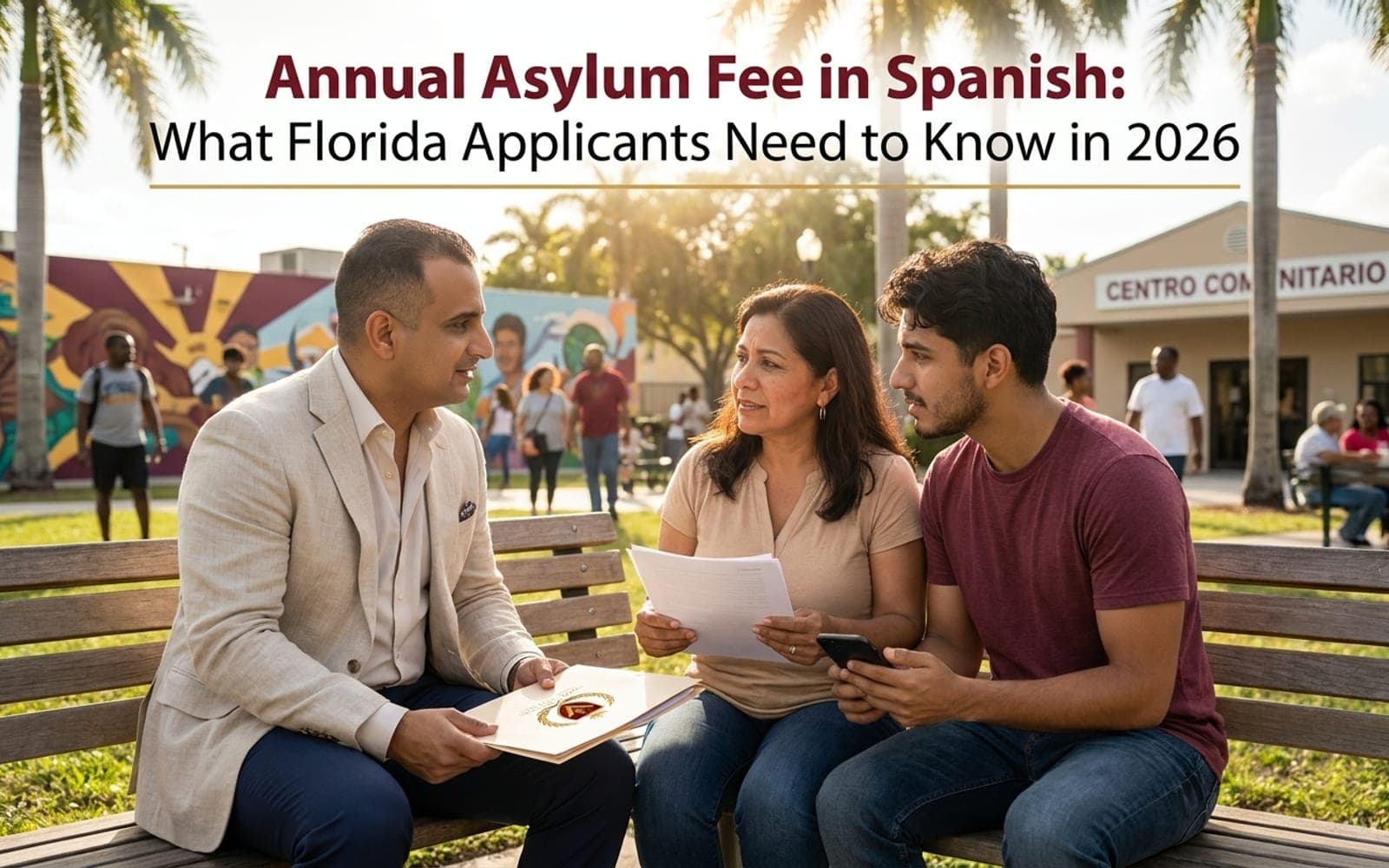
There is no annual fee, nor any filing fee, for Form I-589, Application for Asylum and for Withholding of Removal, regardless of whether it is submitted in English or Spanish. USCIS does not charge applicants to file for asylum. However, applicants may incur costs related to medical examinations, legal representation, translation services, and travel. Understanding the asylum interview preparation process in Florida, including potential costs and required documentation, is crucial for a successful outcome. Seek legal counsel from experienced immigration attorneys to navigate this complex process effectively.
- No filing fee for Form I-589 asylum applications.
- Costs may arise from legal aid, translations, and medical exams.
- Thorough preparation for the asylum interview is vital.
- Consult an immigration lawyer for personalized guidance.
- The process can be lengthy, requiring patience and meticulous documentation.
Navigating the complex world of U.S. immigration law can feel overwhelming, especially when your safety and future are at stake. For individuals seeking asylum in Florida, understanding every step, from filing the initial application to preparing for the crucial asylum interview, is paramount. Many questions arise, including concerns about fees, documentation, and what to expect during this life-altering process. You might be wondering about an annual asylum fee or how to best prepare for your interview in a state as diverse as Florida.
At Florida Immigration Lawyers, we understand the anxieties and challenges you face. This comprehensive guide is designed to clarify the asylum process, address common misconceptions about fees, and provide actionable advice for your asylum interview preparation in Florida for 2026. We'll delve into the specifics of the Form I-589, the interview procedures at USCIS, and the critical steps you need to take to present a strong case. Our goal is to empower you with the knowledge needed to pursue your asylum claim with confidence.
Do not navigate this critical journey alone. If you are seeking asylum or need assistance with your application and interview preparation, call Florida Immigration Lawyers at 1-844-YO-PELEO for a free case review. Our dedicated team is here to provide the expert legal support you deserve.
Is There an Annual Asylum Fee in Spanish or English?
There is no filing fee, annual or otherwise, for Form I-589, Application for Asylum and for Withholding of Removal, regardless of the language it is submitted in. USCIS explicitly states that there is no fee to apply for asylum. This applies uniformly across all applicants, whether they file in English, with Spanish translations, or any other language, and it has remained consistent as of 2026.
The absence of a filing fee for asylum applications is a fundamental aspect of U.S. immigration policy, designed to ensure that individuals fleeing persecution are not financially barred from seeking protection. This policy reflects the humanitarian nature of asylum law, which is rooted in international conventions and U.S. domestic statutes like the Immigration and Nationality Act (INA) Section 208, found at 8 U.S.C. § 1158. While there is no direct fee for the I-589 form itself, it is crucial for applicants in Florida to understand that other related costs might arise during their asylum journey.
These potential costs can include fees for fingerprinting (biometrics, though often waived for asylum seekers), medical examinations required for subsequent adjustment of status applications, translation services for supporting documents, and importantly, legal fees if you choose to hire an attorney. While legal representation is not mandatory, it is highly recommended given the complexities of asylum law and the high stakes involved. An experienced immigration lawyer can help you prepare your application meticulously, gather compelling evidence, and guide you through the interview process, significantly enhancing your chances of success. Understanding these potential indirect costs is part of a comprehensive asylum interview preparation strategy in Florida.
What is the Asylum Interview Process in Florida?
The asylum interview process in Florida typically involves a non-adversarial interview with a USCIS Asylum Officer, usually held at a designated asylum office like the one serving Central Florida. As of 2026, the interview is conducted in English or with a qualified interpreter, and its purpose is to establish the credibility of the applicant's fear of persecution and their eligibility for asylum under U.S. law.
For asylum seekers in Orlando and across Central Florida, your interview will likely take place at the USCIS Asylum Office. The process begins after you have filed your Form I-589 application. USCIS aims to schedule interviews promptly, especially for applications filed recently, following a "last in, first out" scheduling policy in some cases, though this can vary. You will receive an interview notice detailing the date, time, and location. It is imperative to attend this interview, as failure to do so without good cause can lead to the denial of your application or referral to an immigration judge.
Step-by-Step Guide to the Asylum Interview Process
- Receive Interview Notice: After filing Form I-589, USCIS will send you a notice with your interview date, time, and location. This notice also specifies any documents you need to bring.
- Biometrics Appointment: Before your interview, you will typically attend a biometrics appointment where your fingerprints, photograph, and signature are collected for background checks.
- Arrive at the Asylum Office: Arrive early on your interview day. You will go through security screening. Bring your interview notice, all original documents, and your interpreter (if needed and not provided by USCIS).
- The Interview: The asylum officer will administer an oath, confirm your identity, and explain the purpose of the interview. They will then ask detailed questions about your Form I-589, your fear of persecution, country conditions, and personal history. The interview can last several hours.
- Interpreter's Role: If you do not speak English fluently, you must bring a fluent, neutral interpreter (at least 18 years old, not your attorney or witness). USCIS may provide an interpreter in some cases, but it's often safer to bring your own.
- Spouses and Children: If your spouse and/or children are included in your application, they must also attend the interview.
- After the Interview: The asylum officer will typically not give you a decision on the spot. You will usually receive a decision by mail several weeks or months later. In some cases, you may be asked to return for a follow-up interview or to submit additional documents.
How Do I Prepare for My USCIS Asylum Interview in 2026?
Effective preparation for your USCIS asylum interview in 2026 involves meticulously reviewing your Form I-589, gathering all supporting documentation, practicing your narrative, and anticipating potential questions. This includes understanding the specific legal criteria for asylum and being ready to articulate your fear of persecution clearly and consistently to the asylum officer.
Preparing for your asylum interview is perhaps the most critical stage of your asylum claim. It requires a thorough understanding of your own story, the conditions in your home country, and the legal framework of asylum. Many applicants in Florida, especially those from diverse backgrounds, find immense value in working with an attorney specializing in asylum law. Your attorney can help you organize your thoughts, identify key facts, and prepare you for the types of questions an asylum officer might ask, ensuring your testimony is coherent and credible.
Essential Document Checklist for Your Asylum Interview
Bringing a complete set of documents is vital for your asylum interview. Organize them clearly, preferably with tabs or labels, to make it easy for the asylum officer to review. As of 2026, the following are generally required:
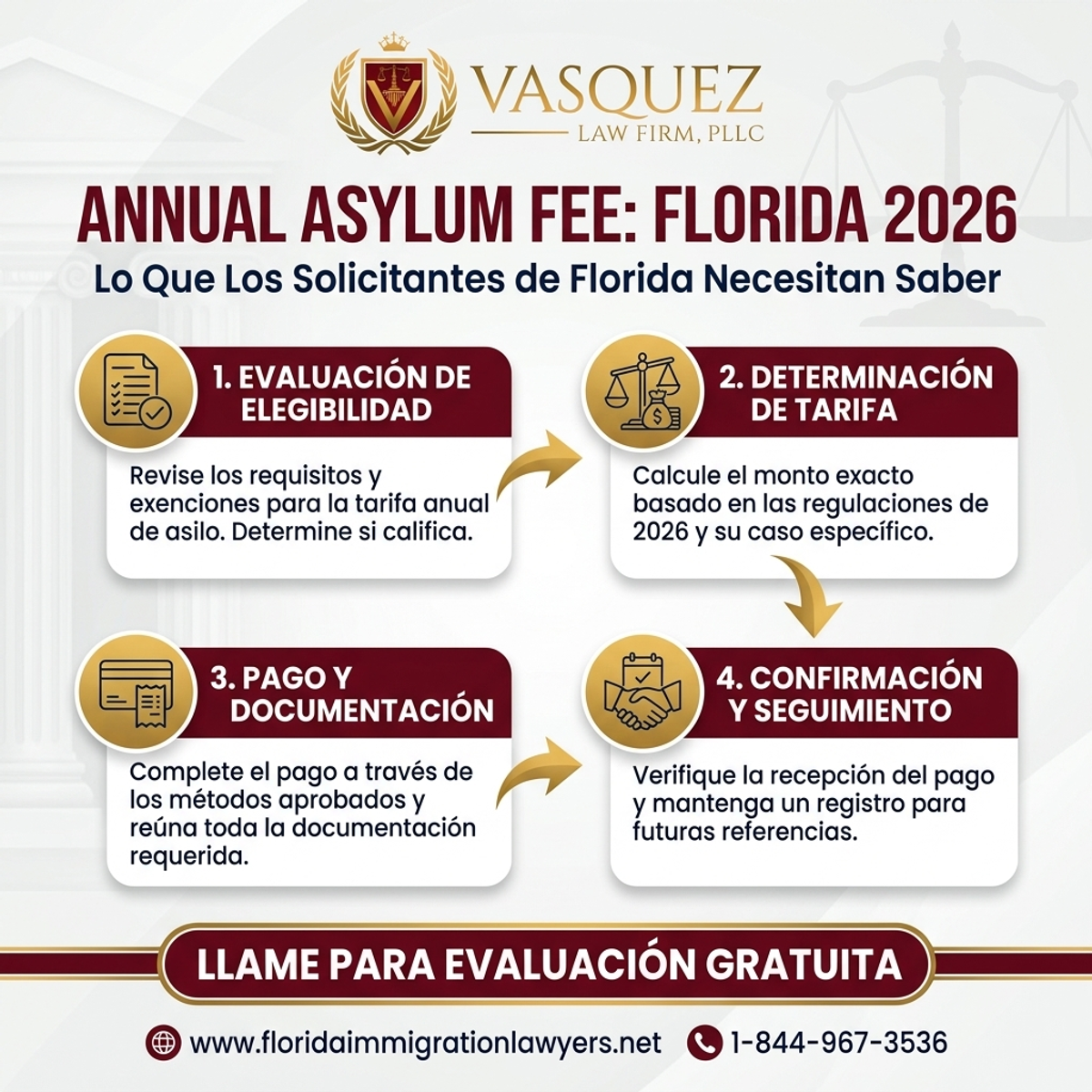
Step-by-Step Process — Annual Asylum Fee in Spanish: What Florida Applicants Need to Know in 2026
- Your original Form I-589, Application for Asylum and for Withholding of Removal, and all supporting documents you submitted.
- Any updated information or new evidence that has developed since you filed your application.
- All passports, travel documents, and identity documents (birth certificates, national ID cards).
- Spouse's and children's passports, birth certificates, and marriage certificate (if applicable and included in your application).
- Originals of all documents you submitted as evidence (e.g., police reports, medical records, news articles, affidavits from witnesses).
- Photographs of any injuries, damaged property, or relevant events.
- Country condition reports from reputable human rights organizations or government sources that support your claim.
- Proof of your presence in the U.S. (e.g., I-94, entry stamp).
- A qualified, neutral interpreter (if needed), along with their photo ID and a signed interpreter certification.
- Any previous immigration applications or documents.
All documents not in English must be accompanied by a certified English translation. This means the translator must certify that they are competent to translate and that the translation is accurate.
Understanding Asylum Interview Timelines and Expectations in Florida
As of 2026, asylum interview timelines in Florida can vary significantly, though USCIS generally prioritizes newly filed applications under its "last in, first out" policy. While some applicants may receive an interview within a few months, others, especially those with older applications, might wait for several years. The decision on your case typically follows weeks or months after the interview.
The waiting period for an asylum interview can be one of the most challenging aspects for applicants in Florida. USCIS has implemented various strategies to manage its asylum caseload, but backlogs can still occur. Factors influencing your timeline include the volume of applications, staffing levels at the USCIS Asylum Offices, and the complexity of your individual case. For example, individuals who have been placed in removal proceedings may have their asylum claims adjudicated by an immigration judge at an Executive Office for Immigration Review (EOIR) court in Miami or Orlando.
Typical Asylum Process Timeline in Florida (As of 2026)
This table provides a general overview. Individual cases may differ.
| Stage | Typical Timeframe | Notes |
|---|---|---|
| File Form I-589 | Within 1 year of U.S. entry (unless exceptions apply) | Crucial deadline; missing it without valid reason can bar asylum. |
| Biometrics Appointment | 3-8 weeks after filing I-589 | Required for background and security checks. |
| Interview Notice Received | Varies greatly (months to years) | "Last in, first out" policy for recent filings, older cases may wait longer. |
| Asylum Interview | Scheduled after notice; can be 1-6 months post-notice | Conducted by a USCIS Asylum Officer. |
| Decision Received | Weeks to several months post-interview | Decision mailed; not typically given on the spot. |
| Work Authorization (EAD) | 150 days after filing I-589; apply after 180 days | Eligibility for work permit begins. |
It's important to remember that these are typical timeframes, and actual processing times can fluctuate. Staying informed about your case status through the USCIS website and regularly communicating with your attorney are key. Should your case be referred to an immigration court, the timeline will shift to align with court dockets and procedures, which can add further delays. This is why having strong deportation defense is critical.
Cost Factors and Fee Breakdown for Asylum Seekers in Florida
While the Form I-589 itself has no filing fee, asylum seekers in Florida should be aware of various other potential costs that can arise during their application process. These expenses are important to budget for and consider when planning your asylum journey. Understanding these cost factors is an integral part of comprehensive asylum interview preparation, helping you avoid unexpected financial burdens.
The most significant potential cost for many asylum seekers is legal representation. While not mandatory, the benefits of having an experienced immigration attorney are substantial. An attorney can help you prepare your application, gather evidence, draft declarations, and represent you during the asylum interview or in immigration court. Attorneys' fees vary based on experience, location, and the complexity of the case, but they are a worthy investment given the high stakes.
Typical Costs Associated with an Asylum Claim (As of 2026)
This table outlines common expenses. Actual costs may vary.
| Item | Typical Fee | Notes |
|---|---|---|
| Form I-589 Filing Fee | $0 | No fee to apply for asylum with USCIS. |
| Biometrics Fee | $0 (often waived for asylum seekers) | If not waived, it's typically a standard fee for other applications. |
| Legal Representation | Varies widely ($3,000 - $15,000+) | Highly recommended; covers preparation, representation, and advocacy. |
| Translation Services | $20-$50 per page or hourly rates | Required for all non-English documents. |
| Medical Examination | $200 - $500 (for adjustment of status) | Required if you are later granted asylum and apply for a green card (Form I-485). |
| Travel Costs | Varies | To USCIS office, attorney's office, or immigration court. |
| Country Condition Reports | $0 - $200+ | Some reports are free, others may require purchase from experts. |
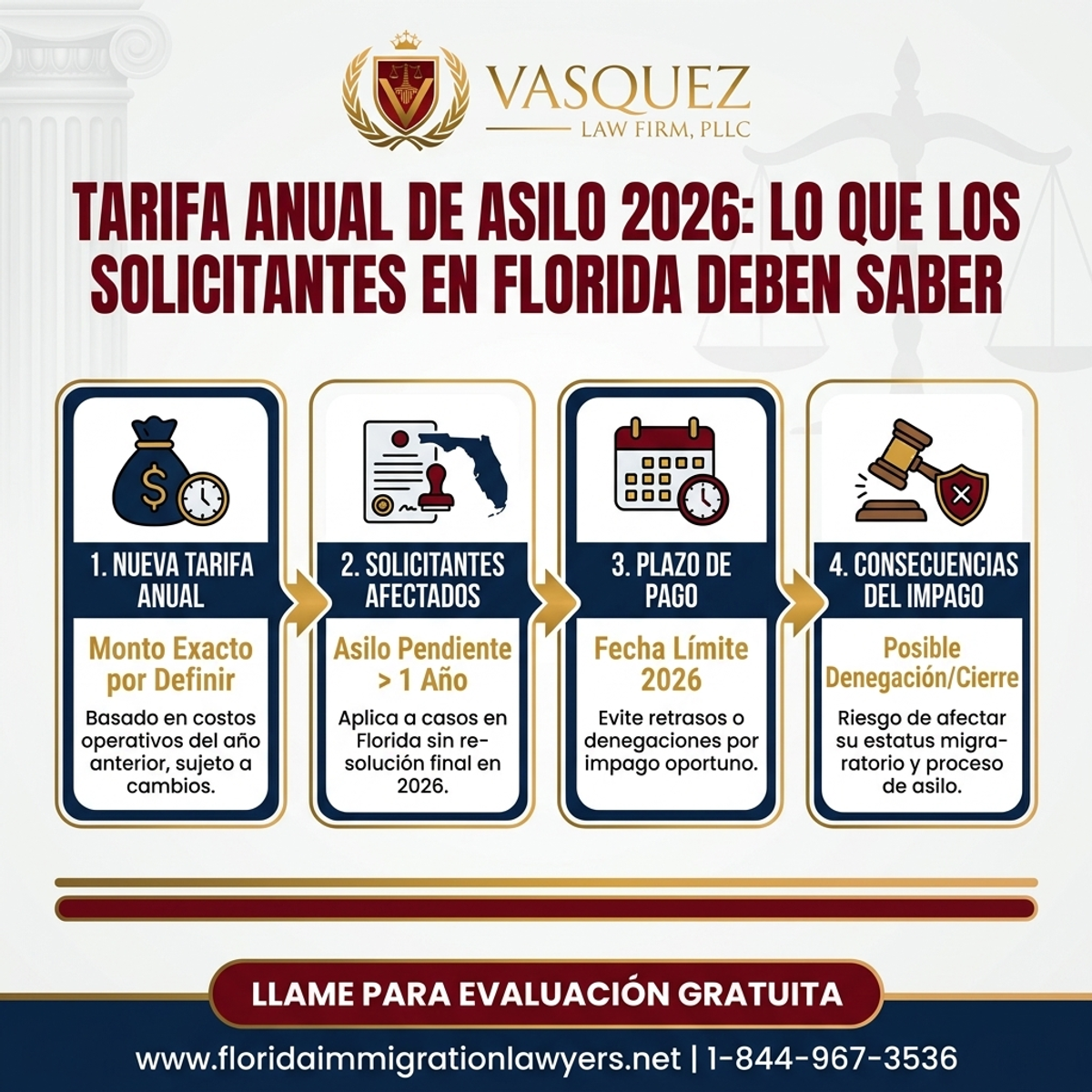
Key Statistics — Annual Asylum Fee in Spanish: What Florida Applicants Need to Know in 2026
Additionally, if your asylum claim is denied by USCIS and referred to an immigration judge, you may incur further legal fees for deportation defense. The costs for applying for work authorization (Form I-765, Employment Authorization Document) after your asylum application has been pending for 150 days also need to be considered. As of 2026, the fee for Form I-765 can be significant, although fee waivers may be available for eligible asylum seekers.
Do not navigate this complex process alone. Contact Florida Immigration Lawyers today for a free case review and let us guide you through your asylum application and interview preparation. We are here to help.
Common Mistakes to Avoid in Your Asylum Interview Preparation
Making even a small error during the asylum process can have significant consequences, potentially jeopardizing your entire case. Being aware of these common pitfalls and actively working to avoid them is crucial for asylum seekers in Florida.
- Missing the One-Year Filing Deadline: Unless you qualify for an exception, you must file your Form I-589 within one year of your last arrival in the U.S. Failing to meet this deadline without a valid reason is a common mistake that can lead to an outright denial.
- Inconsistent or Fabricated Story: Any inconsistencies between your written application, your testimony, and your supporting documents can severely damage your credibility. Asylum officers are trained to detect fabrication. Always be truthful and consistent.
- Lack of Preparation for the Interview: Going into the interview without thoroughly reviewing your application, understanding country conditions, and practicing your narrative can lead to confusion, omissions, or an inability to answer questions clearly.
- Insufficient Supporting Documentation: Failing to provide compelling evidence to corroborate your claim, such as police reports, medical records, news articles, or affidavits, weakens your case. Ensure all documents are translated and certified.
- Not Using a Qualified Interpreter: If you don't speak English fluently, using an unqualified interpreter (a friend, family member, or someone who is not neutral) can lead to miscommunication and misrepresentation of your story.
- Failing to Disclose All Relevant Information: Hiding details, even if they seem minor or embarrassing, can be perceived as an attempt to deceive and can undermine your entire claim. Be open and honest with your attorney and the asylum officer.
- Not Understanding the Legal Standard: Asylum is granted based on specific legal criteria (fear of persecution on account of race, religion, nationality, membership in a particular social group, or political opinion). Many applicants fail to connect their story directly to these protected grounds.
- Missing the Interview or Biometrics Appointment: Failure to appear for scheduled appointments without proper notification and a valid excuse can result in denial or referral to immigration court.
- Not Updating USCIS with New Information: If your contact information changes or new evidence becomes available, failing to inform USCIS promptly can lead to missed notices or a weaker case.
- Arguing with the Asylum Officer: Maintain a respectful and calm demeanor throughout the interview, even if you feel misunderstood or frustrated. The asylum officer's role is to assess your credibility and eligibility.
- Ignoring Legal Advice: Attempting to navigate the asylum process without legal counsel or disregarding your attorney's advice significantly increases your risk of denial.
When to Call a Lawyer for Asylum Interview Preparation in Florida
The asylum process is one of the most complex and high-stakes areas of immigration law. While it is technically possible to apply for asylum without legal representation, doing so significantly increases the risk of denial. You should consider contacting Florida Immigration Lawyers at the earliest possible stage, ideally even before filing your Form I-589, especially if you are in Orlando or anywhere in Central Florida.
Here are specific scenarios and warning signs that strongly indicate you need legal help for your asylum interview preparation:
- You are unsure about the one-year filing deadline or believe you might have missed it.
- You have a complicated personal history or your story involves sensitive or traumatic events that are difficult to articulate.
- You lack sufficient documentation to support your claim and need guidance on how to gather compelling evidence.
- You do not speak English fluently and are concerned about communication during the interview or finding a reliable interpreter.
- You have been previously denied asylum or have a history with immigration authorities.
- You are in removal (deportation) proceedings, which adds another layer of complexity to your case.
- You are unsure if your reasons for fearing persecution meet the legal definition of asylum under U.S. law.
- You need help understanding country conditions and how to present them effectively.
- You are overwhelmed by the paperwork and the detailed nature of the Form I-589.
Florida Immigration Lawyers offers comprehensive services for asylum seekers, including preparing your Form I-589, gathering and organizing evidence, drafting declarations, preparing you thoroughly for your USCIS asylum interview, and representing you in immigration court if your case is referred. Our experienced asylum attorneys understand the nuances of the law and are dedicated to protecting your rights and securing your future.
About Florida Immigration Lawyers
Florida Immigration Lawyers is a leading immigration law firm dedicated to serving individuals and families across the entire state of Florida. With a deep understanding of the complexities of U.S. immigration law, our experienced attorneys provide compassionate, effective, and results-driven legal representation. We are committed to helping our clients navigate the often-challenging immigration system, offering personalized strategies tailored to their unique circumstances.
Located in Orlando, we proudly serve clients throughout Central Florida and beyond, offering a wide range of immigration practice areas including asylum, deportation defense, family immigration, and citizenship. Our firm is available 24/7, providing free case reviews to ensure everyone has access to initial legal guidance. We understand the urgency and importance of your immigration matters, and our bilingual team is ready to assist you every step of the way.
When your future in the United States is on the line, choose a firm that combines legal expertise with genuine care. For a free case review, contact Florida Immigration Lawyers at 1-844-YO-PELEO. We are here to fight for you.
Sources and References
- U.S. Citizenship and Immigration Services (USCIS)
- Executive Office for Immigration Review (EOIR)
- U.S. Department of State
- Immigration and Nationality Act (INA) Section 208 - Asylum (8 U.S.C. § 1158)
- 8 Code of Federal Regulations (CFR) Part 208 - Procedures for Asylum and Withholding of Removal
- USCIS Policy Manual - Volume 7, Part A, Chapter 2 - Asylum Eligibility
Related services: asylum application process, refugee status and resettlement, humanitarian protection programs.
This article provides general legal information and is not intended as legal advice. Every case is unique, and outcomes depend on specific facts and circumstances. Contact an attorney for advice about your particular situation.
Your journey to asylum in the United States is a profound one, and proper preparation is your strongest ally. Understanding that there is no annual asylum fee, meticulously preparing your Form I-589, and diligently practicing for your interview are all crucial steps. Let Florida Immigration Lawyers be your trusted partner in this process. Our experienced team is ready to provide the compassionate and expert legal representation you need.
Contact us today for a free case review at 1-844-YO-PELEO. Se Habla Español - Estamos aquí para ayudarle.
Do Not Navigate This Process Alone
Our experienced immigration attorneys are ready to fight for you. Get a free, confidential case review today.
Se Habla Español
Or leave your details and we’ll call you:
Free Evaluation in 24 Hours
Or talk to us right now
AI voice assistant — available 24/7
FreeFrequently Asked Questions

William J. Vásquez
Founding Attorney · Vasquez Law Firm
U.S. Air Force veteran and immigration attorney with years of hands-on U.S. immigration experience. J.D., NCCU School of Law. AILA member. Admitted to the 4th, 5th, and 11th Circuit Courts.
Available 24/7 - Free Evaluations
Reviewed for legal accuracy by William J. Vásquez
Licensed in North Carolina; U.S. immigration is federal practice.
Related Legal Services
Our Florida immigration attorneys can help you with asylum protection, citizenship and naturalization and immigration practice areas. Call today at 1-844-YO-PELEO for a free case review.
Related Links
Related Topics
Free Legal Case Review
Discuss your case with our experienced attorneys. We're available 24/7.
Se Habla Español - Estamos aquí para ayudarle.
Related Articles
DUI Immigration Consequences in Florida 2026
A DUI conviction in Florida can have severe immigration consequences, potentially leading to inadmissibility, deportation, or denial of immigration benefits. For non-citizens, a DUI is not just a traffic offense but a serious criminal matter that federal immigration law scrutinizes closely. Factors like multiple offenses, injury, or property damage can escalate a simple DUI to a Crime Involving Moral Turpitude (CIMT) or even an aggravated felony, triggering mandatory detention and removal proceedings. Understanding the specific nature of your Florida conviction and its interpretation under the Immigration and Nationality Act (INA) is crucial. This article outlines how DUIs impact immigration status, the grounds for inadmissibility and deportation, a step-by-step guide to navigating the process, essential documentation, and expected timelines for 2026. We also highlight common mistakes to avoid and when to seek legal counsel from an experienced immigration attorney. Florida Immigration Lawyers offers comprehensive support for individuals facing these challenging situations, providing expert guidance through complex legal landscapes.
PERM Labor Certification in Florida: A 2026 Guide
Learn all about the PERM labor certification process in Florida, essential for employers sponsoring green card applicants. Understand the steps, document requirements, and common mistakes to avoid in this 2026 guide.
Dual Citizenship Lawyer in Florida: What You Need to Know
For Florida residents, the concept of dual citizenship, or holding two passports, offers a compelling blend of opportunities and challenges. While the U.S. generally permits dual nationality, the path to achieving this status requires a meticulous understanding of both U.S. immigration laws and the citizenship policies of your country of origin. This guide explores the definition of dual citizenship, the detailed step-by-step process for U.S. naturalization, and the significant benefits and potential pitfalls involved. We cover essential documentation, typical timelines, and cost considerations for 2026, providing crucial insights for anyone in Orlando, Miami, or across Florida considering this important legal step. Learn about common mistakes to avoid and understand when to seek professional legal counsel to navigate this complex process successfully. Florida Immigration Lawyers is here to provide expert, bilingual support for your dual citizenship journey.
Immigration Lawyer Orlando Free Consultation in Florida
For individuals and families in Orlando, Florida, navigating the complexities of U.S. immigration law requires expert guidance. An immigration lawyer in Orlando offers crucial support for everything from visa applications and green card processes to naturalization and deportation defense. This comprehensive guide details what a free consultation covers, providing a step-by-step overview of immigration pathways, essential document checklists, and expected timelines in 2026. We also highlight common mistakes to avoid, discuss the critical role of legal counsel in deportation and asylum cases, and explain why choosing a local Orlando immigration attorney is beneficial. Florida Immigration Lawyers is dedicated to serving the diverse community of Orlando with compassionate, effective legal solutions, ensuring you receive personalized advice and robust representation for a successful immigration journey.