Florida Asylum Process: How to Apply in 2026 | VLF Florida
Learn how to apply for asylum in Florida, including filing Form I-589, preparing for interviews, and avoiding common mistakes. Call for a free consultation.

Applying for asylum in Florida is a detailed process that involves demonstrating credible fear of persecution in your home country. You need to file Form I-589, attend interviews, and possibly go through court hearings. It's crucial to understand each step to improve your chances of success.
- File Form I-589 within one year of arrival.
- Prepare for interviews and hearings.
- Consult an immigration attorney for guidance.
Introduction
Imagine fleeing your home country due to persecution, seeking safety and a new beginning in Florida. The asylum process can be daunting, especially in places like Homestead, Florida, known for its vibrant immigrant community. This guide will walk you through every step of the asylum application process, from filing your initial paperwork to attending interviews and hearings.
Florida, with its diverse population and welcoming atmosphere, has become a beacon of hope for many seeking refuge. However, navigating the complex legal landscape of asylum law requires precise attention to detail and a thorough understanding of U.S. immigration policies. The journey can be emotionally taxing, but with the right preparation and support, it is possible to achieve a positive outcome.
This comprehensive guide aims to demystify the asylum process, providing clarity on eligibility requirements, necessary documentation, and what to expect at each stage. We will also highlight common pitfalls and offer practical advice to help you strengthen your case. Remember, you don't have to face this challenge alone.
Call Florida Immigration Lawyers at 1-844-967-3536 for a free consultation. Our experienced attorneys are ready to assist you with your asylum application.
Understanding Asylum and Eligibility
Asylum is a protection granted to individuals fleeing persecution based on race, religion, nationality, political opinion, or membership in a particular social group. To apply for asylum in the U.S., you must demonstrate a well-founded fear of persecution in your home country.
A "well-founded fear" means that there is a reasonable possibility you would be persecuted if you returned to your home country. This isn't just a general fear of violence or civil unrest; it must be directly linked to one of the five protected grounds. For example, if you were a journalist targeted for your political reporting, or a member of a religious minority facing systemic discrimination and violence, these could form the basis of a well-founded fear.
In Florida, particularly in areas like Homestead, many immigrants seek asylum due to political unrest and violence in their home countries. It's important to note that you must apply within one year of arriving in the U.S., unless you can demonstrate extraordinary circumstances. These exceptional circumstances might include a severe illness that prevented timely filing, changes in country conditions that suddenly made return unsafe, or legal incapacitation.
Understanding these nuances is critical. For instance, simply experiencing general crime in your home country typically does not qualify for asylum. You must show a direct link between the harm you fear or have suffered and a specific protected ground, and that your government is unwilling or unable to protect you. Consulting with Florida Immigration Lawyers can help you determine if your specific situation meets the stringent eligibility criteria.
Consult the USCIS for detailed guidelines on asylum eligibility.
Step-by-Step Guide to Applying for Asylum
- File Form I-589: Submit your application within one year of arrival. Ensure all sections are completed accurately. Missing information can delay your process. This form is the cornerstone of your asylum claim, requiring detailed biographical information, a narrative of your persecution, and a list of all supporting evidence. It's crucial to be truthful and consistent, as any discrepancies can severely undermine your credibility.
- Receive a Fingerprint Notice: After filing, you'll receive a notice to attend a biometric appointment for fingerprinting. This appointment is mandatory and involves collecting your fingerprints, photograph, and signature. These biometrics are used for background checks and to verify your identity. Failure to attend this appointment can lead to delays or even the rejection of your application.
- Prepare for Interviews: The asylum interview is a critical part of the process. Practice answering questions about your experiences in your home country. This preparation should include reviewing your Form I-589 and all supporting documents, anticipating difficult questions, and mentally preparing to recount traumatic experiences. Consider mock interviews with your attorney to build confidence and refine your narrative.
- Attend Asylum Interview: Held at a USCIS Asylum Office. Be honest and detailed in your responses. During the interview, an asylum officer will ask you questions about your fear of persecution, your personal history, and your experiences in your home country. You have the right to an attorney and an interpreter if needed. Maintaining eye contact, speaking clearly, and providing consistent details are vital for a successful interview.
- Decision: After the interview, you’ll receive a decision. If denied, you may be referred to immigration court for a hearing. A decision can be a grant of asylum, a referral to an immigration judge if you are not in lawful immigration status, or a Notice of Intent to Deny (NOID) if the officer believes there are issues with your claim. If you receive a NOID, you typically have an opportunity to submit additional evidence or explanations before a final decision is made.
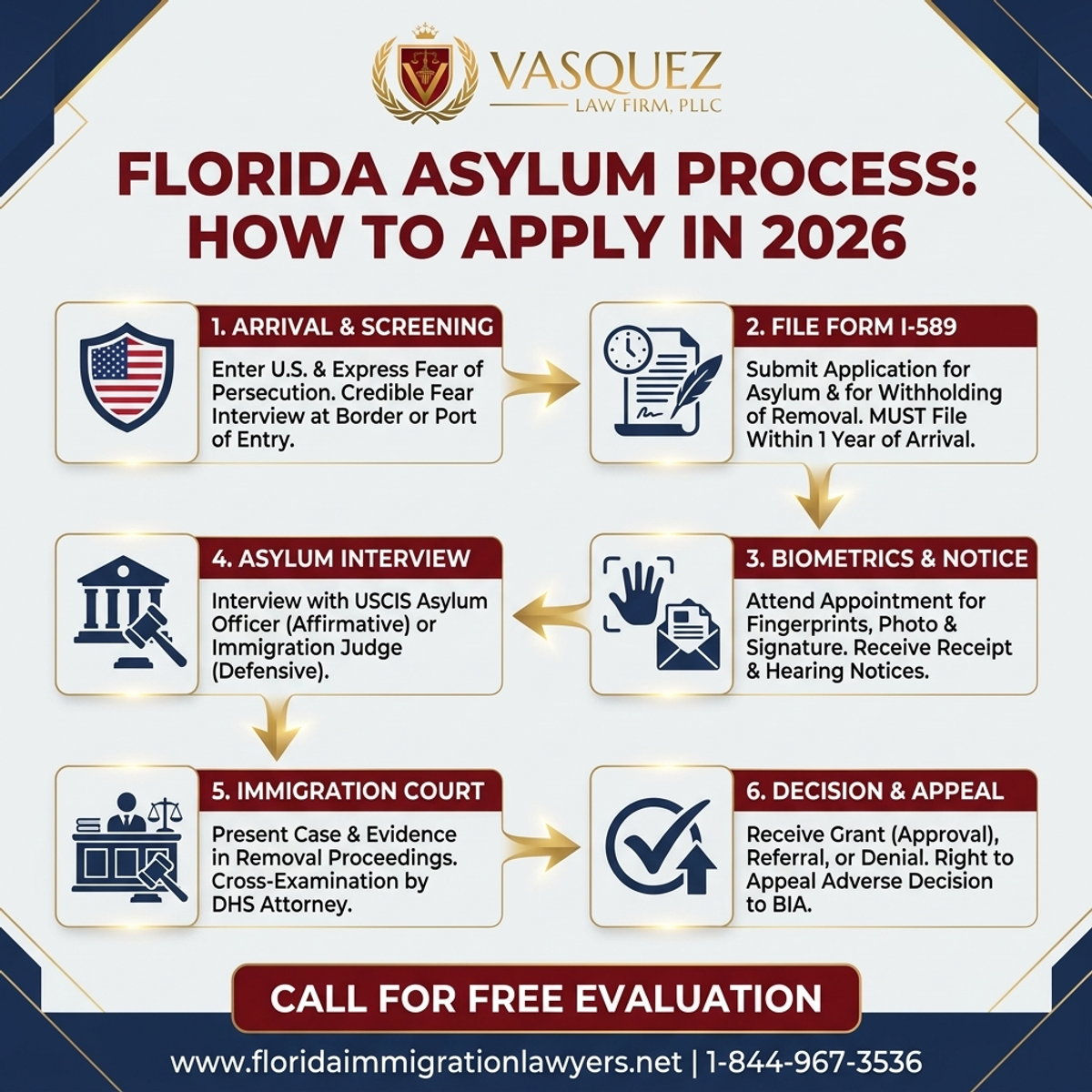
Step-by-Step Process — Florida Asylum Process: How to Apply in 2026
Document Checklist for Asylum Application
- Completed Form I-589: Ensure all questions are answered, even if with "N/A," and that it is signed and dated. An incomplete form can lead to rejection or significant delays.
- Passport and any travel documents: Provide copies of your passport, visas, I-94 arrival record, and any other travel documents you used to enter the U.S.
- Evidence of persecution (e.g., police reports, medical records): This is crucial. Include any documents that corroborate your story, such as police reports detailing incidents of persecution, medical records for injuries sustained, photographs of events or injuries, and affidavits from witnesses.
- Photographs: Submit recent passport-style photographs of yourself and any family members included in your application.
- Personal statement detailing your persecution: This narrative is your opportunity to tell your story in your own words, providing specific dates, locations, and details of the persecution you faced and your fear of returning.
- Any legal documents related to prior immigration status: This includes any previous applications for immigration benefits, deportation orders, or court documents, as they provide a complete picture of your immigration history.
- Country condition reports: While not strictly personal documents, reports from human rights organizations, government agencies, and news articles about the conditions in your home country can provide crucial context and support for your claim of persecution.
- Witness affidavits: Statements from individuals who witnessed your persecution or can attest to your credibility and fear can significantly strengthen your case.
Timeline and Processing Expectations
The timeline for asylum processing can vary. Initial interviews are typically scheduled within 45 days of application receipt, but backlog can extend this period. Decisions can take several weeks to months after the interview.
The USCIS aims to schedule interviews for newly filed affirmative asylum applications within 21 days of filing, but this is often not met due to high volumes. In Florida, particularly with the influx of applicants, wait times can be significantly longer. It's not uncommon for an interview to be scheduled several months or even a year after filing. During this waiting period, many applicants are eligible to apply for an Employment Authorization Document (EAD) after 150 days from the date of filing their asylum application, which can provide much-needed stability.
For those referred to immigration court, the process can take several years, depending on the case complexity and court backlog. Homestead and other Florida areas may experience different wait times, so it's essential to stay updated through the EOIR. An immigration judge will hear your case, and you will have the opportunity to present evidence and testimony. This judicial process often involves multiple hearings, appeals, and can be lengthy, underscoring the importance of continuous legal representation from firms like Florida Immigration Lawyers.
While waiting, it's crucial to keep USCIS updated on any change of address. Missing notices due to an outdated address can lead to your case being dismissed or decided without your presence. Staying organized and proactive during this extended period is key to a successful outcome.
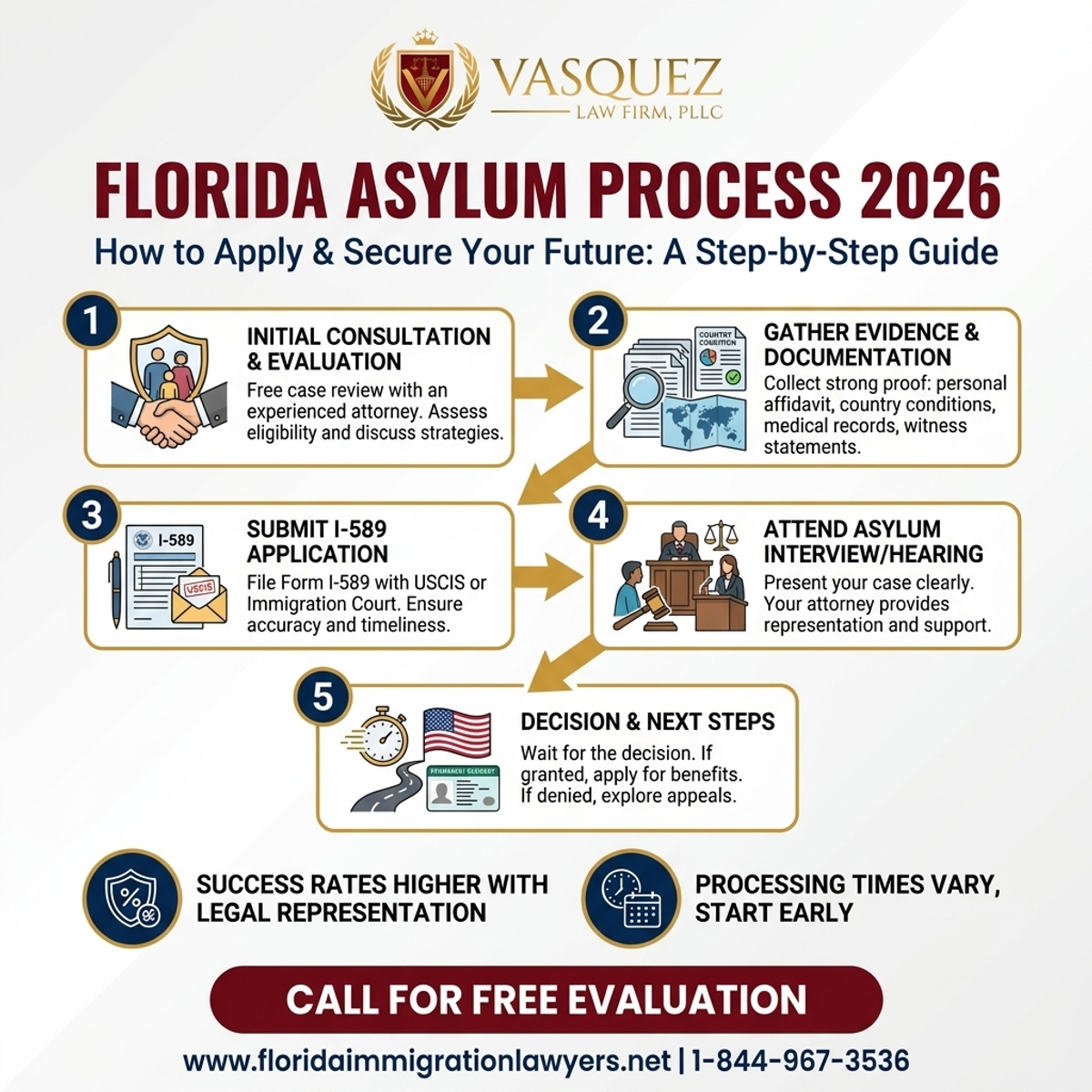
Key Statistics — Florida Asylum Process: How to Apply in 2026
Cost Factors and Fee Breakdown
Applying for asylum does not have a filing fee for Form I-589. However, there may be costs associated with legal representation, translation services, and gathering evidence. It's wise to budget for these expenses when planning your asylum application.
While the Form I-589 itself is free to file, other related costs can accumulate. For instance, obtaining certified translations of foreign documents, such as birth certificates, marriage licenses, or police reports, can be a significant expense. Additionally, travel costs to biometric appointments, interviews, or court hearings, especially if you live far from a USCIS office or immigration court, should be considered.
Legal representation is often the most substantial cost, but it is also an invaluable investment. Attorneys' fees can vary based on experience, the complexity of your case, and whether they charge hourly or a flat fee. Many firms, including Florida Immigration Lawyers, offer payment plans to make legal assistance more accessible. Investing in experienced legal counsel can dramatically increase your chances of success, potentially saving you more in the long run by avoiding costly errors or prolonged litigation.
Do not navigate this process alone. Contact Florida Immigration Lawyers today at 1-844-967-3536 for a free consultation to discuss your specific situation and potential costs.
Common Mistakes to Avoid in the Asylum Process
- Missing the one-year application deadline, which is crucial for eligibility. Failing to file Form I-589 within one year of your last arrival in the U.S. can lead to automatic disqualification unless you can prove extraordinary circumstances or changed conditions. This deadline is strictly enforced, making timely filing paramount.
- Inaccurate or incomplete Form I-589 submissions leading to delays. Any errors, omissions, or inconsistencies on your application form can cause it to be rejected, returned for correction, or lead to questions about your credibility during the interview or hearing. Double-check every detail before submission.
- Failing to prepare thoroughly for the asylum interview. Many applicants underestimate the intensity and scrutiny of the interview. Not being able to clearly articulate your story, recall specific dates, or explain discrepancies can severely weaken your case. Practice and preparation with your attorney are essential.
- Not providing sufficient evidence of persecution. A strong asylum claim requires more than just your testimony. You need corroborating evidence such as police reports, medical records, witness affidavits, news articles, and country condition reports to substantiate your fear and experiences.
- Ignoring the importance of legal representation. While not mandatory, having an experienced immigration attorney can make a significant difference. They can help you prepare your application, gather evidence, prepare for your interview, and represent you in court, navigating the complexities of asylum law.
- Overlooking the need for consistent and truthful statements. Any inconsistencies between your written application, your interview testimony, and any previous statements to immigration officials can be used to challenge your credibility, which is vital to your asylum claim.
- Misunderstanding the requirements for asylum eligibility. Many applicants mistakenly believe that any hardship or danger in their home country qualifies for asylum. It must be persecution based on one of the five protected grounds, and you must demonstrate that your government is unwilling or unable to protect you.
When to Call a Lawyer
If you're unsure about your eligibility, facing a complex case, or need assistance with documentation, it's time to call a lawyer. Legal expertise can make a significant difference in the outcome of your asylum application.
You should consider contacting an attorney immediately if you have a criminal record, have previously been denied any immigration benefit, or have been in removal proceedings. These factors can add significant complexity to your asylum claim and require specialized legal knowledge to navigate effectively. An attorney can assess the strengths and weaknesses of your case from the outset, helping you avoid critical errors.
Even if your case seems straightforward, an attorney can provide invaluable support in preparing your personal statement, identifying crucial evidence, and preparing you for the rigorous interview process. They can also represent you during interviews and court hearings, ensuring your rights are protected and your story is presented clearly and compellingly. Don't hesitate to reach out to Florida Immigration Lawyers for guidance.
Florida Immigration Lawyers offer personalized advice and representation to ensure your rights are protected throughout the process. Call 1-844-967-3536 for a free consultation.
About Florida Immigration Lawyers
Florida Immigration Lawyers is dedicated to providing exceptional legal services to immigrants across Florida. Our team of experienced attorneys offers free consultations, available 24/7, to help you navigate the complexities of immigration law. Contact us at 1-844-967-3536 or visit our website.
With a deep understanding of both federal immigration laws and the unique challenges faced by individuals in Florida's diverse communities, our firm is committed to advocating for your rights and helping you achieve your humanitarian goals. We pride ourselves on offering compassionate, culturally sensitive, and effective legal representation for asylum seekers.
Our commitment extends beyond just legal advice; we strive to be a trusted partner throughout your entire asylum journey, from initial application to potential appeals. We understand the stakes are incredibly high, and we are here to provide the dedicated support and expertise you need to pursue safety and a new life in the United States. Reach out today for a confidential, no-obligation discussion about your case.
Sources and References
- U.S. Citizenship and Immigration Services (USCIS)
- Executive Office for Immigration Review (EOIR)
- 8 U.S.C. Chapter 12 - Immigration and Nationality Act
Frequently Asked Questions About Asylum in Florida
Here are some common questions about the asylum process, with practical advice:
Q: Can I apply for asylum if I entered the U.S. without inspection?
A: Yes, you can apply for asylum regardless of how you entered the U.S. However, if you entered without inspection, your asylum application will likely be heard by an immigration judge in removal proceedings rather than by a USCIS asylum officer. It's crucial to seek legal counsel immediately to understand the specific procedures and prepare your case effectively.
Q: What happens if my asylum application is denied by a USCIS asylum officer?
A: If your affirmative asylum application is denied by USCIS, and you are not in lawful immigration status, your case will typically be referred to an immigration court for removal proceedings. There, an immigration judge will hear your asylum claim anew. This provides a second opportunity to present your case, often with the benefit of an attorney from Florida Immigration Lawyers.
Q: How long does it take to get an Employment Authorization Document (EAD) after applying for asylum?
A: You are generally eligible to apply for an EAD (work permit) 150 days after filing your asylum application, provided your application is not frivolous and has not been denied by an immigration judge. The EAD cannot be issued until 180 days have passed since your asylum application was filed. Processing times for the EAD itself can vary, so it's important to apply as soon as you are eligible.
Q: Can my family members be included in my asylum application?
A: Yes, you can include your spouse and unmarried children under the age of 21 who are physically present in the United States on your asylum application. If asylum is granted to you, your eligible family members will also be granted derivative asylum status. Ensure all family members are listed correctly on Form I-589.
Q: What if I miss the one-year filing deadline for asylum?
A: Missing the one-year deadline is a significant challenge, but not always an absolute bar. You may still be eligible if you can demonstrate "changed circumstances" affecting your eligibility or "extraordinary circumstances" relating to the delay in filing. These exceptions are complex and require strong evidence, making legal assistance from Florida Immigration Lawyers essential to prove your case.
Related services: refugee status and resettlement, withholding of removal, humanitarian protection programs.
This article provides general legal information and is not intended as legal advice. Every case is unique, and outcomes depend on specific facts and circumstances. Contact an attorney for advice about your particular situation.
Call Florida Immigration Lawyers at 1-844-967-3536 for a free consultation. Se Habla Español - Estamos aquí para ayudarle.
If you need legal assistance, learn more about get asylum legal help today, or call us at 1-844-967-3536 for a free consultation.
Do Not Navigate This Process Alone
Our experienced immigration attorneys are ready to fight for you. Get a free, confidential consultation today.
Se Habla Español
Frequently Asked Questions
Florida Immigration Lawyers
Immigration Attorney | Founder, Vasquez Law Firm
U.S. Air Force veteran and immigration attorney with thousands of cases resolved. J.D., NCCU School of Law. AILA member. Admitted to the 4th, 5th, and 11th Circuit Courts.
Available 24/7 - Free Evaluations
Related Legal Services
Our Florida immigration attorneys can help you with deportation defense, citizenship and naturalization and family immigration services. Call today at 1-844-967-3536 for a free consultation.
Related Links
Related Topics
Free Legal Consultation
Discuss your case with our experienced attorneys. We're available 24/7.
Se Habla Español - Estamos aquí para ayudarle.
Related Articles
Stokes Interview & Marriage Fraud: Florida Guide | VLF Florida
A Stokes interview is a rigorous examination conducted by USCIS when there are suspicions of marriage fraud in a marriage-based green card petition. This separate interview process involves extensive questioning of each spouse to verify the authenticity of their relationship. For couples in Florida, understanding the implications of a Stokes interview, preparing thoroughly, and gathering comprehensive evidence of a bona fide marriage are critical. Marriage fraud carries severe penalties, including permanent bars to immigration benefits and potential criminal charges. Seeking expert legal guidance from Florida Immigration Lawyers is essential to navigate this challenging process successfully, protect your rights, and present a strong case to USCIS.
Work Permit Florida Application: Get Your EAD in 2026
For many non-citizens in Florida, obtaining a work permit (EAD) is essential to work legally. This comprehensive guide from Florida Immigration Lawyers covers the step-by-step application process for Form I-765, eligibility criteria, required documents, and what to expect regarding processing times and costs in 2026. We highlight critical mistakes to avoid and explain when seeking legal counsel is vital, especially for residents in Naples and across the state. Our expert team is dedicated to helping you navigate the complexities of immigration law to secure your employment authorization. Learn how to prepare a strong application and avoid common pitfalls, ensuring a smoother journey towards your career goals in Florida. Contact us for a free consultation to discuss your EAD application.
Immigration Lawyer Tampa Bay Area: Your Florida Guide
For those in the Tampa Bay Area and across Florida, navigating immigration law is complex. An experienced immigration lawyer is crucial for family petitions, employment visas, deportation defense, and citizenship. This guide from Florida Immigration Lawyers covers essential services, step-by-step processes, required documents, timelines, and costs. We also highlight common mistakes and when to seek legal help, ensuring you are well-informed. With local expertise and a commitment to clients, our firm provides comprehensive support to achieve your immigration goals. Contact us for a free consultation and personalized guidance.
F-1 Reinstatement Process for Florida Students | VLF Florida
Discover the F-1 reinstatement process for students in Florida. Learn how to regain your student visa status and continue your education. For personalized help, contact Florida Immigration Lawyers at 1-844-967-3536.