Adjustment of Status Guide for Florida Residents
Learn how to adjust your status in Florida with our comprehensive guide. Discover eligibility criteria, document checklists, and common mistakes to avoid. For personalized help, call Florida Immigration Lawyers at 1-844-967-3536.

Adjustment of Status Guide for Florida Residents | VLF Florida
Navigating the complex world of U.S. immigration law can be daunting, especially when your goal is to secure a permanent future in the United States. For many foreign nationals already residing in the U.S., Adjustment of Status (AOS) offers a pathway to obtain a Green Card without having to leave the country. This process is particularly relevant for individuals and families across Florida, a state with a vibrant and diverse immigrant community. At VLF Florida, we understand the nuances of immigration law and are dedicated to guiding Florida residents through every step of their AOS journey.
Adjustment of Status allows eligible individuals to apply for lawful permanent resident status (a Green Card) while physically present in the United States. This is often preferable to consular processing, which requires applicants to travel abroad to their home country for an interview at a U.S. embassy or consulate. For Florida residents, understanding the specific requirements, potential challenges, and local processing considerations is crucial for a successful application. This comprehensive guide will delve into the intricacies of AOS, providing essential information to help you prepare and succeed.
Eligibility Requirements for Adjustment of Status
Before embarking on the AOS process, it's vital to determine if you meet the fundamental eligibility criteria. Not everyone can adjust their status, and specific conditions must be met. Understanding these requirements is the first critical step.
Lawful Entry and Presence
Generally, applicants must have been lawfully admitted to the United States. This means you entered the country with inspection by an immigration officer, typically with a valid visa (e.g., tourist visa, student visa, work visa) or through a visa waiver program. Individuals who entered without inspection (EWI) are typically not eligible for AOS, though there are limited exceptions for certain categories, such as immediate relatives of U.S. citizens who have an approved Form I-130 and meet specific criteria under Section 245(i) of the Immigration and Nationality Act. It's crucial to review your entry records carefully.
Immigrant Visa Availability
For most family-sponsored and employment-sponsored categories, an immigrant visa must be immediately available at the time you file your Form I-485, Application to Register Permanent Residence or Adjust Status. Visa availability is determined by the U.S. Department of State's Visa Bulletin, which is updated monthly. Immediate relatives of U.S. citizens (spouses, unmarried children under 21, and parents of U.S. citizens who are 21 or older) are exempt from visa quotas and typically always have a visa immediately available.
Specific Paths to AOS
- Family-Based Adjustment: This is the most common path, available to immediate relatives of U.S. citizens and certain other family members (e.g., spouses of Green Card holders, unmarried children of Green Card holders).
- Employment-Based Adjustment: For individuals sponsored by an employer for a Green Card, typically after an approved Form I-140, Immigrant Petition for Alien Worker.
- Asylum and Refugee Status: Individuals granted asylum or refugee status in the U.S. are generally eligible to adjust their status to lawful permanent resident after one year of continuous physical presence in the U.S.
- Special Immigrant Juveniles (SIJ): Certain undocumented children who have been abused, neglected, or abandoned by one or both parents may be eligible.
- Diversity Visa Lottery: Winners of the annual Diversity Visa Lottery may also adjust status if they are already in the U.S.
Inadmissibility Issues and Waivers
Certain factors can render an applicant "inadmissible" to the United States, preventing them from obtaining a Green Card. These can include criminal history, certain health issues, prior immigration violations (e.g., unlawful presence, misrepresentation), or public charge concerns. However, some grounds of inadmissibility can be waived. Consulting with an experienced immigration attorney is essential to assess any potential inadmissibility issues and explore available waivers.
The Comprehensive Adjustment of Status Application Process (Form I-485)
The AOS process involves several critical steps, each requiring meticulous attention to detail and adherence to USCIS guidelines. Understanding this roadmap is key to a smooth application.
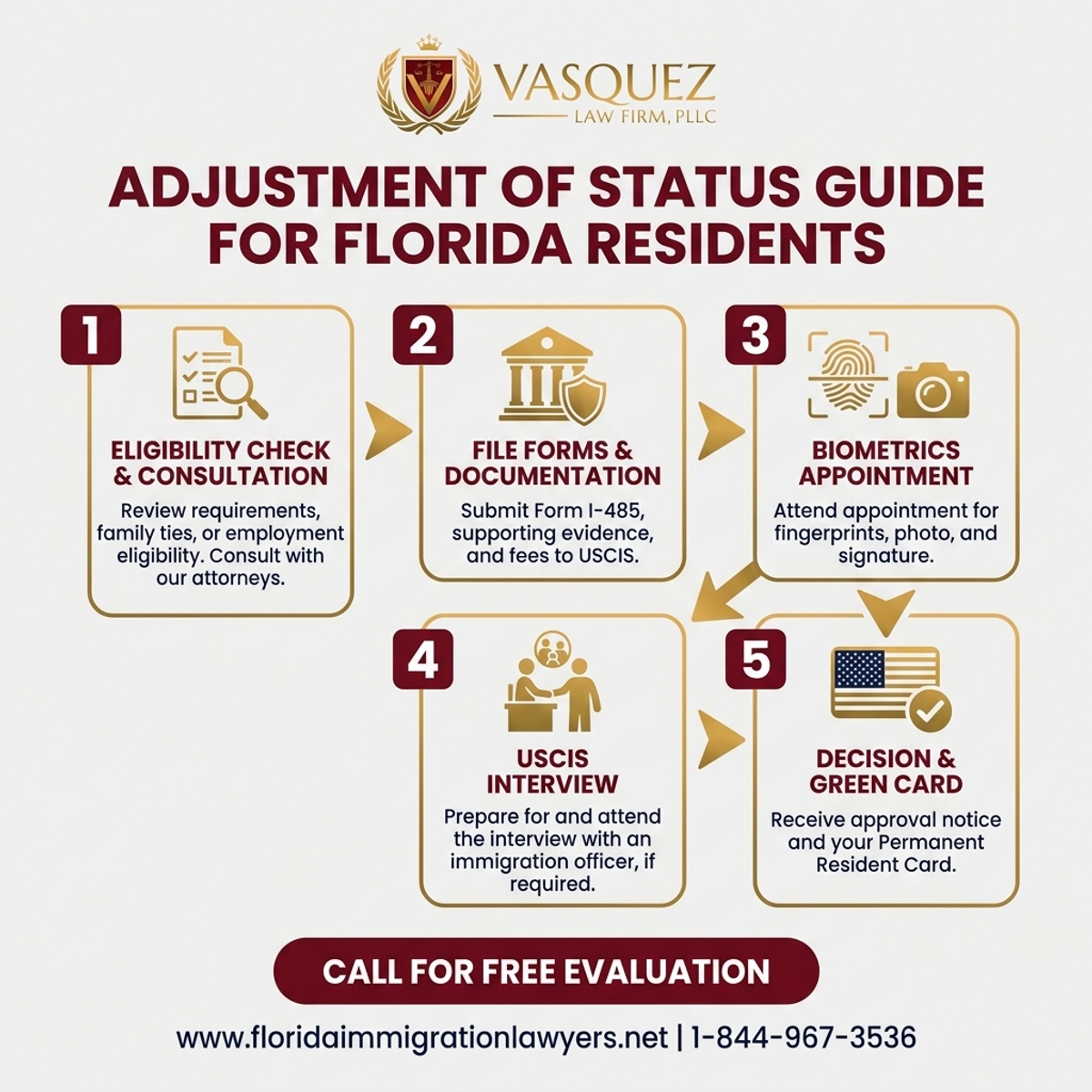
Step 1: Filing Form I-485 and Supporting Documents
The core of the AOS application is Form I-485, Application to Register Permanent Residence or Adjust Status. This form must be filed with a comprehensive package of supporting documents, which can vary depending on your eligibility category. Common documents include:
- Proof of Identity and Nationality: Birth certificate, passport, national identity card.
- Proof of Lawful Entry: I-94 Arrival/Departure Record, visa stamps.
- Affidavit of Support (Form I-864): Required for most family-based immigrants, demonstrating the petitioner's ability to financially support the applicant.
- Medical Examination (Form I-693): Completed by a USCIS-approved civil surgeon.
- Photographs: Passport-style photos meeting USCIS specifications.
- Marriage Certificate (if applicable): For spouses of U.S. citizens or Green Card holders.
- Evidence of Relationship: Birth certificates for children, marriage certificates, joint financial documents, photos, etc.
- Police Clearances/Criminal Records: If applicable, from any country where you lived for more than six months after age 16.
- Previous Immigration Filings: Copies of approved petitions (e.g., I-130, I-140, I-360).
The importance of accuracy and completeness cannot be overstated. Any missing document or error can lead to delays, Requests for Evidence (RFEs), or even denial.
Step 2: Biometrics Appointment
After USCIS receives your application, you will typically receive an appointment notice for biometrics (fingerprints, photographs, and signature). This data is used for background checks and identity verification. It's a mandatory step in the process.
Step 3: Work Permit (EAD) and Travel Document (Advance Parole)
Many AOS applicants are eligible to concurrently file Form I-765 (Application for Employment Authorization) and Form I-131 (Application for Travel Document, also known as Advance Parole). An Employment Authorization Document (EAD) allows you to work legally in the U.S. while your Green Card application is pending. Advance Parole allows you to travel outside the U.S. and return without abandoning your AOS application. It is crucial not to travel internationally without an approved Advance Parole document, as doing so can be considered abandonment of your pending I-485.
Step 4: The USCIS Interview
Most AOS applicants, particularly those in family-based categories, will be scheduled for an interview at a local USCIS field office. During the interview, a USCIS officer will review your application, verify your identity, and ask questions about your eligibility, relationship (if applicable), and background. It's a critical stage where you must demonstrate your eligibility and truthfully answer all questions. Proper preparation, often with the assistance of an attorney, is vital. Your attorney can attend the interview with you, providing support and ensuring your rights are protected.
Step 5: Decision and Green Card Issuance
Following the interview, or sometimes even without an interview for certain categories, USCIS will make a decision. If approved, you will receive a welcome notice, and your Green Card will be mailed to you. If there are outstanding issues, USCIS may issue a Request for Evidence (RFE) or a Notice of Intent to Deny (NOID). In the unfortunate event of a denial, it's crucial to understand the reasons and explore potential options, such as filing a motion to reconsider or reopening the case, or appealing the decision.
Specific Considerations for Florida Residents
Florida, with its diverse population and numerous immigration pathways, presents unique aspects for those undergoing Adjustment of Status. Understanding these local considerations can help streamline your application process and prepare you for what to expect.
Florida is home to several USCIS Field Offices, including major hubs in Miami, Orlando, and Tampa, as well as satellite offices. The specific office handling your case will depend on your residential address. Each office may have slightly different processing times and interview scheduling patterns, though the core federal regulations remain consistent. For instance, the Miami Field Office often handles a high volume of family-based petitions due to the large immigrant communities in South Florida. This can sometimes lead to longer wait times for interviews compared to less busy offices, though this is subject to change based on USCIS workload and staffing.
When preparing your application in Florida, ensure all state-issued documents, such as birth certificates or marriage licenses, are properly certified and translated if not in English. Florida's public records offices are generally efficient, but obtaining certified copies can take time. Furthermore, medical examinations (Form I-693) must be completed by a USCIS-approved civil surgeon. Florida has a robust network of these medical professionals, but it's important to choose one who is experienced with immigration exams and can provide timely results.
Step-by-Step Process — Adjustment of Status Guide for Florida Residents | VLF Florida
For individuals residing near the coast or in areas with high immigrant populations, awareness of local resources and community organizations can be beneficial, though legal counsel remains paramount. While state laws do not directly govern federal immigration processes, they can indirectly impact an applicant's ability to gather required documentation or navigate local services. For example, obtaining a state ID or driver's license while on a temporary immigration status can be important for daily life and can sometimes require specific documentation of your pending AOS. Having local legal representation, like VLF Florida, ensures that your attorney is familiar with the regional USCIS offices, their procedures, and any localized trends that might affect your case. This local insight can be invaluable in anticipating potential issues and preparing a robust application tailored to the Florida context. Our firm is deeply rooted in the Florida community, providing us with an intimate understanding of the unique challenges and opportunities for immigrants in the state.
Overcoming Challenges and Potential Pitfalls in AOS
The path to a Green Card through Adjustment of Status is not always straightforward. Applicants may encounter various challenges that could jeopardize their case. Being aware of these pitfalls and knowing how to address them is crucial.
Common Reasons for Denial
- Inadmissibility: As discussed, certain criminal records, health issues, or past immigration violations can lead to inadmissibility.
- Incomplete or Inaccurate Applications: Missing documents, incorrect information, or failure to follow instructions precisely are frequent causes of delays or denials.
- Misrepresentation: Providing false information or concealing material facts during the application process can lead to severe penalties, including a permanent bar from the U.S.
- Failure to Maintain Legal Status: For many categories, maintaining a lawful nonimmigrant status until the I-485 is filed is essential.
- Public Charge Concerns: If USCIS believes an applicant is likely to become primarily dependent on government assistance, their application may be denied, though recent changes have clarified this rule.
Dealing with Requests for Evidence (RFEs)
An RFE is a request from USCIS for additional information or documentation. It's not a denial, but it indicates that your initial submission was incomplete or raised questions. Responding to an RFE accurately and promptly within the given deadline is critical. Failure to do so will likely result in a denial.
What if You Have a Prior Deportation Order?
If you have a previous deportation order, adjusting status can be significantly more complex. In most cases, you would need to file a motion to reopen your prior removal proceedings or seek a waiver of inadmissibility. This is a highly specialized area of immigration law and requires immediate consultation with an experienced attorney.
What if You Entered Without Inspection (EWI)?
As mentioned, EWI generally bars eligibility for AOS. However, certain exceptions exist, such as for immediate relatives of U.S. citizens who qualify under Section 245(i) and pay a penalty fee, or for those who qualify under specific provisions like asylum or VAWA. Each case is unique and requires careful legal analysis.
Special Cases: Asylum Seekers and Adjustment of Status
For individuals who have been granted asylum in the United States, Adjustment of Status represents the final step towards permanent residency. This process has specific requirements and timelines that differ from other AOS categories.
Eligibility for Asylum Seekers to Adjust Status
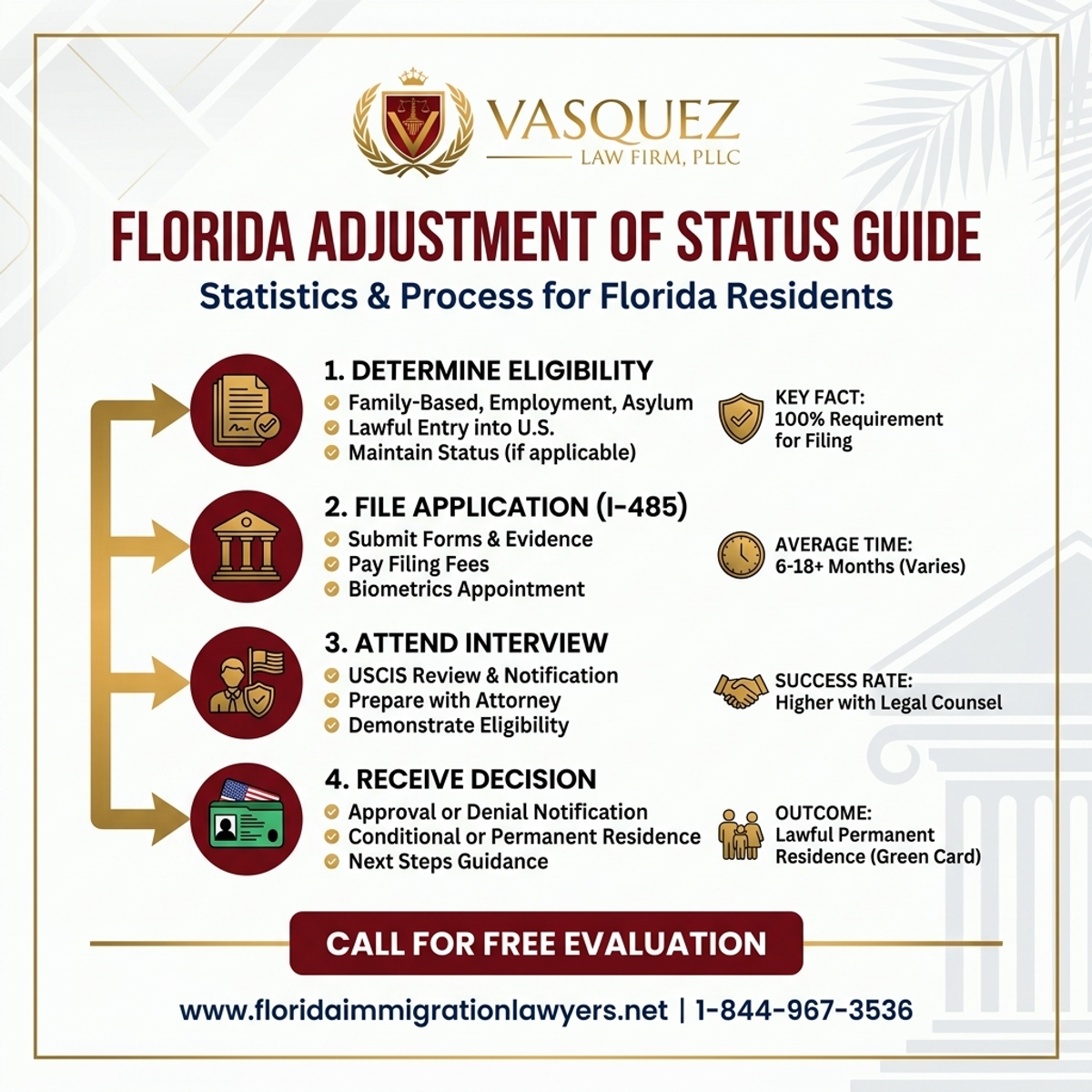
An individual granted asylum in the U.S. is eligible to apply for a Green Card one year after the date asylum was granted, provided they have been physically present in the U.S. for at least one year since the grant of asylum. They must also continue to meet the definition of a refugee or be a qualifying spouse or child of an asylee, and not be firmly resettled in any foreign country. The application must be for a Green Card based on their asylum status.
Specific Forms and Requirements
Asylees adjust status using Form I-485, similar to other applicants, but they check the box indicating they are applying as an asylee. Key documents include proof of asylum grant (e.g., asylum approval letter, I-94 with asylee stamp), proof of one year continuous physical presence, and the standard supporting documents like a medical exam and biometrics. Unlike many other categories, asylees do not typically need an Affidavit of Support (Form I-864).
Key Statistics — Adjustment of Status Guide for Florida Residents | VLF Florida
The One-Year Filing Deadline for Asylum and Its Implications
While the initial asylum application generally has a one-year filing deadline from the date of last arrival in the U.S., there is no strict deadline for asylees to file their I-485 after the one-year physical presence requirement is met. However, it is highly recommended to apply as soon as eligible to avoid any future changes in law or policy, and to secure permanent residency sooner. Delays can prolong uncertainty and may impact travel or employment opportunities.
Transition from Asylum Status to Green Card
The adjustment of status for asylees is a crucial transition. Once approved, the asylee becomes a lawful permanent resident, gaining the same rights and responsibilities as other Green Card holders. This includes the ability to travel freely, work without an EAD, and eventually apply for U.S. citizenship after meeting residency requirements. The date of adjustment of status for an asylee is retroactively set to one year before the actual approval date, which can impact eligibility for naturalization.
Why Choose VLF Florida for Your Adjustment of Status Case
The journey to obtaining a Green Card through Adjustment of Status is a significant life event. Choosing the right legal partner can make all the difference in navigating its complexities successfully. At VLF Florida, we are committed to providing unparalleled legal representation for Florida residents.
Expertise in Florida Immigration Law
Our firm specializes in immigration law, with a deep understanding of federal regulations and how they apply to individuals and families in Florida. We stay abreast of the latest changes in immigration policy and procedure, ensuring that our advice is always current and effective. Our local presence gives us unique insights into the specific practices of USCIS field offices across Florida.
Personalized Legal Strategy
We recognize that every client's situation is unique. We take the time to listen to your story, thoroughly assess your eligibility, and develop a personalized legal strategy tailored to your specific circumstances and goals. Our approach is proactive, identifying potential challenges early on and devising solutions to overcome them.
Experienced Attorneys
Our team of dedicated attorneys brings years of experience in handling a wide range of adjustment of status cases. From family-based petitions to complex asylum adjustments and waivers of inadmissibility, we have the knowledge and expertise to guide you through every stage of the process. We pride ourselves on our meticulous preparation, attention to detail, and unwavering advocacy for our clients.
Commitment to Clients
At VLF Florida, our clients are our priority. We are committed to providing transparent communication, keeping you informed at every step, and answering all your questions promptly. We understand the emotional and financial investment involved in immigration processes and strive to make your experience as stress-free as possible.
Don't leave your future to chance. If you are a Florida resident considering Adjustment of Status, or if you have questions about your eligibility, contact VLF Florida today. We offer free consultations to discuss your case and explore how we can help you achieve your dream of permanent residency in the United States. Call us at 1-844-967-3536 or visit our contact page to schedule your consultation.
Frequently Asked Questions About Adjustment of Status in Florida
- What is Adjustment of Status (AOS)?
Adjustment of Status is an immigration process that allows eligible foreign nationals already in the United States to apply for lawful permanent resident status (a Green Card) without having to return to their home country. - Who is eligible for Adjustment of Status?
Eligibility typically requires lawful entry into the U.S., an immigrant visa being immediately available (unless an immediate relative of a U.S. citizen), and no bars to admissibility. Common categories include family-sponsored immigrants, employment-based immigrants, and asylum seekers. - How long does the AOS process take in Florida?
Processing times vary significantly based on the USCIS field office, the specific immigration category, and the complexity of the case. It can range from several months to several years. You can check current processing times on the USCIS website. - Can I travel internationally while my AOS application is pending?
Generally, no, unless you have an approved Advance Parole document. Traveling without Advance Parole can be considered abandonment of your Adjustment of Status application. - Do I need an interview for Adjustment of Status?
Most family-based AOS applicants will have an interview at a local USCIS field office. Some employment-based cases or those for immediate relatives of U.S. citizens may be waived. - What is the role of the medical examination (Form I-693)?
The medical examination, performed by a USCIS-approved civil surgeon, assesses your health to ensure you do not have any inadmissible health-related conditions. It must be submitted with your application or at your interview. - What if my AOS application is denied?
If your application is denied, you may have options such as filing a motion to reopen or reconsider, or appealing the decision. It is crucial to consult with an immigration attorney immediately to understand your options. - Can VLF Florida help with my Adjustment of Status application?
Yes, VLF Florida specializes in immigration law and has extensive experience assisting Florida residents with their Adjustment of Status applications. We provide comprehensive legal guidance and representation throughout the entire process.
Conclusion
Adjustment of Status offers a life-changing opportunity for many individuals seeking to build a permanent life in the United States. While the process can be intricate and demanding, with the right guidance, it is entirely navigable. For Florida residents, understanding the specific requirements, preparing thoroughly, and anticipating potential challenges are key to a successful outcome. At VLF Florida, we are dedicated to empowering our clients with expert legal counsel, ensuring their journey to a Green Card is as smooth and efficient as possible. Don't hesitate to reach out to our experienced team to discuss your case and take the first step towards your future in America.
Sources and References
- U.S. Citizenship and Immigration Services (USCIS)
- Executive Office for Immigration Review (EOIR)
- U.S. Department of State - Bureau of Consular Affairs
- Immigration and Nationality Act (INA), 8 U.S.C. Chapter 12
Do Not Navigate This Process Alone
Our experienced immigration attorneys are ready to fight for you. Get a free, confidential consultation today.
Se Habla Español
Frequently Asked Questions
Harold Estrada-Rodriguez
Florida Immigration Attorney · FL Bar No. 1041171
Florida Bar attorney handling Florida-jurisdiction immigration matters. Bilingual representation, free consultations.
Available 24/7 - Free Evaluations
Related Legal Services
Our Florida immigration attorneys can help you with business immigration, asylum protection and deportation defense. Call today at 1-844-967-3536 for a free consultation.
Related Links
Related Topics
Free Legal Consultation
Discuss your case with our experienced attorneys. We're available 24/7.
Se Habla Español - Estamos aquí para ayudarle.
Related Articles
Refugee Resettlement Florida: Your 2026 Guide | VLF Florida
For those seeking safety, understanding refugee status and the resettlement process in Florida is crucial. Our 2026 guide covers eligibility, the step-by-step journey from arrival to permanent residency in communities like Hollywood, and the vital support services available. Refugees face unique challenges, but federal protections and comprehensive programs exist to help them integrate successfully. Learn about the benefits, legal pathways, and common pitfalls to avoid. Florida Immigration Lawyers provides expert guidance, ensuring you navigate this complex process with confidence and care. Contact us for a free consultation to secure your future.
Deportation Defense Lawyer in Orlando: Your Guide | VLF Florida
Facing deportation in Orlando? Learn how a deportation defense lawyer can help you navigate removal proceedings and protect your rights. Call Florida Immigration Lawyers at 1-844-967-3536 for a free consultation.
Immigration Backlog Solutions in Florida 2026 | VLF Florida
Facing immigration backlogs in Florida? Discover strategies and solutions to expedite your process and reduce delays. Contact Florida Immigration Lawyers for expert assistance.
Immigration Services in Port St Lucie, Treasure Coast
Discover immigration services in Port St Lucie and the Treasure Coast. Learn about local USCIS offices, common mistakes to avoid, and when to call a lawyer. Ensure a smooth immigration process with expert guidance.