Voluntary Departure vs Deportation: What to Expect
Understanding the critical differences between voluntary departure and deportation is essential for any non-citizen in Florida facing immigration challenges. Voluntary departure offers a path to leave the U.S. without the severe consequences of a formal removal order, potentially preserving future immigration opportunities. In contrast, deportation carries long-term bars to re-entry and a permanent mark on your record. This comprehensive guide, updated for 2026, explores the eligibility requirements, processes, timelines, and costs associated with both options in Florida. Learn about common mistakes to avoid and when to seek professional legal assistance from Florida Immigration Lawyers to protect your rights and future. Our firm provides expert guidance for those in Orlando and across Central Florida, offering free case reviews and bilingual services.
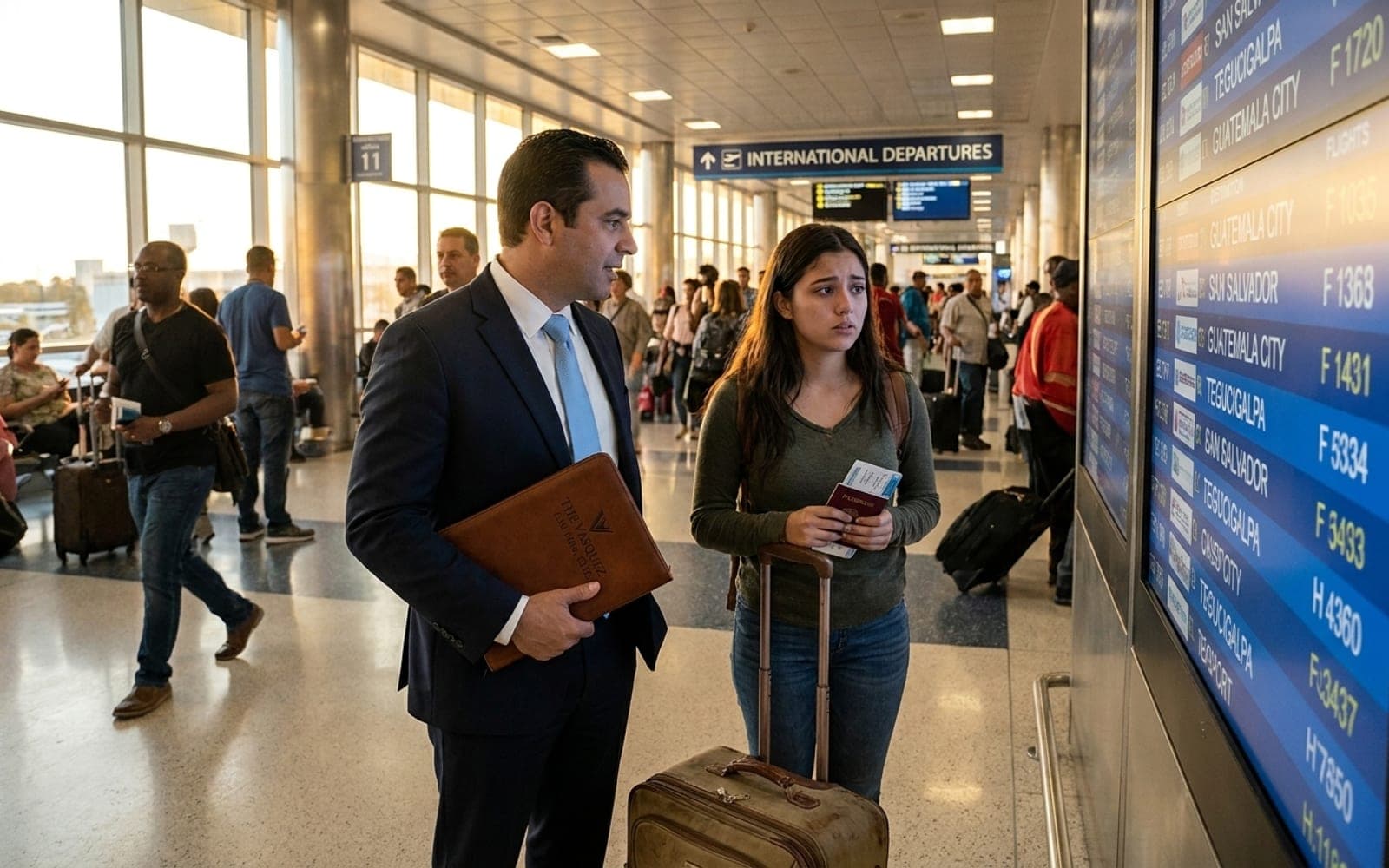
Voluntary departure allows certain non-citizens to leave the U.S. at their own expense and avoid the legal consequences of a formal deportation (removal) order. This option is often preferable as it can prevent bars to future immigration benefits, such as re-entry to the U.S. or adjustment of status. In contrast, deportation is a formal order from an immigration judge requiring a non-citizen to leave the country, often carrying severe penalties like multi-year or permanent bans on returning. Understanding these distinctions is crucial for anyone facing removal proceedings in Florida.
- Voluntary departure avoids a formal deportation order.
- Deportation results in significant bars to future U.S. entry.
- Eligibility for voluntary departure depends on specific criteria and judicial discretion.
- Both processes occur within the U.S. immigration court system.
- Seeking legal counsel from Florida Immigration Lawyers is vital for navigating these complex issues.
Facing immigration challenges in Florida can be daunting, especially when the terms 'voluntary departure' and 'deportation' are involved. Many non-citizens find themselves in removal proceedings, unsure of the profound differences between these two outcomes and how each could impact their future in the United States. While both ultimately result in leaving the country, their implications for future immigration opportunities, legal records, and personal well-being vary dramatically. Understanding these distinctions is not just a matter of legal jargon; it's about protecting your rights and securing your future. If you are navigating the complexities of immigration law, do not face it alone. Call Florida Immigration Lawyers at 1-844-YO-PELEO for a free case review and expert guidance tailored to your unique situation.
What is Voluntary Departure in Florida Immigration Law?
Voluntary departure is a discretionary form of relief that allows eligible non-citizens in removal proceedings to leave the United States voluntarily, at their own expense, by a specific date. This option is generally considered a more favorable outcome than a formal deportation order because it helps avoid the severe legal consequences associated with removal. An immigration judge may grant voluntary departure either at the outset of proceedings or at their conclusion, provided the individual meets strict eligibility criteria. As of 2026, the granting of voluntary departure is a complex process that weighs various factors, including the individual's immigration history, criminal record, and ties to the community. It is a critical opportunity for many to mitigate the long-term impact of immigration violations.
The primary benefit of voluntary departure is that it prevents the creation of a formal deportation record, which can lead to significant bars on re-entry to the U.S. or eligibility for future immigration benefits. For instance, individuals who are formally deported may face a 5, 10, or even 20-year bar, or in some cases, a permanent bar, from returning to the U.S. Voluntary departure, under INA Section 240B, can avoid these harsh penalties, offering a path to potentially seek future immigration relief without the stigma of a removal order. For those in Orlando and across Central Florida, understanding this option is paramount. The decision to grant voluntary departure rests solely with the immigration judge, making a compelling and well-prepared case essential. This often involves demonstrating good moral character, a lack of serious criminal history, and the financial means to depart the country. The deadlines for departure are strict, and failure to comply can result in the entry of a final order of removal and civil penalties.
What is Deportation (Removal) in Florida?
Deportation, formally known as removal, is the legal process by which the U.S. government compels a non-citizen to leave the country due to violations of immigration law. This is a severe legal consequence, typically initiated when a non-citizen is found inadmissible or deportable under the Immigration and Nationality Act (INA). Unlike voluntary departure, a deportation order creates a permanent record of removal, which carries significant penalties, including statutory bars to future re-entry and eligibility for immigration benefits. For individuals in Florida, a deportation order can drastically alter their lives and future prospects in the U.S., often leading to prolonged separation from family members.
The deportation process usually begins with a Notice to Appear (NTA) issued by the Department of Homeland Security (DHS), which charges the non-citizen with specific immigration violations and initiates proceedings before an immigration judge at an Executive Office for Immigration Review (EOIR) court. Florida hosts several immigration courts, including in Orlando and Miami, where these proceedings take place. Common grounds for deportation include overstaying a visa, entering the U.S. without inspection, committing certain crimes, or violating the terms of a non-immigrant status. Once a final order of removal is issued, the individual is legally required to leave the country, and failure to do so can result in detention and forced removal by U.S. Immigration and Customs Enforcement (ICE). The consequences extend beyond immediate removal; a deportation order can trigger a 10-year bar for many, or even a permanent bar for certain aggravated felonies or multiple removals, as outlined in INA Section 212(a)(9). This makes a successful defense against deportation, or securing voluntary departure, incredibly important.
Voluntary Departure vs Deportation: Key Differences and Consequences
The distinction between voluntary departure and deportation is critical, as it directly impacts a non-citizen's future immigration prospects and legal standing. While both result in leaving the U.S., the legal ramifications are profoundly different. Voluntary departure is a form of relief, a concession granted by an immigration judge, allowing an individual to maintain a clean immigration record. It avoids the stigma and harsh penalties associated with a formal removal order. This distinction is paramount for anyone hoping to return to the U.S. lawfully in the future or adjust their status.
The most significant difference lies in the bars to re-entry. A formal deportation order, under 8 U.S.C. § 1182(a)(9), typically triggers a 10-year bar from returning to the U.S. for those removed after an order, or a permanent bar for those who have been ordered removed multiple times or committed certain serious offenses. In contrast, an individual granted voluntary departure does not face these statutory bars to re-entry, provided they depart within the specified timeframe. This means they may be eligible to apply for a visa or other immigration benefits in the future without the severe impediment of a prior removal order. Furthermore, voluntary departure can avoid civil penalties and, in some cases, criminal penalties for failure to depart. For families in Florida, this difference can mean the possibility of eventual reunification versus a long-term, perhaps permanent, separation. The decision to pursue voluntary departure or defend against deportation requires a thorough understanding of these consequences, making expert legal advice indispensable.
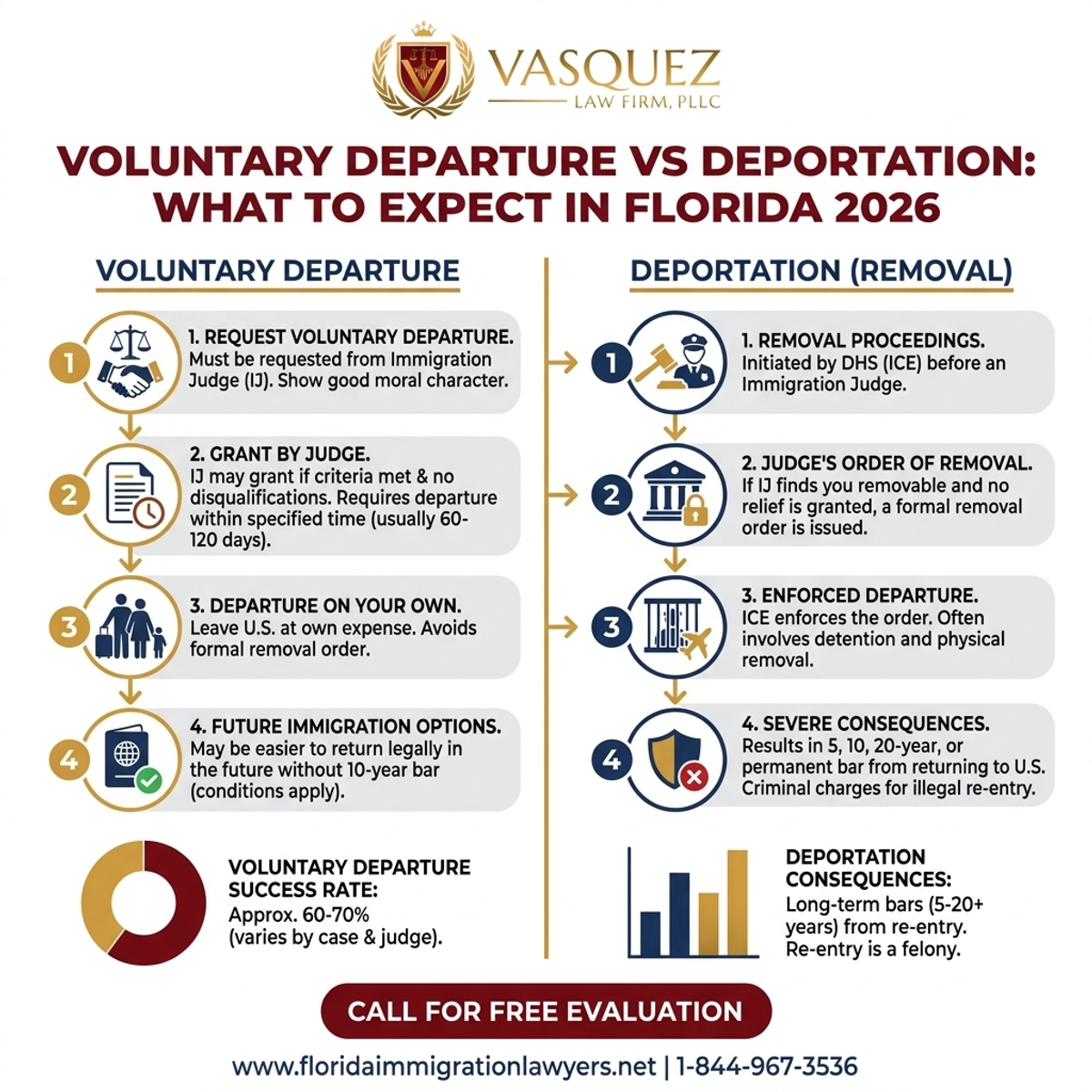
Step-by-Step Process — Voluntary Departure vs Deportation: What to Expect in Florida 2026
How Can I Request Voluntary Departure in Florida Immigration Court?
Requesting voluntary departure in Florida immigration court is a strategic decision that requires careful preparation and adherence to specific legal procedures. This option is typically presented during removal proceedings before an immigration judge. There are two main opportunities to request voluntary departure: at the outset of the proceedings or at the conclusion, after a finding of deportability. Each scenario has distinct eligibility requirements and deadlines that must be met. The immigration judge has the final say in granting this relief, exercising significant discretion based on the facts of the case.
To successfully request voluntary departure, you must demonstrate several key factors. First, you must have been physically present in the U.S. for at least one year immediately preceding the issuance of the Notice to Appear (NTA). Second, you must not have been convicted of an aggravated felony, as defined by INA Section 101(a)(43). Third, you must establish that you have the financial means to depart the U.S. and intend to do so within the specified period, typically 120 days if granted at the outset, or 60 days if granted at the conclusion of proceedings. Fourth, you must post a voluntary departure bond, which guarantees your timely departure. Finally, you must demonstrate good moral character for at least five years prior to the application. The process often involves submitting an application (Form EOIR-40) and presenting evidence to support your eligibility. Given the strict requirements and the judge's discretion, having an experienced immigration attorney from Florida Immigration Lawyers is crucial to effectively present your case and maximize your chances of approval, especially in the busy immigration courts serving Central Florida.
Eligibility, Timelines, and Costs for Voluntary Departure and Deportation
Understanding the eligibility criteria, expected timelines, and associated costs is vital for anyone facing voluntary departure or deportation proceedings in Florida. Eligibility for voluntary departure is stringent and outlined in 8 CFR § 1240.26. Key requirements include a minimum of one year of continuous physical presence in the U.S. before the NTA, no conviction for an aggravated felony, demonstration of good moral character for five years, and the financial ability and intent to depart. For deportation, eligibility is not the question; rather, it's about the grounds for removal (e.g., visa overstay, criminal convictions) and any potential defenses or forms of relief available.
As of 2026, the timelines for these processes can vary significantly depending on the complexity of the case, court backlogs, and the specific immigration court handling the matter (e.g., Orlando Immigration Court). Voluntary departure, if granted at the conclusion of proceedings, typically requires departure within 60 days. The overall court process leading to a decision can take months to years. Deportation proceedings can also be lengthy, often extending for several years, especially if appeals are filed. Below are typical timeframes:
| Stage | Typical Timeframe | Notes |
|---|---|---|
| Notice to Appear (NTA) to First Hearing | 3-12 months | Varies by court docket, can be longer. |
| Full Removal Proceedings | 1-3+ years | Depends on complexity, number of hearings, and potential appeals. |
| Voluntary Departure Grant (if at end) | 60 days to depart | Strict deadline; failure to depart results in formal removal. |
| Deportation Order to Physical Removal | Weeks to months | Depends on ICE resources, country of origin, and detention status. |
Costs also play a significant role. While voluntary departure avoids certain long-term penalties, there are immediate financial obligations. These include the voluntary departure bond (which can range from hundreds to thousands of dollars, returned upon confirmed departure) and the cost of travel to your home country. For deportation, the costs are primarily legal fees, as the government covers the physical removal costs. The table below outlines typical fee considerations:
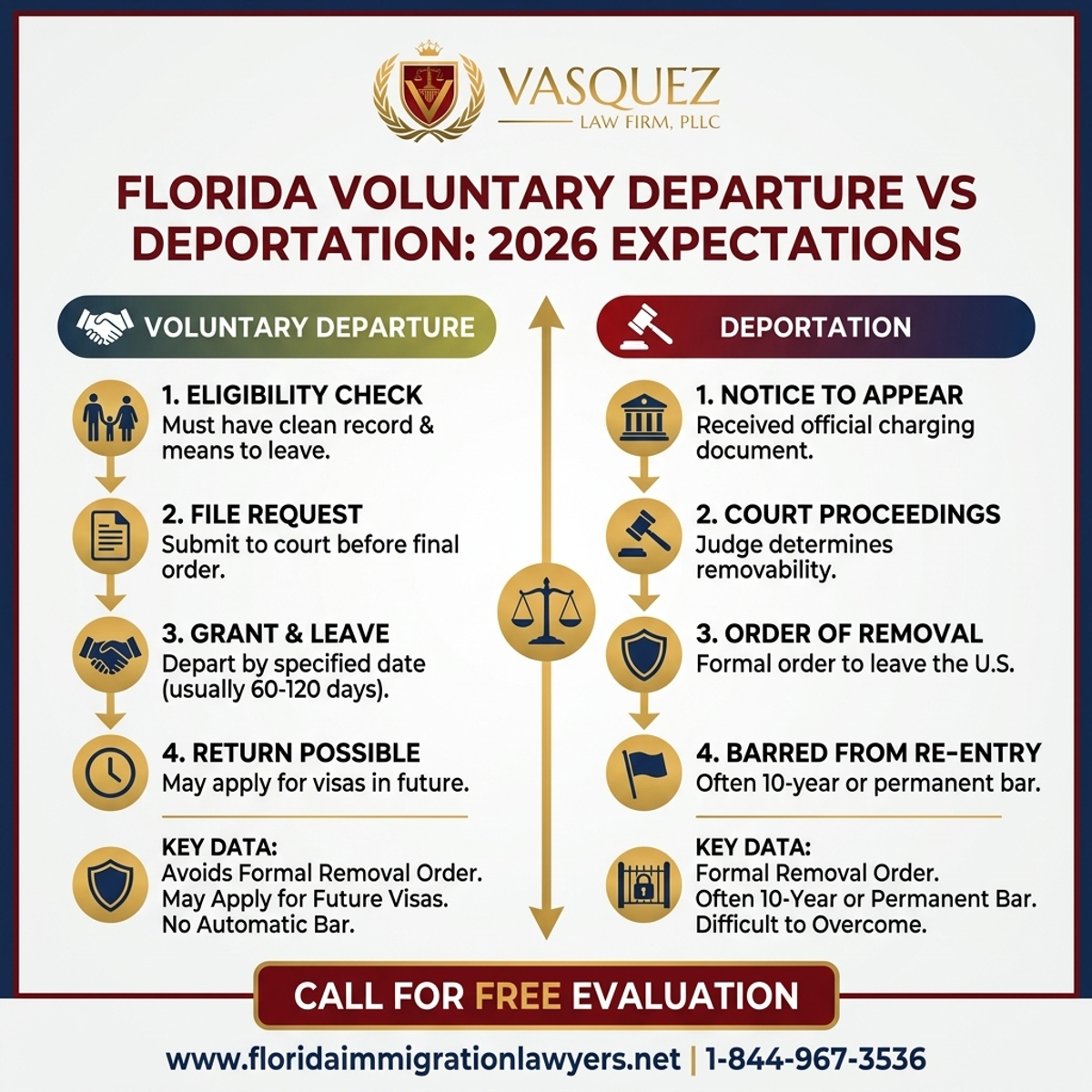
Key Statistics — Voluntary Departure vs Deportation: What to Expect in Florida 2026
| Item | Typical Fee | Notes |
|---|---|---|
| Voluntary Departure Bond | $500 - $3,000+ | Refunded upon timely, confirmed departure. |
| Travel Expenses | Varies widely | Cost of flight, transportation to home country. |
| Attorney Fees (Voluntary Departure) | $3,000 - $10,000+ | Depends on case complexity, attorney experience, and number of hearings. |
| Attorney Fees (Deportation Defense) | $5,000 - $15,000+ | Higher complexity, more hearings, potential appeals. |
| Filing Fees (e.g., for Waivers) | $0 - $1,000+ | If applying for other forms of relief concurrently. |
These figures are estimates and can change. It is crucial to consult with an experienced immigration attorney in Florida, like those at Florida Immigration Lawyers, to get an accurate assessment of costs and timelines specific to your case and to discuss all available options.
Do not navigate this complex process alone. The stakes are incredibly high, and the nuances of immigration law can be overwhelming. Contact Florida Immigration Lawyers today for a free case review and let our experienced team guide you through every step, ensuring your rights are protected and your case is presented effectively. We are available 24/7 to assist you.
Common Mistakes to Avoid in Voluntary Departure and Deportation Cases
Navigating voluntary departure and deportation proceedings is fraught with potential pitfalls. Making even a small error can have severe and lasting consequences on your immigration future. Being aware of these common mistakes can help you avoid jeopardizing your case.
- Failing to Appear in Court: Missing a scheduled immigration court hearing, known as a 'failure to appear,' almost invariably leads to an in absentia order of removal, meaning you are deported without a hearing. This is one of the most serious errors.
- Missing Voluntary Departure Deadlines: If granted voluntary departure, failing to leave the U.S. by the specified date automatically converts the voluntary departure into a formal deportation order, often triggering a 10-year re-entry bar and civil penalties.
- Providing Inconsistent Information: Any discrepancies in your statements or applications, whether to USCIS, ICE, or an immigration judge, can be perceived as misrepresentation, leading to denial of benefits or even charges of fraud.
- Not Disclosing Criminal History: Attempting to conceal past arrests or convictions, even minor ones, can severely damage your credibility and lead to denials or accusations of lying under oath. Full disclosure is always the best policy.
- Attempting to Self-Represent: Immigration law is incredibly complex. Trying to represent yourself without legal training often results in missed deadlines, improper filings, and a failure to present crucial defenses or apply for available forms of relief.
- Failing to Understand Eligibility Criteria: Many individuals apply for voluntary departure without fully understanding if they meet all the stringent requirements, leading to wasted time and resources and eventual denial.
- Not Gathering Sufficient Evidence: A strong case, whether for voluntary departure or defense against deportation, relies on compelling evidence. Failing to collect and present all necessary documents, such as proof of continuous physical presence or good moral character, weakens your position.
- Ignoring Immigration Court Notices: Official notices from the immigration court or DHS contain vital information about your case, including hearing dates and deadlines. Ignoring them can lead to missed opportunities or adverse rulings.
- Leaving the U.S. Without Proper Authorization: If you are in removal proceedings, leaving the U.S. without an explicit grant of voluntary departure or other authorization can complicate your return and may be considered a self-deportation, triggering future bars.
- Assuming All Cases Are the Same: Every immigration case is unique. What applied to a friend or family member may not apply to you. Relying on anecdotal advice instead of professional legal counsel can be detrimental.
When to Call a Florida Immigration Lawyer
The moment you receive a Notice to Appear (NTA) or realize you might be facing removal proceedings, it is imperative to contact a qualified immigration attorney. The complexities of immigration law, particularly regarding voluntary departure and deportation, are too significant to navigate without expert guidance. A skilled lawyer from Florida Immigration Lawyers can assess your situation, explain your rights, and identify all available defenses or forms of relief that you might be eligible for. This includes determining if you qualify for voluntary departure, asylum, cancellation of removal, or other waivers.
You should seek legal counsel immediately if you:
- Receive any official notice from USCIS, ICE, or an immigration court.
- Are detained by immigration authorities in Florida or elsewhere.
- Have a criminal record, even minor offenses, which can significantly complicate your immigration case.
- Are unsure about your eligibility for voluntary departure or other relief.
- Need to appeal an adverse decision from an immigration judge.
- Are considering self-deportation or leaving the U.S. without formal process.
Our attorneys at Florida Immigration Lawyers are deeply familiar with the nuances of immigration courts in Orlando and Miami, as well as the policies of the USCIS Miami Field Office. We can help you gather necessary documentation, prepare compelling arguments, and represent you effectively throughout your proceedings. Do not wait until it's too late; early intervention can make a critical difference in the outcome of your case.
About Florida Immigration Lawyers
Florida Immigration Lawyers is a leading law firm dedicated to providing comprehensive and compassionate immigration legal services throughout Florida. With a deep understanding of U.S. immigration laws and a commitment to our clients, we strive to achieve the best possible outcomes for individuals and families navigating complex immigration challenges. Our experienced attorneys are passionate advocates, offering personalized attention and strategic advice on a wide range of immigration matters, including deportation defense, voluntary departure, asylum, family-based petitions, business immigration, and naturalization. We understand the unique needs of the diverse communities in Central Florida, including Orlando, and are equipped to handle cases across the state.
We believe that everyone deserves access to high-quality legal representation, which is why we offer free case reviews and are available 24/7 to address your concerns. Our bilingual team (Se Habla Español) ensures that language is never a barrier to receiving the legal help you need. Choosing Florida Immigration Lawyers means choosing a partner who will stand by you every step of the way, fighting tirelessly to protect your rights and secure your future in the United States. Schedule a free consultation today and let us put our expertise to work for you. Call us at 1-844-YO-PELEO.
Sources and References
- U.S. Citizenship and Immigration Services (USCIS)
- Executive Office for Immigration Review (EOIR)
- U.S. Department of State
- Immigration and Nationality Act (INA) Section 240B - Voluntary Departure
- Immigration and Nationality Act (INA) Section 212(a)(9) - Aliens Previously Removed
- 8 U.S.C. Chapter 12 - Immigration and Nationality Act
- 8 CFR § 1240.26 - Voluntary departure
Related services: asylum and refugee protection, immigration waivers, humanitarian protection programs, DACA renewal and applications.
This article provides general legal information and is not intended as legal advice. Every case is unique, and outcomes depend on specific facts and circumstances. Contact an attorney for advice about your particular situation.
Navigating the complexities of voluntary departure and deportation in Florida requires not just legal knowledge, but also strategic planning and compassionate representation. Whether you are seeking to understand your options for voluntary departure or are fighting a deportation order, Florida Immigration Lawyers is here to provide the dedicated legal support you need. Our commitment is to protect your rights and guide you through every challenge. Do not face the immigration system alone. Call us today at 1-844-YO-PELEO for your free, confidential case review. Se Habla Español - Estamos aquí para ayudarle.
If you need legal assistance, learn more about our deportation defense practice, or call us at 1-844-967-3536 for a free case review.
Do Not Navigate This Process Alone
Our experienced immigration attorneys are ready to fight for you. Get a free, confidential case review today.
Se Habla Español
Or leave your details and we’ll call you:
Free Evaluation in 24 Hours
Or talk to us right now

AI voice assistant — available 24/7
FreeFrequently Asked Questions

William J. Vásquez
Founding Attorney · Vasquez Law Firm
U.S. Air Force veteran and immigration attorney with years of hands-on U.S. immigration experience. J.D., NCCU School of Law. AILA member. Admitted to the 4th, 5th, and 11th Circuit Courts.
Available 24/7 - Free Evaluations
Reviewed for legal accuracy by William J. Vásquez
Licensed in North Carolina; U.S. immigration is federal practice.
Related Legal Services
Our Florida immigration attorneys can help you with asylum protection, citizenship and naturalization and immigration practice areas. Call today at 1-844-YO-PELEO for a free case review.
Related Links
Related Topics
Free Legal Case Review
Discuss your case with our experienced attorneys. We're available 24/7.
Se Habla Español - Estamos aquí para ayudarle.
Related Articles
DUI Immigration Consequences in Florida 2026
A DUI conviction in Florida can have severe immigration consequences, potentially leading to inadmissibility, deportation, or denial of immigration benefits. For non-citizens, a DUI is not just a traffic offense but a serious criminal matter that federal immigration law scrutinizes closely. Factors like multiple offenses, injury, or property damage can escalate a simple DUI to a Crime Involving Moral Turpitude (CIMT) or even an aggravated felony, triggering mandatory detention and removal proceedings. Understanding the specific nature of your Florida conviction and its interpretation under the Immigration and Nationality Act (INA) is crucial. This article outlines how DUIs impact immigration status, the grounds for inadmissibility and deportation, a step-by-step guide to navigating the process, essential documentation, and expected timelines for 2026. We also highlight common mistakes to avoid and when to seek legal counsel from an experienced immigration attorney. Florida Immigration Lawyers offers comprehensive support for individuals facing these challenging situations, providing expert guidance through complex legal landscapes.
PERM Labor Certification in Florida: A 2026 Guide
Learn all about the PERM labor certification process in Florida, essential for employers sponsoring green card applicants. Understand the steps, document requirements, and common mistakes to avoid in this 2026 guide.
Immigration Lawyer Orlando Free Consultation in Florida
For individuals and families in Orlando, Florida, navigating the complexities of U.S. immigration law requires expert guidance. An immigration lawyer in Orlando offers crucial support for everything from visa applications and green card processes to naturalization and deportation defense. This comprehensive guide details what a free consultation covers, providing a step-by-step overview of immigration pathways, essential document checklists, and expected timelines in 2026. We also highlight common mistakes to avoid, discuss the critical role of legal counsel in deportation and asylum cases, and explain why choosing a local Orlando immigration attorney is beneficial. Florida Immigration Lawyers is dedicated to serving the diverse community of Orlando with compassionate, effective legal solutions, ensuring you receive personalized advice and robust representation for a successful immigration journey.
EAD Advance Parole Combo Card in Florida: What You Need
An EAD advance parole combo card allows individuals with pending adjustment applications to both work and travel abroad without jeopardizing their green card application. Learn how to apply in Florida, what documents you need, and common mistakes to avoid.