VAWA Self-Petition: Abused Spouse Immigration in Florida
For an abused spouse in Florida, the VAWA self-petition offers a confidential and independent path to a green card, allowing them to escape domestic violence without the abuser's involvement. This crucial provision of the Violence Against Women Act (VAWA) enables eligible individuals to file Form I-360, Petition for Amerasian, Widow(er), or Special Immigrant, based on battery or extreme cruelty by a U.S. citizen or lawful permanent resident spouse. Understanding the eligibility requirements, the detailed step-by-step process, essential documentation, and potential timelines is vital. Florida Immigration Lawyers provides legal guidance to help survivors in West Palm Beach, Miami, Orlando, and across the state navigate this sensitive journey, ensuring their safety and securing their immigration future. Learn how to protect yourself and build a new life in Florida.
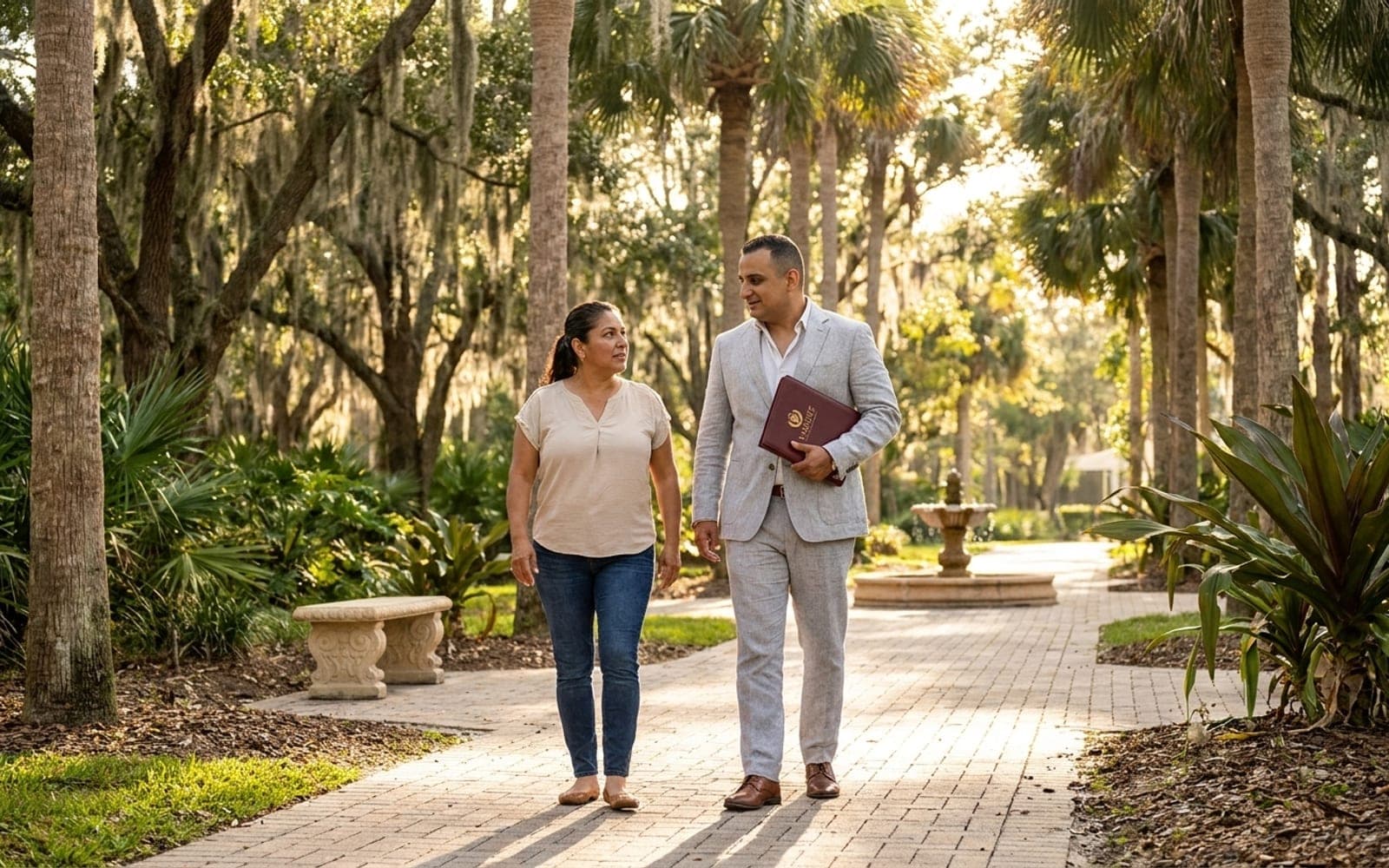
A VAWA self-petition allows certain abused spouses, children, and parents of U.S. citizens or lawful permanent residents (LPRs) to apply for immigration benefits without the abuser's knowledge or cooperation. For an abused spouse in Florida, this means a confidential pathway to a green card, offering safety and independence from domestic violence. The process involves filing Form I-360, Petition for Amerasian, Widow(er), or Special Immigrant, with USCIS. Eligibility requires demonstrating abuse, a good faith marriage, and good moral character. This vital protection ensures survivors can seek legal status without being trapped in an abusive relationship.
- Confidentiality: Abuser is not notified.
- Independence: File without abuser's help.
- Path to Green Card: Leads to lawful permanent residency.
- Safety: Provides a legal pathway to escape abuse.
Navigating the complexities of immigration law can be daunting, especially when compounded by the trauma of domestic violence. For an abused spouse in Florida, the situation can feel particularly isolating and hopeless. You may feel trapped, fearing that seeking help could jeopardize your immigration status or the safety of your children. However, there is a powerful legal pathway designed specifically for individuals in your situation: the Violence Against Women Act (VAWA) self-petition.
The VAWA self-petition allows you to seek immigration relief, including a green card, independently from your abusive U.S. citizen or lawful permanent resident spouse. This means you do not need their cooperation, nor will they be notified of your application. At Florida Immigration Lawyers, we understand the profound courage it takes to pursue this path. We are here to provide compassionate and legal guidance every step of the way, helping you reclaim your safety and future. If you are an abused spouse in Florida, do not suffer in silence. Your safety and legal future are paramount. Call Florida Immigration Lawyers at 1-844-YO-PELEO for a free consultation today.
Understanding the VAWA Self-Petition for Abused Spouses in Florida
The Violence Against Women Act (VAWA), enacted in 1994, provides crucial protections for victims of domestic violence, regardless of their gender. While its name might suggest otherwise, VAWA offers relief to all individuals, including men, who have been subjected to battery or extreme cruelty by a U.S. citizen or lawful permanent resident (LPR) spouse, parent, or adult child. For an abused spouse in Florida, this means a confidential and independent route to obtaining legal immigration status.
The core of VAWA protection for spouses is the ability to "self-petition" for a green card by filing Form I-360, Petition for Amerasian, Widow(er), or Special Immigrant. This process is distinct because it bypasses the need for the abuser to file an immigration petition on your behalf, which is often a tool used by abusers to maintain control. In Florida, where diverse communities and varying levels of access to resources exist, understanding your rights under VAWA is critically important. Many individuals in areas like West Palm Beach, Miami, or Orlando may be unaware that this option exists, or they may fear retaliation if they seek help.
Eligibility for a VAWA self-petition generally requires demonstrating that you are or were married to a U.S. citizen or LPR, that you were subjected to battery or extreme cruelty during the marriage, that you entered the marriage in good faith, and that you are a person of good moral character. The "abuse" definition is broad, encompassing not just physical violence, but also psychological, emotional, financial, and sexual abuse. This crucial provision allows survivors to escape abusive situations and secure their immigration future, fostering independence and safety. See INA § 204(a)(1)(A)(iii) and (B)(ii) for specific legal provisions regarding VAWA self-petitioners. Our firm is dedicated to helping individuals understand these complex laws and apply them to their unique circumstances, offering a lifeline to those who feel trapped.
Key Eligibility Requirements for a VAWA Self-Petition
To successfully file a VAWA self-petition as an abused spouse in Florida, you must meet several specific eligibility criteria established by U.S. Citizenship and Immigration Services (USCIS). Understanding these requirements is the first step toward building a strong case and securing your path to safety and legal residency. It is important to gather comprehensive evidence to support each aspect of your eligibility.
Firstly, you must establish that you are or were married to a U.S. citizen or lawful permanent resident (LPR). If your abuser lost their citizenship or LPR status, or if you divorced them, there are still provisions that may allow you to file, typically within two years of the termination of their status or the divorce. Secondly, you must demonstrate that you were subjected to battery or extreme cruelty by your U.S. citizen or LPR spouse. This is a broad category that includes physical abuse, sexual abuse, emotional manipulation, financial control, isolation, threats, and other forms of psychological harm. The abuse does not have to be physical to qualify, as long as it constitutes extreme cruelty. Documenting this can be challenging, but crucial.
Thirdly, you must show that you entered into the marriage in good faith, meaning you married for love and companionship, not solely to obtain an immigration benefit. USCIS scrutinizes this requirement to prevent marriage fraud, so evidence like joint bank accounts, shared property, photos, and affidavits from friends and family are vital. Lastly, you must demonstrate that you have resided with the abuser and that you are a person of good moral character. This typically involves providing police clearances and a personal statement outlining your character. For individuals living in Florida, especially in areas like West Palm Beach, gathering these documents from local authorities is a common step. Meeting these criteria ensures that the protective measures of VAWA are extended to those genuinely in need. Our experienced attorneys can help you navigate these complex requirements and compile the necessary documentation to present a compelling case to USCIS.
Defining "Extreme Cruelty" in VAWA Cases
The term "extreme cruelty" under VAWA is interpreted broadly by USCIS to encompass a wide range of abusive behaviors beyond physical violence. It recognizes that emotional, psychological, financial, and sexual abuse can be just as devastating and controlling. Examples include constant verbal degradation, threats of deportation, isolation from friends and family, control over finances, forced sexual acts, or threats against children. The crucial aspect is that these actions created a coercive and harmful environment, making it impossible for the victim to leave or seek help without fear. Your personal declaration, supported by corroborating evidence, is key to illustrating the pattern and impact of this cruelty.
Demonstrating a Good Faith Marriage
Proving that your marriage was entered into in good faith and not solely for immigration purposes is a cornerstone of a successful VAWA self-petition. USCIS requires substantial evidence to confirm the legitimacy of the marital union. This evidence can include shared financial records such as joint bank accounts, credit card statements, and tax returns filed jointly. Other strong indicators are co-mingled assets like joint leases, property deeds, or utility bills showing shared residence. Affidavits from friends, family, and employers who can attest to the bona fides of your relationship are also highly valuable. Photographs from your wedding, holidays, and daily life together further help to paint a picture of a genuine relationship. Birth certificates of any children born of the marriage are also strong evidence. The goal is to provide a comprehensive portrayal of a life shared, demonstrating that the marriage was real, despite the abuse.
The VAWA Self-Petition (Form I-360) Process: A Step-by-Step Guide
Filing a VAWA self-petition involves a structured process that, while complex, is designed to protect your confidentiality and provide a pathway to safety. Understanding each step is crucial for an abused spouse in Florida seeking relief. Our firm guides clients through this process with sensitivity and experience.
-
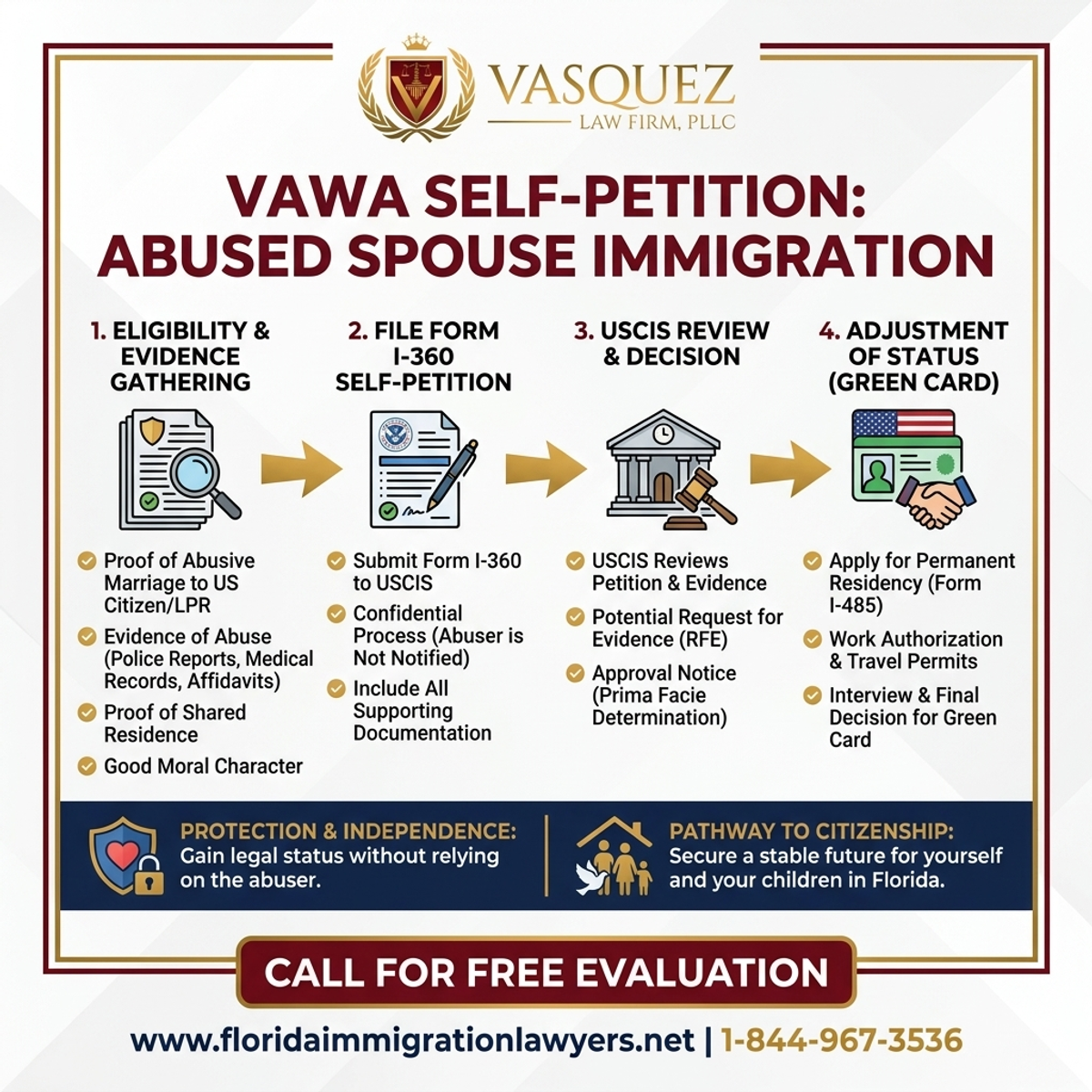
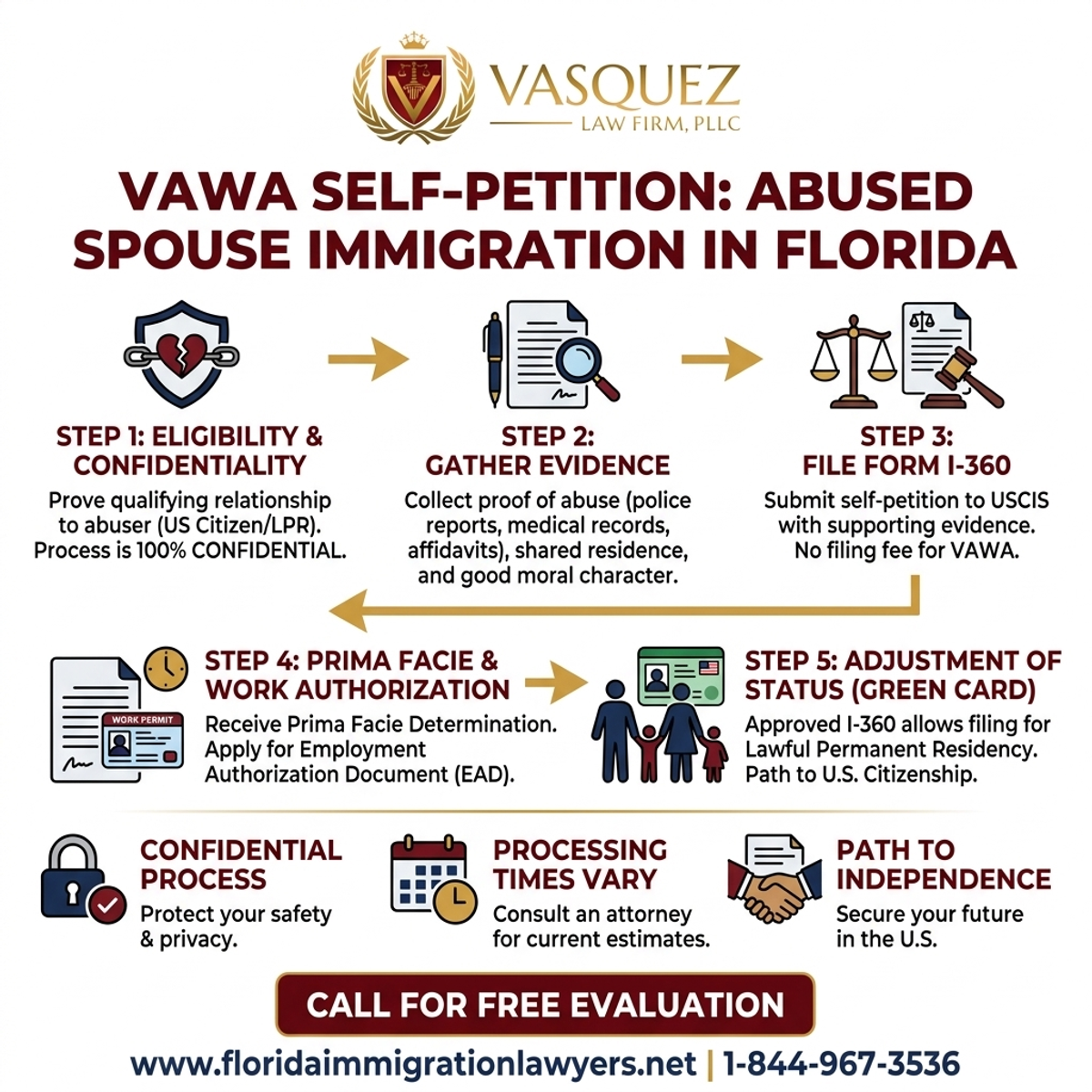
Gather Evidence and Prepare Documentation: This initial phase is critical. You will need to collect all available evidence proving your eligibility, including documentation of the abuser's status, your good faith marriage, your residence with the abuser, your good moral character, and, most importantly, detailed evidence of the battery or extreme cruelty you endured. This can include police reports, medical records, therapy notes, photos, emails, text messages, and affidavits from witnesses. A personal declaration detailing your experiences is also paramount.
-
Complete Form I-360: Fill out Form I-360, Petition for Amerasian, Widow(er), or Special Immigrant, accurately and thoroughly. This form is the cornerstone of your self-petition. It is essential to ensure all questions are answered truthfully and completely, and that you attach all required supporting documents as outlined in the form instructions. Mistakes or omissions can lead to delays or denials.
-
File with USCIS Vermont Service Center: Unlike many other immigration forms, VAWA self-petitions are centrally processed by the USCIS Vermont Service Center. You will mail your completed Form I-360 and all supporting evidence to this specific location. Confidentiality is maintained throughout this process; your abuser will not be notified of your filing.
-
Biometrics Appointment: After USCIS receives your petition, you will typically receive a notice for a biometrics appointment at a local Application Support Center (ASC). For individuals in Florida, this might be at locations in West Palm Beach, Miami, Orlando, or Jacksonville. At this appointment, your fingerprints, photograph, and signature will be collected for background checks.
Step-by-Step Process — VAWA Self-Petition: Abused Spouse Immigration in Florida
-
Prima Facie Determination: USCIS often issues a "Prima Facie" determination within several months of receiving a VAWA petition if the initial evidence suggests you are eligible. This is not a final approval, but it indicates that your case appears to be approvable. A positive prima facie finding can make you eligible for certain public benefits and, importantly, allows you to apply for work authorization (Employment Authorization Document or EAD) and deferred action, providing temporary relief and stability.
-
USCIS Decision on I-360: After reviewing your petition and evidence, USCIS will make a decision. If approved, you will receive an I-360 approval notice. This is a significant milestone, confirming your eligibility as a VAWA self-petitioner and paving the way for your green card application. If USCIS needs more information, they may issue a Request for Evidence (RFE).
-
Adjustment of Status (Form I-485) or Consular Processing: Once your I-360 is approved, you can apply for lawful permanent resident status (a green card). If you are physically present in the U.S. and meet other eligibility criteria, you can file Form I-485, Application to Register Permanent Residence or Adjust Status. If you are outside the U.S. or ineligible for adjustment, you would pursue consular processing through a U.S. embassy or consulate abroad. For those adjusting status in Florida, interviews, if required, would typically be held at the USCIS Miami or Orlando Field Offices. This final step secures your long-term immigration future and independence.
Essential Document Checklist for Your VAWA Petition
Preparing a thorough and well-organized packet of supporting documents is paramount to the success of your VAWA self-petition. For an abused spouse in Florida, gathering these items meticulously demonstrates your eligibility and helps USCIS understand the full scope of your situation. This checklist is a guide, and specific cases may require additional documentation.
- Form I-360, Petition for Amerasian, Widow(er), or Special Immigrant: Completed accurately and signed.
- Your Personal Sworn Statement/Declaration: A detailed, chronological account of the abuse, your relationship, and why you believe you qualify for VAWA. This is often the most critical piece of evidence.
- Evidence of Abuser's U.S. Citizen or LPR Status: Copies of their birth certificate, U.S. passport, Certificate of Naturalization, or green card (Form I-551).
- Evidence of Marriage: Your marriage certificate.
- Evidence of Good Faith Marriage: Joint bank statements, joint utility bills, joint leases or property deeds, tax returns filed jointly, birth certificates of children born to the marriage, photos of you together, affidavits from friends and family attesting to the bona fide nature of your relationship.
- Evidence of Abuse/Extreme Cruelty: Police reports, restraining orders, medical records, psychological evaluations or therapist letters, affidavits from witnesses (e.g., neighbors, social workers, clergy), photos of injuries, copies of abusive texts, emails, or voicemails, documentation from domestic violence shelters or support groups.
- Evidence of Cohabitation: Joint leases, utility bills, mail addressed to both of you at the same address, or other documents showing you lived together.
- Evidence of Good Moral Character: Police clearances from all jurisdictions where you have resided for the past three years (e.g., Palm Beach County Sheriff's Office, Miami-Dade Police Department), court dispositions for any arrests (even if charges were dropped), and a statement explaining any issues.
- Your Birth Certificate and Passport/Visa Copies: Proof of your identity and nationality.
- Photographs: Passport-style photos of yourself as per USCIS specifications.
Processing Timelines and Expectations for VAWA Cases in 2026
Understanding the processing timelines for a VAWA self-petition is crucial for managing expectations, especially for an abused spouse in Florida who is often seeking a swift resolution for safety and stability. While it is important to remember that immigration processing times can vary significantly and are subject to change, here's a general overview of what you might expect in 2026.
The initial Form I-360, Petition for Amerasian, Widow(er), or Special Immigrant, is processed by the USCIS Vermont Service Center. Currently, processing times for I-360 VAWA petitions can range from 18 to 24 months, or even longer in some complex cases. These times are estimates and can fluctuate based on USCIS's workload, staffing, and policy changes. You can always check the USCIS Processing Times page for the most up-to-date information.
One of the key interim benefits for VAWA self-petitioners is the "Prima Facie" determination. USCIS typically reviews petitions for prima facie eligibility within 6-9 months of filing. If a positive prima facie determination is issued, it can make you eligible for certain public benefits and, critically, allows you to apply for work authorization (Form I-765, Application for Employment Authorization) and deferred action. Obtaining an Employment Authorization Document (EAD) usually takes an additional 3-6 months after application, providing you with legal permission to work while your I-360 is pending.
Key Statistics — VAWA Self-Petition: Abused Spouse Immigration in Florida
Once your I-360 petition is approved, you can proceed with applying for adjustment of status (Form I-485) if you are eligible and residing in the U.S. The processing for Form I-485 can add another 12-24 months, including potential interviews at local USCIS field offices in Florida, such as Miami or Orlando. The total journey from filing your I-360 to receiving your green card can often span 2 to 4 years. While this may seem like a long time, the interim benefits and the ultimate goal of lawful permanent residency make it a worthwhile and life-changing process. Our team at Florida Immigration Lawyers will help you track your case progress and prepare for each stage. For details on evidence and eligibility, refer to 8 CFR § 204.2(c).
Cost Factors and Fee Breakdown for a VAWA Self-Petition
Understanding the financial aspects of a VAWA self-petition is an important consideration for an abused spouse in Florida. One of the significant advantages of the VAWA process is that the U.S. government recognizes the vulnerable position of petitioners and has structured the fees accordingly to avoid creating additional barriers to safety and justice.
Crucially, there is no USCIS filing fee for Form I-360, Petition for Amerasian, Widow(er), or Special Immigrant, when filed as a VAWA self-petition. This eliminates a substantial financial hurdle that many other immigration pathways present. This fee exemption applies specifically to the I-360 petition itself, acknowledging the unique circumstances of domestic violence survivors. Similarly, the biometrics fee, which is typically charged for fingerprinting and background checks, is also often waived for VAWA self-petitioners, further reducing out-of-pocket costs.
While the I-360 is fee-exempt, if you proceed to file for Adjustment of Status (Form I-485) after your I-360 is approved, there is typically a filing fee for the I-485 and an associated biometrics fee. However, VAWA self-petitioners are often eligible for a fee waiver for the I-485 and related applications (such as for an Employment Authorization Document, Form I-765, and Advance Parole, Form I-131). Eligibility for fee waivers is based on income and public benefits received, and our attorneys can help determine if you qualify and assist with the fee waiver application (Form I-912).
The primary cost you should anticipate is for legal representation. While not mandatory, retaining an experienced immigration attorney for your VAWA self-petition is highly recommended. The process is complex, requires meticulous evidence gathering, and involves drafting a compelling personal declaration. An attorney can ensure all forms are correctly filed, all necessary evidence is submitted, and your case is presented in the strongest possible light. Legal fees are an investment in your safety, independence, and future. Additional potential costs might include fees for obtaining police reports, medical records, translation services for foreign documents, and mailing fees. Florida Immigration Lawyers offers free consultations to discuss your case and provide a clear understanding of potential costs involved, allowing you to plan your journey with confidence.
Do not navigate this complex and sensitive process alone. Contact Florida Immigration Lawyers today for compassionate and experienced legal guidance. We serve clients across Florida, including Orlando. Our dedicated team is ready to help you take the next step toward a safer and more secure future.
Common Mistakes to Avoid in Your VAWA Self-Petition
The VAWA self-petition process is intricate, and even minor errors can lead to significant delays or even denial. For an abused spouse in Florida, avoiding these common pitfalls is crucial for a successful outcome.
-
Not Filing Due to Fear or Lack of Information: Many abused individuals, particularly those in vulnerable immigrant communities in Florida, fear retaliation from their abuser or believe they have no legal recourse. This fear often prevents them from seeking help, but VAWA is designed to protect you confidentially. Do not let fear or misinformation keep you from your path to safety.
-
Inadequate Evidence of Abuse or Good Faith Marriage: A common mistake is submitting insufficient evidence. USCIS requires compelling proof of both the battery/extreme cruelty and that your marriage was entered into in good faith. Vague statements or a lack of corroborating documents can weaken your case significantly. Collect everything you can, no matter how minor it seems.
-
Filing Without Legal Counsel: While you can file pro se, the complexity of VAWA petitions makes legal representation invaluable. An experienced attorney understands the nuances of immigration law, knows what evidence USCIS requires, and can help you craft a powerful personal declaration. Attempting to navigate this alone often leads to errors and missed opportunities.
-
Failing to Disclose Criminal History (Even Minor Ones): Any past arrests or convictions, even if expunged or minor, must be disclosed. Failing to do so can be considered misrepresentation and lead to a denial. Your attorney can help assess the impact of any criminal record on your good moral character requirement and advise on how to address it.
-
Lying or Misrepresenting Facts: Always be truthful in your petition and all interactions with USCIS. Any deliberate misrepresentation or fraud will result in a denial and can have severe, long-lasting negative immigration consequences, including future bars to benefits.
-
Missing Deadlines or Responding Late to RFEs: USCIS provides strict deadlines for responding to Requests for Evidence (RFEs) or Notices of Intent to Deny (NOIDs). Missing these deadlines or submitting incomplete responses can lead to a denial without further consideration. Prompt and thorough responses are essential.
-
Filing I-360 After Divorce Beyond the Two-Year Window: If you are divorced from your abuser, you typically have two years from the date the divorce was finalized to file your VAWA self-petition. Missing this crucial deadline will render you ineligible, unless specific exceptions apply. Verify your divorce date carefully.
-
Voluntarily Leaving the U.S. Before Approval: Departing the U.S. while your VAWA petition is pending, especially if you have an unlawful presence, can trigger bars to readmission and negatively impact your ability to adjust status. Always consult with an attorney before making any international travel plans during your immigration process, even after receiving an EAD.
-
Not Maintaining Good Moral Character: While awaiting a decision, it is imperative to continue demonstrating good moral character. Any new arrests, criminal activity, or serious immigration violations can jeopardize your petition and future eligibility. Live lawfully and responsibly throughout the entire process.
When to Call a Lawyer for Your VAWA Self-Petition
Deciding when to seek legal counsel for a VAWA self-petition is a critical step for an abused spouse in Florida. While VAWA is designed to be accessible, the legal and emotional complexities involved make experienced legal representation invaluable. You should consider contacting Florida Immigration Lawyers immediately if any of the following scenarios apply to you:
- You are experiencing any form of battery or extreme cruelty: Whether physical, emotional, psychological, financial, or sexual, abuse warrants immediate legal consultation to understand your rights and options.
- You are unsure about your eligibility: The criteria for VAWA are specific. An attorney can assess your unique situation, determine if you meet the requirements, and advise on the best course of action.
- Gathering evidence feels overwhelming or unsafe: Collecting documentation of abuse and good faith marriage can be difficult and even dangerous. A lawyer can guide you on what evidence is most effective and how to obtain it safely.
- You have a criminal record, even a minor one: Any past arrests or convictions can impact your "good moral character" requirement. An attorney can analyze your record and advise on how to address it with USCIS, potentially protecting you from denial.
- Your abuser is threatening to withdraw a previously filed petition or report you to immigration: This is a common tactic of control. A VAWA self-petition can remove your abuser's power over your immigration status.
- You have received a Request for Evidence (RFE) or Notice of Intent to Deny (NOID): These notices indicate that USCIS has concerns about your petition. An attorney can help you formulate a comprehensive and timely response to address these issues effectively.
- You have previously been denied an immigration benefit: A prior denial, especially related to marriage-based petitions, can complicate your VAWA case. An attorney can review your history and strategize the best approach.
- You need to include your children in your petition: If you have children who have also been abused or are at risk, an attorney can ensure they are properly included in your VAWA application, providing them with protection as well.
- You entered the U.S. without inspection or have an unlawful presence: VAWA provides special waivers for certain inadmissibility grounds, which an attorney can help you navigate to adjust your status.
- You are in removal (deportation) proceedings: VAWA can be a powerful defense against deportation, offering a pathway to cancel removal. Our deportation defense attorneys are experienced in these complex cases.
At Florida Immigration Lawyers, we offer experienced and compassionate legal representation for VAWA self-petitioners across Florida, from West Palm Beach to Miami, Orlando, and beyond. We understand the sensitive nature of these cases and are committed to providing a safe and supportive environment as we work to secure your future. Contact us today for a free and confidential consultation.
At Florida Immigration Lawyers, we stand as a beacon of hope and legal excellence for immigrants across the Sunshine State. From our Orlando office, serving communities throughout Florida, our dedicated team of attorneys specializes exclusively in immigration law. We understand the profound impact immigration matters have on individuals and families, and we are committed to providing compassionate, effective, and results-driven representation.
Our firm is built on a foundation of extensive legal knowledge, a deep understanding of USCIS policies, and a genuine commitment to our clients' well-being. We offer a comprehensive suite of immigration services, including family-based petitions, employment visas, deportation defense, asylum claims, naturalization, and, critically, VAWA self-petitions for abused spouses, children, and parents. We pride ourselves on our client-centered approach, ensuring that every individual receives personalized attention and a tailored legal strategy designed to achieve their specific goals.
Choosing Florida Immigration Lawyers means partnering with a team that is available 24/7 to address your urgent needs. We offer free, confidential consultations to help you understand your options without financial obligation. Our attorneys are fluent in English and Spanish ("Se Habla Español"), ensuring clear and culturally sensitive communication. We don't just process paperwork; we advocate fiercely for your rights, guide you through every complex legal challenge, and empower you to build a secure future in the United States. Your journey to safety, stability, and legal status is our priority. Call us today at 1-844-YO-PELEO or visit www.floridaimmigrationlawyers.net to learn how we can help you.
Sources and References
- U.S. Citizenship and Immigration Services (USCIS) - Battered Spouse, Child, or Parent
- U.S. Citizenship and Immigration Services (USCIS) - Form I-360, Petition for Amerasian, Widow(er), or Special Immigrant
- Executive Office for Immigration Review (EOIR)
- 8 U.S.C. § 1154(a)(1)(A)(iii) (Immigration and Nationality Act Section 204(a)(1)(A)(iii)) - Petition for relative, preference status.
- 8 CFR § 204.2(c) - Petitions for spouses, children, and parents (specific regulations for VAWA).
- USCIS Policy Manual, Volume 6, Part G, Chapter 2 - Eligibility Requirements for VAWA Self-Petitioners.
Related services: family petition process, family-based green cards, fiancé visa (K-1).
This article provides general legal information and is not intended as legal advice. Every case is unique, and outcomes depend on specific facts and circumstances. Contact an attorney for advice about your particular situation. Immigration laws are subject to change.
If you are an abused spouse in Florida seeking a path to safety and legal immigration status, do not hesitate to reach out. The compassionate and experienced team at Florida Immigration Lawyers is ready to help you navigate the VAWA self-petition process with dignity and experience. Your future starts now. Call us for a free consultation at 1-844-YO-PELEO. Se Habla Español - Estamos aquí para ayudarle.
If you need legal assistance, learn more about experienced family immigration attorneys, or call us at 1-844-YO-PELEO for a free consultation.
Do Not Navigate This Process Alone
Our experienced immigration attorneys are ready to fight for you. Get a free, confidential case review today.
Se Habla Español
Or leave your details and we’ll call you:
Free Evaluation in 24 Hours
Or talk to us right now
AI voice assistant — available 24/7
FreeFrequently Asked Questions

William J. Vásquez
Founding Attorney · Vasquez Law Firm
U.S. Air Force veteran and immigration attorney with years of hands-on U.S. immigration experience. J.D., NCCU School of Law. AILA member. Admitted to the 4th, 5th, and 11th Circuit Courts.
Available 24/7 - Free Evaluations
Reviewed for legal accuracy by William J. Vásquez
Licensed in North Carolina; U.S. immigration is federal practice.
Related Legal Services
Our Florida immigration attorneys can help you with free immigration consultation, business immigration and deportation defense. Call today at 1-844-YO-PELEO for a free case review.
Related Links
Related Topics
Free Legal Case Review
Discuss your case with our experienced attorneys. We're available 24/7.
Se Habla Español - Estamos aquí para ayudarle.
Related Articles
Dual Citizenship Lawyer in Florida: What You Need to Know
For Florida residents, the concept of dual citizenship, or holding two passports, offers a compelling blend of opportunities and challenges. While the U.S. generally permits dual nationality, the path to achieving this status requires a meticulous understanding of both U.S. immigration laws and the citizenship policies of your country of origin. This guide explores the definition of dual citizenship, the detailed step-by-step process for U.S. naturalization, and the significant benefits and potential pitfalls involved. We cover essential documentation, typical timelines, and cost considerations for 2026, providing crucial insights for anyone in Orlando, Miami, or across Florida considering this important legal step. Learn about common mistakes to avoid and understand when to seek professional legal counsel to navigate this complex process successfully. Florida Immigration Lawyers is here to provide expert, bilingual support for your dual citizenship journey.
Immigration Lawyer Orlando Free Consultation in Florida
For individuals and families in Orlando, Florida, navigating the complexities of U.S. immigration law requires expert guidance. An immigration lawyer in Orlando offers crucial support for everything from visa applications and green card processes to naturalization and deportation defense. This comprehensive guide details what a free consultation covers, providing a step-by-step overview of immigration pathways, essential document checklists, and expected timelines in 2026. We also highlight common mistakes to avoid, discuss the critical role of legal counsel in deportation and asylum cases, and explain why choosing a local Orlando immigration attorney is beneficial. Florida Immigration Lawyers is dedicated to serving the diverse community of Orlando with compassionate, effective legal solutions, ensuring you receive personalized advice and robust representation for a successful immigration journey.
EAD Advance Parole Combo Card in Florida 2026
For individuals with a pending Form I-485, Application to Register Permanent Residence or Adjust Status, the EAD Advance Parole Combo Card is an essential document. This single card combines the authorization to work legally in the U.S. (Employment Authorization Document - EAD) with permission to travel internationally and re-enter without abandoning your green card application (Advance Parole). This guide from Florida Immigration Lawyers provides a comprehensive overview for applicants in Florida in 2026, covering eligibility, the step-by-step application process, required documents, expected processing times, and associated costs. We also highlight common mistakes to avoid and when to seek legal counsel to ensure a smooth and successful immigration journey. Understanding this vital card is key to maintaining stability while awaiting your permanent residency approval.
F-1 to H-4 Change of Status Processing in Florida
Explore the F-1 to H-4 change of status process in Florida, including I-539 processing times, steps involved, and common pitfalls. Call Florida Immigration Lawyers for a free case review.