Parole in Place for Military Families Miami: A 2026 Guide
Explore how parole in place helps military families stay together in Miami. Understand the eligibility, process, and common mistakes to avoid. Contact Florida Immigration Lawyers for expert guidance.

- Eligibility primarily applies to spouses, parents, and children of active duty members.
- Applicants must file Form I-131.
- Approval allows temporary lawful presence and work authorization.
For military families stationed in Florida, particularly in Miami, understanding parole in place is vital. This process allows undocumented family members of military personnel to stay in the U.S. legally. This article explores the ins and outs of parole in place, its significance for military families, and how to apply effectively. Call Florida Immigration Lawyers at 1-844-967-3536 for a free consultation.
What Is Parole in Place for Military Families?
Parole in place is a discretionary benefit that allows undocumented family members of U.S. military personnel to stay in the U.S. with legal status. As of 2026, it remains a critical tool for maintaining family unity. The benefit applies to families of active duty members, reservists, and veterans.
Eligibility for parole in place requires the applicant to be an immediate family member of a military service member. This includes spouses, children, and parents. The process involves filing Form I-131 with U.S. Citizenship and Immigration Services (USCIS).
This discretionary power is exercised on a case-by-case basis, considering the unique circumstances of each military family. The underlying principle is to support the well-being and stability of service members by ensuring their immediate families are not subject to deportation, which could severely impact military readiness and morale. For instance, imagine a decorated Marine serving abroad, whose spouse and children in Miami face the constant threat of removal. Parole in place offers a lifeline, allowing them to remain united and providing the service member with peace of mind.
Furthermore, the benefit extends beyond active duty personnel to encompass reservists and even certain veterans, acknowledging their sacrifices and continued commitment to the nation. This broad scope ensures that a wider range of military families can seek protection. Understanding this nuanced eligibility is paramount, and Florida Immigration Lawyers often assist families in Miami and throughout the state in determining if they meet the specific criteria, ensuring no deserving family is left behind.
The process, while straightforward in concept, demands meticulous attention to detail. Gathering the correct documentation, from proof of military service to establishing the bona fide family relationship, is critical. A single oversight could lead to delays or even denial. Our team at Florida Immigration Lawyers, reachable at 1-844-967-3536, specializes in guiding families through each step, ensuring all necessary paperwork is accurately prepared and submitted to USCIS.
Steps to Apply for Parole in Place
- Determine eligibility based on family relationship and military status.
- Gather necessary documentation, including proof of military service and family relationship.
- Complete and file Form I-131 with USCIS.
- Attend a biometrics appointment if required.
- Wait for USCIS to process the application, which can take several months.
How Does Parole in Place Affect Immigration Status?
Parole in place provides a temporary lawful presence, allowing beneficiaries to apply for work authorization. This status can be renewed but does not directly lead to permanent residency.
This process primarily aims to protect military families from separation due to deportation. While it does not grant permanent legal status, it offers significant relief and stability.
Crucially, parole in place can serve as a vital stepping stone for certain individuals to adjust their status to lawful permanent resident (green card holder) within the United States. Ordinarily, individuals who entered the U.S. without inspection (EWI) are barred from adjusting status in the U.S. and would need to leave the country for consular processing, potentially triggering a 3- or 10-year bar to re-entry. However, being 'paroled' into the U.S. by USCIS effectively 'cures' the unlawful entry, allowing eligible individuals to apply for adjustment of status without leaving the country, provided they have an approved immigrant petition (e.g., an I-130 filed by a U.S. citizen spouse).
This distinction is profoundly important for military families. For example, if a U.S. citizen Army veteran in Florida has an undocumented spouse who entered without inspection, parole in place can transform their immigration journey. After parole is granted, the spouse can then apply for a green card through the veteran's I-130 petition, avoiding the dangerous and often lengthy process of returning to their home country. This pathway to permanent residency underlines the immense value of parole in place for long-term family unity and stability.
It’s important to understand that parole in place itself is not a green card, nor does it automatically grant one. It provides a legal basis for presence and work authorization, paving the way for other immigration benefits. Beneficiaries receive an I-94 document indicating their parole status, which is essential for proving lawful presence and obtaining an Employment Authorization Document (EAD). For comprehensive guidance on leveraging parole in place for a green card, consulting with Florida Immigration Lawyers at 1-844-967-3536 is highly recommended.
Document Checklist for Parole in Place
- Form I-131, Application for Travel Document
- Proof of military service (e.g., DD-214, military orders)
- Evidence of family relationship (e.g., birth or marriage certificates)
- Two passport-style photos
- Proof of residence in the U.S.
Processing Times and Expectations in 2026
Understanding the timeline for parole in place is crucial. Processing times can vary depending on the case and current government policies.
| Stage | Typical Timeframe | Notes |
|---|---|---|
| Application Submission | 1-2 months | Initial review by USCIS |
| Biometrics Appointment | 1 month | If required |
| USCIS Decision | 3-6 months | Depends on case complexity |
| Renewal Process | 3-4 months | For extensions |
Several factors influence how quickly a parole in place application is processed. These include the volume of applications USCIS is currently handling, the completeness and accuracy of your submission, and whether additional evidence (RFE) is requested. For instance, an application submitted with all required documents and clear evidence of eligibility is likely to move faster than one that requires follow-ups from USCIS. Staying organized and proactive in gathering your documents can significantly impact your waiting period.
While the table provides typical timeframes, it's important to set realistic expectations. USCIS processing times are subject to change, and unforeseen circumstances can always arise. Regularly checking the USCIS website for updated processing times for Form I-131, specifically for parole in place requests, is a practical tip. Furthermore, responding promptly and thoroughly to any Requests for Evidence (RFEs) from USCIS is paramount to avoid further delays. Neglecting an RFE can lead to application denial, necessitating a complete reapplication and restarting the entire process.
For military families in Miami, managing these expectations and navigating potential delays can be stressful. This is where the expertise of Florida Immigration Lawyers becomes invaluable. We can help you track your application, understand any communications from USCIS, and advise on the best course of action to keep your application moving forward efficiently. Don't hesitate to reach out to us at 1-844-967-3536 for personalized assistance.
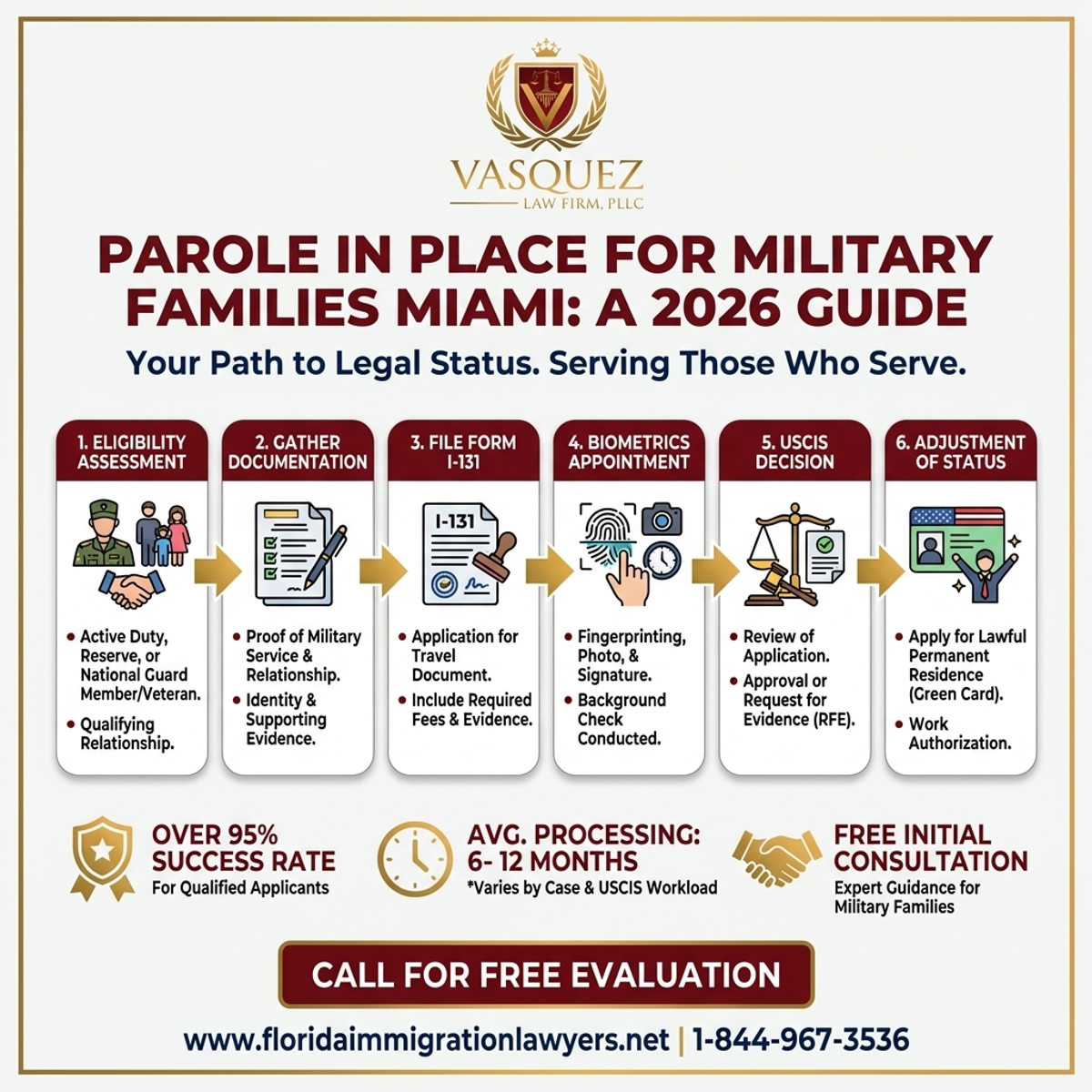
Step-by-Step Process — Parole in Place for Military Families Miami: A 2026 Guide
Costs Associated with Parole in Place
While filing for parole in place, several cost factors need to be considered. These costs can vary based on case specifics and legal assistance required.
| Item | Typical Fee | Notes |
|---|---|---|
| Filing Fee for Form I-131 | Variable | Check USCIS for current fees |
| Biometric Services Fee | Variable | If applicable |
| Attorney Fees | Variable | Depends on services required |
The filing fee for Form I-131 can change, so it's essential to always verify the most current fee directly on the USCIS website. In some cases, applicants may be eligible for a fee waiver, particularly if they can demonstrate financial hardship. Understanding fee waiver eligibility criteria can significantly reduce the financial burden. Similarly, the biometric services fee, if applicable, is another mandatory cost that covers background checks and identity verification.
Beyond government fees, attorney fees represent a significant but often worthwhile investment. While it's technically possible to file parole in place independently, the complexities of immigration law, the potential for costly errors, and the importance of a successful outcome for military families often make legal representation indispensable. An experienced immigration lawyer can ensure all documentation is correct, address any potential issues proactively, and represent your interests throughout the process, ultimately saving time, stress, and potential future expenses from denials or appeals.
Budgeting for these costs is a critical step in the application process. Florida Immigration Lawyers offers transparent fee structures and can discuss payment options during your free consultation. Investing in expert legal guidance helps ensure your application is robust and maximizes your chances of approval, providing peace of mind for your military family. Contact us at 1-844-967-3536 to discuss your specific situation and how we can assist.
Do not navigate this process alone. Contact Florida Immigration Lawyers today.
Common Mistakes to Avoid
Avoiding common pitfalls is just as crucial as understanding the application steps for parole in place. Even minor errors can lead to significant setbacks, from prolonged processing times to outright denial, creating immense stress and uncertainty for military families.
- Failing to provide complete documentation, which can delay processing.
- Not verifying eligibility requirements, leading to application denial.
- Missing deadlines for application submission or renewals.
- Ignoring USCIS requests for additional information.
- Submitting incorrect forms, resulting in processing delays.
- Assuming parole in place grants citizenship.
- Neglecting to renew parole status, risking unlawful presence.
- Not consulting a legal expert when facing complex situations.
- Overlooking changes in military status affecting eligibility.
- Failing to communicate address changes to USCIS.
These mistakes can have profound and lasting consequences, impacting not just the applicant but the entire military family. Proactive measures, such as double-checking all forms and supporting documents, verifying current eligibility, and staying informed about USCIS updates, are essential. When in doubt, or if your case presents unique challenges, the most reliable strategy is to seek professional legal advice. Florida Immigration Lawyers are here to help you navigate these complexities, offering expert guidance to ensure a smooth and successful application process.
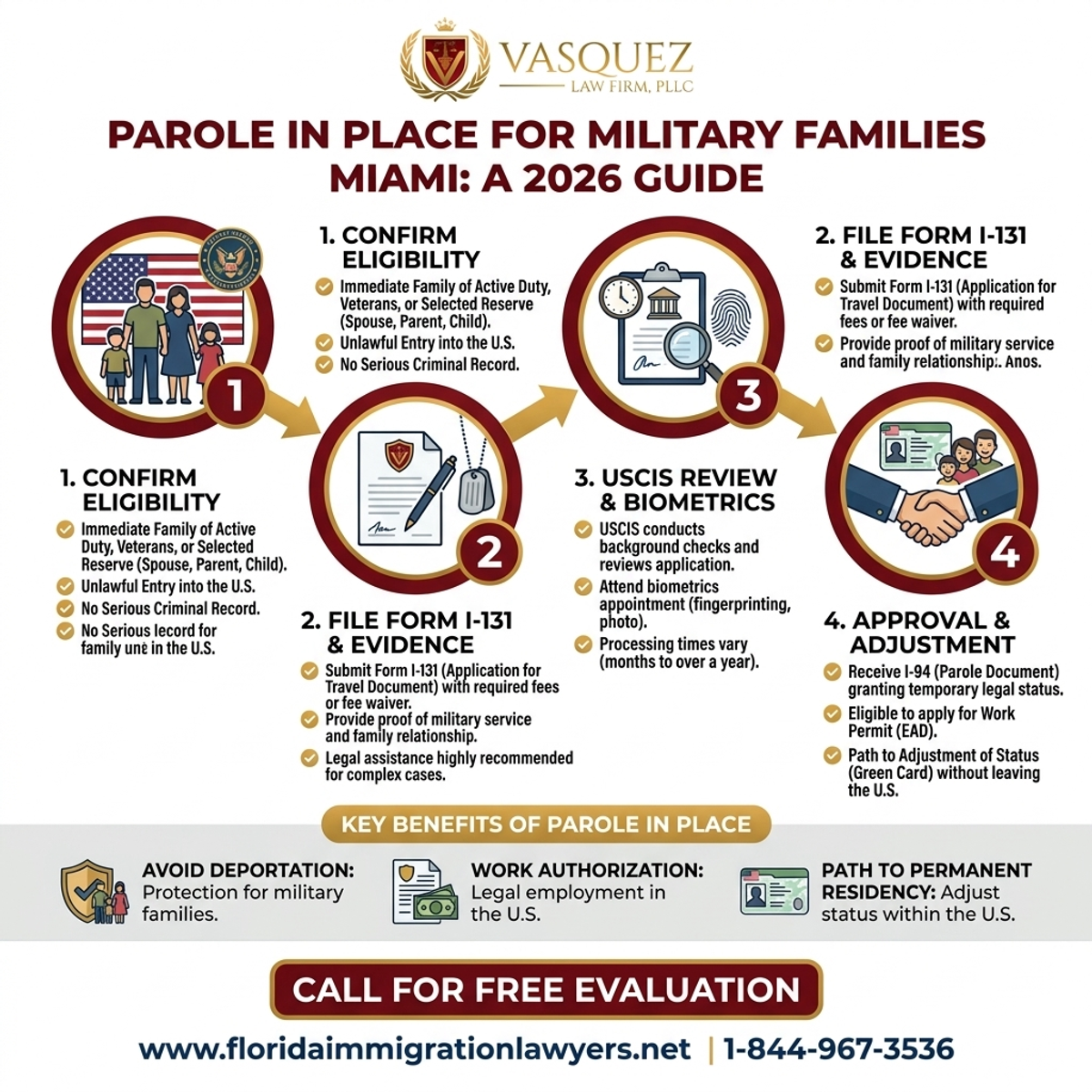
Key Statistics — Parole in Place for Military Families Miami: A 2026 Guide
Frequently Asked Questions About Parole in Place
Q: Can parole in place lead to a green card?
A: Yes, parole in place can be a critical step towards obtaining a green card for certain eligible individuals. While parole in place itself does not grant permanent residency, it "cures" the unlawful entry for those who entered the U.S. without inspection. This allows them to adjust their status to lawful permanent resident from within the United States, provided they have an approved immigrant petition filed on their behalf by a U.S. citizen immediate relative. This pathway avoids the need to leave the U.S. for consular processing, which could trigger re-entry bars.
Q: What happens if my military family member is no longer active duty?
A: Parole in place eligibility extends beyond active duty service members to include reservists and certain veterans. If your family member has honorably served in the U.S. armed forces, you may still be eligible to apply. The key is to demonstrate their qualifying military service, typically through documents like a DD-214. It's crucial to confirm the specific criteria for veterans, as eligibility can sometimes depend on the timing and nature of their service. Florida Immigration Lawyers can help assess your specific situation.
Q: Can I travel outside the U.S. with parole in place?
A: While parole in place grants lawful presence within the U.S., it does not automatically authorize international travel. To travel outside the U.S. and return without jeopardizing your parole status or future immigration applications, you must apply for and receive an Advance Parole document from USCIS *before* you depart. Traveling without Advance Parole could be considered a self-deportation and might prevent you from re-entering the U.S. or lead to the termination of your parole status. Always consult with an attorney before making travel plans.
Q: Is parole in place available for all undocumented family members?
A: No, parole in place is specifically designed for immediate relatives of U.S. military personnel: spouses, unmarried children under 21, and parents. Other family members, such as siblings or adult married children, are generally not eligible for this specific benefit. Furthermore, the military service member must be a U.S. citizen or lawful permanent resident. It's vital to confirm your precise relationship and the service member's status to ensure eligibility before applying. Our team at Florida Immigration Lawyers can provide a thorough eligibility assessment.
Q: How long does parole in place last?
A: Parole in place is typically granted for a period of one year. It is a temporary status, and beneficiaries must apply for renewal before their current parole expires to maintain their lawful presence and work authorization. The renewal process is similar to the initial application, requiring updated documentation and a new Form I-131. Failing to renew your parole status in a timely manner can result in a lapse of lawful presence, potentially exposing you to removal proceedings and complicating future immigration efforts. Plan renewals well in advance.
When to Call a Lawyer
Engaging a lawyer can be crucial in complex situations. If you're unsure about eligibility or face complications with USCIS, consulting a legal expert is wise. Warning signs include unexpected application denials or requests for additional evidence.
Beyond basic eligibility questions, a lawyer becomes indispensable when dealing with complicating factors such as a prior deportation order, criminal history, multiple entries into the U.S., or previous immigration application denials. These issues can significantly impact your eligibility and require expert legal strategy to navigate successfully. Attempting to manage such complexities without professional guidance often leads to further complications and a higher risk of an unfavorable outcome.
For example, consider a scenario where a military spouse has a minor criminal infraction from several years ago. While seemingly small, this could raise red flags with USCIS. An immigration attorney from Florida Immigration Lawyers can assess the impact of such an issue, advise on potential waivers, or help present your case in the most favorable light. Their expertise ensures that your application addresses all potential concerns proactively, strengthening your overall case.
Our services at Florida Immigration Lawyers include comprehensive support for parole in place applications, ensuring you navigate the process smoothly. We provide thorough document review, assistance with responding to complex Requests for Evidence (RFEs), and preparation for any potential interviews. Our goal is to alleviate the stress on military families by providing clear, effective legal strategies and unwavering support throughout the entire parole in place process. Call 1-844-967-3536 today for dedicated assistance.
About Florida Immigration Lawyers
Florida Immigration Lawyers is dedicated to serving the immigration needs of Florida residents. We offer expertise in military naturalization, parole in place, and other immigration services. Our team is available 24/7 to provide free consultations and bilingual support.
Contact us at 1-844-967-3536 or visit our website for more information.
Our commitment extends to understanding the unique challenges faced by military families. We pride ourselves on offering compassionate, culturally sensitive, and highly effective legal representation, ensuring that those who serve our country and their loved ones receive the highest caliber of immigration assistance. From initial eligibility assessment to final decision, we stand by our clients, advocating tirelessly for their right to family unity and legal status in the U.S.
Sources and References
- U.S. Citizenship and Immigration Services (USCIS)
- Executive Office for Immigration Review (EOIR)
- 8 U.S.C. Chapter 12 - Immigration and Nationality Act
Related services: naturalization process, citizenship test preparation, dual citizenship guidance, family-based immigration.
This article provides general legal information and is not intended as legal advice. Every case is unique, and outcomes depend on specific facts and circumstances. Contact an attorney for advice about your particular situation.
For personalized assistance and to ensure the best possible outcome for your case, contact Florida Immigration Lawyers at 1-844-967-3536. Se Habla Español - Estamos aquí para ayudarle.
If you need legal assistance, learn more about citizenship lawyers in Florida, or call us at 1-844-967-3536 for a free consultation.
Do Not Navigate This Process Alone
Our experienced immigration attorneys are ready to fight for you. Get a free, confidential consultation today.
Se Habla Español
Or leave your details and we’ll call you:
Free Evaluation in 24 Hours
Or talk to us right now

AI voice assistant — available 24/7
FreeFrequently Asked Questions

William J. Vásquez
Founding Attorney · Vasquez Law Firm
U.S. Air Force veteran and immigration attorney with years of hands-on U.S. immigration experience. J.D., NCCU School of Law. AILA member. Admitted to the 4th, 5th, and 11th Circuit Courts.
Available 24/7 - Free Evaluations
Reviewed for legal accuracy by William J. Vásquez
Licensed in North Carolina; U.S. immigration is federal practice.
Related Legal Services
Our Florida immigration attorneys can help you with family immigration services, immigration practice areas and free immigration consultation. Call today at 1-844-967-3536 for a free consultation.
Related Links
Related Topics
Free Legal Consultation
Discuss your case with our experienced attorneys. We're available 24/7.
Se Habla Español - Estamos aquí para ayudarle.
Related Articles
eb2 niw lawyer florida: Navigating the NIW Process in 2026
For highly skilled professionals in Florida, the EB-2 National Interest Waiver (NIW) offers a direct path to a green card without employer sponsorship. This comprehensive guide for 2026 details the eligibility criteria, the step-by-step application process, expected processing times, and associated costs. Learn how to demonstrate substantial merit and national importance under the Matter of Dhanasar test, avoid common pitfalls, and understand when to seek expert legal counsel. Florida Immigration Lawyers specializes in assisting innovators, researchers, and entrepreneurs across Florida, including Pembroke Pines, to successfully navigate the complex NIW petition process and achieve permanent residency.
I-140 Premium Processing Timeline in Florida: What to Know
Navigating the I-140 premium processing timeline in Florida can be challenging. Our guide covers timelines, eligibility, and steps for EB-2 and EB-3 categories. Contact Florida Immigration Lawyers for expert assistance.
Unlawful Presence Waiver Florida: A 2026 Guide
Discover how the unlawful presence waiver can help immigrants in Florida stay with their families while adjusting their status. Learn about the I-601A process and eligibility criteria.
USCIS Oath Ceremony Schedule 2026: What to Expect in Florida
For those in Florida awaiting U.S. citizenship in 2026, understanding the USCIS oath ceremony schedule and naturalization processing times is vital. This guide covers the journey from application to the final oath, detailing estimated timelines, required documents, and common pitfalls. Learn about the factors influencing processing in Florida's field offices, such as Miami, Orlando, and Tampa, and what to expect during your interview and the pivotal oath ceremony. We emphasize the importance of meticulous preparation and highlight when legal assistance from Florida Immigration Lawyers can be invaluable, especially with evolving immigration rules. Prepare for your future as a U.S. citizen with confidence and expert guidance.