VAWA Immigration Relief for Abuse Victims in Florida
VAWA provides essential immigration relief for abuse victims in Florida, enabling them to apply for legal status independently. Learn how to navigate this process effectively.

VAWA, or the Violence Against Women Act, provides critical immigration relief for abuse victims in Fort Lauderdale and throughout Florida. This law allows abused spouses, children, and parents of U.S. citizens and permanent residents to self-petition for legal status without relying on their abuser. Key takeaways include:
- Eligibility extends to spouses, children, and parents of abusive U.S. citizens or permanent residents.
- Applicants can file independently without notifying their abuser.
- VAWA helps victims secure safety and independence.
Introduction
Imagine living in fear every day, unsure of your future because your immigration status depends on an abusive partner. For many in Fort Lauderdale and across Florida, this is a harsh reality. Thankfully, the Violence Against Women Act (VAWA) offers a lifeline. This article explains how VAWA provides immigration relief for abuse victims, covering eligibility, application steps, and common mistakes to avoid. If you or someone you know is in an abusive situation, call Florida Immigration Lawyers at 1-844-967-3536 for a free consultation.
The harrowing reality of domestic abuse is compounded for non-citizen victims whose immigration status is tied to their abuser. This dependency creates a cruel trap, making escape seem impossible due to the fear of deportation or losing the chance for legal residency. VAWA steps in as a critical intervention, specifically designed to empower these individuals by decoupling their immigration fate from their abuser's control.
It’s more than just a legal pathway; VAWA offers a chance at a new beginning, providing safety, independence, and the opportunity to build a life free from violence. Understanding its provisions is the first step towards reclaiming control and securing a stable future. For personalized guidance on navigating this vital process, remember that Florida Immigration Lawyers are here to help, offering expert advice and compassionate support.
Understanding VAWA and Its Benefits
The Violence Against Women Act (VAWA) was enacted to provide protection and assistance to victims of domestic violence, particularly those who are non-citizens. Under VAWA, victims can apply for immigration relief independently, without the knowledge or consent of their abuser. This provision is crucial for ensuring safety and autonomy.
In Fort Lauderdale, where diverse communities thrive, VAWA is a beacon of hope for many immigrants facing domestic violence. It allows them to escape abusive situations without fear of deportation, offering a path to lawful permanent residency.
Unlike traditional family-based immigration petitions, which require the U.S. citizen or permanent resident spouse, parent, or adult child to file on behalf of their relative, VAWA allows the victim to 'self-petition.' This means the abuser has no knowledge of the application, cannot interfere with it, and cannot revoke the petition. This confidentiality is paramount, protecting victims from further retaliation and enabling them to pursue their immigration goals in safety.
VAWA covers various forms of abuse, extending beyond just physical violence. It includes extreme cruelty, which encompasses psychological, emotional, financial, and sexual abuse. The law recognizes that abuse can manifest in many insidious ways, all of which can severely impact a victim's well-being and ability to function independently. For instance, a spouse might control all finances, isolate their partner from friends and family, or constantly threaten deportation to maintain power. These situations, common in Fort Lauderdale and across Florida, are precisely what VAWA aims to address, providing a pathway to independence and legal status.
Step-by-Step Guide to Applying for VAWA
- Determine Eligibility: Ensure you meet the criteria as a spouse, child, or parent of an abusive U.S. citizen or permanent resident. This crucial first step involves confirming you fit one of the VAWA categories: an abused spouse, child, or parent of a U.S. citizen or lawful permanent resident. For spouses, demonstrating a good faith marriage, even if it ended in divorce due to the abuse, is vital. For children, the abuse must have occurred before age 21, or before age 25 in specific circumstances. Parents must show their child is a U.S. citizen and subjected them to abuse.
- Gather Evidence: Collect documents proving the abuse, such as police reports, medical records, and affidavits from witnesses. Beyond police reports and medical records, comprehensive evidence can include affidavits from therapists, teachers, clergy, or friends who observed the abuse or its effects. Financial records showing control, emails, texts, or social media posts demonstrating threats or manipulation can also be powerful. The more diverse and corroborating your evidence, the stronger your petition will be.
- Complete Form I-360: This is the official petition for Amerasian, Widow(er), or Special Immigrant, which VAWA applicants must file. This form is your official request for VAWA relief. It requires detailed personal information, a history of your relationship with the abuser, and specific questions about the abuse itself. Accuracy and thoroughness are paramount, as any inconsistencies could raise red flags for USCIS. It's often beneficial to have an experienced attorney from Florida Immigration Lawyers review your form before submission.
- Submit the Application: Send your completed form and evidence to the appropriate USCIS address. Ensure all required forms, supporting documents, and translations (if applicable) are neatly organized and sent to the correct USCIS lockbox facility. Keeping a complete copy of everything you send, including proof of mailing, is a critical best practice.
- Await Decision: USCIS will process your application and notify you of the outcome. This may take several months. USCIS will first issue a receipt notice, then a 'prima facie' determination notice if your application appears valid on its face. This prima facie approval can allow you to apply for work authorization (EAD) and deferred action, providing temporary protection from deportation while your full petition is processed. This waiting period underscores the importance of having a stable support system and legal counsel.
- Adjustment of Status: If approved, you can apply for a green card through Form I-485. Once your I-360 is approved, you become eligible to apply for lawful permanent residency (a green card) by filing Form I-485, Application to Register Permanent Residence or Adjust Status. In some cases, you may be able to file Form I-485 concurrently with your I-360, depending on visa bulletin availability. This final step solidifies your path to a secure future in the U.S.
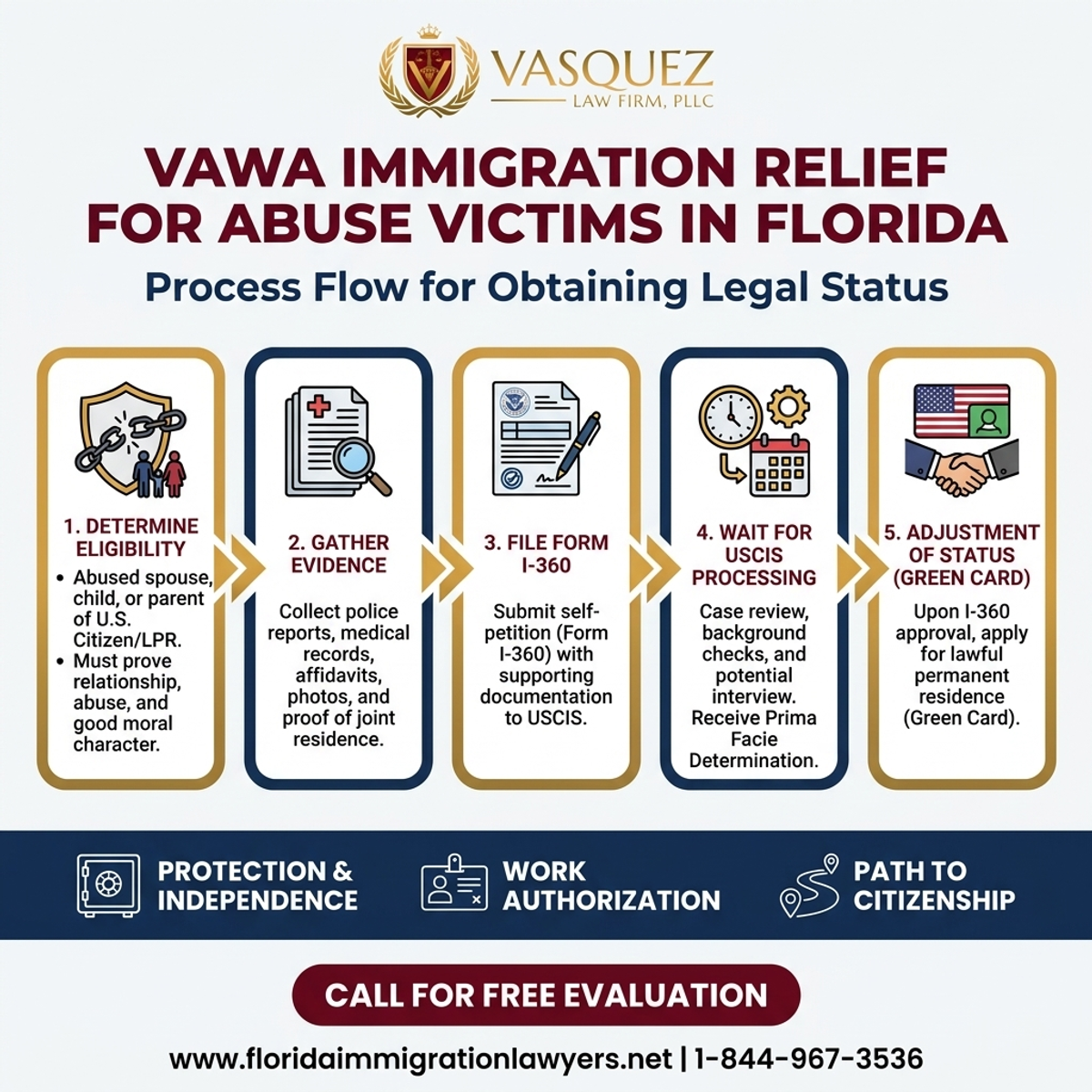
Step-by-Step Process — VAWA Immigration Relief for Abuse Victims in Florida
Document Checklist for VAWA Applications
- Form I-360 filled out completely: Ensure every question is answered truthfully and accurately. If a question does not apply, mark it as 'N/A' rather than leaving it blank. Incomplete forms are a primary cause of delays or denials.
- Proof of relationship to the abuser: For spouses, this includes marriage certificates, joint bank statements, utility bills, birth certificates of children born from the marriage, and photos. For children, birth certificates showing parentage. For parents, your birth certificate showing the U.S. citizen child's parentage. The goal is to establish a bona fide relationship.
- Evidence of abuse (e.g., police reports): This can be a wide array of documents: medical records detailing injuries, psychological evaluations, police reports, court orders (restraining orders, divorce decrees mentioning abuse), affidavits from witnesses (friends, family, counselors, clergy), photos of injuries or property damage, threatening emails or text messages, and even detailed personal journals. The more evidence you provide, the stronger your case.
- Proof of your abuser’s status: This could be a copy of their U.S. birth certificate, naturalization certificate, passport, or green card. If you don't have direct access, other evidence like their driver's license, employment records, or public records might be acceptable, but it's best to consult with an attorney to determine sufficient proof.
- Your personal statement detailing the abuse: This is one of the most critical pieces of evidence. It should be a detailed, chronological account of the abuse, describing its nature, frequency, and impact on your life. Be honest and specific, sharing your feelings and experiences. This statement gives USCIS insight into your unique situation and validates your claim of abuse and good moral character.
- Supporting affidavits from friends or family: These sworn statements from people who have witnessed the abuse or its effects can significantly bolster your petition. They should describe what they observed, when, and how it impacted you. These affidavits add credibility and external validation to your personal statement.
- Proof of residency in the U.S.: You must demonstrate that you resided in the U.S. with the abuser, or that the abuse occurred in the U.S. (or that the abuser is subject to U.S. jurisdiction). This can include utility bills, leases, employment records, or school records.
Timeline and Processing Expectations
VAWA applications typically take several months to process. Once USCIS receives your application, they will send a receipt notice. Processing times can vary based on the complexity of the case and the evidence provided. In general, you can expect updates within 6 to 12 months. During this time, maintaining a record of communication with USCIS and any additional documentation that may arise is crucial.
One of the immediate benefits after filing your I-360 petition is the possibility of receiving a 'prima facie' determination notice. This notice signifies that USCIS has reviewed your petition and found it to be credible on its face, meaning it appears to meet the basic eligibility requirements. While not a final approval, a prima facie determination can allow you to apply for certain benefits, such as work authorization (Form I-765) and deferred action, which grants temporary protection from deportation. This can be a significant relief for victims, providing a measure of stability and independence while awaiting a final decision on their VAWA petition.
It's important to understand that processing times can fluctuate based on USCIS caseloads and policy changes. While the initial receipt notice typically arrives within a few weeks, the full adjudication of an I-360 petition can range from 12 to 24 months, or even longer in some complex cases. During this period, it's crucial to maintain your current contact information with USCIS and promptly respond to any Requests for Evidence (RFEs). Having an attorney from Florida Immigration Lawyers monitor your case status and handle communications can alleviate stress and ensure no deadlines are missed, safeguarding your application's progress.
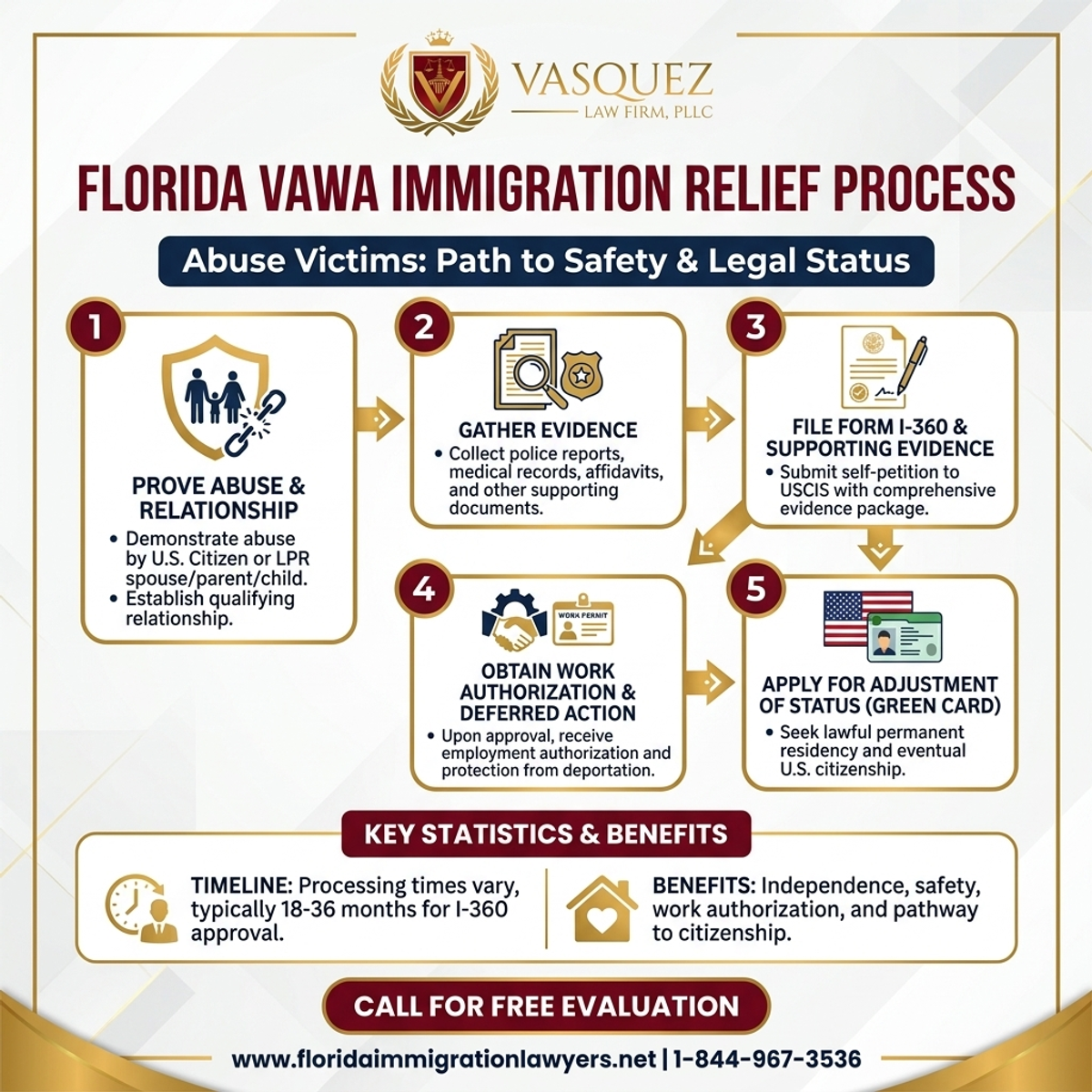
Key Statistics — VAWA Immigration Relief for Abuse Victims in Florida
Cost Factors and Fee Breakdown
While filing Form I-360 is free, other costs may include legal fees, translation services, and document preparation expenses. It's important to budget for these potential costs to ensure a smooth application process. Consulting with an experienced attorney can help you understand these expenses and plan accordingly.
While the I-360 petition itself does not require a filing fee, subsequent applications that may follow, such as the Application to Register Permanent Residence or Adjust Status (Form I-485), the Application for Employment Authorization (Form I-765), and the Application for Travel Document (Form I-131), do have associated fees. However, VAWA self-petitioners are often eligible for fee waivers for these subsequent forms, which can significantly reduce the overall financial burden. An attorney can help you determine eligibility and prepare the necessary fee waiver requests.
Legal fees are a primary consideration. These can vary depending on the complexity of your case and the attorney's experience. Some law firms, like Florida Immigration Lawyers, offer flat fees for VAWA cases, providing predictability, while others may charge hourly. Beyond legal counsel, you might incur costs for obtaining official documents (like birth or marriage certificates), medical or psychological evaluations, and certified translations of any documents not in English. It’s wise to discuss all potential costs upfront with your legal representative to avoid surprises and plan your finances accordingly.
Common Mistakes to Avoid
- Incomplete Applications: Ensure all sections of Form I-360 are meticulously filled out, and every required document is included. Missing signatures, unanswered questions, or absent supporting evidence are common reasons for delays or outright rejections. Double-check everything before submission.
- Insufficient Evidence: A VAWA petition relies heavily on compelling evidence of abuse. Don't limit yourself to just one or two types of documents; provide a broad spectrum of proof, including police reports, medical records, psychological evaluations, sworn affidavits, and personal statements, to create an undeniable narrative of abuse.
- Delaying Filing: While it's understandable to need time to gather documents and process trauma, delaying your application can sometimes complicate matters, especially if the abuser's status changes or if you are approaching age limits for child petitioners. File as soon as it is safe and practical to do so.
- Not Consulting an Attorney: The VAWA process is intricate and emotionally taxing. An experienced immigration attorney can provide invaluable guidance, helping you navigate legal complexities, gather strong evidence, and avoid critical errors that could jeopardize your case. Florida Immigration Lawyers offers expert assistance to maximize your chances of success.
- Inadequate Personal Statement: Your personal statement is your voice in the application. It should be a detailed, coherent, and heartfelt account of the abuse, its impact on your life, and why you fear your abuser. Avoid vague language; be specific about incidents, dates, and emotional toll.
- Failing to Update Address with USCIS: USCIS communicates important updates, Requests for Evidence, and decisions via mail. If your address changes, immediately update it with USCIS to ensure you receive all correspondence promptly and avoid missing critical deadlines.
- Ignoring USCIS Requests for Evidence: An RFE is not a denial but a request for more information or clarification. Ignoring it or providing an insufficient response will almost certainly lead to a denial. Respond thoroughly and within the specified timeframe, ideally with legal counsel.
- Misunderstanding Eligibility: Carefully review all eligibility criteria for spouses, children, or parents. For instance, spouses must prove a good faith marriage, and children have specific age limits. Applying without meeting all criteria wastes time, money, and emotional energy.
- Not Maintaining Copies of All Submissions: Always keep a complete, organized copy of your entire application packet, including all forms, evidence, and correspondence with USCIS. This serves as your personal record and is crucial if documents are lost or if you need to appeal a decision.
- Underestimating Processing Times: VAWA applications can take a significant amount of time to process, often over a year. Be prepared for a lengthy wait and maintain patience. Utilize the time to focus on your well-being and, if applicable, pursue work authorization after a prima facie determination.
Frequently Asked Questions About VAWA
Navigating the VAWA self-petition process can raise many questions. Here are answers to some of the most common concerns, providing practical advice to help you understand your options and prepare your application effectively.
When to Call a Lawyer
If you're navigating the complexities of a VAWA application, it's advisable to seek legal help. An attorney can assist with gathering evidence, completing forms, and responding to USCIS. Red flags like receiving a Request for Evidence or Notice of Intent to Deny indicate a need for professional guidance. Florida Immigration Lawyers offer expert assistance, ensuring your application is as strong as possible.
Beyond the initial filing, an attorney becomes indispensable if your case presents unique challenges, such as a criminal record, previous immigration violations, or if your abuser attempts to interfere with your application. If USCIS issues a Request for Evidence (RFE) or a Notice of Intent to Deny (NOID), professional legal intervention is critical. These notices indicate that USCIS has concerns about your application, and a well-crafted, timely response from an attorney can often turn the tide in your favor.
Furthermore, an attorney can help you understand all available immigration options, including concurrent filings for work authorization or travel documents, ensuring you maximize your chances for stability and security. The team at Florida Immigration Lawyers possesses deep expertise in VAWA cases, offering a confidential and supportive environment to discuss your situation and strategize the strongest possible application. Don't hesitate to reach out for a free consultation at 1-844-967-3536.
About Florida Immigration Lawyers
Florida Immigration Lawyers is dedicated to providing comprehensive legal support for immigration matters across Florida. Our experienced team offers personalized service to help you navigate VAWA applications and other immigration processes. Call us at 1-844-967-3536 or visit our website for a free consultation. We are available 24/7 to assist you.
Sources and References
- U.S. Citizenship and Immigration Services (USCIS)
- Executive Office for Immigration Review (EOIR)
- 8 U.S.C. Chapter 12 - Immigration and Nationality Act
- Code of Federal Regulations (CFR)
Related services: immigration practice areas, family immigration services, citizenship and naturalization, deportation defense.
This article provides general legal information and is not intended as legal advice. Every case is unique, and outcomes depend on specific facts and circumstances. Contact an attorney for advice about your particular situation.
Contact Us for Help
Don't face this challenging process alone. Contact Florida Immigration Lawyers at 1-844-967-3536 for a free consultation. Se Habla Español - Estamos aquí para ayudarle.
If you need legal assistance, learn more about speak with an immigration lawyer, or call us at 1-844-967-3536 for a free consultation.
Do Not Navigate This Process Alone
Our experienced immigration attorneys are ready to fight for you. Get a free, confidential consultation today.
Se Habla Español
Frequently Asked Questions
Florida Immigration Lawyers
Immigration Attorney | Founder, Vasquez Law Firm
U.S. Air Force veteran and immigration attorney with thousands of cases resolved. J.D., NCCU School of Law. AILA member. Admitted to the 4th, 5th, and 11th Circuit Courts.
Available 24/7 - Free Evaluations
Related Legal Services
Our Florida immigration attorneys can help you with deportation defense, citizenship and naturalization and family immigration services. Call today at 1-844-967-3536 for a free consultation.
Related Links
Related Topics
Free Legal Consultation
Discuss your case with our experienced attorneys. We're available 24/7.
Se Habla Español - Estamos aquí para ayudarle.
Related Articles
CR-1 IR-1 Spouse Visa Consular Florida | VLF Florida
Explore the CR-1 and IR-1 spouse visa process for Florida residents. Learn about application steps, document requirements, and common pitfalls. Contact Florida Immigration Lawyers for personalized assistance.
Immigration Lawyer in Hialeah Florida | VLF Florida
Discover how finding the right immigration lawyer in Hialeah, Florida, can help you navigate complex immigration processes. Contact Florida Immigration Lawyers for a free consultation today!
F-1 Visa for Florida University International Students
Explore the process of obtaining an F-1 visa to study at Florida universities, with specific insights for international students in Fort Lauderdale. Understand requirements, avoid common pitfalls, and learn when to seek legal help. Contact Florida Immigration Lawyers for personalized assistance.
Understanding the Stokes Interview for Marriage Fraud in Florida
Facing a Stokes interview in Florida for marriage fraud concerns? Learn what to expect and how to prepare effectively. Contact Florida Immigration Lawyers for expert guidance and a free consultation.
