F-1 Visa for Florida University International Students
Explore the process of obtaining an F-1 visa to study at Florida universities, with specific insights for international students in Fort Lauderdale. Understand requirements, avoid common pitfalls, and learn when to seek legal help. Contact Florida Immigration Lawyers for personalized assistance.

- Secure acceptance from a SEVP-approved school.
- Pay the SEVIS fee and apply for a visa.
- Schedule and attend a visa interview.
- Maintain full-time enrollment to keep your status.
Introduction
Imagine walking through the vibrant campuses of Florida's universities, from the sunny walkways of Florida State University to the bustling halls of the University of Miami. As an international student, this dream is within reach with an F-1 visa. This guide will walk you through the process of obtaining an F-1 visa for studying in Florida, with a focus on Fort Lauderdale. For personalized assistance, call Florida Immigration Lawyers at 1-844-967-3536 for a free consultation.
Florida is not just a popular tourist destination; it's a hub for academic excellence, offering a diverse range of programs from marine biology in coastal cities to cutting-edge technology in urban centers. Its world-class educational institutions, coupled with a welcoming multicultural environment, make it an ideal choice for international students seeking a transformative academic experience. Understanding the intricacies of the F-1 visa application is the first critical step towards realizing this educational journey.
This comprehensive guide aims to demystify the F-1 visa process, providing clear, actionable steps and practical advice to help you navigate each stage successfully. From the initial application to maintaining your student status, we'll cover everything you need to know to pursue your academic dreams in the Sunshine State. Remember, expert legal guidance is always available from Florida Immigration Lawyers to ensure a smooth and stress-free application.
Understanding the F-1 Visa
The F-1 visa is a non-immigrant student visa that allows foreign nationals to pursue academic studies in the United States. Florida, known for its excellent educational institutions, attracts thousands of international students each year. Cities like Fort Lauderdale offer a unique blend of cultural diversity and vibrant student life.
To qualify for an F-1 visa, you must first be accepted by a Student and Exchange Visitor Program (SEVP)-approved school. This includes most universities and colleges in Florida. Once accepted, you'll receive a Form I-20, which is crucial for your visa application.
Maintaining your F-1 status involves adhering to specific rules, such as enrolling full-time and not working off-campus without authorization. Violating these rules can lead to serious consequences, including deportation.
Beyond academic pursuit, the F-1 visa offers a unique opportunity for cultural immersion and professional growth. Students can engage in campus activities, participate in optional practical training (OPT) or curricular practical training (CPT) under specific conditions, and build a global network. These experiences enrich your education and prepare you for a globalized workforce, making your time in Florida invaluable.
It's crucial to understand that the F-1 visa is a temporary, non-immigrant visa, meaning you must demonstrate an intent to return to your home country upon completion of your studies. This 'non-immigrant intent' is a key factor assessed by consular officers during your interview. While the process can seem daunting, with careful preparation and attention to detail, securing your F-1 visa to study in Fort Lauderdale or any other Florida city is an achievable goal.
Step-by-Step Guide to Obtaining an F-1 Visa
Embarking on your F-1 visa journey requires meticulous planning and adherence to a structured process. Each step is interconnected, and successfully completing one paves the way for the next. This guide outlines the essential stages you'll navigate to secure your student visa for Florida.
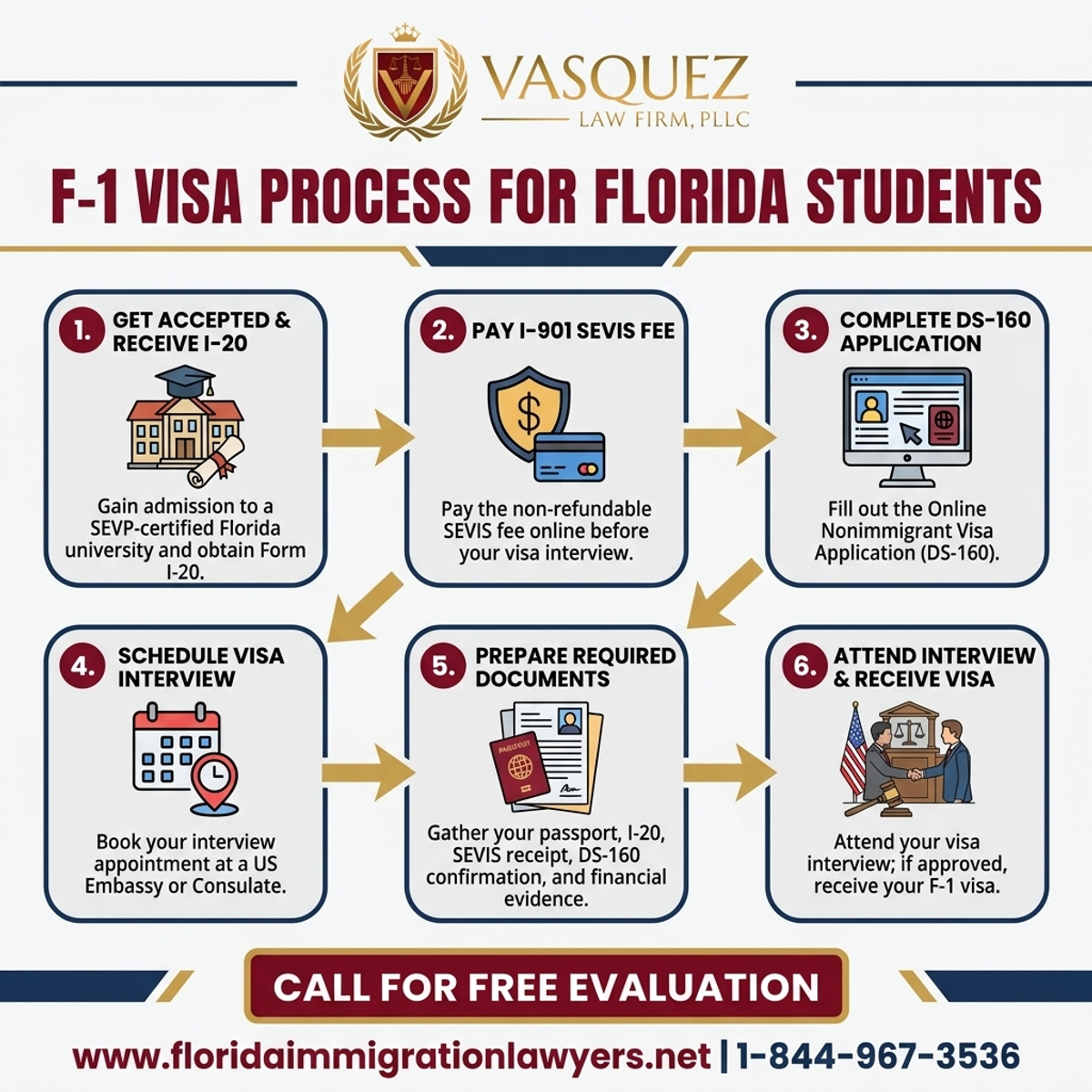
- Get Accepted: Apply and gain acceptance to a SEVP-approved school in Florida. This is the foundational step, as your I-20 form will come directly from your chosen institution. Research schools carefully, considering academic programs, location (like Fort Lauderdale's vibrant scene), and international student support services.
- Receive Form I-20: After acceptance, the school will provide you with a Form I-20, "Certificate of Eligibility for Nonimmigrant Student Status." This document confirms your enrollment, program details, and estimated costs, and is absolutely essential for your visa application.
- Pay the SEVIS Fee: Use the information on your I-20 to pay the SEVIS I-901 fee. This is a critical step before your visa application. The Student and Exchange Visitor Information System (SEVIS) tracks F-1 students, and this fee ensures your record is active in the system. Keep your receipt for the interview.
- Complete the DS-160 Form: Fill out the online non-immigrant visa application form DS-160. This comprehensive form gathers your personal, educational, and travel history. Be truthful and accurate, as any discrepancies could lead to delays or denial.
- Schedule a Visa Interview: Schedule your interview at a U.S. Embassy or Consulate in your home country. In Florida, the nearest locations are in Miami and Jacksonville for specific services, but your initial interview will be conducted abroad. Book early, especially during peak seasons, to secure a timely appointment.
- Attend the Interview: Bring all required documents, including your passport, Form I-20, SEVIS fee receipt, and DS-160 confirmation page. Be prepared to discuss your academic plans, financial resources, and your intent to return home after your studies. Dress professionally and answer all questions honestly and concisely.
- Visa Issuance: If approved, your visa will be issued, allowing you to travel to the U.S. to begin your studies. The consular officer will typically stamp the visa directly into your passport. Congratulations, you're one step closer to your Florida education!
Step-by-Step Process — F-1 Visa for Florida University International Students
Each stage of this process requires careful attention. For instance, when completing the DS-160, ensure all information matches your passport and I-20 precisely. During the interview, clearly articulate your academic goals and how studying in Florida aligns with your future career aspirations. If you have any doubts or encounter complexities, remember that Florida Immigration Lawyers are available for free consultations to guide you through these crucial steps.
Document Checklist for F-1 Visa Application
A well-organized and complete set of documents is paramount for a successful F-1 visa application. Missing or incorrect paperwork is a leading cause of delays and denials. Treat this checklist as your essential guide to preparing for your visa interview.
- Valid passport: Must be valid for at least six months beyond your intended period of stay in the U.S.
- Form I-20: The original Certificate of Eligibility issued by your SEVP-approved school.
- DS-160 confirmation page: Print this page after successfully submitting your online application.
- SEVIS fee receipt: Proof that you have paid the I-901 SEVIS fee.
- Visa application fee receipt: Confirmation of payment for the non-immigrant visa application fee (MRV fee).
- Passport-sized photographs: Recent photos meeting U.S. visa requirements (usually 2x2 inches, white background, no glasses).
- Transcripts and diplomas: Official academic records from all previously attended institutions, demonstrating your educational background.
- Financial evidence proving sufficient funds: Bank statements, scholarship letters, or sponsor affidavits showing you can cover tuition, living expenses, and other costs for at least one year.
- Proof of ties to your home country: Documents like property deeds, family ties, job offers for post-graduation, or bank accounts in your home country to demonstrate non-immigrant intent.
Gathering these documents systematically will not only streamline your application but also boost your confidence during the interview. It's advisable to create a physical folder for originals and a digital backup for all copies. Consular officers often look for consistency and thoroughness in your documentation.
Beyond the core requirements, consider bringing any additional supporting documents that might strengthen your case, such as letters of recommendation, standardized test scores (SAT, ACT, GRE, GMAT, TOEFL, IELTS), or a detailed study plan. Demonstrating a clear purpose for your studies and a strong financial foundation is key to convincing the consular officer of your eligibility for an F-1 visa.
Timeline and Processing Expectations
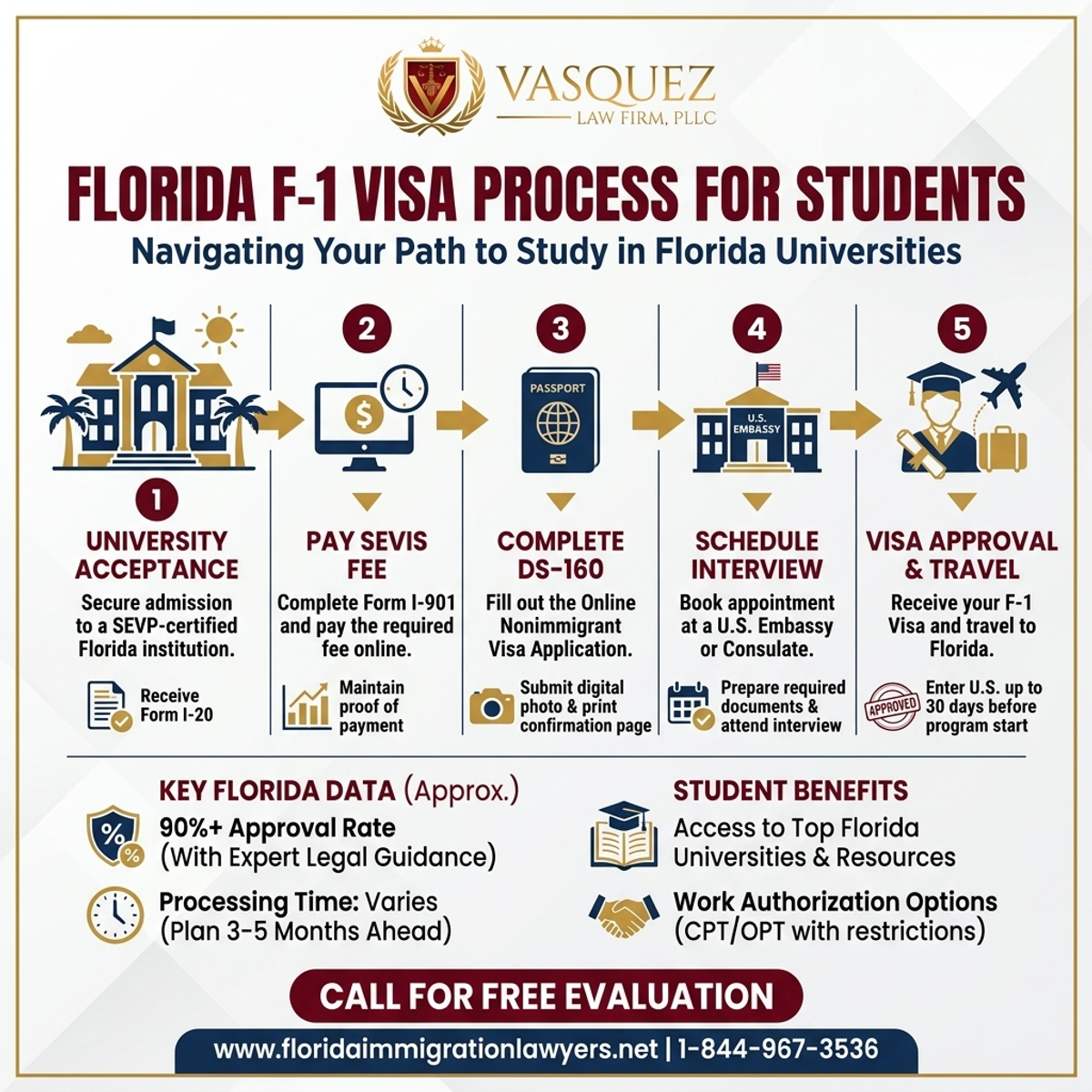
The processing time for an F-1 visa can vary. Generally, it takes about three to five weeks for a visa to be processed after your interview. However, it's wise to begin the process several months in advance to account for potential delays. Florida's consulates are known to be busy, especially around peak academic seasons, so early preparation is key.
Upon approval, you can enter the U.S. up to 30 days before your program starts. Ensure all your documents are in order for a smooth entry.
Key Statistics — F-1 Visa for Florida University International Students
Several factors can influence the timeline, including the specific embassy or consulate, the volume of applications, and any additional administrative processing required for your case. It's not uncommon for some applications to undergo security checks, which can extend the waiting period significantly. Therefore, applying as soon as you receive your Form I-20 is highly recommended, ideally at least 3-4 months before your program start date.
Once your visa is approved, you'll receive your passport with the F-1 visa stamp. Remember, the visa allows you to seek entry into the U.S., but it does not guarantee entry. At the port of entry, a U.S. Customs and Border Protection (CBP) officer will make the final decision. Always carry your I-20, passport, and financial documents in your carry-on luggage, not checked baggage, for easy access during this crucial inspection.
Cost Factors and Fee Breakdown
There are several costs associated with obtaining an F-1 visa. These include the SEVIS fee, visa application fee, and potential travel expenses. Additionally, prepare for costs related to housing, tuition, and daily living expenses once you arrive in Florida.
Universities in Florida, such as those in Fort Lauderdale, often have international student offices that can provide detailed information on tuition rates and living costs.
Specifically, the SEVIS I-901 fee is currently $350, and the DS-160 non-immigrant visa application fee (MRV fee) is $185. These are non-refundable, regardless of the outcome of your visa application. Beyond these government fees, factor in costs for document translation, courier services, and travel to the embassy for your interview. These initial expenses are just the beginning of your financial planning for studying abroad.
Once in Florida, your largest expenses will be tuition and living costs. Tuition varies widely between public and private institutions, and often there's a higher rate for international students. Living expenses, including rent, food, transportation, and health insurance, can also be substantial, especially in popular cities like Fort Lauderdale or Miami. Many schools offer scholarships specifically for international students, and it's worth exploring these opportunities to help offset the financial burden. Always ensure you have sufficient, readily accessible funds as demonstrated on your I-20.
Do not navigate this process alone. Contact Florida Immigration Lawyers today.
Navigating Challenges: Avoiding Common F-1 Visa Mistakes
Securing an F-1 visa can be complex, and even minor errors can lead to significant delays or denials. Being aware of common pitfalls and actively working to avoid them is crucial for a smooth application process. Here's how to navigate potential challenges:
- Incomplete Documentation: Ensure all documents are complete and accurate to avoid delays. Submitting an application with missing forms, outdated financial statements, or uncertified copies can lead to immediate rejection. Always double-check every item on your school's and the embassy's required document lists, and consider organizing them in a binder for easy access during your interview.
- Missing SEVIS Fee Payment: Forgetting to pay this fee can result in a denied visa application. The SEVIS I-901 fee is mandatory and must be paid before your visa interview. Without a valid payment receipt, the consular officer cannot proceed with your application. Always print and keep the receipt with your other crucial documents.
- Incorrect Visa Application Form: Double-check your DS-160 form for errors before submission. Even small mistakes, such as a misspelled name, incorrect date of birth, or an overlooked question, can cause your application to be flagged or denied. Take your time, review every section meticulously, and ensure all information matches your passport and I-20.
- Lack of Financial Proof: Failing to demonstrate sufficient funds can jeopardize your visa status. You must provide clear, verifiable evidence that you have enough money to cover your tuition and living expenses for at least your first year of study, as listed on your I-20. This usually requires official bank statements, scholarship letters, or a notarized affidavit of support from a sponsor.
- Overlooking Interview Preparation: Prepare thoroughly for your interview, as this is a crucial step. Many applicants underestimate the importance of the interview. Practice answering common questions about your academic goals, reasons for choosing Florida, financial plans, and your intent to return home. A confident, clear, and honest presentation is vital for success.
- Ignoring Visa Conditions: Maintain full-time student status to avoid deportation risks. F-1 visa holders are generally required to enroll in a full course of study each semester. Dropping below full-time enrollment without proper authorization from your Designated School Official (DSO) can lead to a violation of your status and severe immigration consequences.
- Late Application: Start your application process early to avoid last-minute stress. Visa processing times can be unpredictable, especially during peak seasons. Applying several months before your program start date provides ample time to address any requests for additional information or unforeseen administrative delays without jeopardizing your enrollment.
- Traveling Without a Valid Visa: Ensure your visa is valid for re-entry if you travel outside the U.S. If your F-1 visa expires while you are outside the United States, you will need to apply for a new visa before returning. Always check your visa's expiration date and plan any international travel accordingly to avoid being stranded abroad.
- Unauthorized Employment: Only work on-campus or obtain proper authorization for other employment. Working off-campus without explicit authorization (e.g., through CPT or OPT) is a serious violation of F-1 status and can lead to immediate termination of your visa. Understand the rules for on-campus employment and consult your DSO before considering any work.
- Not Updating Personal Information: Keep your address and contact details current with both your school and USCIS. F-1 students are legally required to notify their DSO of any change of address within 10 days. Failing to update your information can lead to missed communications from immigration authorities and potential status violations.
When to Call a Lawyer
Securing an F-1 visa is a complex process that requires attention to detail and adherence to legal guidelines. If you encounter any issues, such as visa denials or status violations, consulting with an immigration lawyer is crucial. Florida Immigration Lawyers can provide the guidance you need to navigate these challenges effectively. Don't hesitate to reach out if you're unsure about any part of the process or if you're facing legal hurdles.
Situations like a visa denial, a request for additional evidence (RFE), or concerns about maintaining your F-1 status due to academic or personal challenges warrant immediate legal counsel. An experienced attorney can review your specific circumstances, identify potential issues, and help formulate a strategy to resolve them. This proactive approach can save you significant time, stress, and potential long-term immigration complications.
Even if you're just starting your application and want to ensure everything is perfect, a consultation with Florida Immigration Lawyers can offer peace of mind. We can help you prepare your documents, practice for your interview, and understand the nuances of U.S. immigration law, particularly as it applies to international students in Florida. Call us at 1-844-967-3536 for expert assistance.
About Florida Immigration Lawyers
Florida Immigration Lawyers is dedicated to assisting clients with all their immigration needs. With a team of experienced attorneys, we offer services in visa applications, deportation defense, and family immigration matters. Our offices are available 24/7, and we provide free consultations to help you understand your options. Call us at 1-844-967-3536 or visit our website at www.floridaimmigrationlawyers.net. We proudly serve all of Florida with bilingual services to accommodate both English and Spanish speakers.
Our expertise extends specifically to guiding international students through the F-1 visa process, ensuring that every detail is handled with precision and care. From initial application review to addressing complex issues like visa appeals or status reinstatement, our team is equipped to provide comprehensive support. We understand the unique aspirations and challenges faced by students coming to Florida, and we are committed to helping you achieve your educational goals without unnecessary immigration hurdles.
Sources and References
- U.S. Citizenship and Immigration Services (USCIS)
- Executive Office for Immigration Review (EOIR)
- 8 U.S.C. Chapter 12 - Immigration and Nationality Act
- U.S. Department of State
Related services: immigration practice areas, family immigration services, citizenship and naturalization.
This article provides general legal information and is not intended as legal advice. Every case is unique, and outcomes depend on specific facts and circumstances. Contact an attorney for advice about your particular situation.
For a comprehensive understanding of your F-1 visa options, call Florida Immigration Lawyers at 1-844-967-3536 for a free consultation. Se Habla Español - Estamos aquí para ayudarle.
If you need legal assistance, learn more about speak with an immigration lawyer, or call us at 1-844-967-3536 for a free consultation.
Do Not Navigate This Process Alone
Our experienced immigration attorneys are ready to fight for you. Get a free, confidential consultation today.
Se Habla Español
Frequently Asked Questions
Florida Immigration Lawyers
Immigration Attorney | Founder, Vasquez Law Firm
U.S. Air Force veteran and immigration attorney with thousands of cases resolved. J.D., NCCU School of Law. AILA member. Admitted to the 4th, 5th, and 11th Circuit Courts.
Available 24/7 - Free Evaluations
Related Legal Services
Our Florida immigration attorneys can help you with family immigration services, immigration practice areas and free immigration consultation. Call today at 1-844-967-3536 for a free consultation.
Related Links
Related Topics
Free Legal Consultation
Discuss your case with our experienced attorneys. We're available 24/7.
Se Habla Español - Estamos aquí para ayudarle.
Related Articles
Understanding the Stokes Interview for Marriage Fraud in Florida
Facing a Stokes interview in Florida for marriage fraud concerns? Learn what to expect and how to prepare effectively. Contact Florida Immigration Lawyers for expert guidance and a free consultation.
Tampa Immigration Lawyer: Your Florida Bay Area Guide
Navigating U.S. immigration law in the Tampa Bay Area can be complex, whether you're seeking a visa, green card, or citizenship, or facing deportation. An experienced immigration lawyer in Tampa provides essential guidance, ensuring applications are accurate, deadlines are met, and your rights are protected. Florida Immigration Lawyers offers comprehensive services for family-based visas, employment immigration, naturalization, and deportation defense. With local expertise in Tampa Bay Area USCIS procedures and immigration court practices, our attorneys are equipped to handle even the most challenging cases. Learn about common immigration pathways, typical processing timelines, and crucial mistakes to avoid. Secure your future in Florida with trusted legal representation. Contact us for a free consultation today.
Immigration Attorney Lakeland Polk County FL - Free Consult
Navigating the U.S. immigration system can be daunting, especially in a growing region like Lakeland, Polk County, Florida. An experienced immigration attorney in Lakeland, Polk County, provides crucial guidance for complex processes like visa applications, green card petitions, naturalization, and deportation defense. Our firm understands the local nuances and federal laws, offering personalized support to ensure your case is handled accurately and efficiently. Learn about common immigration pathways, essential documentation, processing times at Florida USCIS and EOIR offices, and critical mistakes to avoid. Discover when professional legal assistance is indispensable for protecting your rights and achieving your immigration goals in Central Florida.
Conditional Green Card Removal Florida: I-751 Guide 2026
For individuals in Florida holding a conditional green card, the process of removing conditions is a critical step towards permanent residency. This involves filing Form I-751 with USCIS within a strict 90-day window before your two-year conditional status expires. Understanding the requirements, gathering comprehensive evidence of a bona fide marriage, and navigating potential challenges like divorce or abuse waivers are essential. This guide provides a detailed overview of the I-751 process, including step-by-step instructions, a document checklist, processing timelines, and cost factors. Learn how to avoid common mistakes and when to seek professional legal assistance from Florida Immigration Lawyers to secure your future in the U.S.