USCIS Office Locations in Florida for Appointments
Discover USCIS field office locations in Florida, focusing on Jacksonville. Learn about the services offered, how to schedule appointments, and avoid common mistakes. Call Florida Immigration Lawyers at 1-844-967-3536 for a free consultation.

USCIS field offices in Florida, including Jacksonville, are essential for various immigration processes. Being well-informed about their locations and services can ease the process of handling immigration matters. Key points include:
- Florida has multiple USCIS field offices.
- Jacksonville is a major hub for immigration services.
- Appointments are required for most services.
- Understanding the functions of each office is crucial.
Introduction
For many immigrants in Florida, visiting a USCIS office is a significant step in their journey toward achieving their American dream. Whether you're applying for a green card, seeking asylum, or attending a naturalization interview, understanding where and how to access these services is crucial. This article provides a comprehensive guide to USCIS field office locations in Florida, focusing on Jacksonville and surrounding areas. Call Florida Immigration Lawyers at 1-844-967-3536 for a free consultation and personalized assistance.
The process of navigating immigration can often feel overwhelming, filled with complex forms, strict deadlines, and specific procedural requirements. Knowing the role of USCIS field offices and how to interact with them effectively can significantly reduce stress and improve the chances of a successful outcome. Our aim is to demystify these interactions, providing clear, actionable advice for residents across the Sunshine State.
From the initial application to the final interview, each stage of the immigration process requires careful attention to detail. Florida's diverse population means that USCIS offices here handle a wide array of cases, reflecting the unique stories and aspirations of individuals and families seeking to establish their lives in the U.S. This guide will help you prepare thoroughly for your visit, ensuring you are well-equipped for every step.
Overview of USCIS Field Offices in Florida
Florida hosts several USCIS field offices that cater to the diverse needs of its immigrant population. These offices are strategically located to provide services such as interviews, biometric appointments, and naturalization ceremonies. The Jacksonville field office is one of the busiest, serving a large portion of the state's immigrant population.
Each USCIS office in Florida offers specific services, and it is crucial to understand what each location provides. This will help ensure that you make the right appointment and visit the correct office for your needs. For instance, while some offices handle interviews and document submission, others may focus on specific services like asylum cases or employment-based immigration processing.
Beyond Jacksonville, other major field offices are located in cities like Miami, Orlando, and Tampa. Each serves its surrounding metropolitan and rural areas, handling a high volume of cases ranging from family-based petitions to adjustment of status interviews. While the core services are similar, the specific caseloads and processing times can vary between locations. For example, the Miami office often handles a significant number of asylum claims due to its proximity to international entry points, while Orlando might see more family-based petitions.
It's important to distinguish between a USCIS field office and a USCIS service center. Field offices are where in-person appointments occur, such as interviews and biometric screenings. Service centers, on the other hand, are administrative hubs that process mailed applications and petitions from across the country. Your specific immigration process will dictate whether you primarily interact with a service center (by mail) or a field office (in person).
Step-by-Step Guide to Scheduling an Appointment
- Determine the service you need: Review your immigration requirements and identify the specific service you need from the USCIS. This could range from an interview for a green card (Form I-485), a naturalization interview (Form N-400), or a biometric services appointment (often for Forms I-765, I-131, or I-485). Understanding the exact purpose of your visit is the first critical step.
- Find the nearest USCIS office: Use the USCIS office locator tool on the USCIS website to find the nearest office that offers your required service. Pay close attention to the specific services listed for each office, as not all offices handle every type of case. For residents near Jacksonville, the local office is typically the primary point of contact, but always confirm based on your case type.
- Schedule an appointment: Appointments can typically be scheduled online through the USCIS website or by calling their customer service. Most general appointments are now scheduled automatically by USCIS after you file your application, and you will receive a notice by mail. For urgent matters that cannot wait for a scheduled appointment, you may be able to request an InfoPass appointment by calling the USCIS Contact Center, though these are reserved for truly critical situations.
- Prepare for your appointment: Gather all necessary documents and identification required for your visit. This may include your passport, application forms, and any relevant correspondence from USCIS. Organize your documents neatly in a folder, making sure to bring both originals and copies as requested. It's also wise to review your application thoroughly and anticipate potential questions related to your case.
- Attend your appointment: Arrive early on the day of your appointment, as security checks may take some time. Ensure you have all your documents organized and ready for review. Dress professionally, be polite, and answer all questions truthfully and concisely. If you are unsure about a question, it's better to state that you don't know or ask for clarification rather than guessing.
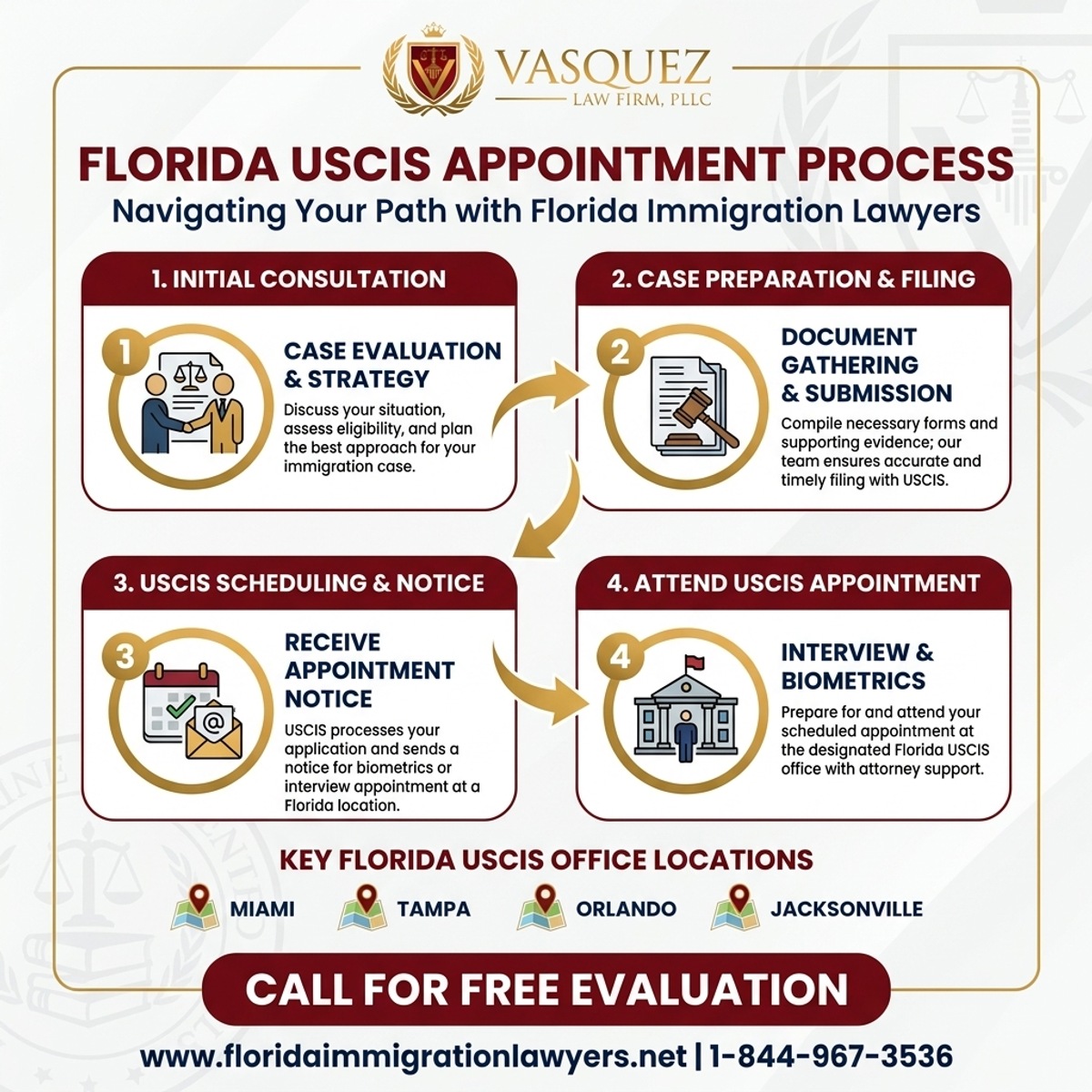
Step-by-Step Process — USCIS Office Locations in Florida for Appointments
Document Checklist for USCIS Appointments
- Government-issued ID (e.g., passport or driver’s license): Essential for verifying your identity and ensuring you are the correct person for the appointment.
- Appointment confirmation notice: This document contains crucial details like the date, time, location, and a barcode for check-in.
- Completed application forms: Bring copies of all forms you submitted, as well as any original forms if specifically requested for review or signature.
- Evidence of immigration status (e.g., visa, green card): Proves your current legal standing in the U.S. and is often a prerequisite for your application.
- Supporting documents (e.g., financial records, employment letters, birth certificates, marriage certificates): These provide evidence for the claims made in your application, such as financial stability, family relationships, or work history.
- Any USCIS correspondence: This includes Requests for Evidence (RFEs), notices of action, or any other letters from USCIS related to your case.
Always bring original documents along with clear photocopies. While USCIS officers typically only need to see the originals for verification and will keep the copies, it's safer to have both. For documents not in English, ensure you have certified translations, along with the original document and a copy of the original.
Missing even a single required document can lead to delays, requests for additional evidence, or even a denial of your application. If you are unsure about what to bring, it’s always best to err on the side of caution and bring more rather than less. Consulting with Florida Immigration Lawyers at 1-844-967-3536 can help you create a comprehensive and accurate checklist tailored to your specific case.
Timeline and Processing Expectations
The timeline for processing immigration applications at USCIS field offices can vary significantly depending on the service requested and the specific office location. Generally, appointments for biometrics or interviews are scheduled within a few weeks to a few months after the initial application is submitted. However, factors such as current workload, staffing levels, and specific case complexities can affect wait times.
For example, the Jacksonville office may experience different processing times compared to Miami or Tampa due to varying caseloads and resource availability. It is advisable to check the current processing times on the USCIS website to set realistic expectations for your case.
Several factors contribute to these fluctuating timelines. National backlogs, changes in immigration policy, and even natural disasters can impact how quickly cases are processed. It's also important to note that the processing time displayed on the USCIS website is an estimate and not a guarantee. Your individual case might be processed faster or slower depending on its unique circumstances, such as the need for additional evidence (RFE) or security checks.
To manage expectations, regularly check your case status online using your receipt number. This portal provides the most up-to-date information on your application's progress. If your case falls outside the normal processing times, you can submit an inquiry through the USCIS website. However, before doing so, ensure you have waited the recommended period. Patience is key, but proactive monitoring is also essential.
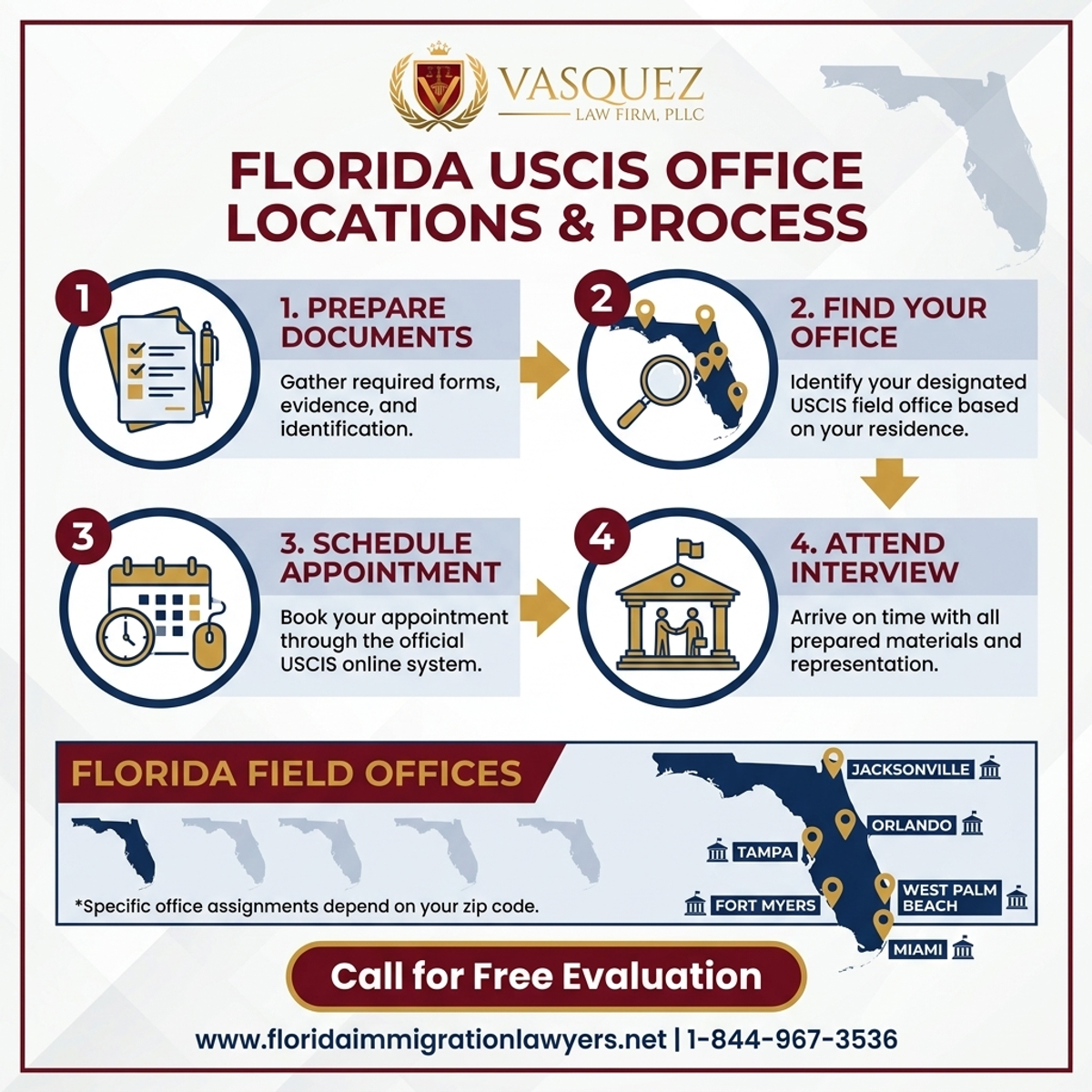
Key Statistics — USCIS Office Locations in Florida for Appointments
Cost Factors and Fee Breakdown
The costs associated with USCIS services include filing fees, biometric fees, and potential legal costs if you choose to hire an attorney. Filing fees vary depending on the type of application or petition being filed. For example, naturalization applications have a different fee than green card applications.
It's important to budget for these costs and understand that they can change. Additionally, consult with Florida Immigration Lawyers to discuss potential legal fees and whether you qualify for any fee waivers or reductions based on your financial situation.
Beyond the base filing fee, many applications require a separate biometric services fee, which covers the cost of fingerprinting, photographs, and signature capture. These fees are typically non-refundable, even if your application is denied or withdrawn. Always refer to the USCIS website or the instructions for your specific form to confirm the most current fees, as they are subject to change without prior notice.
For individuals facing financial hardship, USCIS offers fee waivers for certain forms. Eligibility for a fee waiver is generally based on receiving means-tested public benefits, having an income below 150% of the Federal Poverty Guidelines, or demonstrating that you cannot pay the fee due to financial distress. Applying for a fee waiver requires submitting Form I-912, Request for Fee Waiver, along with supporting documentation. Discussing your eligibility with Florida Immigration Lawyers can ensure you correctly apply for any fee reductions you may qualify for, potentially saving you significant costs.
Common Mistakes to Avoid
- Not verifying the correct office location: Each office has specific functions, and going to the wrong one can delay your process. Always double-check your appointment notice and the USCIS website for the specific address and services provided, as arriving at the incorrect location will result in a wasted trip and a missed appointment.
- Missing appointment notifications: Always check your email and USCIS account for updates on your case. Failure to receive or acknowledge an appointment notice can lead to missing a crucial interview or biometric appointment, which can cause significant delays or even lead to the denial of your application.
- Failing to bring complete documentation: Incomplete documents can lead to rescheduling and delays. Ensure you have all required originals and copies, including certified translations for non-English documents, to avoid a Request for Evidence (RFE) or the need to reschedule.
- Not preparing for your interview: Research common interview questions and practice your answers. A lack of preparation can lead to inconsistent answers or an inability to articulate your case clearly, potentially raising doubts in the officer's mind and complicating your application.
- Ignoring the importance of legal counsel: Complex cases often benefit from professional legal advice. Attempting to navigate intricate immigration laws on your own, especially with a complicated history, can lead to critical errors that might jeopardize your entire case.
- Procrastinating on application submissions: Delays in submission can lead to missed deadlines and opportunities. Immigration laws and policies can change, and waiting too long might mean you miss out on a specific program or face new, more stringent requirements.
- Misunderstanding fee requirements: Ensure you know the exact fees and payment methods accepted by USCIS. Submitting an incorrect fee amount or an unacceptable payment method will result in your application being rejected, causing unnecessary delays.
Avoiding these common pitfalls can significantly streamline your immigration journey. Proactive preparation and attention to detail are paramount. When in doubt, seeking clarification from official USCIS resources or consulting with experienced professionals like Florida Immigration Lawyers can prevent costly mistakes.
When to Call a Lawyer
If you're facing a complex immigration issue or if your case involves multiple legal challenges, it's crucial to consult with an immigration lawyer. Situations such as deportation proceedings, criminal convictions, or significant delays in processing are clear indicators that legal assistance is needed. Florida Immigration Lawyers can provide the expertise and support necessary to navigate these challenges. Call us at 1-844-967-3536 for a free consultation.
Beyond these critical scenarios, a lawyer can be invaluable if you have a history of previous application denials, believe there might be errors in your case, or are simply overwhelmed by the sheer volume and complexity of immigration law. An attorney can review your entire history, identify potential red flags, and help you prepare a robust case, anticipating challenges before they arise.
For instance, if you are applying for adjustment of status but have a minor criminal record from years ago, an immigration lawyer can assess whether it impacts your eligibility and advise on potential waivers or mitigation strategies. Similarly, if your naturalization interview results in unexpected questions about your moral character or residency, having an attorney present or having prepared with one can make a significant difference in the outcome. Florida Immigration Lawyers are adept at handling such nuanced situations, ensuring your rights are protected.
About Florida Immigration Lawyers
At Florida Immigration Lawyers, we are dedicated to providing exceptional legal services to immigrants across Florida. Our team of experienced attorneys specializes in a wide range of immigration matters, including family immigration, deportation defense, and citizenship applications. Available 24/7, we offer free consultations to address your immigration concerns. Visit our website at floridaimmigrationlawyers.net or call us at 1-844-967-3536.
Our commitment extends beyond just legal representation; we aim to be a trusted partner in your immigration journey. We understand the profound impact immigration decisions have on individuals and families, which is why we approach every case with empathy, diligence, and a deep understanding of the law. Our multilingual staff ensures that language barriers never hinder effective communication, making our services accessible to Florida's diverse immigrant communities.
We pride ourselves on our client-centric approach, offering personalized strategies tailored to the unique circumstances of each case. Whether you're navigating the complexities of an asylum claim, fighting a deportation order, or simply need assistance with a DACA renewal, our attorneys are equipped with the knowledge and experience to guide you. Our free consultation is an opportunity for you to discuss your situation without obligation, gaining clarity and understanding of your options. Don't hesitate to reach out to Florida Immigration Lawyers at 1-844-967-3536.
Sources and References
- U.S. Citizenship and Immigration Services (USCIS)
- Executive Office for Immigration Review (EOIR)
- 8 U.S.C. Chapter 12 - Immigration and Nationality Act
Frequently Asked Questions (FAQs)
Here are some common questions about USCIS appointments and field offices in Florida, with practical advice to help you navigate the process.
Related services: asylum and refugee protection, immigration waivers, humanitarian protection programs, DACA renewal and applications.
This article provides general legal information and is not intended as legal advice. Every case is unique, and outcomes depend on specific facts and circumstances. Contact an attorney for advice about your particular situation.
Final CTA
Ensure your immigration journey is smooth and successful. Contact Florida Immigration Lawyers at 1-844-967-3536 for expert guidance and free consultation. Se Habla Español - Estamos aquí para ayudarle.
If you need legal assistance, learn more about learn about deportation defense options, or call us at 1-844-967-3536 for a free consultation.
Do Not Navigate This Process Alone
Our experienced immigration attorneys are ready to fight for you. Get a free, confidential consultation today.
Se Habla Español
Frequently Asked Questions
Florida Immigration Lawyers
Immigration Attorney | Founder, Vasquez Law Firm
U.S. Air Force veteran and immigration attorney with thousands of cases resolved. J.D., NCCU School of Law. AILA member. Admitted to the 4th, 5th, and 11th Circuit Courts.
Available 24/7 - Free Evaluations
Related Legal Services
Our Florida immigration attorneys can help you with asylum protection, deportation defense and citizenship and naturalization. Call today at 1-844-967-3536 for a free consultation.
Related Links
Related Topics
Free Legal Consultation
Discuss your case with our experienced attorneys. We're available 24/7.
Se Habla Español - Estamos aquí para ayudarle.
Related Articles
Immigration Lawyer Cost Florida 2026: What to Expect
Navigating immigration law in Florida, especially understanding the immigration lawyer cost for 2026, can be challenging. This comprehensive guide breaks down attorney fees, factors influencing costs, common fee structures like flat fees and hourly rates, and a step-by-step approach to engaging legal counsel. We highlight the importance of proper documentation, discuss timelines, and pinpoint common mistakes that can increase expenses. Whether you are in West Palm Beach or elsewhere in Florida, our insights aim to provide clarity. Learn when to seek legal expertise and how Florida Immigration Lawyers can offer transparent, compassionate, and effective representation for your immigration journey. Schedule a free consultation to discuss your specific needs.
Green Card Renewal Florida Process 2026 Guide | VLF Florida
Renewing your green card in Florida is a critical process to maintain your permanent resident status. This comprehensive guide from Florida Immigration Lawyers details the I-90 application, required documents, processing timelines, and associated costs for residents in Tallahassee and across the state. Learn how to navigate the USCIS system, avoid common mistakes like late filing or incorrect information, and understand when legal assistance is invaluable. Ensure your future in Florida by proactively managing your green card renewal. Contact us for a free consultation to secure your residency.
Asylum Interview Preparation in Florida | VLF Florida
Preparing for an asylum interview in Florida is crucial. Learn key steps and tips for success. Call Florida Immigration Lawyers for help.
Green Card Renewal Florida Process: Your 2026 Guide
Renewing your green card in Florida is a critical process to maintain your lawful permanent resident status. This comprehensive guide details the steps for filing Form I-90, including eligibility, required documents, and what to expect regarding processing times and costs in 2026. We cover essential tips for Florida residents, highlighting the importance of timely submission and accuracy. Learn about common mistakes to avoid, such as late filing or submitting incomplete information, which can cause significant delays or even denial. Florida Immigration Lawyers provides expert assistance for complex cases, ensuring a smooth green card renewal process and safeguarding your ability to live and work in the U.S. Contact us for a free consultation to secure your future.