USCIS Green Card Removal Proceedings Florida Guide 2026
Are you a conditional permanent resident in Florida approaching the two-year mark? Navigating USCIS green card removal proceedings, particularly the I-751 process, can feel overwhelming. This comprehensive guide from Florida Immigration Lawyers explains what conditional permanent residence means, outlines the step-by-step process for removing conditions, and highlights common pitfalls to avoid. We cover essential documents, processing timelines for 2026, and cost factors. Learn how to protect your immigration status and what to do if you face challenges. For personalized legal assistance in Naples or anywhere in Florida, contact our experienced immigration attorneys today.

USCIS green card removal proceedings in Florida primarily refer to the process of removing conditions on a 2-year conditional green card, typically obtained through marriage. This involves filing Form I-751, Petition to Remove Conditions on Residence. Failure to file on time or a denial can lead to actual deportation proceedings, making timely and accurate submission critical for continued lawful permanent resident status.
- File Form I-751 within the 90-day window before your 2-year green card expires.
- Gather extensive evidence of a bona fide marriage.
- A denial can initiate actual removal proceedings before an immigration judge.
- Waivers are available for certain circumstances like divorce or abuse.
- Seek legal counsel from Florida Immigration Lawyers to navigate this complex process.
Imagine building a life in beautiful Florida, perhaps in a vibrant community like Naples, with your spouse, only to realize your green card is set to expire. For many, this marks a critical juncture: the need to navigate USCIS green card removal proceedings Florida. This often refers to the process of removing the conditions on your two-year conditional permanent resident status.
This comprehensive guide from Florida Immigration Lawyers is designed to demystify the Form I-751 process, ensuring you understand each step to secure your ten-year permanent green card. We will walk you through the requirements, timelines, potential challenges, and how to safeguard your future in the Sunshine State.
Do not let uncertainty jeopardize your immigration status. If you have questions or need assistance with your I-751 petition or any aspect of USCIS green card removal proceedings Florida, we are here to help. Call Florida Immigration Lawyers at 1-844-967-3536 for a free consultation today.
Understanding USCIS Green Card Removal Proceedings Florida
When we talk about "USCIS green card removal proceedings Florida," it's crucial to clarify what this typically means for most conditional residents. It primarily concerns the process of removing the conditions on your permanent residence, not necessarily deportation, unless your application is denied.
What is Conditional Permanent Residence?
If you received your green card based on a marriage to a U.S. citizen or lawful permanent resident, and that marriage was less than two years old at the time of approval, you were likely granted conditional permanent residence. This status is temporary, lasting for two years, and is designed to deter marriage fraud.
The U.S. government wants to ensure your marriage is legitimate and was not entered into solely for immigration benefits. This requirement is outlined in the Immigration and Nationality Act (INA) section 216, codified at 8 U.S.C. § 1186a.
The Role of Form I-751, Petition to Remove Conditions on Residence
The core of USCIS green card removal proceedings Florida for conditional residents is filing Form I-751, Petition to Remove Conditions on Residence. This form must be filed with U.S. Citizenship and Immigration Services (USCIS) within the 90-day period immediately preceding the expiration date on your two-year green card.
This petition requires you and your spouse (or you alone if a waiver applies) to demonstrate that your marriage was, and remains, genuine. Failure to file Form I-751 on time, or if USCIS denies your petition, can lead to serious consequences, including the initiation of actual deportation or "removal" proceedings before an immigration judge.
Florida Context: What Does This Mean for You?
For conditional residents in Florida, including those in Naples, Miami, Orlando, or Tampa, the process follows federal guidelines. However, understanding local resources and having experienced legal representation can make a significant difference. Our firm, Florida Immigration Lawyers, serves clients across the state, including the Naples area, helping you navigate these specific requirements.
The USCIS field offices serving Florida will be involved in processing your I-751 petition. While federal laws apply nationwide, local counsel familiar with regional nuances can be invaluable.
Step-by-Step Guide: Navigating the I-751 Process in Florida
Successfully removing conditions from your green card requires careful attention to detail and timely action. Here is a step-by-step guide to the Form I-751 process:
- Determine Your Eligibility and Filing Window: You must file Form I-751 jointly with your spouse within the 90-day period before your conditional green card expires. If you miss this window, you must explain the delay and demonstrate good cause.
- Gather Comprehensive Supporting Documents: This is perhaps the most critical step. You need to provide substantial evidence that your marriage is bona fide and not solely for immigration purposes. We will detail this in the next section.
- Complete Form I-751 Accurately: Fill out every section of the form completely and truthfully. Any errors or omissions can cause delays or even a denial. Ensure all supporting documents are clearly organized and labeled.
- File Your Petition with USCIS: Mail your completed Form I-751, all supporting documents, and the correct filing fee to the USCIS Lockbox facility specified in the form instructions. USCIS will then send you a receipt notice (Form I-797C, Notice of Action), which typically extends your conditional resident status for a specified period (often 24 months in 2026) while your petition is pending.
- Attend Your Biometrics Appointment: After filing, USCIS will schedule an appointment for you at an Application Support Center (ASC) to capture your fingerprints, photograph, and signature. This usually happens a few weeks after you receive your receipt notice.
- Respond to Requests for Evidence (RFEs): USCIS may send an RFE if they need more information or documentation. It is crucial to respond thoroughly and by the deadline provided. Failing to respond can lead to a denial of your petition.
- Attend an Interview (If Required): Not all I-751 petitioners are required to attend an interview. USCIS may waive the interview if they are satisfied with the evidence provided. However, if an interview is scheduled, both you and your spouse must attend and be prepared to answer questions about your marriage.
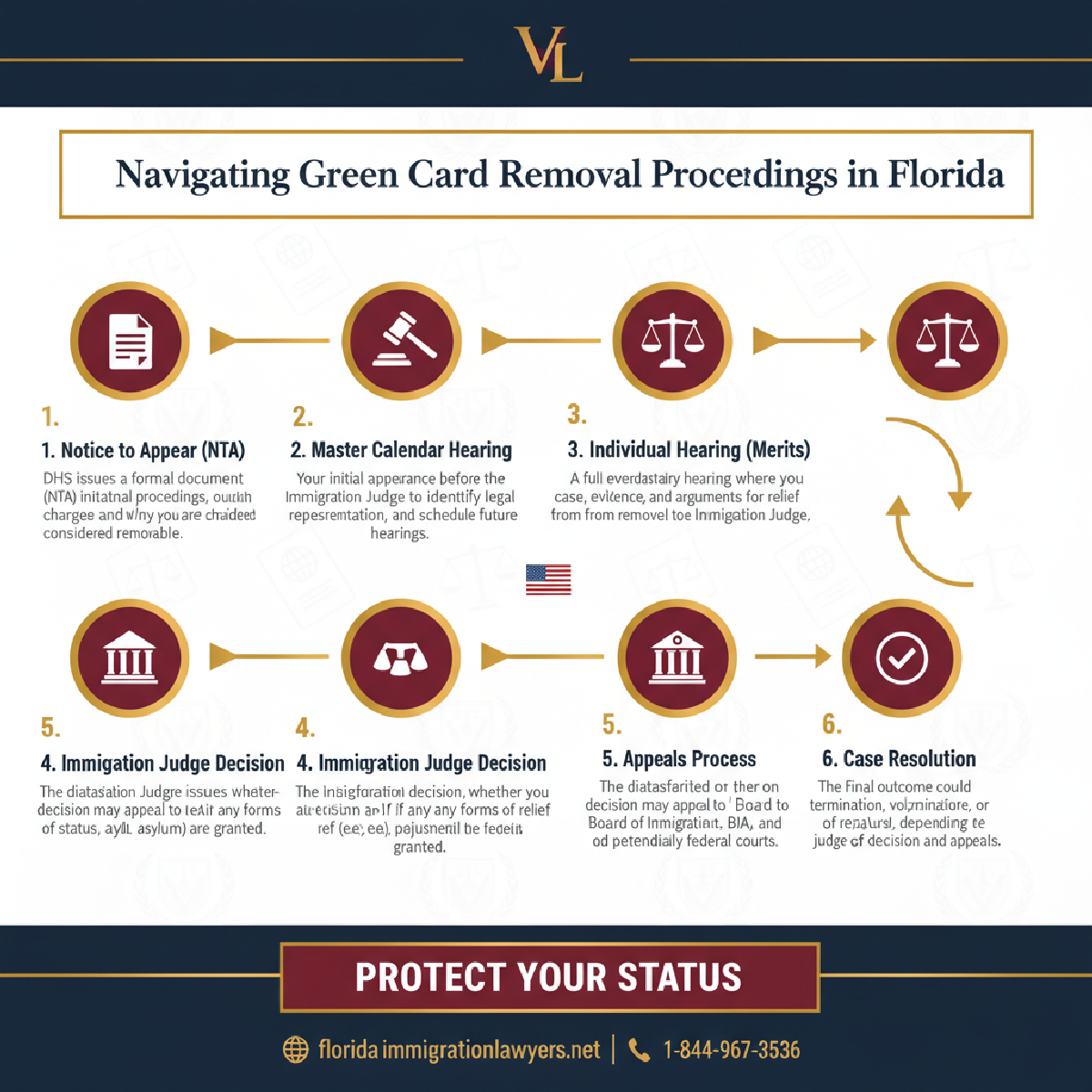
- Receive a Decision: USCIS will send you a written decision. If approved, you will receive your new 10-year permanent resident card. If denied, USCIS will typically issue a Notice to Appear (NTA), initiating actual USCIS green card removal proceedings Florida before an immigration judge.
Waivers for Conditional Permanent Residence
In certain situations, you may be able to file Form I-751 without your spouse, requesting a waiver of the joint filing requirement. Common grounds for a waiver include: your spouse died; you entered the marriage in good faith, but the marriage was terminated through divorce or annulment; you entered the marriage in good faith, but you or your child were subjected to battery or extreme cruelty by your spouse; or termination of your status and removal would result in extreme hardship.
Even if your marriage has ended, you may still be eligible to remove conditions. Discussing your specific circumstances with an experienced immigration attorney from Florida Immigration Lawyers is highly recommended to determine the best strategy for your waiver application.
Document Checklist for Your I-751 Petition
Providing compelling evidence of a bona fide marriage is paramount for a successful I-751 petition. The more evidence you can provide, the stronger your case. Here's a checklist of documents typically required:
- ✓ Copy of Your Conditional Green Card: Front and back.
- ✓ Copy of Your Spouse's Green Card or U.S. Passport/Birth Certificate: To prove their status.
- ✓ Marriage Certificate: The official document confirming your marriage.
- ✓ Birth Certificates of Children (if any): Especially if born during the marriage.
- ✓ Joint Financial Documents:
- ✓ Joint bank account statements (savings, checking).
- ✓ Joint tax returns (IRS transcripts preferred).
- ✓ Joint credit card statements.
- ✓ Joint loan documents (car loans, mortgages).
- ✓ Joint investment accounts.
- ✓ Joint Property Documents:
- ✓ Joint lease agreements or mortgage statements.
- ✓ Joint utility bills (electric, water, gas, internet).
- ✓ Joint property deeds or titles.
- ✓ Insurance Documents: Joint health, life, auto, or home insurance policies naming each other as beneficiaries.
- ✓ Other Joint Documents:
- ✓ Affidavits from third parties (friends, family, clergy) attesting to the bona fides of your marriage.
- ✓ Travel itineraries and hotel bookings from joint trips.
- ✓ Photos showing you and your spouse together over time, with family and friends.
- ✓ Evidence of communication (emails, texts, call logs) if you were separated for periods.
- ✓ Joint memberships (gym, clubs).
Step-by-Step Process Guide - ✓ Divorce Decree/Annulment (if applicable for waiver): If your marriage has ended.
- ✓ Police Reports/Court Documents (if applicable for abuse waiver): Evidence of battery or extreme cruelty.
- ✓ Any other documents proving your shared life and commitment.
Remember, all foreign language documents must be accompanied by a full English translation certified by a competent translator. Keep copies of everything you submit to USCIS.
Timeline and Processing Expectations for I-751 in 2026
The processing time for Form I-751 can vary significantly based on the USCIS service center handling your petition, the completeness of your application, and current caseloads. While we are in 2026, it's important to note that processing times are dynamic and subject to change.
Checking USCIS Processing Times Online
Typically, after filing your I-751, you can expect to receive a receipt notice within a few weeks. This notice automatically extends your conditional green card status, allowing you to continue working and traveling for a period, often 24 months. You can always check the most current processing times directly on the USCIS website by selecting Form I-751 and your specific service center.
In many cases, the entire process, from filing to receiving your 10-year green card, can take anywhere from 12 to 24 months, or even longer for complex cases or those requiring an interview. It's not uncommon for conditional residents in Florida, including those in Naples, to experience these fluctuating timelines.
Factors Affecting Your I-751 Timeline
Several factors can influence how long your I-751 petition takes: completeness of application; interview requirement; complexity of case; USCIS caseload; and timely response to RFEs.
The USCIS Policy Manual, Volume 6, Part B, Chapter 5, provides further guidance on the removal of conditions process and related procedures, which can offer insights into how decisions are made.
Cost Factors and Fee Breakdown for Removing Conditions
Understanding the financial aspects of removing conditions on your green card is essential for planning. The primary costs involve USCIS filing fees and potentially legal fees if you choose to hire an attorney.
USCIS Filing Fees in 2026
The U.S. Citizenship and Immigration Services (USCIS) charges a fee for filing Form I-751. This fee is subject to change, so it's critical to always check the most current fee schedule on the USCIS website or the specific form instructions. In addition to the filing fee, there is typically a biometrics services fee per applicant.
Always ensure you are submitting the correct fee amount. Incorrect payments can lead to your application being rejected and returned, causing significant delays in your USCIS green card removal proceedings Florida.
Attorney Fees and Other Potential Costs
While you can file Form I-751 yourself, many applicants choose to retain an experienced immigration attorney. Legal fees vary depending on the complexity of your case, the attorney's experience, and the services provided. An attorney can help you prepare and organize your petition, ensure forms are accurate, advise on evidence, represent you during an interview, respond to RFEs, and handle complex situations.
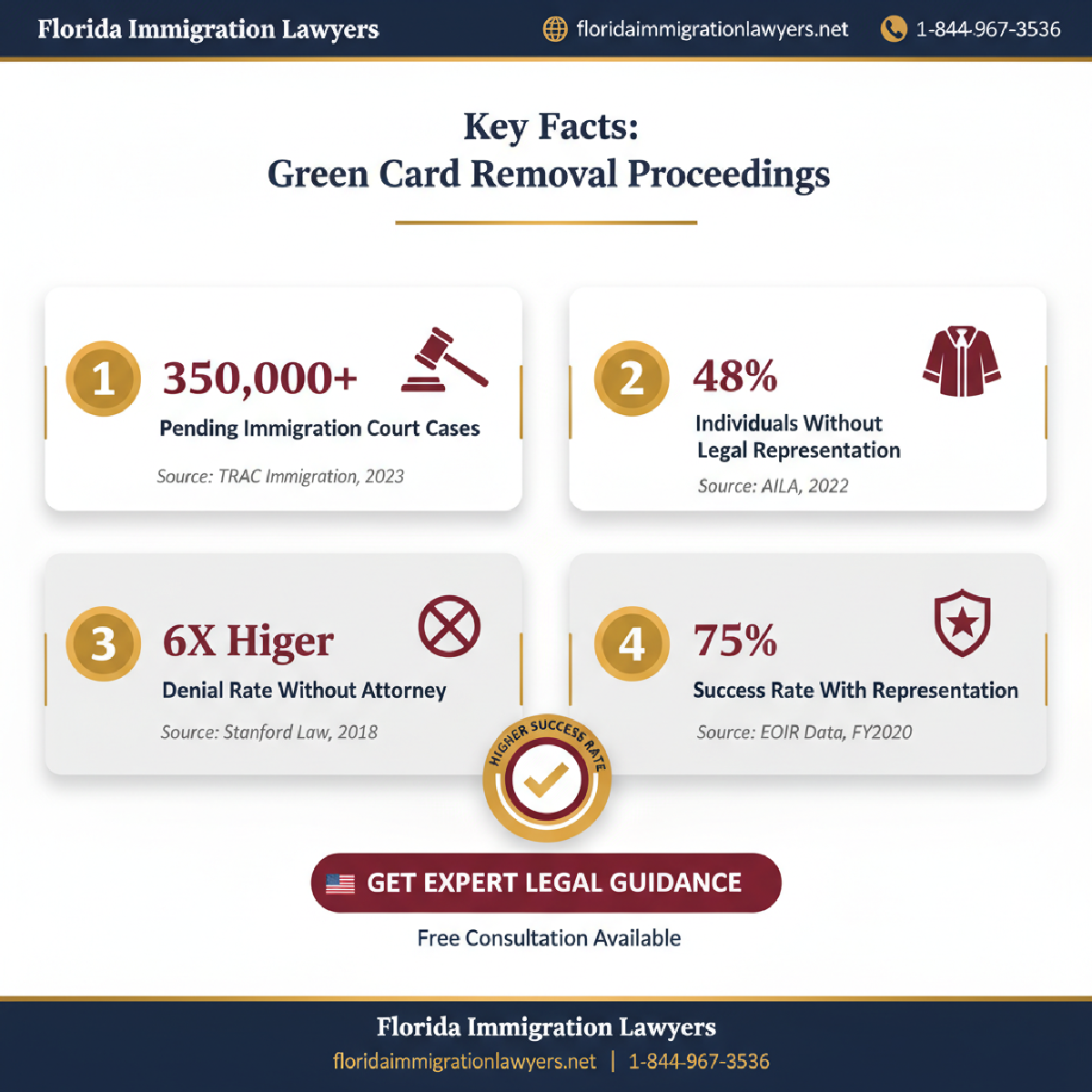
Additional costs might include fees for obtaining certified translations of foreign documents, passport photos, or retrieving official records. Investing in professional legal assistance from Florida Immigration Lawyers can often prevent costly mistakes and provide peace of mind throughout the process.
Do not navigate the intricate landscape of USCIS green card removal proceedings Florida alone. The stakes are too high for your future in the United States. Contact Florida Immigration Lawyers today for a confidential discussion about your case. We are ready to provide the guidance and representation you need.
Common Mistakes to Avoid in Your I-751 Petition
The I-751 process is detail-oriented, and even small errors can have significant consequences. Be aware of these common pitfalls:
- Filing Late Without Justification: You must file Form I-751 within the 90-day window before your green card expires. Filing late without a compelling, well-documented reason will almost certainly lead to a denial and initiation of removal proceedings.
- Submitting Insufficient Evidence: USCIS requires substantial proof of a bona fide marriage. A lack of joint documents, photos, or affidavits can raise red flags and lead to an RFE or denial.
- Inaccurate or Incomplete Forms: Any blank fields, typos, or inconsistent information can cause delays or rejection. Double-check every entry before submission.
- Not Updating Your Address with USCIS: If you move, you must notify USCIS within 10 days using Form AR-11. Missing crucial notices (like RFE or interview appointments) due to an outdated address can severely jeopardize your case.
- Ignoring Requests for Evidence (RFEs): An RFE is not a suggestion; it's a demand for more information. Failing to respond fully and on time will result in a denial.
- Misrepresenting Facts: Providing false information or engaging in marriage fraud carries severe penalties, including permanent bars from immigration benefits and potential criminal charges. Honesty is always the best policy.
- Not Preparing for an Interview: If an interview is scheduled, both spouses must attend and be ready to answer questions about their life together. Inconsistent answers can lead to suspicion and denial.
- Assuming a Divorce Means Automatic Denial: If your marriage ended in good faith, you can still apply for a waiver. Many applicants mistakenly believe their case is hopeless after divorce.
- Failing to Disclose All Relevant Information: This includes minor criminal infractions or previous immigration issues. Transparency, even for seemingly small details, is vital for USCIS to make an informed decision.
- Not Seeking Legal Counsel for Complex Cases: If your marriage is ending, you have a criminal record, or USCIS has issued an RFE, attempting to navigate the process alone can be a grave mistake. An attorney can strategize and advocate for you.
When to Call Florida Immigration Lawyers for Your I-751
While some I-751 petitions are straightforward, many situations warrant the expertise of an immigration attorney. Protecting your status and future in Florida is paramount, especially when facing complex challenges.
Consider contacting Florida Immigration Lawyers if you encounter any of the following:
- Your Marriage Has Ended: Applying for a waiver is complex and requires specific legal arguments and evidence.
- You Are a Victim of Abuse: If you or your child have suffered battery or extreme cruelty by your U.S. citizen or LPR spouse, you can file a waiver. This sensitive process needs compassionate and skilled legal support.
- You Have a Criminal Record: Even minor offenses can impact your eligibility. An attorney can assess the implications and advise on the best course of action.
- USCIS Has Issued a Request for Evidence (RFE): An RFE indicates USCIS has concerns about your petition. A lawyer can help you understand what's needed and prepare a comprehensive response.
- You Receive an Interview Notice: Preparing for an I-751 interview is crucial. An attorney can help you anticipate questions and ensure you are ready to present your case effectively.
- You Filed Late: If you missed the 90-day filing window, you need to provide a compelling reason for the delay. An attorney can help you prepare this explanation and supporting evidence.
- Your I-751 Petition Was Denied: A denial often leads to a Notice to Appear (NTA) in immigration court, initiating actual USCIS green card removal proceedings Florida. Immediate legal intervention is critical for deportation defense.
- You Have Previous Immigration Violations: Any prior issues can complicate your I-751.
Our experienced team at Florida Immigration Lawyers understands the nuances of immigration law, including the specific challenges faced by conditional residents in Naples and across Florida. We offer dedicated representation, ensuring your rights are protected throughout the process. Visit our attorneys page to learn more about our team and our contact page to schedule your consultation.
Frequently Asked Questions About Green Card Removal Proceedings Florida
Can a green card holder be in removal proceedings?
Yes, absolutely. A green card holder, whether conditional or permanent, can be placed in removal (deportation) proceedings for various reasons. For conditional residents, this typically happens if their Form I-751, Petition to Remove Conditions on Residence, is denied. Other grounds for removal can include committing certain crimes, immigration fraud, or violating immigration laws. If you receive a Notice to Appear (NTA), it means removal proceedings have been initiated, and you should immediately seek legal counsel from an experienced immigration attorney at Florida Immigration Lawyers.
How long does USCIS take to remove conditions on a green card?
The processing time for Form I-751, Petition to Remove Conditions on Residence, varies significantly. In 2026, it generally ranges from 12 to 24 months, or sometimes even longer, depending on the specific USCIS service center, the complexity of your case, and current caseloads. USCIS provides an extension letter (Form I-797C) after you file, which typically extends your conditional resident status for a period, often 24 months, allowing you to continue working and traveling. Always check the official USCIS website for the most up-to-date processing times.
How long does it take for I751 to get approved?
The approval timeline for Form I-751 is synonymous with the time it takes to "remove conditions on a green card." As mentioned, this can range from 12 months to over two years. Factors influencing this include whether an interview is required, if USCIS issues a Request for Evidence (RFE), and the thoroughness of your initial application. A well-prepared petition with strong evidence of a bona fide marriage tends to be processed more smoothly. Consulting with Florida Immigration Lawyers can help you prepare a robust application to potentially expedite the process.
What are common I-751 denial reasons?
Common reasons for I-751 denial include insufficient evidence to prove a bona fide marriage, meaning USCIS believes the marriage was entered into solely for immigration purposes. Other reasons involve failing to file the petition on time without a valid excuse, submitting incomplete or inaccurate information, failing to respond adequately to a Request for Evidence (RFE), or the discovery of marriage fraud. Any criminal history or serious immigration violations can also lead to a denial. A denial can lead to being placed in USCIS green card removal proceedings Florida.
What happens if my I-751 is denied?
If your Form I-751 is denied, USCIS will typically issue a Notice to Appear (NTA) before an immigration judge. This officially places you in removal (deportation) proceedings. During these proceedings, you will have an opportunity to present your case to the immigration judge, including arguments for why the conditions should be removed or for other forms of relief. This is a critical stage where having a skilled immigration attorney from Florida Immigration Lawyers is absolutely essential to protect your rights and fight for your ability to remain in the U.S.
Can I travel while my I-751 is pending?
Yes, generally you can travel internationally while your Form I-751 is pending, provided you have received your I-797C receipt notice. This notice serves as temporary proof of your continued lawful permanent resident status and, when presented with your expired conditional green card, allows you to re-enter the U.S. However, it's always advisable to check current travel advisories and ensure your I-797C extension letter is valid for the duration of your trip. Consult with Florida Immigration Lawyers if you have extensive travel plans or specific concerns.
Do I need an interview for my I-751?
Not always. USCIS may waive the interview requirement for I-751 petitions if they are satisfied with the evidence provided in your initial submission and any responses to RFEs. However, if USCIS has concerns about the bona fides of your marriage, or if your case is complex (e.g., a waiver application), an interview may be required. Both spouses must attend joint interviews. Being prepared for a potential interview is always a good strategy, and an attorney can help you with this preparation.
What if my marriage ended before I filed I-751?
Even if your marriage ended before you filed Form I-751, you may still be eligible to remove the conditions on your green card by filing a waiver. You would need to demonstrate that you entered the marriage in good faith and that the marriage was terminated through divorce or annulment. Other waivers exist for victims of abuse or extreme hardship. It is crucial to gather strong evidence of your good faith marriage and consult with an experienced attorney from Florida Immigration Lawyers to navigate this complex waiver process effectively.
About Florida Immigration Lawyers
Florida Immigration Lawyers is a premier immigration law firm dedicated to serving individuals and families across the entire state of Florida, including Naples, Miami, Orlando, and Tampa. We understand the profound impact immigration matters have on people's lives and are committed to providing compassionate, effective, and results-driven legal representation.
Our experienced attorneys specialize in a wide range of immigration services, including family-based immigration, business immigration, green card applications, citizenship, asylum, and deportation defense. We pride ourselves on offering personalized attention, clear communication, and strategic solutions tailored to your unique situation.
When you choose Florida Immigration Lawyers, you gain a dedicated advocate who will tirelessly work to achieve your immigration goals. We offer free consultations and are available 24/7 to answer your urgent questions. Let us be your trusted partner in navigating the complexities of U.S. immigration law.
Contact us today:
- Phone: 1-844-967-3536
- Website: https://www.floridaimmigrationlawyers.net
Legal Disclaimer
This article is for general informational purposes only and does not constitute legal advice. Immigration laws change frequently and are highly complex. For advice specific to your unique situation, including any aspect of USCIS green card removal proceedings Florida, please consult directly with a qualified immigration attorney. Florida Immigration Lawyers cannot guarantee case outcomes or specific results.
Navigating USCIS green card removal proceedings Florida, especially the I-751 petition, is a critical step in securing your future. Do not leave your immigration status to chance. The experienced team at Florida Immigration Lawyers is ready to provide the expert legal guidance you need.
Protect your future in Florida. Call us now for your free, confidential consultation at 1-844-967-3536.
Do Not Navigate This Process Alone
Our experienced immigration attorneys are ready to fight for you. Get a free, confidential consultation today.
Se Habla Español
Frequently Asked Questions
Florida Immigration Lawyers
Immigration Attorney | Founder, Vasquez Law Firm
U.S. Air Force veteran and immigration attorney with thousands of cases resolved. J.D., NCCU School of Law. AILA member. Admitted to the 4th, 5th, and 11th Circuit Courts.
Available 24/7 - Free Evaluations
Related Legal Services
Our Florida immigration attorneys can help you with immigration practice areas, free immigration consultation and experienced immigration attorneys. Call today at 1-844-967-3536 for a free consultation.
Related Links
Related Topics
Free Legal Consultation
Discuss your case with our experienced attorneys. We're available 24/7.
Se Habla Español - Estamos aquí para ayudarle.
Related Articles
Stokes Interview: Navigating Marriage Fraud in Florida
A Stokes interview is a specialized, separate interview conducted by USCIS when there are suspicions of marriage fraud in a green card application. This rigorous process involves individual questioning of spouses, focusing on inconsistencies in their testimonies to determine the authenticity of their marital bond. For couples in Florida, navigating this high-stakes interview requires meticulous preparation, extensive documentation, and often the strategic guidance of an experienced immigration lawyer. Understanding the process, preparing for detailed questions, and presenting a strong case are crucial for overcoming marriage fraud allegations and securing your immigration future. Florida Immigration Lawyers stands ready to assist you.
Immigration Attorney Gainesville: North Florida Legal Help
For those in Gainesville, Alachua County, and throughout North Florida, navigating U.S. immigration law requires expert guidance. An experienced immigration attorney can simplify complex processes, from family-based petitions and employment visas to critical asylum claims and deportation defense. This comprehensive guide outlines the essential services provided by an immigration attorney, details necessary documentation, clarifies processing timelines, and discusses associated costs. We also highlight common mistakes to avoid and crucial scenarios where legal counsel is indispensable. Florida Immigration Lawyers serves all of Florida, including Gainesville and St. Petersburg, providing dedicated legal support to help you achieve your immigration goals. Contact us for a free consultation to discuss your specific needs.
Military Naturalization Expedited at Florida Bases
Explore expedited military naturalization processes for service members at Florida bases like MacDill. Learn about eligibility, steps, and common mistakes. Contact Florida Immigration Lawyers for a free consultation.
Protect Yourself from Immigration Scams in Florida
Learn how to protect against immigration scams in Florida, focusing on St. Petersburg. This guide covers identifying scams, verifying credentials, and getting legal help. Call Florida Immigration Lawyers at 1-844-967-3536 for assistance.
