USCIS Green Card Removal Proceedings Florida: Your Guide
Understanding USCIS green card removal proceedings in Florida is crucial for conditional permanent residents. This guide from Florida Immigration Lawyers covers the I-751 petition, required documents, processing times, and common mistakes to avoid. Whether you're filing jointly or seeking a waiver, securing your permanent residency requires careful attention to detail. Learn about the step-by-step process, what to expect at interviews, and why legal representation is invaluable. We provide essential information for residents in Homestead and across Florida, ensuring you're prepared for every stage of your green card condition removal. Contact us for a free consultation to protect your status.

USCIS green card removal proceedings in Florida typically refer to the process of removing conditions on a conditional green card, primarily through filing Form I-751, Petition to Remove Conditions on Residence. This is crucial for obtaining permanent resident status. Failure to properly file or provide sufficient evidence can lead to denial and potential deportation proceedings.
- File Form I-751 within the 90-day window before your conditional green card expires.
- Gather comprehensive evidence proving your marriage was entered in good faith.
- Understand the distinction between joint filing and applying for a waiver.
- Be prepared for potential interviews at a USCIS office in Florida.
- Seek legal counsel from experienced Florida immigration lawyers to navigate complexities.
Navigating the complexities of immigration law can feel overwhelming, especially when your permanent residency hangs in the balance. If you received your green card through marriage and it's conditional, you understand the anxiety that comes with the approaching expiration date. Many families in Homestead, Florida, and across the state face this critical juncture, wondering how to secure their future in the U.S.
This comprehensive guide from Florida Immigration Lawyers is designed to demystify the USCIS green card removal proceedings. We will walk you through the essential steps, required documentation, potential timelines, and crucial factors involved in removing the conditions on your permanent residence. Our goal is to equip you with the knowledge needed to approach this process with confidence.
Do not face this intricate legal challenge alone. For personalized guidance and to protect your immigration status, call Florida Immigration Lawyers at 1-844-967-3536 for a free consultation. We are here to help you every step of the way.
Understanding USCIS Green Card Removal Proceedings in Florida
When you initially receive a green card based on a marriage to a U.S. citizen or lawful permanent resident, it is often a conditional green card, valid for two years. This is mandated by the Immigration and Nationality Act (INA) Section 216, designed to deter marriage fraud. To become a lawful permanent resident without conditions, you must go through the USCIS green card removal proceedings.
These proceedings involve demonstrating to U.S. Citizenship and Immigration Services (USCIS) that your marriage was, and continues to be, bona fide. This means it was entered into for love and companionship, not solely to obtain an immigration benefit. The primary mechanism for this is filing Form I-751, Petition to Remove Conditions on Residence.
For residents across Florida, including communities like Homestead, Miami, Orlando, and Tampa, understanding the specific requirements and potential pitfalls is vital. A misstep in this process can lead to significant delays, requests for additional evidence, or even the initiation of deportation proceedings. Our firm specializes in helping families navigate these critical moments, ensuring your future in Florida is secure.
The conditional status applies not only to the immigrant spouse but also to any children who obtained conditional permanent resident status at the same time or within 90 days thereafter. Their conditions are typically removed through the same I-751 petition filed by the parent. This unified approach simplifies the process for families seeking permanent residency through family immigration.
Step-by-Step Guide to the I-751 Removal of Conditions Process
Successfully navigating the USCIS green card removal proceedings requires careful attention to detail and adherence to specific deadlines. Here's a typical step-by-step breakdown:
-
Filing Form I-751, Petition to Remove Conditions on Residence
You must file Form I-751 within the 90-day period immediately preceding the expiration date on your conditional green card. Filing outside this window can lead to serious complications, including potential denial and the initiation of removal proceedings. If you are filing jointly with your spouse, both of you must sign the petition.
If you are unable to file jointly due to divorce, annulment, death of your spouse, or if you suffered abuse, you may be eligible to file a waiver. This allows you to petition to remove conditions without your spouse's signature. It's crucial to understand the specific requirements for each waiver category.
-
Gathering Supporting Documents
This is perhaps the most critical step. You must provide compelling evidence to prove the bona fide nature of your marriage. This includes documentation demonstrating commingling of finances, joint responsibilities, shared life, and the birth of any children. A strong case relies on a comprehensive collection of evidence.
Referencing the I-751 documents checklist later in this guide will provide a detailed list of what you need. Remember, quantity and quality of evidence matter significantly. The more proof you can offer, the stronger your petition will be.
-
Biometrics Appointment
After USCIS receives your I-751 petition, you will typically receive an appointment notice for a biometrics screening. This appointment involves taking your fingerprints, photograph, and signature. It is mandatory for all applicants and is used for background checks. Missing this appointment without proper rescheduling can jeopardize your application.
These appointments are usually held at a local Application Support Center (ASC) in Florida, with several locations available across the state to serve residents from Homestead to Jacksonville.
-
Interview (If Required)
While not all I-751 petitioners are required to attend an interview, USCIS reserves the right to request one. An interview is more likely if the evidence submitted is insufficient, inconsistent, or if there are questions about the bona fides of the marriage. Both spouses are generally required to attend a joint interview.
If you are filing a waiver, you will attend the interview alone. The purpose is to assess the credibility of your marriage and your eligibility for permanent residency. Being prepared and truthful is paramount during this stage.
-
Decision
After reviewing your petition and any interview, USCIS will issue a decision. If approved, you will receive a new 10-year green card, signifying your status as a lawful permanent resident. If denied, USCIS will typically issue a Notice to Appear (NTA) in immigration court, initiating USCIS green card removal proceedings in the context of deportation defense. This is why legal representation is so crucial.
Filing Jointly vs. Waiver
The standard procedure is to file Form I-751 jointly with your U.S. citizen or lawful permanent resident spouse. This demonstrates that your marriage is ongoing and genuine. However, life circumstances can change, making joint filing impossible or inappropriate.
Waivers are available in specific situations, such as the death of your spouse, divorce or annulment (if the marriage was entered in good faith), or if you or your child were subjected to extreme cruelty or abuse by your U.S. citizen or LPR spouse. Each waiver category has distinct evidentiary requirements, and securing approval often benefits significantly from legal expertise.
What to Expect at Your Interview
If USCIS schedules an interview, an immigration officer will ask questions about your marriage, your relationship, and your life together. They may review your submitted documentation and ask for additional proof. Be prepared to answer questions truthfully and consistently. If you are filing a waiver, the interview will focus on the circumstances that led to your waiver request.
Essential I-751 Documents Checklist for Florida Residents
A thorough and well-organized submission of documents is vital for successful USCIS green card removal proceedings. This I-751 documents checklist provides a general overview, but individual cases may require additional evidence.
- ✓ Copy of your Conditional Green Card (Form I-551): Front and back.
- ✓ Copy of your Marriage Certificate: Official document from the state of Florida or relevant jurisdiction.
- ✓ Proof of Joint Ownership of Property: Deeds, mortgage statements, or lease agreements for property in both names (e.g., in Homestead, Florida).
- ✓ Proof of Commingled Financial Resources: Joint bank statements, joint credit card statements, joint tax returns, utility bills in both names.
- ✓ Proof of Joint Liabilities: Joint loans (car, personal), insurance policies listing both spouses (health, life, auto).
- ✓ Birth Certificates of Children Born to the Marriage: If applicable, these serve as strong evidence of a bona fide relationship.
- ✓ Affidavits from Third Parties: Letters from friends, family, or employers attesting to the bona fide nature of your marriage. These should be notarized and include the affiant's contact information.
- ✓ Photographs: A collection of photos showing you and your spouse together over time, with family and friends, at significant events.
- ✓ Travel Records: Joint travel itineraries, airline tickets, hotel reservations.
- ✓ Any Other Relevant Evidence: Joint memberships, wills, beneficiary designations, correspondence.
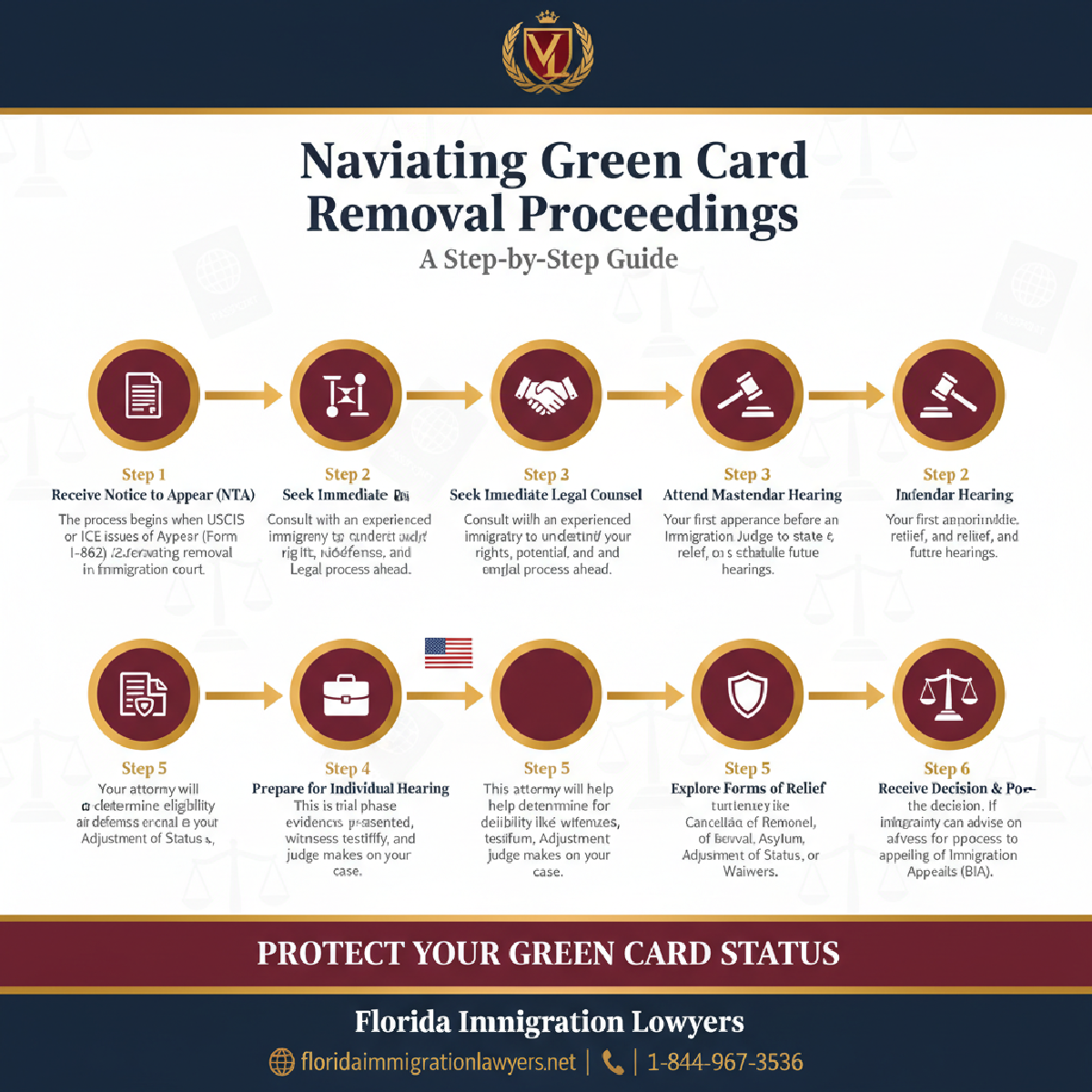
For waiver cases, additional documentation will be required. For example, in cases of extreme cruelty, police reports, medical records, court documents, and psychological evaluations are often necessary. A Florida immigration lawyer can help you tailor your document submission to your specific situation.
I-751 Processing Time and Expectations for Florida Applicants (2026)
The I-751 processing time can vary significantly. USCIS continuously updates its processing times, which are influenced by the volume of applications, staffing levels, and the complexity of individual cases. You can check current estimates on the USCIS website by selecting Form I-751 and your specific service center.
As of early 2026, processing times for Form I-751 typically range from 12 to 24 months, or even longer in some cases. It's important to remember that these are estimates, and your case could be processed faster or slower. During this period, USCIS will issue a receipt notice (Form I-797C) that extends your conditional resident status, typically for 24 months, allowing you to continue working and traveling.
Factors that can affect your I-751 processing time include the completeness of your initial submission, whether you receive a Request for Evidence (RFE), and if an interview is required. Cases involving waivers or complex issues generally take longer to resolve. For those living in Florida, the specific USCIS field office responsible for your case (e.g., Miami, Orlando, Tampa) can also impact the local processing speed.
Checking USCIS Case Status
You can monitor the status of your I-751 petition online using the receipt number provided on your Form I-797C. This tool offers real-time updates on your case's progress. Regularly checking your status is a good practice, but be patient, as updates can be infrequent.
Cost Factors and Fee Breakdown for Removing Green Card Conditions
Understanding the financial implications of the USCIS green card removal proceedings is crucial for planning. The costs primarily include USCIS filing fees and potential legal fees.
- USCIS Filing Fee for Form I-751: This is a mandatory fee paid directly to USCIS. Please note that USCIS fees are subject to change, so always check the most current fee on the official USCIS website before filing.
- Biometrics Services Fee: An additional fee is required for the biometrics appointment, also paid directly to USCIS. This fee is separate from the I-751 filing fee.
- Attorney Fees: Engaging an experienced immigration lawyer, like those at Florida Immigration Lawyers, involves legal fees. These fees vary based on the complexity of your case, the services required (e.g., assistance with joint filing, waiver application, RFE response, interview preparation), and the attorney's experience. While an upfront cost, legal representation can save you significant time, stress, and potential future expenses by preventing errors.
- Ancillary Costs: You may incur other costs such as professional translation services for foreign documents, postage for mailing your application, and travel expenses for biometrics appointments or interviews.
It's important to budget for all these potential expenses. While some costs are fixed, legal fees offer a valuable investment in ensuring your application is prepared correctly and effectively. We offer free consultations to discuss your case and provide transparent information regarding our fees.
Do not navigate this process alone. The stakes are too high. Contact Florida Immigration Lawyers today to ensure your I-751 petition is handled with precision and care, protecting your future in Florida.
Common Mistakes to Avoid in USCIS Green Card Removal Proceedings
Making even a small error during the USCIS green card removal proceedings can lead to significant delays, RFEs, or even denial. Avoid these common pitfalls:
- Filing Form I-751 Late or Too Early: The 90-day window before your conditional green card expires is strict. Filing outside this period without a valid reason can lead to denial and the initiation of removal proceedings. Always mark your calendar and prepare well in advance.
- Insufficient or Weak Evidence of a Bona Fide Marriage: This is the most frequent reason for RFEs and denials. Failing to provide a wide range of compelling documents demonstrating a genuine marital relationship can undermine your case. Don't just provide a few bank statements; aim for a comprehensive portfolio.
- Ignoring Requests for Evidence (RFEs) or Notices of Intent to Deny (NOIDs): USCIS provides specific deadlines for responding to these notices. Failing to respond adequately or on time will almost certainly lead to a denial. Take these notices seriously and seek legal help immediately.
- Misrepresenting Facts or Submitting Fraudulent Documents: Any attempt to deceive USCIS, whether intentional or accidental, can result in severe penalties, including a permanent bar from future immigration benefits and criminal charges. Always be truthful and ensure all documents are authentic.
- Not Updating Your Address with USCIS: If you move within Florida or to another state, you must update your address with USCIS promptly. Failure to do so can result in you missing critical notices, such as biometrics appointments or interview letters, leading to case abandonment or denial.
- Attending an Interview Unprepared: If an interview is scheduled, failing to review your submitted documents and discuss your relationship details can lead to inconsistencies in your answers, raising red flags for the immigration officer. Practice answering questions about your life together.
- Assuming a Waiver Isn't Possible After Divorce or Abuse: Many conditional residents mistakenly believe their path to permanent residency ends if their marriage dissolves or if they experience abuse. Waivers exist for these situations, but they require specific evidence and careful preparation. Do not give up without exploring these options.
- Navigating the Process Without Legal Guidance: While you can file Form I-751 yourself, the complexities of immigration law, especially concerning evidence requirements, waivers, and potential interviews, make legal representation invaluable. An attorney can spot issues you might miss and strengthen your case.
- Failing to Keep Copies of All Submitted Documents: Always retain a complete copy of your entire application package, including all forms, supporting documents, and USCIS notices. This record is essential for reference, especially if USCIS requests further information or if issues arise.
- Not Understanding the Consequences of a Denial: A denied I-751 typically leads to a Notice to Appear (NTA) in immigration court, initiating removal (deportation) proceedings. This is a severe consequence that highlights the importance of getting it right the first time.
- Traveling Internationally Without an Extension Notice: While your I-797C receipt notice extends your conditional status, ensure you have it with you when traveling. Without it, re-entry to the U.S. can be problematic. Consult with an attorney before making travel plans during the pending period.
When to Call a Florida Immigration Lawyer for Your I-751
While some I-751 petitions are straightforward, many situations warrant the expertise of a seasoned Florida immigration lawyer. Our team at Florida Immigration Lawyers is ready to assist you in various scenarios:
- Complex Marital History: If you have a history of multiple marriages, or if there are any doubts about the bona fides of your marriage.
- Divorce or Annulment: If your marriage has ended and you need to file a waiver based on divorce or annulment, proving the initial good faith of the marriage can be challenging without legal guidance.
- Abuse or Extreme Cruelty: If you or your child have been subjected to battery or extreme cruelty by your U.S. citizen or LPR spouse, a lawyer can help you gather the sensitive evidence needed for this specific waiver.
- Death of Your Spouse: Navigating immigration after the death of your spouse is emotionally difficult and legally complex. An attorney can ensure your waiver is filed correctly.
- Receipt of an RFE or NOID: If USCIS sends you a Request for Evidence or a Notice of Intent to Deny, it's a clear signal that your case has issues. Legal intervention at this stage can be critical to addressing concerns effectively and preventing a denial.
- Criminal History: Any past arrests or convictions, even minor ones, can complicate your USCIS green card removal proceedings. An attorney can assess the impact and advise on the best course of action.
- Facing Deportation Proceedings: If your I-751 is denied and you receive a Notice to Appear in immigration court, immediate legal representation is essential for your deportation defense.
- Uncertainty About Documentation: If you are unsure what constitutes strong evidence or how to organize your submission, an attorney can provide clarity and ensure your petition is robust.
Our attorneys at Florida Immigration Lawyers have extensive experience with USCIS green card removal proceedings, serving clients throughout Florida, including Homestead, Miami, and beyond. We understand the nuances of the law (e.g., 8 CFR 216.4) and how to present your case most effectively. Don't risk your future; let us advocate for you.
Frequently Asked Questions About Green Card Condition Removal
What happens if you marry a US citizen and then divorce?
If you marry a U.S. citizen and subsequently divorce, you may still be able to remove the conditions on your green card by filing Form I-751 with a waiver. You must demonstrate that your marriage was entered into in good faith, meaning it was a real marriage and not solely for immigration purposes, even though it ended. You will need to provide substantial evidence of the bona fide nature of your marriage, similar to a joint filing, and prove the divorce is final. This can be a complex process, and legal assistance is highly recommended to present a strong case.
What is the 5 year rule for green cards?
The "5-year rule" generally refers to the residency requirement for naturalization (becoming a U.S. citizen). Most lawful permanent residents must have held their green card for at least five years before being eligible to apply for U.S. citizenship. However, if you obtained your green card through marriage to a U.S. citizen and remain married, this period is typically reduced to three years. It's crucial to meet all other naturalization requirements, including continuous residence and good moral character. The conditional green card period counts towards this residency requirement once conditions are removed.
Can ICE take you away if you have a green card?
Yes, U.S. Immigration and Customs Enforcement (ICE) can apprehend and initiate removal proceedings against green card holders under certain circumstances. While having a green card provides significant protection, it does not grant absolute immunity from deportation. Common reasons include committing certain crimes (especially aggravated felonies), engaging in marriage fraud, or failing to remove conditions on a conditional green card. If your I-751 petition is denied, you typically receive a Notice to Appear in immigration court, which can lead to deportation. If you are a green card holder facing ICE interaction or removal proceedings, contact an immigration attorney immediately.
What is the new law for green card holders in 2025?
Immigration laws are constantly evolving, with new policies and regulations frequently introduced. As of early 2026, there isn't a single, overarching "new law" specifically for green card holders enacted for 2025 that dramatically changes the landscape of green card removal proceedings. However, USCIS implements regular updates to forms, fees, and processing procedures. It is crucial for green card holders to stay informed through official USCIS channels or consult with an immigration attorney, as administrative changes or legislative proposals can impact their status. We recommend verifying any information with a legal professional.
What is Form I-751?
Form I-751, Petition to Remove Conditions on Residence, is the official USCIS form that conditional permanent residents must file to remove the conditions on their green card. This form is used by individuals who obtained their conditional permanent resident status through marriage to a U.S. citizen or lawful permanent resident. It is also used by children who received conditional status concurrently with their parent. The purpose of the form is to prove that the marriage was legitimate and not entered into solely for immigration benefits.
How long does I-751 processing time take?
The I-751 processing time can vary widely, typically ranging from 12 to 24 months or even longer, depending on the specific USCIS service center, caseloads, and the complexity of your individual case. USCIS provides an extension of your conditional resident status (usually 24 months) via a receipt notice (Form I-797C) after you file. This allows you to continue working and traveling while your petition is pending. It's essential to monitor your case status online and respond promptly to any USCIS requests.
What if my I-751 is denied?
If your I-751 petition is denied, USCIS will typically issue a Notice to Appear (NTA) in immigration court, initiating removal (deportation) proceedings. This means you will have to appear before an immigration judge to argue why you should be allowed to remain in the U.S. A denial is a serious matter, and immediate consultation with an experienced immigration attorney is critical to prepare your defense and explore any available appeals or relief options.
Can I travel outside the U.S. while my I-751 is pending?
Yes, generally you can travel outside the U.S. while your I-751 is pending. After filing, USCIS will send you a receipt notice (Form I-797C) that extends your conditional permanent resident status, usually for 24 months, beyond the expiration date on your conditional green card. You should carry your expired conditional green card and the I-797C notice when traveling internationally to re-enter the U.S. However, if you have a criminal record or other immigration issues, it's always advisable to consult with an attorney before traveling.
What evidence strengthens my I-751 removal of conditions petition?
A strong I-751 removal of conditions petition includes a wide array of evidence demonstrating the bona fide nature of your marriage. This includes joint financial documents (bank statements, tax returns), joint property ownership (deeds, leases), birth certificates of children, joint insurance policies, utility bills in both names, affidavits from friends and family, and photographs documenting your relationship over time. The more compelling and varied the evidence, the stronger your petition will be in proving your marriage is genuine.
What if my spouse refuses to sign the I-751?
If your U.S. citizen or LPR spouse refuses to sign the I-751 petition, you may still be able to remove the conditions on your green card by applying for a waiver. This is a crucial provision for conditional residents whose marriages have ended, or who have experienced abuse. You would file the I-751 form on your own, providing evidence that your marriage was entered in good faith and explaining the reasons why your spouse is not signing. This requires a strong evidentiary submission and often benefits greatly from legal counsel.
About Florida Immigration Lawyers
Florida Immigration Lawyers is a leading immigration law firm dedicated to serving individuals and families across the entire state of Florida. With offices strategically located to serve communities like Homestead, Miami, Orlando, and Tampa, our experienced attorneys are committed to providing compassionate, effective, and results-driven legal representation.
We specialize in a comprehensive range of immigration services, including green card applications, family-based petitions, deportation defense, asylum claims, naturalization, and business immigration. Our deep understanding of federal immigration law, combined with our local expertise, allows us to craft tailored strategies for each client's unique situation.
Choosing Florida Immigration Lawyers means choosing a team that genuinely cares about your future. We offer free consultations, are available 24/7 to address your urgent concerns, and provide bilingual services to ensure clear communication. Let us be your trusted advocates in achieving your American dream.
Contact us today for a free consultation at 1-844-967-3536 or visit our website at https://www.floridaimmigrationlawyers.net.
This article is for general informational purposes only and does not constitute legal advice. Immigration laws change frequently. For advice specific to your situation, please consult with a qualified immigration attorney.
Securing your permanent residency is a critical step towards building a lasting future in the United States. Do not leave your USCIS green card removal proceedings to chance. Our dedicated team at Florida Immigration Lawyers is here to provide the expert legal support you need.
Take the first step towards a secure future. Call us today for a free consultation at 1-844-967-3536. We are ready to help you navigate this process successfully.
Do Not Navigate This Process Alone
Our experienced immigration attorneys are ready to fight for you. Get a free, confidential consultation today.
Se Habla Español
Frequently Asked Questions
Florida Immigration Lawyers
Immigration Attorney | Founder, Vasquez Law Firm
U.S. Air Force veteran and immigration attorney with thousands of cases resolved. J.D., NCCU School of Law. AILA member. Admitted to the 4th, 5th, and 11th Circuit Courts.
Available 24/7 - Free Evaluations
Related Legal Services
Our Florida immigration attorneys can help you with immigration practice areas, free immigration consultation and experienced immigration attorneys. Call today at 1-844-967-3536 for a free consultation.
Related Links
Related Topics
Free Legal Consultation
Discuss your case with our experienced attorneys. We're available 24/7.
Se Habla Español - Estamos aquí para ayudarle.
Related Articles
Stokes Interview: Navigating Marriage Fraud in Florida
A Stokes interview is a specialized, separate interview conducted by USCIS when there are suspicions of marriage fraud in a green card application. This rigorous process involves individual questioning of spouses, focusing on inconsistencies in their testimonies to determine the authenticity of their marital bond. For couples in Florida, navigating this high-stakes interview requires meticulous preparation, extensive documentation, and often the strategic guidance of an experienced immigration lawyer. Understanding the process, preparing for detailed questions, and presenting a strong case are crucial for overcoming marriage fraud allegations and securing your immigration future. Florida Immigration Lawyers stands ready to assist you.
Immigration Attorney Gainesville: North Florida Legal Help
For those in Gainesville, Alachua County, and throughout North Florida, navigating U.S. immigration law requires expert guidance. An experienced immigration attorney can simplify complex processes, from family-based petitions and employment visas to critical asylum claims and deportation defense. This comprehensive guide outlines the essential services provided by an immigration attorney, details necessary documentation, clarifies processing timelines, and discusses associated costs. We also highlight common mistakes to avoid and crucial scenarios where legal counsel is indispensable. Florida Immigration Lawyers serves all of Florida, including Gainesville and St. Petersburg, providing dedicated legal support to help you achieve your immigration goals. Contact us for a free consultation to discuss your specific needs.
Military Naturalization Expedited at Florida Bases
Explore expedited military naturalization processes for service members at Florida bases like MacDill. Learn about eligibility, steps, and common mistakes. Contact Florida Immigration Lawyers for a free consultation.
Protect Yourself from Immigration Scams in Florida
Learn how to protect against immigration scams in Florida, focusing on St. Petersburg. This guide covers identifying scams, verifying credentials, and getting legal help. Call Florida Immigration Lawyers at 1-844-967-3536 for assistance.
