TPS News Florida: Crucial Updates for Your Immigration
For TPS beneficiaries in Florida, including Coral Springs, understanding the latest Temporary Protected Status news and updates for 2026 is vital. This comprehensive guide from Florida Immigration Lawyers covers eligibility, the step-by-step application and renewal process, essential documents, timelines, and cost factors. We also address common mistakes to avoid and when to seek legal counsel to protect your immigration status. Stay informed about crucial USCIS TPS updates and court rulings impacting designations. Our firm offers legal assistance, ensuring you navigate these complexities with confidence.
Temporary Protected Status (TPS) in Florida for 2026 remains a critical lifeline for many immigrants. Eligibility and renewal processes are complex and often subject to legal challenges and policy changes. Staying updated with USCIS announcements and understanding your specific country's designation status is essential. Professional legal guidance is highly recommended to navigate these intricacies successfully.
- TPS designations are continually reviewed and can be extended or terminated.
- Timely application or re-registration is crucial to maintain your status.
- Legal counsel helps ensure all documentation is correct and deadlines are met.
- Changes in federal court rulings can impact TPS beneficiaries in Florida.
- Always verify current designation periods on the official USCIS website.
TPS News Florida: Crucial Updates for Your Immigration Status in 2026
Are you a TPS beneficiary living in Coral Springs or elsewhere in Florida, wondering about the future of your immigration status in 2026? The landscape of Temporary Protected Status (TPS) is consistently evolving, marked by complex legal battles, policy shifts, and crucial renewal deadlines. Understanding these changes is vital for maintaining your ability to live and work legally in the United States.
For many individuals and families across Florida, TPS provides essential protection from deportation and the opportunity to obtain work authorization. However, navigating the intricate details of TPS eligibility, application processes, and potential extensions requires diligent attention to current regulations and legal precedents. This guide aims to provide you with the latest insights and actionable steps for TPS in Florida as we look towards 2026.
Do not face this uncertainty alone. The stakes are too high to risk errors or missed deadlines. Call Florida Immigration Lawyers at 1-844-YO-PELEO for a free consultation. Our experienced team is here to help you understand the latest TPS news and protect your future.
Overview of Temporary Protected Status (TPS) in Florida for 2026
Temporary Protected Status (TPS) is a humanitarian immigration benefit granted by the Secretary of Homeland Security to eligible nationals of designated countries. These countries are typically experiencing ongoing armed conflict, environmental disaster, or other extraordinary and temporary conditions. For thousands of individuals in Florida, including vibrant communities in Coral Springs, Miami, and Orlando, TPS has been a critical safeguard.
The program allows individuals from designated countries, who are already in the U.S., to remain here lawfully for a temporary period. This status protects them from deportation and grants them employment authorization. The designation of a country for TPS, or its extension, is subject to review, often leading to uncertainty for beneficiaries.
In Florida, a state with a significant immigrant population, particularly from countries like Haiti, Venezuela, Nicaragua, El Salvador, and Honduras, TPS news directly impacts many lives. The legal challenges surrounding TPS terminations for certain countries, such as the Ramos v. Mayorkas litigation, have created a dynamic and often confusing environment. As of 2026, beneficiaries must remain vigilant about specific country designations and any new court orders affecting their status.
The Department of Homeland Security (DHS) makes decisions on TPS extensions or redesignations based on current conditions in the designated countries. These decisions are published in the Federal Register and on the USCIS website. It is imperative for all TPS holders in Florida to regularly check these official sources for the most up-to-date information regarding their country's status.
Understanding the nuances of TPS, including initial eligibility requirements and re-registration procedures, is paramount. Any misstep can jeopardize your protected status. This is where the guidance of a knowledgeable Florida immigration lawyer becomes invaluable.
Who Qualifies for TPS? Basic Eligibility
To be eligible for TPS, you must meet several core requirements. You must be a national of a country designated for TPS, or a person without nationality who last habitually resided in that country. You must also have been continuously physically present (CPP) and continuously resided (CR) in the U.S. since the effective date of the most recent designation.
Furthermore, you must apply for TPS within the registration period announced for your country. Certain criminal offenses or national security grounds can disqualify an applicant. It is crucial to review the specific eligibility criteria for your country's designation, as published by USCIS, to ensure you meet all requirements.
Navigating the TPS Application and Renewal Process: A Step-by-Step Guide
Applying for or renewing Temporary Protected Status involves a precise sequence of actions. Missing a step or a deadline can have severe consequences for your immigration status Florida. Here is a general step-by-step guide to help you through the process:
-
Determine Your Eligibility: First, confirm that your country is currently designated for TPS and that you meet all individual eligibility requirements. This includes continuous physical presence and residence in the U.S. since the specified dates. Verify the specific dates and conditions on the USCIS TPS page.
-
Gather Required Documents: Collect all necessary identity and nationality documents, proof of continuous residence, and any other supporting evidence. This may include passports, birth certificates, school records, utility bills, and employment records. A comprehensive list is provided in the next section.
-
Complete Form I-821, Application for Temporary Protected Status: Fill out this form accurately and completely. Ensure all questions are answered truthfully. Mistakes or omissions can lead to delays or denials.
-
Complete Form I-765, Application for Employment Authorization (Optional but Recommended): If you wish to work legally in the U.S., you must file Form I-765. This application allows you to obtain an Employment Authorization Document (EAD). Many TPS applicants file this concurrently.
-
Complete Form I-601, Application for Waiver of Grounds of Inadmissibility (If Applicable): If you have certain inadmissibility grounds, such as minor criminal infractions, you may need to file this waiver. This is a complex form and usually requires legal assistance.
-
Pay Filing Fees or Request a Fee Waiver: Submit the required filing fees for Forms I-821 and I-765. If you cannot afford the fees, you may be eligible to apply for a fee waiver using Form I-912, Request for Fee Waiver. Ensure you meet the strict criteria for a waiver.
-
Submit Your Application Package: Mail your completed forms, supporting documents, and fees (or fee waiver request) to the correct USCIS filing address. The address varies depending on your country of designation and whether you are filing an initial application or re-registration. Check the USCIS website for the most current addresses.
-
Attend Biometrics Appointment: After submitting your application, USCIS will send you a notice to attend a biometrics appointment at an Application Support Center (ASC). This appointment is mandatory for fingerprinting and photographs. Do not miss it.
-
Respond to Requests for Evidence (RFE) or Notices of Intent to Deny (NOID): If USCIS needs more information, they will send an RFE. If they intend to deny your application, they will send a NOID. Respond promptly and thoroughly to these requests, preferably with legal counsel.
-
Receive Decision: USCIS will send you a written decision on your TPS application. If approved, you will receive an approval notice and, if requested, your EAD. If denied, you may have options to appeal or refile, depending on the reason for denial.
TPS Renewal and Re-registration for 2026
For those already holding TPS, re-registration is typically required during specific windows announced by USCIS. It is crucial to re-register within the designated period to avoid losing your benefits. Even if your country's TPS designation is subject to litigation, it is often wise to re-register to maintain your status while legal challenges proceed. Keep an eye on USCIS TPS updates for your country.
Essential Documents for Your TPS Application or Renewal
A complete and accurate submission of documents is critical for your TPS application. Organize your documents carefully to avoid delays. Here is a general checklist of items you will typically need:
- Proof of Identity and Nationality:
- Passport (from your designated country)
- Birth certificate with photo identification
- National identity document from your country with photo and/or fingerprint
- Any other official government-issued identity document
- Proof of Date of Entry:
- I-94 Arrival/Departure Record
- Passport entry stamps
- Airline tickets or boarding passes
- Proof of Continuous Residence in the United States since the designated date:
- Employment records (pay stubs, W-2 forms, letters from employers)
- Rent receipts, utility bills (electricity, water, gas, internet)
- School records (transcripts, report cards, enrollment letters)
- Medical records (hospital bills, doctor's notes)
- Affidavits from friends, family, or employers attesting to your residence
- Bank statements, credit card statements
- Insurance policies (health, auto, life)
- Dated photographs
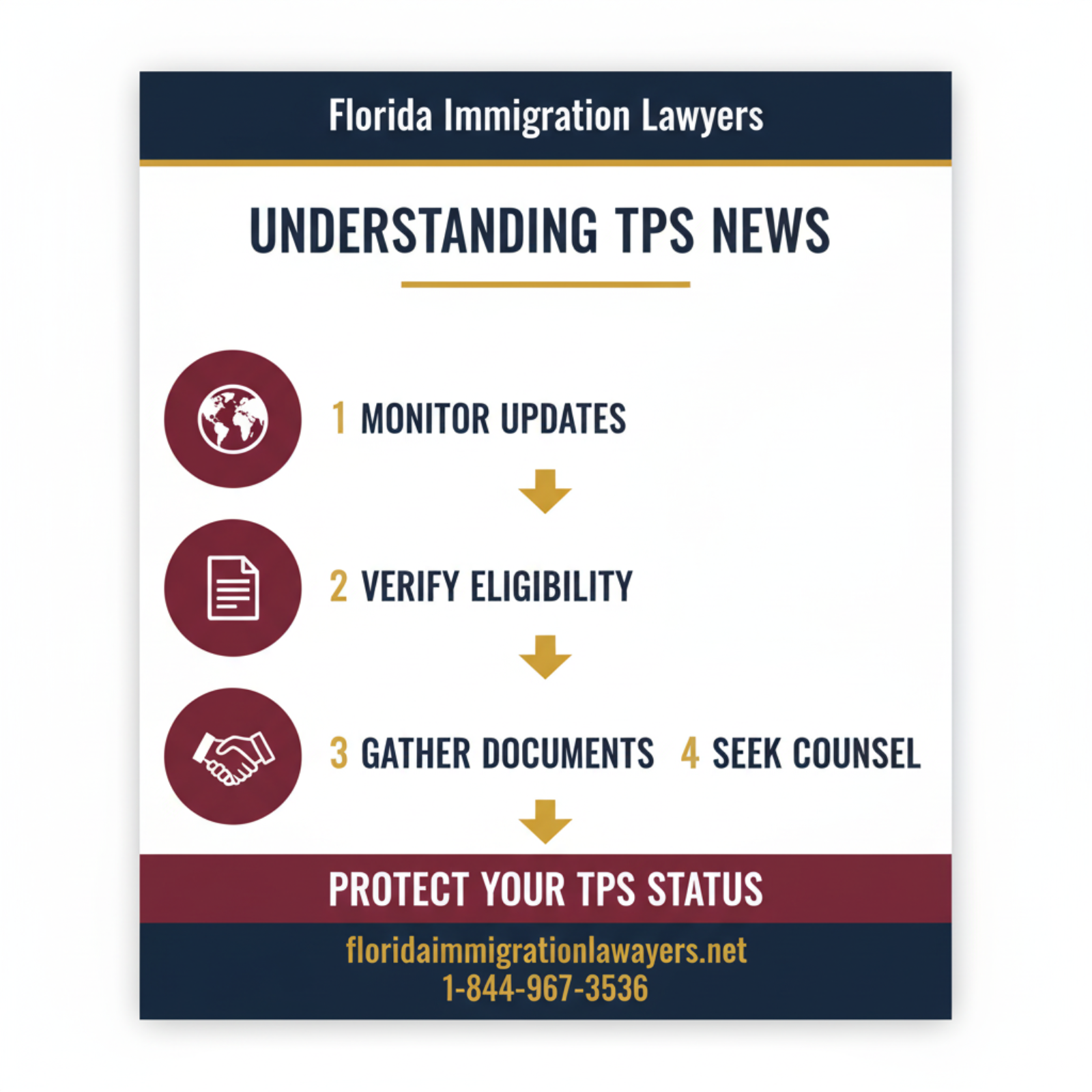
Step-by-Step Process Guide - Two Passport-Style Photographs: Ensure they meet USCIS specifications.
- Filing Fees: Or a completed Form I-912, Request for Fee Waiver.
- Previous TPS documents (for re-registration): Copies of prior approval notices, EADs.
- Court disposition documents: If you have any arrests or criminal charges, even if dismissed.
Always submit copies of your documents, not originals, unless specifically requested by USCIS. All foreign language documents must be accompanied by a complete English translation certified by a competent translator.
Understanding TPS Timelines and Processing Expectations
The processing times for TPS applications and renewals can vary significantly. Several factors influence how quickly USCIS processes your case. These include the volume of applications, the specific USCIS service center handling your case, and the complexity of your individual application.
Generally, you can expect processing to take several months, sometimes extending beyond a year. Initial TPS applications may take longer than re-registrations. USCIS provides estimated processing times on its website, which can give you a general idea, but these are not guarantees. For deportation defense, timely processing is critical.
It is crucial to apply or re-register as early as possible within the designated window. This helps to ensure that your status remains uninterrupted, especially for employment authorization. In some cases, USCIS may issue automatic extensions of EADs for re-registrants, which allows you to continue working while your new EAD is being processed. Always check the Federal Register notice for your country for details on EAD automatic extensions.
Be prepared for potential delays, especially if your application requires additional review or if USCIS issues a Request for Evidence (RFE). Responding promptly and thoroughly to any USCIS communication is key to avoiding further delays. For beneficiaries in Florida, especially in areas like Coral Springs, being proactive is your best strategy.
USCIS Field Offices in Florida
While TPS applications are typically processed at service centers, you may interact with local USCIS field offices in Florida for other immigration matters or appointments. Major field offices are located in Miami, Orlando, Tampa, and Jacksonville. These offices handle interviews for various benefits, but TPS processing itself is largely centralized. However, biometrics appointments are conducted at local Application Support Centers (ASCs) throughout the state.
Cost Factors and Fee Breakdown for TPS
Applying for or renewing Temporary Protected Status involves certain government filing fees. These fees are set by USCIS and are subject to change. It is important to consult the official USCIS website or your legal counsel for the most current fee schedule.
Typically, the fees associated with a TPS application include:
- Form I-821, Application for Temporary Protected Status: This fee may vary or be waived for initial applications or re-registrations depending on the circumstances.
- Biometrics Services Fee: This fee covers the cost of fingerprinting and background checks. This fee is mandatory unless you qualify for a fee waiver.
- Form I-765, Application for Employment Authorization: If you are applying for an EAD, there is a separate filing fee for this form.
It is important to note that if you are re-registering for TPS, you generally only need to pay the biometrics fee and the EAD fee (if requesting an EAD). However, always verify the specific fee requirements for your country's designation notice.
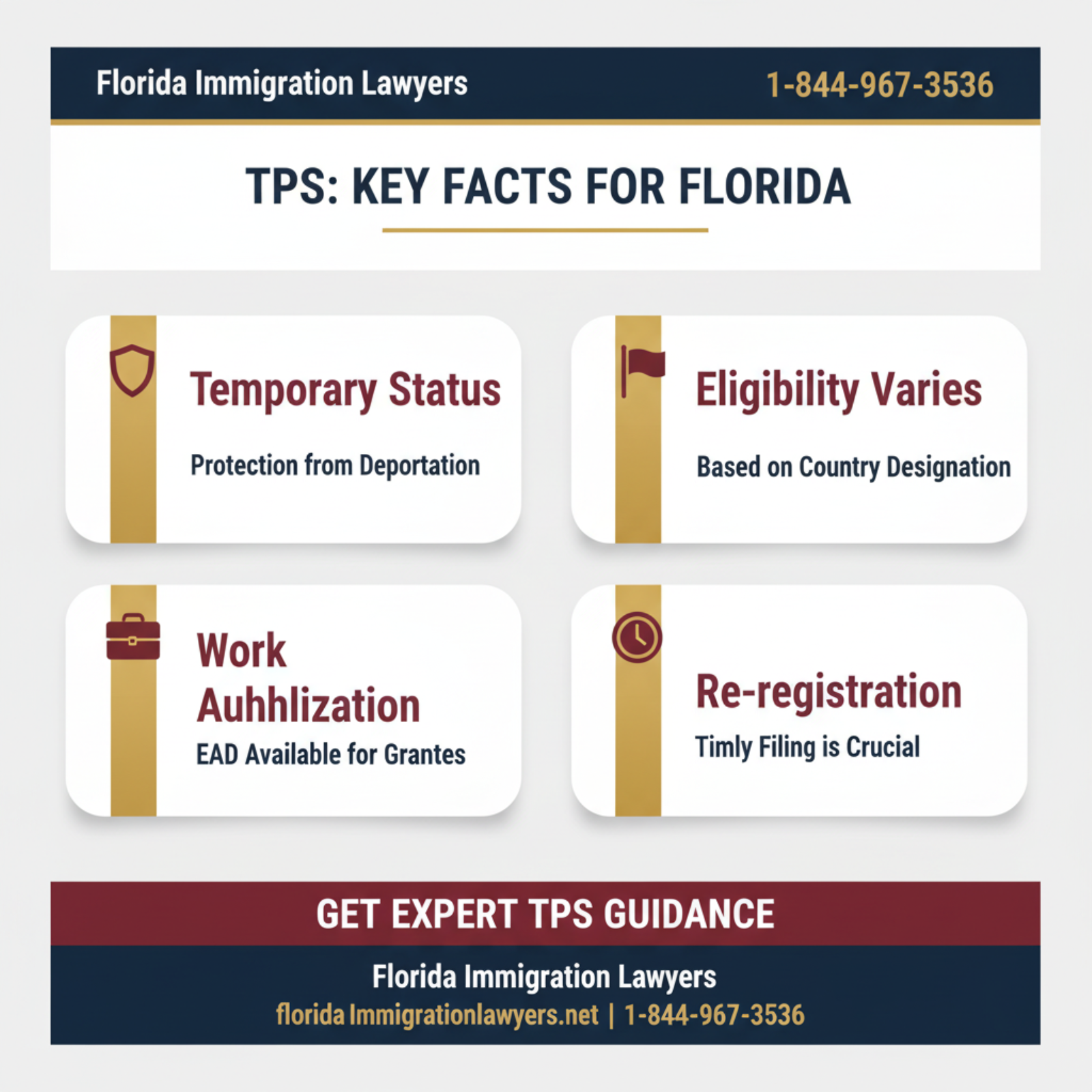
If you are unable to pay the filing fees, you may be eligible for a fee waiver. To request a fee waiver, you must submit Form I-912, Request for Fee Waiver, along with supporting documentation demonstrating your inability to pay. Eligibility for fee waivers is strict and typically requires proof of receiving a means-tested benefit, household income below 150% of the poverty level, or financial hardship. A qualified attorney can help assess your eligibility for a fee waiver.
Beyond government fees, you should also account for potential costs such as legal fees if you hire an attorney, translation services for foreign documents, and postage. Investing in legal assistance can often save you money and stress in the long run by preventing costly errors.
Frequently Asked Questions About TPS in Florida
Many individuals have pressing questions regarding TPS, especially with ongoing legal and political developments. Here are answers to some common concerns:
Will TPS be extended in 2026?
Whether TPS will be extended for specific countries in 2026 depends on several factors. The Secretary of Homeland Security makes these decisions based on conditions in the designated countries, ongoing litigation, and policy considerations. Historically, some countries have seen multiple extensions, while others have faced termination. It is crucial to monitor official USCIS announcements and Federal Register notices closely as 2026 approaches. Legal challenges can also influence extensions, as seen with the Ramos v. Mayorkas case.
Is TPS ending for Haitians?
The status of TPS for Haitians has been subject to significant litigation and policy changes. While the Trump administration attempted to terminate TPS for Haiti, federal court injunctions have largely prevented this from taking effect for many beneficiaries. The situation remains dynamic. Haitian TPS beneficiaries in Florida should continue to re-register when announced and seek legal advice to understand their specific situation in light of current court orders and administrative decisions. For specific information, refer to the latest Federal Register notices for Haiti's TPS designation.
What to do if ICE stops you in Florida?
If Immigration and Customs Enforcement (ICE) stops you in Florida, it's important to know your rights. You have the right to remain silent. You do not have to answer questions about your immigration status or country of origin. You also have the right to speak with an attorney. Do not sign anything without understanding it and consulting with a lawyer. If you are arrested, ask to speak with an attorney immediately and do not provide any information until you have legal counsel. Carrying proof of your TPS status or other immigration documents can be helpful, but do not volunteer information beyond that. Contact a deportation defense lawyer promptly.
What TPS has been canceled?
Several TPS designations have been terminated or faced attempted termination in recent years, though some terminations have been enjoined by federal courts. Countries like El Salvador, Haiti, Honduras, Nepal, Nicaragua, and Sudan have been subject to termination attempts, leading to extensive legal battles. It is essential to distinguish between a proposed termination and one that has actually taken effect, especially when court injunctions are in place. Always verify the current status of your country's TPS designation with official USCIS publications.
Do not navigate this complex process alone. Contact Florida Immigration Lawyers today to secure your future. We are dedicated to providing legal support for all your TPS and immigration needs.
Common Mistakes to Avoid When Applying for TPS
Applying for or renewing TPS is a detailed process where even small errors can lead to significant setbacks. Being aware of common pitfalls can help you avoid them:
-
Missing the Filing Deadline: This is perhaps the most critical mistake. USCIS sets specific registration periods for initial applications and re-registrations. Failing to submit your application within this window can result in loss of eligibility or status. Always mark your calendar for these crucial dates.
-
Incomplete or Inaccurate Forms: Leaving sections blank, providing incorrect information, or failing to sign forms can cause your application to be rejected or delayed. Double-check every entry and ensure all required signatures are present.
-
Insufficient Supporting Documentation: Not providing enough evidence for identity, nationality, continuous residence, or physical presence can lead to a Request for Evidence (RFE). This delays processing and puts your application at risk. Gather all relevant documents meticulously.
-
Submitting Original Documents: Unless explicitly requested, never send original documents to USCIS. Always provide clear, legible copies. Originals can be lost and are difficult to replace.
-
Failure to Disclose Criminal History: Even minor arrests or charges, even if dismissed, must be disclosed. USCIS conducts thorough background checks. Failure to disclose can be considered misrepresentation and lead to denial or even accusations of fraud. Consult an attorney if you have any criminal history.
-
Not Responding to RFEs or NOIDs: If USCIS sends a Request for Evidence (RFE) or a Notice of Intent to Deny (NOID), you must respond within the specified timeframe. Ignoring these notices will almost certainly lead to a denial of your application.
-
Incorrect Filing Fees or Fee Waiver Application Errors: Submitting the wrong fee amount or a poorly documented fee waiver request can cause your application to be rejected. Verify the current fees and ensure your fee waiver application is robust.
-
Not Attending Biometrics Appointment: The biometrics appointment is mandatory. Missing it without rescheduling can lead to a denial. Ensure you receive and attend your appointment notice.
-
Assuming Automatic Renewal without Action: Even if your EAD is automatically extended, you still need to complete the re-registration process for TPS itself. Do not assume your status is automatically maintained without filing the necessary forms.
-
Misunderstanding Continuous Physical Presence (CPP) and Continuous Residence (CR): These are specific legal requirements with strict definitions. Brief, casual, and innocent departures from the U.S. may not break CR, but extended absences can. Understand what constitutes an eligible departure and consult an attorney if unsure.
-
Not Seeking Legal Counsel for Complex Cases: If you have a criminal record, prior immigration violations, or an unusual travel history, your case is complex. Attempting to navigate it alone significantly increases the risk of denial. A family immigration lawyer or TPS specialist can provide critical guidance.
-
Relying on Outdated Information: Immigration law, especially concerning TPS, changes frequently. Relying on old news or unverified sources can lead to mistakes. Always cross-reference information with official USCIS publications or consult an attorney for the latest business immigration or TPS news.
When to Call a Florida Immigration Lawyer for TPS Assistance
While some TPS cases may seem straightforward, the complexities of immigration law often warrant professional legal assistance. This is especially true given the constant changes in asylum and TPS policy and litigation. Knowing when to seek legal counsel can make a significant difference in the outcome of your case.
You should consider contacting Florida Immigration Lawyers if any of the following scenarios apply to you:
- Your country's TPS designation status is unclear or subject to litigation: The legal landscape can be confusing. An attorney can interpret court rulings and official notices.
- You have a criminal record, even a minor one: Certain convictions can make you ineligible for TPS. A lawyer can assess your record and advise on potential waivers or defense strategies.
- You have had previous immigration violations or deportations: These issues complicate any immigration application.
- You have traveled outside the U.S. since receiving TPS: Understanding the rules for re-entry and maintaining continuous residence is critical.
- You received a Request for Evidence (RFE) or Notice of Intent to Deny (NOID): These require precise and timely responses.
- You are unsure about any part of the application or renewal process: It is always better to clarify doubts with an expert than to make a mistake.
- You are concerned about potential delays or want to expedite your application: While expediting is rare, an attorney can help manage expectations and communicate with USCIS.
- You are considering applying for other immigration benefits (e.g., green card, citizenship) while holding TPS: An attorney can advise on the best strategy and potential pathways.
Florida Immigration Lawyers has extensive experience helping individuals across Florida, including Coral Springs, navigate the TPS process. We understand the specific challenges faced by our community and are committed to providing compassionate, effective legal representation. Our goal is to ensure your application is strong, accurate, and submitted correctly, maximizing your chances of a positive outcome.
About Florida Immigration Lawyers
Florida Immigration Lawyers is a leading law firm dedicated to providing comprehensive immigration services to individuals and families throughout Florida. With a deep understanding of U.S. immigration law and a commitment to our clients, we strive to achieve the strongest possible outcomes for every case. Our team of skilled attorneys is passionate about helping immigrants build better lives in the United States.
We offer a wide range of immigration services, including assistance with Temporary Protected Status (TPS), family-based visas, employment-based visas, naturalization and citizenship, deportation defense, asylum, and more. We pride ourselves on our personalized approach, ensuring that each client receives the attention and tailored legal strategies they deserve. Our firm is available 24/7 to address urgent concerns.
Choosing Florida Immigration Lawyers means choosing a partner who will stand by you every step of the way. We offer free consultations to discuss your specific immigration needs and provide clear, honest advice. Our dedicated team serves clients across all of Florida, from Miami to Jacksonville, and everywhere in between, including the vibrant community of Coral Springs. Visit our website at Vasquez Law Firm or call us at 1-844-YO-PELEO to schedule your free consultation today.
Sources and References
- U.S. Citizenship and Immigration Services (USCIS) - Temporary Protected Status
- Executive Office for Immigration Review (EOIR)
- U.S. Immigration and Customs Enforcement (ICE)
- 8 U.S.C. Chapter 12 - Immigration and Nationality Act (INA)
- INA § 244 - Temporary Protected Status
- 8 CFR Part 244 - Temporary Protected Status
- USCIS Policy Manual - Volume 7, Part B, Chapter 6 - Temporary Protected Status
- Federal Register Notices for TPS Designations and Extensions (e.g., specific notices for Haiti, Venezuela, etc.)
This article provides general legal information and is not intended as legal advice. Every case is unique, and outcomes depend on specific facts and circumstances. Contact an attorney for advice about your particular situation.
The future of your TPS status in Florida is too important to leave to chance. Take proactive steps to protect your ability to live and work in the U.S. Our team at Florida Immigration Lawyers is ready to assist you with comprehensive legal support and up-to-date information regarding all immigration matters.
Contact Florida Immigration Lawyers today at 1-844-YO-PELEO for a free consultation. Se Habla Español - Estamos aquí para ayudarle.
Do Not Navigate This Process Alone
Our experienced immigration attorneys are ready to fight for you. Get a free, confidential case review today.
Se Habla Español
Or leave your details and we’ll call you:
Free Evaluation in 24 Hours
Or talk to us right now

AI voice assistant — available 24/7
FreeFrequently Asked Questions

William J. Vásquez
Founding Attorney · Vasquez Law Firm
U.S. Air Force veteran and immigration attorney with years of hands-on U.S. immigration experience. J.D., NCCU School of Law. AILA member. Admitted to the 4th, 5th, and 11th Circuit Courts.
Available 24/7 - Free Evaluations
Reviewed for legal accuracy by William J. Vásquez
Licensed in North Carolina; U.S. immigration is federal practice.
Related Legal Services
Our Florida immigration attorneys can help you with business immigration, deportation defense and family immigration services. Call today at 1-844-YO-PELEO for a free case review.
Related Links
Related Topics
Free Legal Case Review
Discuss your case with our experienced attorneys. We're available 24/7.
Se Habla Español - Estamos aquí para ayudarle.
Related Articles
Immigration Lawyer Orlando Free Consultation in Florida
For individuals and families in Orlando, Florida, navigating the complexities of U.S. immigration law requires expert guidance. An immigration lawyer in Orlando offers crucial support for everything from visa applications and green card processes to naturalization and deportation defense. This comprehensive guide details what a free consultation covers, providing a step-by-step overview of immigration pathways, essential document checklists, and expected timelines in 2026. We also highlight common mistakes to avoid, discuss the critical role of legal counsel in deportation and asylum cases, and explain why choosing a local Orlando immigration attorney is beneficial. Florida Immigration Lawyers is dedicated to serving the diverse community of Orlando with compassionate, effective legal solutions, ensuring you receive personalized advice and robust representation for a successful immigration journey.
USCIS Office Near Me: Florida Locations & Appointments 2026
Navigating USCIS processes in Florida can be complex, from finding the right field office to preparing for critical appointments. This comprehensive guide provides essential information for individuals seeking immigration services in 2026, including a step-by-step process for locating your nearest USCIS office in Florida, understanding its services, and efficiently scheduling appointments. We detail the necessary documents for interviews, outline typical processing timelines, and break down associated costs. Furthermore, we highlight common pitfalls to avoid and crucial situations when consulting an experienced Florida immigration lawyer is indispensable. Whether you're in Orlando or elsewhere, empower your immigration journey with expert advice and practical strategies. Learn how Florida Immigration Lawyers can assist you.
Immigration Appeal Process with BIA in Florida
Facing an immigration appeal in Florida? Learn about the Board of Immigration Appeals process, essential steps, and when to seek legal help. Call Florida Immigration Lawyers at 1-844-YO-PELEO for a free case review.
Consular Processing Lawyer for Florida Applicants in 2026
Consular processing is a key step for Florida immigrants seeking an immigrant visa. Learn about the process, including the embassy interview and preparation tips. Call Florida Immigration Lawyers at 1-844-YO-PELEO for assistance.