TPS Honduras: Re-registration Deadlines in Florida 2026
For Honduran nationals in Florida, understanding TPS re-registration deadlines for 2026 is vital to maintain legal status and work authorization. This comprehensive guide covers the step-by-step process, essential documents, expected timelines, and associated costs. We emphasize the importance of monitoring official USCIS announcements, completing forms accurately, and avoiding common mistakes. Florida Immigration Lawyers provides expert assistance for complex cases, criminal history concerns, or any challenges during re-registration. Protecting your status ensures you continue to benefit from TPS protections. Get a free case review with our experienced Central Florida attorneys to navigate this critical process successfully.
For Temporary Protected Status (TPS) holders from Honduras in Florida, re-registration in 2026 is a critical process to maintain legal status and work authorization. While specific deadlines for 2026 are typically announced by USCIS closer to the re-registration period, it is imperative to prepare well in advance. This involves gathering necessary documentation, completing Forms I-821 and I-765, and submitting all required fees. Missing the re-registration window can lead to loss of TPS benefits, potential deportation proceedings, and severe immigration consequences. Proactive engagement with an experienced immigration attorney in Central Florida is highly recommended to ensure a timely and accurate submission.
- Re-registration is mandatory to maintain TPS benefits.
- Specific 2026 deadlines for Honduras will be announced by USCIS.
- Prepare Forms I-821 and I-765 with supporting documents.
- Failure to re-register can result in loss of status.
- Seek legal counsel for accurate and timely submission in Florida.
Navigating the complexities of immigration law can be a daunting experience, especially when your legal status and ability to work in the United States hang in the balance. For thousands of Honduran nationals residing in Florida, the Temporary Protected Status (TPS) program offers a vital lifeline, providing protection from deportation and authorization to work. However, this protection is not permanent and requires timely re-registration to maintain its benefits. As we approach 2026, understanding the re-registration process, key deadlines, and potential pitfalls is more critical than ever.
In Florida, a state with a significant immigrant population, staying informed about changes and requirements for TPS is paramount. Recent shifts in immigration policy and increased scrutiny, as highlighted by discussions around risks to lawfully present immigrant families, underscore the need for diligent compliance. This comprehensive guide from Florida Immigration Lawyers aims to demystify the TPS re-registration process for Honduran beneficiaries in 2026, offering clarity on what you need to do to protect your status.
Whether you're a long-time TPS holder or approaching your first re-registration, this article will cover the essential steps, documents, timelines, and costs involved. We understand the anxieties that come with these processes, and our goal is to empower you with the knowledge to proceed confidently. Do not risk your future by missing critical deadlines or making preventable errors. For personalized guidance and to ensure your re-registration is handled meticulously, call Florida Immigration Lawyers at 1-844-YO-PELEO for a free case review today.
Understanding Temporary Protected Status (TPS) for Honduran Nationals in Florida
Temporary Protected Status (TPS) is a humanitarian immigration benefit granted by the United States government to eligible nationals of certain countries designated by the Secretary of Homeland Security. This status is extended when conditions in a country temporarily prevent its nationals from returning safely, or when the country is unable to handle the return of its nationals adequately. Honduras was initially designated for TPS in 1999 following Hurricane Mitch, and this designation has been extended multiple times since, providing crucial relief to many. For Honduran nationals in Florida, TPS offers protection from deportation, along with work authorization and, in some cases, travel authorization.
As of 2026, the TPS designation for Honduras remains a critical topic for thousands of individuals and families across Florida, particularly in areas like Orlando and Central Florida, which are home to diverse immigrant communities. Beneficiaries must continually meet eligibility requirements, including continuous physical presence in the U.S. and continuous residence since the initial designation date, as well as passing security checks. The benefits of TPS are significant, allowing individuals to live and work legally in the U.S. without fear of removal. However, it is important to remember that TPS does not automatically lead to permanent residency or citizenship, though it can provide a pathway to other forms of relief for eligible individuals. Understanding the scope and limitations of TPS is the first step in ensuring continued compliance and securing your future. For more information on general immigration matters, you can explore our immigration practice areas.
What are the TPS Honduras Re-registration Deadlines for 2026?
The specific re-registration deadlines for TPS Honduras in 2026 will be officially announced by U.S. Citizenship and Immigration Services (USCIS) through a Federal Register Notice. This notice typically provides a 60-day window for re-registration, though extensions can occur. It is absolutely critical for all Honduran TPS beneficiaries to monitor USCIS announcements and the Federal Register closely for these exact dates. Missing the re-registration deadline, even by a single day, can result in the loss of your TPS status and all associated benefits, including your employment authorization document (EAD).
While we await the official 2026 dates, historical patterns suggest that re-registration periods typically open well in advance of the current expiration date of the TPS designation. For beneficiaries living in Florida, being prepared means having all your documents in order and understanding the filing process. The USCIS website (USCIS) is the primary source for official updates and forms. It is advisable to subscribe to USCIS email updates or regularly check their TPS page for Honduras. Given the potential for policy changes and the strict nature of immigration deadlines, proactive preparation is the best defense against unforeseen complications. Even if you believe you are aware of the general timeframe, always confirm the precise dates published by USCIS to avoid any missteps.
Step-by-Step Guide to TPS Re-registration in Florida
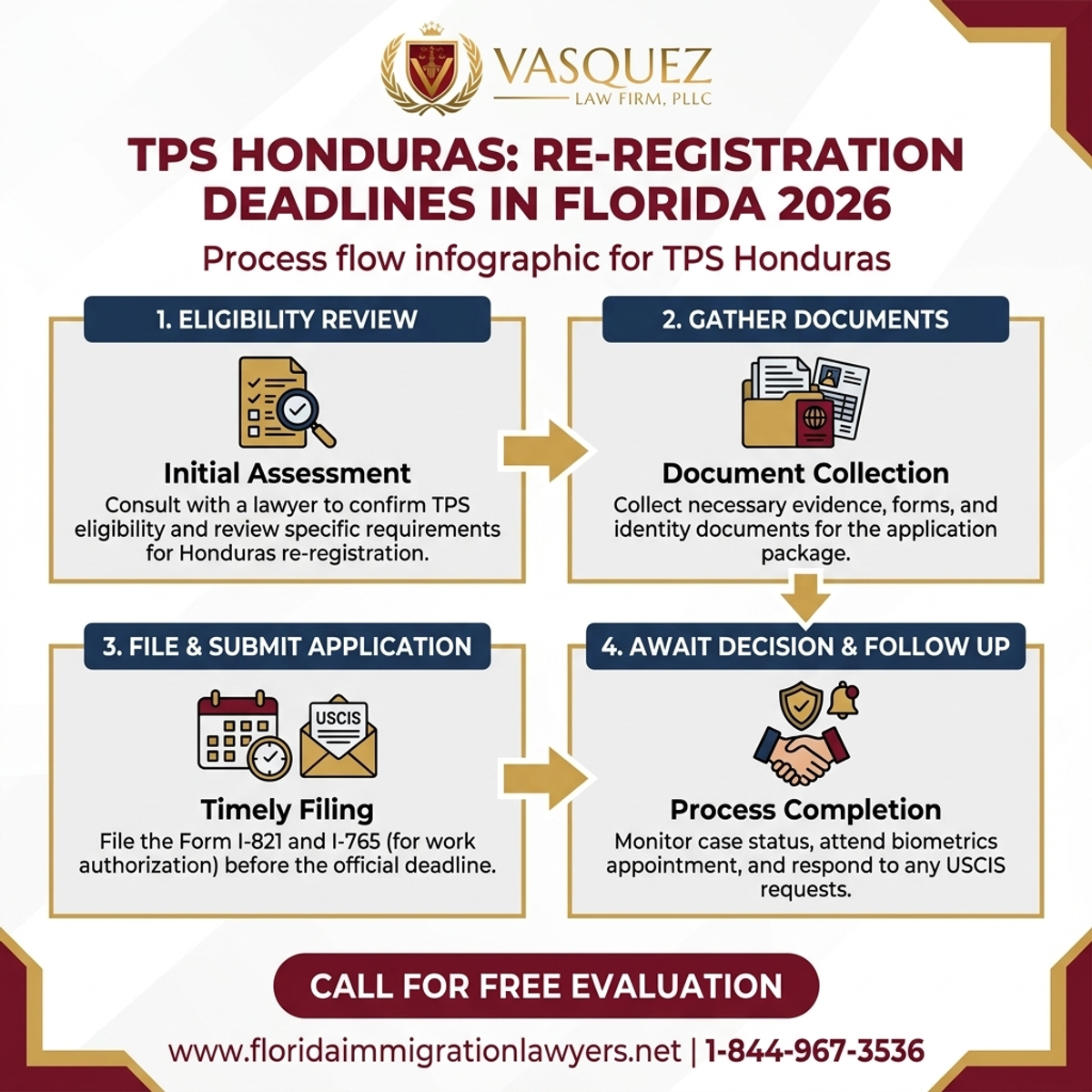
Re-registering for TPS requires careful attention to detail and timely submission. Here is a step-by-step guide for Honduran nationals in Florida to navigate the process:
-
Monitor Official Announcements: The first and most crucial step is to stay informed about the official re-registration period and deadlines for Honduras, which will be published by USCIS in the Federal Register. Do not rely on unofficial sources for this critical information.
-
Complete Form I-821, Application for Temporary Protected Status: You must complete and sign Form I-821. Ensure all information is accurate and up-to-date. Any discrepancies with previous applications could raise red flags.
-
Complete Form I-765, Application for Employment Authorization: If you wish to maintain your work authorization, you must also complete and sign Form I-765. This form allows you to receive a new Employment Authorization Document (EAD).
-
Pay Required Fees or Request a Fee Waiver: You will need to pay the filing fee for Form I-765 and the biometric services fee, unless you are exempt or qualify for a fee waiver. There is typically no fee for Form I-821 for re-registrants. If applying for a fee waiver, submit Form I-912, Request for Fee Waiver, with supporting documentation.
-
Gather Supporting Documentation: Collect all necessary documents, including proof of identity, nationality, continuous physical presence, and continuous residence in the U.S. (refer to the document checklist section below). Ensure all copies are clear and legible.
Step-by-Step Process — TPS Honduras: Re-registration Deadlines in Florida 2026
-
Submit Your Application Package: Mail your complete application package, including all forms, fees, and supporting documents, to the designated USCIS Lockbox facility. The mailing address will be specified in the Federal Register Notice. Keep a copy of everything you submit for your records.
-
Attend Biometrics Appointment: After submitting your application, USCIS will send you an appointment notice for biometrics (fingerprints and photos) at an Application Support Center (ASC). For those in Central Florida, the Orlando ASC is a common location. It is mandatory to attend this appointment.
-
Respond to Requests for Evidence (RFE) or Notices of Intent to Deny (NOID): If USCIS requires additional information or intends to deny your application, they will send an RFE or NOID. Respond promptly and thoroughly within the given timeframe. Failing to do so can lead to denial.
Required Documents for TPS Re-registration
A complete TPS re-registration application package for Honduran nationals in Florida must include specific documentation to prove eligibility. Submitting an incomplete package is a common reason for delays or denials. Here is a general checklist of documents you will typically need:
- Proof of Identity and Nationality: Valid Honduran passport, birth certificate with photo identification, or any national identity document issued by Honduras bearing your photograph and/or fingerprint.
- Proof of Date of Entry into the U.S.: I-94 Arrival/Departure Record, passport entry stamp, or other official travel documents.
- Proof of Continuous Residence in the U.S.: Documents showing you have lived in the U.S. since the initial designation date for Honduras and have maintained continuous residence. This can include:
- Employment records (pay stubs, W-2s, letters from employers)
- Rent receipts, utility bills, or mortgage statements
- School records (transcripts, report cards)
- Medical records (hospital bills, doctor's notes)
- Bank statements with your address
- Affidavits from individuals who know you and can attest to your residence.
- Proof of Continuous Physical Presence in the U.S.: Similar documents to continuous residence, demonstrating you have been physically present in the U.S. during the required periods.
- Previous EAD: Your most recent Employment Authorization Document (Form I-766).
- Two Passport-Style Photos: If required by current USCIS instructions, ensure they meet specifications.
- Marriage Certificate/Birth Certificates: If applicable, to prove familial relationships for derivative beneficiaries.
- Court Dispositions: If you have any criminal history, you must provide certified court dispositions for all arrests and convictions, regardless of how minor. Failure to disclose this information can lead to severe consequences.
It is crucial to submit copies of all documents, not originals, unless specifically requested by USCIS. Keep your original documents safe. If any documents are not in English, they must be accompanied by a certified English translation.
Do not navigate this process alone. Contact Florida Immigration Lawyers today for expert assistance.
How Long Does TPS Re-registration Take in Florida?
The processing time for TPS re-registration applications can vary significantly, often taking several months, and sometimes even over a year, depending on USCIS caseloads, individual case complexities, and the specific field office or service center handling the application. As of 2026, applicants in Florida should anticipate potential delays due to the high volume of immigration applications nationwide. While some cases may be adjudicated faster, it is prudent to prepare for an extended wait. During this time, it's essential to keep your contact information updated with USCIS to receive all correspondence.
USCIS aims to process applications efficiently, but factors such as requests for evidence (RFEs), background check delays, or administrative processing can extend timelines. For Honduran nationals, maintaining valid work authorization is often a primary concern. USCIS typically issues automatic extensions of EADs for a certain period when a new TPS designation or extension is announced and re-registration is timely filed. This ensures that beneficiaries can continue to work while their new EADs are being processed. Always check the latest Federal Register Notice for information on automatic EAD extensions.
| Stage | Typical Timeframe | Notes |
|---|---|---|
| Application Submission to Receipt Notice | 1-3 weeks | USCIS sends I-797C, Notice of Action. |
| Biometrics Appointment Scheduling | 4-8 weeks after receipt | Appointment at an Application Support Center (ASC), e.g., Orlando. |
| Case Review and Adjudication | 6-18 months (or more) | Highly variable; depends on USCIS workload and case complexity. |
| EAD Card Production and Delivery | 2-4 weeks after approval | If Form I-765 was approved. |
| TPS Approval Notice Delivery | 1-2 weeks after approval | Official confirmation of renewed TPS status. |
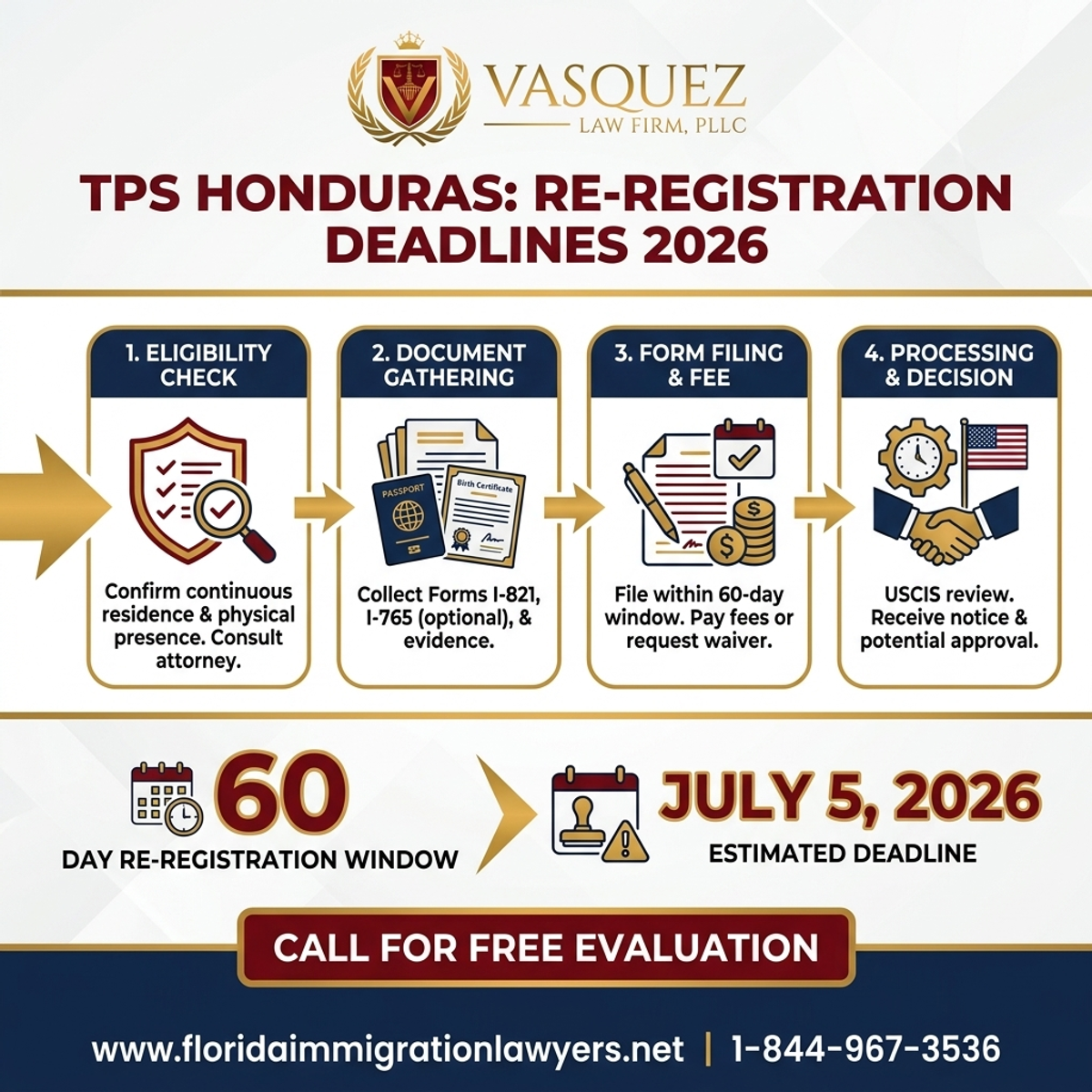
Key Statistics — TPS Honduras: Re-registration Deadlines in Florida 2026
What are the Costs Associated with TPS Re-registration?
Re-registering for Temporary Protected Status involves several fees that applicants must pay to USCIS, unless they qualify for a fee waiver. As of 2026, these fees are subject to change, so it is crucial to always consult the most current USCIS fee schedule on their official website before submitting your application. The main costs typically include filing fees for certain forms and biometric services. Understanding these expenses in advance allows you to budget accordingly and avoid unexpected delays due to incorrect payments.
For re-registrants, the fee for Form I-821, Application for Temporary Protected Status, is usually waived. However, if you are also applying for an Employment Authorization Document (EAD) to continue working legally, the filing fee for Form I-765, Application for Employment Authorization, is required. Additionally, a biometric services fee is mandatory for all applicants aged 14 and older, regardless of whether they are requesting an EAD. These fees are non-refundable, even if your application is denied. USCIS offers a fee waiver option (Form I-912, Request for Fee Waiver) for individuals who demonstrate an inability to pay based on specific criteria, such as receiving means-tested public benefits or having an income below 150% of the federal poverty guidelines.
Beyond USCIS fees, applicants in Florida should also consider potential costs for legal assistance. While not mandatory, hiring an experienced immigration attorney can significantly increase the likelihood of a successful and timely re-registration. Attorneys can help with preparing forms, gathering documents, responding to RFEs, and navigating complex issues, providing invaluable peace of mind. The cost of legal representation can vary based on the attorney's experience and the complexity of your case. For individuals considering pathways to permanent residency, our firm also offers services in family immigration.
| Item | Typical Fee (Consult USCIS for current rates) | Notes |
|---|---|---|
| Form I-821 (TPS Application) | No fee for re-registrants | Fee typically waived for those re-registering for TPS. |
| Form I-765 (Employment Authorization) | Varies (e.g., $410-$550) | Required if you need an Employment Authorization Document. |
| Biometric Services Fee | Varies (e.g., $85) | Mandatory for applicants aged 14 and older. |
| Attorney Fees | Varies by case and firm | Optional, but highly recommended for complex cases or peace of mind. |
| Document Translation/Copying | Varies | Costs for certified translations if documents are not in English. |
Common Mistakes to Avoid During TPS Re-registration
Re-registration for TPS can be a straightforward process, but many applicants make preventable mistakes that can jeopardize their status. Avoiding these common errors is crucial for a successful outcome:
- Missing the Re-registration Deadline: This is the most critical mistake. Failing to submit your application within the designated window almost always leads to the loss of TPS benefits and can initiate removal proceedings.
- Submitting Incomplete Applications: Missing forms, signatures, fees, or supporting documents will result in USCIS rejecting your application or issuing a Request for Evidence (RFE), causing significant delays.
- Using Outdated Forms: USCIS regularly updates its forms. Using an old version will lead to rejection. Always download the latest forms directly from the USCIS website.
- Incorrect Fee Payment: Submitting the wrong fee amount, an expired money order, or a check with errors will cause processing delays or rejection. Always verify current fees.
- Failing to Disclose Criminal History: Even minor arrests or convictions, including those dismissed or expunged, must be disclosed. Failure to do so can be considered misrepresentation and lead to denial and severe immigration consequences.
- Not Updating Your Address with USCIS: If you move, you must inform USCIS within 10 days using Form AR-11. Failure to do so means you might miss important notices, including biometrics appointments or RFEs.
- Traveling Outside the U.S. Without Advance Parole: Leaving the U.S. without first obtaining advance parole (Form I-131) can result in termination of your TPS upon your return.
- Assuming Automatic Re-registration: TPS is not automatically renewed. You must actively re-register during each designated period.
- Providing Inconsistent Information: Discrepancies between your current application and previous immigration filings can raise questions about your credibility and lead to scrutiny or denial.
- Not Seeking Legal Advice for Complex Cases: If you have a criminal record, previous immigration violations, or other complicated factors, attempting to re-register without legal counsel can be extremely risky.
When to Call a Florida Immigration Lawyer for TPS Re-registration
While the TPS re-registration process might seem manageable, certain situations warrant the immediate attention of an experienced immigration attorney. Florida Immigration Lawyers are here to provide the expert guidance you need, especially if you encounter any of the following scenarios:
- Complex Eligibility Issues: If you have questions about your continuous physical presence or continuous residence, or if you've had a break in status.
- Criminal History: Any arrests, charges, or convictions, no matter how minor or old, can significantly complicate your application. An attorney can assess the impact and advise on the best course of action.
- Previous Immigration Violations: If you have prior deportation orders, removal proceedings, or other immigration-related issues, legal counsel is essential to avoid detrimental outcomes.
- Missed Deadlines: If you believe you have missed the re-registration deadline or are close to it, an attorney might be able to explore limited options or advise on alternatives.
- Receiving a Request for Evidence (RFE) or Notice of Intent to Deny (NOID): These notices require a precise and timely response. An attorney can help you gather the correct evidence and formulate a compelling reply.
- Desire to Travel Abroad: If you need to travel internationally, an attorney can help you apply for advance parole (Form I-131) to ensure your TPS status is not jeopardized upon re-entry.
- Considering Other Immigration Pathways: If you are a TPS holder exploring options for permanent residency or other visas, an attorney can help you understand how TPS interacts with other immigration benefits.
The immigration landscape is constantly evolving, with new policies posing risks to immigrant families. Protecting your legal status is paramount. Our team at Florida Immigration Lawyers serves clients across all of Florida, including Central Florida, offering dedicated support for TPS re-registration and other immigration challenges. We pride ourselves on providing clear, compassionate, and effective legal representation.
About Florida Immigration Lawyers
Florida Immigration Lawyers is a leading law firm dedicated to providing exceptional immigration legal services to individuals and families across the entire state of Florida. With a deep understanding of U.S. immigration laws and a commitment to our clients, we strive to achieve the best possible outcomes in every case. Our team of experienced attorneys specializes in a wide range of immigration matters, including Temporary Protected Status (TPS), asylum, deportation defense, family-based petitions, business immigration, and naturalization. We are proud to serve the diverse communities of Florida, including Orlando and surrounding areas, offering personalized attention and strategic legal solutions.
We believe that everyone deserves access to high-quality legal representation, which is why we offer free case reviews and are available 24/7 to address your urgent concerns. Our firm is founded on principles of integrity, empathy, and unwavering advocacy. When you choose Florida Immigration Lawyers, you gain a dedicated partner who will stand by you every step of the way, fighting tirelessly to protect your rights and secure your future in the United States. We understand the unique challenges faced by immigrants, and we are here to provide the guidance and support you need. Schedule a free consultation with our knowledgeable attorneys today.
Sources and References
- U.S. Citizenship and Immigration Services (USCIS)
- Executive Office for Immigration Review (EOIR)
- U.S. Department of State
- Immigration and Nationality Act (INA) Section 244, 8 U.S.C. § 1254a - Temporary Protected Status
- 8 Code of Federal Regulations (CFR) Part 244 - Temporary Protected Status
- Federal Register Notices (Official announcements for TPS designations and re-registrations)
Related services: citizenship and naturalization.
This article provides general legal information and is not intended as legal advice. Every case is unique, and outcomes depend on specific facts and circumstances. Contact an attorney for advice about your particular situation.
Securing your TPS status is crucial for your stability and future in Florida. Don't leave your re-registration to chance. Contact Florida Immigration Lawyers today for a free, no-obligation case review. Call us at 1-844-YO-PELEO. Se Habla Espanol - Estamos aqui para ayudarle.
Do Not Navigate This Process Alone
Our experienced immigration attorneys are ready to fight for you. Get a free, confidential case review today.
Se Habla Español
Or leave your details and we’ll call you:
Free Evaluation in 24 Hours
Or talk to us right now

AI voice assistant — available 24/7
FreeFrequently Asked Questions

William J. Vásquez
Founding Attorney · Vasquez Law Firm
U.S. Air Force veteran and immigration attorney with years of hands-on U.S. immigration experience. J.D., NCCU School of Law. AILA member. Admitted to the 4th, 5th, and 11th Circuit Courts.
Available 24/7 - Free Evaluations
Reviewed for legal accuracy by William J. Vásquez
Licensed in North Carolina; U.S. immigration is federal practice.
Related Legal Services
Our Florida immigration attorneys can help you with experienced immigration attorneys, asylum protection and citizenship and naturalization. Call today at 1-844-YO-PELEO for a free case review.
Related Links
Related Topics
Free Legal Case Review
Discuss your case with our experienced attorneys. We're available 24/7.
Se Habla Español - Estamos aquí para ayudarle.
Related Articles
DUI Immigration Consequences in Florida 2026
A DUI conviction in Florida can have severe immigration consequences, potentially leading to inadmissibility, deportation, or denial of immigration benefits. For non-citizens, a DUI is not just a traffic offense but a serious criminal matter that federal immigration law scrutinizes closely. Factors like multiple offenses, injury, or property damage can escalate a simple DUI to a Crime Involving Moral Turpitude (CIMT) or even an aggravated felony, triggering mandatory detention and removal proceedings. Understanding the specific nature of your Florida conviction and its interpretation under the Immigration and Nationality Act (INA) is crucial. This article outlines how DUIs impact immigration status, the grounds for inadmissibility and deportation, a step-by-step guide to navigating the process, essential documentation, and expected timelines for 2026. We also highlight common mistakes to avoid and when to seek legal counsel from an experienced immigration attorney. Florida Immigration Lawyers offers comprehensive support for individuals facing these challenging situations, providing expert guidance through complex legal landscapes.
Dual Citizenship Lawyer in Florida: What You Need to Know
For Florida residents, the concept of dual citizenship, or holding two passports, offers a compelling blend of opportunities and challenges. While the U.S. generally permits dual nationality, the path to achieving this status requires a meticulous understanding of both U.S. immigration laws and the citizenship policies of your country of origin. This guide explores the definition of dual citizenship, the detailed step-by-step process for U.S. naturalization, and the significant benefits and potential pitfalls involved. We cover essential documentation, typical timelines, and cost considerations for 2026, providing crucial insights for anyone in Orlando, Miami, or across Florida considering this important legal step. Learn about common mistakes to avoid and understand when to seek professional legal counsel to navigate this complex process successfully. Florida Immigration Lawyers is here to provide expert, bilingual support for your dual citizenship journey.
EAD Advance Parole Combo Card in Florida 2026
For individuals with a pending Form I-485, Application to Register Permanent Residence or Adjust Status, the EAD Advance Parole Combo Card is an essential document. This single card combines the authorization to work legally in the U.S. (Employment Authorization Document - EAD) with permission to travel internationally and re-enter without abandoning your green card application (Advance Parole). This guide from Florida Immigration Lawyers provides a comprehensive overview for applicants in Florida in 2026, covering eligibility, the step-by-step application process, required documents, expected processing times, and associated costs. We also highlight common mistakes to avoid and when to seek legal counsel to ensure a smooth and successful immigration journey. Understanding this vital card is key to maintaining stability while awaiting your permanent residency approval.
EAD Advance Parole Combo Card in Florida: What You Need
An EAD advance parole combo card allows individuals with pending adjustment applications to both work and travel abroad without jeopardizing their green card application. Learn how to apply in Florida, what documents you need, and common mistakes to avoid.