TPS Honduras Latest News 2026 for Florida Residents
Temporary Protected Status (TPS) for Honduras in 2026 is essential for many Florida residents. Discover the latest updates, application processes, and eligibility requirements for TPS in Orlando and beyond. Contact Florida Immigration Lawyers for expert guidance.
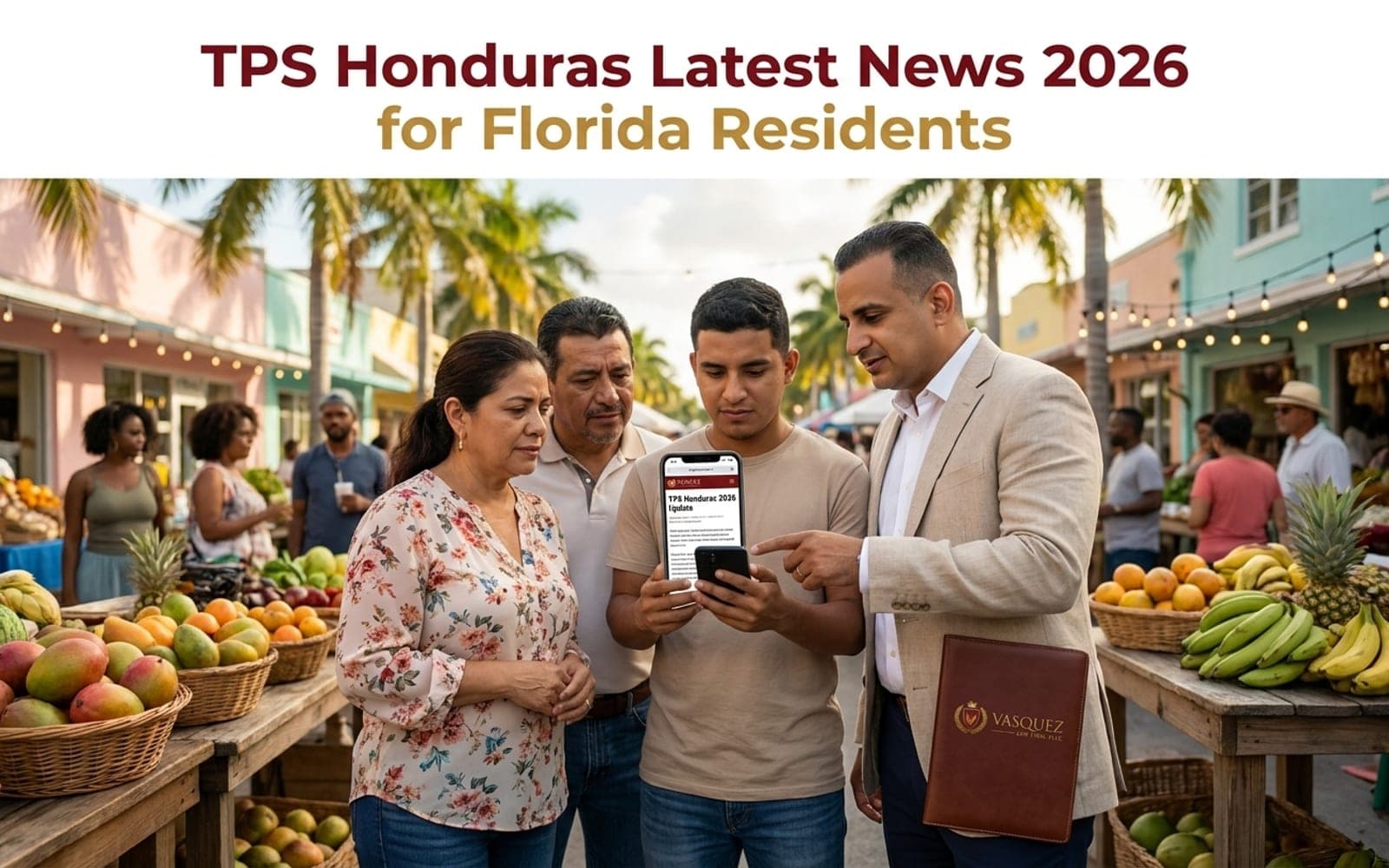
- TPS protects against deportation.
- Eligible countries include Honduras, El Salvador, and more.
- Stay updated with USCIS announcements.
Introduction
Living in Florida and seeking Temporary Protected Status (TPS) can be a complex journey. For many immigrants from countries like Honduras, this status provides a vital lifeline, offering protection and work authorization. In this blog, we’ll explore the latest updates on TPS for Honduras in 2026, focusing on eligibility, application processes, and what Floridians need to know. Call Florida Immigration Lawyers at 1-844-YO-PELEO for a free case review.
Florida, with its diverse population and vibrant communities, is home to a significant number of individuals who may qualify for TPS. For Honduran nationals, the ongoing designation reflects a recognition of the challenging conditions in their home country, making TPS a critical avenue for safety and stability in the U.S. Understanding the nuances of this temporary relief is paramount for those looking to secure their future and contribute to their new communities.
Navigating immigration law requires precise attention to detail and up-to-date information. As an expert immigration content writer, our goal is to provide comprehensive guidance, ensuring that Florida residents, particularly those in areas like Orlando and Miami, are well-informed about their rights and the steps required to apply for or renew their TPS status. The landscape of immigration policies can shift, making continuous awareness and professional legal support invaluable.
What is TPS and How Does it Work?
Temporary Protected Status (TPS) is a temporary immigration status provided to nationals of certain countries experiencing ongoing armed conflict, environmental disasters, or extraordinary conditions. As of 2026, TPS allows individuals to live and work in the U.S. without fear of deportation. TPS does not lead to permanent residency but protects against deportation and grants work authorization.
For Florida residents, understanding TPS is crucial, especially with the diverse immigrant population in Orlando and surrounding areas. TPS eligibility depends on the designation of your home country by the U.S. government, which can change based on current events.
The Secretary of Homeland Security makes TPS designations based on specific statutory criteria, evaluating conditions such as civil war, widespread violence, or the aftermath of natural catastrophes like earthquakes or hurricanes. This status is designed to offer a humanitarian reprieve, preventing individuals from being returned to dangerous circumstances in their home countries. While temporary, TPS offers a crucial period of stability, allowing beneficiaries to work legally, obtain a driver's license, and access certain social services without the constant threat of removal.
It's important to differentiate TPS from other immigration pathways. Unlike asylum or refugee status, TPS is country-specific and time-limited. However, for many individuals, particularly those from Honduras who have resided in the U.S. for an extended period, it has provided a consistent form of protection, allowing them to build lives and families in Florida. Keeping abreast of re-registration periods and any potential changes to the designation is vital to maintain this protection.
Which Countries are Eligible for TPS in 2026?
As of 2026, several countries are designated for TPS due to ongoing crises. These include Honduras, El Salvador, Nicaragua, Haiti, and Venezuela. Each country’s designation is subject to review and renewal based on the conditions in those nations. For residents in Florida, these updates are significant, given the large populations from these countries residing in cities like Orlando.
The U.S. Department of Homeland Security revises these designations regularly. Florida residents should stay informed through reliable sources like the U.S. Citizenship and Immigration Services (USCIS) and local immigration lawyers.
The decision to designate or extend TPS for a country involves a thorough evaluation of various factors, including human rights conditions, political stability, and the capacity of the country to safely receive returning nationals. For example, Honduras's designation has been influenced by factors such as persistent gang violence, political instability, and the lingering effects of natural disasters. These complex considerations underscore why the status is continually reviewed and can be subject to changes based on evolving circumstances.
For Floridians, particularly those in vibrant immigrant communities in South Florida, Tampa, and Orlando, these designations directly impact thousands of families. Staying informed about the specific re-registration periods for each country is critical. Missing a deadline can result in the loss of TPS benefits, including work authorization and protection from deportation. Consulting with Florida Immigration Lawyers can ensure you receive timely updates and personalized advice regarding your country's status.
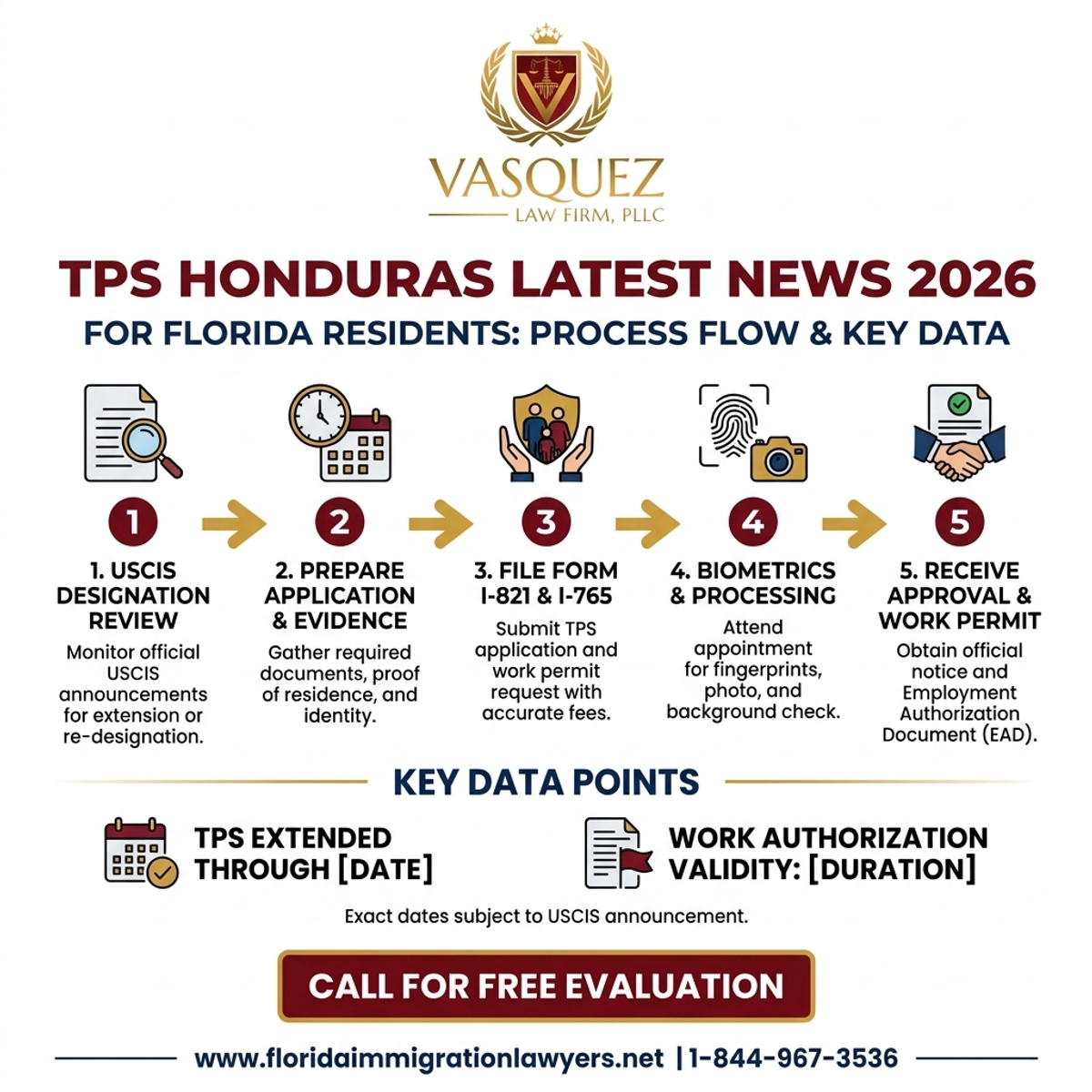
Step-by-Step Process — TPS Honduras Latest News 2026 for Florida Residents
How to Apply for TPS in Florida
To apply for TPS in Florida, you must meet certain criteria, including being a national of a designated country and meeting physical presence requirements. The application involves submitting Form I-821, Application for Temporary Protected Status, along with supporting documents.
- Check if your country is designated for TPS.
- Gather necessary documents: passport, proof of residence, and identity.
- Complete Form I-821 and Form I-765 for work authorization.
- Pay the required fees or request a fee waiver if eligible.
- Submit your application to USCIS.
After submission, applicants may be required to attend a biometrics appointment. Processing times can vary, so it’s essential to apply promptly and seek guidance from an immigration attorney.
Gathering the correct supporting documents is often the most challenging part of the application process. Beyond your passport and proof of identity, you'll need evidence of continuous physical presence in the U.S. since the designated date. This can include utility bills, school records, employment records, medical records, or affidavits from friends and family. A comprehensive and well-organized submission can significantly reduce delays and requests for further evidence from USCIS.
For Florida residents, especially those in bustling cities like Orlando, ensuring all forms are filled out accurately and completely is paramount. Any discrepancies or missing information can lead to significant delays or even denial. It's advisable to make copies of all submitted documents for your records. If you have any doubts about your eligibility or the required documentation, consulting with an experienced lawyer at Florida Immigration Lawyers can provide peace of mind and prevent costly mistakes.
Timeline and Processing Expectations for TPS Applications
| Stage | Typical Timeframe | Notes |
|---|---|---|
| Application Submission | 1-2 weeks | Ensure all documents are complete. |
| Biometrics Appointment | 3-6 weeks | Attend your scheduled appointment. |
| USCIS Processing | 6-8 months | Processing times may vary. |
| Decision Notification | Varies | Receive approval or denial notice. |
While the table provides typical timeframes, it's crucial to understand that these are estimates. Actual processing times can fluctuate significantly due to factors such as USCIS workload, the complexity of individual cases, and current immigration policy priorities. Applicants should regularly check the USCIS website for updated processing times and their case status using the receipt number provided after submission.
Delays can be frustrating, but proactive measures can help. Ensure your mailing address is always up-to-date with USCIS to avoid missing important notices. If you experience unusually long delays, or if you receive a Request for Evidence (RFE), it’s a strong indicator that you should contact an immigration attorney. Florida Immigration Lawyers can help inquire about your case status and respond effectively to RFEs, ensuring your application remains on track.
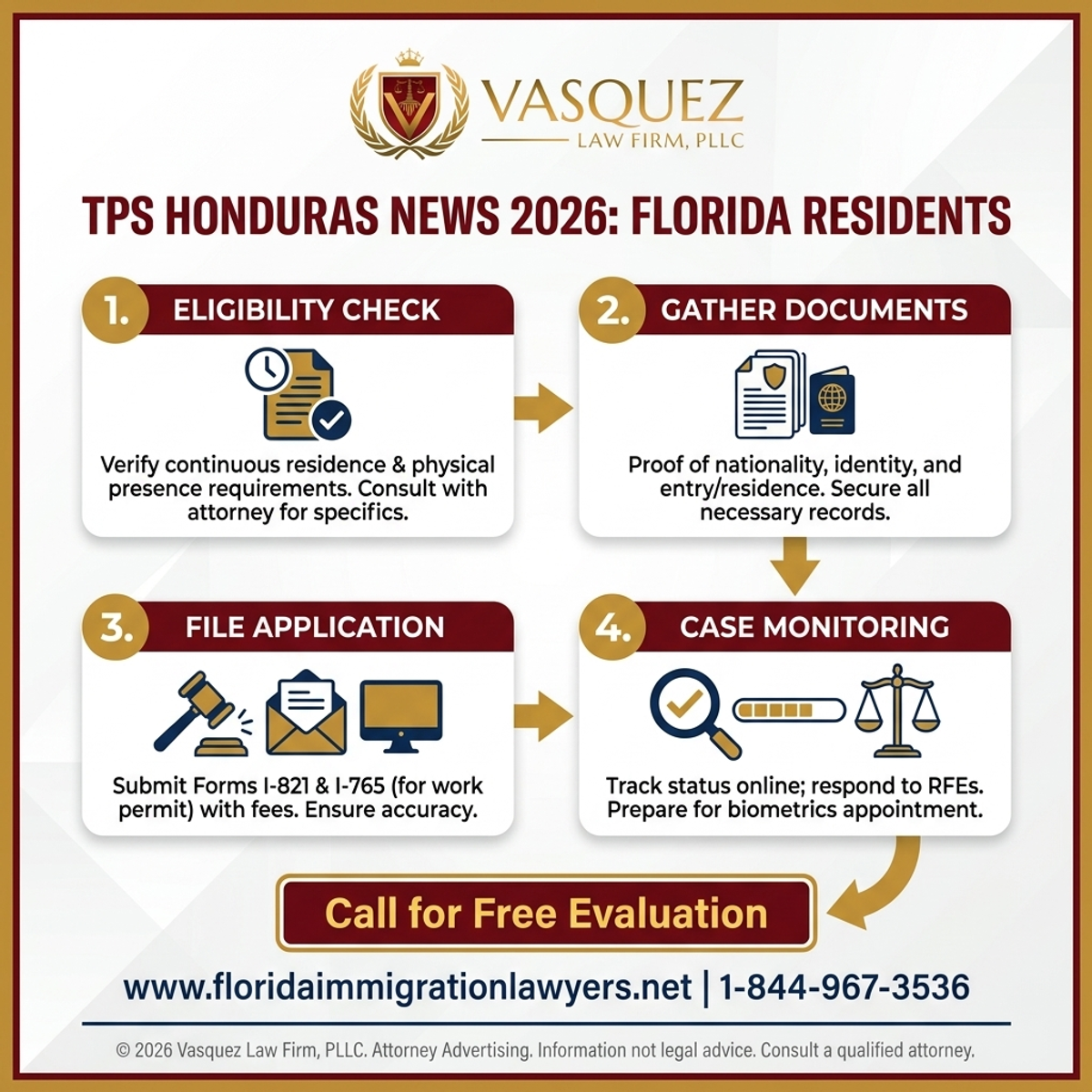
Key Statistics — TPS Honduras Latest News 2026 for Florida Residents
Cost Factors and Fee Breakdown for TPS
Applying for TPS involves certain fees, such as the application fee and biometrics fee. However, costs can vary based on individual circumstances, including age and employment status. It’s essential to check the latest fees on the USCIS website.
| Item | Typical Fee | Notes |
|---|---|---|
| Form I-821 | Varies | Fee waivers may be available. |
| Biometrics | Varies | Required for all applicants. |
| Form I-765 | Varies | If applying for work authorization. |
Always verify current fees as they are subject to change. Consulting with an attorney can help clarify these costs and explore potential fee waivers.
For many applicants, the cost of fees can be a significant barrier. USCIS offers fee waivers (Form I-912) for those who can demonstrate an inability to pay. Eligibility for a fee waiver typically depends on meeting certain income guidelines, receiving a means-tested benefit, or experiencing financial hardship. Providing robust documentation to support your fee waiver request is crucial to avoid delays or denial of the waiver.
Beyond the USCIS fees, it's also wise to consider the investment in legal counsel. While not mandatory, hiring an experienced immigration attorney, such as those at Florida Immigration Lawyers, can save you time, stress, and potential errors. An attorney can help identify all applicable fees, prepare fee waiver requests, and ensure your application is submitted correctly, ultimately providing greater assurance for a successful outcome. Do not navigate this process alone. Contact Florida Immigration Lawyers today.
Common Mistakes to Avoid When Applying for TPS
Applying for Temporary Protected Status can be a complex process, and even minor errors can lead to significant delays or outright denial. Being aware of the most common pitfalls and taking proactive steps to avoid them is crucial for a successful outcome. Diligence and attention to detail are your best allies when preparing your TPS application.
- Missing application deadlines: This can lead to denial of your application.
- Incomplete documentation: Causes delays and potential rejections.
- Not updating address with USCIS: Important notices may be missed.
- Ignoring renewal deadlines: Results in loss of status.
- Submitting incorrect fees: Can delay processing.
- Failing to attend biometrics appointments: Leads to application holds.
- Misunderstanding eligibility: Check current country designation.
- Not consulting an attorney: Professional guidance can prevent errors.
- Assuming TPS leads to permanent residency: It is a temporary status.
- Relying on unofficial sources: Always verify information with USCIS.
To mitigate these risks, create a checklist for your application, double-check all forms and supporting documents, and set reminders for deadlines. If any part of the process feels overwhelming or unclear, remember that expert assistance is available. Consulting with Florida Immigration Lawyers can provide the necessary guidance to prevent these common mistakes and ensure your application is handled with the utmost care and precision.
When to Call a Lawyer for TPS Issues
Consulting an attorney is essential if you face complications in your TPS application, such as complex eligibility issues or missed deadlines. Legal experts can provide guidance on documentation, fee waivers, and renewal processes. In Orlando, Florida Immigration Lawyers offer comprehensive services to assist with TPS applications and other immigration needs.
You should consider contacting an attorney immediately if you have a criminal record, even minor offenses, as certain convictions can disqualify you from TPS. Similarly, if you've had previous immigration denials, a history of deportation proceedings, or complex travel outside the U.S., professional legal advice is indispensable. An attorney can assess your unique situation, identify potential challenges, and develop a strategy to present the strongest possible case to USCIS.
Beyond initial applications, legal counsel is also vital during re-registration periods or if there are announcements regarding the termination of TPS for your country. An attorney can help you understand the implications of such changes and explore alternative immigration pathways to maintain your legal status in the U.S. Don't wait until a problem arises; proactive legal consultation can safeguard your future. Call 1-844-YO-PELEO for a free case review.
About Florida Immigration Lawyers
At Florida Immigration Lawyers, we provide dedicated support for clients navigating the immigration process. Our team offers expertise in immigration law, asylum, deportation defense, and more. We are committed to helping you understand your options and protect your future. Available 24/7, we offer free case reviews. Schedule a free consultation today.
We understand the profound impact immigration decisions have on individuals and families, especially those seeking refuge and stability through TPS. Our compassionate and experienced legal team is dedicated to providing personalized attention, ensuring every client feels heard and supported throughout their journey. We pride ourselves on our deep understanding of the intricacies of U.S. immigration law and our unwavering commitment to advocating for our clients' best interests.
Whether you are applying for TPS for the first time, re-registering, or exploring other immigration avenues, Florida Immigration Lawyers is here to be your trusted partner. We offer services in multiple languages, including Spanish, making legal assistance accessible to a wider community. Let us help you navigate the complexities of immigration law with confidence and clarity. Your peace of mind is our priority.
Sources and References
- U.S. Citizenship and Immigration Services (USCIS)
- Executive Office for Immigration Review (EOIR)
- 8 U.S.C. Chapter 12 - Immigration and Nationality Act
Related services: immigration practice areas, family immigration services, citizenship and naturalization, business immigration.
This article provides general legal information and is not intended as legal advice. Every case is unique, and outcomes depend on specific facts and circumstances. Contact an attorney for advice about your particular situation.
For personalized assistance, call us at 1-844-YO-PELEO. Se Habla Espanol - Estamos aqui para ayudarle.
Do Not Navigate This Process Alone
Our experienced immigration attorneys are ready to fight for you. Get a free, confidential case review today.
Se Habla Español
Or leave your details and we’ll call you:
Free Evaluation in 24 Hours
Or talk to us right now

AI voice assistant — available 24/7
FreeFrequently Asked Questions

William J. Vásquez
Founding Attorney · Vasquez Law Firm
U.S. Air Force veteran and immigration attorney with years of hands-on U.S. immigration experience. J.D., NCCU School of Law. AILA member. Admitted to the 4th, 5th, and 11th Circuit Courts.
Available 24/7 - Free Evaluations
Reviewed for legal accuracy by William J. Vásquez
Licensed in North Carolina; U.S. immigration is federal practice.
Related Legal Services
Our Florida immigration attorneys can help you with family immigration services, immigration lawyer cost in Florida and experienced immigration attorneys. Call today at 1-844-YO-PELEO for a free case review.
Related Links
Related Topics
Free Legal Case Review
Discuss your case with our experienced attorneys. We're available 24/7.
Se Habla Español - Estamos aquí para ayudarle.
Related Articles
Immigration Lawyer Orlando Free Consultation in Florida
For individuals and families in Orlando, Florida, navigating the complexities of U.S. immigration law requires expert guidance. An immigration lawyer in Orlando offers crucial support for everything from visa applications and green card processes to naturalization and deportation defense. This comprehensive guide details what a free consultation covers, providing a step-by-step overview of immigration pathways, essential document checklists, and expected timelines in 2026. We also highlight common mistakes to avoid, discuss the critical role of legal counsel in deportation and asylum cases, and explain why choosing a local Orlando immigration attorney is beneficial. Florida Immigration Lawyers is dedicated to serving the diverse community of Orlando with compassionate, effective legal solutions, ensuring you receive personalized advice and robust representation for a successful immigration journey.
EAD Advance Parole Combo Card in Florida 2026
For individuals with a pending Form I-485, Application to Register Permanent Residence or Adjust Status, the EAD Advance Parole Combo Card is an essential document. This single card combines the authorization to work legally in the U.S. (Employment Authorization Document - EAD) with permission to travel internationally and re-enter without abandoning your green card application (Advance Parole). This guide from Florida Immigration Lawyers provides a comprehensive overview for applicants in Florida in 2026, covering eligibility, the step-by-step application process, required documents, expected processing times, and associated costs. We also highlight common mistakes to avoid and when to seek legal counsel to ensure a smooth and successful immigration journey. Understanding this vital card is key to maintaining stability while awaiting your permanent residency approval.
EAD Advance Parole Combo Card in Florida: What You Need
An EAD advance parole combo card allows individuals with pending adjustment applications to both work and travel abroad without jeopardizing their green card application. Learn how to apply in Florida, what documents you need, and common mistakes to avoid.
Dual Citizenship Lawyer in Florida: What You Need to Know
For Florida residents, the concept of dual citizenship, or holding two passports, offers a compelling blend of opportunities and challenges. While the U.S. generally permits dual nationality, the path to achieving this status requires a meticulous understanding of both U.S. immigration laws and the citizenship policies of your country of origin. This guide explores the definition of dual citizenship, the detailed step-by-step process for U.S. naturalization, and the significant benefits and potential pitfalls involved. We cover essential documentation, typical timelines, and cost considerations for 2026, providing crucial insights for anyone in Orlando, Miami, or across Florida considering this important legal step. Learn about common mistakes to avoid and understand when to seek professional legal counsel to navigate this complex process successfully. Florida Immigration Lawyers is here to provide expert, bilingual support for your dual citizenship journey.