TPS to Green Card Pathway in Florida | VLF Florida
Navigating the pathway from TPS to a green card in Florida involves understanding eligibility and the adjustment of status process. Contact Florida Immigration Lawyers for guidance.

TPS to Green Card Pathway in Florida | VLF Florida
For many individuals granted Temporary Protected Status (TPS) in the United States, the dream of permanent residency, or a Green Card, is a significant step towards long-term stability and security. While TPS offers crucial temporary protection from deportation and work authorization, it does not automatically lead to a Green Card. However, for many TPS holders in Florida, a clear pathway to permanent residency exists through a process known as Adjustment of Status. Navigating this intricate legal journey requires a deep understanding of U.S. immigration law, specific eligibility criteria, and meticulous preparation. This comprehensive guide from VLF Florida aims to demystify the TPS to Green Card process, providing essential information for those seeking to transition from temporary protection to permanent residency in the Sunshine State.
Understanding Temporary Protected Status (TPS) and Its Benefits
Temporary Protected Status (TPS) is a humanitarian immigration benefit provided by the United States to eligible nationals of certain countries designated by the Secretary of Homeland Security. These designations are made when conditions in a country temporarily prevent its nationals from returning safely, or when the country is unable to handle the return of its nationals adequately. Such conditions might include ongoing armed conflict, environmental disaster, or other extraordinary and temporary conditions. TPS offers several critical benefits, including protection from deportation, the ability to obtain an Employment Authorization Document (EAD), and permission to travel internationally with a travel authorization document.
While TPS provides a vital lifeline, it is inherently temporary. Its designation can be extended, re-designated, or terminated based on evolving conditions in the designated country. This temporary nature often prompts TPS holders to explore more permanent solutions for their immigration status. The pathway to a Green Card offers the stability and long-term security that TPS cannot provide, allowing individuals to build a lasting life in the U.S. without the uncertainty of future TPS extensions. Understanding these foundational aspects of TPS is the first step in appreciating the significance and complexity of pursuing a Green Card.
Eligibility Requirements for TPS to Green Card
The transition from TPS to a Green Card is not automatic and hinges on meeting specific eligibility criteria for Adjustment of Status. While TPS itself doesn't directly lead to a Green Card, it can provide a crucial foundation, particularly regarding the 'lawful admission' or 'parole' requirement for adjustment. Generally, to adjust status to a lawful permanent resident, an applicant must meet several key requirements:
- Lawful Entry or Parole: This is often the most critical hurdle for many TPS holders. Historically, individuals who entered the U.S. without inspection (EWI) were generally barred from adjusting status. However, certain court decisions and policy changes have provided pathways for some TPS holders. Specifically, if a TPS holder was granted TPS and subsequently received a travel document (Advance Parole) and used it to travel internationally and re-enter the U.S., that re-entry often constitutes a 'lawful admission' or 'parole,' making them eligible for adjustment of status. It is crucial to verify if your specific re-entry under Advance Parole qualifies as a lawful admission for adjustment purposes, as interpretations can vary and legal advice is paramount.
-
An Underlying Basis for a Green Card: TPS itself is not an immigrant visa category. To get a Green Card, a TPS holder must qualify under a different immigrant visa category. Common categories include:
- Family-Based Petitions: Being sponsored by a U.S. citizen spouse, parent, child (if the child is over 21), or a lawful permanent resident spouse or parent.
- Employment-Based Petitions: Being sponsored by an employer for a specific job.
- Asylum Status: If you have also been granted asylum, this provides a direct path to a Green Card after one year.
- Admissibility: Applicants must be admissible to the United States. This means they must not have certain criminal convictions, immigration violations (beyond the initial unlawful entry if cured by parole), or other grounds of inadmissibility. If grounds of inadmissibility exist, waivers may be available, but these are complex and require expert legal guidance.
- Continuous Physical Presence: While TPS requires continuous physical presence for its own maintenance, for adjustment of status, the focus shifts to the underlying immigrant petition and ensuring no significant breaks in presence that could impact admissibility or eligibility for waivers if needed.
Each of these requirements has nuances and exceptions, making the process highly individualized. Consulting with an experienced Florida immigration lawyer is essential to determine your specific eligibility and to navigate potential complexities.
The Adjustment of Status Process in Florida
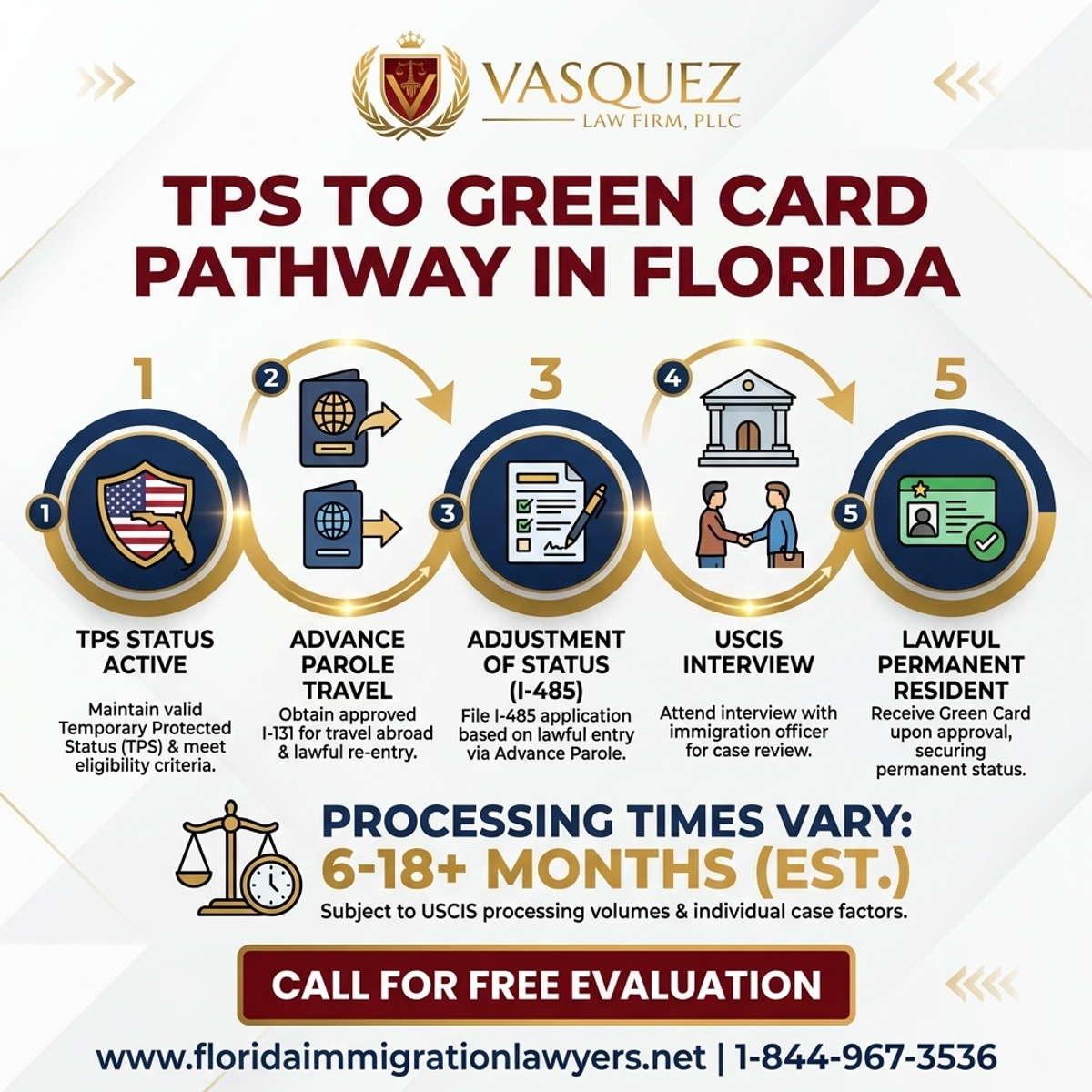
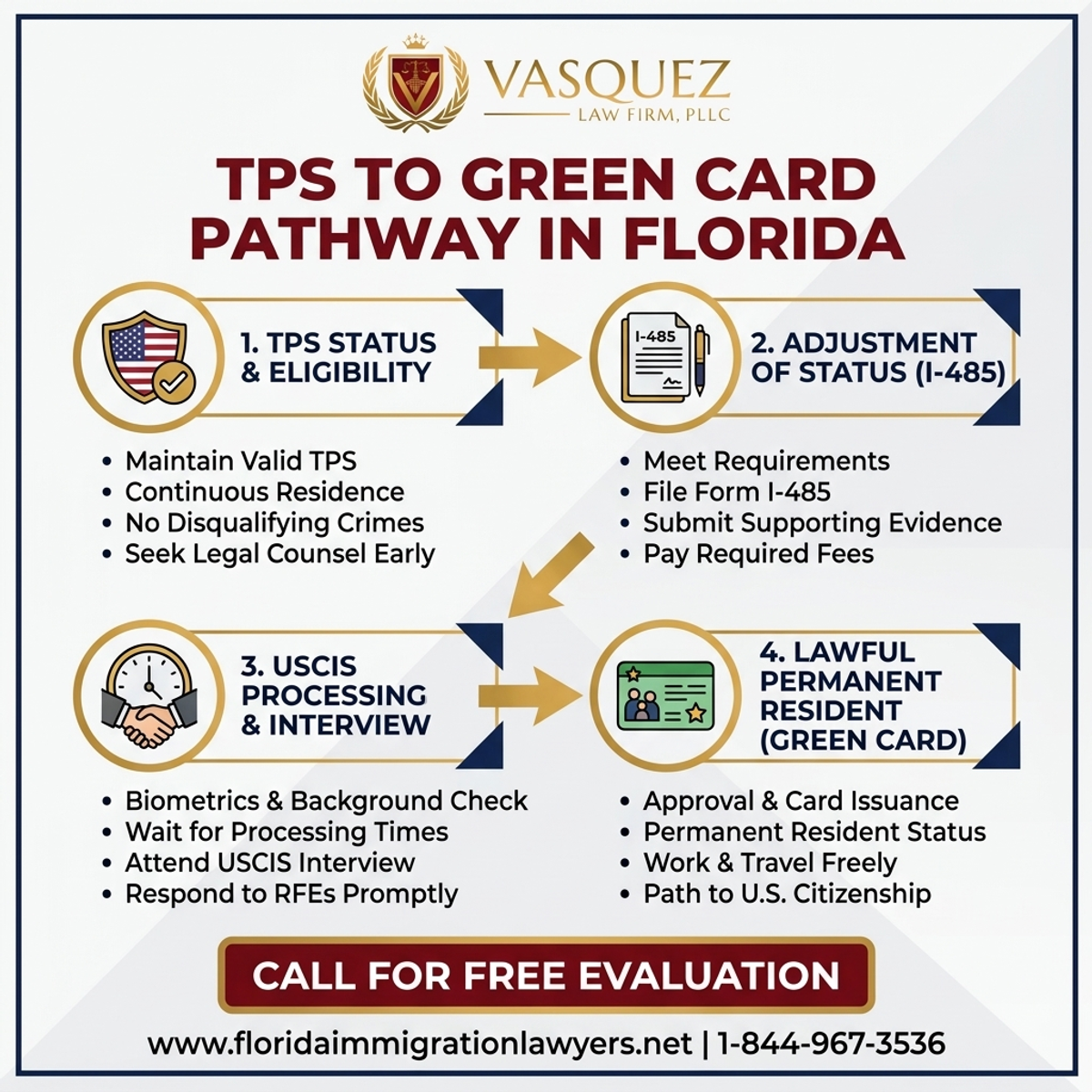
Once eligibility is established, the Adjustment of Status process involves a series of steps and the submission of various forms and supporting documentation to U.S. Citizenship and Immigration Services (USCIS). While the exact timeline can vary significantly, the general steps include:
- Filing the Immigrant Petition: The first step is typically for the sponsoring relative (U.S. citizen or LPR) or employer to file an immigrant petition on your behalf (e.g., Form I-130, Petition for Alien Relative, or Form I-140, Immigrant Petition for Alien Worker). This establishes the underlying basis for your Green Card application.
- Visa Availability: For some family-based and most employment-based categories, there is a waiting period for a visa number to become available, indicated by the Visa Bulletin. Immediate relatives of U.S. citizens (spouses, unmarried children under 21, and parents) do not have to wait for a visa number.
-
Filing Form I-485, Application to Register Permanent Residence or Adjust Status: Once a visa number is available (or immediately for immediate relatives), you can file Form I-485, along with a comprehensive package of supporting documents. This package typically includes:
- Birth certificate
- Marriage certificate (if applicable)
- Proof of lawful entry/parole (e.g., TPS travel document with entry stamp)
- Proof of TPS status
- Affidavit of Support (Form I-864) from the sponsor
- Medical examination results (Form I-693)
- Photographs
- Identity documents
- Criminal records (if any)
- Biometrics Appointment: After filing, you will receive an appointment notice for biometrics (fingerprints, photos, and signature) at an Application Support Center (ASC).
- Interview: Most adjustment of status applicants will be scheduled for an interview at a USCIS field office. During the interview, an immigration officer will review your application, verify your eligibility, and ask questions about your background, the basis of your petition, and your relationship (for family-based cases).
- Decision: Following the interview, USCIS will make a decision on your application. If approved, you will receive your Green Card by mail.
Step-by-Step Process — TPS to Green Card Pathway in Florida | VLF Florida
Throughout this process, maintaining your TPS status is crucial until your Green Card is approved. If your TPS expires before your Green Card is granted, and you do not have another valid immigration status, you could face significant challenges.
Navigating Common Challenges and Pitfalls in the TPS to Green Card Process
While the pathway from TPS to a Green Card offers hope, it is often fraught with complexities and potential pitfalls that can derail an application if not addressed proactively. Understanding these challenges is key to a successful outcome:
- The 'Lawful Entry' Requirement: As discussed, this is frequently the biggest hurdle. Many TPS holders initially entered the U.S. without inspection. While using an Advance Parole document to travel and re-enter can cure this, the specifics of each re-entry must be carefully reviewed. Not all re-entries under Advance Parole are treated equally, and a misinterpretation can lead to denial. Without a lawful entry, adjustment of status is generally not possible, making it critical to explore all options, including potential waivers or consular processing if necessary.
- Grounds of Inadmissibility: Certain past actions or circumstances can render an applicant inadmissible to the U.S., even if they have a qualifying petition and lawful entry. These can include criminal convictions (even minor ones), past immigration fraud, misrepresentations, or certain health-related issues. While waivers exist for some grounds of inadmissibility, they are discretionary, complex, and require compelling evidence and strong legal arguments. Failing to disclose or properly address these issues can lead to denial and even deportation proceedings.
- Maintaining TPS Status: It is vital for TPS holders to continuously maintain their TPS status by re-registering during every designated period until their Green Card is approved. If TPS expires and the applicant has no other lawful status, they could accrue unlawful presence, which can trigger bars to re-entry if they ever leave the U.S. or complicate their adjustment application.
- Changes in Law and Policy: Immigration law and policy are constantly evolving. What was permissible or required last year might be different today. Staying updated on the latest regulations, court decisions, and USCIS memos is crucial, as these changes can directly impact eligibility and process. An experienced immigration attorney will keep abreast of these developments.
- Documentation and Evidence: The Adjustment of Status application requires extensive documentation. Any missing, incorrect, or inconsistent information can lead to Requests for Evidence (RFEs), delays, or even denial. For family-based petitions, proving a bona fide marriage or relationship is paramount, requiring substantial evidence beyond just a marriage certificate.
- Interview Preparation: The USCIS interview is a critical step. Applicants must be prepared to answer questions truthfully and consistently with their application. For marriage-based cases, officers often look for signs of a fraudulent marriage, making thorough preparation essential.
Addressing these challenges effectively often requires the guidance of a skilled immigration attorney who can anticipate potential issues, prepare robust arguments, and navigate the intricate legal landscape. Proactive legal counsel can make the difference between approval and denial.
Beyond TPS: Exploring Other Pathways to Permanent Residency in Florida
While the TPS to Green Card pathway through Adjustment of Status is a primary focus for many, it's important for individuals in Florida to understand that other avenues to permanent residency may exist, depending on their unique circumstances. Exploring these options can provide alternative routes or strengthen an existing application:
- Asylum and Refugee Status: For individuals who have fled their home country due to persecution or a well-founded fear of persecution, asylum or refugee status can lead to a Green Card one year after approval. Many TPS holders may also have strong asylum claims, and pursuing asylum can offer an independent path to permanent residency, separate from their TPS status. It's crucial to apply for asylum within one year of your last arrival in the U.S., though exceptions exist.
- Family-Based Immigration: Even if you don't qualify for Adjustment of Status through TPS due to lack of lawful entry, you might still be eligible for a Green Card through a U.S. citizen or lawful permanent resident family member. This often involves consular processing, where you would leave the U.S. to attend an interview at a U.S. embassy or consulate in your home country or a third country. This path carries risks, especially if you have accrued unlawful presence, as it could trigger a 3 or 10-year bar to re-entry. However, waivers may be available.
- Employment-Based Immigration: If you have specialized skills, a job offer from a U.S. employer, or significant investments, you might qualify for an employment-based Green Card. These categories often require employer sponsorship and can be highly competitive, with varying wait times depending on the visa category and your country of origin.
- Special Immigrant Juvenile Status (SIJS): For children under 21 who have been abused, neglected, or abandoned by one or both parents and for whom reunification is not viable, SIJS can provide a pathway to a Green Card. This involves state court proceedings to declare the child dependent and eligible for SIJS, followed by a USCIS petition.
- U and T Visas for Victims of Crimes: Victims of certain serious crimes who have cooperated with law enforcement (U Visa) or victims of human trafficking (T Visa) may be eligible for these nonimmigrant visas, which can eventually lead to a Green Card after a period of time and meeting specific requirements. These visas offer protection and a path to stability for vulnerable individuals.
Key Statistics — TPS to Green Card Pathway in Florida | VLF Florida
Understanding the full spectrum of immigration options is vital. A comprehensive consultation with an immigration attorney can help you identify all potential pathways and determine the most viable strategy for achieving permanent residency in Florida, even if the direct TPS to Green Card route proves challenging.
Why Choose VLF Florida? Your Trusted Partner in Immigration
The journey from TPS to a Green Card is a monumental step, and the complexities of U.S. immigration law demand experienced and compassionate legal representation. At VLF Florida, we understand the unique challenges faced by TPS holders and are dedicated to providing personalized, strategic guidance to help you achieve your goal of permanent residency. Our team of skilled immigration attorneys possesses extensive knowledge of the ever-evolving immigration landscape, particularly as it pertains to Florida residents.
We pride ourselves on our meticulous approach, ensuring every detail of your application is handled with precision and care. From assessing your initial eligibility and gathering comprehensive documentation to preparing you for interviews and representing you before USCIS, we are with you every step of the way. We recognize that each case is unique, and we tailor our strategies to fit your specific circumstances, addressing potential hurdles proactively and advocating fiercely on your behalf. Our commitment extends beyond just filing paperwork; we strive to empower our clients with clear communication, honest assessments, and unwavering support. Choosing VLF Florida means choosing a partner who genuinely cares about your future and is equipped to navigate the intricacies of your immigration journey with expertise and dedication.
Contact VLF Florida for a Free Consultation
The path from Temporary Protected Status to a Green Card is a significant undertaking, filled with legal nuances and potential challenges. Don't navigate this complex journey alone. The experienced immigration lawyers at VLF Florida are here to provide the expert guidance and support you need to maximize your chances of success. We offer a free, no-obligation consultation to discuss your specific situation, assess your eligibility, and outline the best strategy for achieving permanent residency.
Whether you have questions about lawful entry, need assistance with an underlying immigrant petition, or require help addressing potential inadmissibility issues, our team is ready to assist. Take the first step towards securing your future in Florida. Contact VLF Florida today at 1-844-967-3536 to schedule your free consultation. Let us help you turn your temporary protection into permanent peace of mind.
Sources and References
- U.S. Citizenship and Immigration Services (USCIS)
- Executive Office for Immigration Review (EOIR)
- U.S. Department of State - Bureau of Consular Affairs
- Immigration and Nationality Act (INA), 8 U.S.C. Chapter 12
Do Not Navigate This Process Alone
Our experienced immigration attorneys are ready to fight for you. Get a free, confidential consultation today.
Se Habla Español
Frequently Asked Questions
Florida Immigration Lawyers
Immigration Attorney | Founder, Vasquez Law Firm
U.S. Air Force veteran and immigration attorney with thousands of cases resolved. J.D., NCCU School of Law. AILA member. Admitted to the 4th, 5th, and 11th Circuit Courts.
Available 24/7 - Free Evaluations
Related Legal Services
Our Florida immigration attorneys can help you with asylum protection, deportation defense and citizenship and naturalization. Call today at 1-844-967-3536 for a free consultation.
Related Links
Related Topics
Free Legal Consultation
Discuss your case with our experienced attorneys. We're available 24/7.
Se Habla Español - Estamos aquí para ayudarle.
Related Articles
Immigration Lawyer Hialeah Florida: Expert Guidance
Finding an immigration lawyer in Hialeah, Florida, is crucial for navigating complex immigration laws. Our experienced team offers bilingual support and personalized guidance. Discover key factors, common mistakes, and when to call an expert.
F-1 Reinstatement Process for Students in Florida | VLF Florida
Learn about the F-1 reinstatement process for students in Florida who have fallen out of status. Discover necessary steps, common pitfalls, and when to seek legal help. Call Florida Immigration Lawyers for a free consultation.
Immigration Lawyer in Hialeah: Your Guide | VLF Florida
Looking for an immigration lawyer in Hialeah, Florida? Discover how to choose the right legal expert to navigate your immigration journey. Call Florida Immigration Lawyers at 1-844-967-3536 for a free consultation.
Credible Fear Interview Preparation in Florida | VLF Florida
Prepare for your credible fear interview in Florida with expert guidance. Learn what to expect and how to enhance your chances of success. Call Florida Immigration Lawyers for a free consultation today.