TPS Florida Eligible Countries 2026: Your Guide | VLF Florid
For Florida residents in 2026, understanding Temporary Protected Status (TPS) and its eligible countries is essential. TPS offers crucial protection from deportation and work authorization for individuals from nations facing severe crises. This comprehensive guide details the TPS application process, required documentation, and processing timelines. It highlights the importance of continuous physical presence and residence, strict deadlines, and avoiding common mistakes. With the dynamic nature of TPS designations, staying informed through official USCIS channels and seeking expert legal counsel from Florida Immigration Lawyers is paramount to navigate this complex immigration relief successfully. Learn how to protect your status and secure your future in Florida.

Temporary Protected Status (TPS) is a vital humanitarian immigration benefit allowing eligible non-citizens from designated countries to live and work in the U.S. temporarily. For Florida residents in 2026, understanding which countries are designated is crucial, as the list can change based on conditions like armed conflict or natural disasters. TPS offers protection from deportation and work authorization, but strict eligibility criteria, continuous physical presence, and timely application are mandatory. Consulting an experienced Florida immigration lawyer is essential to navigate the complex application process and ensure compliance with all requirements.
- TPS provides temporary protection from deportation and work authorization.
- Eligible countries are designated by the Secretary of Homeland Security.
- The list of designated countries is dynamic and subject to change.
- Florida residents must meet specific continuous physical presence and residence requirements.
- Legal assistance is highly recommended for the application and re-registration processes.
Introduction: Navigating Temporary Protected Status in Florida for 2026
The landscape of immigration law is constantly evolving, presenting unique challenges and opportunities for non-citizens residing in Florida. For many, the prospect of securing legal status and protection from deportation is a primary concern. Temporary Protected Status (TPS) offers a crucial lifeline, providing a safe haven for individuals from countries facing extraordinary conditions such as armed conflict or environmental disasters. As we look towards 2026, understanding the nuances of TPS, including the list of TPS Florida eligible countries 2026, is more important than ever.
This comprehensive guide from Florida Immigration Lawyers is designed to demystify Temporary Protected Status for Florida residents. We will delve into what TPS entails, how countries become designated, and the step-by-step process for applying. Our goal is to equip you with the knowledge needed to make informed decisions about your immigration future. The complexities of immigration law require careful attention to detail and a thorough understanding of current regulations.
Do not navigate these intricate processes alone. If you have questions about your eligibility for temporary protected status or need assistance with your application, contact Florida Immigration Lawyers at 1-844-967-3536 for a free consultation. We are here to help you understand your options and protect your rights.
Overview of Temporary Protected Status (TPS)
Temporary Protected Status (TPS) is a humanitarian immigration benefit established under Section 244 of the Immigration and Nationality Act (INA), codified at 8 U.S.C. § 1254a. It allows eligible individuals from certain countries experiencing severe crises to temporarily live and work in the United States. The Secretary of Homeland Security designates a country for TPS when conditions prevent its nationals from safely returning. These conditions typically include ongoing armed conflict, environmental disaster, or other extraordinary and temporary conditions.
The primary benefits of TPS are protection from deportation and eligibility for an Employment Authorization Document (EAD), also known as a work permit. This means TPS beneficiaries can legally work in the U.S. and cannot be removed from the country during their designated period. Additionally, individuals granted TPS may be able to apply for travel authorization, known as advance parole, allowing them to leave and re-enter the U.S. without jeopardizing their status. It is crucial to understand that TPS is a temporary status and does not automatically lead to permanent residency or a green card, though some TPS holders may qualify for other forms of relief.
USCIS is the agency responsible for processing TPS applications and determining eligibility. The designation periods are typically for 6, 12, or 18 months and can be extended if the country's conditions persist. For Florida residents, especially in diverse communities like Hialeah, Miami, and Orlando, TPS has provided critical relief to thousands seeking refuge from unstable homelands. Understanding the specific criteria for designation and individual eligibility is the first step in pursuing this valuable protection.
Current and Potential TPS Eligible Countries for Florida Residents in 2026
The list of TPS Florida eligible countries 2026 is dynamic, continually reviewed, and subject to change by the Secretary of Homeland Security. Each designation or extension is announced through a Federal Register notice, which outlines the eligibility criteria, registration procedures, and deadlines. For Florida residents, it is imperative to stay informed about these official announcements, as eligibility hinges on the designation status of one's home country at the time of application or re-registration. The U.S. Citizenship and Immigration Services (USCIS) website is the definitive source for current designations.
Currently, several countries are designated for TPS, impacting large immigrant populations across Florida. These often include nations like El Salvador, Haiti, Honduras, Nepal, Nicaragua, Somalia, South Sudan, Sudan, Syria, Ukraine, Venezuela, Afghanistan, Cameroon, Ethiopia, and Myanmar. It is vital to remember that to be eligible, individuals must generally have been continuously physically present in the U.S. since the most recent designation date for their country and meet other specific criteria. For example, a national of a newly designated country arriving in late 2025 might be eligible for a 2026 application, but a national of an earlier designated country would need to have maintained continuous physical presence from that earlier date.
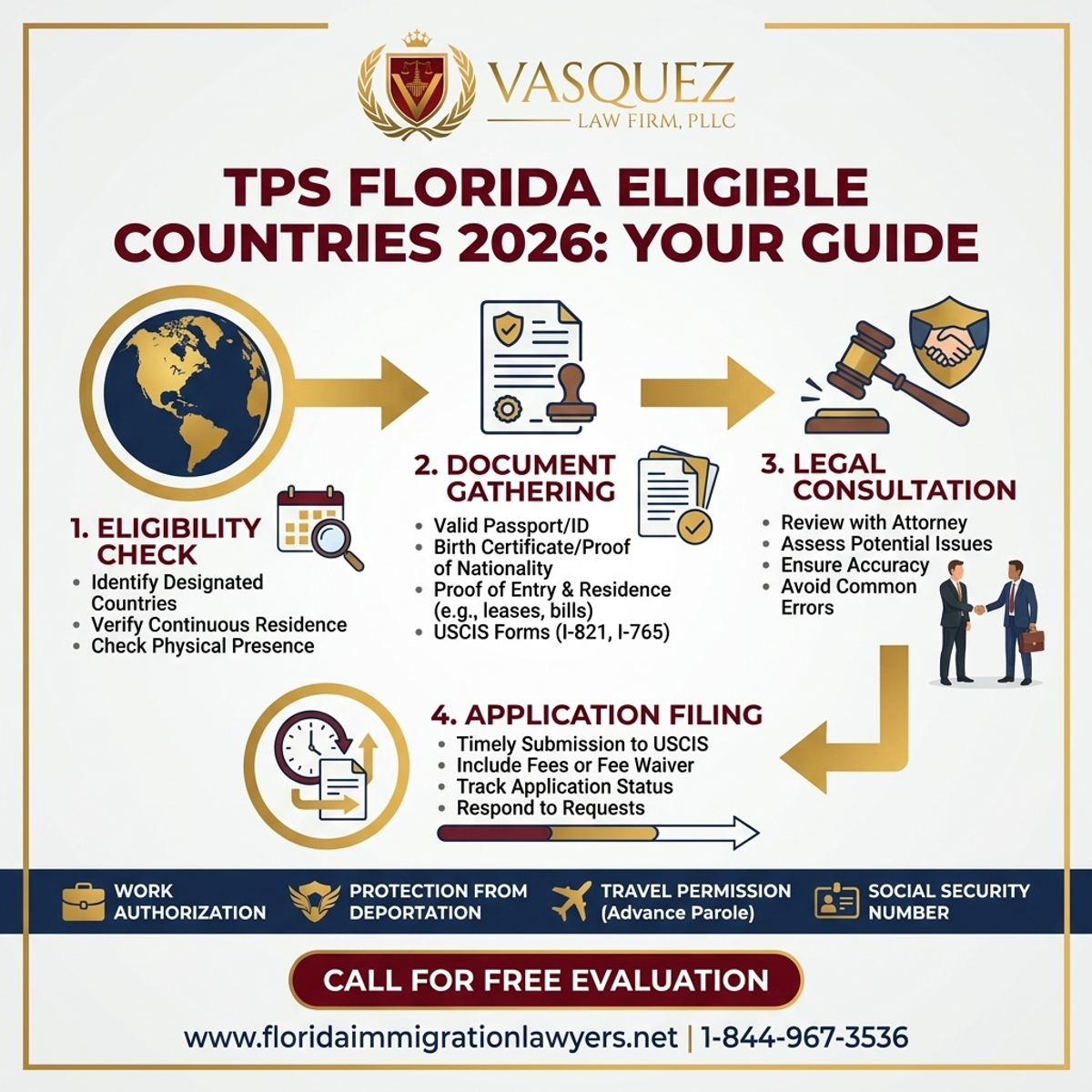
Step-by-Step Process — TPS Florida Eligible Countries 2026: Your Guide
The designation process involves a thorough assessment of conditions in the country by the Department of Homeland Security (DHS). Factors such as armed conflict, natural disasters like earthquakes or hurricanes, and other extraordinary events are considered. While we cannot predict future designations for 2026, the ongoing global climate suggests that new designations or extensions for existing ones remain a possibility. Staying updated through official channels and consulting with an immigration attorney is critical for those in Hialeah, Tampa, and across Florida who may be impacted by these decisions. Recent judicial decisions affecting broader asylum and immigration processing, though not directly about TPS designations, underscore the volatile nature of immigration policy and the importance of timely action.
The TPS Application Process: A Step-by-Step Guide
Applying for Temporary Protected Status can seem daunting, but breaking it down into manageable steps makes the process clearer. For Florida residents seeking temporary protected status, understanding each stage is crucial for a successful outcome. The process begins with determining your eligibility and gathering comprehensive documentation. Adhering to deadlines and providing accurate information is paramount.
- Determine Eligibility: First, confirm that your country is currently designated for TPS and that you meet the specific requirements for continuous physical presence (CPP) and continuous residence (CR) in the U.S. since the designated date. You must also be admissible to the U.S., though certain grounds of inadmissibility can be waived.
- File Form I-821, Application for Temporary Protected Status: This is the primary application form. You must complete it thoroughly and accurately. If you are re-registering, you will also use this form.
- File Form I-765, Application for Employment Authorization Document (EAD): If you wish to work legally in the U.S., you must file this form concurrently with or after your I-821. This provides your work permit.
- File Form I-601, Application for Waiver of Grounds of Inadmissibility (If Applicable): If you have certain criminal convictions or other issues that make you inadmissible, you may need to file this waiver. An immigration attorney can help assess if this is necessary.
- Attend Biometrics Appointment: After filing, USCIS will send you a notice to attend a biometrics appointment at an Application Support Center (ASC). Here, your fingerprints, photograph, and signature will be collected for background checks.
- Respond to Requests for Evidence (RFE): USCIS may send an RFE if they need more information or documentation to support your application. Responding promptly and completely is essential to avoid delays or denial.
- Attend Interview (If Requested): While not all TPS applicants are interviewed, USCIS may schedule one to clarify information or verify facts presented in your application. Be prepared to answer questions about your eligibility and background.
- Receive Decision: USCIS will mail you a written decision. If approved, you will receive an approval notice and your EAD (if applied for). If denied, the notice will explain the reasons, and you may have options to appeal or reapply.
Throughout this process, maintaining records of all submitted documents and communications with USCIS is vital. The exact steps and required forms, as outlined in 8 CFR Part 244, can be complex, and a single mistake can lead to significant delays or even denial. For residents in Florida, especially those facing language barriers or unfamiliarity with the U.S. legal system, professional guidance can make a substantial difference.
Required Documents for a TPS Application
A successful TPS application process Florida requires a comprehensive collection of supporting documents. These documents serve as proof of your identity, nationality, entry into the U.S., and continuous physical presence and residence since your country's designation date. Failing to provide adequate documentation is a common reason for delays or requests for evidence (RFEs) from USCIS. Organizing these materials meticulously before filing is a critical step.
- Proof of Identity and Nationality:
- Passport from your country of nationality.
- Birth certificate accompanied by a photo identification document.
- National identity document from your country bearing your photograph and/or fingerprint.
- Any other national identity document from your country.
- Proof of Entry into the U.S.:
- Form I-94, Arrival/Departure Record.
- Passport with admission stamp.
- Other official travel documents indicating your entry.
- Proof of Continuous Physical Presence (CPP) and Continuous Residence (CR): These are crucial for demonstrating that you have been in the U.S. since the required date. Provide as many documents as possible to cover the entire period.
- Employment records (pay stubs, W-2s, letters from employers).
- Rent receipts, utility bills, or mortgage statements.
- School records (transcripts, enrollment letters).
- Medical records (hospital bills, doctor's notes).
- Bank statements showing transactions within the U.S.
- Affidavits from credible witnesses who can attest to your presence.
- Tax returns filed in the U.S.
- Any dated receipts, letters, or documents bearing your name and address.
Key Statistics — TPS Florida Eligible Countries 2026: Your Guide
- Two Passport-Style Photographs: Ensure they meet USCIS specifications.
- Marriage Certificates and Birth Certificates: If you are applying for family members or need to prove relationships for any waivers.
- Criminal Records and Court Dispositions: If you have any arrests or convictions, you must provide certified copies of all court dispositions, even for minor offenses. Failure to disclose can lead to severe consequences.
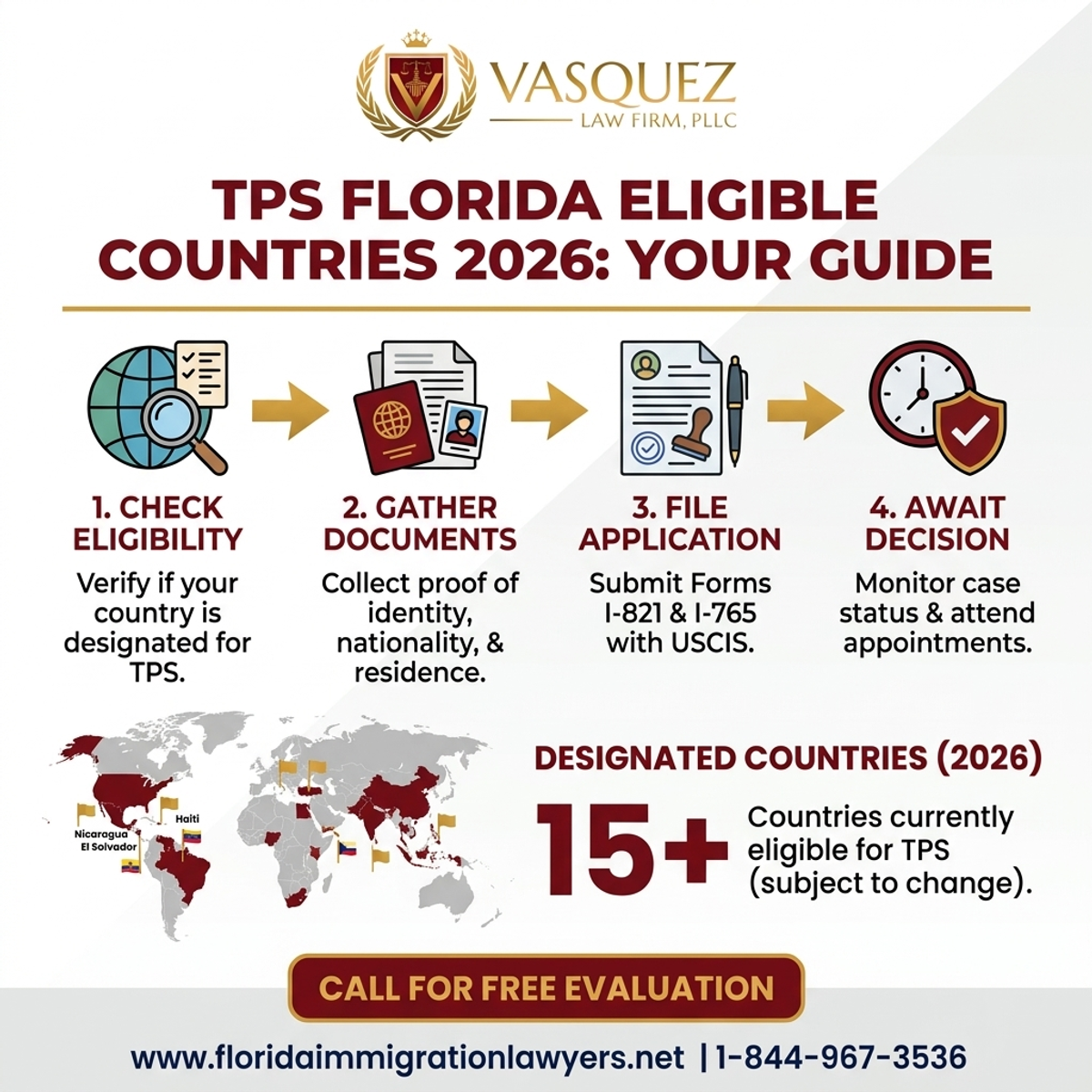
Gathering these documents can be time-consuming, and some may require translation by a certified translator. It is always advisable to keep original documents safe and submit only copies unless USCIS specifically requests originals. An experienced immigration attorney can help you identify all necessary documents and organize them effectively for your application, minimizing the risk of RFEs or denials.
Understanding TPS Timelines and Processing Expectations
One of the most common questions from Florida residents applying for temporary protected status is about how long the process will take. The truth is, TPS processing times can vary significantly based on several factors, including the volume of applications, the complexity of individual cases, and the specific USCIS service center handling the petition. While USCIS strives for efficiency, applicants should prepare for potential delays. You can check current processing times on the USCIS website, but these are estimates and not guarantees.
Typically, the timeline for a TPS application involves several stages. After submitting your Form I-821 and I-765 (if applicable), you will usually receive a receipt notice within a few weeks. This notice confirms that USCIS has received your application. The next step is often a biometrics appointment notice, which usually arrives within 1-3 months of filing. Attending this appointment is mandatory for background checks. The Employment Authorization Document (EAD) is often processed faster than the I-821, allowing applicants to work legally while their TPS application is pending. EADs can sometimes take 3-6 months or more to be approved after biometrics.
The approval of the Form I-821, which grants the actual TPS status, can take anywhere from 6 months to over a year, sometimes even longer, especially during periods of high application volume or when RFEs are issued. Factors that can extend processing times include incomplete applications, criminal history, previous immigration violations, or the need for an interview. It's important to continuously monitor your case status online using the receipt number provided by USCIS.
For those who have been granted TPS, re-registration is a critical component. When a country's TPS designation is extended, USCIS announces a re-registration period, typically 60 days. Failing to re-register within this window can lead to the loss of your deportation protection Florida and work authorization. Therefore, staying vigilant about these deadlines is paramount. Florida Immigration Lawyers can help you track these dates and ensure timely re-registration, providing peace of mind to our clients in Hialeah, Fort Lauderdale, and throughout the state.
Cost Factors and Fee Breakdown for TPS Applications
Understanding the costs associated with applying for temporary protected status is an important part of the planning process for Florida residents. While the benefits of TPS are substantial, there are mandatory fees that applicants must pay to USCIS. It is crucial to note that USCIS fees can change, so always verify the most current amounts on the official USCIS website before filing your application. Attempting to pay an incorrect fee can lead to your application being rejected and returned, causing significant delays.
The primary fees associated with a TPS application typically include:
- Form I-821, Application for Temporary Protected Status: There may or may not be a filing fee for this form, depending on your age and whether it's an initial application or re-registration. Always check the current USCIS fee schedule.
- Biometrics Services Fee: This fee is mandatory for all applicants aged 14 and older and covers the cost of fingerprinting and background checks. This fee is non-refundable.
- Form I-765, Application for Employment Authorization Document (EAD): If you wish to obtain a work permit, there is a separate filing fee for this form. This fee is often required alongside the biometrics fee.
- Form I-601, Application for Waiver of Grounds of Inadmissibility: If you need to file this waiver, there is a substantial fee associated with it. This is in addition to the other application fees.
In addition to USCIS filing fees, applicants should budget for other potential costs. These may include attorney fees for legal representation, which can be invaluable for navigating the complexities of the process, especially for those seeking immigration relief Hialeah. Other expenses might include document translation services, photocopying, postage, and travel costs for biometrics appointments or interviews. While these can add up, the investment in ensuring a properly filed and strong application is often worth it.
For individuals facing financial hardship, USCIS offers the possibility of requesting a fee waiver using Form I-912, Request for Fee Waiver. Eligibility for a fee waiver is based on certain income guidelines or receipt of means-tested benefits. It is important to submit strong evidence to support a fee waiver request, as an improperly filed request can lead to rejection of your entire application. Consulting with Florida Immigration Lawyers can help you determine your eligibility for fee waivers and ensure all forms are correctly prepared.
Common Mistakes to Avoid in Your TPS Application
Applying for Temporary Protected Status is a critical step towards securing your legal presence and work authorization in the U.S. However, the process is fraught with potential pitfalls that can lead to delays, requests for evidence, or even outright denial. Avoiding these common mistakes is essential for a successful outcome, especially for Florida residents navigating a complex system.
- Missing Deadlines: This is perhaps the most critical mistake. Both initial registration and re-registration periods have strict deadlines. Missing these windows almost always results in a denial, as outlined in 8 CFR § 244.17. Always check Federal Register notices.
- Failing to Provide Sufficient Proof of CPP/CR: USCIS requires robust evidence of your continuous physical presence and residence since the designated date. Submitting too few documents or documents that don't cover the entire period will lead to RFEs or denial.
- Incomplete or Inaccurate Forms: Leaving fields blank, providing inconsistent information, or making typographical errors can cause significant delays. Double-check every entry before submission.
- Not Disclosing Criminal History or Previous Immigration Violations: Attempting to hide any arrests, charges, or prior immigration issues (even minor ones) is a serious offense that can lead to an automatic denial and potentially other negative immigration consequences, including fraud allegations.
- Failing to File for an EAD Concurrently: Many applicants want to work. Forgetting to file Form I-765 with your I-821 means you will not receive work authorization, delaying your ability to seek employment.
- Not Responding to RFEs in Time: If USCIS sends a Request for Evidence, you have a specific timeframe to respond. Failing to submit the requested documentation by the deadline will almost certainly result in a denial.
- Leaving the U.S. Without Advance Parole: If you have TPS and leave the U.S. without first obtaining advance parole (Form I-131), you may be deemed to have abandoned your TPS status, and you could be inadmissible upon attempting to re-enter.
- Assuming Automatic Re-designation or Extension: TPS designations are not permanent. Always verify the latest Federal Register notices for extensions or new designations. Do not assume your status will automatically continue.
- Ignoring the Need for Legal Review of Complex Cases: Cases involving criminal history, prior deportations, or other immigration complications are highly complex. Attempting to handle these without an attorney significantly increases the risk of denial.
- Relying on Unofficial Sources for Eligibility Information: Immigration laws are precise. Always refer to official USCIS announcements, Federal Register notices, or a qualified immigration attorney for accurate and up-to-date information.
- Not Seeking a Fee Waiver When Eligible: If you qualify for a fee waiver but don't apply, you might incur unnecessary costs or have your application returned if you cannot pay the fees. Ensure Form I-912 is properly submitted with evidence.
When to Call a Lawyer for TPS Assistance in Florida
While this guide provides a comprehensive overview, the complexities of immigration law mean that individual circumstances often require personalized legal advice. Deciding when to call a lawyer for temporary protected status assistance is crucial for protecting your rights and ensuring a smooth application process. Florida Immigration Lawyers are here to help residents throughout the state, from Hialeah to Jacksonville, navigate these intricate legal pathways.
You should consider contacting an attorney if:
- Your Eligibility is Unclear: If you are unsure whether your country is designated or if you meet the CPP/CR requirements, an attorney can assess your specific situation.
- You Have a Criminal Record: Any arrests, charges, or convictions, even minor ones, can impact your eligibility for TPS. An attorney can advise on potential waivers (Form I-601) or other legal strategies.
- You Have Prior Immigration Violations: Previous denials, deportations, or periods of unlawful presence can complicate your TPS application. Legal counsel can help address these issues.
- You Have Traveled Outside the U.S. After Designation: Leaving the U.S. without advance parole can jeopardize your TPS eligibility. An attorney can evaluate your travel history and its implications.
- You Received a Request for Evidence (RFE) or Notice of Intent to Deny (NOID): These notices indicate that USCIS requires more information or intends to deny your application. An attorney can help you prepare a comprehensive and timely response.
- You are Applying for Re-registration: While seemingly straightforward, re-registration can still have pitfalls. An attorney ensures all requirements are met and deadlines are honored.
- You Need Assistance with Fee Waivers: Determining eligibility for and properly submitting Form I-912 requires careful attention to detail and evidence.
- You are Seeking Other Immigration Relief Concurrently: If you are also exploring options for family-based immigration (Family Immigration), asylum (Asylum), or citizenship (Citizenship), an attorney can help coordinate these efforts to ensure they do not negatively impact each other.
Florida Immigration Lawyers has extensive experience in all aspects of immigration law, including general immigration matters and deportation defense. We understand the unique challenges faced by Florida's diverse communities and are committed to providing compassionate and effective legal representation. Our team is well-versed in the latest changes to immigration policy and can offer strategic advice tailored to your needs. Do not hesitate to seek professional help when your future is on the line.
About Florida Immigration Lawyers
Florida Immigration Lawyers is a leading immigration law firm dedicated to serving individuals and families throughout the entire state of Florida. With a deep understanding of U.S. immigration laws and a steadfast commitment to our clients, we provide comprehensive legal services designed to achieve favorable outcomes. Our experienced attorneys specialize in a wide array of immigration matters, including Temporary Protected Status, asylum, deportation defense, family-based petitions, business immigration, and naturalization.
We pride ourselves on offering personalized attention and strategic advocacy, recognizing that every client's situation is unique. Our team is available 24/7 to address your concerns and provide timely support. We offer free consultations to help you understand your legal options without any upfront cost. Whether you are in Hialeah, Miami, Orlando, Tampa, or any other part of Florida, our firm is equipped to provide the expert guidance you need. Choose Florida Immigration Lawyers for dedicated representation that puts your interests first.
Visit our website at https://www.floridaimmigrationlawyers.net or call us directly at 1-844-967-3536 to schedule your free consultation today. Our attorneys (Our Attorneys) are ready to assist you.
Sources and References
- U.S. Citizenship and Immigration Services (USCIS) - Temporary Protected Status
- U.S. Citizenship and Immigration Services (USCIS) - Check Case Processing Times
- Executive Office for Immigration Review (EOIR)
- 8 U.S.C. § 1254a - Immigration and Nationality Act (INA) Section 244 (Temporary Protected Status)
- 8 CFR Part 244 - Code of Federal Regulations, Title 8, Part 244 (Temporary Protected Status)
- Department of Homeland Security (DHS) Federal Register Notices for TPS Designations and Extensions
Related services: immigration practice areas, free immigration consultation.
This article provides general legal information and is not intended as legal advice. Every case is unique, and outcomes depend on specific facts and circumstances. Contact an attorney for advice about your particular situation.
Protect Your Future with Expert Legal Guidance
The path to securing temporary protected status in Florida for 2026 is filled with critical details and potential challenges. From understanding the ever-changing list of eligible countries to meticulously preparing your application, expert legal guidance can make all the difference. At Florida Immigration Lawyers, we are committed to providing the highest level of legal representation to individuals and families across the state.
Don't leave your immigration future to chance. Let our dedicated team provide you with the clarity and support you need. We offer free, confidential consultations to discuss your case and outline the best strategy for your success. Call Florida Immigration Lawyers today at 1-844-967-3536.
Se Habla Espanol - Estamos aqui para ayudarle.
Do Not Navigate This Process Alone
Our experienced immigration attorneys are ready to fight for you. Get a free, confidential consultation today.
Se Habla Español
Frequently Asked Questions
Florida Immigration Lawyers
Immigration Attorney | Founder, Vasquez Law Firm
U.S. Air Force veteran and immigration attorney with thousands of cases resolved. J.D., NCCU School of Law. AILA member. Admitted to the 4th, 5th, and 11th Circuit Courts.
Available 24/7 - Free Evaluations
Related Legal Services
Our Florida immigration attorneys can help you with experienced immigration attorneys, business immigration and asylum protection. Call today at 1-844-967-3536 for a free consultation.
Related Links
Related Topics
Free Legal Consultation
Discuss your case with our experienced attorneys. We're available 24/7.
Se Habla Español - Estamos aquí para ayudarle.
Related Articles
Immigration Scams Protection Florida: Avoid Fraud | VLF Florida
Immigration scams, particularly notario fraud, pose a significant threat to immigrant communities in Florida. These deceptive practices can lead to devastating financial losses, jeopardized immigration status, and even deportation. Understanding the common types of fraud, recognizing red flags, and knowing how to report suspicious activity are crucial steps in protecting yourself and your loved ones. This comprehensive guide from Florida Immigration Lawyers provides vital information to help you navigate the immigration process safely, emphasizing the indispensable role of licensed attorneys over unauthorized consultants. Learn how to safeguard your future and ensure your immigration journey is legitimate by seeking expert legal counsel.
I-601 Waiver Guide for Florida Immigrants | VLF Florida
Learn how the I-601 waiver can help you overcome inadmissibility and remain in the U.S. The guide covers eligibility, process steps, and tips for Florida immigrants. Contact Florida Immigration Lawyers for a free consultation.
Immigration Services in Kissimmee Florida | VLF Florida
Explore immigration services in Kissimmee, Florida, and learn about the comprehensive support available for individuals and families. Discover how Florida Immigration Lawyers can assist you with a free consultation.
Immigration Services Port St Lucie & Treasure Coast 2026
Seeking expert immigration services in Port St Lucie, the Treasure Coast, or anywhere in Florida? Florida Immigration Lawyers provides comprehensive legal assistance for family visas, employment petitions, naturalization, asylum, and deportation defense. With the U.S. immigration system constantly changing, having experienced legal counsel is crucial for navigating complex procedures and achieving a successful outcome. Our dedicated team serves clients in Kissimmee and across the Treasure Coast, offering personalized guidance and free consultations. Learn how we can help you with your immigration journey in 2026, ensuring compliance with all federal regulations and local requirements. Contact us today to discuss your unique situation.
