I-601 Waiver Guide for Florida Immigrants
Learn how the I-601 waiver can help you overcome inadmissibility and remain in the U.S. The guide covers eligibility, process steps, and tips for Florida immigrants. Contact Florida Immigration Lawyers for a free consultation.

The I-601 waiver allows certain immigrants deemed inadmissible to the U.S. to request a waiver of their inadmissibility under specific circumstances. This waiver is often sought by those who have been denied entry due to past immigration violations or criminal records. Key points include:
- Covers grounds of inadmissibility like unlawful presence or fraud
- Requires proving extreme hardship to a U.S. citizen or LPR spouse or parent
- Essential for many immigrants residing in Florida
- Legal guidance is recommended to navigate the complex process
Introduction
Imagine you've built a life in Homestead, Florida, contributing positively to your community, but now face the daunting challenge of overcoming inadmissibility to remain in the U.S. The I-601 waiver process could be your lifeline. In this guide, we will walk you through the critical elements of the I-601 immigration waiver, focusing on its relevance for Florida residents. Whether you're dealing with past immigration violations or other grounds for inadmissibility, understanding this waiver is crucial. Call Florida Immigration Lawyers at 1-844-967-3536 for a free consultation and get the help you need today.
Facing inadmissibility can cast a long shadow over your life, impacting not just your future but also the stability and well-being of your family. The I-601 waiver stands as a beacon of hope, offering a legal pathway for individuals to remain united with their loved ones in the United States, despite past issues that might otherwise bar their entry or adjustment of status. It's a testament to the U.S. immigration system's recognition of humanitarian concerns and family unity.
Florida, with its vibrant multicultural communities and high number of mixed-status families, sees countless individuals facing these very dilemmas. From the agricultural heartland of Homestead to the bustling urban centers, the need for robust immigration solutions is ever-present. This waiver is specifically designed to address situations where separation would inflict profound suffering on U.S. citizen or lawful permanent resident (LPR) relatives, acknowledging the deep bonds that form within families.
This comprehensive guide aims to demystify the I-601 process, offering clarity and practical advice tailored for Florida residents. Understanding each step, from eligibility to documentation, is paramount. Remember, you don't have to navigate this journey alone. Florida Immigration Lawyers are here to provide the expert guidance you need. Call us today at 1-844-967-3536 for a free consultation and take the first step towards securing your family's future.
Understanding the I-601 Waiver
The I-601 waiver is a legal avenue for immigrants who are otherwise inadmissible to the United States. In Florida, this waiver is particularly important due to the state's diverse immigrant population. The waiver applies to various grounds of inadmissibility, such as unlawful presence, fraud, and certain criminal activities. Applicants must demonstrate that their removal would cause extreme hardship to a qualifying U.S. citizen or lawful permanent resident (LPR) relative, typically a spouse or parent.
Understanding the criteria for extreme hardship is essential. It involves more than just economic difficulties; it can include emotional and medical impacts. For example, if your spouse relies on you for daily care, this could be a qualifying factor. Florida's unique demographics, with a significant number of mixed-status families, make this waiver particularly pertinent. For more detailed information, visit the USCIS I-601 page.
The I-601 waiver addresses a broad spectrum of inadmissibility grounds outlined in the Immigration and Nationality Act (INA). These can range from unlawful presence (accruing more than 180 days of unauthorized stay in the U.S.) to specific criminal offenses, misrepresentation, or fraud in previous immigration applications. For instance, if an individual inadvertently provided incorrect information on a past visa application, or if they overstayed a visa for an extended period, they might be deemed inadmissible. The waiver provides a mechanism to overcome these barriers, allowing deserving individuals to proceed with their immigration goals.
Defining 'extreme hardship' is often the most challenging aspect of an I-601 application. It goes beyond the typical difficulties associated with relocation or separation. USCIS looks for compelling evidence that the qualifying relative (U.S. citizen or LPR spouse or parent) would suffer significantly more than what is usually expected. This could include severe medical conditions requiring the applicant's care, profound psychological distress from separation, significant financial collapse impacting the qualifying relative, or inability to access necessary educational or medical resources in the applicant's home country. Each case is unique, and a strong application meticulously details these specific hardships.
In Florida, where many families have deep roots and intricate support systems, proving extreme hardship often involves demonstrating the disruption to established community ties, access to specialized medical care available only here, or the critical role the applicant plays in the family's financial and emotional stability. For example, a U.S. citizen child with special needs might heavily rely on an inadmissible parent for daily care and emotional support, making the parent's removal an extreme hardship. Our team at Florida Immigration Lawyers has extensive experience in building such compelling cases for families across the state, from Miami to Orlando.
Step-by-Step Guide to Filing the I-601 Waiver
- Eligibility Determination: Confirm that you qualify for the waiver based on your specific grounds of inadmissibility.
- Gather Supporting Documents: These include evidence of hardship, such as medical records, financial documents, and affidavits from family members.
- Complete Form I-601: Fill out the application form accurately. Any mistakes can delay processing.
- Submit the Application: File the completed form and supporting documents to the appropriate USCIS lockbox facility.
- Await Processing: Processing times can vary, but applicants can generally expect a decision within several months.
- Receive the Decision: If approved, you may proceed with your immigration application. If denied, consider appealing or re-applying with additional evidence.
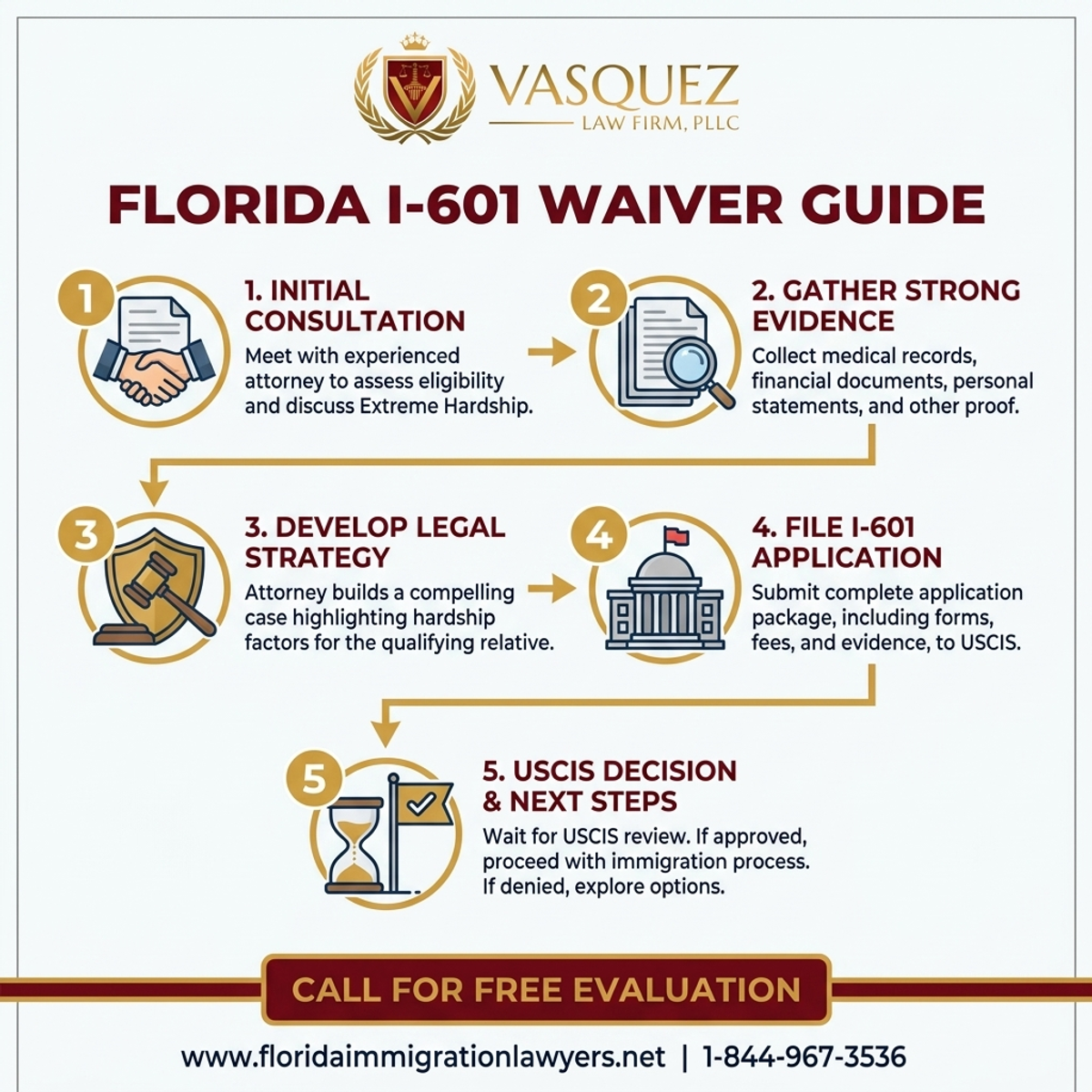
Step-by-Step Process — I-601 Waiver Guide for Florida Immigrants
Document Checklist for I-601 Waiver
- Completed Form I-601
- Proof of qualifying relative's status (U.S. citizen or LPR)
- Evidence of relationship to qualifying relative
- Medical evaluations or reports (if applicable)
- Financial records showing economic hardship
- Personal affidavits describing emotional hardship
- Any relevant legal documents or court records
Timeline and Processing Expectations
The processing time for an I-601 waiver can vary, often taking several months from the date of submission. Factors influencing the timeline include the complexity of your case and the current backlog at USCIS offices. It's crucial to submit a complete and thorough application to avoid unnecessary delays. In Florida, especially in areas like Homestead, processing times may be influenced by local demand and the efficiency of nearby USCIS facilities.
Applicants should regularly check their application status online through the USCIS case status tool. Understanding these timelines helps in planning your next steps and managing expectations.
Several factors can influence the I-601 processing timeline. The volume of applications at a particular USCIS service center, the complexity of your individual case, and whether Requests for Evidence (RFEs) are issued can all add to the wait. An RFE means USCIS needs more information or clarification, which can significantly extend the processing period. Submitting a meticulously prepared application from the outset, with all required documentation and a clear narrative, is your best defense against such delays. Florida Immigration Lawyers can help ensure your application is as robust as possible.
During the waiting period, it's natural to feel anxious. While you can monitor your case status online, it's also wise to prepare for potential next steps, whether that's an interview or further documentation requests. Maintain open communication with your legal team, especially if there are any changes in your circumstances or contact information. For Florida residents, understanding the specific nuances of local USCIS field offices and their typical processing patterns can also be beneficial, information that an experienced immigration attorney can provide.
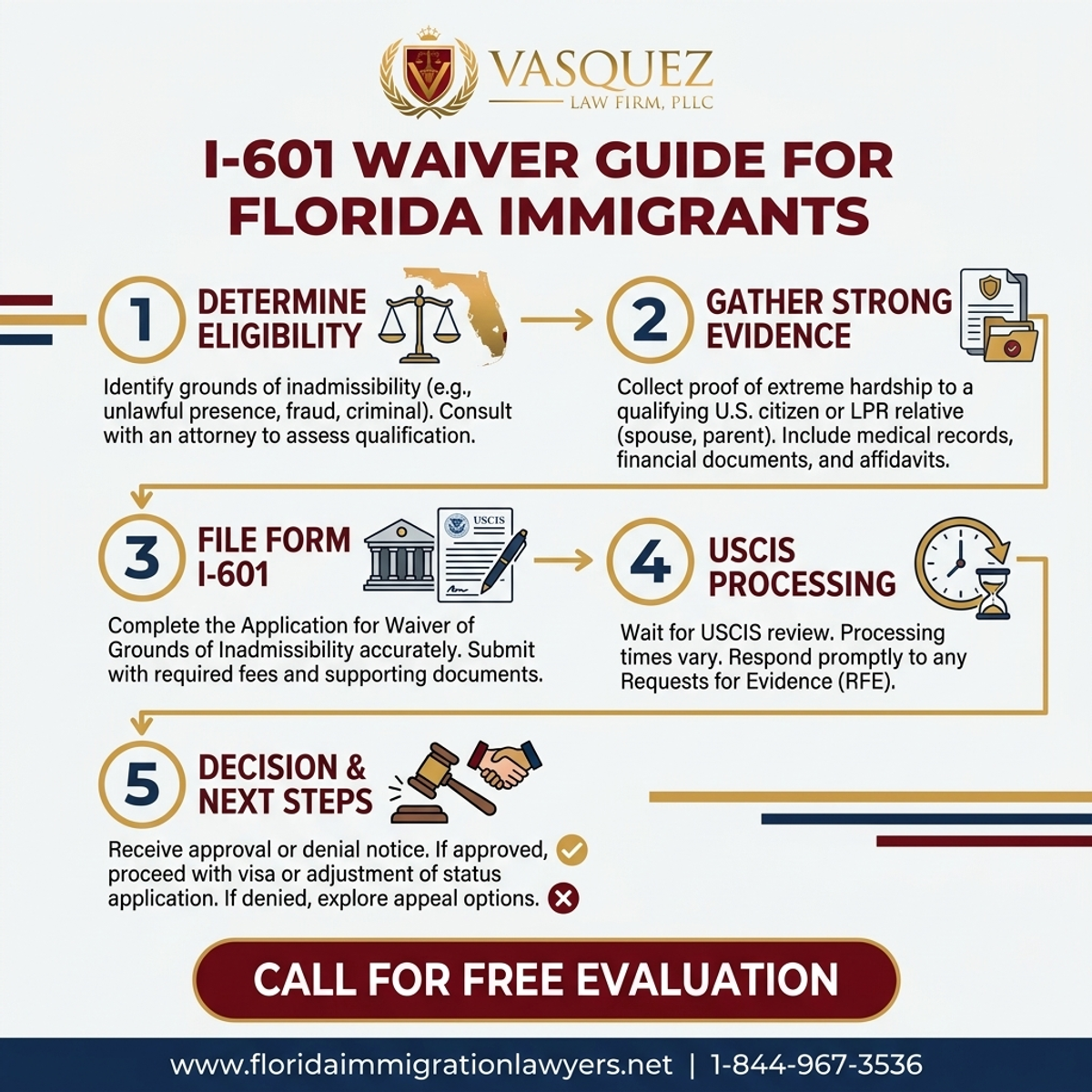
Key Statistics — I-601 Waiver Guide for Florida Immigrants
Cost Factors and Fee Breakdown
Filing for an I-601 waiver involves certain fees, which can change over time. It's important to check the latest fee schedule on the USCIS website before submission. In addition to the filing fee, consider potential costs for gathering documentation, such as medical evaluations or translations of documents not in English. Legal fees for professional assistance may also be a factor, but investing in expert help can significantly enhance your application's success rate.
Do not navigate this process alone. Contact Florida Immigration Lawyers today for guidance and support.
Beyond the standard USCIS filing fee, applicants should budget for additional expenses. These might include fees for obtaining certified translations of foreign documents, costs associated with medical evaluations or psychological assessments crucial for proving extreme hardship, postage, and travel expenses for interviews or to gather evidence. While these costs can accumulate, viewing legal fees for professional assistance as an investment in your future is critical. An experienced immigration lawyer can save you time, reduce the risk of denial due to errors, and significantly increase your chances of a successful outcome, potentially avoiding costly re-applications.
Understanding the full financial scope upfront allows for better planning and reduces stress during the application process. At Florida Immigration Lawyers, we believe in transparent fee structures and will discuss all potential costs with you during your free consultation. We are committed to providing value and ensuring that you understand every aspect of your investment in your immigration journey. Don't let financial concerns deter you from seeking the expert help that can make all the difference. Contact us at 1-844-967-3536 to discuss your case and our services.
Common Mistakes to Avoid
- Incomplete Applications: Missing information can lead to delays or denials. Double-check all sections before submission.
- Insufficient Evidence of Hardship: Failing to provide comprehensive proof can weaken your case.
- Not Meeting Eligibility Requirements: Ensure you qualify for the waiver before applying.
- Ignoring Deadlines: Late submissions can lead to automatic denials. Keep track of all timelines.
- Incorrect Filing Location: Sending applications to the wrong USCIS office can result in lost or delayed paperwork.
- Neglecting Legal Advice: Attempting the process without expert guidance can reduce your chances of approval.
- Failing to Update USCIS on Changes: Not informing USCIS of address or circumstance changes can affect your application status.
- Overlooking Language Requirements: Ensure all documents are in English or have certified translations.
- Submitting False Information: Any form of deception can lead to severe legal consequences, including permanent bans.
- Misunderstanding the Hardship Standard: Make sure you understand what qualifies as extreme hardship.
When to Call a Lawyer
Navigating the I-601 waiver process can be complex and overwhelming. It's advisable to seek legal assistance if you face any of the following scenarios:
- You have a complicated immigration history.
- There's uncertainty about what constitutes extreme hardship in your case.
- You need help gathering and presenting the necessary evidence.
- Your initial application was denied, and you wish to appeal.
Florida Immigration Lawyers offer comprehensive services to guide you through every step. Our team is ready to assist and ensure you have the best chance of success. Contact us at 1-844-967-3536.
Seeking legal counsel becomes particularly imperative when dealing with complex immigration histories, such as prior deportations, multiple entries without inspection, or any criminal convictions, even minor ones. These situations often involve intricate legal interpretations and require a nuanced understanding of how different inadmissibility grounds interact. An attorney can analyze your specific record, identify all potential issues, and strategize the most effective way to present your case, ensuring no critical details are overlooked or misinterpreted by immigration officials.
Furthermore, the standard of 'extreme hardship' is subjective and requires compelling, well-documented evidence. A lawyer can help you identify what constitutes strong evidence in your unique situation, assist in drafting persuasive affidavits, and organize your documentation in a manner that clearly demonstrates the profound impact your removal would have on your qualifying relative. They can also represent you in communications with USCIS, respond to RFEs, and guide you through any interviews, significantly improving your application's strength and increasing your chances of approval. Florida Immigration Lawyers are adept at crafting these intricate narratives.
About Florida Immigration Lawyers
Florida Immigration Lawyers is a dedicated firm specializing in all areas of immigration law. With years of experience, we provide expert legal advice to help you navigate complex immigration processes, including I-601 waivers. Our team is available 24/7, offering free consultations to clients throughout Florida. Why choose us? Because we understand the unique challenges faced by immigrants in Florida and are committed to providing compassionate, effective legal services.
Our firm prides itself on a deep understanding of both federal immigration law and the specific challenges faced by immigrant communities throughout Florida. Whether you are in a bustling metropolis like Miami or a smaller community, our attorneys are equipped with the knowledge and resources to advocate effectively on your behalf. We are not just legal advisors; we are compassionate advocates dedicated to helping families stay together and achieve their American dreams. Our commitment extends to staying updated on the latest immigration policies and precedents, ensuring our clients receive the most current and effective legal strategies.
Choosing Florida Immigration Lawyers means partnering with a team that offers personalized attention and strategic guidance. Our 24/7 availability for free consultations underscores our dedication to accessibility, recognizing that immigration matters often arise unexpectedly and require immediate attention. We understand the local context – the demographics, the community resources, and the specific USCIS office procedures that can impact your case in Florida. This local insight, combined with our extensive legal expertise, positions us uniquely to serve you. Call us at 1-844-967-3536 to experience the difference our dedicated legal support can make.
Frequently Asked Questions (FAQs) about the I-601 Waiver
Sources and References
- U.S. Citizenship and Immigration Services (USCIS)
- Executive Office for Immigration Review (EOIR)
- 8 U.S.C. Chapter 12 - Immigration and Nationality Act
Related services: immigration practice areas, family immigration services, citizenship and naturalization, deportation defense.
This article provides general legal information and is not intended as legal advice. Every case is unique, and outcomes depend on specific facts and circumstances. Contact an attorney for advice about your particular situation.
Don't let the complexity of immigration laws overwhelm you. Call Florida Immigration Lawyers at 1-844-967-3536 for a free consultation. Se Habla Espanol - Estamos aqui para ayudarle.
If you need legal assistance, learn more about learn about our immigration practice, or call us at 1-844-967-3536 for a free consultation.
Do Not Navigate This Process Alone
Our experienced immigration attorneys are ready to fight for you. Get a free, confidential consultation today.
Se Habla Español
Or leave your details and we’ll call you:
Free Evaluation in 24 Hours
Or talk to us right now
AI voice assistant — available 24/7
FreeFrequently Asked Questions

William J. Vásquez
Founding Attorney · Vasquez Law Firm
U.S. Air Force veteran and immigration attorney with years of hands-on U.S. immigration experience. J.D., NCCU School of Law. AILA member. Admitted to the 4th, 5th, and 11th Circuit Courts.
Available 24/7 - Free Evaluations
Reviewed for legal accuracy by William J. Vásquez
Licensed in North Carolina; U.S. immigration is federal practice.
Related Legal Services
Our Florida immigration attorneys can help you with free immigration consultation, experienced immigration attorneys and business immigration. Call today at 1-844-967-3536 for a free consultation.
Related Links
Related Topics
Free Legal Consultation
Discuss your case with our experienced attorneys. We're available 24/7.
Se Habla Español - Estamos aquí para ayudarle.
Related Articles
Military Naturalization Expedited in Florida Bases
Explore military naturalization options for families at Florida bases, including parole in place benefits in Miami. Learn how to expedite your application with expert guidance from Florida Immigration Lawyers.
Immigration Lawyer Orlando Free Consultation 2026
Discover how an immigration lawyer in Orlando can help you through a free consultation. Learn about the services offered, costs, and recent immigration policy updates affecting your case.
Naturalization Ceremony Locations and Schedule 2026 in
Navigating the naturalization process to become a U.S. citizen in Florida requires careful attention to detail, from meeting eligibility criteria to attending the final oath ceremony. This comprehensive guide for 2026 details the step-by-step application process, including preparing Form N-400, understanding document requirements, and navigating interview and civics tests. We also provide crucial information on typical processing timelines and the various costs involved. For residents in Naples, Miami, Orlando, and across Florida, knowing the general locations and schedules for naturalization ceremonies is key. Avoid common mistakes that can delay your application and learn when professional legal assistance is essential. Florida Immigration Lawyers offers expert guidance for a smooth path to citizenship. Contact us for a free consultation at 1-844-967-3536.
How to Get a Work Permit in Florida for 2026
Learn how to obtain a work permit in Florida through the PERM labor certification process. This guide covers everything from job descriptions to filing the necessary forms. Contact Florida Immigration Lawyers for expert advice.