SIJS Eligibility in Florida: A 2026 Guide for Minor
Special Immigrant Juvenile Status (SIJS) offers a critical pathway to lawful permanent residency for vulnerable children in Florida who have experienced abuse, neglect, or abandonment. This comprehensive guide, updated for 2026, details SIJS eligibility requirements, the two-stage application process involving Florida state courts and USCIS, necessary documentation, and typical processing timelines. It also highlights common mistakes to avoid and emphasizes the indispensable role of legal counsel in navigating this complex journey. For minor immigrants in St. Petersburg, Miami, Orlando, and across the state, understanding SIJS can be the first step towards a safer, more stable future. Florida Immigration Lawyers provides compassionate legal assistance, available 24/7 for free consultations to help protect a child's future.
Quick Answer: Understanding SIJS in Florida
Special Immigrant Juvenile Status (SIJS) provides a pathway to lawful permanent residency for certain undocumented children in the United States who have been abused, neglected, or abandoned by one or both parents. In Florida, obtaining SIJS involves a two-step process: first, securing a specific order from a Florida state juvenile court (often a family or dependency court) finding parental abuse, neglect, or abandonment and deeming reunification not viable, and second, filing a petition with USCIS. This status offers critical protection and a path to a green card, particularly for vulnerable minors in the St. Petersburg area and across Florida.
- SIJS is for children under 21 who are unmarried and reside in the U.S.
- Requires a state court order finding abuse, neglect, or abandonment.
- Petition is filed with USCIS after obtaining the state court order.
- Grants eligibility for a green card, offering protection and stability.
- Legal assistance is crucial for navigating both state and federal processes.
SIJS Eligibility in Florida: A Comprehensive Guide for Minor Immigrants in 2026
Navigating the complex landscape of U.S. immigration law can be particularly daunting for young individuals, especially those who have experienced profound hardships. In Florida, the Special Immigrant Juvenile Status (SIJS) offers a beacon of hope for many minor immigrants. This vital immigration classification provides a pathway to lawful permanent residency for children who have been abused, neglected, or abandoned by a parent.
For a child in St. Petersburg, Miami, Orlando, or anywhere else in the Sunshine State, understanding SIJS can be the first step towards a safer, more stable future. This guide will meticulously outline the eligibility requirements, the detailed application process, necessary documentation, and typical timelines for SIJS petitions in Florida, as of 2026. We will also address common pitfalls and explain why legal counsel is indispensable.
If you are a minor immigrant, or if you know a child who may qualify for this critical protection, it is essential to seek knowledgeable legal guidance. The process involves both state family courts and federal immigration authorities, requiring careful coordination. Don't let the complexity deter you from exploring this crucial opportunity. Call Florida Immigration Lawyers at 1-844-YO-PELEO for a free, confidential consultation today to understand your options.
What is SIJS and Who is Eligible in Florida?
Special Immigrant Juvenile Status (SIJS) is a unique provision under U.S. immigration law, specifically 8 U.S.C. § 1101(a)(27)(J) of the Immigration and Nationality Act (INA), designed to protect vulnerable immigrant children. It allows certain unmarried individuals under the age of 21, who have been subjected to abuse, neglect, or abandonment by a parent, to obtain a green card. The core purpose of SIJS is to offer a humanitarian pathway for children who cannot be reunified with one or both parents due to these severe circumstances.
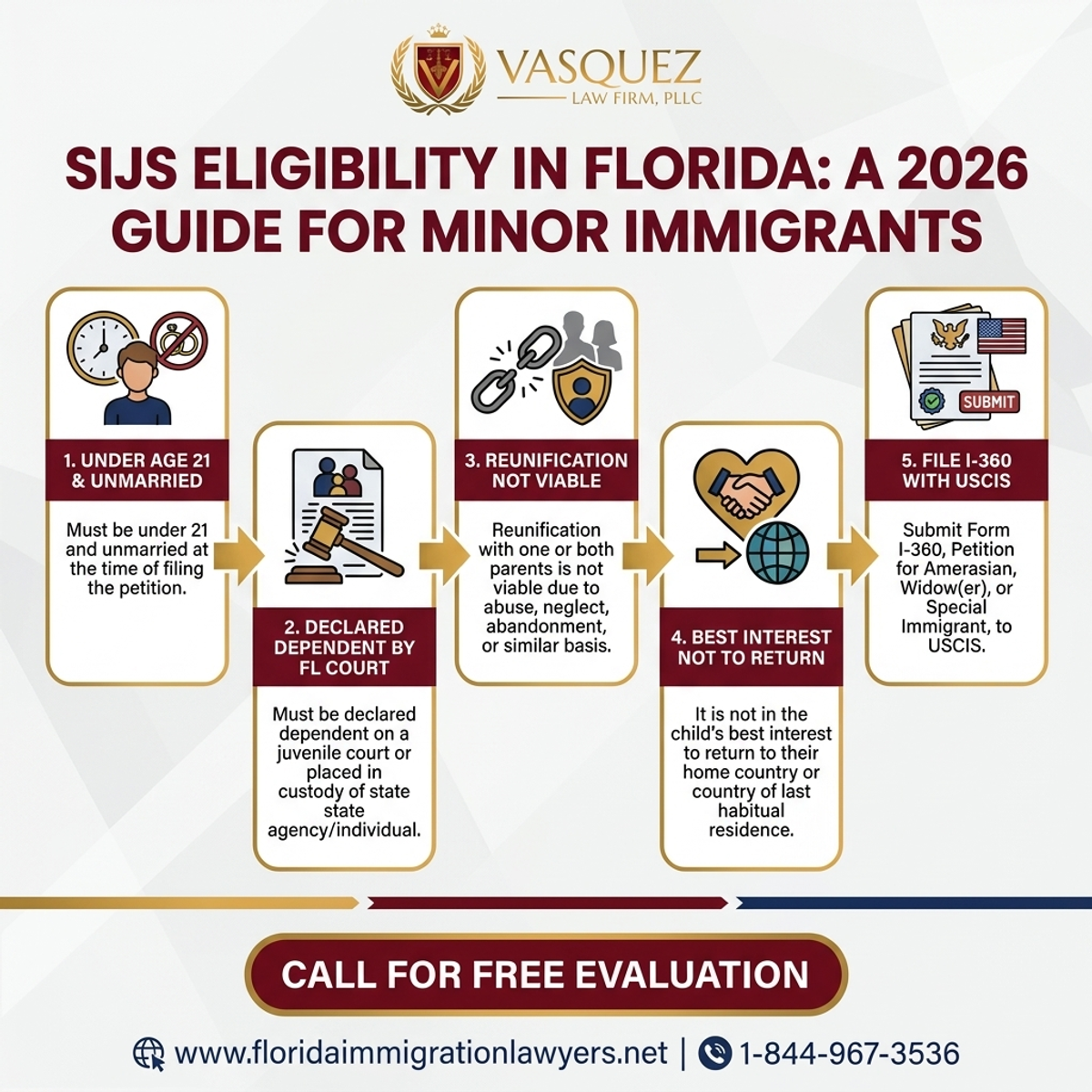
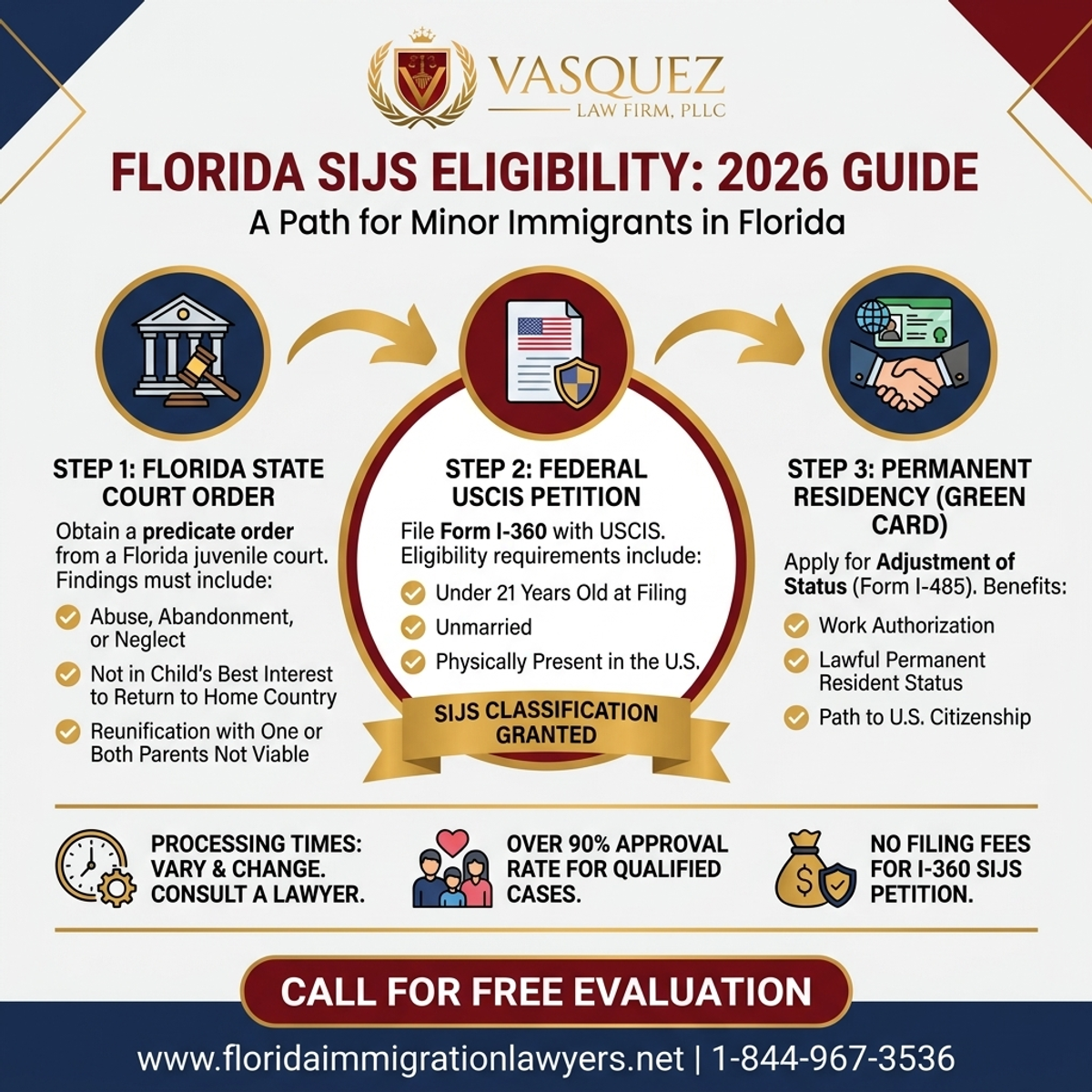
In Florida, eligibility for SIJS hinges on several key criteria. First, the applicant must be under 21 years old and unmarried at the time of filing the SIJS petition (Form I-360). Second, they must be physically present in the United States. Crucially, a Florida state court – typically a dependency court or a family court handling guardianship or custody matters – must issue an order making specific findings. This order, often referred to as a “predicate order,” must declare that the child is dependent on the court or has been committed to the custody of a state agency or an individual appointed by the court. It must also find that reunification with one or both parents is not viable due to abuse, neglect, or abandonment, and that it is not in the child’s best interest to return to their home country or last habitual residence of one or both parents. These findings are the bedrock of any SIJS petition in Florida, reflecting the state’s commitment to protecting its most vulnerable residents, including those in areas like St. Petersburg and Tampa who may have experienced severe family trauma.
The state court process in Florida often involves proving the child's dependency or the need for a guardian, followed by presenting evidence of parental mistreatment. This could include documentation of physical abuse, chronic neglect, emotional harm, or deliberate abandonment where a parent has failed to maintain contact or provide support. The specific findings required in the state court order are detailed and must precisely align with federal immigration law to be accepted by USCIS. Without a properly worded predicate order from a Florida court, the SIJS petition cannot proceed. This dual-jurisdiction requirement makes SIJS cases inherently complex, demanding careful navigation of both state family law and federal immigration regulations. The goal is to ensure the child receives the protection they deserve, offering them a chance at a stable life in the U.S. away from harmful environments.
How to Apply for SIJS in Florida: A Step-by-Step Guide
Applying for Special Immigrant Juvenile Status in Florida is a multi-faceted process that generally involves two main stages: obtaining a state court order and then filing with USCIS. Each step requires meticulous attention to detail and adherence to specific legal requirements. As of 2026, the process remains consistent with established guidelines, but legal counsel is always recommended to ensure compliance with any updates or nuances.
The application process for SIJS in Florida begins in the state court system, usually a family or dependency court, where the child’s circumstances are first evaluated. Once the necessary state court order is secured, the federal immigration application can be submitted to USCIS. This dual-track approach ensures that the child's best interests are determined by a judicial body familiar with their local situation before federal immigration benefits are considered. This methodical approach helps to safeguard the child's well-being throughout the entire process.
-
Initiate State Court Proceedings (Predicate Order)
The first and often most challenging step is to obtain a “predicate order” from a Florida state court. This typically involves filing a petition in a Florida family court (e.g., for guardianship, custody, or dependency) in the county where the child resides, such as Pinellas County for St. Petersburg residents, or in Miami-Dade or Orange County. The petition must present evidence that the child is dependent on the court or has been placed in the custody of a state agency or an individual, that reunification with one or both parents is not possible due to abuse, neglect, or abandonment, and that it is not in the child's best interest to return to their home country. This state court action is critical because USCIS will not approve an SIJS petition without a valid and specific order from a state court. The court will hold hearings, review evidence, and make findings regarding the child's welfare and parental fitness.
-
File Form I-360, Petition for Amerasian, Widow(er), or Special Immigrant
Once the Florida state court issues the predicate order, the next step is to file Form I-360, Petition for Amerasian, Widow(er), or Special Immigrant, with USCIS. This petition officially requests SIJS classification. It must be accompanied by the certified state court order, a copy of the child’s birth certificate, and any other supporting documentation that proves eligibility. This federal filing is where the immigration agency reviews the state court’s findings and confirms they meet the criteria for SIJS under federal law. It is crucial that the I-360 petition is complete and accurately reflects the information in the predicate order, as any discrepancies can cause delays or even denial. The filing location for the I-360 depends on the child's residence; for most Florida residents, it will be filed with the USCIS Nebraska Service Center.
-
Attend Biometrics Appointment
After filing Form I-360, USCIS will send a notice for a biometrics appointment at an Application Support Center (ASC). During this appointment, the child will have their fingerprints, photograph, and signature taken. These biometrics are used for background checks and identity verification. It is a mandatory step in the process, and failure to attend can lead to delays or rejection of the petition.
Step-by-Step Process — SIJS Eligibility in Florida: A 2026 Guide for Minor Immigrants
-
Interview with USCIS (if required)
While not all SIJS applicants are required to attend an interview, USCIS may request one to clarify information or verify details presented in the petition. If an interview is scheduled, it will typically take place at a local USCIS field office, such as those in Tampa, Orlando, or Miami. It is highly advisable to have legal representation present during any interview to ensure the child’s rights are protected and to assist with answering questions accurately.
-
File Form I-485, Application to Register Permanent Residence or Adjust Status
Once the Form I-360 is approved, the child becomes eligible to apply for lawful permanent residency (a green card) by filing Form I-485, Application to Register Permanent Residence or Adjust Status. This form can sometimes be filed concurrently with the I-360 if an immigrant visa number is immediately available. For SIJS applicants, a visa is generally available, allowing for concurrent filing in many cases. The I-485 petition requires additional documentation, including medical examination results, affidavits of support, and proof of continuous presence in the U.S. After filing, there will be another biometrics appointment and potentially an interview, leading to the final decision on the green card application. Upon approval, the child receives their green card, granting them permanent resident status in the United States.
What Documents Are Needed for an SIJS Petition?
A successful SIJS petition relies heavily on comprehensive and accurate documentation. Gathering the correct documents is critical for both the state court proceedings and the subsequent USCIS filings. Missing or incorrect documentation can cause significant delays or even lead to a denial of the petition. It is imperative to organize all required papers meticulously.
For individuals in Florida, especially in areas like St. Petersburg, having a clear checklist can help streamline this complex process. The documents generally fall into categories related to identity, the state court's findings, and the child's personal history. Ensuring every piece of evidence supports the narrative of abuse, neglect, or abandonment, and the child's best interests, is paramount. An experienced attorney can guide you through the specifics of what is needed, helping to compile a robust application package that meets all legal requirements.
Key Documents for Your SIJS Application:
- Certified Copy of State Court Order: This is the most crucial document. It must be a final order from a Florida state court with specific findings, including the child's dependency or custody, non-viability of parental reunification due to abuse, neglect, or abandonment, and that it is not in the child’s best interest to return to their home country.
- Child's Birth Certificate: A copy of the child's birth certificate or other official document establishing age and identity.
- Proof of Identity: Copies of the child's passport, national identity card, or other government-issued identification.
- Proof of Entry and Presence in the U.S.: Copies of I-94 arrival/departure record, visa, entry stamps, or any other documentation showing how and when the child entered the U.S. and their continuous presence.
- Evidence of Abuse, Neglect, or Abandonment: While the state court order makes these findings, supporting evidence can be beneficial. This might include police reports, medical records, school records, affidavits from teachers or social workers, or any other documents detailing the parental mistreatment.
- Proof of Relationship: If applicable, documents establishing the relationship between the child and the petitioning parent or guardian (e.g., marriage certificates, adoption decrees).
- Form I-360, Petition for Amerasian, Widow(er), or Special Immigrant: Completed and signed form.
- Form I-485, Application to Register Permanent Residence or Adjust Status: Completed and signed form (if filed concurrently or after I-360 approval).
- Form I-693, Report of Medical Examination and Vaccination Record: Completed by a USCIS-approved civil surgeon.
- Photographs: Passport-style photos for both I-360 and I-485.
- Fee Waivers: If applicable, Form I-912, Request for Fee Waiver.
How Long Does SIJS Processing Take in Florida in 2026?
The timeline for SIJS processing in Florida, as of 2026, can vary significantly due to the two-stage nature of the application and the varying caseloads of state courts and USCIS service centers. It's important to understand that there isn't a single, fixed duration, but rather a series of stages, each with its own typical timeframe. The overall process can take several years from the initial state court filing to the final green card approval.
Factors influencing processing times include the specific Florida county court's schedule, the complexity of the child's case, the completeness of documentation, and the current processing backlogs at USCIS. For instance, a dependency court in Miami might have different timelines than a family court in St. Petersburg. While the process requires patience, understanding the typical stages can help manage expectations. Legal counsel can often help expedite certain aspects by ensuring all paperwork is perfect and proactively addressing potential issues.
Typical SIJS Processing Timeline in Florida (as of 2026)
| Stage | Typical Timeframe | Notes |
|---|---|---|
| State Court Predicate Order | 6 months - 2 years | Depends on court caseload, complexity of case, and evidence required. Can be faster if uncontested. |
| Form I-360 (SIJS Petition) Processing | 6 months - 1.5 years | USCIS Service Center processing times vary. Check USCIS website for current estimates. |
| Biometrics Appointment | 1-2 months after I-360 filing | Appointment at an Application Support Center (ASC). |
| Form I-485 (Adjustment of Status) Processing | 1-3 years (after I-360 approval) | Can sometimes be filed concurrently with I-360. Includes biometrics and potential interview. |
| Receipt of Green Card | 1-3 months after I-485 approval | Final step after all approvals. |
Key Statistics — SIJS Eligibility in Florida: A 2026 Guide for Minor Immigrants
It is crucial to remember that these are typical estimates. Some cases may be resolved more quickly, while others, particularly those with complex legal issues or evidentiary challenges, may take longer. Staying informed through your legal representative about current processing times is always advisable. The Executive Office for Immigration Review (EOIR) also plays a role if the child is in removal proceedings, which can further impact timelines. For more information on immigration court proceedings, visit justice.gov/eoir.
What Are the Costs Associated with SIJS Applications?
Understanding the financial aspects of an SIJS application is important for families in Florida. While many of the USCIS filing fees for SIJS petitions (Form I-360 and Form I-485) can be waived for eligible applicants, there are still other costs that families should anticipate. These costs are not fixed and can vary depending on individual circumstances, the need for specific documents, and legal representation.
As of 2026, the primary costs associated with SIJS applications typically include legal fees for an immigration attorney, fees for obtaining necessary documents from state courts or other agencies, and potential costs for medical examinations. Even if USCIS filing fees are waived, these other expenses can accumulate. Families in areas like St. Petersburg or Orlando should budget for these items and discuss all potential costs transparently with their legal counsel. Navigating these fees, especially for vulnerable families, is another reason why legal guidance is so beneficial, as attorneys can advise on fee waivers and cost-saving measures.
Typical SIJS Application Costs (as of 2026)
| Item | Typical Fee | Notes |
|---|---|---|
| USCIS Form I-360 Filing Fee | Waivable | Generally waived for SIJS applicants. |
| USCIS Form I-485 Filing Fee | Waivable | Generally waived for SIJS applicants. |
| Biometrics Fee | Waivable | Included with I-485 fee, also generally waived for SIJS. |
| Medical Examination (Form I-693) | $200 - $500 | Required. Performed by a USCIS-approved civil surgeon; fees vary by provider. Not waivable by USCIS. |
| State Court Filing Fees | Varies by county (e.g., $100 - $400) | For predicate order proceedings (guardianship, dependency, custody). May be waived for indigent petitioners. |
| Document Translation Fees | Varies ($20 - $50 per page) | If documents are not in English, certified translations are required. |
| Attorney Fees | Varies significantly | Highly recommended due to complexity. Fees depend on case complexity and attorney’s experience. |
While the federal government offers fee waivers for the main immigration forms for SIJS applicants, the costs for medical examinations, state court fees, and legal representation can still be substantial. Many Florida Immigration Lawyers offer flexible payment plans or work with organizations that provide assistance. It is always best to inquire about all potential costs upfront during your initial consultation. This transparency ensures that you are fully prepared for the financial commitment involved in securing SIJS and ultimately, a green card.
The Role of Florida Family Courts in SIJS Cases
Florida family courts play an absolutely foundational role in the SIJS process. Without a specific order from a state court, no child can successfully obtain Special Immigrant Juvenile Status. These courts, whether they are dependency courts handling child welfare cases or family courts overseeing custody and guardianship, are responsible for making the crucial findings that directly qualify a child for SIJS under federal law. This initial state-level determination is often the most critical and complex part of the entire application.
Specifically, a Florida state court must determine that the child is dependent on the court or has been committed to the custody of a state agency or an individual appointed by the court. Furthermore, the court must find that reunification with one or both of the child's parents is not viable due to abuse, neglect, or abandonment. This means the court must hear evidence and issue an order explicitly stating these findings. For instance, a dependency court in Hillsborough County (Tampa) or Broward County (Fort Lauderdale) might issue an order finding a child to be dependent due to chronic neglect by their parents, and that it would not be in the child's best interest to return to their home country. This state court order acts as the “predicate” for the federal SIJS petition. Without this specific judicial determination, the federal immigration agencies cannot grant SIJS. The involvement of Florida’s judicial system underscores the humanitarian nature of SIJS, ensuring that a child’s dire circumstances are first recognized and addressed at a local level before federal immigration relief is pursued. This critical step safeguards the child’s well-being and ensures the protective intent of the SIJS provisions is met.
Benefits and Challenges of SIJS for Minor Immigrants in Florida
For eligible minor immigrants in Florida, obtaining Special Immigrant Juvenile Status (SIJS) offers profound benefits that can transform their lives, but the journey also comes with significant challenges. Understanding both sides is crucial for anyone considering this pathway to protection and stability. The advantages primarily center on long-term security and a pathway to legal residency, while the challenges often involve the intricate legal process and the emotional toll of recounting past traumas.
The most significant benefit of SIJS is the opportunity for a child to obtain a green card, leading to lawful permanent residency in the United States. This status provides stability, protection from deportation, and access to educational and employment opportunities that would otherwise be unavailable. It allows children who have suffered severe abuse, neglect, or abandonment to build a new life in Florida, free from the fear of removal and the instability of their past. SIJS recipients are also eligible for federal benefits, including financial aid for higher education, and eventually, they may even apply for U.S. citizenship. This offers a true fresh start for vulnerable minors in St. Petersburg, Orlando, and across the state, ensuring they can grow up in a safe and supportive environment. Furthermore, SIJS is a pathway that does not typically require a parent to petition for the child, which is crucial when parental abuse or abandonment is the very reason for seeking SIJS.
However, the SIJS process is not without its challenges. The primary hurdle is navigating the complex legal requirements of both Florida state courts and federal immigration law. Obtaining the predicate order from a state court requires proving abuse, neglect, or abandonment, which can be emotionally difficult for the child to recount. The legal proceedings can be lengthy and emotionally draining, often requiring multiple court appearances and detailed testimony. Additionally, gathering all necessary documentation, especially for children who may have limited records, can be a significant obstacle. There are also strict age and marital status requirements that must be maintained throughout the entire process. The changing political climate around immigration, while not directly altering SIJS law, can create an atmosphere of uncertainty and fear. Despite these challenges, the long-term benefits of SIJS often far outweigh the difficulties, making it a critical avenue for protection for many minor immigrants in Florida. Legal representation is almost always necessary to navigate these complexities successfully and to provide compassionate support to the child throughout their journey.
Do not navigate this complex process alone. The journey to securing Special Immigrant Juvenile Status for a vulnerable child in Florida is fraught with legal intricacies and emotional challenges. Having an experienced legal team by your side can make all the difference, ensuring every step is handled correctly and compassionately. Contact Florida Immigration Lawyers today at 1-844-YO-PELEO for a free consultation to protect a minor's future.
Common Mistakes to Avoid in SIJS Applications
Applying for Special Immigrant Juvenile Status is a detailed and sensitive process. Even minor errors can lead to significant delays or even denial of the petition. Being aware of common pitfalls can help families and legal guardians avoid these mistakes and ensure a smoother application process. Here are some of the most frequent errors encountered in SIJS cases:
- Failing to Obtain a Proper State Court Predicate Order: This is perhaps the most critical mistake. The Florida state court order must contain very specific findings (dependency/custody, non-viability of reunification duenot in best interest to return to home country due to abuse, neglect, or abandonment). An order that is too general or missing any of these specific declarations will be rejected by USCIS, halting the entire process.
- Missing Age or Marital Status Requirements: The child must be under 21 years old and unmarried at the time the I-360 petition is filed. If the child turns 21 or gets married before the petition is properly filed and accepted, they lose eligibility for SIJS.
- Incomplete or Incorrect Documentation: Submitting an I-360 or I-485 petition without all required supporting documents, such as birth certificates, identity proofs, or certified court orders, will lead to Requests for Evidence (RFEs) or denial. Ensure all forms are filled out accurately and completely.
- Not Filing a Fee Waiver (Form I-912) When Eligible: While SIJS applicants are generally eligible for fee waivers for USCIS forms, some families fail to submit the Form I-912. This can lead to the rejection of the application for non-payment of fees, causing unnecessary delays.
- Lack of Timely Filing: Delays in filing the I-360 after obtaining the state court order, or not filing the I-485 concurrently when possible, can prolong the process unnecessarily. It's important to move efficiently once the predicate order is secured.
- Inadequate Evidence of Abuse, Neglect, or Abandonment: Although the state court makes the initial findings, having strong supporting evidence (medical records, police reports, school records, affidavits) reinforces the case for USCIS, especially if there are any ambiguities.
- Not Seeking Legal Counsel: The SIJS process involves complex interaction between state family law and federal immigration law. Attempting to navigate this without an experienced immigration attorney often leads to critical errors, missed deadlines, and ultimately, denial.
- Failure to Update USCIS on Address Changes: If the child or their guardian moves during the application process, failing to inform USCIS within 10 days (using Form AR-11) can result in missed notices, interview appointments, or other critical communications, jeopardizing the case.
When to Call a Lawyer for SIJS in Florida
The decision to pursue Special Immigrant Juvenile Status is significant, and the process is intricate. While it offers immense relief to vulnerable children, it is rarely a journey that should be undertaken without legal guidance. You should call a lawyer for SIJS in Florida if you encounter any of the following scenarios or recognize these red flags:
- You are unsure about eligibility: The criteria for SIJS are specific, especially regarding the state court findings of abuse, neglect, or abandonment. An attorney can assess your specific situation and determine if you or the child you represent meets the complex requirements under 8 U.S.C. § 1101(a)(27)(J).
- Navigating Florida state courts: Obtaining the predicate order from a Florida family or dependency court is often the most challenging step. This involves understanding state laws, court procedures, and how to present evidence effectively. An immigration lawyer with experience in SIJS cases will know how to work with state court attorneys or directly represent the child in these proceedings.
- Dealing with complex family situations: Cases involving parents who are difficult to locate, uncooperative, or have a history of criminal activity require careful legal strategy. An attorney can help navigate these sensitive dynamics while protecting the child's best interests.
- Child is in removal proceedings: If the child is already in immigration court facing deportation, pursuing SIJS becomes even more urgent and complex. An attorney can help terminate or postpone removal proceedings to allow the SIJS application to proceed.
- Receiving a Request for Evidence (RFE) or Notice of Intent to Deny (NOID): If USCIS sends an RFE or NOID, it means there are deficiencies in your application. Responding correctly and thoroughly within strict deadlines is crucial, and an attorney is essential for crafting a strong response.
- You need help gathering documentation: Locating birth certificates, school records, medical reports, or police records can be challenging, especially for children who have moved frequently or come from difficult backgrounds. An attorney can assist in gathering and organizing all necessary evidence.
Florida Immigration Lawyers has extensive experience in handling complex SIJS cases across Florida, including in St. Petersburg, Miami, and Orlando. We understand the unique challenges faced by minor immigrants and are dedicated to providing compassionate, effective legal representation. Our team is well-versed in both Florida state family law requirements and federal immigration procedures, ensuring a seamless and robust application process for your child.
About Florida Immigration Lawyers
Florida Immigration Lawyers is an immigration law firm dedicated to serving individuals and families throughout the entire state of Florida. With a deep understanding of U.S. immigration laws and a compassionate approach, our experienced attorneys are committed to providing exceptional legal representation to clients in St. Petersburg, Miami, Orlando, and all other communities. We focus on a comprehensive range of immigration services, including family-based petitions, asylum claims, deportation defense, citizenship applications, business immigration, and, critically, Special Immigrant Juvenile Status (SIJS).
Our firm prides itself on being available 24/7 to address your urgent immigration needs. We offer free, confidential consultations to help you understand your legal options without financial commitment. Our team is bilingual, with fluent Spanish-speaking attorneys and staff, ensuring that language barriers never prevent access to justice. We are passionate about protecting the rights and futures of immigrants in Florida, working tirelessly to achieve the strongest possible outcomes for our clients. Choose Florida Immigration Lawyers for dedicated advocacy and unwavering support through every step of your immigration journey. Call us today at 1-844-YO-PELEO.
Sources and References
- U.S. Citizenship and Immigration Services (USCIS)
- USCIS Form I-360, Petition for Amerasian, Widow(er), or Special Immigrant
- Executive Office for Immigration Review (EOIR)
- 8 U.S.C. § 1101(a)(27)(J) - Immigration and Nationality Act (INA) - Definition of "Special Immigrant"
- 8 CFR Part 204 - Petitions, particularly 8 CFR § 204.11 - Special Immigrant Juveniles
- USCIS Policy Manual, Volume 6, Part J - Special Immigrant Juveniles
Related services: immigration practice areas.
This article provides general legal information and is not intended as legal advice. Every case is unique, and outcomes depend on specific facts and circumstances. Contact an attorney for advice about your particular situation.
If you or a child you know needs assistance with Special Immigrant Juvenile Status or any other immigration matter in Florida, do not hesitate to reach out. Our compassionate and experienced legal team is ready to help. Call Florida Immigration Lawyers now at 1-844-YO-PELEO for your free consultation. Se Habla Espanol - Estamos aqui para ayudarle.
If you need legal assistance, learn more about experienced immigration attorneys in Orlando, or call us at 1-844-YO-PELEO for a free consultation.
Do Not Navigate This Process Alone
Our experienced immigration attorneys are ready to fight for you. Get a free, confidential case review today.
Se Habla Español
Or leave your details and we’ll call you:
Free Evaluation in 24 Hours
Or talk to us right now

AI voice assistant — available 24/7
FreeFrequently Asked Questions

William J. Vásquez
Founding Attorney · Vasquez Law Firm
U.S. Air Force veteran and immigration attorney with years of hands-on U.S. immigration experience. J.D., NCCU School of Law. AILA member. Admitted to the 4th, 5th, and 11th Circuit Courts.
Available 24/7 - Free Evaluations
Reviewed for legal accuracy by William J. Vásquez
Licensed in North Carolina; U.S. immigration is federal practice.
Related Legal Services
Our Florida immigration attorneys can help you with immigration practice areas, free immigration consultation and business immigration. Call today at 1-844-YO-PELEO for a free case review.
Related Links
Related Topics
Free Legal Case Review
Discuss your case with our experienced attorneys. We're available 24/7.
Se Habla Español - Estamos aquí para ayudarle.
Related Articles
Immigration Lawyer Orlando Free Consultation in Florida
For individuals and families in Orlando, Florida, navigating the complexities of U.S. immigration law requires expert guidance. An immigration lawyer in Orlando offers crucial support for everything from visa applications and green card processes to naturalization and deportation defense. This comprehensive guide details what a free consultation covers, providing a step-by-step overview of immigration pathways, essential document checklists, and expected timelines in 2026. We also highlight common mistakes to avoid, discuss the critical role of legal counsel in deportation and asylum cases, and explain why choosing a local Orlando immigration attorney is beneficial. Florida Immigration Lawyers is dedicated to serving the diverse community of Orlando with compassionate, effective legal solutions, ensuring you receive personalized advice and robust representation for a successful immigration journey.
EAD Advance Parole Combo Card in Florida 2026
For individuals with a pending Form I-485, Application to Register Permanent Residence or Adjust Status, the EAD Advance Parole Combo Card is an essential document. This single card combines the authorization to work legally in the U.S. (Employment Authorization Document - EAD) with permission to travel internationally and re-enter without abandoning your green card application (Advance Parole). This guide from Florida Immigration Lawyers provides a comprehensive overview for applicants in Florida in 2026, covering eligibility, the step-by-step application process, required documents, expected processing times, and associated costs. We also highlight common mistakes to avoid and when to seek legal counsel to ensure a smooth and successful immigration journey. Understanding this vital card is key to maintaining stability while awaiting your permanent residency approval.
Immigration Appeal BIA Process in Florida 2026
Learn about the immigration appeal process with the Board of Immigration Appeals in Florida. Understand the steps, necessary documentation, and timelines involved. Discover when to seek legal help to ensure a successful appeal.
Consular Processing Lawyer for Florida Applicants
Consular processing is crucial for Florida applicants seeking immigrant visas. This guide covers every step from submitting an application to attending the embassy interview. Learn about document requirements, timelines, and common mistakes to avoid. Consult a lawyer for personalized assistance.