Immigration Appeal BIA Process in Florida 2026
Learn about the immigration appeal process with the Board of Immigration Appeals in Florida. Understand the steps, necessary documentation, and timelines involved. Discover when to seek legal help to ensure a successful appeal.
The Board of Immigration Appeals (BIA) is the highest administrative body for interpreting immigration laws. If you disagree with an immigration judge's decision, you can file an appeal with the BIA. This process can be complex, requiring detailed documentation and a clear understanding of legal procedures. Key takeaways include:
- Filing must occur within 30 days of the decision.
- The BIA reviews the case record, not new evidence.
- Legal representation can significantly impact outcomes.
Introduction
For many immigrants in Orlando, Florida, navigating the complexities of immigration law can be daunting. When a decision by an immigration judge seems unfair or incorrect, an appeal with the Board of Immigration Appeals (BIA) may be your next step. This article guides you through the process of filing an immigration appeal in Florida, offering insights into timelines, documentation, and when to seek legal counsel. Call Florida Immigration Lawyers at 1-844-YO-PELEO for a free case review.
The journey through the U.S. immigration system can be fraught with uncertainty, and receiving an adverse decision from an immigration judge can feel like a final blow. However, it's crucial to understand that such a decision is not always the end of the road. The BIA provides a vital avenue for review, ensuring that justice is served and immigration laws are applied correctly.
Understanding the nuances of the BIA appeal process is paramount. From meticulously preparing your Notice of Appeal to crafting compelling legal arguments, every step requires precision and a deep understanding of immigration statutes and precedents. This guide aims to demystify the process, highlighting the critical stages and emphasizing the indispensable role of experienced legal representation, especially in a state like Florida where diverse immigration cases are prevalent.
What is the Board of Immigration Appeals (BIA)?
The Board of Immigration Appeals (BIA) is the highest administrative body that interprets and applies immigration laws in the U.S. It reviews decisions made by immigration judges and certain Department of Homeland Security (DHS) decisions. As of 2026, the BIA primarily focuses on errors in law application or procedural mistakes rather than re-evaluating facts.
The BIA operates under the Department of Justice. It's crucial to understand that the BIA does not take new evidence; it reviews the existing case record to determine if the law was applied correctly.
As the highest administrative appellate body, the BIA's decisions are binding on all immigration judges and DHS officers unless overturned by the U.S. Attorney General or a federal court. This hierarchical structure underscores the significance of a BIA appeal; a favorable decision can set a precedent or at least provide clear guidance for your specific case moving forward. The Board's primary function is to ensure uniformity and consistency in the application of immigration law across the nation.
The types of cases the BIA typically reviews include appeals from orders of deportation or removal, denials of asylum or withholding of removal, decisions regarding bond redetermination, and certain visa petition denials. For instance, if an immigration judge denies your asylum claim because they misapplied a legal standard regarding persecution, the BIA would review that legal error, not simply re-hear your testimony. This distinction is critical and shapes the entire strategy for a BIA appeal, making the expertise of Florida Immigration Lawyers invaluable.
How to File an Immigration Appeal in Florida?
Filing an appeal with the BIA involves several detailed steps. Generally, you must file a Notice of Appeal using Form EOIR-26 within 30 days of the immigration judge's decision. Missing this deadline can forfeit your right to appeal.
- Prepare the Notice of Appeal: Clearly state the reasons why you believe the judge's decision was incorrect.
- Submit the Form: Send the completed form along with the required fee to the BIA.
- Await the BIA's Review: The BIA will examine the case record.
- Receive the Decision: The BIA will issue a decision which could affirm, reverse, or remand the case.
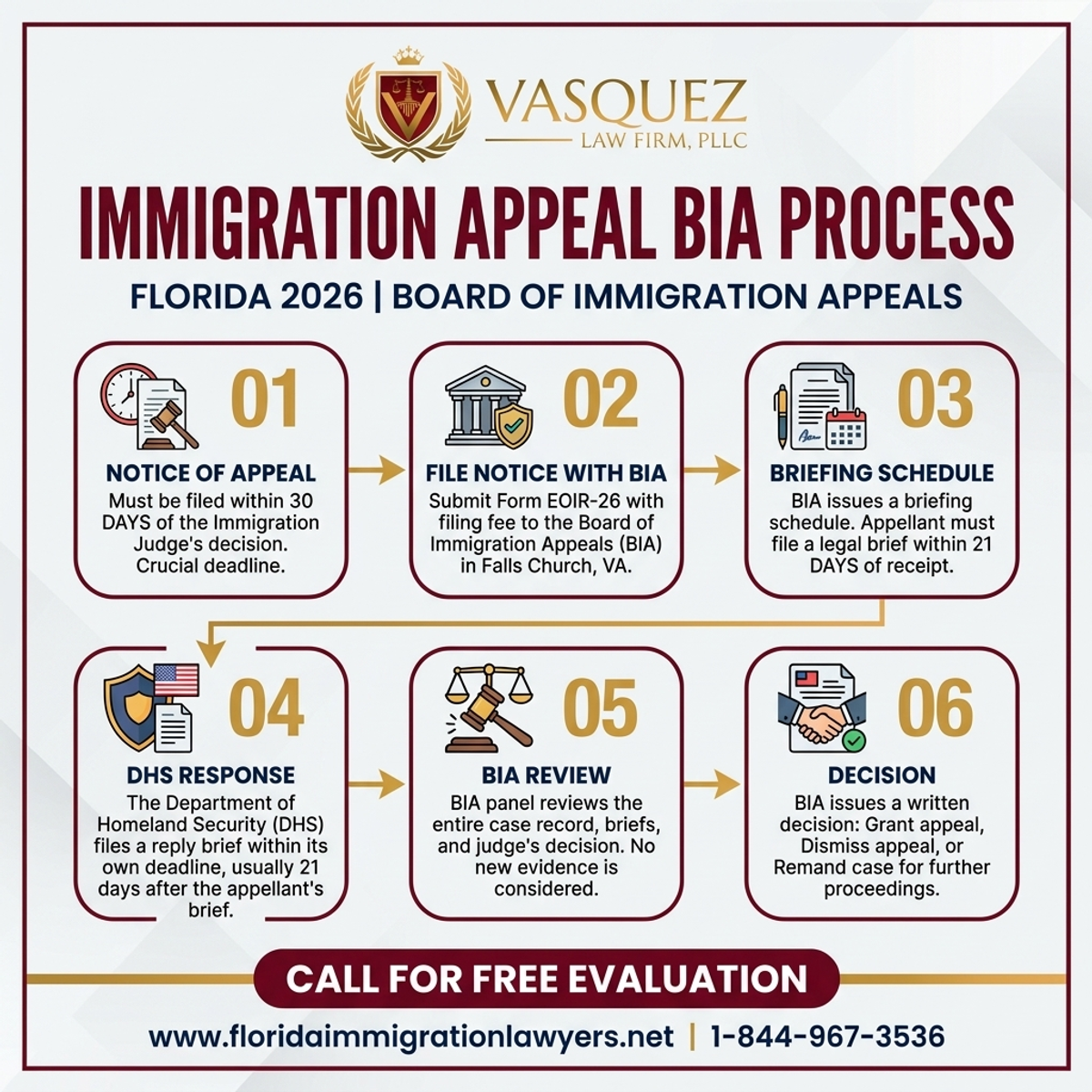
Step-by-Step Process — Immigration Appeal BIA Process in Florida 2026
Each step requires careful attention to detail and knowledge of immigration law.
The 30-day deadline for filing Form EOIR-26 is absolute. It begins counting from the date the immigration judge issues their decision, not when you receive it. Even a single day late can result in the automatic dismissal of your appeal, effectively ending your opportunity for administrative review. This strict adherence to deadlines highlights why securing prompt legal advice from experienced professionals like Florida Immigration Lawyers is not just beneficial, but often critical to preserving your rights.
When preparing the Notice of Appeal, specificity is key. Instead of a general statement like "the judge was wrong," you must articulate precise legal and factual errors. For example, you might argue that the judge misapplied a specific section of the Immigration and Nationality Act, failed to consider a crucial piece of evidence already in the record, or made a finding of fact that was not supported by substantial evidence. This detailed approach forms the foundation of your entire appeal strategy and guides the BIA's review.
Upon submission, the BIA will establish a briefing schedule, allowing both you (the appellant) and the government (DHS) to submit written legal arguments, known as briefs. These briefs are where the detailed legal analysis and citation to relevant case law and statutes truly come into play. After reviewing the briefs and the entire record of proceedings, the BIA will issue its decision. An affirmance means the judge's decision stands, a reversal means the judge's decision is overturned in your favor, and a remand sends the case back to the immigration judge for further action consistent with the BIA's instructions.
What Documents Do You Need for a BIA Appeal?
When preparing for an appeal, gathering the right documents is crucial. Here is a checklist of essential documents:
- Notice of Appeal (Form EOIR-26)
- Copy of the Immigration Judge's decision
- Proof of payment for the appeal fee
- Detailed written arguments (briefs)
- Supporting legal documents and case law references
These documents collectively support your arguments and demonstrate why the initial decision should be reconsidered.
The Notice of Appeal (Form EOIR-26) is more than just a cover sheet; it's your formal declaration of intent to appeal and must clearly identify the specific errors in the immigration judge's decision. This foundational document sets the stage for all subsequent arguments. Accompanying this, a clear copy of the Immigration Judge's decision is indispensable, as it provides the BIA with the exact ruling being challenged and the basis for the appeal.
Proof of payment for the appeal fee, typically $110, must be included unless a fee waiver (Form EOIR-26A) is granted. This waiver requires compelling evidence of financial hardship, and proper submission is crucial to avoid dismissal. Perhaps the most critical documents are the detailed written arguments, or briefs. These legal documents allow you to systematically present your case, citing relevant immigration laws, regulations, and judicial precedents to explain why the immigration judge's decision was legally flawed. A well-researched and clearly articulated brief can significantly sway the BIA's decision.
Finally, any supporting legal documents and case law references are vital. This includes copies of statutes, regulations, BIA precedent decisions, or federal court rulings that bolster your legal arguments. For example, if you are arguing a misapplication of asylum law, you would cite specific sections of the Immigration and Nationality Act and relevant BIA or Circuit Court cases. Organizing these documents meticulously and ensuring they are complete is a task best handled with the expertise of Florida Immigration Lawyers, who can ensure no critical detail is overlooked.
How Long Does the BIA Appeal Process Take in 2026?
The timeline for a BIA appeal can vary, but understanding typical timeframes can help manage expectations.
| Stage | Typical Timeframe | Notes |
|---|---|---|
| File Notice of Appeal | 30 days | From the date of decision |
| BIA Review | 6-12 months | Depends on case complexity |
| Decision Issued | Varies | Could be extended due to backlog |
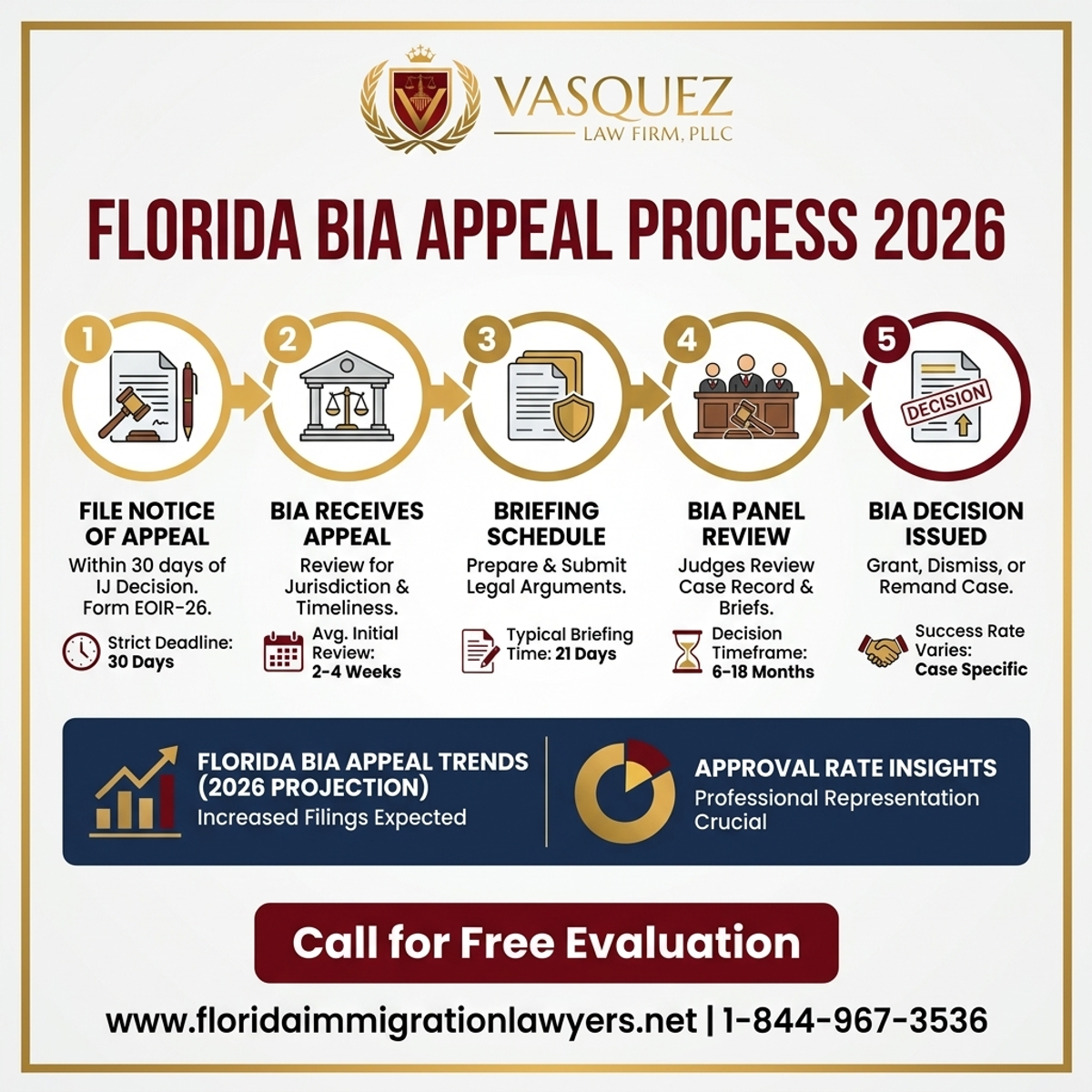
Key Statistics — Immigration Appeal BIA Process in Florida 2026
The process requires patience, and legal representation can help navigate any complexities or delays.
The 30-day window to file the Notice of Appeal is non-negotiable and starts precisely from the date of the immigration judge's decision, not receipt. This means immediate action is necessary once a decision is rendered. Once the appeal is properly filed, the BIA review period, typically ranging from 6 to 12 months, can fluctuate significantly. Factors influencing this timeframe include the complexity of the legal issues involved, whether oral arguments are requested (though rare), and the overall caseload and backlog at the BIA. Some cases may be resolved faster, while others, particularly those involving novel legal questions or extensive records, can take longer.
The duration until a final decision is issued is also highly variable. While many cases fall within the typical timeframe, significant backlogs can extend the wait considerably. During this period, individuals may experience prolonged uncertainty regarding their immigration status, which can impact employment, family planning, and overall well-being. This is where the guidance of Florida Immigration Lawyers becomes invaluable, as they can provide realistic expectations, monitor the case progress, and advise on any interim steps or potential strategies while awaiting a decision.
For instance, an asylum seeker appealing a denial might face over a year of waiting, during which their ability to work or travel might be restricted. An attorney can help manage these practical implications and ensure that all necessary steps are taken to keep the case active and moving forward. Patience is indeed a virtue in BIA appeals, but informed patience, guided by legal expertise, is even better.
Common Mistakes in BIA Appeals
- Missing the Filing Deadline: The appeal must be filed within 30 days, and missing this can forfeit the case.
- Incomplete Documentation: Failing to include all necessary documents can delay or dismiss the appeal.
- Poorly Written Arguments: Vague or unsupported arguments can weaken your case.
- Lack of Legal Representation:0: Navigating the appeal without a lawyer can lead to procedural errors.
- Not Understanding BIA's Scope: The BIA reviews legal errors, not factual disputes.
- Ignoring USCIS Notices: Failing to respond can have serious consequences.
- Overlooking Local Regulations: Florida-specific rules may apply, impacting your appeal.
Each of these common mistakes can severely jeopardize the success of a BIA appeal, transforming a potentially winnable case into a lost opportunity. Missing the 30-day filing deadline, for example, is an irreversible error that automatically leads to dismissal, regardless of the merits of your case. This strict adherence to timelines underscores the need for immediate and decisive action.
Incomplete documentation is another frequent pitfall. If your Notice of Appeal or fee waiver application lacks required information or supporting evidence, the BIA may reject it or issue a request for evidence, causing significant delays or even dismissal. Similarly, poorly written arguments that are vague, emotional, or lack proper legal citations fail to persuade the BIA, which relies on clear, logical reasoning and adherence to legal precedent. A brief that merely reiterates facts without identifying legal errors is unlikely to succeed.
Perhaps the most critical mistake is proceeding without legal representation. The BIA appeal process is intricate, involving complex legal statutes, regulations, and procedural rules that are difficult for non-attorneys to navigate. An experienced immigration lawyer can identify legal errors, craft compelling arguments, ensure all documentation is complete, and adhere to strict deadlines. For example, understanding the distinction between a factual dispute and a legal error, which is the BIA's focus, requires specialized knowledge. Florida Immigration Lawyers possess this expertise, ensuring your appeal is robust and procedurally sound.
Furthermore, ignoring notices from USCIS or other immigration agencies can have cascading negative effects on your overall immigration status, even while a BIA appeal is pending. All communications from immigration authorities must be promptly addressed. While the BIA is a federal administrative body, specific circuit court precedents or local operational procedures within Florida might subtly influence how cases are framed or argued, making local legal insight beneficial. Avoiding these common pitfalls is paramount, and the comprehensive support offered by Florida Immigration Lawyers can make all the difference in achieving a favorable outcome.
When to Call a Lawyer for Your BIA Appeal
Engaging a lawyer can significantly influence the outcome of your BIA appeal. If you face challenges such as language barriers, complex legal arguments, or have received a denial from USCIS, it's crucial to seek legal aid. Florida Immigration Lawyers specialize in these cases and can provide the guidance you need.
Do not navigate this process alone. Contact Florida Immigration Lawyers today.
The decision to involve an attorney in your BIA appeal is often the most critical choice you will make. Beyond simply understanding the law, an experienced immigration lawyer brings strategic insight, procedural expertise, and the ability to articulate complex legal arguments persuasively. For instance, if your case involves intricate issues like criminal inadmissibility, waivers, or complex asylum claims based on evolving country conditions, the specialized knowledge of a legal professional is indispensable.
Consider a scenario where an immigration judge denied your petition for cancellation of removal, citing a lack of 'exceptional and extremely unusual hardship.' An attorney from Florida Immigration Lawyers would meticulously review the judge's decision, identify if the judge misapplied the legal standard for hardship, or failed to properly weigh all the evidence presented. They would then craft a detailed brief, citing relevant BIA and federal court precedents to demonstrate the legal error, significantly strengthening your chances of a reversal or remand.
Even if you believe your case is straightforward, the nuances of immigration law can be deceptive. A lawyer can identify subtle legal errors that you might miss, such as a judge's failure to adequately consider a particular form of relief or an incorrect interpretation of a statute. Moreover, facing an appeal without legal counsel can be incredibly stressful and emotionally taxing. Having Florida Immigration Lawyers on your side provides not only expert legal representation but also peace of mind, allowing you to focus on your life while they navigate the complexities of the BIA process.
About Florida Immigration Lawyers
Florida Immigration Lawyers, based in Orlando, offer comprehensive legal services across Florida. Our experienced attorneys specialize in immigration appeals, deportation defense, and family immigration. With 24/7 availability and free case reviews, we prioritize your needs and ensure you receive the best possible advice.
Call us at 1-844-YO-PELEO or schedule a free consultation today.
At Florida Immigration Lawyers, our commitment extends beyond just legal representation; we are dedicated advocates for our clients, understanding the profound impact immigration decisions have on individuals and families. Our team brings a wealth of experience in diverse immigration matters, from complex BIA appeals to humanitarian protection cases, ensuring that no stone is left unturned in your pursuit of justice.
We pride ourselves on our client-centered approach, offering personalized strategies tailored to the unique circumstances of each case. Our attorneys stay abreast of the latest developments in immigration law, ensuring that our advice is always current and effective. When you choose Florida Immigration Lawyers, you're not just hiring an attorney; you're gaining a partner who will tirelessly fight for your rights and guide you through every step of the intricate immigration process.
Frequently Asked Questions About BIA Appeals
Can I submit new evidence to the BIA?
No, the Board of Immigration Appeals (BIA) generally does not accept new evidence. Its primary role is to review the existing record from the immigration judge's decision for errors of law or procedure. Submitting new evidence is typically not permitted unless there are very specific and rare circumstances, such as evidence of changed country conditions in an asylum case, and even then, it must meet strict criteria. Focus on legal arguments based on the original record.
What happens if the BIA remands my case?
If the BIA remands your case, it means they are sending it back to the immigration judge for further proceedings. This usually occurs when the BIA finds a legal error or procedural flaw in the initial decision and requires the judge to reconsider the case with new instructions. A remand is often a positive development, offering a fresh opportunity to present your arguments or address issues that were previously overlooked. Legal counsel is crucial at this stage to guide you.
Can I appeal a BIA decision?
Yes, if you are dissatisfied with the BIA's decision, you generally have the right to appeal it to a U.S. Circuit Court of Appeals. This is a higher federal court. The timeline for filing such an appeal is typically 30 days from the date of the BIA's decision. Appealing to a Circuit Court is a highly complex process, requiring specialized legal expertise, and it is strongly advised to consult with an experienced immigration attorney like Florida Immigration Lawyers to navigate this advanced stage effectively.
What is the filing fee for a BIA appeal?
The filing fee for a BIA appeal (Form EOIR-26) is typically $110, though this amount can change. It's essential to check the most current fee schedule on the Executive Office for Immigration Review (EOIR) website. If you cannot afford the fee, you may be eligible to apply for a fee waiver by submitting Form EOIR-26A, Motion to Reopen, Reconsider, or Appeal, along with supporting documentation demonstrating your financial hardship. Proper submission is key.
How important is the brief in a BIA appeal?
The legal brief is critically important in a BIA appeal. It is your primary opportunity to present detailed written arguments explaining why the immigration judge's decision was legally incorrect. A well-crafted brief clearly outlines the errors, cites relevant statutes and case law, and logically connects your arguments to the facts in the record. A poorly written or absent brief significantly weakens your chances of success, making professional legal assistance invaluable for this crucial document.
Sources and References
- U.S. Citizenship and Immigration Services (USCIS)
- Executive Office for Immigration Review (EOIR)
- 8 U.S.C. Chapter 12 - Immigration and Nationality Act
Related services: deportation defense services, asylum and refugee protection, immigration waivers, humanitarian protection programs.
This article provides general legal information and is not intended as legal advice. Every case is unique, and outcomes depend on specific facts and circumstances. Contact an attorney for advice about your particular situation.
Final CTA
For personalized assistance with your immigration appeal, contact Florida Immigration Lawyers at 1-844-YO-PELEO for a free consultation. Se Habla Español - Estamos aquí para ayudarle.
If you need legal assistance, learn more about immigration case consultation, or call us at 1-844-967-3536 for a free case review.
Do Not Navigate This Process Alone
Our experienced immigration attorneys are ready to fight for you. Get a free, confidential case review today.
Se Habla Español
Or leave your details and we’ll call you:
Free Evaluation in 24 Hours
Or talk to us right now

AI voice assistant — available 24/7
FreeFrequently Asked Questions

William J. Vásquez
Founding Attorney · Vasquez Law Firm
U.S. Air Force veteran and immigration attorney with years of hands-on U.S. immigration experience. J.D., NCCU School of Law. AILA member. Admitted to the 4th, 5th, and 11th Circuit Courts.
Available 24/7 - Free Evaluations
Reviewed for legal accuracy by William J. Vásquez
Licensed in North Carolina; U.S. immigration is federal practice.
Related Legal Services
Our Florida immigration attorneys can help you with free immigration consultation, business immigration and deportation defense. Call today at 1-844-YO-PELEO for a free case review.
Related Links
Related Topics
Free Legal Case Review
Discuss your case with our experienced attorneys. We're available 24/7.
Se Habla Español - Estamos aquí para ayudarle.
Related Articles
Immigration Lawyer Orlando Free Consultation in Florida
For individuals and families in Orlando, Florida, navigating the complexities of U.S. immigration law requires expert guidance. An immigration lawyer in Orlando offers crucial support for everything from visa applications and green card processes to naturalization and deportation defense. This comprehensive guide details what a free consultation covers, providing a step-by-step overview of immigration pathways, essential document checklists, and expected timelines in 2026. We also highlight common mistakes to avoid, discuss the critical role of legal counsel in deportation and asylum cases, and explain why choosing a local Orlando immigration attorney is beneficial. Florida Immigration Lawyers is dedicated to serving the diverse community of Orlando with compassionate, effective legal solutions, ensuring you receive personalized advice and robust representation for a successful immigration journey.
EAD Advance Parole Combo Card in Florida 2026
For individuals with a pending Form I-485, Application to Register Permanent Residence or Adjust Status, the EAD Advance Parole Combo Card is an essential document. This single card combines the authorization to work legally in the U.S. (Employment Authorization Document - EAD) with permission to travel internationally and re-enter without abandoning your green card application (Advance Parole). This guide from Florida Immigration Lawyers provides a comprehensive overview for applicants in Florida in 2026, covering eligibility, the step-by-step application process, required documents, expected processing times, and associated costs. We also highlight common mistakes to avoid and when to seek legal counsel to ensure a smooth and successful immigration journey. Understanding this vital card is key to maintaining stability while awaiting your permanent residency approval.
Consular Processing Lawyer for Florida Applicants
Consular processing is crucial for Florida applicants seeking immigrant visas. This guide covers every step from submitting an application to attending the embassy interview. Learn about document requirements, timelines, and common mistakes to avoid. Consult a lawyer for personalized assistance.
Immigration Rights: Know Your Legal Protections in Florida
Navigating immigration law in Florida requires a thorough understanding of your legal rights, especially when facing potential interactions with ICE. This guide from Florida Immigration Lawyers provides crucial information on constitutional protections, what to do during an ICE encounter, and the steps involved in the deportation process. Learn about your right to remain silent, the importance of legal counsel, and how to prepare essential documents. We also cover common mistakes to avoid, timelines for immigration court, and the costs associated with legal representation. Empower yourself with knowledge and ensure your family's safety by understanding your legal standing in Florida. Our firm offers dedicated support and free case reviews for residents across the state.