Immigration Rights: Know Your Legal Protections in Florida
Navigating immigration law in Florida requires a thorough understanding of your legal rights, especially when facing potential interactions with ICE. This guide from Florida Immigration Lawyers provides crucial information on constitutional protections, what to do during an ICE encounter, and the steps involved in the deportation process. Learn about your right to remain silent, the importance of legal counsel, and how to prepare essential documents. We also cover common mistakes to avoid, timelines for immigration court, and the costs associated with legal representation. Empower yourself with knowledge and ensure your family's safety by understanding your legal standing in Florida. Our firm offers dedicated support and free case reviews for residents across the state.

Knowing your immigration rights in Florida is crucial for all individuals, regardless of immigration status. These rights include the fundamental protections guaranteed by the U.S. Constitution, such as the right to remain silent, the right to speak with an attorney, and protection against unreasonable searches and seizures. Understanding these legal rights empowers you to interact confidently with law enforcement, including ICE agents, and helps prevent unintended legal consequences. It is always advised to carry identification, avoid signing documents you do not understand, and seek legal counsel promptly if detained or facing deportation.
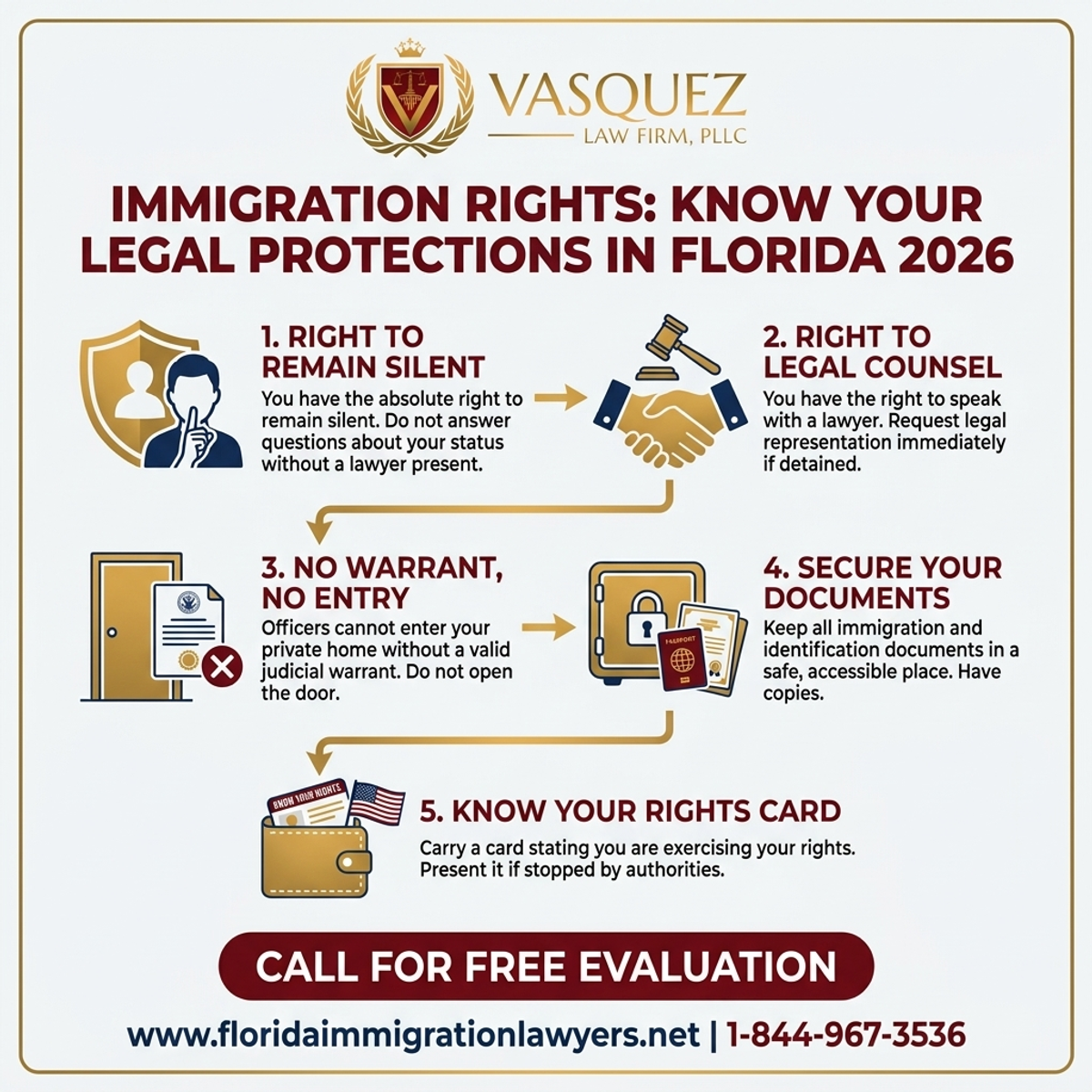
- Right to Remain Silent: You do not have to answer questions from law enforcement or immigration officials.
- Right to an Attorney: Request to speak with a lawyer immediately if detained or questioned.
- Do Not Open Your Door: Unless officials have a judicial warrant signed by a judge, you are not required to open your door.
- Carry Identification: Always have proof of identity and immigration status readily available.
- Document Everything: Note details of any interaction, including agent names and badge numbers.
Navigating the complex landscape of U.S. immigration law can be daunting, especially when concerns about your legal rights arise. For many immigrants and their families in Florida, the fear of an unexpected encounter with immigration officials like ICE (Immigration and Customs Enforcement) is a constant worry. Understanding your constitutional and statutory immigration rights is not just a legal formality; it is a fundamental aspect of protecting yourself and your loved ones. Whether you are a permanent resident, a visa holder, or undocumented, you possess certain legal protections under U.S. law.
This comprehensive guide from Florida Immigration Lawyers is designed to empower you with the knowledge needed to assert your rights effectively. We will delve into what your legal rights entail, provide actionable steps for interactions with ICE, outline the deportation process, and explain when it is critical to seek professional legal assistance. Our goal is to ensure that residents across Florida, including those in Orlando and the wider Central Florida region, are well-informed and prepared. Don't face these challenges alone. Call Florida Immigration Lawyers at 1-844-YO-PELEO for a free case review and let our experienced attorneys guide you.
What are your fundamental immigration rights in Florida?
All individuals present in the United States, regardless of their immigration status, are afforded certain constitutional rights. These fundamental immigration rights are enshrined in the U.S. Constitution and apply to everyone within U.S. borders, including those in Florida. These protections are essential safeguards against potential overreach by government officials, including Immigration and Customs Enforcement (ICE). Understanding these rights is your first line of defense.
Key among these are the Fourth Amendment right protecting against unreasonable searches and seizures, and the Fifth Amendment right to due process and protection against self-incrimination. This means you have the right to remain silent and do not have to answer questions about your immigration status or country of origin. You also have the right to an attorney, and if detained, you should request to speak with one immediately. Furthermore, you are not required to sign any document you do not understand or that you have not reviewed with legal counsel. These rights are not just theoretical; they are practical tools that can significantly impact the outcome of an interaction with immigration authorities. As of 2026, these constitutional principles remain steadfast, providing a critical framework for all immigrants in Florida.
How should you interact with ICE agents in Florida?
If approached by ICE agents in Florida, you have specific rights that should be asserted to protect yourself. You have the right to remain silent, and you should clearly state that you wish to exercise this right. Do not lie or present false documents, but you are not obligated to answer questions beyond providing identification. Always ask if you are free to leave; if the answer is yes, you may calmly walk away. If you are not free to leave, state that you wish to speak with an attorney.
Crucially, if ICE agents come to your home, you are not required to open your door unless they present a judicial warrant signed by a judge. This is distinct from an administrative warrant, which does not grant them permission to enter without your consent. Inspect any warrant through the closed door or window to verify it is judicial and specifically names you and your address. If they do not have such a warrant, you can decline entry. If agents enter without a valid warrant or your permission, do not resist physically but state clearly that you do not consent to the search. Document everything you can, including badge numbers and the duration of the interaction. Remember, your calm and informed assertion of these legal rights can make a significant difference in any encounter with immigration officials in Florida.
What documents should immigrants in Florida always carry or have accessible?
It is crucial for immigrants in Florida to carry valid identification and any documents proving their immigration status, such as a green card, work permit, or visa. Keep originals in a safe place and carry copies, or have digital access to them. Having these readily available can help verify your status and rights during an unexpected encounter with law enforcement.
While you are not legally required to carry your immigration documents at all times if you are over 18, it is highly advisable to do so. If you are a lawful permanent resident, you are required to carry your Alien Registration Card (Form I-551, or green card). For others, having copies of your visa, I-94 arrival/departure record, employment authorization document (EAD), or Notice of Action (Form I-797) can be beneficial. Store original documents in a secure, fireproof location, and ensure trusted family members or friends know where to access them. Additionally, consider compiling a 'ready file' with copies of all vital documents, contact information for your attorney, and emergency contacts. This preparedness is especially important in Florida, where immigration enforcement can be active. Ensure your children know what to do if you are detained, including who to contact and where important documents are located. This proactive approach can help protect your legal rights and streamline any necessary legal processes.
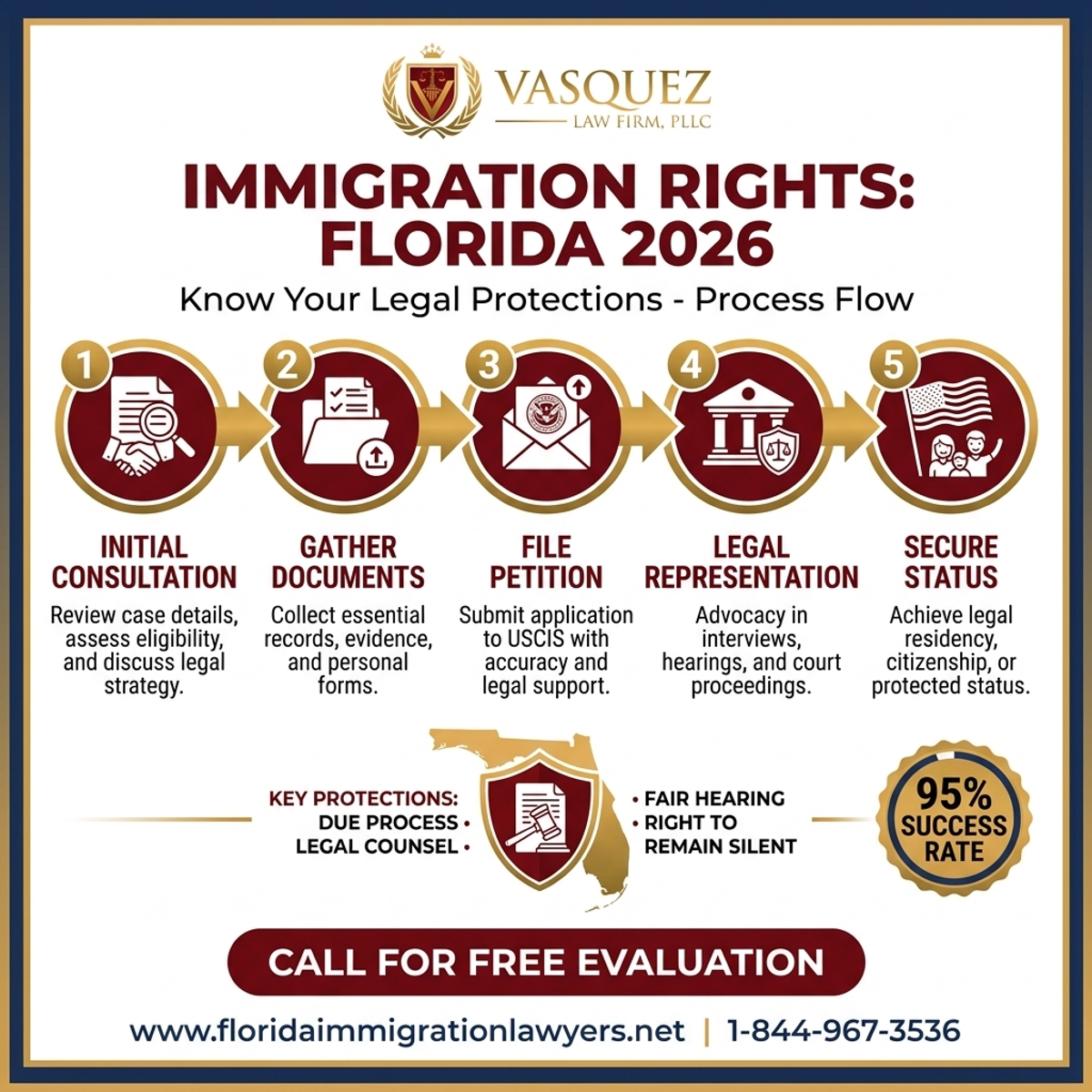
Step-by-Step Process — Immigration Rights: Know Your Legal Protections in Florida 2026
Understanding the deportation process: A step-by-step guide in Florida
The deportation, or removal, process can be a frightening prospect for any immigrant. Knowing the steps involved can help you prepare and respond effectively, especially with the assistance of an experienced immigration lawyer in Florida. As of 2026, the general process typically unfolds as follows:
-
Arrest and Detention: An individual may be arrested by ICE or other law enforcement and placed into immigration detention. This can occur after an encounter with ICE, a traffic stop, or even following a criminal arrest.
-
Notice to Appear (NTA): Once detained, or even if not detained, the government issues a Notice to Appear (Form I-862). This document formally charges an individual with being removable from the U.S. and instructs them to appear before an immigration judge. This is the official start of removal proceedings.
-
Bond Hearing (if detained): If an individual is detained, they may be eligible for a bond hearing before an immigration judge to request release from custody. The judge will determine if the individual poses a flight risk or a danger to the community. This hearing is critical for those held in facilities like the Krome Service Processing Center.
-
Master Calendar Hearing: This is the initial court appearance before an immigration judge, such as those at the Orlando Immigration Court. During this hearing, the judge will confirm the NTA charges, ensure the individual understands them, and provide an opportunity to seek relief from removal. The individual will state whether they admit or deny the charges and designate countries for removal.
-
Individual Hearing (Merits Hearing): If relief from removal is sought, the case proceeds to an Individual Hearing. This is essentially a trial where evidence is presented, witnesses may testify, and the immigration judge makes a decision on the merits of the case. This is where an individual might present their eligibility for asylum, cancellation of removal, or other forms of relief. It is during these hearings that the expertise of an attorney is invaluable.
-
Decision by Immigration Judge: After the Individual Hearing, the immigration judge issues a decision. This decision can order removal, grant relief, or terminate proceedings. If the judge orders removal, the individual has the right to appeal.
-
Appeals Process: If either party (the government or the individual) disagrees with the judge's decision, they can appeal to the Board of Immigration Appeals (BIA). Further appeals can be made to a U.S. Circuit Court of Appeals. This process can significantly extend the timeline of a case. For information on BIA decisions, you can refer to the Executive Office for Immigration Review (EOIR) website.
Navigating immigration court in Florida: Key timelines and expectations
Understanding the typical timelines for immigration court proceedings in Florida can help manage expectations and plan effectively. It's important to note that these are general estimates, and individual cases can vary significantly based on court backlogs, case complexity, and judge's schedules. As of 2026, the Orlando Immigration Court, like others nationwide, faces substantial caseloads. Here is a general overview:
| Stage | Typical Timeframe | Notes |
|---|---|---|
| Issuance of Notice to Appear (NTA) to Master Calendar Hearing | 6 months to 2+ years | Highly variable depending on court backlog and urgency of case. Can be expedited for detained individuals. |
| Master Calendar Hearing to Individual Hearing | 6 months to 3+ years | Depends on complexity, number of witnesses, and judge's calendar. Multiple master calendar hearings are common. |
| Individual Hearing to Decision | Immediate to 3 months | Often, the judge issues an oral decision at the end of the hearing. Written decisions can take longer. |
| Decision to Appeal (Board of Immigration Appeals - BIA) | 30 days to file appeal | Strict deadlines apply. BIA decisions can take 1-2 years. |
| BIA Decision to Circuit Court Appeal | 30 days to file petition for review | Further appeals to federal courts can add several years to the process. |
Key Statistics — Immigration Rights: Know Your Legal Protections in Florida 2026
These timelines underscore the importance of early legal intervention and meticulous preparation. Delays are common, and maintaining contact with your attorney and the court is essential. For up-to-date information on case status, you can check the USCIS website or the EOIR automated case information system.
Legal representation: Costs and considerations for immigrants in Florida
Securing experienced legal representation is one of the most critical steps an immigrant can take when navigating their rights or facing immigration proceedings in Florida. While concerns about legal fees are understandable, the cost of not having proper representation can be far greater, potentially leading to deportation or loss of crucial opportunities. Legal fees for immigration cases can vary widely based on the complexity of the case, the attorney's experience, and the services required. Florida Immigration Lawyers believes in transparent fee structures and offers various payment options to help make quality legal assistance accessible.
| Item | Typical Fee | Notes |
|---|---|---|
| Initial Consultation | Free to $300 | Many firms, including Florida Immigration Lawyers, offer free initial case reviews. |
| Attorney Fees (Flat Fee - e.g., Green Card Application) | $2,500 - $10,000+ | Varies greatly by case type (e.g., family petition, asylum, deportation defense). Flat fees are common for defined services. |
| Attorney Fees (Hourly Rate - e.g., Complex Litigation) | $250 - $500+ per hour | Typically reserved for highly complex cases, appeals, or court appearances where the scope is less predictable. |
| USCIS Filing Fees | $0 - $2,000+ | Mandatory government fees for applications (e.g., I-130, I-485, I-765). Fees are subject to change by USCIS. |
| Biometrics Fee | $85 (as of 2026) | Required for most applications involving fingerprinting and background checks. |
| Translation Fees | $20 - $100+ per page | Required for any foreign-language documents submitted to USCIS or the court. |
| Court Costs/Fees | Varies | May include fees for motions, appeals to the BIA, or other judicial filings. |
These figures are illustrative and can change. For example, some USCIS fees increased in 2024, and further adjustments are possible in 2026. Always confirm current fees with your attorney and on the official USCIS website. Many firms, including ours, offer payment plans to ease the financial burden. Investing in legal counsel is an investment in your future and your ability to navigate the complex U.S. immigration system successfully. For specific details on costs related to your case, we encourage you to schedule a free consultation with our team.
Do not navigate this process alone. The complexities of immigration law and the potential consequences of missteps are too significant to face without expert guidance. Contact Florida Immigration Lawyers today to ensure your rights are protected and your case is handled with the utmost care and professionalism.
Common Mistakes to Avoid Regarding Your Immigration Rights
Navigating immigration matters can be fraught with peril, and even seemingly minor errors can have significant, long-lasting consequences. Being aware of common mistakes can help immigrants in Florida protect their legal standing and avoid unnecessary complications. Here are 7-12 crucial mistakes to avoid:
-
Lying or Providing False Information to Immigration Officials: Any misrepresentation, whether intentional or unintentional, can lead to charges of fraud, permanent bars to immigration benefits, and even criminal penalties. Always be truthful.
-
Signing Documents Without Understanding Them: Never sign any document presented by an immigration official if you do not fully understand its contents or implications. You have the right to have documents translated and reviewed by an attorney.
-
Not Carrying Proper Identification: While not always legally required for non-LPRs, failing to carry proof of identity or immigration status can lead to prolonged detention and difficulty in asserting your rights. Lawful permanent residents are required by 8 U.S.C. § 1304(e) to carry their green card.
-
Missing Court Dates or Deadlines: Failure to appear for an immigration court hearing (e.g., at the Orlando Immigration Court) can result in an in absentia removal order, making it extremely difficult to reopen your case or seek future immigration benefits. Missing application deadlines can lead to denials.
-
Resisting Arrest or Obstructing Justice: While you can assert your rights verbally, physically resisting an officer can lead to criminal charges, even if the initial stop was unlawful. Remain calm and compliant while asserting your rights.
-
Voluntarily Returning to Your Home Country Without Legal Advice: If you are in removal proceedings, accepting 'voluntary departure' without understanding its implications can waive your right to appeal or seek other forms of relief, potentially barring you from future entry.
-
Traveling Internationally Without Consulting an Attorney: Leaving the U.S. while an application is pending or if you have a prior removal order can trigger serious issues, including being denied re-entry or triggering an automatic removal.
-
Overstaying a Visa: Remaining in the U.S. beyond the authorized period of your visa can accrue unlawful presence, leading to bars to future re-entry (3-year, 10-year, or permanent bars) and making it harder to adjust status.
-
Not Disclosing Prior Criminal History: Attempting to conceal past arrests or convictions, no matter how minor, can be viewed as misrepresentation and lead to denial of benefits or even criminal prosecution.
-
Failing to Update USCIS of Address Changes: All non-citizens are legally required to notify USCIS of any address change within 10 days of moving, using Form AR-11. Failure to do so can result in fines, imprisonment, or even deportation, as per 8 CFR § 265.1.
-
Trusting Unlicensed 'Notarios' for Legal Advice: In Florida, as in many states, it is illegal for 'notarios públicos' (notaries public) to provide immigration legal advice. They are not attorneys and can cause severe damage to your case. Always seek advice from a licensed attorney.
-
Ignoring Communications from USCIS or Immigration Court: Failing to respond to Requests for Evidence (RFEs), Notices of Intent to Deny (NOIDs), or court notices can lead to automatic denials or removal orders. Open and respond to all official mail promptly.
When to Call a Lawyer at Florida Immigration Lawyers
The complexities of immigration law and the potential life-altering consequences of immigration proceedings mean that legal representation is not just beneficial, it's often essential. Knowing when to call a lawyer at Florida Immigration Lawyers can make all the difference in protecting your rights and achieving a favorable outcome. You should seek immediate legal counsel if:
- You are approached by ICE or any law enforcement: Even if you believe you have nothing to hide, an attorney can ensure your rights are protected during any interaction.
- You receive a Notice to Appear (NTA): This signifies the start of removal proceedings, and you need an attorney to represent you in immigration court.
- You or a family member is detained by ICE: An attorney can help determine eligibility for bond and work towards release.
- You are facing deportation or removal proceedings: Our attorneys specialize in deportation defense, exploring all available avenues for relief.
- You are applying for any immigration benefit (e.g., green card, visa, asylum, citizenship): While some forms seem simple, errors can lead to delays or denials. Our team assists with family immigration, business immigration, asylum, and citizenship applications.
- Your immigration application has been denied: An attorney can help you understand the reasons for denial and explore options for appeal or reapplication.
- You have a prior criminal record: Certain criminal convictions can have severe immigration consequences, including inadmissibility or deportability.
- You have questions about your eligibility for any immigration status: Our attorneys can assess your situation and advise on the best path forward.
At Florida Immigration Lawyers, we understand the stress and uncertainty that come with immigration challenges. Our dedicated team is here to provide compassionate, expert guidance every step of the way. We serve clients throughout Florida, offering personalized strategies tailored to your unique circumstances.
About Florida Immigration Lawyers
Florida Immigration Lawyers is a leading law firm dedicated to providing comprehensive and compassionate immigration legal services across the entire state of Florida. With our primary office located in Orlando, we are strategically positioned to serve individuals and families throughout Central Florida and beyond. Our team of highly skilled and experienced immigration attorneys is committed to upholding the rights of immigrants and helping them achieve their American dreams.
We specialize in a wide range of immigration matters, including deportation defense, family-based petitions, employment visas, asylum claims, naturalization, and complex litigation. We understand that every case is unique and requires a personalized approach. Our firm prides itself on offering accessible legal counsel, free case reviews, and being available 24/7 to address your most pressing concerns. We are proud to offer bilingual services, ensuring that all clients receive clear and effective communication. When you choose Florida Immigration Lawyers, you choose a partner dedicated to fighting for your rights and guiding you through every step of your immigration journey. We are here to help you navigate the system with confidence and peace of mind. Schedule a free consultation today.
Sources and References
- U.S. Citizenship and Immigration Services (USCIS)
- Executive Office for Immigration Review (EOIR)
- U.S. Department of State
- 8 U.S.C. Chapter 12 - Immigration and Nationality Act (INA)
- 8 CFR - Code of Federal Regulations, Title 8 (Aliens and Nationality)
- U.S. Constitution: Fourth Amendment, Fifth Amendment
- 8 U.S.C. § 1304(e) - Certificate of alien registration or alien registration receipt card; personal possession; penalties
- 8 CFR § 265.1 - Address reporting
Related services: immigration waivers, humanitarian protection programs, DACA renewal and applications, temporary protected status (TPS).
This article provides general legal information and is not intended as legal advice. Every case is unique, and outcomes depend on specific facts and circumstances. Contact an attorney for advice about your particular situation. Immigration laws are subject to change.
Understanding your immigration rights is your strongest defense against uncertainty and fear. Do not wait until you are in a crisis to seek knowledge and legal support. Empower yourself with information and the backing of experienced legal professionals. Contact Florida Immigration Lawyers today at 1-844-YO-PELEO for your free case review. Se Habla Español - Estamos aquí para ayudarle.
Do Not Navigate This Process Alone
Our experienced immigration attorneys are ready to fight for you. Get a free, confidential case review today.
Se Habla Español
Or leave your details and we’ll call you:
Free Evaluation in 24 Hours
Or talk to us right now

AI voice assistant — available 24/7
FreeFrequently Asked Questions

William J. Vásquez
Founding Attorney · Vasquez Law Firm
U.S. Air Force veteran and immigration attorney with years of hands-on U.S. immigration experience. J.D., NCCU School of Law. AILA member. Admitted to the 4th, 5th, and 11th Circuit Courts.
Available 24/7 - Free Evaluations
Reviewed for legal accuracy by William J. Vásquez
Licensed in North Carolina; U.S. immigration is federal practice.
Related Legal Services
Our Florida immigration attorneys can help you with family immigration services, immigration lawyer cost in Florida and experienced immigration attorneys. Call today at 1-844-YO-PELEO for a free case review.
Related Links
Related Topics
Free Legal Case Review
Discuss your case with our experienced attorneys. We're available 24/7.
Se Habla Español - Estamos aquí para ayudarle.
Related Articles
Immigration Lawyer Orlando Free Consultation in Florida
For individuals and families in Orlando, Florida, navigating the complexities of U.S. immigration law requires expert guidance. An immigration lawyer in Orlando offers crucial support for everything from visa applications and green card processes to naturalization and deportation defense. This comprehensive guide details what a free consultation covers, providing a step-by-step overview of immigration pathways, essential document checklists, and expected timelines in 2026. We also highlight common mistakes to avoid, discuss the critical role of legal counsel in deportation and asylum cases, and explain why choosing a local Orlando immigration attorney is beneficial. Florida Immigration Lawyers is dedicated to serving the diverse community of Orlando with compassionate, effective legal solutions, ensuring you receive personalized advice and robust representation for a successful immigration journey.
EAD Advance Parole Combo Card in Florida 2026
For individuals with a pending Form I-485, Application to Register Permanent Residence or Adjust Status, the EAD Advance Parole Combo Card is an essential document. This single card combines the authorization to work legally in the U.S. (Employment Authorization Document - EAD) with permission to travel internationally and re-enter without abandoning your green card application (Advance Parole). This guide from Florida Immigration Lawyers provides a comprehensive overview for applicants in Florida in 2026, covering eligibility, the step-by-step application process, required documents, expected processing times, and associated costs. We also highlight common mistakes to avoid and when to seek legal counsel to ensure a smooth and successful immigration journey. Understanding this vital card is key to maintaining stability while awaiting your permanent residency approval.
Child Status Protection Act: Navigating Aging Out in Florida
The Child Status Protection Act (CSPA) is crucial for families in Florida dealing with children aging out of immigration eligibility. Learn how CSPA protects derivative beneficiaries and the steps to apply for protection. Contact Florida Immigration Lawyers for expert assistance.
Special Immigrant Juvenile Status Florida: Your 2026 Guide
Special Immigrant Juvenile Status (SIJS) offers a crucial pathway to lawful permanent residency for vulnerable children in Florida who have experienced abuse, neglect, or abandonment. This 2026 guide explains the eligibility criteria, highlighting the vital role of a Florida state court order, which must find the child dependent and unable to reunite with their parents due to the aforementioned hardships. The article details the multi-step application process, from obtaining the predicate order to filing federal petitions with USCIS and ultimately adjusting status to a Green Card. It also covers typical timelines, potential costs, and the life-changing benefits SIJS provides, such as protection from deportation and access to education. For families and guardians navigating this complex process, understanding the requirements and avoiding common pitfalls is essential. Florida Immigration Lawyers stands ready to provide expert legal guidance.