Schedule A Nurse Immigration for Florida Hospitals in 2026
Explore Schedule A nurse immigration options for Florida hospitals in 2026. Learn about the streamlined process, necessary documentation, and how to avoid common pitfalls. Contact Florida Immigration Lawyers for expert guidance.
- Schedule A category offers streamlined processing
- EB-3 visas are primarily used
- Florida hospitals have high demand for nurses
- Understanding requirements is crucial for applicants
Introduction
As the demand for healthcare professionals in Florida continues to rise, Schedule A nurse immigration provides a vital pathway for qualified nurses to work in the United States. This process simplifies the immigration journey by removing certain hurdles, allowing nurses to quickly fill critical roles in hospitals across Orlando and Central Florida. In this article, we will explore the specifics of Schedule A immigration for nurses in Florida, providing a comprehensive guide to the process, requirements, and benefits. Call Florida Immigration Lawyers at 1-844-YO-PELEO for a free case review.
Florida's unique demographics, including a large retiree population and a booming tourism industry, place immense pressure on its healthcare infrastructure. This creates a persistent and urgent need for skilled nursing professionals. Schedule A classification is a direct response to this national shortage, particularly benefiting states like Florida where the demand is especially acute. It's a win-win: qualified foreign nurses gain access to rewarding careers in the U.S., and Florida hospitals can maintain high standards of patient care.
Navigating the U.S. immigration system can be daunting, but Schedule A offers a significantly expedited route for eligible nurses. By understanding each step, from securing a job offer to obtaining your visa, applicants can approach the process with confidence. Our goal is to demystify Schedule A nurse immigration, offering clear guidance and practical advice to help you achieve your professional aspirations in the Sunshine State.
What is Schedule A Nurse Immigration?
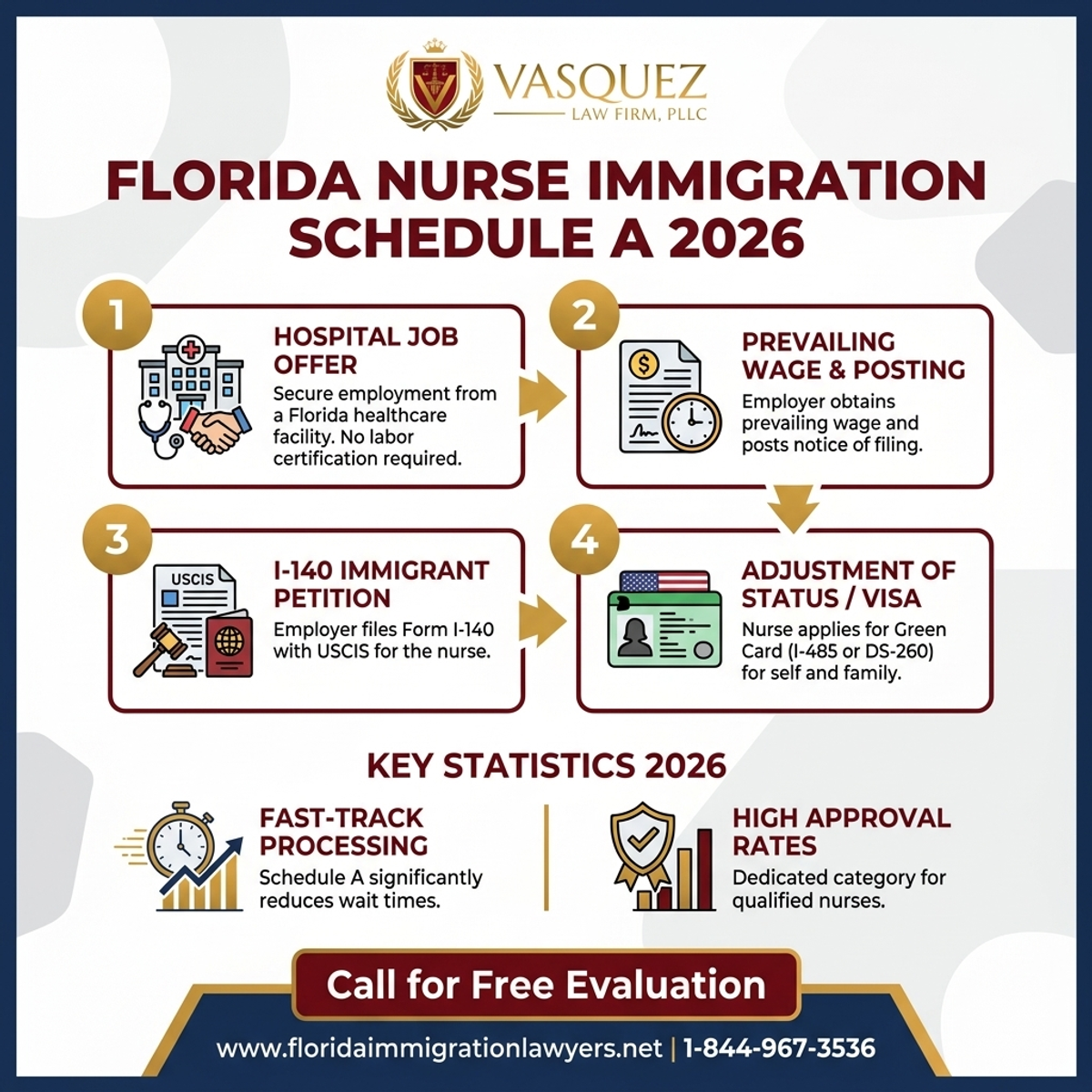
Schedule A is a designation by the U.S. Department of Labor that allows certain occupations, including registered nurses, to bypass the labor certification process typically required for employment-based immigration. This means that nurses can apply directly for an EB-3 visa, allowing them to work in the U.S. more quickly.
The traditional labor certification process, known as PERM (Program Electronic Review Management), is a lengthy and complex procedure designed to ensure that hiring a foreign worker will not adversely affect U.S. workers. It requires employers to conduct extensive recruitment efforts to prove that no qualified U.S. workers are available for the position. This can add many months, or even over a year, to the immigration timeline.
By contrast, Schedule A occupations are pre-certified by the Department of Labor, meaning the DOL has already determined that there aren't enough U.S. workers who are able, willing, qualified, and available for these roles, and that employing foreign nationals in these occupations will not negatively impact U.S. workers' wages and working conditions. This pre-certification dramatically streamlines the process, making it an invaluable pathway for nurses seeking to practice in high-demand areas like Florida.
Specifically, Schedule A, Group I, covers professional nurses. This classification acknowledges the critical and ongoing shortage of registered nurses nationwide. For a foreign nurse, this means their sponsoring employer does not need to go through the arduous PERM process, allowing them to proceed directly to filing Form I-140, Immigrant Petition for Alien Worker, with USCIS. This expedited route is a cornerstone of addressing the healthcare staffing crisis in Florida hospitals and clinics.
How to Apply for a Schedule A Visa as a Nurse?
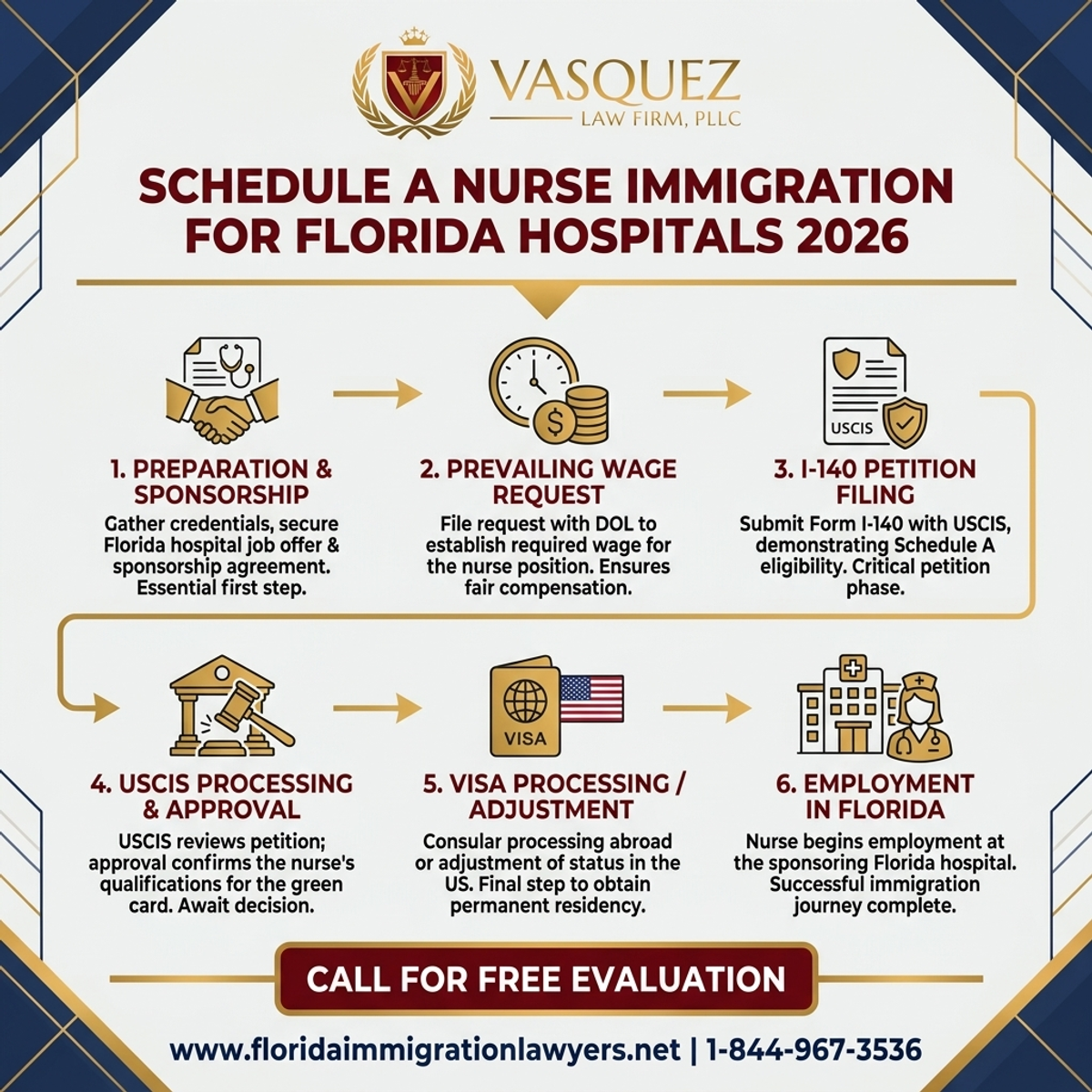
To apply for a Schedule A visa as a nurse, you must meet several requirements and follow a specific process. The steps include:
- Obtain a nursing license in the state of intended employment, such as Florida.
- Secure a job offer from a U.S. employer, typically a hospital or healthcare facility.
- File Form I-140, Immigrant Petition for Alien Worker, with the U.S. Citizenship and Immigration Services (USCIS).
- Submit evidence of U.S. nursing license and visa screen certification from the Commission on Graduates of Foreign Nursing Schools (CGFNS).
- Attend a visa interview at a U.S. consulate or embassy if applying from abroad.
Step-by-Step Process — Schedule A Nurse Immigration for Florida Hospitals in 2026
Ensuring all documentation is accurate and complete is crucial for a smooth application process.
Let's delve deeper into these critical steps. Obtaining a Florida nursing license often involves passing the NCLEX-RN exam and meeting the specific educational requirements set by the Florida Board of Nursing. For foreign-educated nurses, this typically means having your credentials evaluated and potentially completing additional coursework to meet U.S. standards. Securing a legitimate, full-time job offer from a U.S. healthcare facility, such as an Orlando hospital, is paramount, as your employer will be your sponsor and initiate the I-140 petition.
The Form I-140 is the cornerstone of your employment-based immigration. Your sponsoring employer files this petition on your behalf, providing evidence of your qualifications and the job offer. This is where the Schedule A designation truly shines, as the employer does not need to submit a labor certification application. Instead, they include documentation proving your eligibility as a professional nurse under Schedule A. After the I-140 is approved, the process moves to either adjustment of status (if you are already in the U.S. and eligible) or consular processing (if you are abroad).
The visa screen certification from CGFNS (Commission on Graduates of Foreign Nursing Schools) is a mandatory step that verifies your education, license, and English language proficiency meet U.S. requirements. This certification is essential for both the I-140 petition and the final visa issuance. Finally, the visa interview at a U.S. consulate or embassy is where an officer will review your application, ask questions about your background and intentions, and make a final determination on your visa. Proper preparation for this interview, often with the guidance of Florida Immigration Lawyers, can significantly increase your chances of success.
Document Checklist for Schedule A Nurse Immigration
- Nursing license from Florida Board of Nursing
- Job offer letter from a U.S. employer
- Form I-140, Immigrant Petition for Alien Worker
- Visa screen certification from CGFNS
- Proof of English proficiency (if required)
- Passport and identity documents
Each document on this checklist plays a vital role in your Schedule A nurse immigration application. Your Florida nursing license must be current and unencumbered, demonstrating your legal authorization to practice in the state where you intend to work. The job offer letter should be a formal document from a U.S. healthcare employer, clearly outlining the full-time, permanent nursing position, salary, and job duties. This letter is crucial evidence of your bona fide employment opportunity.
Form I-140, the Immigrant Petition for Alien Worker, is filed by your sponsoring employer and must be meticulously prepared with all supporting documentation. This includes proof of the employer's ability to pay the offered wage and your qualifications as a registered nurse. The visa screen certification from CGFNS is a comprehensive evaluation confirming that your foreign nursing education and licenses are comparable to U.S. standards and that you meet English language proficiency requirements, a non-negotiable step for healthcare professionals.
Proof of English proficiency, if not covered by your CGFNS visa screen or if you are from a non-exempt country, typically involves official scores from recognized tests like IELTS or TOEFL. Finally, your passport and other identity documents must be valid and accurately reflect your personal information. Always ensure you have multiple copies of all documents, and any foreign-language documents are accompanied by certified English translations to avoid unnecessary delays. Consulting with Florida Immigration Lawyers can help ensure your documentation is flawless.
Timeline and Processing Expectations
The timeline for Schedule A nurse immigration can vary based on several factors, including USCIS processing times and individual circumstances. Generally, applicants can expect the following stages:
| Stage | Typical Timeframe | Notes |
|---|---|---|
| License Verification | 1-3 months | Depends on state processing |
| Form I-140 Approval | 6-8 months | Premium processing available |
| Visa Interview | 2-4 months | Consulate scheduling varies |
| Final Processing | 1-2 months | Upon visa approval |
Key Statistics — Schedule A Nurse Immigration for Florida Hospitals in 2026
While these timeframes provide a general guideline, it's crucial to understand that they are estimates. Factors such as the volume of applications USCIS is receiving, the specific service center handling your petition, and whether your country of origin is current on the Visa Bulletin can significantly impact your waiting period. Premium processing for Form I-140, while incurring an additional fee, can reduce the approval time to as little as 15 calendar days, which can be a game-changer for employers and nurses facing urgent needs.
After I-140 approval, the next major factor is the availability of an immigrant visa number. For most nurses, the EB-3 category is generally "current," meaning a visa number is immediately available. However, for some countries with high demand, there might be a backlog, requiring applicants to wait for their priority date to become current. This is where regular consultation of the Department of State's Visa Bulletin becomes essential.
For those adjusting status within the U.S., concurrent filing of Form I-485 (Application to Register Permanent Residence or Adjust Status) with the I-140 can further streamline the process, potentially allowing for work authorization (EAD) and travel permission (Advance Parole) while the green card application is pending. Regardless of the path, maintaining open communication with your employer and immigration attorney from Florida Immigration Lawyers is vital to manage expectations and promptly address any requests for evidence (RFEs) from USCIS.
Cost Factors and Fee Breakdown
Understanding the costs associated with Schedule A nurse immigration is essential for planning. While fees can change, here is a typical breakdown:
| Item | Typical Fee | Notes |
|---|---|---|
| Form I-140 Filing | Varies | USCIS fee schedule applies |
| Visa Screen Certification | Varies | Set by CGFNS |
| Medical Examination | Varies | Required for visa processing |
Do not navigate this process alone. Contact Florida Immigration Lawyers today.
Beyond the listed items, applicants should anticipate additional expenses. The USCIS filing fee for Form I-140, for instance, is subject to change, so always check the latest fee schedule on the official USCIS website. If you opt for premium processing, an additional significant fee will apply, but it guarantees faster processing for your I-140 petition. The CGFNS Visa Screen certification also has its own fee structure, which can vary based on the services required, such as credential evaluation and English proficiency testing.
The mandatory medical examination, conducted by a USCIS-approved civil surgeon, is another variable cost. Prices can differ based on the physician and location, and it's essential to ensure the examination includes all required vaccinations and tests. Furthermore, don't overlook indirect costs such as legal fees for an experienced immigration attorney, which are highly recommended for a smooth process. These fees cover expert guidance, document preparation, and representation throughout your case.
Other potential costs include fees for obtaining certified copies of documents, professional translations, passport photos, and travel expenses for interviews or medical exams. A comprehensive financial plan is crucial for managing these expenses effectively. While the upfront costs may seem substantial, viewing them as an investment in a long-term career in the U.S. can help put them into perspective. Florida Immigration Lawyers can provide a detailed breakdown of anticipated costs during your free consultation at 1-844-YO-PELEO.
Common Mistakes to Avoid
- **Not verifying nursing license requirements for Florida, resulting in application delays.** Always start by thoroughly researching the Florida Board of Nursing website. Requirements for foreign-educated nurses can differ significantly from those for U.S. graduates, often involving credential evaluation, specific coursework, and passing the NCLEX-RN. Failing to meet these exact standards from the outset can lead to significant delays or even outright rejection of your licensure application.
- **Submitting incomplete Form I-140, which can lead to rejections.** The I-140 petition requires precise information and comprehensive supporting documentation. Any missing forms, unsigned documents, or insufficient evidence (e.g., proving the employer's ability to pay the offered wage) will likely result in a Request for Evidence (RFE) or, worse, a denial. Double-check every item against USCIS checklists and consider professional legal review.
- **Failing to obtain visa screen certification, a mandatory requirement.** The CGFNS Visa Screen Certificate is non-negotiable for foreign healthcare workers seeking an occupational visa or green card. This certification validates your educational credentials, professional license, and English language proficiency. Without it, your I-140 petition cannot be approved, and you will not be able to obtain your visa.
- **Ignoring English proficiency requirements, potentially causing denials.** Even if you come from an English-speaking country, you might still need to demonstrate proficiency through standardized tests like IELTS, TOEFL, or PTE Academic, unless specifically exempted. Many applicants underestimate this requirement, leading to delays. Ensure you meet the minimum scores and submit valid test results.
- **Overlooking USCIS fee changes, leading to unexpected costs.** USCIS fees are subject to change, often without extensive prior notice. Always verify the current filing fees on the official USCIS website immediately before submitting any petition. Sending an incorrect fee amount will cause your application to be rejected and returned, delaying your entire process.
- **Missing visa interview appointments, which can significantly delay processing.** Once your interview is scheduled at a U.S. consulate or embassy, it is imperative to attend on time and with all required documents. Missing an appointment without proper rescheduling can lead to significant delays, and in some cases, even the cancellation of your application, requiring you to restart the process.
- **Providing inaccurate information on visa applications, risking bans or denials.** Any misrepresentation, whether intentional or unintentional, on your immigration forms can have severe consequences, including a finding of fraud or misrepresentation. This can lead to a permanent bar from entering the U.S. or a lengthy visa ban. Always be truthful and accurate in all your submissions.
When to Call a Lawyer
Navigating the Schedule A nurse immigration process can be complex. It is advisable to consult with an immigration lawyer if you encounter any of the following situations:
- Difficulties in obtaining a nursing license in Florida
- Complications with Form I-140 submission
- Visa denials or delays
- Uncertainty about documentation requirements
Florida Immigration Lawyers are here to help with all aspects of the immigration process.
Beyond these specific points, a lawyer's expertise becomes invaluable if you have a complex immigration history, such as previous visa denials, overstays, or any minor criminal infractions. These issues, which might seem insignificant to you, can significantly impact your eligibility and require nuanced legal strategies to overcome. An attorney can assess your unique situation, identify potential obstacles early on, and develop a robust plan to mitigate risks.
Sources and References
- U.S. Citizenship and Immigration Services (USCIS)
- Executive Office for Immigration Review (EOIR)
- U.S. Department of State
- Immigration and Nationality Act (INA), 8 U.S.C. Chapter 12
Do Not Navigate This Process Alone
Our experienced immigration attorneys are ready to fight for you. Get a free, confidential case review today.
Se Habla Español
Or leave your details and we’ll call you:
Free Evaluation in 24 Hours
Or talk to us right now

AI voice assistant — available 24/7
FreeFrequently Asked Questions

William J. Vásquez
Founding Attorney · Vasquez Law Firm
U.S. Air Force veteran and immigration attorney with years of hands-on U.S. immigration experience. J.D., NCCU School of Law. AILA member. Admitted to the 4th, 5th, and 11th Circuit Courts.
Available 24/7 - Free Evaluations
Reviewed for legal accuracy by William J. Vásquez
Licensed in North Carolina; U.S. immigration is federal practice.
Related Legal Services
Our Florida immigration attorneys can help you with asylum protection, citizenship and naturalization and immigration practice areas. Call today at 1-844-YO-PELEO for a free case review.
Related Links
Related Topics
Free Legal Case Review
Discuss your case with our experienced attorneys. We're available 24/7.
Se Habla Español - Estamos aquí para ayudarle.
Related Articles
DUI Immigration Consequences in Florida 2026
A DUI conviction in Florida can have severe immigration consequences, potentially leading to inadmissibility, deportation, or denial of immigration benefits. For non-citizens, a DUI is not just a traffic offense but a serious criminal matter that federal immigration law scrutinizes closely. Factors like multiple offenses, injury, or property damage can escalate a simple DUI to a Crime Involving Moral Turpitude (CIMT) or even an aggravated felony, triggering mandatory detention and removal proceedings. Understanding the specific nature of your Florida conviction and its interpretation under the Immigration and Nationality Act (INA) is crucial. This article outlines how DUIs impact immigration status, the grounds for inadmissibility and deportation, a step-by-step guide to navigating the process, essential documentation, and expected timelines for 2026. We also highlight common mistakes to avoid and when to seek legal counsel from an experienced immigration attorney. Florida Immigration Lawyers offers comprehensive support for individuals facing these challenging situations, providing expert guidance through complex legal landscapes.
Dual Citizenship Lawyer in Florida: What You Need to Know
For Florida residents, the concept of dual citizenship, or holding two passports, offers a compelling blend of opportunities and challenges. While the U.S. generally permits dual nationality, the path to achieving this status requires a meticulous understanding of both U.S. immigration laws and the citizenship policies of your country of origin. This guide explores the definition of dual citizenship, the detailed step-by-step process for U.S. naturalization, and the significant benefits and potential pitfalls involved. We cover essential documentation, typical timelines, and cost considerations for 2026, providing crucial insights for anyone in Orlando, Miami, or across Florida considering this important legal step. Learn about common mistakes to avoid and understand when to seek professional legal counsel to navigate this complex process successfully. Florida Immigration Lawyers is here to provide expert, bilingual support for your dual citizenship journey.
EAD Advance Parole Combo Card in Florida 2026
For individuals with a pending Form I-485, Application to Register Permanent Residence or Adjust Status, the EAD Advance Parole Combo Card is an essential document. This single card combines the authorization to work legally in the U.S. (Employment Authorization Document - EAD) with permission to travel internationally and re-enter without abandoning your green card application (Advance Parole). This guide from Florida Immigration Lawyers provides a comprehensive overview for applicants in Florida in 2026, covering eligibility, the step-by-step application process, required documents, expected processing times, and associated costs. We also highlight common mistakes to avoid and when to seek legal counsel to ensure a smooth and successful immigration journey. Understanding this vital card is key to maintaining stability while awaiting your permanent residency approval.
EAD Advance Parole Combo Card in Florida: What You Need
An EAD advance parole combo card allows individuals with pending adjustment applications to both work and travel abroad without jeopardizing their green card application. Learn how to apply in Florida, what documents you need, and common mistakes to avoid.