RFE Response Strategies for Immigration in Florida
Facing an RFE from USCIS can be intimidating, but understanding the process and knowing how to respond can make a significant difference. Learn the steps and common mistakes to avoid in this comprehensive guide.
When facing a Request for Evidence (RFE) from USCIS, it is crucial to respond promptly and accurately to avoid delays or denials in your immigration process. Understanding the reasons for an RFE and gathering the necessary documentation can enhance your chances of success.
- Respond promptly to avoid delays.
- Understand the specific evidence requested.
- Consult with an immigration attorney for guidance.
- Organize your documents meticulously.
- Ensure your response is comprehensive and timely.
Introduction
Imagine receiving a letter from the United States Citizenship and Immigration Services (USCIS) requesting additional information for your visa application. This letter, known as a Request for Evidence (RFE), can be daunting, especially if you're unfamiliar with the process. An RFE indicates that USCIS needs more documentation or information before making a decision on your case. In this blog post, we will explore the steps you can take to effectively respond to an RFE in Florida. Call Florida Immigration Lawyers at 1-844-YO-PELEO for a free case review and personalized assistance.
Receiving an RFE can understandably cause anxiety, as it often feels like a setback in an already lengthy immigration journey. However, it's vital to view an RFE not as a denial, but as an opportunity to strengthen your application and provide USCIS with the complete picture they require. A well-prepared and timely response can significantly impact the outcome of your case, moving you closer to achieving your immigration goals.
This comprehensive guide will walk you through understanding what an RFE entails, common reasons for its issuance, the critical steps for crafting an effective response, and when professional legal assistance from Florida Immigration Lawyers can make a pivotal difference. Our aim is to demystify the RFE process and equip you with the knowledge needed to navigate it successfully within Florida's immigration landscape.
What is an RFE from USCIS?
A Request for Evidence (RFE) is a formal request from USCIS for additional documentation or information to support your immigration application. RFEs are sent when the initial evidence submitted is insufficient to make a final decision.
As of 2026, USCIS issues RFEs for a variety of reasons, including missing documents, discrepancies in the application, or the need for further clarification. Understanding the nature of your RFE is crucial to formulating an effective response. Each RFE will specify the exact information or documents needed, and it's imperative to provide these accurately and timely to avoid delays or possible denial.
The primary purpose of an RFE from USCIS's perspective is to ensure that all applicants meet the specific eligibility criteria for the immigration benefit they are seeking. This helps maintain the integrity of the immigration system and prevents fraudulent or unqualified applications from proceeding. An RFE is not necessarily a negative indicator; often, it simply means an adjudicator needs more clarity or a specific piece of evidence that wasn't initially provided or was unclear.
RFEs can range from simple requests for a missing signature or date to complex demands for extensive financial records, expert opinions, or detailed explanations of relationships or employment. For instance, an RFE for a family-based petition might ask for more proof of a bona fide marriage, while an employment-based petition could require additional evidence of the applicant's specialized skills or the employer's ability to pay the proffered wage. Recognizing the specific type and scope of your RFE is the first critical step toward a successful response.
How to Respond to an RFE in Florida?
Responding to an RFE requires careful attention to detail. Follow these steps to ensure your response is thorough and timely:
- Read the RFE Carefully: Understand exactly what USCIS is requesting. This includes reviewing any cited regulations or instructions.
- Gather the Required Documents: Collect the specific documents or information requested. Ensure they are clear and properly referenced.
- Organize Your Response: Use a cover letter to outline what documents are included and how they address the RFE.
- Submit on Time: Adhere to the deadline specified in the RFE. Late submissions can lead to denial.
- Consult an Attorney: Consider consulting with an immigration attorney to review your response.
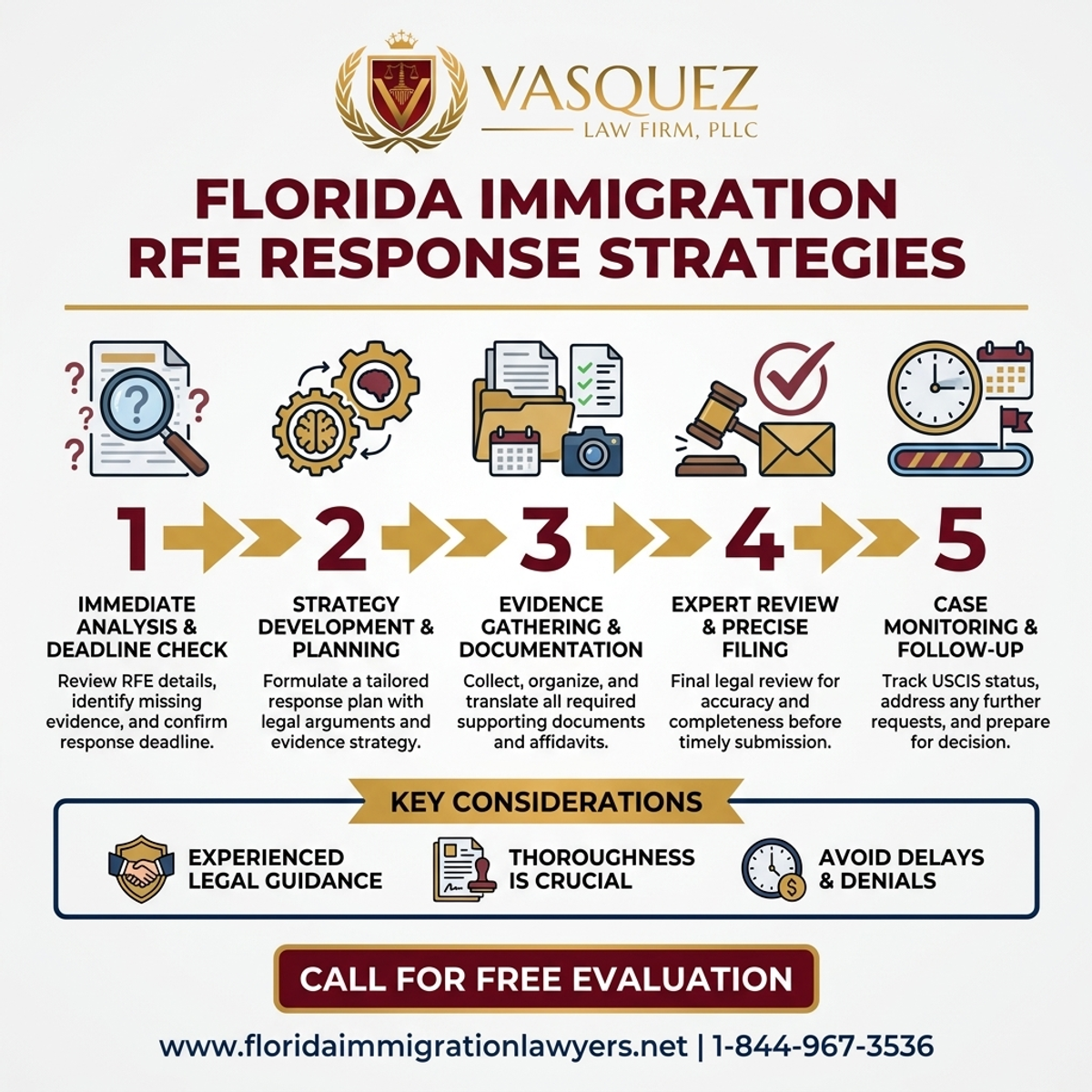
Step-by-Step Process — RFE Response Strategies for Immigration in Florida
When you receive an RFE, the first and most crucial step is to meticulously read and understand every single detail. Pay close attention to any legal citations, specific examples, or formatting instructions provided by USCIS. Misinterpreting even a small part of the request can lead to submitting incorrect or insufficient evidence, potentially resulting in further delays or a denial. If anything is unclear, it is highly recommended to seek clarification from an experienced immigration attorney like those at Florida Immigration Lawyers.
Once you fully grasp the request, begin gathering all necessary documentation. This might involve obtaining certified copies of birth or marriage certificates, bank statements, tax returns, letters from employers, or expert evaluations. For any documents not in English, ensure they are accompanied by a certified English translation. A practical tip is to create a checklist based on the RFE letter, marking off each item as you collect it to ensure nothing is missed.
Organizing your response in a clear, logical manner is paramount. A detailed cover letter should introduce your submission, reference your case number, and clearly list each piece of evidence, explaining how it directly addresses a specific point raised in the RFE. Tab and label your documents for easy navigation by the USCIS officer. Remember to always keep a complete copy of your entire RFE response package for your records before mailing it. This meticulous approach not only helps the adjudicator but also provides you with a comprehensive record should any questions arise later.
Successfully responding to an RFE can significantly increase your chances of a favorable outcome. Do not navigate this process alone. Contact Florida Immigration Lawyers today.
Common Reasons for Receiving an RFE
Understanding the common reasons for RFEs can help you prepare better and avoid potential pitfalls.
- Insufficient Evidence: Sometimes the initial evidence submitted does not fully demonstrate eligibility for the immigration benefit.
- Inconsistent Information: Discrepancies between different forms or documents can trigger an RFE.
- Missing Documents: Essential documents like birth certificates or marriage certificates are often omitted.
- Financial Documentation: Inadequate proof of financial support or employment.
- Legal Status Issues: Questions about the applicant’s current legal status or history in the U.S.
Being aware of these reasons allows you to preemptively address potential issues in your initial application.
For instance, under "Insufficient Evidence," USCIS might request additional proof of your specialized skills for an H-1B visa, such as letters from previous employers or academic transcripts detailing relevant coursework. If your RFE cites "Inconsistent Information," it could be due to a different birth date on your passport versus your birth certificate, requiring you to provide an explanation and supporting documents to resolve the discrepancy. Addressing these issues thoroughly and accurately is key.
Another common reason for an RFE involves "Changes in Circumstances" since the initial application was filed. For example, if you applied for a marriage-based green card and your spouse changed jobs, USCIS might issue an RFE to request updated financial documentation (e.g., new pay stubs, employment verification letter) to ensure they still meet the poverty guidelines. Similarly, if there are questions about your "Good Moral Character" due to a minor past infraction, USCIS might request court dispositions or character affidavits. Proactively reviewing your application for any potential weaknesses or areas that might require further explanation can significantly reduce the likelihood of receiving an RFE.
RFE Response Timeline and Processing Expectations
Knowing what to expect in terms of timelines and processing can help you plan your response effectively.
| Stage | Typical Timeframe | Notes |
|---|---|---|
| RFE Issuance | 1-2 weeks after initial application review | Varies depending on the complexity of the case |
| Response Preparation | 30-90 days | Based on the deadline specified in the RFE |
| USCIS Review | 60-90 days post-submission | Decision making period |
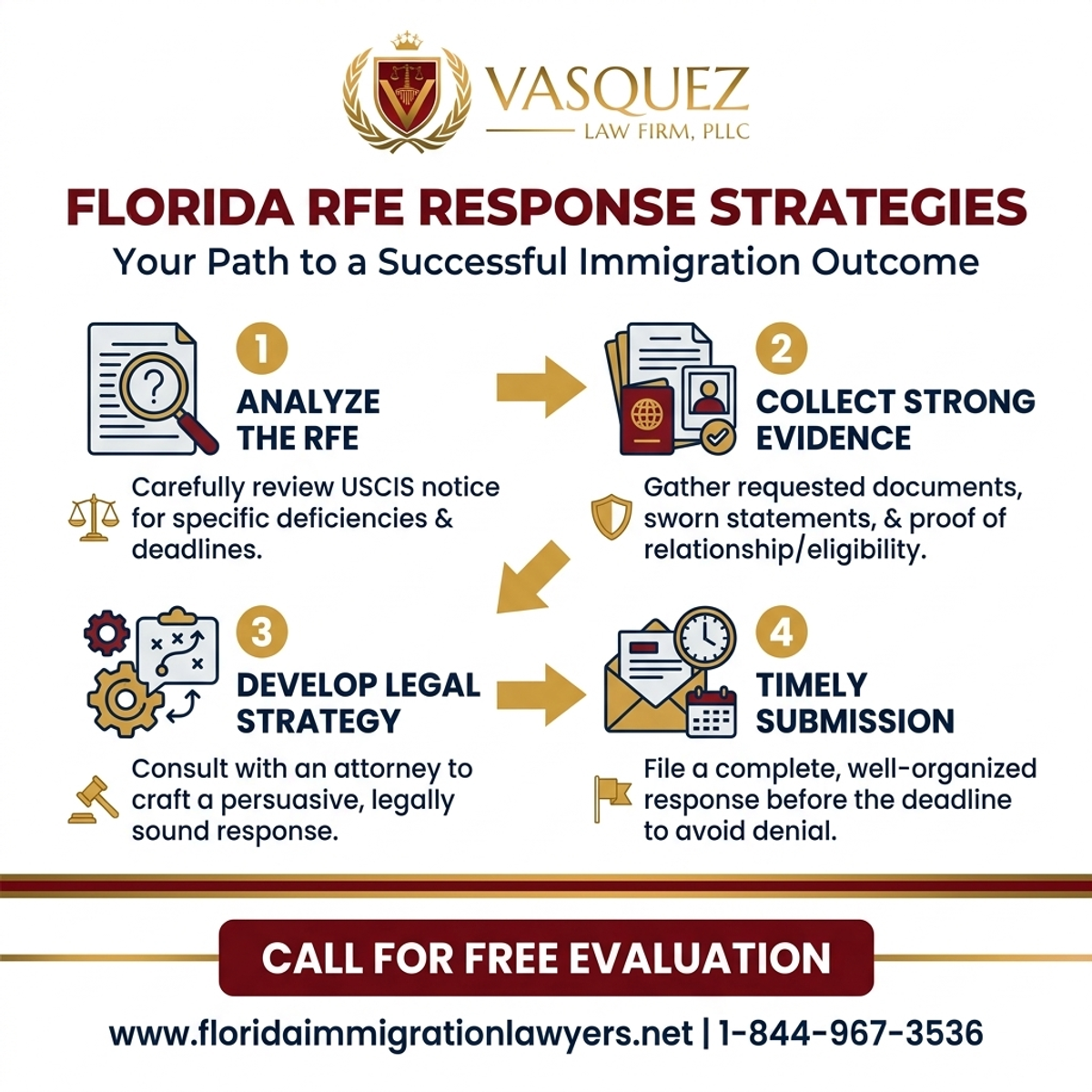
Key Statistics — RFE Response Strategies for Immigration in Florida
The "Response Preparation" phase is where most of your effort will be concentrated. While the RFE specifies a deadline, it's wise to aim for submission well before that date. This allows for any unforeseen delays in gathering documents, obtaining certified translations, or scheduling consultations with immigration attorneys. For complex RFEs, this period might also involve obtaining expert opinion letters or affidavits, which can take time to secure. Starting immediately upon receipt of the RFE is crucial to ensure a comprehensive and timely submission.
After you submit your response, USCIS will typically issue a receipt notice confirming they have received your documents. You can then monitor your case status online using the receipt number provided in the RFE. The "USCIS Review" period can vary significantly based on the service center, case type, and current processing backlogs. During this time, it's important to remain patient and avoid submitting duplicate inquiries, as this can sometimes further delay processing. If the review period exceeds the typical timeframe, Florida Immigration Lawyers can help you inquire about your case status.
Timely submission is crucial. Extensions are rarely granted, so it’s important to start preparing your response as soon as possible. Failure to meet the deadline will almost certainly result in the denial of your application, requiring you to start the entire process over and potentially incur new filing fees. Therefore, treating the RFE deadline as a firm, non-negotiable date is essential for a successful outcome.
Cost Factors and Fee Breakdown for RFE Responses
While responding to an RFE itself does not typically incur additional USCIS fees, there are other potential costs involved, such as legal fees or costs for obtaining additional documentation.
| Item | Typical Fee | Notes |
|---|---|---|
| Attorney Consultation | Varies | Depends on the complexity of the case |
| Document Translation | Varies | For non-English documents |
| Courier Services | Varies | For timely delivery of documents |
These costs can vary widely, so it is advisable to plan ahead and consult with professionals as needed.
Attorney consultation fees can vary significantly. Some attorneys offer flat fees for RFE responses, while others charge hourly rates. The cost will largely depend on the complexity of your RFE and the amount of legal work required to gather evidence, draft legal arguments, and prepare the response package. Investing in experienced legal counsel can be a cost-effective decision in the long run, as it significantly reduces the risk of denial and the associated costs of reapplying or appealing a decision.
Beyond legal fees, you might encounter other expenses. For instance, if your RFE requests a new medical examination (Form I-693), you would need to pay the civil surgeon's fees. Obtaining official government documents, such as certified copies of court records or birth certificates from overseas, may also incur fees from the issuing authorities. Additionally, if an RFE requires an expert opinion letter (e.g., for an O-1 visa or an H-1B specialty occupation), the fees for such experts can be substantial. Always factor these potential costs into your budget when responding to an RFE.
While the immediate costs associated with an RFE response can seem daunting, consider them an investment in the success of your immigration journey. The financial and emotional toll of a denied application, followed by the need to refile or appeal, far outweighs the cost of a thorough and professionally prepared RFE response. Florida Immigration Lawyers can discuss potential costs upfront during your free consultation, helping you plan effectively.
Common Mistakes to Avoid When Responding to an RFE
- Ignoring the RFE: Failing to respond will lead to denial of your application.
- Missing the Deadline: Late submissions are generally not accepted.
- Submitting Incomplete Information: Ensure all requested information is provided.
- Not Understanding the Request: Misinterpreting what is being asked can lead to incorrect responses.
- Failing to Consult an Attorney: Legal guidance can prevent costly errors.
- Providing Unclear Documents: Ensure all documents are legible and properly certified if necessary.
- Overlooking Details: Small discrepancies can lead to big issues.
- Using Incorrect Forms: Ensure the correct forms are used as per the RFE.
- Not Keeping Copies: Always keep copies of everything you send.
- Assuming Extensions: Do not assume you can get an extension on the deadline.
Avoiding these common pitfalls is paramount to a successful RFE response. Each mistake, no matter how minor it seems, can significantly jeopardize your immigration application. The meticulous nature of USCIS reviews means that attention to every detail is not just recommended, but essential. When in doubt, remember that the expertise of an immigration attorney can be invaluable in navigating these complexities and ensuring your response is flawless.
When to Call a Lawyer for RFE Help
Sources and References
- U.S. Citizenship and Immigration Services (USCIS)
- Executive Office for Immigration Review (EOIR)
- U.S. Department of State
- Immigration and Nationality Act (INA), 8 U.S.C. Chapter 12
Do Not Navigate This Process Alone
Our experienced immigration attorneys are ready to fight for you. Get a free, confidential case review today.
Se Habla Español
Or leave your details and we’ll call you:
Free Evaluation in 24 Hours
Or talk to us right now

AI voice assistant — available 24/7
FreeFrequently Asked Questions

William J. Vásquez
Founding Attorney · Vasquez Law Firm
U.S. Air Force veteran and immigration attorney with years of hands-on U.S. immigration experience. J.D., NCCU School of Law. AILA member. Admitted to the 4th, 5th, and 11th Circuit Courts.
Available 24/7 - Free Evaluations
Reviewed for legal accuracy by William J. Vásquez
Licensed in North Carolina; U.S. immigration is federal practice.
Related Legal Services
Our Florida immigration attorneys can help you with citizenship and naturalization, immigration practice areas and free immigration consultation. Call today at 1-844-YO-PELEO for a free case review.
Related Links
Related Topics
Free Legal Case Review
Discuss your case with our experienced attorneys. We're available 24/7.
Se Habla Español - Estamos aquí para ayudarle.
Related Articles
PERM Labor Certification in Florida: A 2026 Guide
Learn all about the PERM labor certification process in Florida, essential for employers sponsoring green card applicants. Understand the steps, document requirements, and common mistakes to avoid in this 2026 guide.
Dual Citizenship Lawyer in Florida: What You Need to Know
For Florida residents, the concept of dual citizenship, or holding two passports, offers a compelling blend of opportunities and challenges. While the U.S. generally permits dual nationality, the path to achieving this status requires a meticulous understanding of both U.S. immigration laws and the citizenship policies of your country of origin. This guide explores the definition of dual citizenship, the detailed step-by-step process for U.S. naturalization, and the significant benefits and potential pitfalls involved. We cover essential documentation, typical timelines, and cost considerations for 2026, providing crucial insights for anyone in Orlando, Miami, or across Florida considering this important legal step. Learn about common mistakes to avoid and understand when to seek professional legal counsel to navigate this complex process successfully. Florida Immigration Lawyers is here to provide expert, bilingual support for your dual citizenship journey.
EAD Advance Parole Combo Card in Florida: What You Need
An EAD advance parole combo card allows individuals with pending adjustment applications to both work and travel abroad without jeopardizing their green card application. Learn how to apply in Florida, what documents you need, and common mistakes to avoid.
Immigration Lawyer Orlando Free Consultation in Florida
For individuals and families in Orlando, Florida, navigating the complexities of U.S. immigration law requires expert guidance. An immigration lawyer in Orlando offers crucial support for everything from visa applications and green card processes to naturalization and deportation defense. This comprehensive guide details what a free consultation covers, providing a step-by-step overview of immigration pathways, essential document checklists, and expected timelines in 2026. We also highlight common mistakes to avoid, discuss the critical role of legal counsel in deportation and asylum cases, and explain why choosing a local Orlando immigration attorney is beneficial. Florida Immigration Lawyers is dedicated to serving the diverse community of Orlando with compassionate, effective legal solutions, ensuring you receive personalized advice and robust representation for a successful immigration journey.