Refugee Resettlement Florida: Your Path to Safety & New Life
Refugee resettlement in Florida offers a structured path to safety for those fleeing persecution. This guide details the step-by-step process, from initial UNHCR referral and rigorous USCIS vetting to arrival and integration into Florida communities. Learn about essential documentation, expected timelines, and the vital support provided by resettlement agencies. We also cover financial considerations, common pitfalls to avoid, and crucial moments when legal expertise is essential. Florida Immigration Lawyers provides compassionate and effective representation for refugees across Florida, helping individuals and families navigate the complexities of obtaining permanent residency and eventually citizenship. Secure your future with expert legal guidance.

Refugee resettlement in Florida offers a vital pathway to safety and a new beginning for individuals fleeing persecution in their home countries. This complex process, often initiated through the United Nations High Commissioner for Refugees (UNHCR) or other international bodies, involves rigorous vetting by U.S. authorities like USCIS and the Department of State. Once approved, refugees are typically connected with local resettlement agencies across Florida, including those in Miami, to receive essential support services like housing, employment assistance, and cultural orientation. Understanding each step and securing expert legal guidance is crucial for a successful transition and integration into the vibrant communities of Florida.
- Refugee status is granted to those outside their home country unable to return due to persecution.
- The process often begins with referral from UNHCR or a U.S. embassy abroad.
- Rigorous vetting by U.S. agencies, including USCIS, is mandatory.
- Resettlement agencies in Florida provide critical support upon arrival.
- Refugees can apply for a Green Card after one year in the U.S.
For individuals and families fleeing persecution, the dream of a safe haven and a fresh start is paramount. Florida, with its diverse population and welcoming communities, has long been a significant destination for those seeking refugee status and resettlement. The journey to becoming a resettled refugee in Florida is often complex, filled with intricate legal requirements and emotional challenges. Understanding the process is the first step towards achieving stability and building a new life.
This comprehensive guide will walk you through the intricacies of refugee resettlement in Florida, from initial eligibility criteria and the application process to the vital support services available upon arrival. We will explore the roles of key organizations, discuss common hurdles, and highlight how expert legal assistance can make a profound difference. If you are navigating this challenging path, remember you do not have to do it alone. Call Florida Immigration Lawyers at 1-844-967-3536 for a free consultation to discuss your specific situation and learn how we can assist you.
Understanding Refugee Status and Resettlement in Florida
The terms "refugee" and "asylum seeker" are often used interchangeably, but they carry distinct legal definitions and processes under U.S. immigration law. A refugee is an individual who has fled their country of origin and is unable or unwilling to return due to a well-founded fear of persecution based on race, religion, nationality, membership in a particular social group, or political opinion. This definition is enshrined in Section 101(a)(42) of the Immigration and Nationality Act (INA), 8 U.S.C. § 1101(a)(42), and aligns with international standards set by the 1951 Refugee Convention.
Crucially, refugee status is typically sought by individuals *outside* the United States, often referred to the U.S. Resettlement Program by the United Nations High Commissioner for Refugees (UNHCR) or a U.S. embassy abroad. In contrast, an asylum seeker is someone who is already present in the U.S. or at a port of entry and requests protection. While both seek safety from persecution, their application processes differ significantly. Understanding this distinction is vital when considering your pathway to safety in Florida.
Florida plays a substantial role in the U.S. refugee resettlement program, consistently ranking among the top states for refugee arrivals. Cities like Miami, Orlando, and Tampa have established robust networks of resettlement agencies and support services. The state's diverse population and existing immigrant communities often provide a welcoming environment, helping new arrivals integrate more smoothly. However, navigating the complex federal and state systems requires careful attention to detail and a thorough understanding of your rights and responsibilities. The journey of refugee resettlement in Florida is not just about legal status; it is about rebuilding lives and becoming part of a new community.
The Refugee Resettlement Process in Florida: A Step-by-Step Guide
The journey to refugee resettlement in Florida is a multi-stage process that can take several years, involving numerous U.S. government agencies and international bodies. It begins long before an individual steps foot on U.S. soil. Understanding each phase is crucial for managing expectations and preparing for the future.
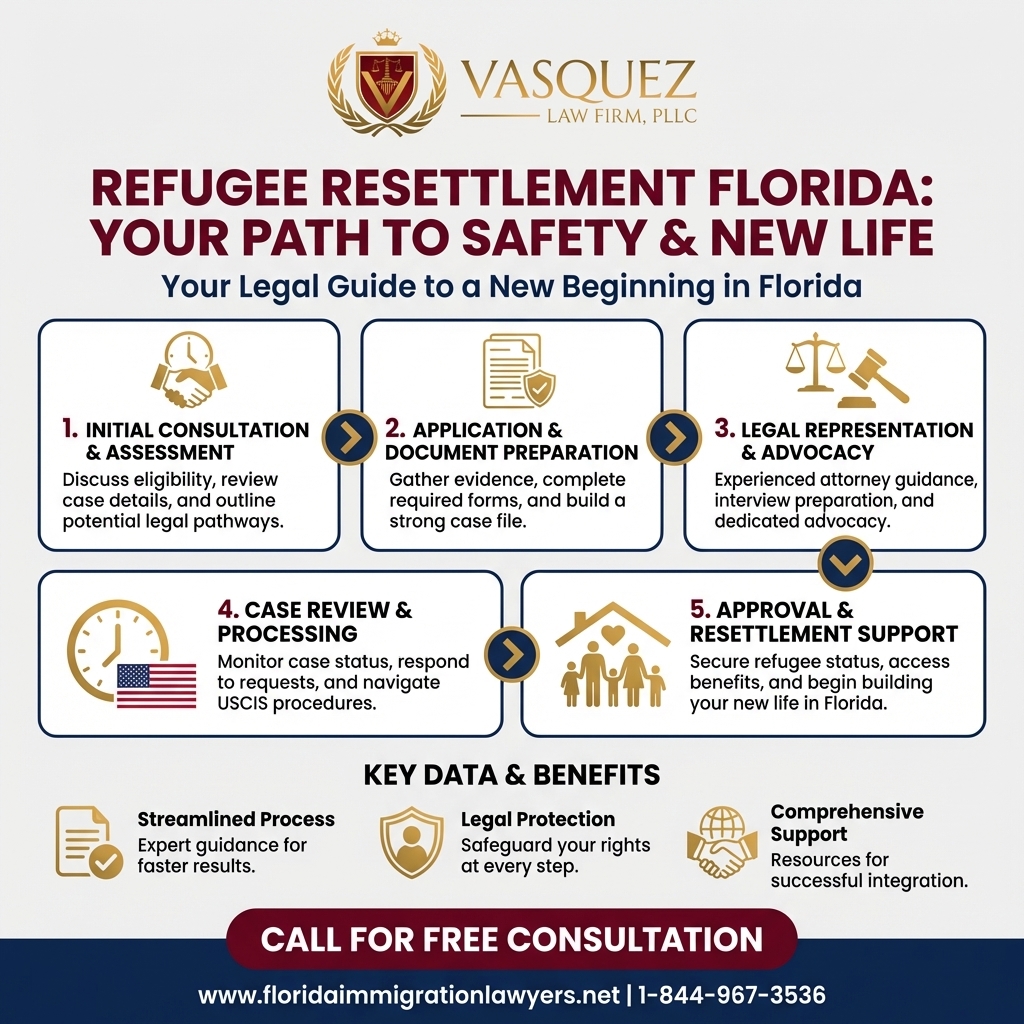
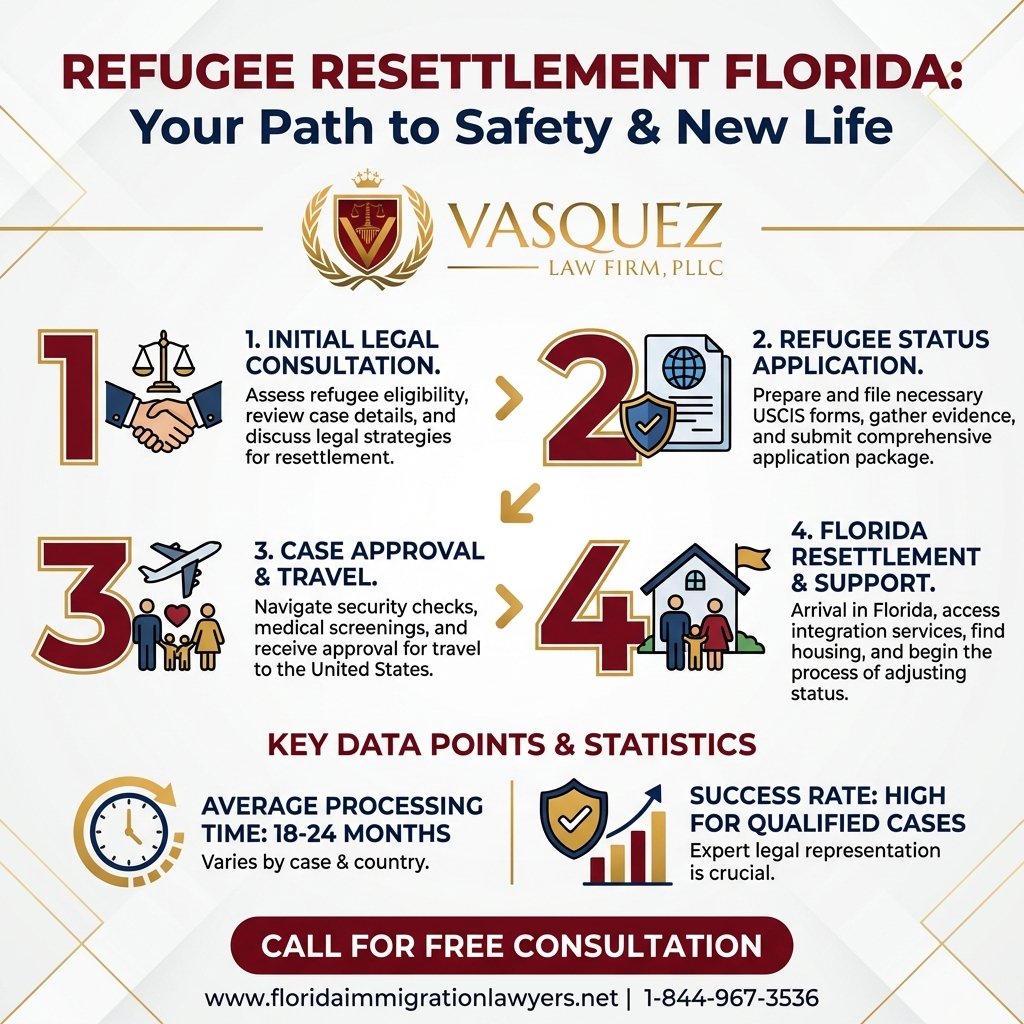
- Referral to the U.S. Refugee Admissions Program (USRAP): Most refugees are referred to USRAP by UNHCR, a U.S. embassy, or a designated non-governmental organization (NGO). This initial referral confirms the individual meets the international definition of a refugee and requires resettlement. This step can often take considerable time, depending on the global refugee situation and the individual's specific circumstances.
- Resettlement Support Center (RSC) Processing: Once referred, the case is assigned to one of nine RSCs worldwide. These centers collect biographical data, conduct initial interviews, and prepare the case for review by the U.S. Citizenship and Immigration Services (USCIS). They ensure all necessary documentation is gathered and translated.
- USCIS Interview and Adjudication: A USCIS officer conducts a thorough interview to determine if the applicant meets the legal definition of a refugee under U.S. law. This is a critical step where the applicant must convincingly articulate their well-founded fear of persecution. USCIS officers are highly trained to assess credibility and gather comprehensive information. If approved, USCIS grants conditional refugee status.
- Security and Medical Clearances: All approved refugees undergo extensive security checks by multiple U.S. intelligence and law enforcement agencies. They also complete a mandatory medical examination to screen for communicable diseases and ensure they meet U.S. health requirements. These clearances are rigorous and designed to protect national security and public health. This phase can be lengthy, with checks often taking months.
- Cultural Orientation and Travel Arrangements: Once all clearances are obtained, refugees participate in a cultural orientation program, typically provided by the International Organization for Migration (IOM). This program offers vital information about life in the U.S., including laws, customs, and what to expect upon arrival. Travel to the U.S. is then arranged, often facilitated by IOM, with the destination typically determined by family ties or the availability of resettlement resources in states like Florida.
- Arrival and Initial Resettlement in Florida: Upon arrival, usually at Miami International Airport or other Florida hubs, refugees are met by representatives from a local resettlement agency. These agencies, funded by the U.S. Department of State, provide immediate assistance with housing, food, clothing, and initial cultural orientation. They help refugees enroll children in school, access healthcare, and begin the process of finding employment.
What to Expect: The entire process, from referral to arrival, typically takes 18-24 months, but can extend much longer depending on the country of origin, security concerns, and processing backlogs. Be prepared for extensive interviews and documentation requests. Patience and meticulous attention to detail are paramount throughout this journey. For specific questions about your case's timeline, consulting an experienced Florida immigration lawyer can provide clarity.
Key Documents for Refugee Status and Resettlement
Gathering and maintaining accurate documentation is a cornerstone of a successful refugee resettlement process. Any discrepancies or missing information can cause significant delays or even lead to denial. While the specific documents required may vary slightly based on individual circumstances and country of origin, the following list outlines the generally expected paperwork.
- UNHCR Registration Documents: If referred by UNHCR, your registration card or proof of refugee status from UNHCR is critical. This establishes your initial recognition as a refugee.
- Identity Documents: Passports, national identity cards, birth certificates, or any other official identification from your country of origin. Even if expired or difficult to obtain, provide what you have and explain any gaps.
- Family Information: Marriage certificates, birth certificates for children, and any documents proving family relationships. This is crucial for family reunification and ensuring all eligible family members are included in the resettlement process.
- Educational and Professional Records: Diplomas, academic transcripts, professional licenses, or employment letters. These documents can be helpful for job placement and educational enrollment in Florida.
- Medical Records: Any existing medical history, vaccination records, or reports of past treatments. While a new medical exam will be required, prior records can provide valuable context.
- Travel Documents (Upon Arrival): Once approved for travel, you will receive specific travel documents. Upon entry to the U.S., you will typically be issued an I-94, Arrival/Departure Record, which serves as proof of your lawful admission as a refugee.
- USCIS Forms: While USCIS forms are primarily processed by the resettlement agencies on your behalf for initial entry, you will later file forms such as Form I-765 for an Employment Authorization Document (EAD) and Form I-485, Application to Register Permanent Residence or Adjust Status, to apply for a Green Card after one year.
It is important to keep all original documents safe and provide copies when requested. Ensure all foreign language documents are accompanied by certified English translations. Working with a qualified legal professional, such as the team at Florida Immigration Lawyers, can help you organize your documents, identify any missing pieces, and ensure compliance with all requirements. This meticulous approach significantly smooths the journey through refugee resettlement in Florida.
Timelines and Expectations for Refugee Integration in Florida
While the initial processing for refugee status can be lengthy, the integration phase upon arrival in Florida presents its own set of timelines and expectations. Understanding these can help refugees and their families plan for a smoother transition into their new lives. Integration is not an overnight process; it involves several key milestones over months and years.
Initial 30-90 Days: Upon arrival in a Florida city like Miami, immediate needs are addressed. Resettlement agencies provide initial housing, help apply for social security cards, register children for school, and connect refugees with health screenings and basic medical care. Cultural orientation sessions are frequent, focusing on essential life skills in the U.S. During this period, refugees are eligible for cash and medical assistance through the Refugee Cash Assistance (RCA) and Refugee Medical Assistance (RMA) programs, typically administered by the Florida Department of Children and Families.
First Year: This year is critical for achieving self-sufficiency. Resettlement agencies continue to provide support, emphasizing employment services to help refugees find jobs and become financially independent. English language classes (ESL) are often prioritized. After one year of continuous physical presence in the U.S. as a refugee, individuals are eligible to apply for Adjustment of Status to become a Lawful Permanent Resident (Green Card holder). This is a crucial step towards long-term stability and is governed by 8 U.S.C. § 1159 (INA § 209).
Beyond One Year: Once a Green Card is obtained, refugees can travel more freely and have broader access to public benefits. After five years of holding a Green Card, refugees are generally eligible to apply for U.S. citizenship through naturalization, provided they meet all other requirements, including continuous residency, good moral character, and passing civics and English tests. The USCIS field offices in Miami, Orlando, and Tampa handle these applications for Florida residents.
What to Expect: Integration is a dynamic process. While initial support is robust, refugees are expected to strive for self-sufficiency. Challenges such as language barriers, cultural differences, and finding suitable employment are common. However, Florida's extensive network of community organizations and the resilience of its refugee populations often lead to successful integration. Legal guidance from Florida Immigration Lawyers can be invaluable during each of these phases, particularly when applying for your Green Card or citizenship.
Financial Considerations and Support for Refugees in Florida
The financial aspect of starting a new life in a foreign country can be daunting, but refugees arriving in Florida benefit from various support programs designed to ease this burden. It is important to understand that the initial refugee resettlement process itself does not involve significant application fees paid by the refugee to the U.S. government. Instead, the process is largely funded through federal programs and administered by resettlement agencies.
Initial Resettlement Support: Upon arrival, resettlement agencies in Florida provide comprehensive support. This typically includes assistance with rent for the first few months, food, clothing, and household furnishings. They also help with accessing public benefits like Refugee Cash Assistance (RCA) and Refugee Medical Assistance (RMA), which provide temporary financial aid and healthcare coverage. These programs are vital for covering immediate needs while refugees seek employment. The U.S. Department of State's Bureau of Population, Refugees, and Migration (PRM) provides funding to these agencies.
Employment and Self-Sufficiency: A primary goal of resettlement is self-sufficiency. Resettlement agencies offer job counseling, resume building, and placement services to help refugees find employment quickly. While initial jobs might be entry-level, the aim is to transition to stable, higher-paying work over time. Refugees are eligible to apply for an Employment Authorization Document (EAD) upon arrival, allowing them to work legally. USCIS provides detailed information on Form I-765.
Legal Fees: While the initial resettlement process is mostly covered, there are legal fees associated with subsequent steps, such as applying for Adjustment of Status (Green Card) and Naturalization (Citizenship). These fees are paid to USCIS and can change periodically. For example, filing Form I-485 for adjustment of status and Form N-400 for naturalization each have associated fees. Additionally, if you choose to hire a private attorney, like those at Florida Immigration Lawyers, for expert guidance and representation, their legal fees will be a separate cost. Investing in legal counsel can be highly beneficial, ensuring applications are filed correctly and efficiently, potentially saving time and money in the long run by avoiding costly mistakes.
What to Expect: While substantial support is available, refugees should expect to contribute to their own financial well-being as soon as possible. Budgeting, saving, and actively seeking employment are crucial for long-term financial stability in Florida. Understanding the fee structure for future immigration applications and budgeting for legal assistance is a smart approach for managing your journey effectively.
Do not navigate this complex process alone. Contact Florida Immigration Lawyers today. Our experienced team can provide the guidance and representation you need to ensure your applications are handled correctly and your rights are protected throughout your refugee resettlement in Florida.
Common Mistakes to Avoid in Refugee Resettlement
The refugee resettlement process is fraught with potential pitfalls that can delay or jeopardize your journey to a new life in Florida. Being aware of these common mistakes can help you navigate the system more effectively and avoid unnecessary complications.
- Providing Inconsistent Information: Any discrepancies in your story or documentation across different interviews (e.g., with UNHCR, USCIS, or resettlement agencies) can raise credibility concerns and lead to delays or denials. Always be truthful and consistent.
- Missing Deadlines: Failing to submit required documents or attend scheduled appointments by their deadlines can result in your application being delayed or even closed. Keep meticulous track of all dates and requirements.
- Failing to Disclose All Relevant Information: Omitting details about prior arrests, detentions, or other significant life events, even if minor, can be viewed as an attempt to deceive and may have severe consequences for your case. Full disclosure is always best.
- Traveling Internationally Without Permission: Once you are granted refugee status in the U.S., traveling outside the country without proper authorization (e.g., a Refugee Travel Document) can lead to the abandonment of your refugee status and inadmissibility upon return.
- Not Updating Your Address with USCIS: If you move within Florida or to another state, you must inform USCIS of your new address within 10 days using Form AR-11. Failure to do so can result in missed notices and critical communications.
- Misunderstanding the Role of Resettlement Agencies: While agencies provide crucial initial support, they are not your legal representatives. They assist with integration, but legal advice should come from a qualified immigration attorney.
- Ignoring Legal Advice: If you have legal counsel, disregard their advice at your peril. They are experts in immigration law and can guide you through complex situations.
- Failing to Apply for Adjustment of Status Timely: Refugees are required to apply for a Green Card (Adjustment of Status) one year after their arrival. Delaying this application without good cause can create issues for your permanent residency.
- Not Preparing for Interviews: Going into a USCIS interview unprepared can lead to confusion and missed opportunities to present your case clearly. Practice your narrative and understand your documents.
- Falling Victim to Scams: Be wary of individuals or organizations promising expedited processing or guaranteed outcomes for a fee. Only authorized attorneys or accredited representatives can provide legal advice. Verify credentials.
- Lack of Documentation: While it is understood that fleeing persecution can make it difficult to gather documents, not making a diligent effort to obtain or explain the absence of crucial paperwork can hinder your case.
When to Call a Lawyer for Refugee Resettlement in Florida
While resettlement agencies provide invaluable support for newly arrived refugees, there are specific situations where the expertise of an experienced immigration lawyer, such as those at Florida Immigration Lawyers, becomes indispensable. Navigating the U.S. immigration system is complex, and legal counsel can ensure your rights are protected and your applications are processed efficiently.
Consider seeking legal assistance if you:
- Have a Complex Case: If your refugee claim involves intricate legal issues, prior immigration denials, a criminal history, or questions about eligibility that are not straightforward.
- Need to Apply for a Green Card: The application for Adjustment of Status (Form I-485) after one year as a refugee is a critical step. An attorney can help prepare your application, gather supporting documents, and represent you if issues arise with USCIS, particularly at the Miami or Orlando field offices.
- Are Facing Family Reunification Challenges: If you wish to petition for family members still abroad (Form I-730, Refugee/Asylee Relative Petition), the process can be complex, especially with evolving policies. An attorney can guide you through this sensitive procedure.
- Received a Request for Evidence (RFE) or Notice of Intent to Deny (NOID): These notices from USCIS indicate a problem with your application. Responding correctly and comprehensively is vital, and a lawyer can formulate a strong response.
- Are Considering Asylum Instead of Refugee Status: If you are already in the U.S. and debating whether to apply for asylum, an attorney can help you understand the differences and determine the best path for your situation.
- Have Questions About Work Authorization or Travel: Understanding the nuances of your Employment Authorization Document (EAD) and the requirements for a Refugee Travel Document can prevent costly mistakes.
- Are Preparing for Naturalization: When you are eligible for U.S. citizenship, an attorney can help prepare your N-400 application and prepare you for the interview, ensuring you meet all requirements.
- Are Concerned About Deportation: If you receive any notice of removal proceedings, immediate legal action is required.
Florida Immigration Lawyers has extensive experience assisting refugees and asylum seekers throughout Florida, including Miami, Tampa, and Orlando. We understand the unique challenges you face and are dedicated to providing compassionate, effective legal representation. Our team is here to offer clarity and robust advocacy at every stage of your resettlement journey.
About Florida Immigration Lawyers
At Florida Immigration Lawyers, we understand the profound challenges and hopes that accompany the journey of immigration. As a leading immigration law firm serving all of Florida, we are dedicated to providing comprehensive, compassionate, and effective legal representation to individuals and families seeking a new life in the United States. Our experienced attorneys specialize in a wide range of immigration matters, including refugee resettlement, asylum claims, family immigration, business immigration, deportation defense, and naturalization.
We pride ourselves on our client-focused approach, offering personalized strategies tailored to each unique case. Our team is committed to guiding you through every step of the complex immigration process, from initial consultations to court appearances. We serve clients across Florida, including major cities like Miami, Orlando, Tampa, and Jacksonville, ensuring that expert legal help is always within reach. Your peace of mind is our priority, and we strive to achieve the best possible outcomes for your immigration goals.
Available 24/7, Florida Immigration Lawyers offers free consultations to help you understand your options and rights. Do not face the complexities of immigration law alone. Contact us today at 1-844-967-3536 or visit our website at https://www.floridaimmigrationlawyers.net to schedule your free consultation. We are here to help you build a brighter future in Florida.
Sources and References
- U.S. Citizenship and Immigration Services (USCIS)
- U.S. Department of State
- Executive Office for Immigration Review (EOIR)
- 8 U.S.C. Chapter 12 - Immigration and Nationality Act (INA)
- 8 U.S.C. § 1101(a)(42) - Definition of Refugee
- 8 U.S.C. § 1159 (INA § 209) - Adjustment of Status of Refugees
- 8 CFR Part 207 - Refugee Status
- Form I-485, Application to Register Permanent Residence or Adjust Status
- Form I-765, Application for Employment Authorization
- Form N-400, Application for Naturalization
- Form I-730, Refugee/Asylee Relative Petition
Related services: asylum application process, withholding of removal, humanitarian protection programs.
This article provides general legal information and is not intended as legal advice. Every case is unique, and outcomes depend on specific facts and circumstances. Contact an attorney for advice about your particular situation.
Embarking on a new life as a refugee in Florida is a journey of hope and resilience. While the path may be challenging, understanding the process and having dedicated legal support can make all the difference. Florida Immigration Lawyers is here to be your trusted partner, offering expert guidance and unwavering advocacy for your refugee resettlement in Florida. Do not hesitate to reach out for the assistance you deserve. Call us today for a free consultation at 1-844-967-3536. Se Habla Espanol - Estamos aqui para ayudarle.
Do Not Navigate This Process Alone
Our experienced immigration attorneys are ready to fight for you. Get a free, confidential consultation today.
Se Habla Español
Frequently Asked Questions

William J. Vásquez
Founding Attorney · Vasquez Law Firm
U.S. Air Force veteran and immigration attorney with thousands of cases resolved. J.D., NCCU School of Law. AILA member. Admitted to the 4th, 5th, and 11th Circuit Courts.
Available 24/7 - Free Evaluations
Related Legal Services
Our Florida immigration attorneys can help you with free immigration consultation, experienced immigration attorneys and business immigration. Call today at 1-844-967-3536 for a free consultation.
Related Links
Related Topics
Free Legal Consultation
Discuss your case with our experienced attorneys. We're available 24/7.
Se Habla Español - Estamos aquí para ayudarle.
Related Articles
Dual Citizenship in Florida: What You Need to Know
Explore dual citizenship in Florida, understand the process, and learn how to apply. Discover the benefits and complexities involved with having two passports and navigating immigration laws. Call Florida Immigration Lawyers for expert guidance.
Understanding the Child Status Protection Act in Florida
Worried about your child aging out of their immigration status in Florida? Discover how the Child Status Protection Act (CSPA) can help safeguard their future. Call Florida Immigration Lawyers at 1-844-967-3536 for expert guidance.
Protect Yourself from Immigration Scams in Florida
Immigration scams are a serious issue in Florida, particularly in areas like Hollywood. Learn how to identify and avoid scams such as notario fraud. Stay informed and seek legal help when necessary. Call Florida Immigration Lawyers for a free consultation.
H-4 EAD Spouse Work Permit Rules in Florida | VLF Florida
Discover how the H-4 EAD can empower spouses of H-1B visa holders in Florida to work legally. Our detailed guide covers eligibility, application process, and common pitfalls. Call Florida Immigration Lawyers for personalized assistance.