Family Petition Immigration Lawyer in Miami | VLF Florida
Navigating the family petition process in Miami can be challenging. Learn about the I-130 form, common mistakes, and when to consult a lawyer. Contact us for a free consultation.

- Understand the I-130 petition process.
- Hire an experienced immigration lawyer.
- Be aware of common mistakes to avoid.
- Consult a lawyer if you face difficulties.
Introduction
Imagine reuniting with your loved ones in Jacksonville, Florida. The family petition process can make this dream a reality. With the guidance of an experienced Miami immigration lawyer, navigating the complexities of the I-130 petition becomes manageable.
The journey to family reunification in the United States, particularly through the I-130 family petition, is a deeply personal and often emotional one. For many, it represents the hope of building a new life together, away from geographical barriers. However, the path is paved with intricate legal requirements, strict deadlines, and potential hurdles that can be daunting without expert assistance. This article aims to demystify the process, offering clarity and practical advice to help you bring your family closer.
This article provides a comprehensive guide on family petitions, including step-by-step instructions, common pitfalls, and when to seek legal assistance. We understand the significance of this journey for families across Florida, from Jacksonville to Miami, and are committed to simplifying it. Call Florida Immigration Lawyers at 1-844-967-3536 for a free consultation.
Understanding the Family Petition Process
The family petition process involves filing an I-130 form with the U.S. Citizenship and Immigration Services (USCIS). This form establishes the relationship between the petitioner and the beneficiary. It's crucial to provide accurate information and required documentation to avoid delays.
The I-130 Petition for Alien Relative is the foundational step in most family-based immigration cases. It serves as proof to the U.S. government that a legitimate family relationship exists between a U.S. citizen or lawful permanent resident (the petitioner) and an eligible foreign national (the beneficiary). Without an approved I-130, the beneficiary cannot typically proceed with applying for a green card, whether through adjustment of status within the U.S. or consular processing abroad.
Florida, particularly Miami, is home to a diverse population of immigrants. This makes understanding local nuances essential for a successful family petition. Whether you're in Jacksonville or another part of Florida, knowing the process can significantly impact your case. The type of relationship — whether it's an immediate relative (spouse, unmarried child under 21, or parent of a U.S. citizen) or a family preference category (e.g., adult children, siblings) — will heavily influence processing times and availability of visas. An experienced immigration lawyer from Florida Immigration Lawyers can help you determine the correct category and streamline your application.
It's important to differentiate between the I-130 petition, which establishes the family relationship, and the subsequent application for an immigrant visa or adjustment of status, which grants permanent residency. These are distinct but interconnected steps. An approved I-130 is a prerequisite for the green card application, but it does not, by itself, grant any immigration benefits to the beneficiary. Understanding this distinction is key to managing expectations and planning your immigration journey effectively.
Step-by-Step Guide to Filing an I-130 Petition
- Determine Eligibility: Ensure the petitioner is a U.S. citizen or lawful permanent resident. This is the absolute first step. U.S. citizens can petition for spouses, children, parents, and siblings. Lawful Permanent Residents (Green Card holders) can petition for spouses and unmarried children. The specific relationship dictates the processing priority and eligibility, so accurately identifying your status and the relationship is paramount.
- Gather Necessary Documents: Collect proof of relationship, legal status, and identity. This often includes birth certificates, marriage certificates, divorce decrees, passports, and evidence of the petitioner's U.S. citizenship or permanent residency. For spousal petitions, extensive evidence of a bona fide marriage (joint bank accounts, photos, affidavits from friends/family, shared leases) is crucial. Accuracy and completeness here can prevent significant delays.
- Complete Form I-130: Fill out the form accurately and completely. Every section must be addressed, and any inconsistencies with prior immigration applications or personal records must be explained. A single error or omission can lead to a Request for Evidence (RFE) or even denial, prolonging the separation from your loved ones.
- Pay the Filing Fee: Submit the required fee with the application. USCIS fees are subject to change, so always verify the current amount on their official website. Failure to pay the correct fee will result in the rejection of your petition. In certain circumstances, fee waivers may be available for eligible petitioners facing financial hardship.
- Submit the Application: Send your complete petition to the appropriate USCIS address. The mailing address depends on where you live and the type of petition you are filing. Always use a trackable mail service to ensure proof of delivery. Keep a complete copy of everything you send to USCIS for your records.
- Await USCIS Response: Be prepared for additional requests for information or interviews. After submission, you will receive a receipt notice (Form I-797C). USCIS may then send an RFE if they need more documentation, or a notice for biometrics (fingerprinting). For some cases, an interview at a USCIS office or a U.S. embassy/consulate abroad will be required.
Document Checklist for I-130 Petition
Ensuring you have all required documents is a critical component of a successful I-130 petition. Missing or incorrect documentation is one of the leading causes of delays and RFEs from USCIS. Always aim to provide clear, legible copies, and be prepared to present originals if requested. For any documents not in English, certified translations are mandatory.
- Proof of U.S. citizenship or permanent residency (e.g., U.S. birth certificate, naturalization certificate, U.S. passport, green card copy)
- Proof of familial relationship (e.g., birth certificates showing parent-child relationship, marriage certificates for spouses, adoption decrees for adopted children)
- Identity documents for both petitioner and beneficiary (e.g., copies of passports, national ID cards)
- Passport-sized photos (check USCIS specifications for size and background)
- Proof of termination of prior marriages (if applicable, e.g., divorce decrees, death certificates)
- Evidence of a bona fide marriage (for spousal petitions: joint bank statements, utility bills, leases, photos, affidavits from friends/family, etc.)
- Any other supporting evidence relevant to your specific relationship or circumstances.
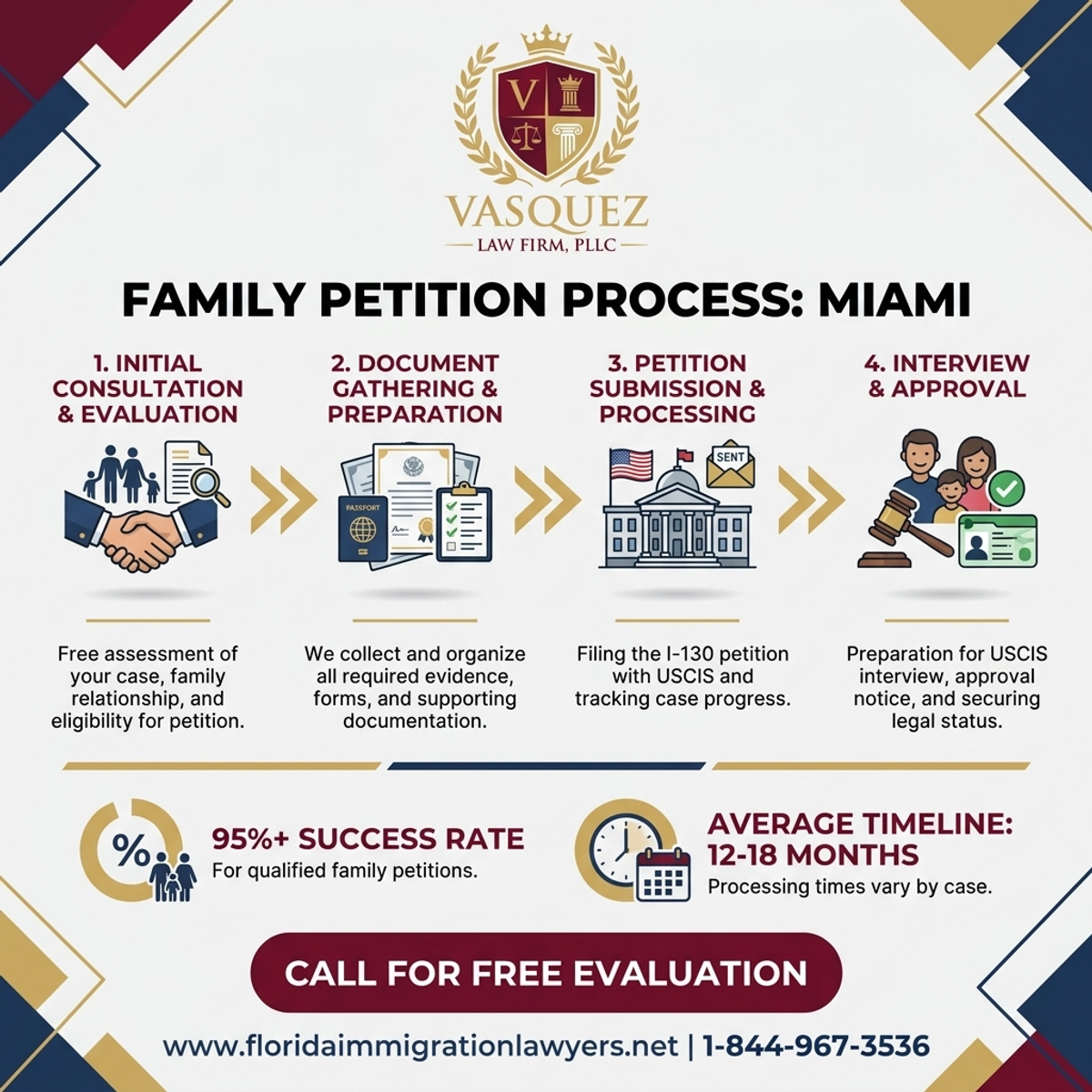
Step-by-Step Process — Family Petition Immigration Lawyer in Miami
Timeline and Processing Expectations
Processing times for family petitions can vary. Typically, USCIS takes several months to review I-130 petitions. Factors such as the complexity of your case and current backlog can affect this timeline. Staying informed and responsive to any USCIS requests can help expedite the process.
The actual processing time for an I-130 petition is heavily influenced by the relationship category and the beneficiary's country of origin. Immediate relatives (spouses, unmarried children under 21, and parents of U.S. citizens) generally have shorter wait times because an immigrant visa is immediately available once the I-130 is approved. In contrast, family preference categories (e.g., adult children, siblings) are subject to annual quotas and can involve waiting periods of several years, sometimes even decades, due to visa backlogs.
To monitor these fluctuating timelines, it's essential to regularly check the USCIS processing times tool online and, for preference categories, the Department of State's monthly Visa Bulletin. The Visa Bulletin indicates when immigrant visas become available based on the petitioner's priority date (the date USCIS received your I-130 petition). Understanding these publications is crucial for setting realistic expectations and planning the next steps in your immigration journey. Florida Immigration Lawyers can help you interpret these complex charts and provide a clearer picture of your specific timeline.
Beyond the initial I-130 approval, additional steps like adjustment of status (if the beneficiary is in the U.S.) or consular processing (if abroad) also have their own processing times. These can involve further interviews, medical examinations, and background checks. Any delays in submitting requested documents, attending appointments, or responding to RFEs can significantly prolong the overall process. Proactive communication and meticulous preparation are your best allies.
Cost Factors and Fee Breakdown
Filing an I-130 petition involves several costs. While the primary fee is for the application itself, additional expenses may arise for gathering documents, legal consultation, and translation services. Always check the USCIS website for the most current fee information.
The USCIS filing fee for Form I-130 is a mandatory expense, but it's just one part of the financial commitment. Other potential costs include fees for obtaining birth certificates, marriage licenses, or other vital records, as well as fees for professional translation services if your documents are not in English. For beneficiaries applying for a green card, there will be additional fees for the adjustment of status application (Form I-485) or immigrant visa application (DS-260), biometrics, and a mandatory medical examination by a USCIS-approved physician.
While some petitioners choose to navigate the process independently, investing in an experienced immigration lawyer can often save money in the long run by preventing costly mistakes, delays, or even denials that would require re-filing. Legal fees vary depending on the complexity of the case and the services provided, but many firms, including Florida Immigration Lawyers, offer free initial consultations to discuss your options and provide a transparent fee structure. Considering the emotional and financial investment involved, professional guidance can be invaluable.
It's also important to be aware of potential fee waivers. USCIS offers fee waivers for certain forms and services to individuals who can demonstrate an inability to pay. Eligibility is typically based on income level, receipt of means-tested benefits, or financial hardship. If you believe you might qualify, discussing this option with your attorney can help alleviate some of the financial burden associated with the immigration process. Remember to budget not just for the immediate I-130, but for all subsequent steps in the green card journey.
Do not navigate this process alone. Contact Florida Immigration Lawyers today.
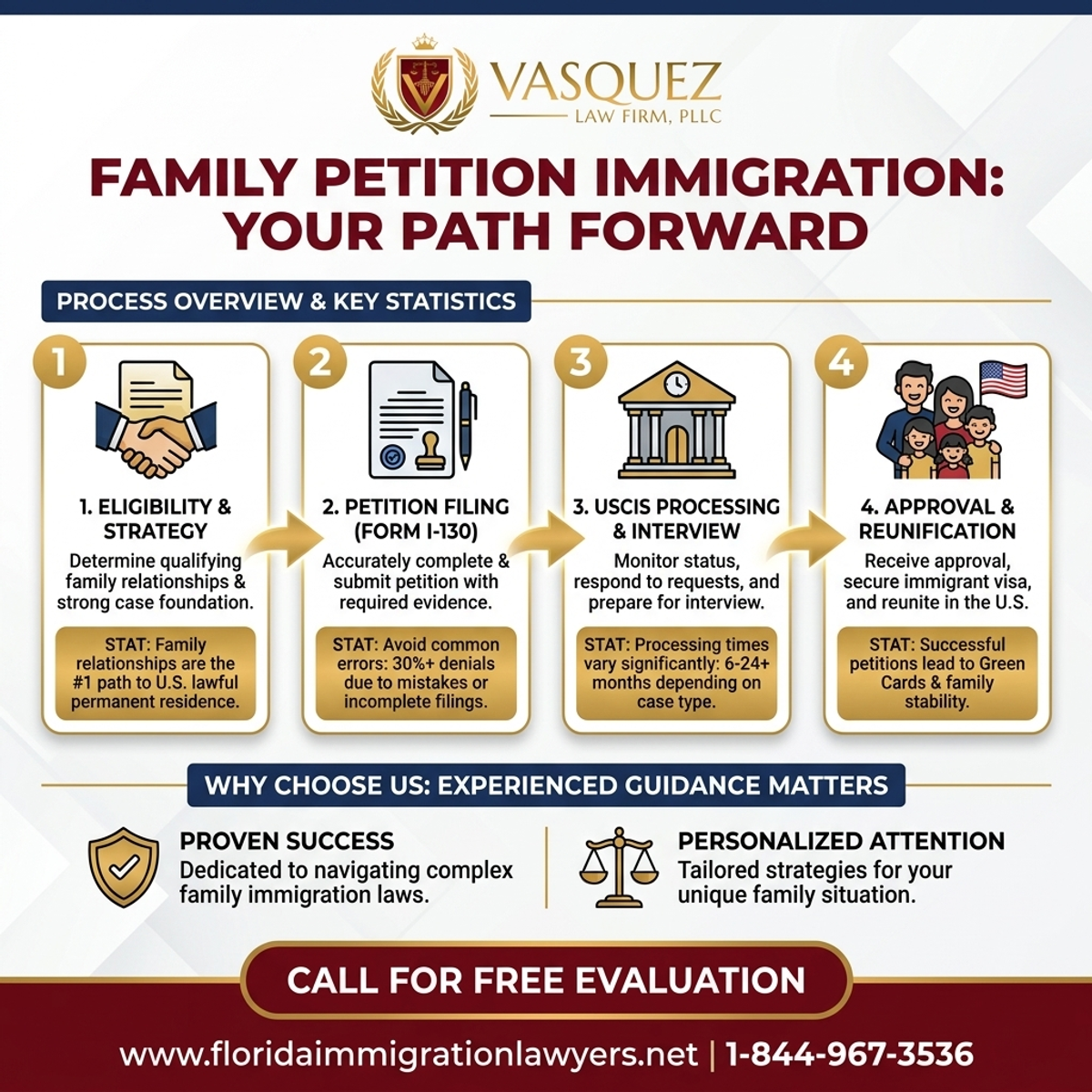
Key Statistics — Family Petition Immigration Lawyer in Miami
Common Mistakes to Avoid
Navigating the family petition process can be fraught with potential missteps that can lead to significant delays or even denial. Understanding and actively avoiding these common errors is crucial for a smooth and successful application. Even seemingly minor oversights can have major repercussions on your family's immigration journey.
- Incomplete Applications: Missing information can lead to rejections. This includes not signing the form, leaving blank mandatory fields, or failing to include required initial evidence. USCIS will often reject incomplete petitions outright, forcing you to restart the process and lose valuable time.
- Incorrect Fees: Ensure you pay the correct amount. USCIS fees change periodically. Submitting an incorrect fee, even by a small amount, will result in the return of your entire application packet. Always double-check the current fee schedule on the USCIS website before mailing.
- Inadequate Evidence: Lack of proof of relationship can delay approval. For spousal petitions, merely submitting a marriage certificate is rarely enough. You need to provide robust evidence of a bona fide marriage, such as joint bank accounts, shared utility bills, photographs, and affidavits from people who know you as a couple.
- Failure to Update Address: Not informing USCIS of address changes can result in missed correspondence. If USCIS sends an RFE, interview notice, or approval notice to an old address, you might miss critical deadlines, potentially leading to denial. Always file Form AR-11 online or by mail promptly.
- Ignoring USCIS Requests: Always respond promptly to any requests for additional information. RFEs have strict deadlines. Failing to respond within the given timeframe, or providing an insufficient response, will almost certainly lead to a denial of your petition.
- Misrepresenting Information: Providing false information can have severe consequences. Any misrepresentation, whether intentional or unintentional, can lead to accusations of fraud, permanent bars from immigration benefits, and even criminal penalties. Always be truthful and accurate.
- Not Consulting a Lawyer: Professional guidance can prevent costly mistakes. An experienced immigration attorney can identify potential issues early, ensure all documentation is correct, and represent you effectively throughout the process, saving you time, stress, and money.
- Delaying Filing: Timely submission is crucial, especially under changing immigration policies. Waiting too long can mean missing out on current visa availability or facing new, more restrictive policies. Prompt action is often beneficial.
- Overlooking Deadlines: Missing deadlines can result in case denial. This applies not only to RFEs but also to subsequent steps like filing for adjustment of status or attending interviews. Keep a meticulous record of all dates.
- Insufficient Legal Knowledge: Understanding the legal framework can prevent errors. Immigration law is complex and constantly evolving. Relying solely on anecdotal advice or outdated information can lead to critical errors.
By being vigilant and proactive, and by considering the support of Florida Immigration Lawyers, you can significantly reduce the risk of these common pitfalls and move closer to reuniting with your family.
When to Call a Lawyer
Consulting an immigration lawyer is advisable if you encounter issues with your family petition. Complex cases involving criminal history, previous immigration violations, or unique family situations often require professional expertise. Florida Immigration Lawyers offer comprehensive services to help you through this process.
While some straightforward cases might seem manageable without legal help, the intricacies of immigration law often make professional guidance invaluable. You should strongly consider contacting an attorney if the beneficiary has a history of overstaying a visa, entering the U.S. without inspection, or has any criminal record. These issues can trigger inadmissibility grounds that require waivers, a highly complex legal process best handled by an expert.
Furthermore, if your family structure is complex—for instance, involving step-parents, adopted children, or situations where the relationship itself might be questioned by USCIS—a lawyer can help gather the necessary evidence and present your case effectively. An attorney can also represent you during interviews, respond to Requests for Evidence (RFEs) with legally sound arguments, and appeal adverse decisions. Don't wait until a problem arises; proactive legal consultation from Florida Immigration Lawyers can prevent issues before they occur. Call us at 1-844-967-3536 for a free consultation to discuss your unique situation.
About Florida Immigration Lawyers
Florida Immigration Lawyers is dedicated to providing expert legal services for all immigration-related issues. Our experienced attorneys specialize in family petitions, asylum, deportation defense, citizenship, and more. We are available 24/7 and offer free consultations to assist you. Call us at 1-844-967-3536 or visit our website at floridaimmigrationlawyers.net.
Sources and References
- U.S. Citizenship and Immigration Services (USCIS)
- Executive Office for Immigration Review (EOIR)
- 8 U.S.C. Chapter 12 - Immigration and Nationality Act
Related services: immigration practice areas, citizenship and naturalization, asylum protection.
This article provides general legal information and is not intended as legal advice. Every case is unique, and outcomes depend on specific facts and circumstances. Contact an attorney for advice about your particular situation.
Se Habla Español - Estamos aquí para ayudarle.
If you need legal assistance, learn more about our family immigration services, or call us at 1-844-967-3536 for a free consultation.
Do Not Navigate This Process Alone
Our experienced immigration attorneys are ready to fight for you. Get a free, confidential consultation today.
Se Habla Español
Frequently Asked Questions
Florida Immigration Lawyers
Immigration Attorney | Founder, Vasquez Law Firm
U.S. Air Force veteran and immigration attorney with thousands of cases resolved. J.D., NCCU School of Law. AILA member. Admitted to the 4th, 5th, and 11th Circuit Courts.
Available 24/7 - Free Evaluations
Related Legal Services
Our Florida immigration attorneys can help you with experienced immigration attorneys, business immigration and asylum protection. Call today at 1-844-967-3536 for a free consultation.
Related Links
Related Topics
Free Legal Consultation
Discuss your case with our experienced attorneys. We're available 24/7.
Se Habla Español - Estamos aquí para ayudarle.
Related Articles
Immigration Services Kissimmee Florida: Your 2026 Guide
For those seeking immigration services in Kissimmee, Florida, understanding the legal pathways is crucial. From family-based petitions for the vibrant Puerto Rican community in Osceola County to employment visas, asylum, and deportation defense, the U.S. immigration system is complex. This comprehensive guide from Florida Immigration Lawyers provides essential information on navigating these processes in 2026. Learn about step-by-step procedures, required documents, and common mistakes to avoid. With constantly evolving laws and strict regulations from agencies like USCIS and EOIR, expert legal guidance is invaluable. Our firm offers compassionate and effective representation, helping you secure your future in Florida. Contact us for a free consultation.
L-1 Visa Transfer for Florida Companies | VLF Florida
Explore the L-1 visa transfer process for bringing international talent to your Florida business. Learn about eligibility, application steps, and common pitfalls. Contact Florida Immigration Lawyers at 1-844-967-3536 for expert guidance.
Citizenship Interview Tips Florida: Your Guide to Naturalization
Preparing for your citizenship interview in Florida is a crucial step towards becoming a U.S. citizen. This comprehensive guide from Florida Immigration Lawyers offers expert tips for the naturalization interview, covering eligibility, document checklists, and what to expect at USCIS field offices in St. Petersburg, Tampa, and other Florida locations. Learn how to prepare for the English and civics tests, avoid common mistakes, and understand the cost factors involved. We also highlight when it's essential to seek legal counsel for complex cases or to ensure a flawless application. Contact our firm for a free consultation to secure your path to citizenship.
O-1 Visa for Extraordinary Ability in Florida | VLF Florida
Explore the O-1 visa process for extraordinary ability individuals in Florida. Learn about eligibility, application steps, and why consulting an immigration lawyer is essential. Contact Florida Immigration Lawyers today.
