Political Asylum Attorney in Florida: Requirements
Political asylum in Florida offers protection for those facing persecution. Learn the requirements, application process, and common mistakes to avoid. Contact Florida Immigration Lawyers for expert assistance.
- File within one year of arrival.
- Prepare for the asylum interview thoroughly.
- Provide detailed evidence of persecution.
- Consult an attorney for guidance.
Introduction
Seeking political asylum in Florida can be a daunting process, yet it offers a crucial lifeline for individuals facing grave dangers in their home countries. Those who face persecution due to their race, religion, nationality, membership in a particular social group, or political opinions may qualify for asylum in the United States, granting them safety and a chance to rebuild their lives. However, navigating the intricate web of legal requirements and procedures is paramount for a successful application.
This article aims to be a comprehensive guide, walking you through every critical step of the political asylum process specifically within Florida. We will delve into essential eligibility requirements, detail the necessary documentation, highlight common pitfalls to avoid, and clarify exactly when seeking expert legal assistance becomes indispensable. Understanding these elements is not just about compliance; it's about building a compelling case that accurately reflects your fear and need for protection. For personalized guidance and a free case review to navigate this complex process effectively, do not hesitate to call Florida Immigration Lawyers at 1-844-YO-PELEO.
Florida, with its diverse population and proximity to many nations experiencing political instability, often serves as a primary destination for asylum seekers. While the federal government oversees asylum law, local resources and experienced legal counsel, like Florida Immigration Lawyers, are vital for applicants in the state. Our goal is to empower you with the knowledge needed to pursue asylum confidently and strategically.
What Are the Requirements for Political Asylum in Florida?
To qualify for political asylum in Florida, applicants must demonstrate a well-founded fear of persecution based on one of five protected grounds: race, religion, nationality, membership in a particular social group, or political opinion. A 'well-founded fear' means that you genuinely fear persecution (subjective component) and that a reasonable person in your circumstances would also fear persecution (objective component). This objective component typically requires showing a reasonable possibility that you would be persecuted if returned to your home country.
As of 2026, applicants must apply within one year of their arrival in the U.S., unless they can prove changed circumstances affecting their eligibility or extraordinary circumstances prevented them from filing. Changed circumstances might include new laws in your home country making persecution more likely, or a significant deterioration of human rights conditions. Extraordinary circumstances could involve severe illness, legal incapacitation, or ineffective assistance from a prior attorney. Gathering credible, corroborating evidence and preparing meticulously for the asylum interview are critical steps in this process, as the burden of proof rests squarely on the applicant.
Applicants should be prepared to present a range of evidence, such as detailed personal statements recounting their experiences, affidavits from witnesses who can corroborate their story, and country condition reports from reputable human rights organizations or government bodies. These reports help establish the objective basis for fear. For instance, if you are fleeing persecution due to your political activism, evidence might include news articles about the political climate, arrest warrants, or reports from organizations like Amnesty International. Legal advice from an experienced attorney, such as those at Florida Immigration Lawyers, can be invaluable in compiling a strong, persuasive case that meets the stringent legal standards.
Understanding each of the five protected grounds is crucial. 'Membership in a particular social group' often requires careful legal argument and can include groups defined by immutable characteristics, such as sexual orientation, gender, or family ties, or those with a shared past experience, such as former child soldiers or victims of domestic violence. 'Political opinion' extends beyond formal party affiliation to include any opinion the government perceives as a challenge to its authority, even if you do not actively express it. A Florida Immigration Lawyers attorney can help you identify which grounds apply to your unique situation and build a strong narrative around them.
How to Apply for Political Asylum in Florida?
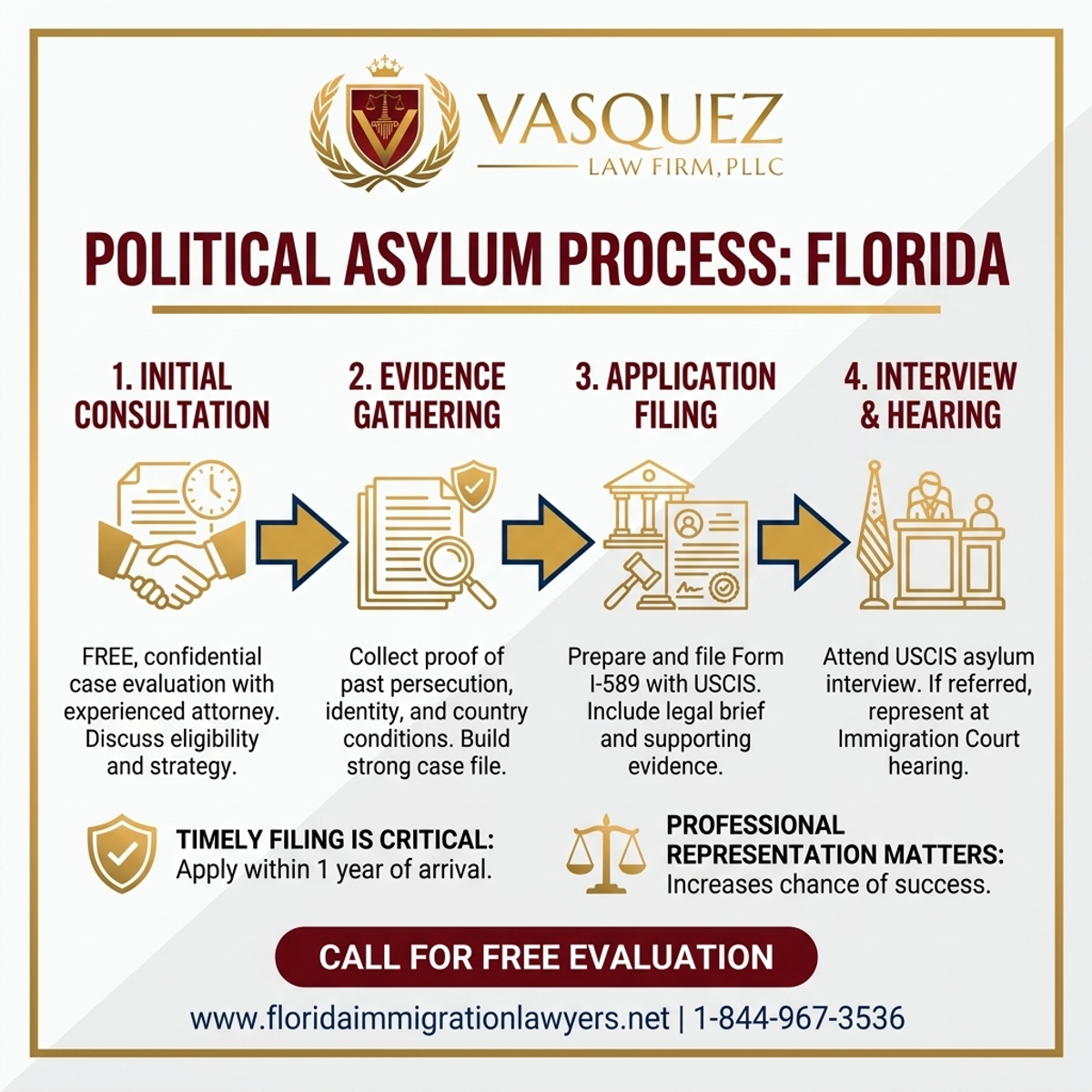
Applying for political asylum involves several structured steps, starting with filing Form I-589, Application for Asylum and for Withholding of Removal, with the U.S. Citizenship and Immigration Services (USCIS). This form is the cornerstone of your application and must be completed accurately and thoroughly, detailing your personal history, the basis of your fear, and any past persecution.
- File Form I-589: This must be done within one year of entering the U.S. unless exceptions apply, as discussed earlier. It is crucial to include all eligible family members (spouse and unmarried children under 21) on your application at this stage, as they can often receive derivative asylum status. Missing this deadline without a valid exception is one of the most common reasons for denial.
- Prepare Your Case: Gathering comprehensive evidence is paramount. This includes not only your personal statement but also objective documentation of country conditions, medical records, police reports, news articles, and affidavits from witnesses. A strong case tells a consistent, credible story supported by multiple sources. Florida Immigration Lawyers can assist in identifying and organizing the most impactful evidence for your specific circumstances.
- Attend the Asylum Interview: After filing, you will typically receive an interview notice. This is your opportunity to explain your story in detail to an asylum officer. The interview is a critical moment where your credibility will be assessed. Be ready to discuss your case thoroughly, answer questions about your fear, and provide specifics about the persecution you faced or fear you will face. An attorney can prepare you for the types of questions you might encounter and can accompany you to the interview.
- Decision: Await the decision, which could take several months, sometimes over a year, due to extensive backlogs and security checks. A decision will be mailed to you. If your asylum is granted, you will receive asylum status. If denied, your case may be referred to an immigration judge for removal proceedings, where you will have another opportunity to present your asylum claim.
Step-by-Step Process — Political Asylum Attorney in Florida: Requirements
The process can be lengthy and complex, often taking several months to over a year, sometimes even longer, depending on the volume of applications and the specific USCIS field office. Staying informed and prepared is essential for navigating the asylum process successfully. Engaging with Florida Immigration Lawyers at 1-844-YO-PELEO can provide you with peace of mind and expert guidance through each stage, ensuring no critical step is missed and your case is presented as strongly as possible.
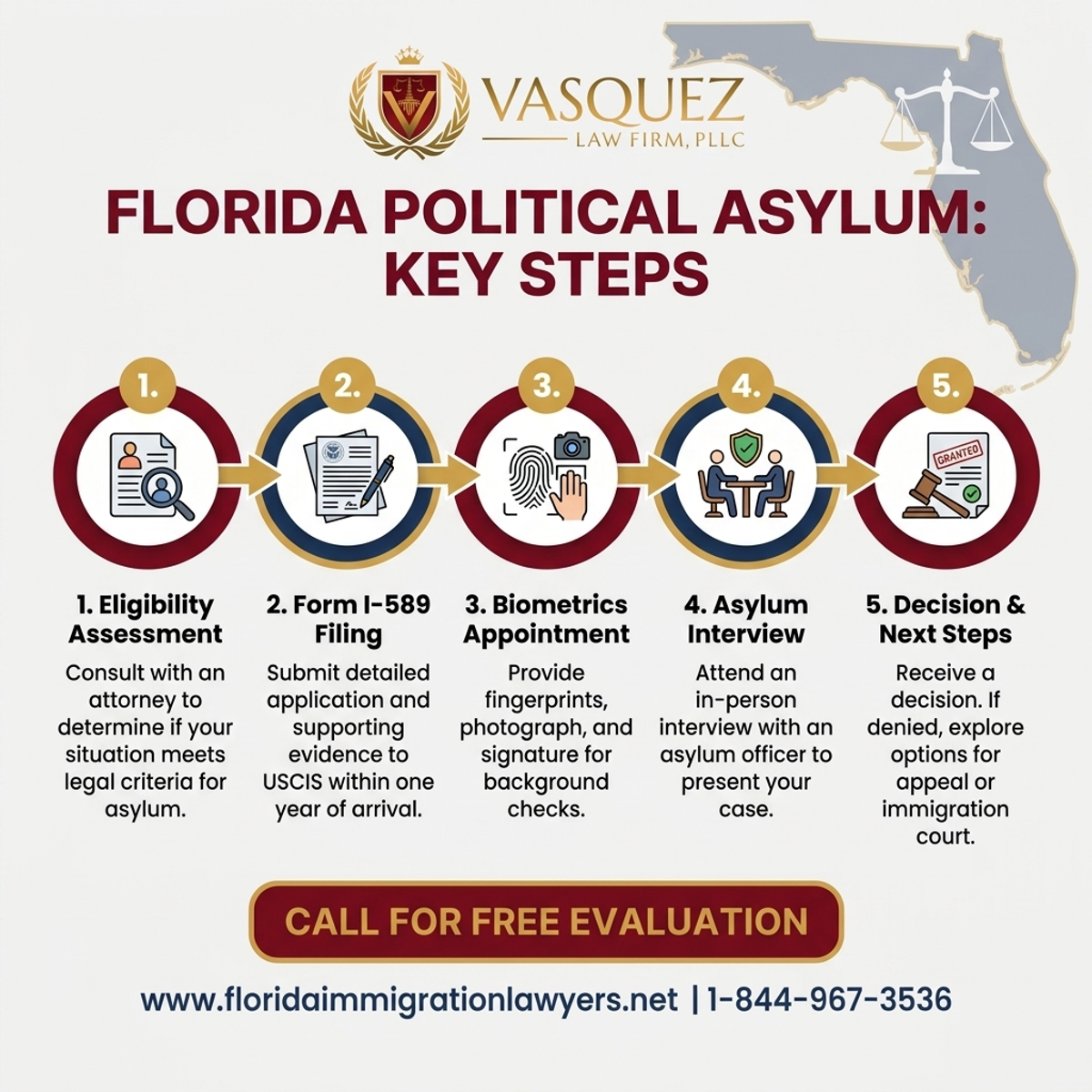
Upon filing Form I-589, you will also typically be scheduled for a biometrics appointment, where your fingerprints and photographs are taken for background and security checks. This is a standard procedure for all applicants. Following this, you will receive your interview notice, which specifies the date, time, and location of your asylum interview. It is crucial to attend this interview, as failure to do so without proper notification can lead to a denial of your application or referral to immigration court.
What Documents Are Needed for a Political Asylum Application?
Submitting a comprehensive application with the correct documentation is crucial for political asylum seekers. The strength of your case often hinges on the quality and quantity of supporting evidence you provide. This evidence must corroborate your personal testimony and demonstrate a well-founded fear of persecution.
- Form I-589: Completed and signed, this is the foundational document for your application. Ensure all questions are answered truthfully and completely, as any inconsistencies can later undermine your credibility.
- Personal Statement: This is arguably the most critical piece of evidence. It should be a detailed, chronological account of the persecution you experienced or fear, explaining how it relates to one of the five protected grounds. Be specific about dates, locations, names of persecutors, and the impact of these events on your life. An attorney can help you structure a compelling and legally sound narrative.
- Supporting Evidence: This category is broad and highly individualized. It can include:
- News articles and Human Rights Reports: Documenting country conditions, political instability, or persecution against your specific group. Sources like Amnesty International, Human Rights Watch, and U.S. State Department reports are highly credible.
- Photographs: Images of injuries, destroyed property, public demonstrations, or specific individuals involved in your persecution.
- Medical Records: Documenting physical or psychological harm suffered due to persecution. This can be critical for proving past persecution.
- Police Reports or Court Documents: If you were arrested, detained, or involved in legal proceedings related to your persecution.
- Affidavits: Sworn statements from witnesses (family, friends, colleagues, experts) who can corroborate parts of your story or provide context about country conditions.
- Letters from Organizations: Documentation from human rights groups, religious organizations, or political parties confirming your involvement or the persecution of your group.
- Identity Documents: Provide copies of your passport, birth certificate, national ID, or any other government-issued identification. If you do not have these due to confiscation or fear of returning to obtain them, explain why in your personal statement.
Ensure that all documents not in English are accompanied by a certified English translation. A certified translation includes a statement from the translator affirming their competence and the accuracy of the translation. Proper documentation is not just about quantity; it's about providing clear, credible, and relevant evidence that directly supports your claim of a well-founded fear of persecution. Florida Immigration Lawyers can help you meticulously organize and present these documents to strengthen your asylum application.
Beyond the primary documents, consider including any evidence of your involvement in political or social activities that may have led to persecution, such as membership cards, publications, or social media posts. The more thoroughly you can demonstrate the link between your protected ground and the persecution, the stronger your case will be. Remember, the goal is to paint a clear and undeniable picture of your need for protection.
What to Expect During the Asylum Interview?
The asylum interview is a critical step where applicants must articulate their case and fear of persecution directly to an asylum officer. This interview is typically non-adversarial, meaning the officer's role is to elicit facts and determine your eligibility, not to prosecute you. However, it is a formal proceeding where your testimony and credibility will be rigorously evaluated.
| Stage | Typical Timeframe | Notes |
|---|---|---|
| Preparation | Weeks before interview | Gather all necessary documents and practice your narrative. This includes reviewing your I-589 form and personal statement to ensure consistency. |
| Interview | Several hours | Conducted by an asylum officer who evaluates credibility and evidence. You will be asked detailed questions about your experiences and fears. |
| Decision | Within 180 days | Notification via mail. This timeframe is a goal, but actual processing times can vary significantly. |
Key Statistics — Political Asylum Attorney in Florida: Requirements
During the interview, an interpreter will be provided if you are not fluent in English. It is your responsibility to ensure the interpreter is accurately conveying your statements. The asylum officer will ask open-ended questions about your personal history, the events leading to your flight, and your fears of returning. They may also ask specific questions to test the consistency and credibility of your narrative. It is crucial to answer truthfully and to the best of your recollection. If you don't remember a specific detail, it's better to state that than to invent an answer.
It is highly recommended to attend the interview with an attorney. An attorney from Florida Immigration Lawyers can help you prepare thoroughly, ensuring you understand the types of questions you'll face and how to articulate your story effectively. During the interview, your lawyer can clarify questions, object to inappropriate lines of inquiry, and present a concise closing statement summarizing the strengths of your case. Their presence can significantly reduce anxiety and ensure your rights are protected throughout the process, improving your chances of a favorable outcome.
After the interview, the asylum officer will review your testimony and evidence. You may be given an opportunity to submit additional evidence within a specified timeframe. The decision will be mailed to you, typically within a few weeks to several months. If asylum is not granted, your case may be referred to an immigration judge for further review in removal proceedings, offering another chance to present your claim.
Frequently Asked Questions About Political Asylum in Florida
Navigating the asylum process can raise many questions. Here are answers to some of the most common inquiries, offering practical advice to help you succeed.
Q1: What is the one-year deadline for filing asylum, and are there exceptions?
The one-year deadline requires you to file Form I-589 within one year of your last arrival in the U.S. Exceptions exist for 'changed circumstances' that materially affect your eligibility (e.g., new persecution risks in your home country) or 'extraordinary circumstances' that prevented timely filing (e.g., severe illness, legal incapacitation). It's crucial to document these exceptions thoroughly, and an attorney from Florida Immigration Lawyers can help you determine if you qualify.
Q2: How important is evidence in an asylum case?
Evidence is paramount. It corroborates your personal testimony, establishes credibility, and demonstrates a well-founded fear of persecution. Without sufficient, credible evidence, even a compelling personal story may not meet the legal burden of proof. Gather various types of evidence, including personal statements, witness affidavits, country condition reports, medical records, and any official documents related to your persecution. Strong evidence significantly strengthens your case.
Q3: What if my testimony has inconsistencies?
Minor inconsistencies are often understandable, especially when recalling traumatic events. However, significant or material inconsistencies can severely damage your credibility and lead to a denial. It's vital to be truthful and consistent throughout your application and interview. If you realize a discrepancy, explain it honestly. An attorney can help you review your story for consistency and prepare you to address any potential issues proactively.
Q4: Do I need to translate all my supporting documents?
Yes, absolutely. All documents not in English must be accompanied by a complete and accurate English translation. Each translation must include a certification by the translator, stating that they are competent to translate from the foreign language into English and that the translation is true and accurate. Failure to provide certified translations can lead to delays or rejection of your evidence.
Q5: Is it really necessary to hire an attorney for an asylum case?
While not legally required, hiring an experienced immigration attorney significantly improves your chances of success. Asylum law is incredibly complex, with strict deadlines, high evidentiary standards, and nuanced legal arguments. An attorney can help you identify protected grounds, gather strong evidence, prepare a compelling personal statement, navigate the interview, and represent you in court if necessary. Don't risk your future; contact Florida Immigration Lawyers at 1-844-YO-PELEO.
Q6: What should I do to prepare for my asylum interview?
Preparation is key. Review your Form I-589 and personal statement thoroughly to ensure you remember all details and dates. Practice articulating your story clearly and chronologically. Anticipate questions about your persecution, fears, and personal history. Gather and organize all original documents and their certified translations. A mock interview with your attorney can be invaluable for building confidence and refining your responses.
Q7: What happens if my asylum application is denied?
If your asylum application is denied by USCIS, your case will typically be referred to an immigration court for removal proceedings. This provides a second opportunity to present your asylum claim before an immigration judge. You will have the right to legal representation during these proceedings. If denied by the immigration judge, you may have options to appeal the decision to the Board of Immigration Appeals or higher federal courts.
Q8: Can I include my family members in my asylum application?
Yes, you can include your spouse and any unmarried children under the age of 21 who are in the United States at the time of your application. They can be included on your Form I-589. If you are granted asylum, your spouse and children will also be granted derivative asylum status. This ensures that your immediate family can also find safety and protection alongside you.
About Florida Immigration Lawyers
Florida Immigration Lawyers is dedicated to assisting individuals in navigating the complexities of immigration law. Our experienced team offers comprehensive services in asylum, deportation defense, family immigration, and more. We understand the profound impact that immigration decisions have on individuals and families, which is why we approach every case with empathy, diligence, and a commitment to achieving the best possible outcome. We are available 24/7 with free case reviews, ensuring that help is always within reach when you need it most.
Serving all of Florida, we are committed to providing empathetic and professional legal assistance to asylum seekers and all those facing immigration challenges. Our team is fluent in multiple languages, including Spanish, ensuring effective communication and understanding of your unique situation. We believe everyone deserves a fair chance at safety and a new beginning. Schedule a free consultation today to discuss your case and learn how we can support you.
Sources and References
- U.S. Citizenship and Immigration Services (USCIS)
- Executive Office for Immigration Review (EOIR)
- 8 U.S.C. Chapter 12 - Immigration and Nationality Act
Related services: asylum application process, refugee status and resettlement.
This article provides general legal information and is not intended as legal advice. Every case is unique, and outcomes depend on specific facts and circumstances. Contact an attorney for advice about your particular situation.
Final Thoughts
Applying for political asylum is more than just a legal procedure; it is a profound journey towards safety, freedom, and a new beginning. While the path can be challenging and emotionally taxing, with the right preparation, comprehensive evidence, and expert legal guidance, you can navigate this complex process successfully. The decision to seek asylum is a testament to your resilience and courage, and you do not have to face it alone.
Florida Immigration Lawyers stands ready to be your steadfast advocate, offering the compassionate and knowledgeable support you need at every turn. Our dedicated team understands the stakes involved and is committed to helping you build the strongest possible case for protection. Don't let fear or confusion deter you from pursuing the safety you deserve. Call Florida Immigration Lawyers at 1-844-YO-PELEO for a consultation. Se Habla Español - Estamos aquí para ayudarle. Your journey to safety begins with a single step, and we are here to guide you through it.
If you need legal assistance, learn more about Florida asylum legal team, or call us at 1-844-967-3536 for a free case review.
Do Not Navigate This Process Alone
Our experienced immigration attorneys are ready to fight for you. Get a free, confidential case review today.
Se Habla Español
Or leave your details and we’ll call you:
Free Evaluation in 24 Hours
Or talk to us right now
AI voice assistant — available 24/7
FreeFrequently Asked Questions

William J. Vásquez
Founding Attorney · Vasquez Law Firm
U.S. Air Force veteran and immigration attorney with years of hands-on U.S. immigration experience. J.D., NCCU School of Law. AILA member. Admitted to the 4th, 5th, and 11th Circuit Courts.
Available 24/7 - Free Evaluations
Reviewed for legal accuracy by William J. Vásquez
Licensed in North Carolina; U.S. immigration is federal practice.
Related Legal Services
Our Florida immigration attorneys can help you with citizenship and naturalization, immigration practice areas and free immigration consultation. Call today at 1-844-YO-PELEO for a free case review.
Related Links
Related Topics
Free Legal Case Review
Discuss your case with our experienced attorneys. We're available 24/7.
Se Habla Español - Estamos aquí para ayudarle.
Related Articles
PERM Labor Certification in Florida: A 2026 Guide
Learn all about the PERM labor certification process in Florida, essential for employers sponsoring green card applicants. Understand the steps, document requirements, and common mistakes to avoid in this 2026 guide.
Dual Citizenship Lawyer in Florida: What You Need to Know
For Florida residents, the concept of dual citizenship, or holding two passports, offers a compelling blend of opportunities and challenges. While the U.S. generally permits dual nationality, the path to achieving this status requires a meticulous understanding of both U.S. immigration laws and the citizenship policies of your country of origin. This guide explores the definition of dual citizenship, the detailed step-by-step process for U.S. naturalization, and the significant benefits and potential pitfalls involved. We cover essential documentation, typical timelines, and cost considerations for 2026, providing crucial insights for anyone in Orlando, Miami, or across Florida considering this important legal step. Learn about common mistakes to avoid and understand when to seek professional legal counsel to navigate this complex process successfully. Florida Immigration Lawyers is here to provide expert, bilingual support for your dual citizenship journey.
EAD Advance Parole Combo Card in Florida: What You Need
An EAD advance parole combo card allows individuals with pending adjustment applications to both work and travel abroad without jeopardizing their green card application. Learn how to apply in Florida, what documents you need, and common mistakes to avoid.
Immigration Lawyer Orlando Free Consultation in Florida
For individuals and families in Orlando, Florida, navigating the complexities of U.S. immigration law requires expert guidance. An immigration lawyer in Orlando offers crucial support for everything from visa applications and green card processes to naturalization and deportation defense. This comprehensive guide details what a free consultation covers, providing a step-by-step overview of immigration pathways, essential document checklists, and expected timelines in 2026. We also highlight common mistakes to avoid, discuss the critical role of legal counsel in deportation and asylum cases, and explain why choosing a local Orlando immigration attorney is beneficial. Florida Immigration Lawyers is dedicated to serving the diverse community of Orlando with compassionate, effective legal solutions, ensuring you receive personalized advice and robust representation for a successful immigration journey.