Oxford Historian Faces Deportation in Florida: Legal
The hypothetical scenario of an Oxford historian facing deportation in Florida highlights critical immigration challenges. This post explores common reasons for deportation, such as visa overstays and violations, and outlines the complex, multi-stage deportation process in Florida's immigration courts. We detail essential documents for defense, discuss unpredictable timelines, and cover potential legal costs. With increased enforcement in Florida, understanding your rights and obligations is more crucial than ever. Learn how legal counsel from Florida Immigration Lawyers can make a significant difference in navigating these intricate legal waters.
A situation like an Oxford historian facing deportation in Florida highlights the strictness of U.S. immigration law regarding visa compliance and overstays. Even minor infractions, such as violating visa terms or spending too much time abroad, can lead to removal proceedings. Understanding your specific visa conditions and seeking immediate legal counsel is crucial to protect your status and fight deportation effectively.
- Visa overstays and violations of status are serious offenses under U.S. law.
- Deportation proceedings are complex and require expert legal navigation.
- Early consultation with a qualified immigration attorney is essential.
- Florida has specific immigration courts and enforcement initiatives.
Oxford Historian Faces Deportation in Florida: Legal Insights and Defense Strategies
Imagine dedicating years to profound academic research, contributing significantly to your field, only to find your immigration status threatened. The recent case of an Oxford historian facing deportation, hypothetically reimagined in Florida, underscores the precarious nature of immigration even for highly accomplished individuals. This scenario vividly illustrates how crucial it is for visa holders to meticulously adhere to U.S. immigration regulations.
For anyone living in Florida on a visa, understanding the potential pitfalls and the robust legal defenses available is paramount. This article explores common reasons for deportation, outlines the legal process within Florida's immigration system, and details crucial steps you can take to protect your immigration status. We will delve into how an unexpected challenge, like the one faced by an Oxford historian facing deportation in Florida, can swiftly escalate into a complex legal battle.
If you or someone you know is facing immigration challenges, do not hesitate. Call Florida Immigration Lawyers at 1-844-YO-PELEO for a free consultation today. Our experienced team is ready to provide the guidance you need.
Understanding Deportation Risks in Florida for Visa Holders
Florida, with its diverse population and bustling international hubs like Miami, is a focal point for immigration. However, it is also an area with heightened immigration enforcement. Understanding the specific risks that can lead to deportation is the first step in prevention.
The Hypothetical Case of an Oxford Historian in Florida
Consider an academic, like our hypothetical Oxford historian facing deportation in Florida, who holds a non-immigrant visa such as an O-1 (for individuals with extraordinary ability) or an H-1B (specialty occupation). These visas come with specific conditions. For example, an O-1 visa holder must generally maintain their engagement in the field for which the visa was granted. An H-1B holder must work for the sponsoring employer.
If this historian were to, say, spend an extended period abroad for research that falls outside the permissible limits of their visa, or if their employment terms changed without proper USCIS notification, they could be deemed to have violated their visa status. Such violations, even if unintentional, can trigger deportation proceedings. This highlights the critical need for constant vigilance and legal advice regarding visa compliance.
Common Triggers for Deportation Proceedings
Deportation, also known as removal, can be initiated for various reasons beyond visa violations. These include:
- Visa Overstays: Remaining in the U.S. beyond the authorized period of admission is a common ground for removal, as outlined in INA § 222(g). Even one day over can have severe consequences.
- Violations of Status: Failing to comply with the terms of your visa, such as working without authorization, failing to attend school (for student visas), or engaging in activities inconsistent with your visa type (8 U.S.C. § 1227(a)(1)(C)(i)).
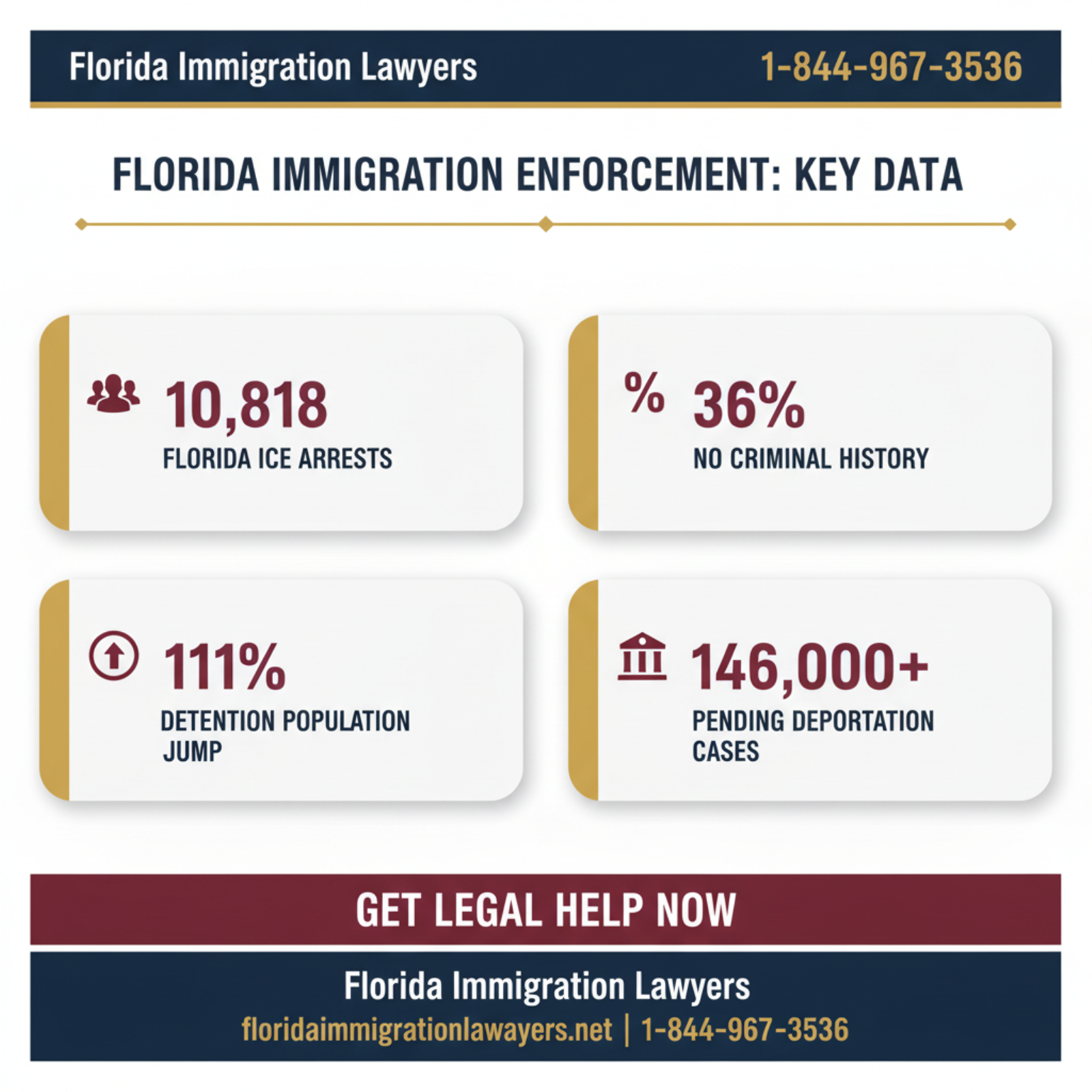
- Criminal Convictions: Certain criminal offenses, particularly those involving moral turpitude, aggravated felonies, or drug-related crimes, can render an individual deportable (8 U.S.C. § 1227(a)(2)). Florida has seen increased enforcement through initiatives like Operation Tidal Wave, leading to significant immigration arrests.
- Fraud or Misrepresentation: Providing false information or misrepresenting facts to obtain an immigration benefit.
- Entry Without Inspection: Entering the U.S. without being lawfully admitted or paroled by an immigration officer.
In Florida, immigration courts in cities like Miami and Orlando handle a high volume of deportation cases. The legal landscape is constantly evolving, making legal counsel indispensable for anyone facing these serious charges.
The Deportation Process in Florida: A Step-by-Step Guide
Facing deportation can be a frightening experience, but understanding the process can help you prepare. The removal process typically involves several stages, primarily overseen by the Executive Office for Immigration Review (EOIR) within the Department of Justice.
-
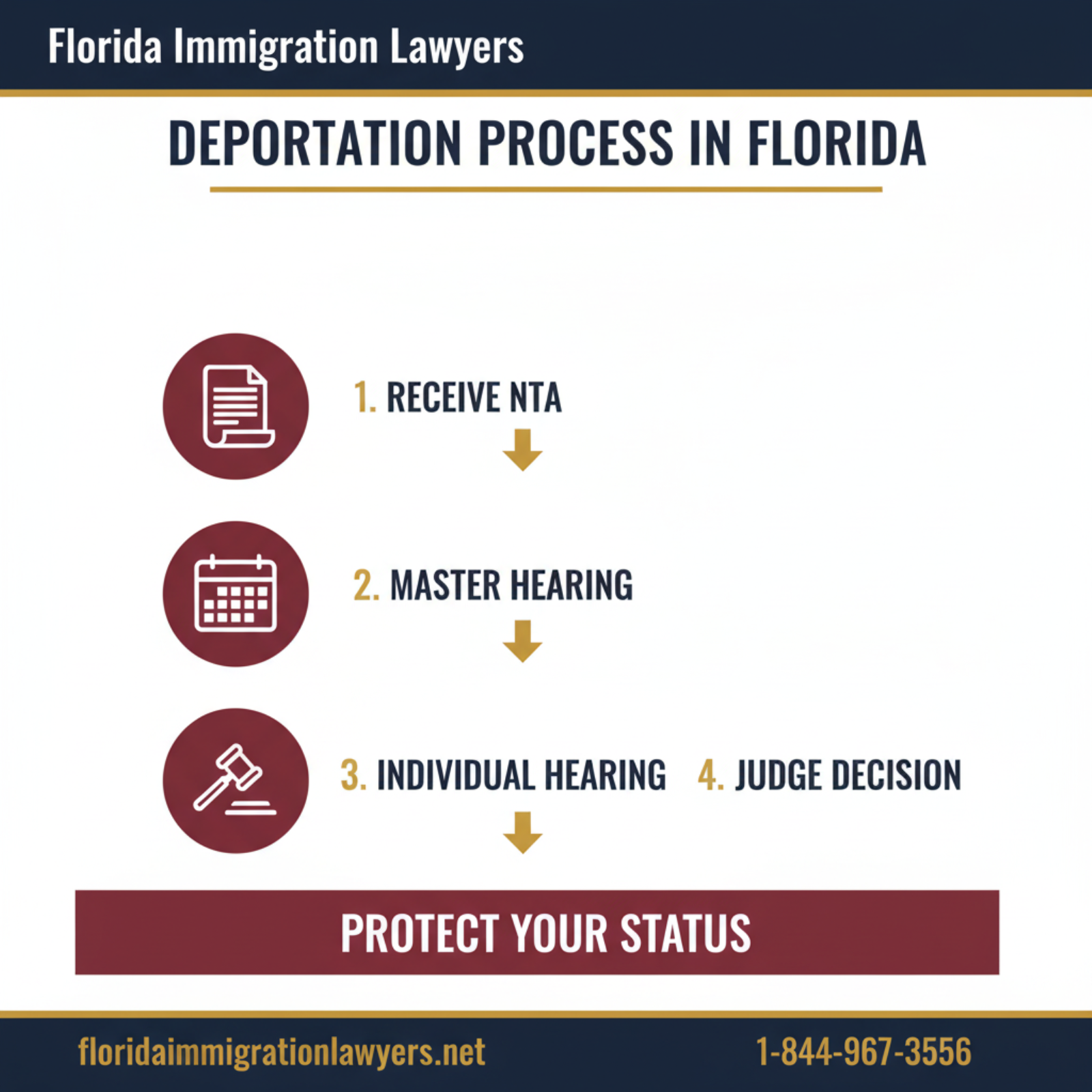
Notice to Appear (NTA): The process usually begins when U.S. Immigration and Customs Enforcement (ICE) issues a Notice to Appear (Form I-862). This document alleges that you are deportable and specifies the charges against you. It also provides the date and location of your first hearing before an immigration judge. Receiving an NTA is a critical moment; immediate legal consultation is advised (8 CFR § 239.1).
-
Master Calendar Hearing: This is the initial hearing before an immigration judge. During this hearing, you, or your attorney, will acknowledge receipt of the NTA, admit or deny the allegations, and state whether you concede deportability. This is also where you inform the judge if you intend to seek any forms of relief from removal, such as asylum, adjustment of status, or cancellation of removal. In Florida, these hearings often take place in the Miami Immigration Court.
-
Individual Hearing (Merits Hearing): If you deny deportability or seek relief from removal, the judge will schedule an individual hearing. This is similar to a trial, where both sides present evidence, call witnesses, and cross-examine. You will have the opportunity to present your case for why you should not be deported and why you qualify for a specific form of relief. The judge will then make a decision based on the evidence presented.
-
Decision and Appeal: After the individual hearing, the immigration judge will issue a decision. If the judge orders you removed, you generally have the right to appeal this decision to the Board of Immigration Appeals (BIA) within 30 days. Further appeals may be possible to the U.S. Court of Appeals. An experienced immigration lawyer in Florida can guide you through the complex appeals process.
Each step in this process is complex and fraught with legal nuances. Missing deadlines or failing to present a compelling case can have dire consequences. Having a skilled deportation defense lawyer by your side is not just beneficial, it is often essential.
Essential Documents for Your Deportation Defense
Building a strong defense against deportation in Florida requires meticulous preparation and a comprehensive collection of documents. These documents serve as evidence to support your eligibility for various forms of relief from removal.
- Identity and Travel Documents: Valid passport, visa, Form I-94 (Arrival/Departure Record), birth certificate, and any previous immigration documents (e.g., I-20 for students, I-797 approval notices).
- Proof of Residence in Florida: Lease agreements, utility bills, mail with your name and address, Florida driver's license or state ID. This helps establish ties to the community.
- Employment Records: Pay stubs, W-2 forms, employment verification letters, tax returns. These demonstrate your contribution to the U.S. economy and your good moral character.
- Academic Records: Transcripts, diplomas, enrollment verification letters, especially relevant for someone like the Oxford historian facing deportation in Florida.
- Family Ties in the U.S.: Birth certificates of U.S. citizen or lawful permanent resident family members (spouse, children, parents), marriage certificates, affidavits from family members. These are crucial for demonstrating hardship in cancellation of removal cases.
- Financial Stability: Bank statements, property deeds, evidence of investments.
- Criminal Records (if any): Certified court dispositions for all arrests and convictions. It is vital to be transparent; your attorney needs to know everything to assess your eligibility for waivers.
- Medical Records: Especially if you have a serious medical condition that would be difficult to treat in your home country.
- Hardship Evidence: Documents demonstrating extreme and unusual hardship to qualifying U.S. citizen or LPR relatives if you were deported. This can include medical reports, psychological evaluations, and financial dependency proofs.
- Character References: Letters from employers, community leaders, friends, and family attesting to your good character and contributions to the community.
Organizing these documents can be overwhelming. An immigration attorney can help you identify which specific documents are most relevant to your case and how to present them effectively to the immigration judge.
Navigating Timelines and Processing Expectations in Florida Immigration Cases
One of the most challenging aspects of any immigration case, particularly deportation proceedings, is the unpredictability of timelines. There is no fixed duration for how long a removal case will take in Florida's immigration courts.
Several factors influence the processing time:
- Court Backlogs: Immigration courts, particularly busy ones like Miami, often face significant backlogs. This can lead to delays in scheduling hearings and receiving decisions.
- Case Complexity: Cases involving multiple forms of relief, complex legal arguments, or extensive evidence can naturally take longer.
- Judge's Caseload: The individual judge assigned to your case will have their own caseload, which can affect scheduling.
- ICE Priorities: ICE's enforcement priorities can also impact how quickly certain cases are processed.
- Appeals: If a decision is appealed to the Board of Immigration Appeals (BIA) or federal courts, the process can extend for many months, or even years.
While USCIS processing times for petitions and applications are generally published on their website (uscis.gov/processing-times), these do not apply to immigration court proceedings. The Executive Office for Immigration Review (EOIR) does not provide specific timelines for individual court cases due to their highly variable nature.
It is important to maintain realistic expectations and understand that patience is often required. Your immigration lawyer in Florida will keep you informed about your case's progress and any changes in scheduling. They will also ensure all deadlines are met, which is critical for avoiding further delays or adverse outcomes.
Cost Factors and Legal Fees in Florida Deportation Cases
Understanding the potential costs associated with a deportation defense is important for planning. While Florida Immigration Lawyers offers a free initial consultation, the overall expenses for defending against removal can vary significantly.
Key cost factors typically include:
- Attorney Fees: This is often the most substantial cost. Legal fees depend on the complexity of your case, the amount of time and resources required, the specific forms of relief sought, and the attorney's experience. A case involving criminal grounds of deportability, for example, will typically be more complex and thus more costly than a simple visa overstay case.
- Filing Fees: While there are generally no filing fees for the deportation proceedings themselves, if you apply for certain forms of relief from removal (e.g., adjustment of status, waivers, asylum), you may incur fees payable to USCIS. These fees are subject to change, so specific amounts are not provided here.
- Expert Witness Fees: In some cases, particularly those involving asylum claims or extreme hardship arguments, it may be necessary to hire expert witnesses (e.g., psychologists, country condition experts). Their fees can add to the overall cost.
- Translation and Interpretation Costs: If documents need to be translated into English or if an interpreter is required for court hearings, these services will incur additional costs.
- Travel and Miscellaneous Expenses: Costs for obtaining certified documents, travel to court hearings, and other administrative expenses.
During your free consultation with Florida Immigration Lawyers, we can discuss the potential costs associated with your specific case. We believe in transparency and will provide a clear understanding of our fee structure, helping you plan effectively for your legal defense.
The complexities of immigration law, especially when facing deportation, demand experienced legal counsel. Do not navigate this process alone. Contact Florida Immigration Lawyers today to discuss your situation and explore your options.
Common Mistakes to Avoid in Deportation Cases
Navigating deportation proceedings is fraught with potential missteps that can jeopardize your case. Avoiding these common mistakes is crucial for a successful defense, especially for individuals like the Oxford historian facing deportation in Florida.
-
Ignoring a Notice to Appear (NTA): Many individuals, out of fear or misunderstanding, fail to appear for their scheduled Master Calendar Hearing. This almost always results in an in absentia removal order, making it extremely difficult to reopen your case and fight deportation.
-
Failing to Understand Visa Conditions: Not knowing or misinterpreting the specific terms of your visa (e.g., permissible length of stay, work restrictions, academic requirements) can lead to unintentional violations and subsequent removal proceedings.
-
Providing False Information to Immigration Officials: Any form of misrepresentation or fraud can lead to permanent bars from immigration benefits and severe penalties, including criminal charges in some cases.
-
Leaving the U.S. Without Proper Legal Advice During Proceedings: Departing the country while in removal proceedings can be considered a self-deportation and may prevent you from re-entering the U.S. for many years, even if you had a strong defense.
-
Overstaying Your Visa: Even a single day past your authorized stay can trigger bars to future immigration benefits and make you a priority for removal. Always monitor your I-94 record (i94.cbp.dhs.gov).
-
Not Disclosing Criminal History: Attempting to hide arrests or convictions from your attorney or immigration officials will severely undermine your credibility and can lead to more serious legal problems. Transparency is key.
-
Attempting to Represent Yourself in Immigration Court: Immigration law is incredibly complex. Representing yourself against experienced government attorneys significantly reduces your chances of success. An immigration lawyer understands the nuances of court procedures, evidence rules, and available relief.
-
Missing Deadlines for Filings or Appeals: Immigration courts and the BIA have strict deadlines for filing documents and appeals. Missing these can result in the loss of crucial opportunities to present your case or challenge an adverse decision.
-
Assuming Minor Infractions Are Harmless: What seems like a minor issue to you (e.g., a traffic ticket, a brief period of unauthorized work) could have significant immigration consequences. Always consult with an attorney to assess any potential impact.
-
Not Gathering Sufficient Evidence: A strong defense relies on compelling evidence. Failing to collect and present all necessary documents and testimony can weaken your case significantly.
-
Delaying Legal Consultation: The sooner you consult with an immigration lawyer, the more time they have to prepare your defense, gather evidence, and explore all available legal strategies. Delays can limit your options.
-
Failing to Update Contact Information with USCIS/EOIR: If you move, you must inform USCIS and the immigration court (EOIR) of your new address. Failing to do so means you could miss important notices, including hearing dates, leading to an in absentia removal order.
When to Call a Florida Immigration Lawyer
The decision to seek legal counsel is often critical in immigration matters. For individuals in Florida, knowing when to contact an attorney can make all the difference in the outcome of their case.
You should call Florida Immigration Lawyers immediately if:
- You have received a Notice to Appear (NTA) or any other official communication from ICE, USCIS, or the Executive Office for Immigration Review (EOIR).
- You have overstayed your visa or violated the terms of your immigration status.
- You have been arrested or convicted of any crime, regardless of how minor it seems.
- Your visa petition or application has been denied, or you have received a Request for Evidence (RFE) or Notice of Intent to Deny (NOID).
- You fear returning to your home country and believe you may be eligible for asylum or other humanitarian relief.
- You are seeking to adjust your status to a lawful permanent resident or need assistance with family-based or business-based immigration petitions.
- You are a student facing academic challenges or visa issues, similar to the scenario of the Oxford historian facing deportation in Florida.
- You are considering applying for U.S. citizenship.
Warning signs that you need legal help include any official letter questioning your immigration status, an encounter with immigration officials, or any uncertainty about your eligibility for an immigration benefit. The team at Florida Immigration Lawyers focuses on deportation defense, asylum claims, family immigration, and business immigration. We are here to provide comprehensive support and legal strategies tailored to your unique situation.
About Florida Immigration Lawyers
Florida Immigration Lawyers is a leading law firm dedicated to serving the diverse immigration needs of individuals and families across the entire state of Florida. With years of specialized experience, our attorneys are committed to providing compassionate, effective, and results-driven legal representation.
We understand the complexities and emotional toll that immigration challenges can bring. Our firm offers a wide range of services, including visa applications, deportation defense, asylum assistance, citizenship applications, and more. We pride ourselves on offering personalized attention to each client, ensuring that your case receives the thorough and dedicated advocacy it deserves.
Why choose Florida Immigration Lawyers? Our commitment to our clients is unwavering. We offer free consultations, are available 24/7, and provide bilingual services (Se Habla Español) to ensure clear communication and understanding. Our extensive knowledge of U.S. immigration law, combined with our deep understanding of the local Florida legal landscape, positions us to effectively navigate even the most challenging cases. Visit our attorneys page to learn more about our dedicated team, or contact us directly.
Your future in Florida is important to us. Let us be your trusted legal partners. Call us at 1-844-YO-PELEO or visit our website at Vasquez Law Firm.
Sources and References
- U.S. Citizenship and Immigration Services (USCIS)
- Executive Office for Immigration Review (EOIR)
- Customs and Border Protection (CBP) I-94 Retrieval
- 8 U.S.C. Chapter 12 - Immigration and Nationality Act (INA)
- 8 U.S.C. § 1227(a)(1)(C)(i) - Deportable Aliens, Violations of Status
- 8 U.S.C. § 1227(a)(2) - Deportable Aliens, Criminal Offenses
- 8 CFR § 239.1 - Initiation of Removal Proceedings, Notice to Appear
- INA § 222(g) - Visa Overstay Provisions
This article provides general legal information and is not intended as legal advice. Every case is unique, and outcomes depend on specific facts and circumstances. Immigration laws are complex and subject to change. Contact an attorney for advice about your particular situation. Florida Immigration Lawyers does not guarantee case outcomes or specific results.
Protecting your future in Florida requires vigilance and legal guidance. If you are facing deportation or have immigration concerns, contact Florida Immigration Lawyers immediately. Call us at 1-844-YO-PELEO for a free, confidential consultation. Se Habla Español - Estamos aquí para ayudarle.
Do Not Navigate This Process Alone
Our experienced immigration attorneys are ready to fight for you. Get a free, confidential case review today.
Se Habla Español
Or leave your details and we’ll call you:
Free Evaluation in 24 Hours
Or talk to us right now

AI voice assistant — available 24/7
FreeFrequently Asked Questions

William J. Vásquez
Founding Attorney · Vasquez Law Firm
U.S. Air Force veteran and immigration attorney with years of hands-on U.S. immigration experience. J.D., NCCU School of Law. AILA member. Admitted to the 4th, 5th, and 11th Circuit Courts.
Available 24/7 - Free Evaluations
Reviewed for legal accuracy by William J. Vásquez
Licensed in North Carolina; U.S. immigration is federal practice.
Related Legal Services
Our Florida immigration attorneys can help you with deportation defense, family immigration services and immigration lawyer cost in Florida. Call today at 1-844-YO-PELEO for a free case review.
Related Links
Related Topics
Free Legal Case Review
Discuss your case with our experienced attorneys. We're available 24/7.
Se Habla Español - Estamos aquí para ayudarle.
Related Articles
Certificate of Eligibility for Expungement in Florida 2026
For non-U.S. citizens in Florida, understanding how a state expungement impacts immigration status is critical. A certificate of eligibility for expungement in Florida allows a criminal record to be sealed or expunged under state law. However, federal immigration agencies often disregard such state-level relief, still considering the original criminal offense as a conviction for immigration purposes. This can have severe implications for visa applications, green card eligibility, naturalization, and even lead to deportation. This guide clarifies the Florida expungement process, its limited effect on federal immigration law, and key steps to protect your status in 2026. Learn about common mistakes, required documents, timelines, and when to seek expert legal counsel from Florida Immigration Lawyers to navigate these complex issues effectively.
Immigration Lawyer Orlando Free Consultation in Florida
For individuals and families in Orlando, Florida, navigating the complexities of U.S. immigration law requires expert guidance. An immigration lawyer in Orlando offers crucial support for everything from visa applications and green card processes to naturalization and deportation defense. This comprehensive guide details what a free consultation covers, providing a step-by-step overview of immigration pathways, essential document checklists, and expected timelines in 2026. We also highlight common mistakes to avoid, discuss the critical role of legal counsel in deportation and asylum cases, and explain why choosing a local Orlando immigration attorney is beneficial. Florida Immigration Lawyers is dedicated to serving the diverse community of Orlando with compassionate, effective legal solutions, ensuring you receive personalized advice and robust representation for a successful immigration journey.
How to Apply for VAWA in Florida: A 2026 Guide
Discover how to apply for VAWA in Florida, offering crucial immigration relief for abuse victims. Learn the process, requirements, and how Florida Immigration Lawyers can assist you.
USCIS Office Near Me: Florida Locations & Appointments 2026
Navigating USCIS processes in Florida can be complex, from finding the right field office to preparing for critical appointments. This comprehensive guide provides essential information for individuals seeking immigration services in 2026, including a step-by-step process for locating your nearest USCIS office in Florida, understanding its services, and efficiently scheduling appointments. We detail the necessary documents for interviews, outline typical processing timelines, and break down associated costs. Furthermore, we highlight common pitfalls to avoid and crucial situations when consulting an experienced Florida immigration lawyer is indispensable. Whether you're in Orlando or elsewhere, empower your immigration journey with expert advice and practical strategies. Learn how Florida Immigration Lawyers can assist you.