Motion to Reopen Immigration Case in Florida | VLF Florida
Understanding how to file a motion to reopen an immigration case in Florida can be critical if facing deportation. Learn the process, avoid common pitfalls, and know when to seek legal help. Contact Florida Immigration Lawyers for a free consultation.
Motion to Reopen Immigration Case in Florida | VLF Florida
Facing an adverse decision in an immigration case can feel like the end of the road, especially when it involves the threat of deportation. However, for many individuals in Florida, there's a critical avenue for relief: the Motion to Reopen. This legal mechanism allows individuals to ask an immigration judge or the Board of Immigration Appeals (BIA) to reconsider a previous decision based on new facts, changed circumstances, or legal errors. Understanding the intricacies of filing a motion to reopen is paramount, as it represents a crucial opportunity to present new evidence or argue for a different outcome, potentially altering the course of your immigration journey. In a state like Florida, with its diverse immigrant population, these motions are frequently utilized, yet they come with strict deadlines and complex requirements that demand precise legal strategy.
At VLF Florida, our experienced immigration attorneys specialize in navigating the complexities of immigration law, including the challenging process of motions to reopen. We understand that life circumstances can change rapidly, or crucial evidence may not have been available during initial proceedings. This guide aims to demystify the motion to reopen process, outlining its purpose, grounds for filing, strict deadlines, and the vital role of skilled legal representation in securing a favorable outcome. If you believe your immigration case warrants a second look, understanding this powerful tool is your first step towards potential relief.
What is a Motion to Reopen an Immigration Case?
A Motion to Reopen is a formal request submitted to an immigration court or the Board of Immigration Appeals (BIA) asking them to reconsider a decision previously made in an immigration case. Unlike an appeal, which challenges whether the initial decision was legally correct based on the evidence presented at the time, a motion to reopen introduces new facts or evidence that were not available or discoverable at the time of the original hearing. Its primary purpose is to allow the immigration court or BIA to review the case with this new information, potentially leading to a different outcome, such as the cancellation of a deportation order or the approval of a benefit like asylum.
This legal tool is particularly significant because immigration proceedings often have life-altering consequences. A motion to reopen serves as a critical safety net, recognizing that circumstances can evolve, or new, compelling evidence may emerge after a final decision has been rendered. It’s not merely a second chance to argue the same points; rather, it’s an opportunity to present a fundamentally different picture of the case. For instance, if an individual was ordered deported and later discovers new evidence proving eligibility for a form of relief, a motion to reopen would be the appropriate mechanism to bring that evidence before the court. The success of such a motion heavily relies on demonstrating that the new evidence is material, was not previously available, and would likely change the outcome of the case.
Understanding the distinction between a motion to reopen and a motion to reconsider is also crucial. A motion to reconsider asks the court to review its decision based on an alleged error of law or fact in the original decision, using the *same* evidence that was already part of the record. A motion to reopen, conversely, introduces *new* evidence or facts. Both are powerful tools, but they serve different purposes and have distinct requirements and deadlines. Navigating these distinctions is a core part of effective immigration legal strategy.
Common Grounds for Filing a Motion to Reopen
Filing a motion to reopen is not a simple matter of disagreement with a prior ruling; it requires specific, legally recognized grounds. The most common reasons for which an immigration court or the BIA will consider reopening a case typically fall into a few key categories:
1. New, Material Evidence
This is perhaps the most frequent ground. To succeed, the new evidence must be truly new, meaning it was not available and could not have been discovered or presented at the time of the original hearing. Furthermore, it must be “material,” which means it is relevant to the issues in the case and, if considered, would likely change the outcome of the prior decision. Examples include newly obtained documents (e.g., birth certificates, marriage licenses, police reports from a home country), expert opinions, or affidavits from witnesses whose testimony was previously unobtainable. For instance, if an asylum seeker was denied relief and later obtains compelling evidence of changed country conditions or personal persecution that was previously unknown, this could form the basis for a motion to reopen.
2. Changed Country Conditions (for Asylum/Withholding of Removal Cases)
For individuals seeking asylum or withholding of removal, a significant change in conditions in their home country can be a powerful ground for reopening a case. If, after a final order of removal, the political, social, or human rights situation in the applicant's country of origin deteriorates significantly, making return unsafe, this can constitute new evidence. This ground is often exempt from the strict 90-day filing deadline, provided the motion is filed within a reasonable period after the change in conditions occurred and is supported by credible evidence of the new circumstances. Our attorneys are adept at gathering and presenting such evidence effectively.
3. Ineffective Assistance of Counsel (IAC)
If an individual received substandard legal representation during their original immigration proceedings, and this poor representation directly led to an unfavorable outcome, they might be able to file a motion to reopen based on ineffective assistance of counsel. This is a complex claim, requiring the individual to demonstrate that their previous attorney's performance fell below an objective standard of reasonableness and that, but for the attorney's errors, the outcome of the proceedings would have been different. Strict procedural requirements, known as the 'Matter of Lozada' requirements, must be met, including notifying the previous attorney of the allegations and giving them an opportunity to respond. This is a particularly challenging ground to prove and often requires the expertise of new, competent counsel.
4. Joint Motions to Reopen
In some cases, the Department of Homeland Security (DHS) may agree to join an immigrant in filing a motion to reopen. This often occurs when DHS acknowledges an error in the previous proceedings, or when new, compelling humanitarian factors or legal developments warrant reconsideration. A joint motion to reopen is not subject to the usual numerical or time limitations, making it a highly desirable, though less common, avenue for relief. It requires negotiation and cooperation with government counsel, highlighting the benefit of having an experienced legal team.
Each of these grounds requires meticulous preparation and a thorough understanding of immigration law. Successfully arguing any of these points demands not only compelling evidence but also precise legal argumentation, which is where the expertise of a dedicated deportation defense attorney becomes indispensable.
Deadlines and Exceptions for Motions to Reopen
One of the most critical aspects of filing a motion to reopen is adhering to strict deadlines. Generally, a motion to reopen must be filed within 90 days of the date of the final administrative decision by the immigration judge or the Board of Immigration Appeals (BIA). This 90-day clock is unforgiving, and missing it without a valid exception can permanently bar an individual from seeking this form of relief. Furthermore, an individual is generally allowed to file only one motion to reopen.
However, there are several crucial exceptions to these strict rules, which can provide a lifeline for individuals who have missed the standard deadline or have already filed a motion:
1. Changed Country Conditions
As mentioned earlier, motions to reopen based on changed country conditions for asylum or withholding of removal applicants are exempt from the 90-day deadline. These motions must be filed within a “reasonable period” after the changes occur, and the applicant must demonstrate that the evidence of these changes is material and was not available at the time of the previous hearing.
2. Joint Motions to Reopen
When the Department of Homeland Security (DHS) agrees to join an individual in filing a motion to reopen, neither the 90-day deadline nor the one-motion limit applies. These motions are often filed when there has been a significant change in law or policy, or when DHS acknowledges an error or believes that reopening the case is in the interest of justice. Securing a joint motion requires persuasive advocacy and often extensive negotiation with DHS counsel.

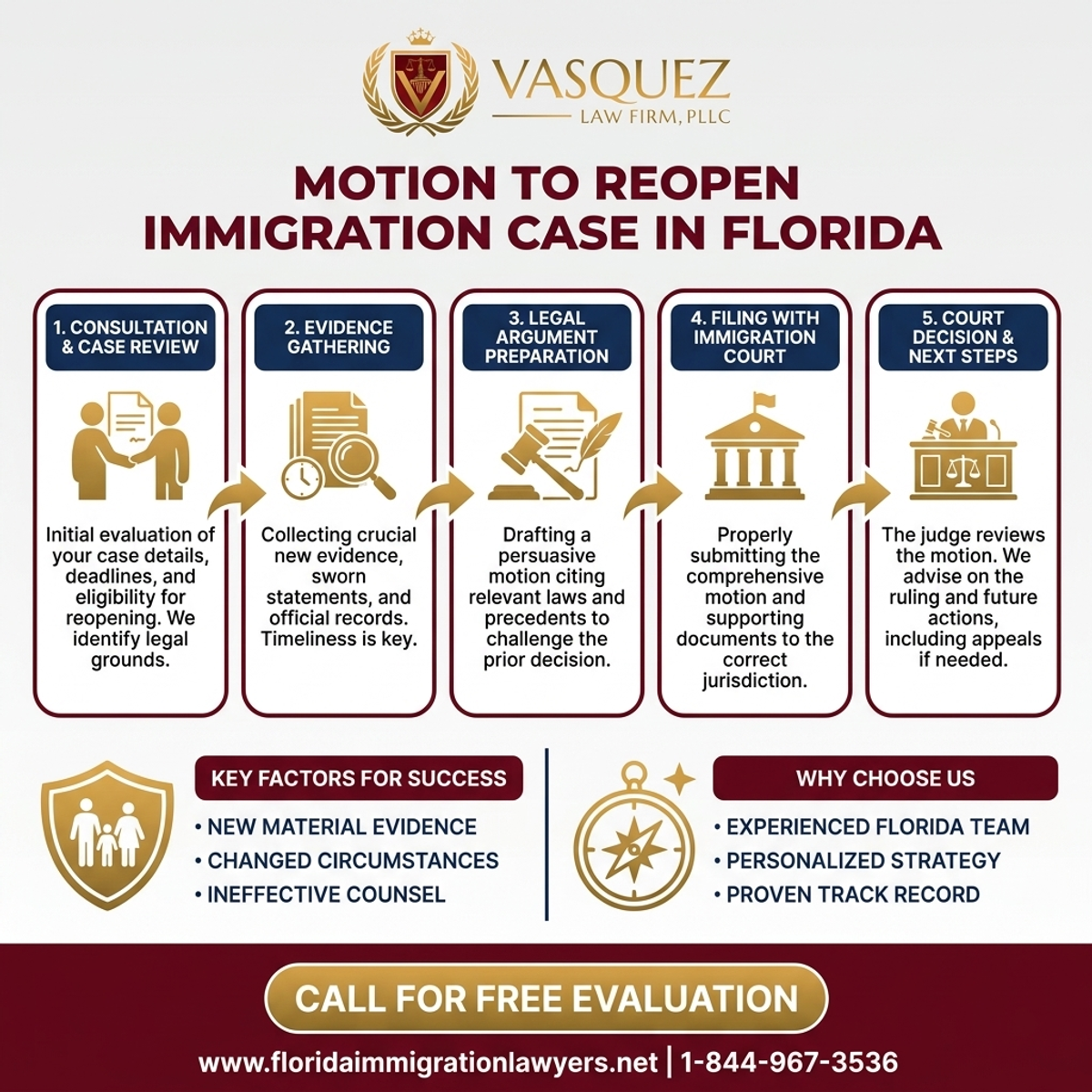
Step-by-Step Process — Motion to Reopen Immigration Case in Florida | VLF Florida
3. Sua Sponte Motions to Reopen
Both immigration judges and the BIA have the discretionary authority to reopen a case *sua sponte* (on their own motion) at any time. This is a rare and extraordinary remedy, typically reserved for cases involving fundamental miscarriages of justice or significant legal errors. While an individual cannot directly file a *sua sponte* motion, they can request that the judge or BIA exercise this authority. Such requests must present compelling reasons why the court should act outside the normal procedural rules.
4. Motions Based on Ineffective Assistance of Counsel
While subject to the one-motion limit, motions based on ineffective assistance of counsel may sometimes be considered even if filed outside the 90-day window, particularly if the previous counsel’s errors prevented the timely filing of the motion. However, demonstrating this requires meeting the stringent 'Matter of Lozada' requirements and proving that the untimeliness was directly attributable to the ineffective assistance.
Understanding these deadlines and exceptions is paramount. A missed deadline can be fatal to a case, making it imperative to consult with an experienced immigration attorney as soon as possible after receiving an adverse decision. Our team at VLF Florida is skilled in assessing the viability of a motion to reopen and navigating these complex time constraints.
The Process of Filing a Motion to Reopen
Filing a motion to reopen is a multi-step legal process that demands precision, thoroughness, and a deep understanding of immigration procedures. The specific steps can vary slightly depending on whether the motion is filed with an immigration judge or the Board of Immigration Appeals (BIA), but the core requirements remain consistent.
1. Determine the Proper Venue and Jurisdiction
The first step is to identify where the motion should be filed. If the last decision in your case was made by an immigration judge, the motion generally goes back to that judge. If the BIA issued the final decision, then the motion must be filed with the BIA. Understanding the correct jurisdiction is critical, as filing in the wrong place can lead to immediate rejection.
2. Gather New Evidence and Documentation
This is often the most labor-intensive part of the process. You must collect all new, material evidence that supports your grounds for reopening. This could include affidavits, expert reports, medical records, country condition reports, new legal documents, or any other evidence that was not available or discoverable at the time of your original hearing. Each piece of evidence must be carefully organized, translated if necessary, and accompanied by an affidavit explaining its relevance and why it was not previously presented.
3. Draft the Motion to Reopen
The motion itself is a legal brief that must clearly state the grounds for reopening, cite relevant legal authority, and explain how the new evidence or changed circumstances warrant a different outcome. It must demonstrate that the motion is timely filed (or falls under an exception) and that the new evidence is material and would likely change the result. This document requires sophisticated legal writing and argumentation, often referencing specific sections of the Immigration and Nationality Act (INA) and case law.
4. Prepare Supporting Documents
In addition to the new evidence, the motion must include a cover page, a table of contents, and a certificate of service proving that a copy of the motion was sent to the opposing party (usually DHS counsel). If filing with the BIA, you'll use Form EOIR-42B, and if with an Immigration Court, it's typically a written brief with supporting exhibits. All exhibits must be clearly labeled and referenced within the motion.
5. File the Motion
The completed motion, along with all supporting documentation, must be filed with the appropriate court or BIA within the strict deadlines. This usually involves mailing the documents, often with a fee, and ensuring proper delivery and receipt. Timeliness is measured by the date of mailing, not receipt, but proof of mailing is essential.
6. Await a Decision
After filing, the opposing party (DHS) will have an opportunity to respond. The immigration judge or BIA will then review the motion and decide whether to grant or deny it. If granted, the case is reopened, and new proceedings will commence to consider the new evidence. If denied, further appeals may be possible, depending on the specifics of the denial.
Given the complexity and high stakes involved, attempting to navigate this process without professional legal guidance is highly discouraged. An experienced immigration attorney can ensure all procedural requirements are met, arguments are compelling, and evidence is presented effectively.
Strategic Considerations and Advanced Nuances in Motions to Reopen
While the basic framework of a motion to reopen involves presenting new evidence or changed circumstances, successful filings often hinge on strategic considerations and an understanding of advanced legal nuances. It's not just about having new information; it's about how that information is presented and positioned within the broader context of immigration law.
Interplay with Motions to Reconsider and Appeals
A common strategic decision involves choosing between a motion to reopen, a motion to reconsider, or an appeal. While distinct, these remedies can sometimes overlap or be pursued sequentially. For instance, if a case has both new evidence and an arguable legal error, an attorney might file both a motion to reopen and a motion to reconsider, or prioritize one based on deadlines and likelihood of success. Understanding which avenue offers the best chance for relief, and whether pursuing one impacts the ability to pursue another, is critical. For example, filing a motion to reopen generally does not toll the time for filing an appeal to a higher court, meaning both processes might need to be managed concurrently.
Demonstrating "Due Diligence"
When presenting new evidence, the applicant must often demonstrate that they exercised "due diligence" in trying to obtain and present that evidence during the original proceedings. This means showing that the evidence was genuinely unavailable or undiscoverable earlier, despite reasonable efforts. Simply claiming ignorance is usually not enough. Attorneys must meticulously document why the evidence is new and why it could not have been presented before, often through detailed affidavits and supporting documents. This is particularly important in cases of alleged ineffective assistance of counsel, where the new attorney must show that the client was diligent in seeking a remedy for the prior attorney's errors.
The High Bar for "Likely to Change the Outcome"
The standard for new evidence is not just that it's material, but that it would "likely change the outcome" of the case. This is a high bar. It requires the attorney to not only present the new evidence but also to construct a compelling legal argument explaining *how* this evidence, if considered, would lead to a different decision. This often involves forecasting the immigration judge or BIA's re-evaluation of the entire record in light of the new information.
Key Statistics — Motion to Reopen Immigration Case in Florida | VLF Florida
Navigating Discretionary Factors
Even if the technical requirements for a motion to reopen are met, the granting of the motion can still be discretionary. Immigration judges and the BIA have broad discretion, especially in cases where the applicant is seeking a form of relief that is itself discretionary (e.g., asylum, cancellation of removal). Therefore, a successful motion often includes arguments addressing positive equities, rehabilitation, family ties, and other factors that weigh in favor of a favorable exercise of discretion. This holistic approach is crucial for cases that are not strictly legal but also involve compelling human elements.
The Role of Current Immigration Policy and Precedent
Immigration law and policy are constantly evolving. A strong motion to reopen will consider the most current legal precedents and administrative policies. New court decisions or policy directives from the Attorney General or DHS can create new opportunities or challenges for motions to reopen. Staying abreast of these changes is vital for crafting effective arguments and identifying novel grounds for relief. Our attorneys are committed to continuous learning and adapting strategies to the latest legal landscape.
These advanced considerations underscore why a motion to reopen is far from a routine filing. It requires a sophisticated understanding of immigration law, strategic thinking, and meticulous execution, all of which are hallmarks of the legal services provided by VLF Florida.
Why You Need an Experienced Immigration Attorney in Florida
The complexities surrounding motions to reopen make legal representation not just beneficial, but often essential for success. The stakes in immigration cases are incredibly high, often involving an individual's right to remain in the U.S. and their future with family. An experienced immigration attorney provides invaluable guidance through this challenging process.
Navigating Complex Legal Requirements
Immigration law is notoriously complex, with intricate statutes, regulations, and case precedents that govern motions to reopen. An attorney understands these nuances, ensuring that your motion meets all procedural and substantive requirements. They can correctly identify the appropriate grounds for your motion, cite relevant legal authority, and structure your arguments in a way that maximizes your chances of success.
Meeting Strict Deadlines
The 90-day deadline for motions to reopen is rigid, and missing it can be fatal to your case. An attorney will ensure that your motion is prepared and filed on time, or identify if your case qualifies for one of the rare exceptions. They manage the timeline, gather necessary documents efficiently, and prevent costly procedural errors.
Gathering and Presenting Compelling Evidence
Successfully demonstrating that evidence is "new, material, and would likely change the outcome" requires significant legal skill. An attorney knows what types of evidence are persuasive, how to obtain them, and how to present them effectively. They can help you gather affidavits, expert opinions, country condition reports, and other critical documentation, ensuring it is properly authenticated and submitted in a legally compliant manner.
Crafting Persuasive Legal Arguments
A motion to reopen is essentially a legal brief that must be well-researched and persuasively written. An attorney can articulate complex legal arguments clearly, address potential counter-arguments from DHS, and highlight the most compelling aspects of your case. They can also argue for the exercise of discretion in your favor, which is often a critical component of these motions.
Representing You in Court
If your motion is granted and your case is reopened, you will likely return to immigration court. Having an attorney who can represent you, present your case, cross-examine witnesses, and respond to the judge's inquiries is crucial. They provide a strong voice for your rights and interests throughout the reopened proceedings.
Peace of Mind
Dealing with immigration issues can be incredibly stressful. Entrusting your case to a knowledgeable attorney provides peace of mind, knowing that your case is being handled by professionals who are dedicated to achieving the best possible outcome for you and your family. Especially when facing deportation, having an expert on your side can make all the difference.
At VLF Florida, our attorneys possess the experience and dedication required to navigate the complexities of motions to reopen. We are committed to providing robust legal defense and strategic guidance to individuals in Florida seeking to challenge adverse immigration decisions. Don't face this critical process alone.
Contact VLF Florida for Assistance with Your Motion to Reopen
A motion to reopen an immigration case is a powerful, yet intricate, legal tool that can offer a second chance to individuals facing adverse decisions, including orders of deportation. Whether you have discovered new evidence, experienced changed country conditions relevant to an asylum claim, or believe you suffered from ineffective assistance of prior counsel, understanding your options and acting swiftly is paramount.
The strict deadlines, complex evidentiary requirements, and nuanced legal arguments involved in motions to reopen demand the expertise of seasoned immigration attorneys. At VLF Florida, we are dedicated to providing comprehensive and strategic legal representation to individuals throughout Florida. Our team has a proven track record of meticulously preparing and successfully arguing motions to reopen, helping our clients achieve favorable outcomes and secure their future in the United States.
If you believe your case warrants reconsideration, or if you have questions about your eligibility for a motion to reopen, do not delay. Time is often of the essence. Contact VLF Florida today for a confidential consultation. Let our experienced attorneys review your case, assess your options, and guide you through every step of this critical process. Your future depends on it.
Sources and References
- U.S. Citizenship and Immigration Services (USCIS)
- Executive Office for Immigration Review (EOIR)
- U.S. Department of State - Bureau of Consular Affairs
- Immigration and Nationality Act (INA), 8 U.S.C. Chapter 12
Do Not Navigate This Process Alone
Our experienced immigration attorneys are ready to fight for you. Get a free, confidential consultation today.
Se Habla Español
Frequently Asked Questions
Florida Immigration Lawyers
Immigration Attorney | Founder, Vasquez Law Firm
U.S. Air Force veteran and immigration attorney with thousands of cases resolved. J.D., NCCU School of Law. AILA member. Admitted to the 4th, 5th, and 11th Circuit Courts.
Available 24/7 - Free Evaluations
Related Legal Services
Our Florida immigration attorneys can help you with immigration practice areas, free immigration consultation and experienced immigration attorneys. Call today at 1-844-967-3536 for a free consultation.
Related Links
Related Topics
Free Legal Consultation
Discuss your case with our experienced attorneys. We're available 24/7.
Se Habla Español - Estamos aquí para ayudarle.
Related Articles
Immigration Attorney in West Palm Beach | VLF Florida
Facing immigration challenges in West Palm Beach? Our team at Florida Immigration Lawyers is here to help. Learn about the role of an immigration attorney, steps to hire one, and common pitfalls to avoid. Call 1-844-967-3536 for a free consultation.
Green Card Renewal Process in Florida | VLF Florida
Renew your green card smoothly in Florida by following our comprehensive guide. Understand the process, avoid common pitfalls, and know when to seek legal help. Contact Florida Immigration Lawyers at 1-844-967-3536 for assistance.
Re-Entry Permit: Avoid Green Card Abandonment | VLF Florida
Learn how a re-entry permit can prevent green card abandonment for LPRs in Florida. Call us for a free consultation!
F-1 Visa Guide for Florida Universities | VLF Florida
Learn how to successfully apply for an F-1 student visa to attend universities in Florida. Discover essential steps, common pitfalls, and get expert advice tailored to Pembroke Pines and surrounding areas.
