Orlando Immigration Lawyer: Free Consultation 2026
Navigating immigration law in Orlando requires expert guidance. This comprehensive guide provides essential information on visa applications, Green Card processes, naturalization, and deportation defense in Florida for 2026. Discover common mistakes to avoid, when to seek legal counsel, and how a free consultation with an Orlando immigration lawyer can clarify your path. Florida Immigration Lawyers offers compassionate and effective legal support for all your immigration needs, serving Orlando, Kissimmee, and the entire state.

An immigration lawyer in Orlando offers a wide range of services, including family-based petitions, employment visas, green card applications, naturalization, and deportation defense. Many firms, like Florida Immigration Lawyers, provide a free initial consultation to assess your case, explain your options, and outline the legal process. This initial meeting is crucial for understanding your eligibility and the potential challenges you might face. It allows you to get expert advice without an upfront financial commitment, helping you make informed decisions about your immigration journey in Florida.
- Free consultations provide crucial initial legal assessment.
- Services cover visas, green cards, citizenship, and deportation defense.
- Understanding your options is key before proceeding.
- Legal guidance can significantly impact case outcomes.
Orlando Immigration Lawyer: Free Consultation 2026
Navigating the complex landscape of U.S. immigration law can feel overwhelming, especially when your future in the United States hangs in the balance. For individuals and families in Orlando, Kissimmee, and across Florida, finding reliable legal guidance is paramount. Whether you are aspiring to unite with family, seeking employment opportunities, or facing the daunting prospect of deportation, understanding your legal rights and options is the first critical step.
As of 2026, immigration policies continue to evolve, making expert legal counsel more important than ever. This comprehensive guide will explore the essential immigration services available in Orlando, detail common processes, and highlight why a free consultation with an experienced Orlando immigration lawyer can be a game-changer for your case. We will cover everything from visa applications and green card processes to naturalization and deportation defense, providing you with the knowledge you need to move forward confidently.
Do not face your immigration challenges alone. Your journey toward a secure future in Florida begins with informed decisions. Call Florida Immigration Lawyers at 1-844-967-3536 for a free consultation today. Our team is ready to provide the compassionate and effective legal support you deserve.
What Immigration Services Does an Orlando Lawyer Offer?
An Orlando immigration lawyer provides a comprehensive suite of legal services designed to assist individuals and families with various immigration needs. These services typically include family-based petitions, employment-based visas, adjustment of status, naturalization, and robust deportation defense. The goal is to guide clients through every step of the often-intricate legal process, ensuring compliance with U.S. immigration laws.
For those living in Orlando and surrounding areas like Kissimmee, an experienced attorney can offer invaluable assistance. This includes help with family-based immigration, such as filing I-130 petitions for relatives, or navigating the complexities of K-1 fiancé visas. On the employment front, lawyers assist businesses and individuals with H-1B, L-1, O-1, and other work visas, ensuring that all requirements are met for skilled workers and professionals. They also provide crucial support for individuals seeking asylum or Temporary Protected Status (TPS), particularly relevant given recent policy shifts affecting communities, including those from Haiti residing in Florida. Moreover, an attorney can help with complex cases like waivers of inadmissibility, U visas for victims of crime, and DACA renewals, offering a lifeline to many deserving individuals.
How Can I Get a Green Card in Florida in 2026?
Obtaining a Green Card in Florida in 2026 typically involves several stages, depending on your eligibility category, such as family sponsorship, employment sponsorship, or asylum status. The process generally starts with a petition filed by a qualifying relative or employer, followed by an application for adjustment of status if you are already in the U.S., or consular processing if you are abroad. Each path has specific requirements and timelines, which can be navigated more effectively with legal guidance.
The path to a Green Card, or Lawful Permanent Resident status, is a cornerstone of U.S. immigration. As of 2026, the primary routes remain family-based immigration, employment-based immigration, and humanitarian programs. For family-based Green Cards, a U.S. citizen or lawful permanent resident in Florida can petition for eligible relatives. This involves filing Form I-130, Petition for Alien Relative, with USCIS. Depending on the relationship and the petitioner's status, visa availability can vary significantly, with immediate relatives (spouses, minor children, parents of U.S. citizens) often having shorter waiting times. For those seeking employment-based Green Cards, a U.S. employer typically files Form I-140, Immigrant Petition for Alien Worker, on behalf of the prospective employee. Specific categories like EB-1, EB-2, EB-3, and EB-5 (investor visas) each have distinct requirements and processing backlogs. Additionally, individuals granted asylum or refugee status, or those eligible under special programs like the Diversity Visa Lottery, may also pursue a Green Card. An Orlando immigration lawyer can help determine the most suitable category for your situation and prepare a robust application, ensuring all forms and supporting documents adhere to strict USCIS guidelines.
Green Card Application Step-by-Step Process (2026)
The Green Card application process is intricate, requiring careful attention to detail. Here are the general steps:
- Determine Eligibility: Identify the correct Green Card category (family, employment, asylum, diversity lottery, etc.). This often involves understanding preference categories and visa bulletin cut-off dates.
- File the Petition: A U.S. citizen or LPR relative files Form I-130, or an employer files Form I-140. For some categories, like the Diversity Visa, no petition is needed initially.
- Petition Approval: USCIS reviews the petition. Once approved, if a visa is immediately available (or current), you can proceed.
- File for Adjustment of Status (Form I-485) or Consular Processing:
- Adjustment of Status: If you are physically present in the U.S. and entered lawfully, you may file Form I-485 to adjust your status to lawful permanent resident. This typically includes a medical examination, biometrics, and an interview at a USCIS field office, such as the one in Orlando.
- Consular Processing: If you are outside the U.S., or ineligible for adjustment of status, your case will be processed through a U.S. consulate or embassy in your home country. This involves submitting documents to the National Visa Center (NVC) and attending an interview.
- Attend Interview: You will typically undergo an interview with a USCIS officer or a consular officer to verify the information in your application.
- Decision and Green Card Issuance: Upon approval, your Green Card will be mailed to you.
Typical Green Card Processing Timeline (As of 2026)
Processing times for Green Cards can fluctuate significantly based on the category, country of origin, and USCIS workload. Here’s a general expectation:
| Stage | Typical Timeframe | Notes |
|---|---|---|
| I-130 Petition (Family) | 6-24 months | Immediate relatives often faster; preference categories depend on visa availability. |
| I-140 Petition (Employment) | 6-18 months | Premium processing available for some categories (expedited to 15 days). |
| I-485 Adjustment of Status | 10-36 months | Varies by USCIS field office (e.g., Orlando office processing times). |
| Consular Processing | 6-18 months (after NVC) | Depends on embassy/consulate efficiency and country-specific backlogs. |
| Biometrics Appointment | 3-6 weeks after filing | Mandatory for most applications. |
| Interview Scheduling | Varies widely | After all documents are processed and background checks completed. |
What Documents Do I Need for a Visa Application in Orlando?
For any visa application filed in Orlando, you will generally need to provide a valid passport, birth certificate, marriage certificate (if applicable), police clearance certificates, financial documentation proving self-sufficiency, and any specific forms related to your visa type (e.g., I-130, I-140, DS-160). Additional documents may include educational degrees, employment letters, or affidavits of support, all of which must be translated into English if originally in another language.
The precise documents required for a visa application depend entirely on the type of visa you are seeking. For instance, a non-immigrant visa like a B-2 tourist visa will require proof of your intent to return to your home country, such as property deeds, employment letters, and strong family ties abroad. An H-1B work visa, on the other hand, demands extensive documentation of your educational qualifications, professional experience, and a job offer from a U.S. employer. For family-based visas, you will need proof of the relationship between the petitioner and the beneficiary, such as birth certificates, marriage certificates, and photos. Financial documents are almost universally required to demonstrate that you will not become a public charge in the U.S. This could include bank statements, tax returns, and Form I-864, Affidavit of Support, from a U.S. sponsor. All foreign language documents must be accompanied by a certified English translation. An Orlando immigration lawyer can provide a tailored checklist for your specific case and ensure all documents are correctly prepared and submitted.
Essential Document Checklist for Most Visa Applications
- Valid Passport (with at least six months validity beyond your intended stay)
- Birth Certificate
- Marriage Certificate (if applicable)
- Divorce Decrees (if applicable)
- Police Clearance Certificates from all countries resided in for 6+ months since age 16
- Medical Examination Report (from a USCIS-approved physician)
- Financial Documentation (bank statements, tax returns, employment verification, Form I-864 Affidavit of Support)
- Photographs (passport-style, recent)
- Completed Visa Application Forms (e.g., DS-160 for non-immigrant, I-130/I-485 for immigrant)
- Proof of Relationship (for family-based visas: photos, correspondence, joint documents)
- Educational Degrees and Transcripts (for employment or student visas)
- Employment Letters/Offer Letters (for employment visas)
- Travel Itinerary (for non-immigrant visas, showing intent to return)
- Any previous immigration documents (e.g., I-94 records, previous visa stamps)
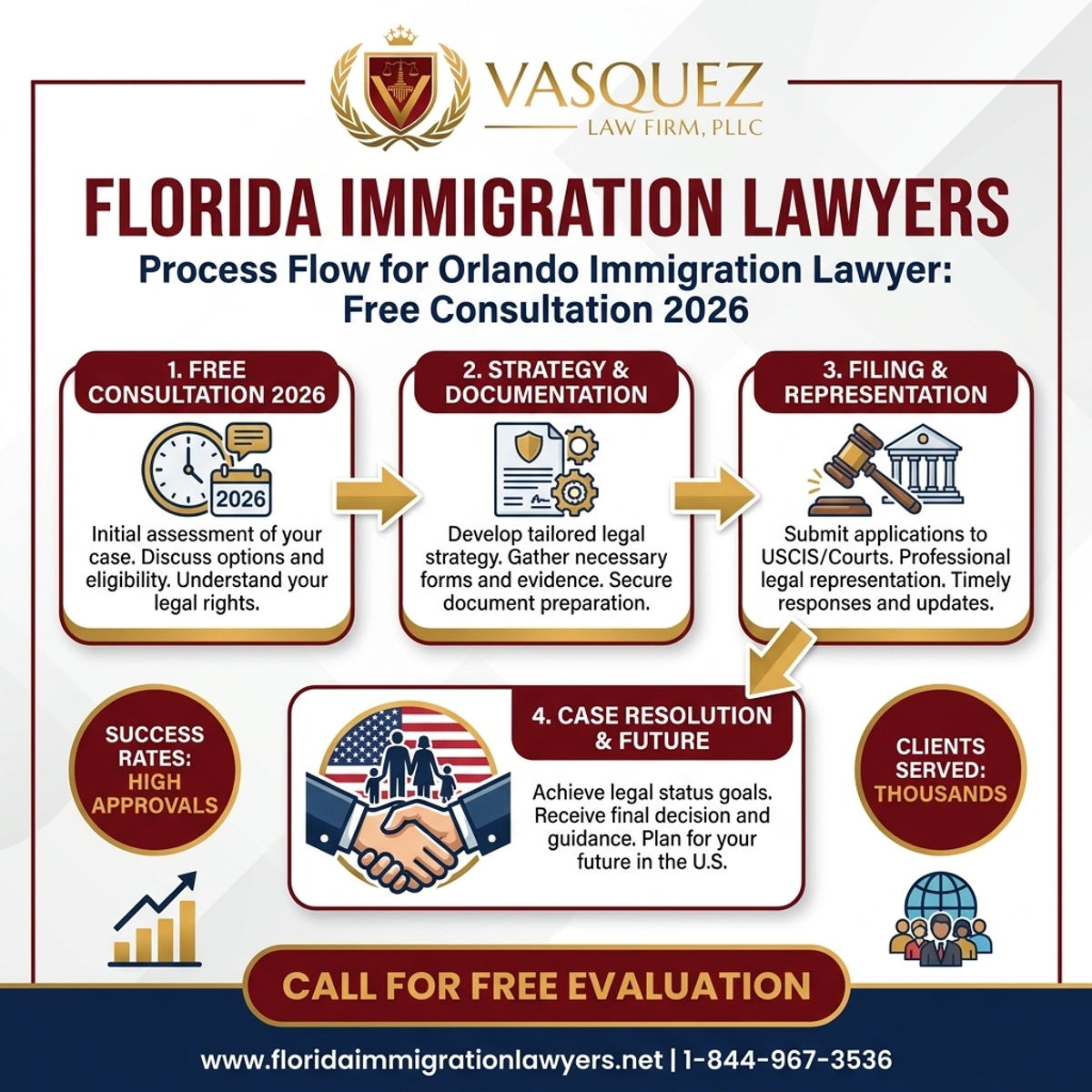
Step-by-Step Process — Orlando Immigration Lawyer: Free Consultation 2026
Do not navigate this process alone. Contact Florida Immigration Lawyers today to ensure your application is complete and accurate. Our dedicated team serves clients across Florida, including Orlando, Kissimmee, and the Treasure Coast, offering expert guidance for every step of your immigration journey. Call us at 1-844-967-3536 for your free consultation.
How Much Does an Immigration Lawyer Cost in Orlando?
The cost of an immigration lawyer in Orlando varies significantly based on the complexity of the case, the type of service required, and the attorney's experience. Many firms offer flat fees for common services like Green Card applications or citizenship petitions, while others charge hourly rates, particularly for complex cases like deportation defense or appeals. Importantly, many Orlando immigration lawyers, including Florida Immigration Lawyers, offer a free initial consultation to discuss your specific needs and provide a fee estimate without obligation.
Understanding the financial aspect of legal representation is crucial. While USCIS filing fees are separate and non-negotiable (and can change, so we do not list specific amounts here), attorney fees represent the cost of expert legal guidance, case preparation, and representation. For straightforward cases such as family-based Green Card applications or DACA renewals, many attorneys charge a flat fee, providing cost predictability. This fee typically covers document preparation, communication with USCIS, and representation at interviews. More intricate matters, such as deportation defense, federal litigation, or complex waiver applications, often require more extensive legal work and may be billed hourly. The total cost will depend on the time spent on the case. During your free consultation with an Orlando immigration lawyer, you should receive a clear breakdown of potential costs, including attorney fees and an estimate of filing fees, allowing you to budget effectively. Investing in legal counsel can often prevent costly mistakes and delays, ultimately saving you time and money in the long run.
Typical Fee Structures for Immigration Services (As of 2026)
| Item | Typical Fee Structure | Notes |
|---|---|---|
| Initial Consultation | Free or flat fee ($100-300) | Many firms, including ours, offer free consultations to assess your case. |
| Family-Based Green Card (I-130 & I-485) | Flat fee ($3,000-$7,000+) | Varies by complexity, number of beneficiaries. Excludes USCIS filing fees. |
| Employment-Based Green Card (I-140 & I-485) | Flat fee ($4,000-$10,000+) | Depends on EB category, PERM process, and complexity. Excludes USCIS filing fees. |
| Naturalization (N-400) | Flat fee ($1,500-$3,000) | Covers application preparation and interview prep. Excludes USCIS filing fees. |
| Deportation Defense | Hourly ($250-$500/hour) or flat fee ($5,000-$15,000+) | Highly variable based on court appearances, complexity, and duration of case. |
| Asylum Application | Flat fee ($3,000-$8,000+) | Covers application, interview preparation, and representation. |
| Waivers of Inadmissibility | Flat fee ($3,000-$6,000+) | Complex applications, often requiring extensive documentation. |
| Non-Immigrant Visas (e.g., H-1B, L-1, O-1) | Flat fee ($2,500-$6,000+) | Often employer-sponsored, covers petition filing. |
What Happens During Deportation Proceedings in Florida?
Deportation proceedings in Florida begin when the Department of Homeland Security (DHS) issues a Notice to Appear (NTA), charging an individual with being removable from the U.S. The case then proceeds to an immigration court, such as the Orlando Immigration Court or Miami Immigration Court, under the Executive Office for Immigration Review (EOIR). During these proceedings, an immigration judge determines if the individual is deportable and if any forms of relief from removal are available. This can be a lengthy and emotionally taxing process, often involving multiple hearings and complex legal arguments.
Being placed in removal proceedings is a serious matter with potentially life-altering consequences. In Florida, individuals facing deportation may be detained by Immigration and Customs Enforcement (ICE), particularly given recent federal appeals court decisions regarding detention policies. Your first appearance before an immigration judge is called a Master Calendar Hearing, where you will acknowledge the charges, state whether you admit or deny them, and identify any relief you intend to seek (e.g., asylum, cancellation of removal, adjustment of status). Subsequent Individual Hearings are evidentiary, allowing both sides to present evidence, testimony, and legal arguments. It is critical to have an experienced deportation defense attorney to advocate on your behalf. They can identify potential defenses, argue against the charges, and apply for various forms of relief under the Immigration and Nationality Act (INA), such as INA § 240A(b) for cancellation of removal for non-LPRs, or INA § 208 for asylum. The process can be prolonged, sometimes taking years, especially if appeals are filed with the Board of Immigration Appeals (BIA) or federal circuit courts. An attorney can help challenge the government's case, protect your rights, and pursue every available avenue to allow you to remain in the U.S.
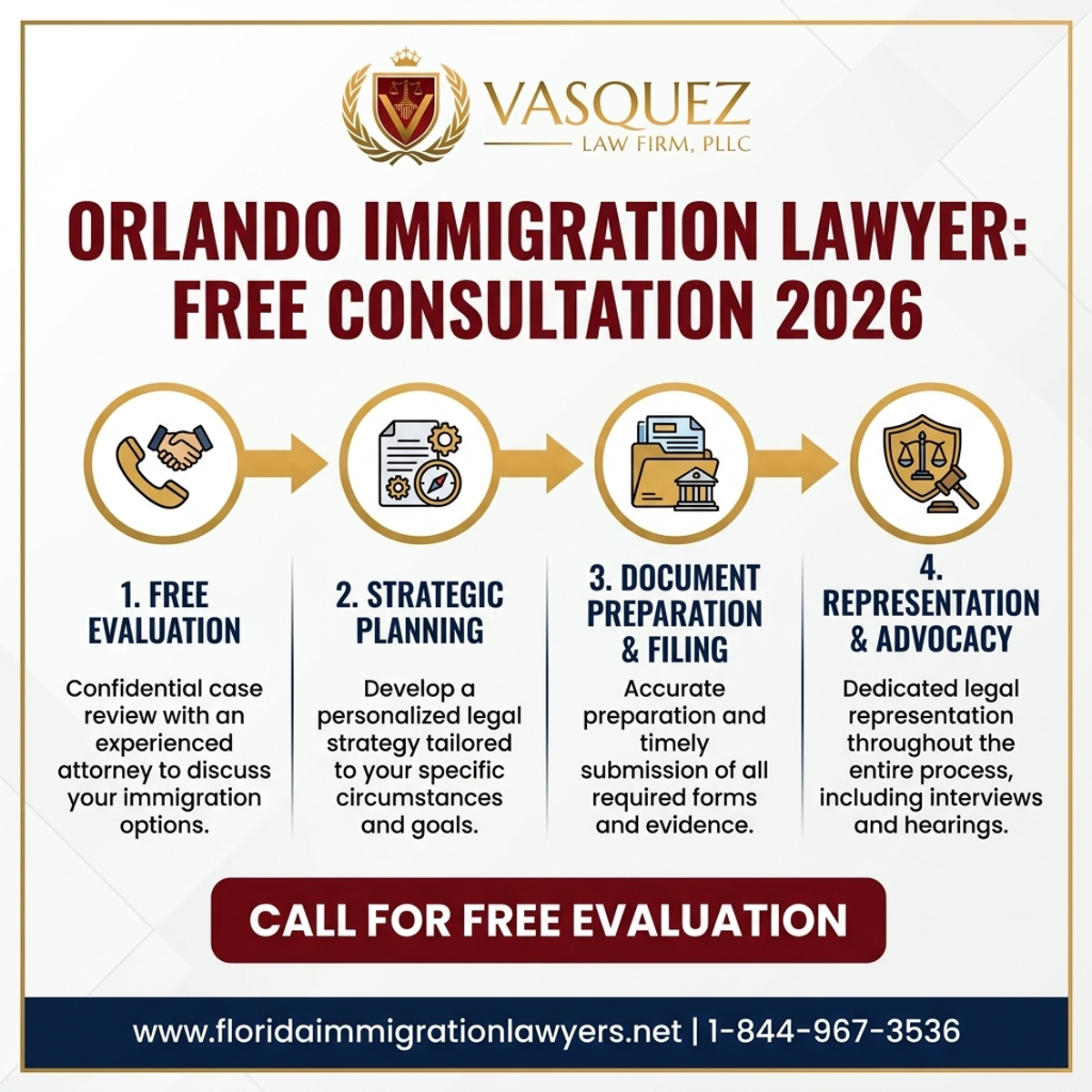
Key Statistics — Orlando Immigration Lawyer: Free Consultation 2026
How Long Does it Take to Become a U.S. Citizen in 2026?
Becoming a U.S. citizen through naturalization in 2026 typically takes between 8 to 24 months from the time you file Form N-400, Application for Naturalization, until you take the Oath of Allegiance. This timeline depends on the USCIS field office processing your application (e.g., Orlando or Tampa), the complexity of your case, and whether any interviews or additional requests for evidence are required. Generally, applicants must meet specific residency and good moral character requirements before applying.
Naturalization is the final step for many immigrants seeking full integration into American society. To be eligible for U.S. citizenship, most applicants must be at least 18 years old, be a lawful permanent resident (Green Card holder) for at least five years (or three years if married to a U.S. citizen), demonstrate continuous residence and physical presence in the U.S., possess good moral character, and pass English and civics tests. The process begins with filing Form N-400. After submission, you will receive a receipt notice, followed by an appointment for biometrics (fingerprinting). Next, you will attend an interview at a USCIS field office, where an officer will review your application, test your English proficiency, and ask questions about your civics knowledge and good moral character. If approved, you will attend an Oath of Allegiance ceremony, officially becoming a U.S. citizen. Delays can occur if USCIS requests additional evidence or if there are issues with your background check or good moral character assessment. An experienced Orlando immigration lawyer can help prepare your N-400 application, prepare you for the interview, and address any potential complications, ensuring a smoother path to citizenship.
Naturalization Timeline and Processing Expectations (As of 2026)
The naturalization process involves several key stages, each with its own timeframe:
| Stage | Typical Timeframe | Notes |
|---|---|---|
| Form N-400 Submission to Receipt | 1-3 weeks | Electronic filing can be faster than mail. |
| Biometrics Appointment | 3-6 weeks after receipt | Scheduled at an Application Support Center (ASC). |
| Interview Scheduling | 6-12 months after biometrics | Varies by USCIS field office (e.g., Orlando office wait times). |
| Interview and Decision | 1-3 months after interview | Decision may be given on the spot or by mail. |
| Oath of Allegiance Ceremony | 1-4 weeks after approval | Can be scheduled on the same day as interview in some offices. |
| Total Process | 8-24 months | Overall range, highly dependent on individual case and office workload. |
Common Mistakes to Avoid in Immigration Applications
Navigating the U.S. immigration system is fraught with potential pitfalls. Even minor errors can lead to significant delays or even outright denials, costing you time, money, and emotional distress. Being aware of these common mistakes can help you avoid unnecessary complications and improve your chances of a successful outcome.
- Incomplete or Inaccurate Forms: Failing to fill out every section of a form, or providing incorrect information, is a leading cause of RFEs (Requests for Evidence) or denials. USCIS is highly particular about complete and accurate submissions.
- Missing Supporting Documents: Applications often require extensive supporting evidence. Missing birth certificates, marriage licenses, financial records, or police clearances can halt your case. Ensure all required documents are included and properly organized.
- Failure to Translate Documents: Any document not in English must be accompanied by a certified English translation. Without proper translation, USCIS will not consider the document valid.
- Ignoring Deadlines: Missing deadlines for RFEs, appeals, or court appearances can result in automatic denials or even orders of removal. Always be aware of and adhere to all specified timeframes.
- Misrepresenting Facts: Providing false information, even unintentionally, can have severe consequences, including findings of fraud or misrepresentation, which can lead to permanent bars from the U.S. Honesty is always the best policy.
- Lack of Good Moral Character: Certain criminal convictions, even minor ones, can impact eligibility for Green Cards or citizenship. Failing to disclose these or address them properly can lead to denial.
- Incorrect Filing Fees: USCIS fees change periodically. Submitting an incorrect fee amount will cause your application to be rejected and returned, delaying your process. Always check the current fees on the USCIS website.
- Not Updating Address Changes: Immigrants are required to notify USCIS of any address change within 10 days. Failure to do so can result in missed notices, interviews, or even orders of removal.
- Attending Interviews Unprepared: Interviews are a critical part of many immigration processes. Not understanding your application, your history, or the purpose of the interview can lead to unfavorable outcomes.
- Attempting to Navigate Complex Cases Alone: While some simple cases might be manageable, complex situations like deportation defense, waivers, or specific visa categories almost always benefit from legal counsel. Self-representation in complex cases significantly increases the risk of error.
- Overlooking Grounds of Inadmissibility: Many individuals are unknowingly inadmissible to the U.S. due to past actions, medical conditions, or criminal history. A lawyer can identify these issues and apply for waivers if available.
When to Call an Orlando Immigration Lawyer
It is advisable to call an Orlando immigration lawyer at the earliest sign of an immigration challenge or when planning any significant immigration application. If you have received a Notice to Appear (NTA) for deportation proceedings, have been detained by ICE, or are facing an interview at a USCIS office, immediate legal counsel is essential. Furthermore, if your application has been denied, if you have a criminal record, or if your case involves any complexities such as previous visa overstays or multiple petitions, an attorney's expertise is invaluable.
Even for seemingly straightforward applications, legal guidance can prevent costly mistakes and delays. For example, if you are applying for a Green Card through marriage, an attorney can help ensure all documents prove a bona fide relationship and prepare you for a spousal interview. If you are a U.S. citizen petitioning for a relative, an Orlando immigration lawyer can help navigate preference categories and potential backlogs. Florida Immigration Lawyers specializes in providing comprehensive support for various immigration matters, including asylum claims, family-based visas, employment visas, and citizenship applications. We understand the specific nuances of immigration courts and USCIS field offices throughout Florida, including Orlando, Miami, and Tampa. Our firm is equipped to handle complex cases, including those involving waivers of inadmissibility, appeals, or federal litigation, ensuring your rights are protected at every stage. We encourage you to seek professional advice proactively to secure the best possible outcome for your immigration future.
About Florida Immigration Lawyers
Florida Immigration Lawyers is a leading law firm dedicated to providing exceptional immigration legal services to individuals and families throughout Florida. With a deep understanding of U.S. immigration law and a commitment to our clients, we offer comprehensive representation across a wide array of immigration matters, including family-based immigration, employment visas, deportation defense, asylum, and naturalization. Our experienced attorneys are passionate about helping clients achieve their American dream, offering personalized strategies and compassionate support.
We pride ourselves on our client-focused approach, ensuring that every individual receives the attention and tailored advice they deserve. Serving all of Florida, including Orlando, Kissimmee, Port St Lucie, and the Treasure Coast, we are available 24/7 to address your urgent legal needs. We understand the importance of accessible legal counsel, which is why we offer free consultations to help you understand your options without financial burden. Choose Florida Immigration Lawyers for dedicated advocacy and expert legal solutions. Contact us at 1-844-967-3536 or visit www.floridaimmigrationlawyers.net to schedule your free consultation today.
Sources and References
- U.S. Citizenship and Immigration Services (USCIS)
- Executive Office for Immigration Review (EOIR)
- U.S. Department of State - Bureau of Consular Affairs
- 8 U.S.C. Chapter 12 - Immigration and Nationality Act (INA)
- 8 C.F.R. - Code of Federal Regulations related to Aliens and Nationality
- INA § 208 - Asylum
- INA § 240A(b) - Cancellation of Removal for Non-Permanent Residents
Related services: immigration waivers, humanitarian protection programs, DACA renewal and applications.
This article provides general legal information and is not intended as legal advice. Every case is unique, and outcomes depend on specific facts and circumstances. Contact an attorney for advice about your particular situation.
Your immigration journey deserves experienced and dedicated legal support. If you are in Orlando or anywhere in Florida, do not hesitate to seek professional guidance. Florida Immigration Lawyers is here to help you navigate the complexities of immigration law with confidence. Call us today at 1-844-967-3536 for a free consultation. Se Habla Espanol - Estamos aqui para ayudarle.
Do Not Navigate This Process Alone
Our experienced immigration attorneys are ready to fight for you. Get a free, confidential consultation today.
Se Habla Español
Or leave your details and we’ll call you:
Free Evaluation in 24 Hours
Or talk to us right now
AI voice assistant — available 24/7
FreeFrequently Asked Questions

William J. Vásquez
Founding Attorney · Vasquez Law Firm
U.S. Air Force veteran and immigration attorney with years of hands-on U.S. immigration experience. J.D., NCCU School of Law. AILA member. Admitted to the 4th, 5th, and 11th Circuit Courts.
Available 24/7 - Free Evaluations
Reviewed for legal accuracy by William J. Vásquez
Licensed in North Carolina; U.S. immigration is federal practice.
Related Legal Services
Our Florida immigration attorneys can help you with immigration practice areas, free immigration consultation and experienced immigration attorneys. Call today at 1-844-967-3536 for a free consultation.
Related Links
Related Topics
Free Legal Consultation
Discuss your case with our experienced attorneys. We're available 24/7.
Se Habla Español - Estamos aquí para ayudarle.
Related Articles
Immigration Lawyer Orlando Free Consultation 2026
Discover how to find an immigration lawyer in Orlando offering a free consultation. Understand the services available and why choosing Florida Immigration Lawyers can make a difference in your case.
Military Naturalization Expedited in Florida Bases
Explore military naturalization options for families at Florida bases, including parole in place benefits in Miami. Learn how to expedite your application with expert guidance from Florida Immigration Lawyers.
K-3 Visa Timeline in Florida: What to Expect
Learn the K-3 visa timeline process in Florida, including steps, costs, and documentation. Understand your options in 2026 with guidance from Florida Immigration Lawyers.
Immigration Lawyer Orlando Free Consultation & BIA Appeals
Explore the process of filing an immigration appeal with the BIA in Florida. Learn about the Board of Immigration Appeals, common mistakes to avoid, and when to seek legal assistance. Contact Florida Immigration Lawyers for a free consultation.