Can DACA Recipients Travel Within the U.S. 2026? A Florida
For DACA recipients in Florida, understanding travel regulations and renewal processes for 2026 is essential. This guide clarifies that domestic travel is generally allowed with valid ID, but international travel requires approved Advance Parole for specific humanitarian, educational, or employment reasons. We outline the step-by-step DACA renewal process, including required documents, typical timelines, and associated costs. Crucially, we highlight common mistakes to avoid, such as late filing or traveling internationally without proper authorization, which can lead to severe immigration consequences. Florida Immigration Lawyers provides expert assistance for DACA renewals and Advance Parole applications, offering free case reviews. Learn how to protect your DACA status and navigate complex immigration issues with confidence, ensuring you maintain your deferred action and work authorization in Florida.
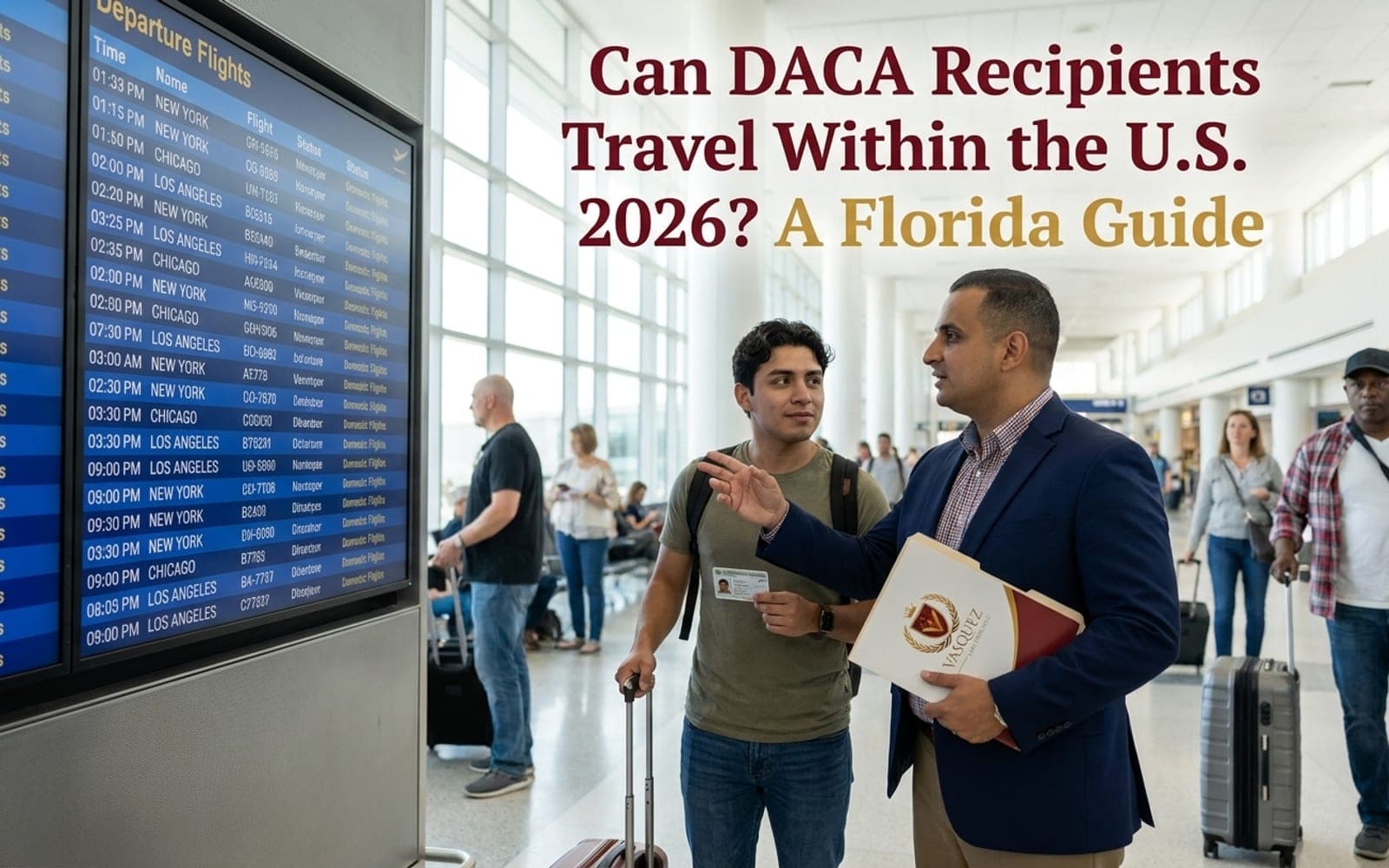
As of 2026, DACA recipients generally can travel within the United States without issue, provided they have a valid DACA approval notice and government-issued ID. However, international travel requires an approved Advance Parole document from USCIS, which is granted only under specific humanitarian, educational, or employment-related circumstances. Traveling without valid Advance Parole can lead to serious immigration consequences, including potential inadmissibility and inability to re-enter the U.S. Always consult with an immigration attorney before making any travel plans, especially for international trips.
- DACA recipients can travel domestically within the U.S. with valid ID.
- International travel requires an approved Advance Parole document.
- Advance Parole is typically granted for humanitarian, educational, or employment reasons.
- Traveling internationally without Advance Parole will likely prevent re-entry.
- Always seek legal advice before any international travel as a DACA recipient.
Navigating the complexities of immigration law can be challenging, especially when it involves the Deferred Action for Childhood Arrivals (DACA) program. For thousands of DACA recipients across Florida, questions about travel rights and renewal processes are constant concerns. As we look to 2026, understanding the current policies and potential changes is crucial for maintaining your deferred action status and planning your life.
Whether you're wondering if you can visit family in another state, or if a humanitarian trip abroad is possible, the rules surrounding DACA and travel are specific and require careful attention. This comprehensive guide from Florida Immigration Lawyers will delve into the nuances of DACA travel, the essential steps for DACA renewal in Florida, and common pitfalls to avoid. We aim to provide clarity on these vital issues, empowering you to make informed decisions about your future.
The DACA program, while offering temporary relief from deportation and work authorization, does not confer legal status or a path to citizenship. This unique position means that DACA recipients, often referred to as Dreamers, must adhere to strict guidelines, particularly concerning movement both within and outside the U.S. Understanding these boundaries is not just about compliance; it's about protecting your DACA status and your ability to live and work in the country you call home.
For personalized advice on your DACA status, travel plans, or renewal application, do not hesitate to reach out. Call Florida Immigration Lawyers at 1-844-YO-PELEO for a free case review and expert guidance tailored to your specific situation.
Can DACA Recipients Travel Within the U.S. 2026?
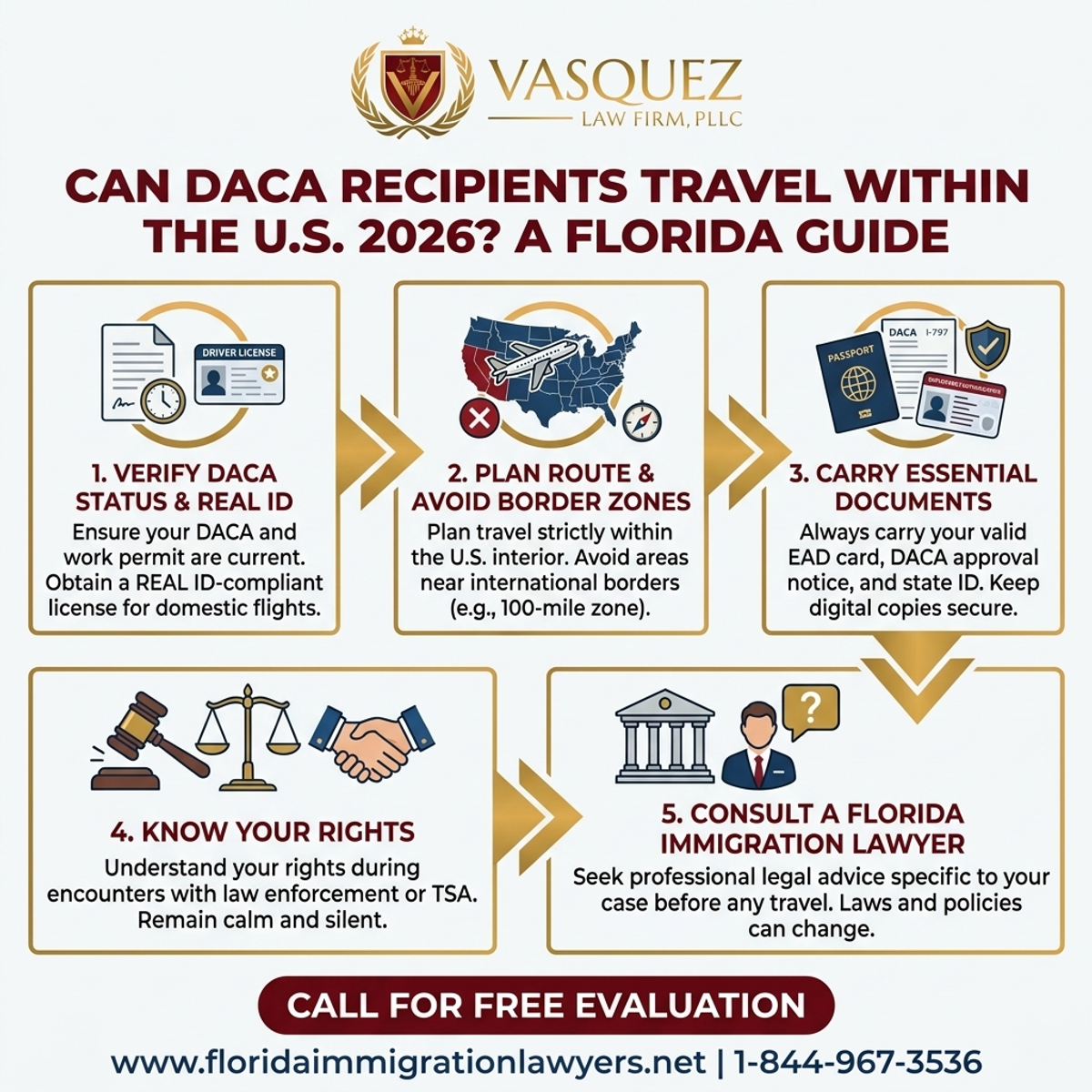
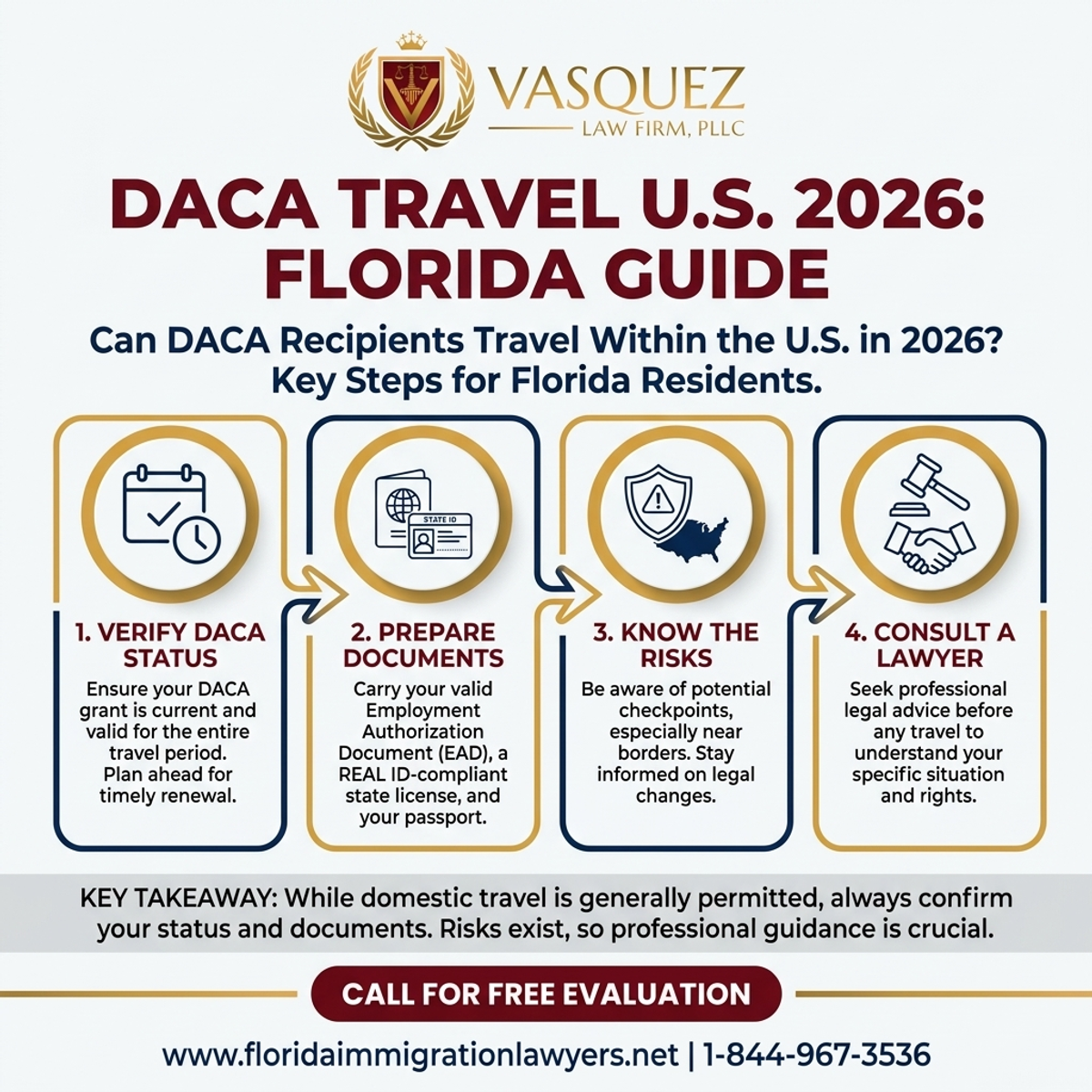
As of 2026, DACA recipients are generally permitted to travel domestically within the United States. This means you can fly, drive, or take other forms of transportation across state lines without needing special permission from USCIS. However, you must carry valid identification, such as your DACA approval notice (Form I-797), an unexpired Employment Authorization Document (EAD) with DACA notation, and a government-issued photo ID like a state driver's license or ID card. While domestic travel is typically straightforward, it is always wise to be prepared and carry all relevant documentation to avoid any potential misunderstandings, especially at airports or border patrol checkpoints within the U.S. (e.g., near Florida's southern coast).
The ability of DACA recipients to travel domestically stems from their deferred action status, which temporarily protects them from deportation and grants work authorization. This status allows for freedom of movement within the national borders, similar to other U.S. residents. However, it's crucial to understand that this domestic travel right does not extend to international travel. Any attempt to leave the United States without specific authorization, known as Advance Parole, can lead to severe consequences, including being barred from re-entry and potentially losing your DACA status. The distinction between domestic and international travel is paramount for all DACA holders.
When traveling domestically, particularly by air, Transportation Security Administration (TSA) officials primarily verify identity. Your EAD card is a valid form of identification recognized by TSA. While you are not required to disclose your immigration status to TSA, having your DACA approval notice readily available can help clarify your status if any questions arise. For those living in Florida, traveling to other states for work, education, or family visits is a common occurrence. Ensuring your DACA status is current and your documents are unexpired is your best defense against travel complications. Always keep digital and physical copies of your important immigration documents.
What is DACA Renewal in Florida and How Does it Work for 2026?
DACA renewal in Florida, as for all states, involves submitting an application to USCIS to extend your deferred action status and work authorization for another two years. As of 2026, the process remains largely consistent, requiring beneficiaries to demonstrate continued eligibility based on the original DACA criteria. This includes maintaining residence in the U.S. since June 15, 2007, not having been convicted of certain crimes, and continuing to meet educational requirements. The renewal process is critical for DACA recipients in Florida to maintain their employment authorization and protection from deportation.
The DACA program has faced numerous legal challenges since its inception, but as of the current landscape in 2026, USCIS is accepting and processing renewal applications. New initial DACA applications are generally not being accepted, making the renewal process vital for existing beneficiaries. It is imperative to file your renewal application well in advance of your current DACA expiration date, ideally between 120 and 150 days before it expires. This timeframe helps prevent any lapse in your work authorization, which can have significant impacts on your employment and daily life in Florida.
Successfully renewing DACA involves meticulous preparation of forms and supporting documentation. Any errors or omissions can lead to delays or even a denial of your application. This is why many DACA recipients in Central Florida, including Orlando and surrounding areas, choose to work with experienced immigration attorneys. Lawyers can help ensure all forms are correctly filled out, all necessary evidence is included, and the application is submitted to the correct USCIS lockbox facility. Staying organized and proactive is key to a smooth DACA renewal process, safeguarding your future in Florida.
What Documents Do I Need for DACA Renewal in 2026?
For DACA renewal in 2026, you will need to gather several key documents to prove your continued eligibility and identity. The primary forms include Form I-821D (Consideration for Deferred Action for Childhood Arrivals), Form I-765 (Application for Employment Authorization), and Form I-765 Worksheet. Beyond these forms, you must provide supporting evidence to establish that you meet the DACA criteria, especially if there have been any changes in your life since your last application or if you have any criminal history. Having a complete and accurate document packet is essential for a successful renewal.
Required Documents Checklist:
- Most Recent DACA Approval Notice: Your Form I-797 Notice of Action for your previous DACA approval.
- Most Recent Employment Authorization Document (EAD): Your DACA-related work permit.
- Proof of Continuous Residence: Documentation showing you have resided in the U.S. since June 15, 2007, and up to the present. This could include school transcripts, employment records, utility bills, rental agreements, or medical records.
- Proof of Identity: A copy of your birth certificate, passport, or other government-issued photo identification.
- Proof of Educational Enrollment/Completion: High school diplomas, GED certificates, college transcripts, or proof of current enrollment in school or a vocational program.
- Criminal History Records (if applicable): If you have any arrests or convictions, even minor ones, you must provide certified court dispositions. Failure to disclose can lead to denial.
- Previous DACA Application Copies: While not strictly required by USCIS, having copies of your previous applications can be helpful for reference.
- Passport-Style Photos: Two identical passport-style photos taken within 30 days of filing.
Step-by-Step Process — Can DACA Recipients Travel Within the U.S. 2026? A Florida Guide
It is critical to provide clear, legible copies of all documents. Do not send original documents unless specifically requested by USCIS. Organize your application packet logically with cover letters and tabs, if possible, to aid the adjudicating officer. For residents of Florida, ensure all addresses on your documentation match your current residence, especially if you have moved within the state or to a new county. Consulting with an immigration lawyer in Orlando can help ensure your document checklist is exhaustive and tailored to your specific situation.
What is the DACA Renewal Timeline and Processing for 2026?
As of 2026, the DACA renewal timeline and processing can vary, but generally, USCIS aims to process applications within a few months. It is highly recommended to file your renewal application between 120 and 150 days before your current DACA and EAD expire to prevent any lapse in work authorization. While USCIS provides general processing times on its website, individual cases can differ based on caseloads, the complexity of the application, and whether additional information is requested.
The typical DACA renewal process involves several stages, each with its own approximate timeframe:
| Stage | Typical Timeframe (As of 2026) | Notes |
|---|---|---|
| Preparation & Filing | 2-4 weeks | Gathering documents, completing forms. File 120-150 days before expiration. |
| USCIS Receipt Notice | 1-3 weeks | You will receive Form I-797C confirming receipt of your application. |
| Biometrics Appointment | 3-8 weeks after receipt | If required, you'll receive a notice for an appointment at an Application Support Center (ASC), such as the one in Orlando, FL. |
| Case Adjudication | 2-5 months from filing | USCIS reviews your application. Some cases may be faster, others slower. |
| Approval Notice & EAD Card | 1-2 weeks after approval | Upon approval, you receive Form I-797 (approval notice) and your new EAD card. |
It is crucial to monitor your application status online using the receipt number provided by USCIS. If your DACA is nearing expiration and you haven't received an update, or if you receive a Request for Evidence (RFE), immediate action is necessary. An RFE means USCIS requires more information to make a decision, and responding promptly and thoroughly is vital. A delay in processing could lead to a period where you are not authorized to work, which can be particularly disruptive for individuals and families across Florida. Proactive engagement with the process and, if necessary, with legal counsel, can help mitigate these risks.
What are the DACA Renewal Cost Factors and Fees for 2026?
As of 2026, the DACA renewal cost primarily consists of the USCIS filing fees, which are subject to change but have historically included a fee for the Form I-765 (Application for Employment Authorization) and the biometrics services fee. It is important to note that the Form I-821D (Consideration for Deferred Action for Childhood Arrivals) itself does not have a separate filing fee. However, the associated fees for the I-765 and biometrics are mandatory for the complete renewal package. Always check the USCIS website for the most current fee schedule before submitting your application, as fees can be updated periodically.
Beyond the government filing fees, DACA recipients in Florida should also consider potential costs associated with preparing their application. These can include: obtaining new passport-style photos, making copies of supporting documents, postage or courier services for mailing the application, and legal fees if you choose to retain an immigration attorney. While legal representation is not mandatory, it is highly recommended, especially for complex cases or if you have any criminal history, to ensure the application is filed correctly and completely, minimizing the risk of denial.
Here’s a breakdown of typical cost factors for DACA renewal in 2026:
| Item | Typical Fee (As of 2026) | Notes |
|---|---|---|
| Form I-765 (EAD Application) | Check USCIS website for current fee | Mandatory fee for work authorization. |
| Biometrics Services Fee | Check USCIS website for current fee | Mandatory fee for fingerprinting and background check. |
| Passport Photos | $10-$20 | Two required; can be taken at many pharmacies or photo studios. |
| Postage/Courier | $10-$30 | Recommended to use traceable mail service for security. |
| Legal Fees | Varies widely | Highly recommended for professional guidance and peace of mind. |
Key Statistics — Can DACA Recipients Travel Within the U.S. 2026? A Florida Guide
It is important to budget for these expenses to ensure a smooth renewal process. USCIS does not typically offer fee waivers for DACA renewal applications. Therefore, having the funds available is a critical part of your preparation. If financial hardship is a concern, exploring payment plans with your legal counsel or seeking assistance from non-profit organizations that offer DACA renewal support might be options. However, these resources can be limited in Florida. Proactive financial planning is crucial for all DACA recipients.
Do not navigate this process alone. The complexities of DACA renewal and travel authorization require meticulous attention to detail and up-to-date legal knowledge. Contact Florida Immigration Lawyers today at 1-844-YO-PELEO for a free case review and dedicated support.
Can DACA Recipients Apply for Advance Parole in 2026?
Yes, as of 2026, DACA recipients can still apply for Advance Parole (Form I-131) to travel internationally under specific circumstances. Advance Parole is a document issued by USCIS that allows certain non-citizens to re-enter the U.S. after traveling abroad without jeopardizing their immigration status. For DACA recipients, Advance Parole is generally granted only for humanitarian, educational, or employment purposes. Purely recreational international travel is typically not a valid reason for approval. Without Advance Parole, leaving the U.S. as a DACA recipient is extremely risky and will likely result in being denied re-entry, potentially leading to the loss of your DACA status.
To apply for Advance Parole, you must submit Form I-131, Application for Travel Document, along with supporting documentation that clearly demonstrates the humanitarian, educational, or employment-related need for your travel. This could include medical records for a sick family member abroad, acceptance letters from a study abroad program, or a letter from your employer requiring your international travel. Each application is reviewed on a case-by-case basis, and approval is not guaranteed. It is imperative to have your Advance Parole document approved and in hand before you depart the United States. Traveling while your Advance Parole application is pending is equivalent to traveling without it.
The process of obtaining Advance Parole can be lengthy, with processing times varying. As with DACA renewal, it is wise to apply well in advance of your intended travel date. For DACA recipients in Florida considering international travel, especially to visit family in their country of origin, understanding the strict requirements for Advance Parole is critical. An approved Advance Parole document allows for a lawful re-entry into the U.S., which can have significant benefits for future immigration pathways, even for DACA recipients. For instance, lawful entry might open doors for adjustment of status if you later become eligible through a qualifying relative. Therefore, careful planning and legal consultation are highly advised before pursuing Advance Parole.
Common Mistakes to Avoid During DACA Renewal and Travel
- Filing Late: Submitting your DACA renewal application too close to your expiration date can lead to a lapse in your work authorization and protection from deportation. Aim to file 120-150 days before expiration.
- Incomplete Application: Failing to include all required forms, supporting documents, or paying the incorrect fee will cause delays or denial. USCIS will send an RFE (Request for Evidence) or reject the application outright.
- Not Disclosing Criminal History: Even minor arrests or convictions, including traffic offenses, must be fully disclosed with certified court dispositions. Failure to do so is considered misrepresentation and can result in denial and severe immigration consequences.
- Traveling Internationally Without Advance Parole: Leaving the U.S. without an approved Advance Parole document will almost certainly prevent you from re-entering, leading to the loss of your DACA status and potential inadmissibility.
- Ignoring Change of Address: DACA recipients must inform USCIS of any change of address within 10 days of moving by filing Form AR-11. Failing to do so can cause you to miss important notices regarding your application.
- Assuming DACA Provides Legal Status: DACA provides deferred action and work authorization, but it does not grant lawful immigration status. Misunderstanding this distinction can lead to incorrect assumptions about travel rights or other immigration benefits.
- Not Seeking Legal Counsel for Complex Cases: If you have a criminal record, multiple arrests, or any other complicating factors, attempting to renew DACA without legal assistance is a significant risk. An attorney can help navigate these complexities.
- Misunderstanding Advance Parole Eligibility: Believing that Advance Parole is granted for any international travel, including purely recreational trips, is a common misconception. It's strictly for humanitarian, educational, or employment purposes.
When to Call a Lawyer for DACA Renewal or Travel in Florida
While some DACA renewals may seem straightforward, certain situations warrant immediate legal consultation to protect your status and future. You should call an experienced immigration lawyer like those at Florida Immigration Lawyers if you:
- Have Any Criminal History: Even minor arrests, citations, or convictions can impact your DACA eligibility. An attorney can assess the severity and help you gather necessary court documents.
- Are Unsure About Continuous Residence: If you have gaps in your residency documentation or spent time outside the U.S. that could affect your continuous presence requirement, legal advice is essential.
- Received a Request for Evidence (RFE) or Notice of Intent to Deny (NOID): These notices from USCIS indicate a problem with your application that requires a precise and timely response.
- Are Considering International Travel: Applying for Advance Parole is complex. An attorney can help determine your eligibility, prepare your application, and advise on potential risks and benefits, including the possibility of lawful entry.
- Have Previous Immigration Violations: Any prior deportations, voluntary departures, or other immigration issues can complicate your DACA renewal.
- Are Nearing Your DACA Expiration Date: If your DACA is expiring soon and you haven't yet filed, an attorney can help expedite the process or advise on emergency options.
- Need General Clarification on DACA Policies: Immigration laws are constantly evolving. An attorney stays current on policies from USCIS and the Executive Office for Immigration Review (EOIR) and can provide accurate information for your specific case.
At Florida Immigration Lawyers, we understand the stakes involved for DACA recipients in Orlando and across Central Florida. We are here to provide the clarity, guidance, and dedicated representation you need to navigate these critical immigration processes successfully. Don't risk your deferred action status by going it alone.
About Florida Immigration Lawyers
Florida Immigration Lawyers is a leading immigration law firm dedicated to serving individuals and families across the entire state of Florida. With an unwavering commitment to our clients, we provide comprehensive legal services, specializing in DACA renewals, family-based immigration, deportation defense, asylum, and citizenship applications. Our experienced attorneys understand the unique challenges faced by immigrants and offer compassionate, effective legal representation.
We pride ourselves on our client-focused approach, ensuring that every individual receives personalized attention and strategic advice tailored to their specific circumstances. Whether you are seeking to renew your DACA, pursue a green card, or defend against removal proceedings, our team is equipped with the knowledge and resources to advocate fiercely on your behalf. We are available 24/7 to answer your questions and offer free case reviews, making quality legal assistance accessible when you need it most.
Our firm is deeply rooted in the Central Florida community, with an office in Orlando, but our reach extends to every corner of the state. We believe in empowering our clients through education and clear communication, guiding them through every step of their immigration journey. Choose Florida Immigration Lawyers for dedicated, bilingual support and a relentless pursuit of your immigration goals. Schedule a free consultation with us today.
Sources and References
- U.S. Citizenship and Immigration Services (USCIS)
- Executive Office for Immigration Review (EOIR)
- U.S. Department of State
- 8 U.S.C. § 1182 - Inadmissible aliens
- 8 CFR § 274a.12 - Classes of aliens authorized to accept employment
- USCIS Policy Manual, Volume 7, Part A, Chapter 5 - Deferred Action for Childhood Arrivals (DACA)
Related services: immigration practice areas, family immigration services.
This article provides general legal information and is not intended as legal advice. Every case is unique, and outcomes depend on specific facts and circumstances. Contact an attorney for advice about your particular situation.
Protecting your DACA status and understanding your travel rights are paramount for your future in Florida. Don't leave these critical matters to chance. For expert legal guidance on DACA renewal, Advance Parole applications, or any other immigration concern, contact Florida Immigration Lawyers today. We offer free case reviews and are available 24/7 to provide the support you need. Call us at 1-844-YO-PELEO. Se Habla Espanol - Estamos aqui para ayudarle.
Do Not Navigate This Process Alone
Our experienced immigration attorneys are ready to fight for you. Get a free, confidential case review today.
Se Habla Español
Or leave your details and we’ll call you:
Free Evaluation in 24 Hours
Or talk to us right now
AI voice assistant — available 24/7
FreeFrequently Asked Questions

William J. Vásquez
Founding Attorney · Vasquez Law Firm
U.S. Air Force veteran and immigration attorney with years of hands-on U.S. immigration experience. J.D., NCCU School of Law. AILA member. Admitted to the 4th, 5th, and 11th Circuit Courts.
Available 24/7 - Free Evaluations
Reviewed for legal accuracy by William J. Vásquez
Licensed in North Carolina; U.S. immigration is federal practice.
Related Legal Services
Our Florida immigration attorneys can help you with citizenship and naturalization, immigration practice areas and free immigration consultation. Call today at 1-844-YO-PELEO for a free case review.
Related Links
Related Topics
Free Legal Case Review
Discuss your case with our experienced attorneys. We're available 24/7.
Se Habla Español - Estamos aquí para ayudarle.
Related Articles
Immigration Lawyer Orlando Free Consultation in Florida
For individuals and families in Orlando, Florida, navigating the complexities of U.S. immigration law requires expert guidance. An immigration lawyer in Orlando offers crucial support for everything from visa applications and green card processes to naturalization and deportation defense. This comprehensive guide details what a free consultation covers, providing a step-by-step overview of immigration pathways, essential document checklists, and expected timelines in 2026. We also highlight common mistakes to avoid, discuss the critical role of legal counsel in deportation and asylum cases, and explain why choosing a local Orlando immigration attorney is beneficial. Florida Immigration Lawyers is dedicated to serving the diverse community of Orlando with compassionate, effective legal solutions, ensuring you receive personalized advice and robust representation for a successful immigration journey.
EAD Advance Parole Combo Card in Florida 2026
For individuals with a pending Form I-485, Application to Register Permanent Residence or Adjust Status, the EAD Advance Parole Combo Card is an essential document. This single card combines the authorization to work legally in the U.S. (Employment Authorization Document - EAD) with permission to travel internationally and re-enter without abandoning your green card application (Advance Parole). This guide from Florida Immigration Lawyers provides a comprehensive overview for applicants in Florida in 2026, covering eligibility, the step-by-step application process, required documents, expected processing times, and associated costs. We also highlight common mistakes to avoid and when to seek legal counsel to ensure a smooth and successful immigration journey. Understanding this vital card is key to maintaining stability while awaiting your permanent residency approval.
I-601 Waiver Lawyer Florida: Your Guide
Facing inadmissibility issues in Florida? Learn how an I-601 waiver can help you overcome these challenges with the guidance of an experienced lawyer. This guide provides a detailed overview of the process, eligibility requirements, and common pitfalls to avoid. Call Florida Immigration Lawyers at 1-844-YO-PELEO for expert assistance today.
O-1 Visa Extraordinary Ability in Florida: What You Need
Explore the O-1 visa for extraordinary ability in Florida. Learn about eligibility, application process, and common mistakes to avoid. Contact Florida Immigration Lawyers for expert assistance.