I-601 Waiver Lawyer Florida: Your Guide
Facing inadmissibility issues in Florida? Learn how an I-601 waiver can help you overcome these challenges with the guidance of an experienced lawyer. This guide provides a detailed overview of the process, eligibility requirements, and common pitfalls to avoid. Call Florida Immigration Lawyers at 1-844-YO-PELEO for expert assistance today.
An I-601 waiver lawyer in Florida can help you overcome inadmissibility issues by demonstrating extreme hardship to a qualifying relative. The I-601 waiver is essential for those seeking to adjust their status or immigrate to the U.S. despite certain inadmissibility grounds.
- Prove extreme hardship to a U.S. citizen or lawful permanent resident relative.
- File Form I-601 with supporting documentation.
- Consult a lawyer for guidance through the complex process.
Introduction
Facing inadmissibility issues can be a daunting challenge for immigrants in Florida. If you're in Orlando or the surrounding areas and need assistance with an I-601 waiver, you're not alone. Many individuals seek this waiver to overcome inadmissibility and adjust their status or immigrate to the U.S. legally. The process can be complex, requiring a deep understanding of immigration laws and the ability to prove extreme hardship to a qualifying relative.
The journey to legal status in the U.S. can be emotionally taxing, especially when confronted with the possibility of separation from loved ones due to inadmissibility. The I-601 waiver offers a beacon of hope, providing a pathway for families to stay together despite past issues. It's designed to acknowledge the profound impact that denial of admission would have on U.S. citizen or lawful permanent resident family members, often involving significant emotional, financial, or medical burdens.
Understanding the nuances of what constitutes "extreme hardship" is paramount, as USCIS scrutinizes each case individually. This isn't merely about inconvenience; it's about demonstrating a level of suffering that goes beyond the normal difficulties associated with relocation or separation. Florida Immigration Lawyers are adept at helping clients articulate and document these hardships effectively, transforming complex personal circumstances into compelling legal arguments.
This comprehensive guide will walk you through the essential aspects of the I-601 waiver process, focusing on the specific needs of Florida residents. Whether you're dealing with past immigration violations, health-related grounds, or other issues, understanding how to navigate this waiver is crucial. Call Florida Immigration Lawyers at 1-844-YO-PELEO for a free case review.
What is an I-601 Waiver?
An I-601 waiver is a legal tool that allows individuals deemed inadmissible to the United States to seek entry or adjust status by showing that denying admission would cause extreme hardship to a U.S. citizen or lawful permanent resident relative. As of 2026, this waiver is often necessary for those facing inadmissibility due to past immigration violations, criminal history, or health-related issues.
The I-601 waiver specifically addresses various grounds of inadmissibility outlined in the Immigration and Nationality Act (INA). These can include, but are not limited to, unlawful presence in the U.S., certain criminal convictions, misrepresentation of material facts to immigration officials, health-related grounds, and prior deportation orders. Each ground carries its own set of challenges, and the waiver serves as a discretionary remedy, meaning USCIS has the authority to approve or deny based on the totality of the circumstances presented.
The cornerstone of a successful I-601 waiver application is proving "extreme hardship." This standard is intentionally high and requires more than just typical emotional or financial difficulties. For instance, extreme hardship might involve a qualifying U.S. citizen child who has a severe medical condition requiring specialized care only available in the U.S., or a U.S. citizen spouse who would face significant financial ruin and emotional distress if forced to relocate or live without their immigrant partner. Documenting these specific, severe impacts is where the expertise of Florida Immigration Lawyers becomes invaluable.
The waiver process involves filing Form I-601 with the U.S. Citizenship and Immigration Services (USCIS) and providing substantial evidence of hardship. This can include medical records, financial statements, and personal affidavits. Understanding the intricacies of this process is essential for a successful outcome.
How to Apply for an I-601 Waiver in Florida?
Navigating the I-601 waiver application process in Florida requires meticulous attention to detail and a strategic approach. While the general steps are universal, understanding the specific requirements and potential pitfalls can significantly impact your outcome. The goal is to present a comprehensive and compelling case to USCIS, leaving no room for doubt regarding the extreme hardship your qualifying relative would endure. Florida Immigration Lawyers frequently assist clients in Orlando and across Central Florida with this intricate process, ensuring every aspect is handled professionally.
Applying for an I-601 waiver in Florida involves several steps. Here’s a step-by-step guide:
- Determine Eligibility: Ensure you have a qualifying relative (U.S. citizen or lawful permanent resident) who would suffer extreme hardship if you are denied admission.
- Gather Documentation: Collect evidence of hardship, including financial, medical, and personal documentation.
- Complete Form I-601: Accurately fill out the form, ensuring all sections are complete and truthful.
- Submit the Application: File the form with USCIS, along with the required fee and supporting documents.
- Await Decision: USCIS will review your application and decide based on the evidence provided.
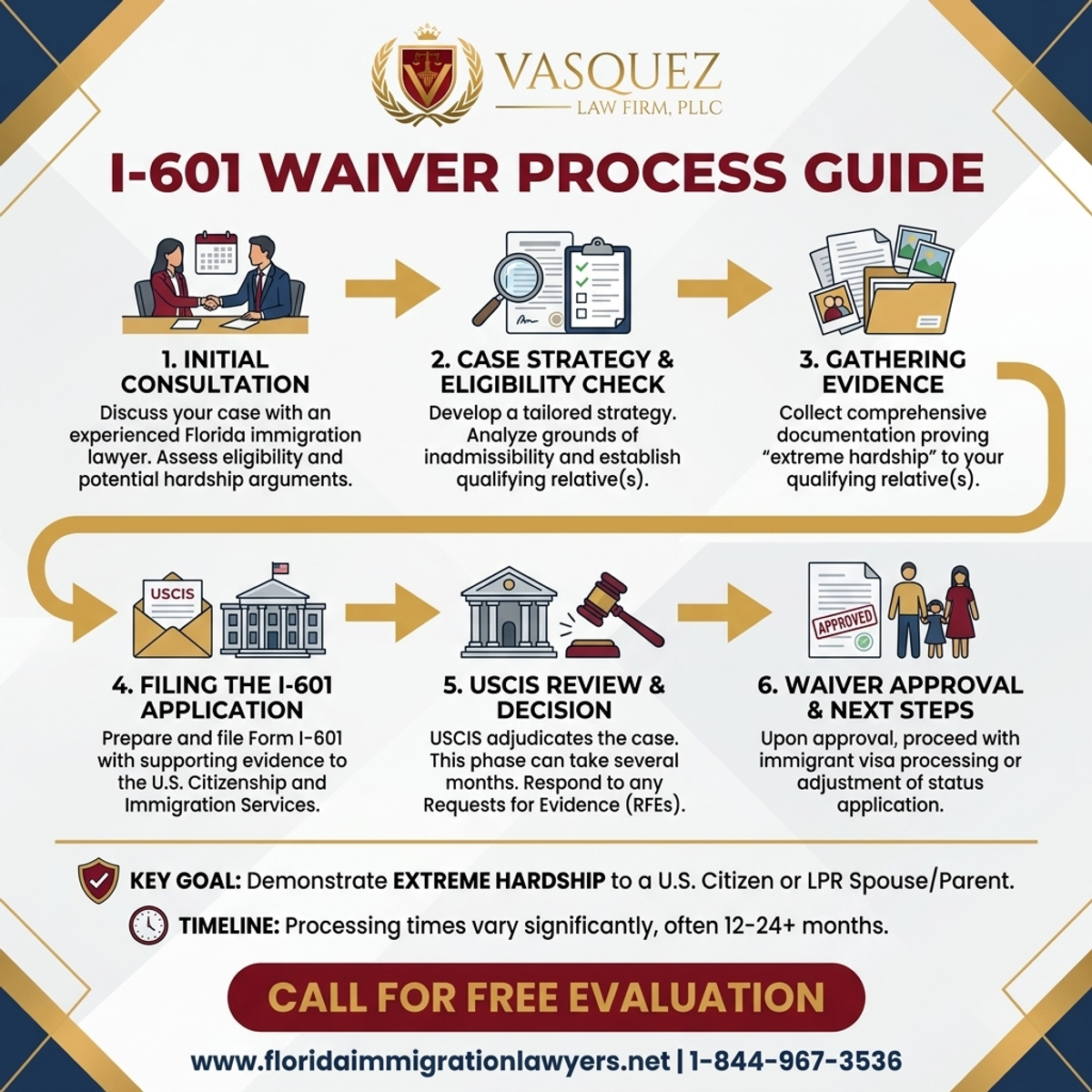
Step-by-Step Process — I-601 Waiver Lawyer Florida: Your Guide
A crucial aspect of the application is the narrative of extreme hardship. This isn't just a collection of documents; it's a story told through evidence, detailing the specific and unusual burdens your qualifying relative would face. For example, if a U.S. citizen spouse relies on the applicant for care due to a disability, or if their business would collapse without the applicant's involvement, these are compelling points. Preparing a detailed legal brief that ties all the evidence together, explaining its relevance and impact, is a service Florida Immigration Lawyers excel at providing. They help paint a clear picture for USCIS adjudicators.
Furthermore, applicants must be prepared for potential requests for additional evidence (RFEs) from USCIS. An RFE is not a denial but an opportunity to strengthen your case with more information. Responding promptly and thoroughly to an RFE is critical, and a lawyer can ensure that your response addresses all concerns raised by USCIS effectively, preventing unnecessary delays or even a denial. This proactive approach is a hallmark of the service provided by Florida Immigration Lawyers, who can be reached at 1-844-YO-PELEO for guidance.
Processing times can vary, with many cases taking several months. It's crucial to carefully follow each step and consider consulting an immigration lawyer to increase your chances of approval.
Document Checklist for I-601 Waiver
The success of your I-601 waiver application hinges significantly on the thoroughness and quality of your supporting documentation. This checklist serves as a foundational guide, but remember that each case is unique, and additional, specific evidence may be required to fully demonstrate extreme hardship. Organizing these documents clearly and logically is just as important as gathering them.
- Form I-601 completed and signed
- Proof of relationship to qualifying relative
- Evidence of extreme hardship (medical records, financial statements, etc.)
- Personal affidavits from family and friends
- Legal documents related to inadmissibility grounds
- Additional supporting documents as needed
Beyond merely collecting documents, consider how each piece of evidence contributes to your overall narrative of extreme hardship. For instance, medical records should clearly state diagnoses, treatment plans, and the impact on the qualifying relative's life, while financial statements should illustrate specific monetary burdens. Affidavits should be detailed, heartfelt, and notarized, providing firsthand accounts of the suffering that would ensue.
It's also vital to ensure all foreign-language documents are accompanied by certified English translations. Any discrepancies or missing information can cause significant delays or even lead to a denial. Florida Immigration Lawyers can help you meticulously review your entire package, ensuring everything is in order and presented in the most persuasive manner possible, minimizing the risk of common errors.
Typical Processing Time and Expectations
| Stage | Typical Timeframe | Notes |
|---|---|---|
| Initial Application Review | 3-5 months | Time may vary based on case complexity |
| Request for Additional Evidence | 1-2 months | If USCIS requires more information |
| Final Decision | 1-3 months | After all documents are reviewed |
As of 2026, processing times can fluctuate due to changes in USCIS workload and policies. Staying updated with the latest information is essential.
While the table provides a general overview, actual processing times can be highly variable and are influenced by numerous factors, including the specific USCIS service center handling your case, the volume of applications, and the complexity of your individual circumstances. For example, a case involving multiple grounds of inadmissibility or extensive criminal history might naturally take longer to adjudicate due to the need for more in-depth review.
It is crucial for applicants to manage their expectations and prepare for a potentially lengthy waiting period. During this time, it's advisable to avoid making any major life changes that could impact your application, such as international travel without proper authorization. Maintaining open communication with your legal team, like Florida Immigration Lawyers, can help you stay informed about any updates or changes in your case status, and they can advise you on how to best navigate the waiting period.
Furthermore, utilizing USCIS online tools to track your case status is a good practice, but always cross-reference with your attorney. If you receive an RFE, responding promptly and comprehensively is paramount to avoid further delays. A well-prepared response, guided by experienced legal counsel, can significantly expedite the subsequent stages of your application.
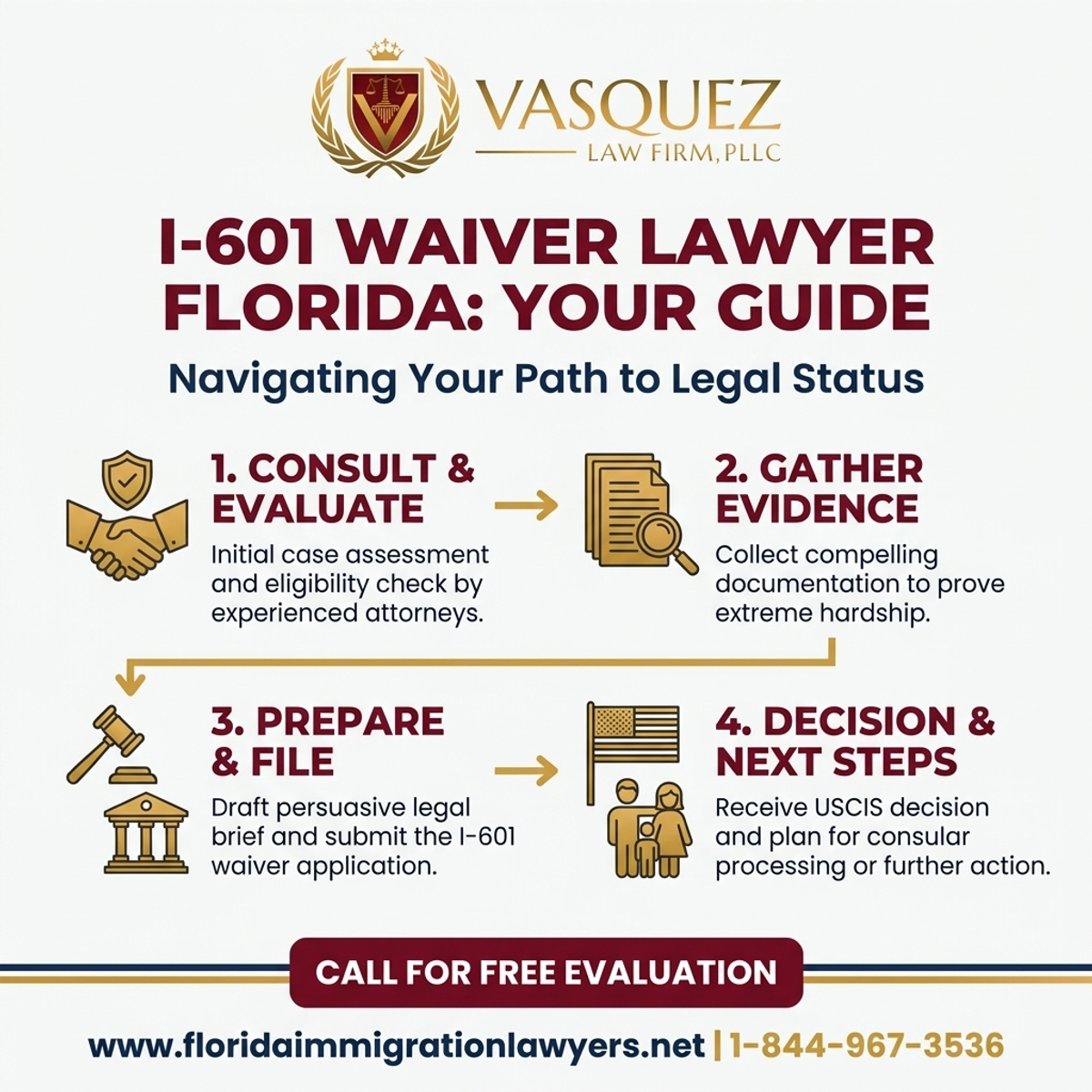
Key Statistics — I-601 Waiver Lawyer Florida: Your Guide
Cost Factors and Fees for I-601 Waiver
| Item | Typical Fee | Notes |
|---|---|---|
| Filing Fee | Varies | Check USCIS website for current fee |
| Attorney Fees | Varies | Depends on case complexity |
| Additional Documentation | Varies | May include translation or medical reports |
Consulting a lawyer can provide clarity on potential costs and help navigate the fee requirements effectively.
Understanding the financial commitment involved in an I-601 waiver application is a critical step in preparing for the process. Beyond the USCIS filing fee, which is non-refundable and subject to change, applicants should anticipate costs associated with gathering comprehensive evidence. This might include fees for obtaining medical evaluations, psychological assessments to document emotional hardship, or certified translations of foreign documents, all of which can add up.
Attorney fees represent a significant, yet often invaluable, investment. These fees typically vary based on the complexity of your case, the attorney's experience, and the scope of services provided. Some firms, like Florida Immigration Lawyers, may offer flat fees for waiver applications, providing cost predictability, while others might charge hourly. It's essential to have a transparent discussion with your chosen legal counsel about their fee structure and what services are included to avoid any surprises.
While the costs may seem substantial, the investment in experienced legal representation can dramatically increase your chances of a successful outcome, potentially saving you from repeated applications, denials, and prolonged separation from your family. Florida Immigration Lawyers are committed to providing clear cost breakdowns and expert guidance throughout the I-601 waiver process, ensuring clients in Florida understand the financial aspects and receive high-quality support.
Do not navigate this process alone. Contact Florida Immigration Lawyers today.
Common Mistakes to Avoid
The I-601 waiver process is fraught with potential pitfalls that can lead to delays, requests for additional evidence, or even outright denial. Being aware of these common mistakes is the first step toward a successful application. Many applicants, without professional guidance, inadvertently undermine their own cases by overlooking critical details or misinterpreting legal requirements.
- Incomplete Forms: Failing to fill out all sections accurately can lead to delays or denials.
- Insufficient Evidence: Not providing adequate proof of hardship can weaken your case.
- Missing Deadlines: Late submissions can result in application rejection.
- Ignoring Legal Advice: Overlooking professional guidance may lead to errors.
- Inaccurate Information: Providing false information can result in severe consequences.
- Not Checking Status: Failing to track your application status might cause missed updates.
- Improper Documentation: Submitting documents in the wrong format can cause issues.
- Forgetting to Sign: Unsigned applications are considered invalid.
- Not Keeping Copies: Always retain copies of all submissions for your records.
- Assuming Approval: Never assume approval; always prepare for potential outcomes.
One of the most frequent errors is underestimating the "extreme hardship" standard. Applicants often provide evidence of general inconvenience rather than the severe and unusual suffering required by USCIS. For instance, simply stating that a U.S. citizen spouse would miss their partner is not enough; detailing how that separation would lead to a specific, diagnosed mental health condition or significant financial collapse due to unique circumstances is what strengthens a case.
Engaging with an experienced immigration lawyer, such as those at Florida Immigration Lawyers, can effectively mitigate these risks. They possess the expertise to identify potential weaknesses in your application, assist in gathering compelling evidence, and ensure all forms are completed accurately and submitted on time. Their guidance is instrumental in transforming a potentially flawed application into a robust and persuasive submission, significantly improving your chances of approval.
When to Call a Lawyer
If you're facing complex inadmissibility issues, such as criminal history or health-related grounds, consulting an immigration lawyer is crucial. Legal expertise can guide you through the intricacies of the I-601 waiver process and help you gather the necessary evidence to support your case.
While some individuals might consider navigating the immigration system independently, the I-601 waiver is rarely a straightforward process. Specific scenarios almost always warrant immediate legal intervention. For example, if you have any criminal convictions, even minor ones, or if you have previously been deported or ordered removed from the U.S., your case will involve intricate legal analysis that only an experienced attorney can provide. Similarly, if your inadmissibility stems from a misrepresentation to immigration authorities, the legal complexities are profound.
An immigration lawyer from Florida Immigration Lawyers can assess the specific grounds of your inadmissibility, determine your eligibility for the I-601 waiver, and strategize the most effective way to present your extreme hardship claim. They understand what USCIS adjudicators look for and how to frame your story and evidence persuasively. This includes advising on the types of expert opinions needed, such as psychological evaluations, and ensuring all documentation meets the stringent requirements.
Signs you need legal assistance include receiving a Request for Evidence (RFE) from USCIS, having a complicated case history, or feeling overwhelmed by the documentation requirements. Florida Immigration Lawyers can provide the support and guidance you need. Don't hesitate to reach out for a free case review at 1-844-YO-PELEO; their bilingual team is ready to help you understand your options and pursue the best path forward.
About Florida Immigration Lawyers
Florida Immigration Lawyers is a trusted firm dedicated to assisting individuals with their immigration needs. Our experienced attorneys specialize in various areas, including waivers, deportation defense, and family immigration. We offer 24/7 availability and free case reviews to ensure you get the help you need.
Our team at Florida Immigration Lawyers understands the profound impact that immigration matters have on individuals and families. We approach each I-601 waiver case with compassion, diligence, and a deep commitment to achieving positive outcomes. Our expertise in demonstrating extreme hardship is particularly strong, as we work closely with clients to uncover and articulate every facet of their qualifying relative's suffering, whether it's medical, psychological, financial, or educational.
We pride ourselves on our client-centric approach, providing personalized attention and clear communication throughout the often-stressful waiver process. For example, we recently assisted a client whose U.S. citizen spouse relied on them for specialized medical care, successfully arguing extreme hardship based on detailed medical reports and expert testimonies. This dedication to thorough preparation and strategic advocacy is what sets us apart.
Located in Orlando, we serve clients across Central Florida. Our bilingual team is here to assist you every step of the way. Schedule a free consultation today or explore our immigration practice areas for more information.
Frequently Asked Questions About the I-601 Waiver
Navigating the I-601 waiver can raise many questions. Here are some common inquiries with practical advice to help clarify the process.
What exactly does "extreme hardship" mean for an I-601 waiver?
Extreme hardship is a high legal standard, meaning suffering beyond the normal difficulties of separation or relocation. It requires demonstrating unusual and significant emotional, financial, medical, or educational burdens on your U.S. citizen or lawful permanent resident qualifying relative. For instance, a child requiring specialized medical care only available in the U.S. or a spouse facing severe mental health crises due to separation could constitute extreme hardship. Documenting these specific, severe impacts is key.
Who can be a "qualifying relative" for an I-601 waiver?
For most I-601 waivers, a "qualifying relative" must be a U.S. citizen or lawful permanent resident spouse, parent, or in some cases, a child. The hardship must be proven for this specific qualifying relative, not for the applicant themselves. It's crucial to correctly identify your qualifying relative, as proving hardship to a non-qualifying relative will not satisfy the waiver requirements. An immigration lawyer can help you determine who qualifies in your specific situation.
Can I apply for an I-601 waiver if I have a criminal record?
Yes, an I-601 waiver can often address certain criminal grounds of inadmissibility, but it depends heavily on the nature and severity of the crime. Crimes involving moral turpitude, multiple criminal convictions, or controlled substance offenses can make you inadmissible. While the waiver provides a remedy, cases with criminal records are particularly complex and require robust legal arguments and extensive documentation. Consulting Florida Immigration Lawyers is highly recommended to assess your eligibility and build a strong defense.
What happens if my I-601 waiver is denied?
A denial of your I-601 waiver can be disheartening
Sources and References
- U.S. Citizenship and Immigration Services (USCIS)
- Executive Office for Immigration Review (EOIR)
- U.S. Department of State
- Immigration and Nationality Act (INA), 8 U.S.C. Chapter 12
Do Not Navigate This Process Alone
Our experienced immigration attorneys are ready to fight for you. Get a free, confidential case review today.
Se Habla Español
Or leave your details and we’ll call you:
Free Evaluation in 24 Hours
Or talk to us right now

AI voice assistant — available 24/7
FreeFrequently Asked Questions

William J. Vásquez
Founding Attorney · Vasquez Law Firm
U.S. Air Force veteran and immigration attorney with years of hands-on U.S. immigration experience. J.D., NCCU School of Law. AILA member. Admitted to the 4th, 5th, and 11th Circuit Courts.
Available 24/7 - Free Evaluations
Reviewed for legal accuracy by William J. Vásquez
Licensed in North Carolina; U.S. immigration is federal practice.
Related Legal Services
Our Florida immigration attorneys can help you with business immigration, deportation defense and family immigration services. Call today at 1-844-YO-PELEO for a free case review.
Related Links
Related Topics
Free Legal Case Review
Discuss your case with our experienced attorneys. We're available 24/7.
Se Habla Español - Estamos aquí para ayudarle.
Related Articles
Immigration Lawyer Orlando Free Consultation in Florida
For individuals and families in Orlando, Florida, navigating the complexities of U.S. immigration law requires expert guidance. An immigration lawyer in Orlando offers crucial support for everything from visa applications and green card processes to naturalization and deportation defense. This comprehensive guide details what a free consultation covers, providing a step-by-step overview of immigration pathways, essential document checklists, and expected timelines in 2026. We also highlight common mistakes to avoid, discuss the critical role of legal counsel in deportation and asylum cases, and explain why choosing a local Orlando immigration attorney is beneficial. Florida Immigration Lawyers is dedicated to serving the diverse community of Orlando with compassionate, effective legal solutions, ensuring you receive personalized advice and robust representation for a successful immigration journey.
EAD Advance Parole Combo Card in Florida 2026
For individuals with a pending Form I-485, Application to Register Permanent Residence or Adjust Status, the EAD Advance Parole Combo Card is an essential document. This single card combines the authorization to work legally in the U.S. (Employment Authorization Document - EAD) with permission to travel internationally and re-enter without abandoning your green card application (Advance Parole). This guide from Florida Immigration Lawyers provides a comprehensive overview for applicants in Florida in 2026, covering eligibility, the step-by-step application process, required documents, expected processing times, and associated costs. We also highlight common mistakes to avoid and when to seek legal counsel to ensure a smooth and successful immigration journey. Understanding this vital card is key to maintaining stability while awaiting your permanent residency approval.
O-1 Visa Extraordinary Ability in Florida: What You Need
Explore the O-1 visa for extraordinary ability in Florida. Learn about eligibility, application process, and common mistakes to avoid. Contact Florida Immigration Lawyers for expert assistance.
Green Card Holders Issued New Warning in Florida
Green card holders face new warnings in Florida. Learn about marriage-based green cards, spouse visas, and avoid common pitfalls. Contact Florida Immigration Lawyers for guidance.