Form N-600 Delays in Florida: Expedite Your Child's
Delays in processing Form N-600 for a Certificate of Citizenship in Florida can be frustrating. Learn about common causes of delays, steps to apply, and tips to avoid mistakes.
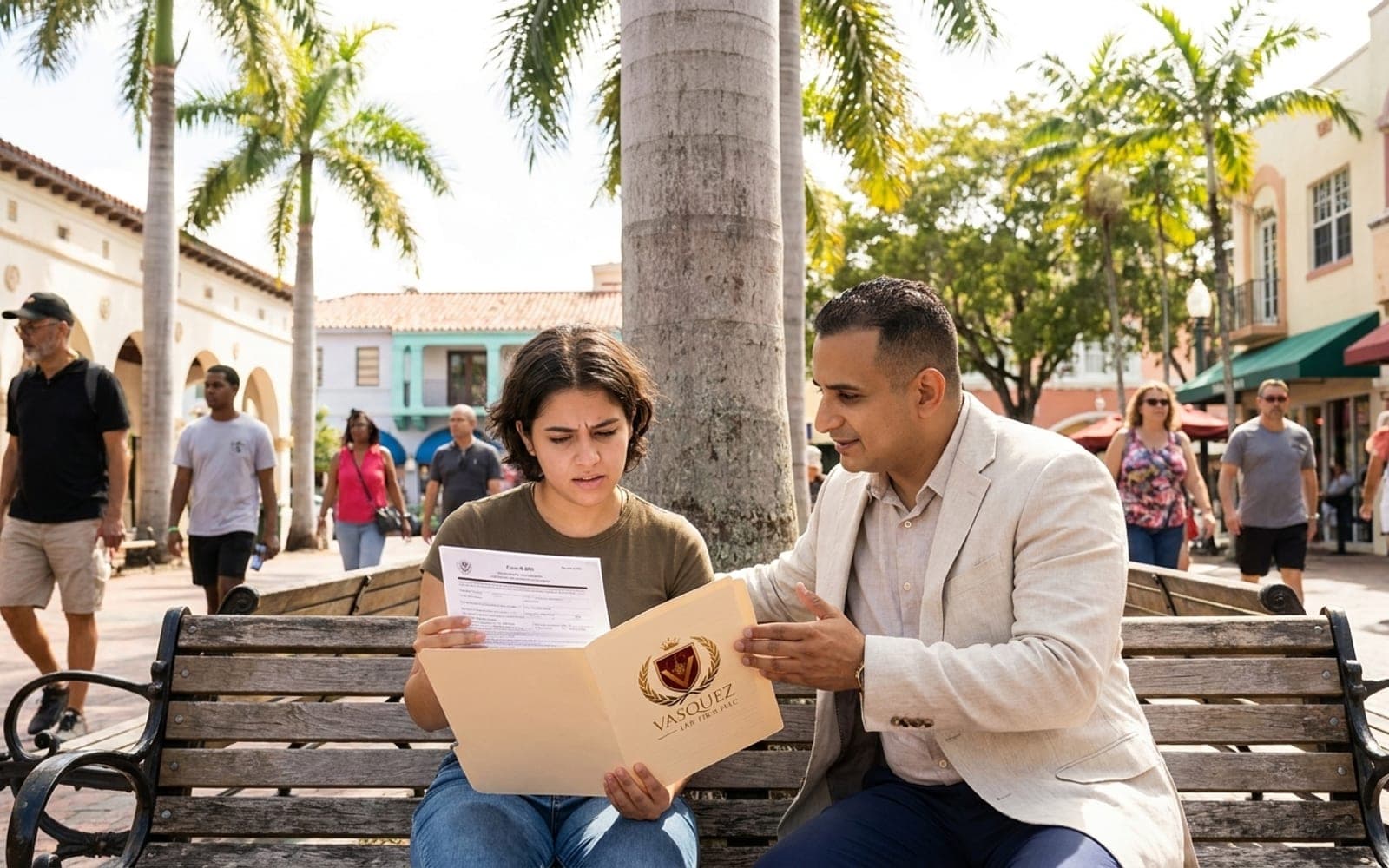
Form N-600 Delays in Florida: Expedite Your Child's Citizenship
For families in Florida, the wait for a Form N-600, Application for Certificate of Citizenship, can be incredibly frustrating. While the desire to secure your child's legal status as a U.S. citizen is paramount, processing times can often stretch for months, or even years, leaving many parents anxious and uncertain. This comprehensive guide delves into the common reasons behind these delays, particularly within Florida, and outlines proactive strategies to help expedite your child's application. Understanding the intricacies of the U.S. immigration system is crucial, and seeking professional guidance can often be the key to navigating these challenges successfully. For general information on various immigration matters, visit our immigration practice areas.
Understanding Form N-600: Certificate of Citizenship
Form N-600 is an application filed with U.S. Citizenship and Immigration Services (USCIS) to obtain a Certificate of Citizenship. This document serves as official proof of U.S. citizenship for individuals who acquired or derived citizenship automatically through their parents. Unlike naturalization (Form N-400), which is a process to become a citizen, the N-600 merely confirms citizenship that already exists. It's often sought by children of U.S. citizens born abroad, or children who became permanent residents and whose parents naturalized before the child turned 18.
Who is Eligible for Form N-600?
Eligibility for a Certificate of Citizenship generally falls into two main categories: acquired citizenship and derived citizenship. Acquired citizenship applies to children born outside the U.S. to U.S. citizen parents who met certain residency requirements prior to the child's birth. Derived citizenship applies to children who automatically become U.S. citizens when one or both parents naturalize, provided the child is under 18, is a lawful permanent resident, and resides in the U.S. in the legal and physical custody of the naturalizing parent(s).
Derived vs. Acquired Citizenship: Key Distinctions
While both pathways lead to U.S. citizenship, understanding the nuances between derived and acquired citizenship is vital for correctly filing Form N-600 and addressing any potential issues. Acquired citizenship typically occurs at the moment of birth. For example, a child born in Germany to a U.S. citizen parent who lived in the U.S. for a certain period before the child's birth might acquire citizenship. The requirements depend on the date of birth, whether one or both parents were U.S. citizens, and the parents' physical presence in the U.S. prior to the child's birth. Documentation proving the parent's U.S. citizenship and their residency history is crucial.
Derived citizenship, on the other hand, happens automatically when certain conditions are met after birth. The most common scenario involves a child who is a lawful permanent resident (green card holder) and is residing in the U.S. in the legal and physical custody of a parent who naturalizes to become a U.S. citizen. For derived citizenship, the child must be under 18 years old at the time of the parent's naturalization. This automatic conferral of citizenship is a powerful legal provision, but obtaining the physical Certificate of Citizenship via Form N-600 provides undeniable proof, which is essential for passports, voting, and other civic rights. In cases where a parent's immigration status was complex, perhaps involving asylum claims or other unique circumstances, the documentation required for the N-600 can be extensive and require careful presentation.
Why Are Form N-600 Applications Taking So Long in Florida?
Florida, with its large and diverse immigrant population, often experiences significant backlogs and unique challenges within the USCIS system. Several factors contribute to the protracted processing times for Form N-600 applications in the state.
USCIS Processing Backlogs and Resource Constraints
One of the primary drivers of N-600 delays nationwide, and particularly in high-volume states like Florida, is the sheer volume of applications coupled with fluctuating USCIS resources. The agency often faces staffing shortages, budget limitations, and an ever-increasing caseload across all application types. This creates a ripple effect, leading to longer processing times for every step of the N-600 journey, from initial receipt to final adjudication.
Incomplete Applications and Requests for Evidence (RFEs)
A common pitfall that significantly prolongs processing is an incomplete or improperly filed application. USCIS meticulously reviews every submission. If any required document is missing, unreadable, or inconsistent, USCIS will issue a Request for Evidence (RFE). Responding to an RFE adds weeks or even months to the process, as the application is put on hold until the requested information is received and reviewed. Common RFE triggers include insufficient proof of parental citizenship, incomplete birth certificates, missing marriage/divorce decrees, or inadequate evidence of physical custody.
Interview Requirements and Scheduling Delays
While not all N-600 applicants are required to attend an interview, USCIS reserves the right to call any applicant for an interview to verify information or address discrepancies. In Florida, scheduling these interviews can be a major source of delay. Field offices in cities like Miami, Orlando, and Tampa often have extensive backlogs for interview slots. Furthermore, if an interview is required, the time it takes for an officer to review the case and make a decision post-interview can add further delays.
Background Checks and Security Clearances
Every N-600 applicant, regardless of age, undergoes thorough background checks and security clearances. These checks involve multiple government agencies and can sometimes uncover issues that require further investigation, leading to substantial delays. While most applicants clear these checks without incident, any red flags can halt an application indefinitely until resolved.
Specific Challenges in Florida Field Offices
Florida is home to several USCIS field offices, each with its own workload and processing nuances. The Miami Field Office, for instance, is one of the busiest in the country, handling a vast array of immigration cases. This high volume can lead to longer wait times compared to less busy offices. Additionally, local policy interpretations or specific backlogs within a particular Florida office can contribute to localized delays for N-600 applications.
Strategies to Expedite Your N-600 Application
While patience is often a virtue in immigration matters, there are proactive steps you can take to potentially expedite your Form N-600 application and minimize delays.
Proactive Application Preparation
The single most effective strategy is to submit a complete, accurate, and well-organized application from the outset. Double-check all forms for errors, ensure every question is answered, and include all required supporting documentation. Providing certified translations for foreign-language documents and clearly labeling all exhibits can also prevent RFEs. A meticulously prepared application reduces the chances of delays caused by missing information or unclear evidence.
Following Up with USCIS
If your application has been pending beyond the normal processing times published on the USCIS website, you can take several steps to follow up:
- Service Request: You can submit an online service request if your case is outside normal processing times.
- Infopass Appointment: While less common now, you might be able to schedule an Infopass appointment at a local USCIS office to inquire about your case status.
- Contacting the USCIS Contact Center: You can call the USCIS Contact Center for general inquiries, though specific case information might be limited.
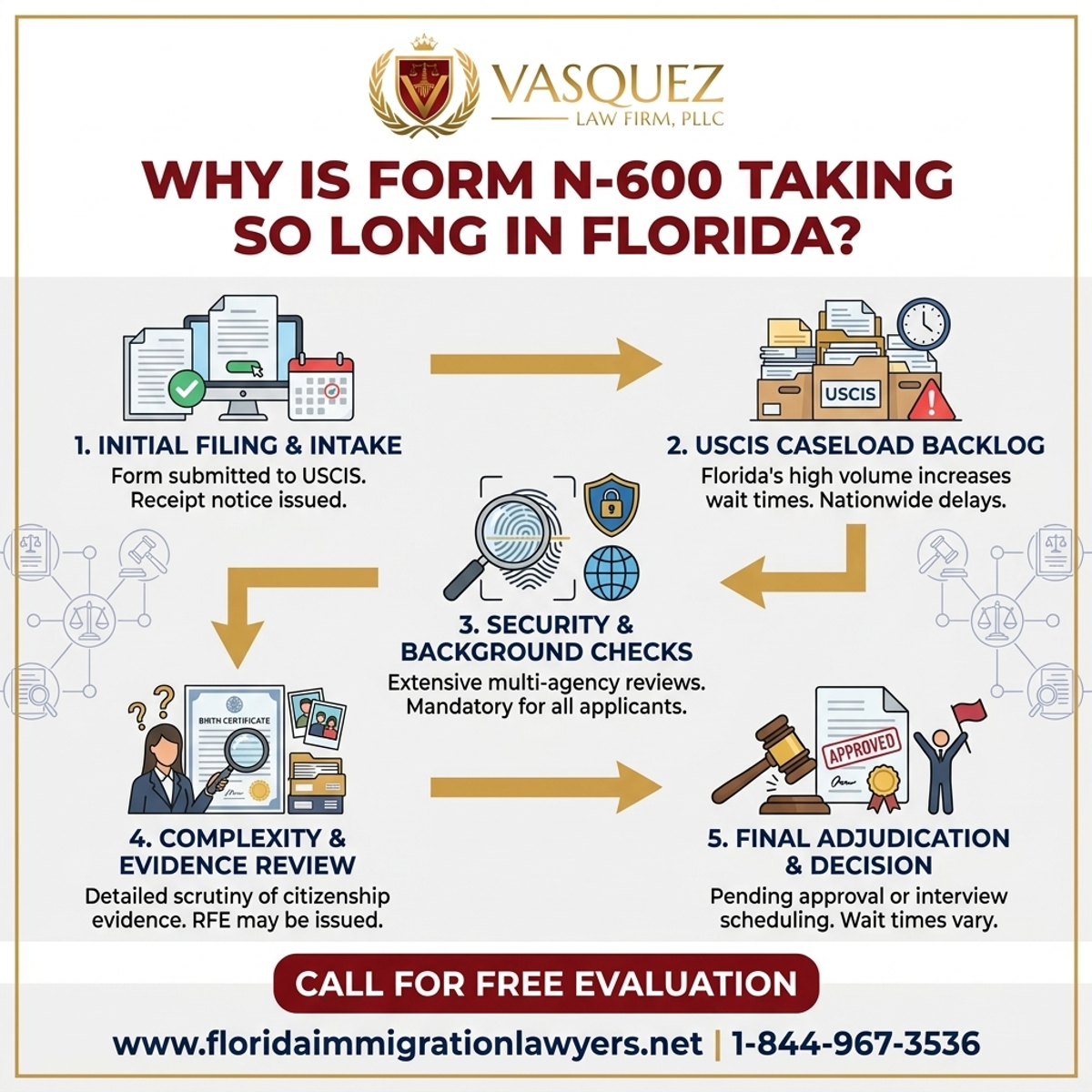
Step-by-Step Process — Form N-600 Delays in Florida: Expedite Your Child's Citizenship
Congressional Inquiries
If your N-600 application is significantly delayed and you have exhausted other avenues, contacting your local U.S. Representative or Senator can sometimes be effective. Congressional offices have liaisons with USCIS and can make inquiries on behalf of their constituents. While they cannot guarantee an expedited decision, their involvement can sometimes prompt a review of the case.
Mandamus Lawsuits
In extreme cases of unreasonable delay, where USCIS has failed to act on an N-600 application for an extended period beyond normal processing times, a lawsuit for mandamus may be an option. A writ of mandamus is a court order compelling a government agency to perform its duty. This is a complex legal strategy and should only be pursued with the guidance of an experienced immigration attorney. It is often considered when delays are causing severe hardship or are clearly arbitrary. Such a legal action can also be a critical part of a broader deportation defense strategy if the child's status is in question.
The Critical Role of Legal Representation in N-600 Cases
Navigating the complexities of U.S. immigration law, especially when dealing with delays in critical applications like Form N-600, can be overwhelming for families. Engaging an experienced immigration attorney can significantly improve your chances of a smooth and timely process, providing invaluable support and expertise every step of the way. Our team of dedicated attorneys is here to help.
Navigating Complex Immigration Law
Immigration law is intricate and constantly evolving. An attorney specializing in immigration can interpret the specific statutes and regulations pertaining to derived or acquired citizenship, ensuring that your application meets all legal requirements. They can assess your family's unique situation, identify potential challenges, and develop a robust strategy to present your case to USCIS effectively. This includes understanding the nuances of how different parental statuses, birth locations, and dates impact eligibility.
Ensuring a Complete and Accurate Application
One of the most common reasons for N-600 delays is an incomplete or incorrectly filed application. An attorney will meticulously review all forms, gather necessary supporting documents, and ensure everything is properly organized and translated. They understand exactly what USCIS officers look for and can proactively address potential issues, significantly reducing the likelihood of Requests for Evidence (RFEs) or Notices of Intent to Deny (NOIDs). This thorough preparation from the outset can save months of processing time.
Responding to RFEs and NOIDs Effectively
Should USCIS issue an RFE or NOID, an attorney can formulate a comprehensive and persuasive response. They know how to present additional evidence, legal arguments, and clarifications in a manner that satisfies USCIS requirements, preventing further delays or even denial of the application. Their expertise in crafting these responses can be the difference between approval and prolonged uncertainty.
Representing You at Interviews
If an N-600 interview is required, having legal representation can be immensely beneficial. An attorney can prepare you and your child for the interview, explaining what questions to expect and how to answer them truthfully and effectively. During the interview itself, the attorney can be present to offer legal support, clarify misunderstandings, and ensure that your rights are protected. Their presence can also signal to USCIS that your case is being handled with serious legal oversight, potentially leading to a more streamlined process.
Advocating for Expedited Processing
In cases of extreme urgency or hardship, an attorney can help you submit an expedite request with USCIS, providing compelling evidence to support the need for faster processing. They can also effectively engage with USCIS through official channels, track your case status, and follow up on delays, using their professional standing to advocate for your application. If administrative avenues prove insufficient, an attorney can advise on and pursue more aggressive legal actions, such as a writ of mandamus, to compel USCIS to make a decision.
Addressing Potential Deportation Concerns
In some complex family situations, a child's citizenship status might be intertwined with broader immigration issues, including potential deportation defense for other family members. An N-600 approval can be a critical step in securing a child's future and, by extension, providing stability for the family. An attorney can navigate these sensitive intersections, ensuring that the N-600 application supports any broader immigration strategies and protects the child from any adverse actions.
What to Expect After Approval: Receiving Your Certificate
Once your Form N-600 is approved, USCIS will schedule an Oath of Allegiance ceremony, if required, or simply mail the Certificate of Citizenship directly. The Certificate of Citizenship is a highly valuable document, serving as definitive proof of U.S. citizenship. It is crucial for obtaining a U.S. passport, voting, and accessing various federal benefits. Keep this document in a safe place, as replacing it can be another lengthy process.
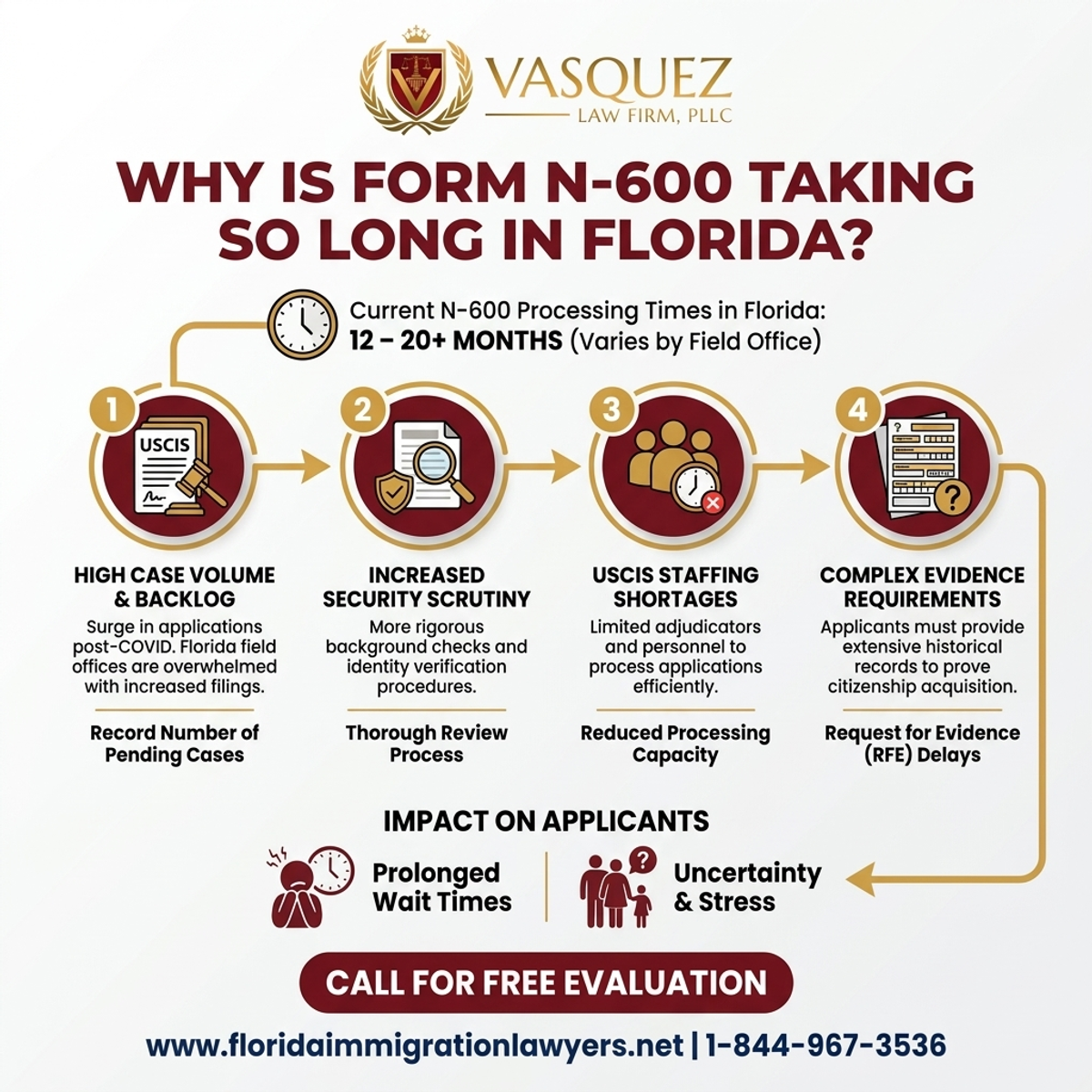
Key Statistics — Form N-600 Delays in Florida: Expedite Your Child's Citizenship
Frequently Asked Questions About Form N-600 Delays
Here are answers to common questions regarding Form N-600 applications and delays:
- How long does Form N-600 processing typically take in Florida? Processing times vary greatly but can range from several months to over a year, depending on the USCIS field office, completeness of the application, and current backlogs.
- Can I travel internationally while my N-600 is pending? Yes, generally, a pending N-600 does not restrict international travel if the applicant has a valid passport from their country of origin or a U.S. green card. However, always consult with an attorney before making travel plans.
- What if I receive an RFE? Respond promptly and comprehensively with all requested documents. An attorney can help you gather and submit the correct evidence to avoid further delays.
- Is an interview always required for N-600? No, but USCIS reserves the right to request an interview for any applicant.
- What is the difference between an N-600 and a U.S. passport? An N-600 provides a Certificate of Citizenship, which is proof of citizenship. A U.S. passport is a travel document that also serves as proof of citizenship. You typically need the N-600 (or other primary evidence of citizenship) to apply for a first-time U.S. passport.
- Can I check my N-600 status online? Yes, you can use the USCIS online case status tool with your receipt number.
- What if my N-600 is denied? If your N-600 is denied, you may have options to appeal the decision or refile the application. It is crucial to consult with an immigration attorney immediately to understand your options.
- Does my child need to be a permanent resident to file N-600? For derived citizenship, yes, the child must be a lawful permanent resident when the parent naturalizes. For acquired citizenship, the child is a citizen at birth and does not need to be a permanent resident.
- What documents are crucial for N-600? Key documents include the child's birth certificate, parents' marriage certificate (if applicable), parents' naturalization certificates or proof of U.S. citizenship, and proof of legal and physical custody.
Conclusion
The journey to obtain a Certificate of Citizenship for your child through Form N-600 can be fraught with delays, particularly in Florida. However, by understanding the common causes of these delays and implementing proactive strategies, you can significantly improve your application's processing time. From meticulous preparation to strategic follow-ups and, when necessary, legal intervention, every step counts. If you are experiencing N-600 delays or need assistance with your application, do not hesitate to seek professional legal guidance. Our experienced immigration attorneys are here to help you navigate the complexities of USCIS and secure your child's future. Contact us today for a consultation.
Sources and References
- U.S. Citizenship and Immigration Services (USCIS)
- Executive Office for Immigration Review (EOIR)
- U.S. Department of State
- Immigration and Nationality Act (INA), 8 U.S.C. Chapter 12
Do Not Navigate This Process Alone
Our experienced immigration attorneys are ready to fight for you. Get a free, confidential case review today.
Se Habla Español
Or leave your details and we’ll call you:
Free Evaluation in 24 Hours
Or talk to us right now
AI voice assistant — available 24/7
FreeFrequently Asked Questions

William J. Vásquez
Founding Attorney · Vasquez Law Firm
U.S. Air Force veteran and immigration attorney with years of hands-on U.S. immigration experience. J.D., NCCU School of Law. AILA member. Admitted to the 4th, 5th, and 11th Circuit Courts.
Available 24/7 - Free Evaluations
Reviewed for legal accuracy by William J. Vásquez
Licensed in North Carolina; U.S. immigration is federal practice.
Related Legal Services
Our Florida immigration attorneys can help you with family immigration services, immigration lawyer cost in Florida and experienced immigration attorneys. Call today at 1-844-YO-PELEO for a free case review.
Related Links
Related Topics
Free Legal Case Review
Discuss your case with our experienced attorneys. We're available 24/7.
Se Habla Español - Estamos aquí para ayudarle.
Related Articles
DUI Immigration Consequences in Florida 2026
A DUI conviction in Florida can have severe immigration consequences, potentially leading to inadmissibility, deportation, or denial of immigration benefits. For non-citizens, a DUI is not just a traffic offense but a serious criminal matter that federal immigration law scrutinizes closely. Factors like multiple offenses, injury, or property damage can escalate a simple DUI to a Crime Involving Moral Turpitude (CIMT) or even an aggravated felony, triggering mandatory detention and removal proceedings. Understanding the specific nature of your Florida conviction and its interpretation under the Immigration and Nationality Act (INA) is crucial. This article outlines how DUIs impact immigration status, the grounds for inadmissibility and deportation, a step-by-step guide to navigating the process, essential documentation, and expected timelines for 2026. We also highlight common mistakes to avoid and when to seek legal counsel from an experienced immigration attorney. Florida Immigration Lawyers offers comprehensive support for individuals facing these challenging situations, providing expert guidance through complex legal landscapes.
Immigration Lawyer Orlando Free Consultation in Florida
For individuals and families in Orlando, Florida, navigating the complexities of U.S. immigration law requires expert guidance. An immigration lawyer in Orlando offers crucial support for everything from visa applications and green card processes to naturalization and deportation defense. This comprehensive guide details what a free consultation covers, providing a step-by-step overview of immigration pathways, essential document checklists, and expected timelines in 2026. We also highlight common mistakes to avoid, discuss the critical role of legal counsel in deportation and asylum cases, and explain why choosing a local Orlando immigration attorney is beneficial. Florida Immigration Lawyers is dedicated to serving the diverse community of Orlando with compassionate, effective legal solutions, ensuring you receive personalized advice and robust representation for a successful immigration journey.
EAD Advance Parole Combo Card in Florida 2026
For individuals with a pending Form I-485, Application to Register Permanent Residence or Adjust Status, the EAD Advance Parole Combo Card is an essential document. This single card combines the authorization to work legally in the U.S. (Employment Authorization Document - EAD) with permission to travel internationally and re-enter without abandoning your green card application (Advance Parole). This guide from Florida Immigration Lawyers provides a comprehensive overview for applicants in Florida in 2026, covering eligibility, the step-by-step application process, required documents, expected processing times, and associated costs. We also highlight common mistakes to avoid and when to seek legal counsel to ensure a smooth and successful immigration journey. Understanding this vital card is key to maintaining stability while awaiting your permanent residency approval.
EAD Advance Parole Combo Card in Florida: What You Need
An EAD advance parole combo card allows individuals with pending adjustment applications to both work and travel abroad without jeopardizing their green card application. Learn how to apply in Florida, what documents you need, and common mistakes to avoid.