Japan Immigration News Florida: Your 2026 Guide to Visas...
For Florida residents interested in Japan immigration news for 2026, understanding visa requirements and application processes is essential. This detailed guide covers everything from identifying the right visa category to gathering necessary documents and anticipating timelines. We delve into the role of the Consulate-General of Japan in Miami, cost considerations, and common mistakes to avoid. Whether you're planning a visit, work, or study in Japan, staying informed about evolving policies is crucial. Our firm, Florida Immigration Lawyers, based in Florida, provides expert legal assistance to navigate these complexities. Learn how our immigration lawyers can help secure your future in Japan, offering free consultations for tailored advice.

Navigating the intricacies of international immigration can be a daunting task, especially when seeking to move to a country with a unique cultural and legal framework like Japan. For residents of Florida looking towards Japan in 2026, staying abreast of the latest immigration news, visa requirements, and legal processes is paramount. This comprehensive guide aims to demystify the journey, providing crucial insights into Japan's immigration landscape, potential changes for 2026, and how expert legal assistance can pave your way.
Understanding Japan's Visa Categories for Florida Residents
Japan offers a diverse range of visa categories, each tailored to specific purposes and durations of stay. For Florida residents planning their move, understanding which visa best suits their objectives is the first critical step. The Japanese government continually refines its immigration policies, making it essential to consult the most current guidelines, often available through the Consulate General of Japan in Miami or official immigration websites.
Temporary Visas: Short-Term Stays and Explorations
Temporary visas are designed for individuals planning short-term visits to Japan for tourism, business meetings, cultural exchanges, or specific educational programs. These typically include:
- Tourist Visa: For leisure and sightseeing. While many nationalities, including US citizens, can enter Japan without a visa for short tourist stays (up to 90 days), specific circumstances or longer intended stays may require a formal tourist visa application.
- Business Visitor Visa: For attending meetings, conferences, market research, or contract negotiations. This visa does not permit gainful employment.
- Student Visa: For enrollment in Japanese language schools, universities, or other educational institutions. Requires an acceptance letter from a recognized institution.
- Working Holiday Visa: Available to citizens of specific countries (the U.S. is not currently included in Japan's working holiday program, but policies can evolve, so it's worth monitoring for 2026).
Applicants for temporary visas must demonstrate sufficient funds for their stay, a clear purpose for their visit, and an intention to depart Japan before their visa expires. For personalized advice on temporary visa options for your specific situation, contact ${FIRM_NAME} at ${FIRM_PHONE} today.
Long-Term and Permanent Visas: Building a Future in Japan
For those aspiring to live and work in Japan for extended periods or permanently, the options become more complex and require more extensive documentation. These categories are often tied to employment, family reunification, or significant investment:
- Work Visas: Japan offers numerous work visa categories, such as "Engineer/Specialist in Humanities/International Services," "Highly Skilled Professional," "Specific Skilled Worker," and "Intra-company Transferee." Each has specific educational, experience, and salary requirements.
- Spouse or Child of Japanese National Visa: For individuals married to a Japanese citizen or children of Japanese nationals.
- Spouse or Child of Permanent Resident Visa: For family members of those holding permanent residency in Japan.
- Investor/Business Manager Visa: For individuals establishing or investing in a business in Japan, requiring a significant capital investment and a viable business plan.
- Permanent Resident Visa: The most sought-after status, offering unrestricted work and stay. It typically requires a long period of continuous residence (usually 10 years, or less for highly skilled professionals), demonstrating good conduct, and financial independence.
The requirements for long-term visas are rigorous and often involve obtaining a Certificate of Eligibility (COE) from the Japanese immigration authorities before applying for the visa at the consulate. This process can be intricate, and expert guidance is invaluable.
Special Cases: E-Visas and the Emerging Digital Nomad Visa
Japan has been embracing digitalization in its immigration processes. The Japan e-visa system, primarily for short-term stays, streamlines the application process for eligible nationalities. For Florida residents, checking eligibility for an e-visa can save time and effort.
Furthermore, in response to global trends, Japan has recently introduced a Digital Nomad Visa. While specific details and eligibility criteria are still being refined and may evolve by 2026, this visa category targets remote workers who earn income from outside Japan. This represents a significant shift in Japan's immigration policy, opening new avenues for professionals seeking a unique work-life balance in Japan. Staying updated on the precise requirements for this new visa category will be crucial for eligible Florida-based professionals.
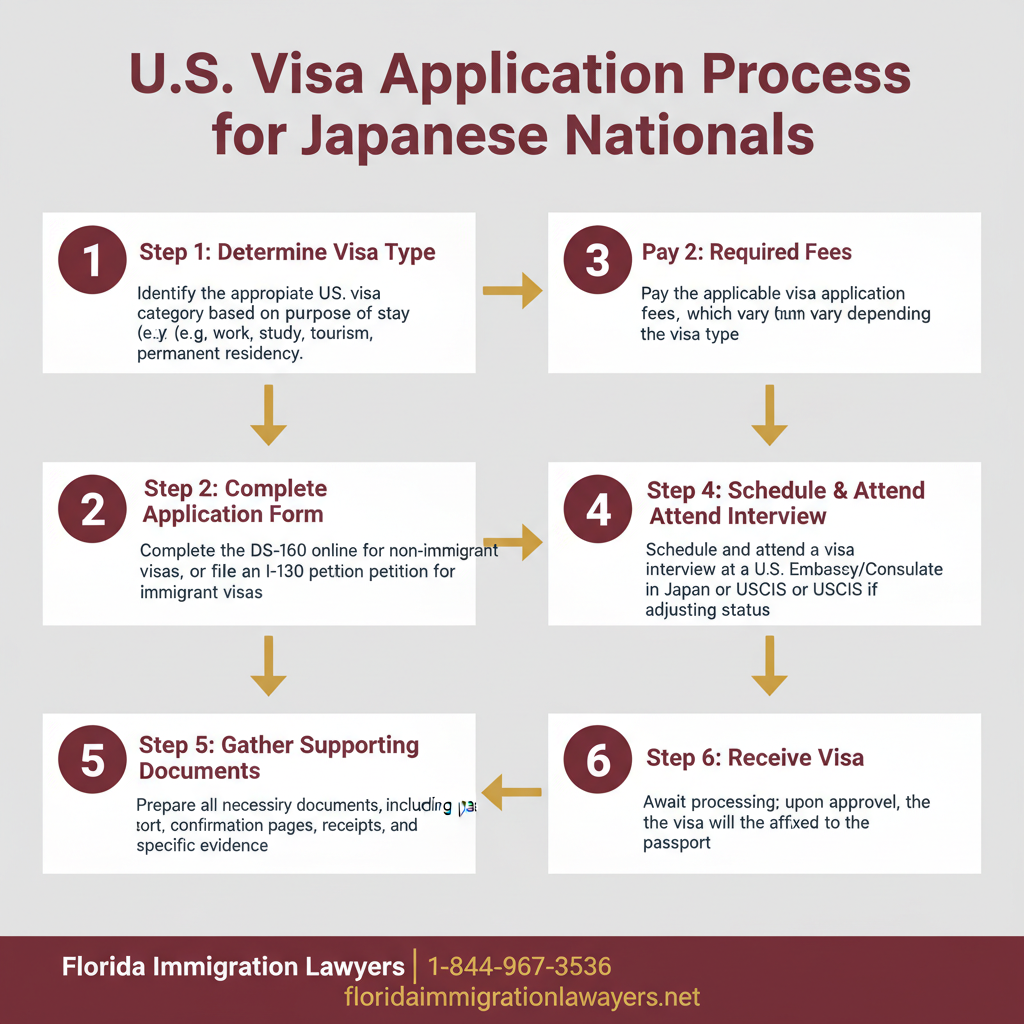
The Application Process: From Florida to Japan
Embarking on the Japanese visa application journey from Florida involves several critical steps, each requiring meticulous attention to detail. A single error or omission can lead to delays or even rejection.
Gathering Required Documents: Precision is Key
The documentation required varies significantly by visa type, but common elements include:
- Valid passport with sufficient validity beyond your intended stay.
- Completed visa application form.
- Recent passport-sized photographs.
- Certificate of Eligibility (COE) for most long-term visas, issued by the Japanese Immigration Services Agency.
- Proof of financial means (bank statements, employment letters, tax returns).
- Invitation letter and guarantee letter (if applicable, from a Japanese sponsor).
- Educational and professional certificates (for work/student visas).
- Criminal background check.
- Medical examination results.
It is crucial to ensure all documents are accurate, up-to-date, and translated into Japanese or English by certified translators if necessary. Incomplete applications are a primary cause of delays. For a comprehensive checklist tailored to your visa type, consult with ${FIRM_NAME} at ${FIRM_PHONE}.
Navigating the Consulate General of Japan in Miami
For Florida residents, the Consulate General of Japan in Miami serves as the primary point of contact for visa applications. The process typically involves:
- Appointment Scheduling: Many consulates require appointments for visa submissions. Check the official website of the Consulate General of Japan in Miami for their specific procedures.
- Document Submission: Presenting all required documents in person on your appointment day.
- Interview (if required): Some visa types or individual circumstances may necessitate an interview with a consular officer.
- Processing Time: Visa processing times can vary widely, from a few days for simple temporary visas to several weeks or months for complex long-term visas requiring COE.

Understanding the consulate's specific operating hours, holiday closures, and submission protocols is vital to avoid unnecessary trips or delays. Their website is an invaluable resource, but for complex cases, direct communication or legal representation can streamline the process.
Interview Preparation and Common Pitfalls
While not all visa applications require an interview, being prepared is always beneficial. Be ready to articulate your purpose of visit, your ties to Florida (proving intent to return for temporary visas), and your financial stability. Common pitfalls to avoid include:
- Incomplete or Inaccurate Documentation: The most frequent reason for rejection. Double-check everything.
- Misrepresentation: Providing false information can lead to immediate denial and future bans.
- Lack of Clear Intent: Especially for temporary visas, failing to convince the consular officer of your intent to return to Florida can be problematic.
- Insufficient Funds: Not demonstrating adequate financial resources to support your stay.
Thorough preparation, honesty, and clarity are your best allies. If you have concerns about your interview or application, seeking pre-submission review from a legal expert can significantly improve your chances of success.
Key Updates and Changes in Japan Immigration Law for 2026
Japan's immigration policies are dynamic, influenced by economic needs, demographic shifts, and global events. While predicting exact changes for 2026 can be challenging, current trends suggest several areas of focus that Florida residents should monitor. Japan faces an aging population and a shrinking workforce, driving a continuous need for skilled foreign labor. This demographic reality is a primary catalyst for ongoing immigration reforms aimed at attracting and retaining talent.
One significant area of potential development for 2026 involves the expansion and refinement of existing visa categories designed to attract highly skilled professionals and specific skilled workers. The government may introduce more streamlined pathways for individuals in high-demand sectors such as IT, engineering, healthcare, and advanced manufacturing. There could be further incentives, such as accelerated paths to permanent residency or expanded family reunification options, for those who contribute significantly to the Japanese economy. Additionally, the recently introduced Digital Nomad Visa is likely to see its criteria refined and potentially expanded, reflecting Japan's desire to attract remote workers who can contribute to the economy without necessarily filling traditional employment gaps.
Furthermore, Japan is increasingly investing in digitalization across all government services. For 2026, we might see further enhancements to the e-visa system, potentially broadening its scope or simplifying the application process for a wider range of short-term visitors. There's also a possibility of more online portals for long-term visa applications and status checks, reducing the need for in-person visits to consulates or immigration offices. Security concerns and international relations will also continue to shape policy, potentially leading to stricter background checks or more nuanced approaches to visa issuance based on geopolitical considerations. Staying informed through official channels and expert legal counsel will be indispensable for anyone planning their Japan immigration journey in 2026.
Impact of Recent Policy Shifts
Recent years have seen Japan introduce significant changes, such as the "Specified Skilled Worker" visa to address labor shortages in specific industries and the "Highly Skilled Professional" visa, which offers preferential treatment for top talent. These changes signal a proactive approach to immigration, moving away from traditionally restrictive policies. The introduction of the Digital Nomad Visa in 2024 further exemplifies this shift, indicating a willingness to adapt to global work trends. For 2026, we can expect these foundational changes to be built upon, potentially with clearer guidelines, expanded quotas, or even new sub-categories tailored to emerging industries.
Future Outlook and Predictions
Looking ahead to 2026, it's plausible that Japan will continue to balance its need for foreign talent with its desire to maintain social cohesion. We might see a greater emphasis on Japanese language proficiency for certain long-term visas, or enhanced integration support programs for new residents. Environmental and sustainability sectors could also become new areas of focus for skilled worker visas. The overarching goal will likely remain the same: to attract individuals who can contribute positively
Do Not Navigate This Process Alone
Our experienced immigration attorneys are ready to fight for you. Get a free, confidential consultation today.
Se Habla Español
Frequently Asked Questions
Vasquez Law Firm
Immigration Attorney | Founder, Vasquez Law Firm
U.S. Air Force veteran and immigration attorney with thousands of cases resolved. J.D., NCCU School of Law. AILA member. Admitted to the 4th, 5th, and 11th Circuit Courts.
Available 24/7 - Free Evaluations
Related Legal Services
Our Florida immigration attorneys can help you with immigration practice areas, free immigration consultation and experienced immigration attorneys. Call today at 1-844-967-3536 for a free consultation.
Related Links
Related Topics
Free Legal Consultation
Discuss your case with our experienced attorneys. We're available 24/7.
Se Habla Español - Estamos aquí para ayudarle.
Related Articles
Stokes Interview: Navigating Marriage Fraud in Florida
A Stokes interview is a specialized, separate interview conducted by USCIS when there are suspicions of marriage fraud in a green card application. This rigorous process involves individual questioning of spouses, focusing on inconsistencies in their testimonies to determine the authenticity of their marital bond. For couples in Florida, navigating this high-stakes interview requires meticulous preparation, extensive documentation, and often the strategic guidance of an experienced immigration lawyer. Understanding the process, preparing for detailed questions, and presenting a strong case are crucial for overcoming marriage fraud allegations and securing your immigration future. Florida Immigration Lawyers stands ready to assist you.
Immigration Attorney Gainesville: North Florida Legal Help
For those in Gainesville, Alachua County, and throughout North Florida, navigating U.S. immigration law requires expert guidance. An experienced immigration attorney can simplify complex processes, from family-based petitions and employment visas to critical asylum claims and deportation defense. This comprehensive guide outlines the essential services provided by an immigration attorney, details necessary documentation, clarifies processing timelines, and discusses associated costs. We also highlight common mistakes to avoid and crucial scenarios where legal counsel is indispensable. Florida Immigration Lawyers serves all of Florida, including Gainesville and St. Petersburg, providing dedicated legal support to help you achieve your immigration goals. Contact us for a free consultation to discuss your specific needs.
Military Naturalization Expedited at Florida Bases
Explore expedited military naturalization processes for service members at Florida bases like MacDill. Learn about eligibility, steps, and common mistakes. Contact Florida Immigration Lawyers for a free consultation.
Protect Yourself from Immigration Scams in Florida
Learn how to protect against immigration scams in Florida, focusing on St. Petersburg. This guide covers identifying scams, verifying credentials, and getting legal help. Call Florida Immigration Lawyers at 1-844-967-3536 for assistance.