Port St. Lucie Immigration Services: Treasure Coast Help
Explore crucial immigration services in Port St Lucie and the Treasure Coast to navigate your path to residency and citizenship in Florida. Learn about the necessary steps and common mistakes to avoid in this comprehensive guide. Call Florida Immigration Lawyers at 1-844-YO-PELEO for assistance.
- Comprehensive support for visas and green cards
- Assistance with family and employment-based immigration
- Legal guidance for asylum seekers and deportation defense
- Located conveniently for residents of Martin County and beyond
Introduction: Port St. Lucie Immigration Services
For many immigrants in Homestead, Florida, navigating the complexities of U.S. immigration law can be daunting. Whether you are seeking a green card, citizenship, or temporary work permit, understanding the resources available in Port St Lucie and the Treasure Coast is vital. This article will guide you through the immigration services offered in these areas, providing practical advice and insights to help you on your journey. Call Florida Immigration Lawyers at 1-844-YO-PELEO for a free consultation.
The U.S. immigration system is known for its intricate rules, constantly evolving policies, and extensive documentation requirements. For individuals and families establishing new roots in Florida, these complexities can be overwhelming. From understanding visa categories to preparing for interviews, every step demands meticulous attention and often, professional legal insight. Our goal is to demystify this process, highlighting the crucial support systems available right here in your local community.
Port St Lucie and the broader Treasure Coast region are vibrant, growing areas, home to diverse immigrant communities from across the globe. Each individual's journey is unique, whether they are joining family, pursuing career opportunities, or seeking protection. Recognizing this diversity, local immigration services are designed to offer tailored support, ensuring that every applicant receives the specific guidance they need to successfully navigate their path to a new life in the United States.
Understanding Immigration Services in Port St Lucie
Port St Lucie, located in the Treasure Coast, offers a variety of immigration services tailored to meet the needs of its diverse community. With a growing population from various backgrounds, local immigration services are equipped to handle cases involving family-based petitions, employment-based visas, and more. The community is served by USCIS offices and immigration courts located in Miami and Orlando, ensuring access to necessary legal proceedings.
Immigrants in Port St Lucie benefit from a network of experienced attorneys and legal aid organizations dedicated to providing comprehensive support. These services are crucial in a climate where new policies, such as recent changes proposed by the Trump administration, can impact the legal landscape.
Beyond basic applications, these services encompass a broad spectrum of immigration needs. For families, this includes assistance with petitions for spouses, children, parents, and siblings, ensuring that families can reunite and build their lives together in the U.S. For professionals and entrepreneurs, support is available for various employment-based visas, including H-1B for specialized occupations, L-1 for intracompany transferees, and O-1 for individuals with extraordinary abilities, as well as green cards through employer sponsorship.
Furthermore, local legal experts are adept at navigating complex cases such as asylum claims for those fleeing persecution, defense against deportation, and various types of waivers for inadmissibility. The dynamic nature of immigration law means that policies can shift rapidly, making it essential to have legal counsel who stays updated on the latest regulations and judicial precedents. For instance, understanding the nuances of public charge rules or changes in visa bulletin cut-off dates can significantly impact an application's success.
The cultural diversity of Port St Lucie means that many residents may also require assistance with language barriers or understanding cultural differences in legal proceedings. Immigration lawyers in the area often provide multilingual support and culturally sensitive advice, ensuring that clients feel comfortable and fully informed throughout their legal journey. This personalized approach is vital for fostering trust and achieving positive outcomes for the community.
Step-by-Step Guide to Securing Immigration Services
Embarking on an immigration journey requires a clear roadmap. Following a structured approach can significantly reduce stress and improve the likelihood of a successful outcome. This step-by-step guide outlines the typical process, highlighting key actions you'll need to take.
- Determine Your Needs: Identify whether you need a visa, green card, or other immigration documentation. This initial assessment is critical, as different immigration pathways have distinct requirements and eligibility criteria.
- Gather Documentation: Collect necessary documents such as birth certificates, passports, and employment records. Accuracy and completeness are paramount; even minor discrepancies can cause significant delays.
- Consult with an Attorney: Schedule a consultation with an immigration lawyer to discuss your case and options. An experienced attorney, like those at Florida Immigration Lawyers, can help you understand the best path forward, identify potential challenges, and prepare a strong application.
- File Your Application: Submit your application through the appropriate USCIS channels. This involves completing complex forms and paying the required filing fees.
- Attend Interviews: Prepare for and attend any required interviews or hearings. Your attorney can help you prepare for common questions and ensure you present your case effectively.
- Receive Decision: Await the USCIS decision on your application. During this waiting period, it's important to stay informed and respond promptly to any requests for additional information.
Each step in this process is interconnected, and overlooking any detail can have significant repercussions. For example, failing to properly identify your immigration category in Step 1 could lead to filing the wrong application, wasting time and money. Similarly, inadequate preparation for an interview in Step 5 could jeopardize your entire case. Engaging with Florida Immigration Lawyers at 1-844-YO-PELEO from the outset can provide you with the guidance needed to navigate these stages confidently and efficiently, ensuring all requirements are met.
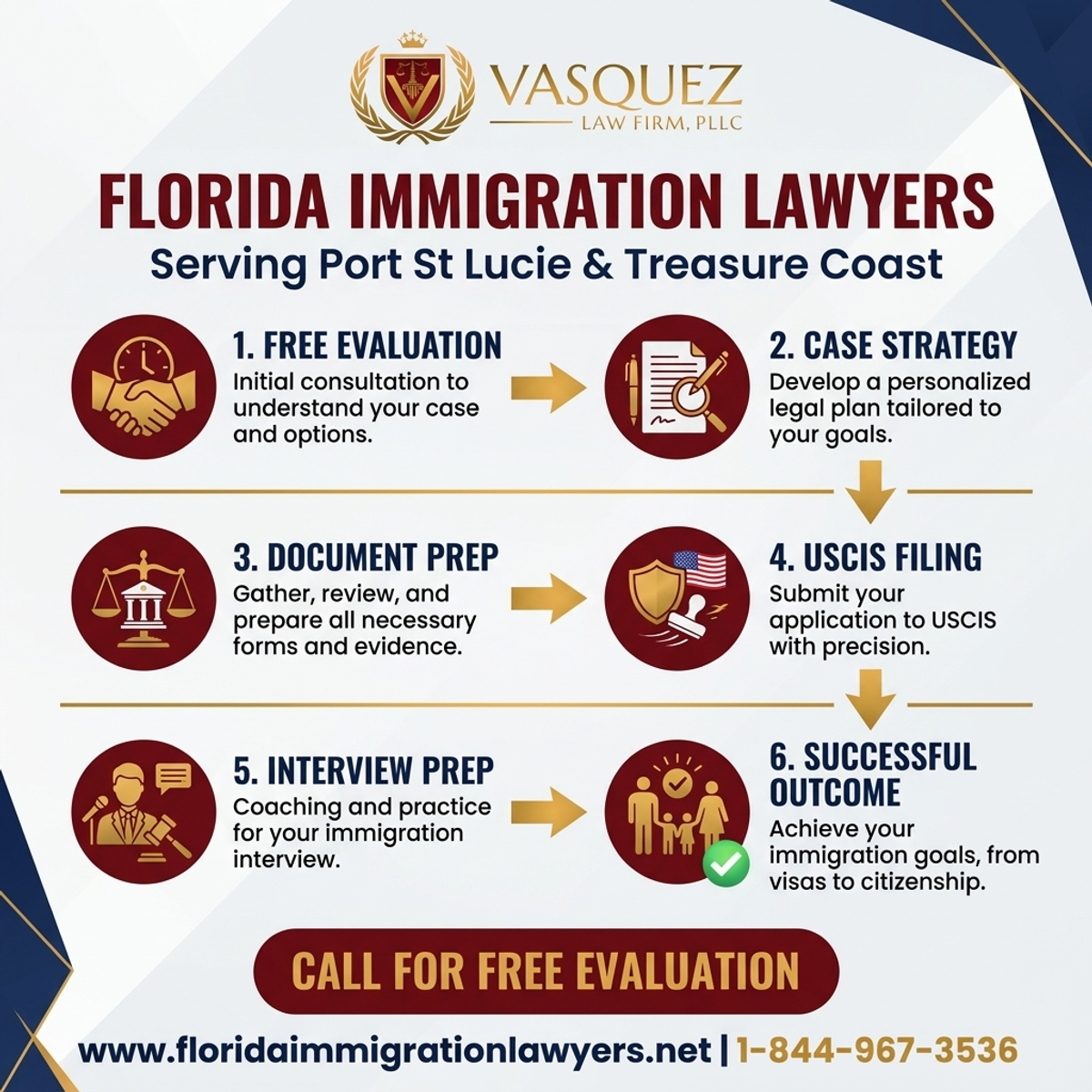
Step-by-Step Process — Immigration Services in Port St Lucie and Treasure Coast
Document Checklist for Immigration Applications: Port St. Lucie Immigration Services
A thorough and accurate collection of documents is the backbone of any successful immigration application. Missing or incorrect paperwork is one of the most common reasons for delays or denials. Below is a foundational checklist, but remember that specific requirements vary greatly depending on your case type.
- Valid Passport: Essential for proving identity and nationality. Ensure it is not expired and has sufficient validity remaining.
- Birth Certificate: Required to establish your date and place of birth, and often, your parentage.
- Proof of Residency: Documents like utility bills, lease agreements, or property deeds to show where you live.
- Employment Records: Pay stubs, employment letters, tax returns, or offer letters, especially crucial for employment-based visas.
- Marriage Certificate (if applicable): Necessary for family-based petitions involving spouses.
- Financial Statements: Bank statements, affidavits of support, or tax returns to demonstrate financial stability and ability to support yourself or your family.
Beyond this core list, you may need additional documents such as police clearance certificates, medical examination results, educational transcripts, or divorce decrees. It is crucial to gather originals or certified copies and, if documents are not in English, provide certified translations. Organizing these documents meticulously, perhaps in a binder with clear labels, can greatly streamline the application process and prevent last-minute scrambling. Your attorney at Florida Immigration Lawyers can provide a precise, tailored checklist for your unique situation.
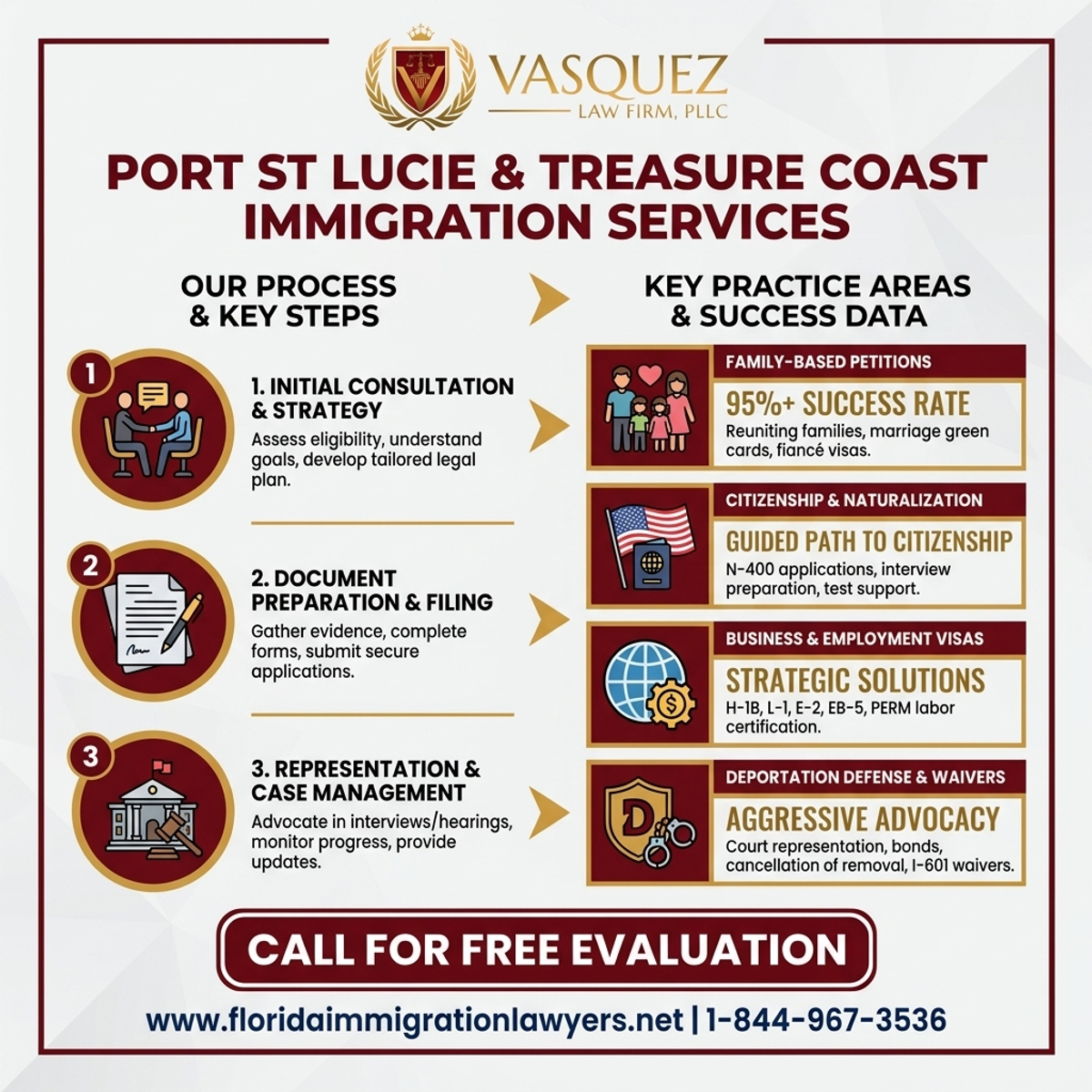
Key Statistics — Immigration Services in Port St Lucie and Treasure Coast
Timeline and Processing Expectations: Port St. Lucie Immigration Services
Processing times for immigration applications can vary significantly based on the type of service requested and the volume of applications at the USCIS offices. Generally, temporary visas can take a few months, while green card processing may take over a year. It is important to stay informed about your application status by regularly checking with the USCIS or through your attorney.
Several factors contribute to these fluctuating timelines, including the specific USCIS service center handling your case, the complexity of your application, and whether additional evidence (RFE) is requested. For instance, a simple visa renewal might be processed in a few weeks, whereas a family-preference green card for a sibling could take over a decade due to annual quotas and backlogs. Employment-based petitions also vary widely depending on the category and country of origin.
While it's natural to feel anxious during the waiting period, patience and proactive monitoring are key. USCIS provides online tools to check case status, but these often offer limited detail. An experienced immigration attorney can help interpret status updates, anticipate potential delays, and advise on appropriate actions if your case seems stalled. They can also submit inquiries on your behalf if processing times exceed published estimates.
Managing expectations is crucial; avoid making irreversible plans based on optimistic timelines. Always factor in potential delays and be prepared for the possibility of interviews or requests for further information. Your legal team at Florida Immigration Lawyers can provide realistic estimates based on current trends and their extensive experience, helping you plan your future more effectively.
Cost Factors and Fee Breakdown: Port St. Lucie Immigration Services
The cost of immigration services can differ depending on the complexity of the case and the type of application. Fees may include attorney fees, USCIS filing fees, and additional costs for document translations and certifications. While these expenses can add up, many legal service providers offer payment plans to ease the financial burden.
Understanding the financial aspects upfront is crucial for planning your immigration journey. USCIS filing fees are non-refundable and vary significantly by form; for example, an I-130 Petition for Alien Relative costs one amount, while an N-400 Application for Naturalization costs another, often with additional biometric service fees. These government fees are mandatory and subject to change, so staying updated is important.
Attorney fees represent the cost of professional legal guidance and representation. These can be structured as flat fees for specific services (e.g., green card application, visa petition) or hourly rates for more complex cases like deportation defense or appeals. While legal fees are an investment, they often mitigate the risk of costly errors, delays, or even denials that can arise from navigating the intricate immigration system alone. Many firms, including Florida Immigration Lawyers, offer transparent fee structures and flexible payment options to make legal assistance accessible.
Beyond government and attorney fees, applicants should budget for other potential expenses. These might include fees for medical examinations by USCIS-approved doctors, costs for obtaining police records or certified copies of documents, translation services for foreign-language documents, and travel expenses for interviews or court appearances. A comprehensive consultation with Florida Immigration Lawyers can provide a detailed breakdown of all anticipated costs, ensuring you are fully prepared financially for your immigration process.
Do not navigate this process alone. Contact Florida Immigration Lawyers today.
Common Mistakes to Avoid: Port St. Lucie Immigration Services
Navigating the U.S. immigration system is fraught with potential pitfalls. Even minor errors can lead to significant delays, requests for additional evidence, or outright denials. Being aware of these common mistakes can help you avoid them and ensure a smoother application process.
- Submitting Incomplete Applications: Missing information or required forms can delay processing or lead to rejection. Always double-check that every field is filled out and all supporting documents are attached.
- Failing to Stay Updated on Policy Changes: Recent changes in immigration policy can affect your case. Laws and regulations are dynamic; what was true last year might not be true today.
- Not Hiring an Experienced Attorney: Professional guidance is crucial for complex cases. Attempting to navigate the system without legal advice can lead to critical missteps.
- Missing Deadlines: Late submissions can lead to application rejection or even loss of eligibility. Pay close attention to all deadlines provided by USCIS or your attorney.
- Providing Incorrect Information: Accuracy is critical in all documentation. Any false statements, even unintentional ones, can have severe consequences, including accusations of fraud.
- Ignoring Notices from USCIS: Promptly respond to any requests for additional information or interview notices. Failing to do so can result in your application being abandoned or denied.
- Underestimating the Importance of Legal Representation: Legal advice can make a significant difference in the outcome of your case. An attorney can spot potential issues, prepare strong arguments, and represent your interests effectively.
These mistakes, though seemingly minor, can have profound impacts on your immigration journey. For example, providing incorrect information, even innocently, could lead to a finding of misrepresentation, potentially barring you from future immigration benefits. Similarly, ignoring a Request for Evidence (RFE) from USCIS will almost certainly result in a denial. Consulting with Florida Immigration Lawyers can provide you with the necessary experience to meticulously prepare your application, avoid these common errors, and significantly enhance your chances of success.
When to Call a Lawyer: Port St. Lucie Immigration Services
If you face challenges such as visa denials, deportation proceedings, or complexities in family immigration, it is time to seek legal assistance. Warning signs include receiving notices from immigration authorities or changes in your personal circumstances that could affect your status. Florida Immigration Lawyers are here to help navigate these challenges.
Beyond the obvious crisis situations like deportation notices, there are many instances where proactive legal consultation can prevent future problems. For example, if you have a criminal record, even a minor one, it can impact your eligibility for immigration benefits. Similarly, if you have previously overstayed a visa or entered the U.S. without inspection, these issues require legal strategy to overcome.
Complex family situations, such as a petitioner with a prior immigration violation or a beneficiary with a history of inadmissibility, also warrant immediate legal attention. Business immigration cases, especially those involving intricate corporate structures or highly specialized skills, benefit greatly from an attorney's guidance to ensure compliance with ever-changing regulations. Essentially, whenever there's a doubt about your eligibility, a potential legal hurdle, or a significant life event that could impact your immigration status, it's prudent to consult with an attorney. Don't wait for a problem to escalate; call Florida Immigration Lawyers at 1-844-YO-PELEO for a free consultation to assess your situation.
About Florida Immigration Lawyers: Port St. Lucie Immigration Services
Florida Immigration Lawyers is dedicated to providing top-notch legal services to immigrants throughout Florida. We focus on family, business, and deportation defense cases, offering personalized solutions to meet your needs. Our team is available 24/7, offering free consultations to guide you through your immigration journey. Call us at 1-844-YO-PELEO or visit our website at www.floridaimmigrationlawyers.net.
With years of experience serving diverse communities across Florida, our firm understands the unique challenges and aspirations of immigrants. Our commitment extends beyond just processing paperwork; we strive to be a compassionate and knowledgeable partner, advocating fiercely for our clients' rights and futures. We pride ourselves on clear communication, ensuring you understand every step of your case in a language you comprehend.
Whether you are seeking to reunite with loved ones, establish a thriving business in the U.S., or defend your right to remain in the country, Florida Immigration Lawyers possesses the experience and dedication to guide you. Our personalized approach means we take the time to understand your specific circumstances, crafting tailored strategies designed for the strongest possible outcome. Trust our experienced team to navigate the complexities of immigration law on your behalf.
Frequently Asked Questions (FAQs): Port St. Lucie Immigration Services
Here are some common questions about immigration services, along with practical advice to help you understand the process better.
Sources and References: Port St. Lucie Immigration Services
- U.S. Citizenship and Immigration Services (USCIS)
- Executive Office for Immigration Review (EOIR)
- U.S. Department of State
- 8 U.S.C. Chapter 12 - Immigration and Nationality Act
Related services: asylum and refugee protection, immigration waivers, humanitarian protection programs, DACA renewal and applications.
This article provides general legal information and is not intended as legal advice. Every case is unique, and outcomes depend on specific facts and circumstances. Contact an attorney for advice about your particular situation.
For comprehensive immigration support, contact Florida Immigration Lawyers at 1-844-YO-PELEO. Se Habla Español - Estamos aquí para ayudarle.
If you need legal assistance, learn more about how our defense attorneys can help, or call us at 1-844-YO-PELEO for a free consultation.
Working With an Immigration Lawyer From Port St Lucie
If you are looking for an immigration lawyer Port St Lucie residents can work with, you do not need an office in St. Lucie County to get full representation. Our only office is at 1111 E Amelia Street in Orlando, and we serve clients in Port St Lucie, Fort Pierce, Stuart and the rest of the Treasure Coast by phone and secure video, in English and Spanish. Clients who prefer to meet in person can visit us in Orlando.
Common matters on the Treasure Coast
- Green cards through a U.S. citizen or permanent resident spouse, parent or child.
- Citizenship applications for permanent residents.
- Work permits, TPS renewals and DACA.
- Notices to Appear, detention and bond, and hearings in immigration court.
How a remote case works
The first consultation covers your immigration history, your goals and the documents you already have. You send copies electronically, we review them, and we explain which options fit your facts and what risks exist. When forms are ready, we go over every answer with you before filing. Before a USCIS interview or court hearing, we prepare you by video so you know what to expect.
Choosing a Port St Lucie immigration lawyer
Ask who will handle your file, how you will receive updates, and whether the lawyer will explain the risks as well as the options. Avoid notarios and anyone who promises a specific result; only a licensed attorney or accredited representative can give legal advice on immigration. To talk about your case, contact our team.
Local guides for nearby areas
If you live nearby, these guides may help:
More questions about immigration help in Port St Lucie
Where will my USCIS interview or court hearing take place if I live in Port St Lucie?
It depends on your case. USCIS schedules interviews at the field office that serves your address, and immigration court hearings take place at the court that has your case. Your lawyer will confirm the location from your notice.
Can I hire a lawyer in Orlando if I live on the Treasure Coast?
Yes. Immigration law is federal, so a licensed attorney can represent you anywhere in Florida. Most of the work is done by phone, video and secure document sharing.
Do Not Navigate This Process Alone
Our experienced immigration attorneys are ready to fight for you. Get a free, confidential case review today.
Se Habla Español
Or leave your details and we’ll call you:
Free Evaluation in 24 Hours
Or talk to us right now

AI voice assistant — available 24/7
FreeFrequently Asked Questions

William J. Vásquez
Founding Attorney · Vasquez Law Firm
U.S. Air Force veteran and immigration attorney with years of hands-on U.S. immigration experience. J.D., NCCU School of Law. AILA member. Admitted to the 4th, 5th, and 11th Circuit Courts.
Available 24/7 - Free Evaluations
Reviewed for legal accuracy by William J. Vásquez
Licensed in North Carolina; U.S. immigration is federal practice.
Related Legal Services
Our Florida immigration attorneys can help you with free immigration consultation, business immigration and deportation defense. Call today at 1-844-YO-PELEO for a free case review.
Related Links
Related Topics
Free Legal Case Review
Discuss your case with our experienced attorneys. We're available 24/7.
Se Habla Español - Estamos aquí para ayudarle.
Related Articles
EB-5 Investor Green Card in Florida: A 2026 Guide
Explore how to obtain an EB-5 investor green card in Florida. Learn about the investment requirements, processes, and benefits of participating in this program. Discover how Florida's economic landscape can be an ideal setting for your investment. Contact Florida Immigration Lawyers for a free case review.
Certificate of Eligibility for Expungement in Florida 2026
For non-U.S. citizens in Florida, understanding how a state expungement impacts immigration status is critical. A certificate of eligibility for expungement in Florida allows a criminal record to be sealed or expunged under state law. However, federal immigration agencies often disregard such state-level relief, still considering the original criminal offense as a conviction for immigration purposes. This can have severe implications for visa applications, green card eligibility, naturalization, and even lead to deportation. This guide clarifies the Florida expungement process, its limited effect on federal immigration law, and key steps to protect your status in 2026. Learn about common mistakes, required documents, timelines, and when to seek expert legal counsel from Florida Immigration Lawyers to navigate these complex issues effectively.
Immigration Lawyer Orlando Free Consultation in Florida
For individuals and families in Orlando, Florida, navigating the complexities of U.S. immigration law requires expert guidance. An immigration lawyer in Orlando offers crucial support for everything from visa applications and green card processes to naturalization and deportation defense. This comprehensive guide details what a free consultation covers, providing a step-by-step overview of immigration pathways, essential document checklists, and expected timelines in 2026. We also highlight common mistakes to avoid, discuss the critical role of legal counsel in deportation and asylum cases, and explain why choosing a local Orlando immigration attorney is beneficial. Florida Immigration Lawyers is dedicated to serving the diverse community of Orlando with compassionate, effective legal solutions, ensuring you receive personalized advice and robust representation for a successful immigration journey.
Immigration Interview Preparation Florida 2026 Guide
Facing an immigration interview in Florida? This comprehensive guide offers essential 2026 USCIS interview tips for green card and naturalization applicants. Learn how to meticulously prepare your documents, understand the typical timelines, and avoid common mistakes that could jeopardize your case. We cover what to expect at the Orlando USCIS Field Office, provide a detailed document checklist, and explain the various costs involved in the process. With insights into naturalization specifics and when to seek legal counsel, Florida Immigration Lawyers helps you approach your interview with confidence. Our firm is dedicated to empowering immigrants across Florida with the knowledge and support needed for a successful outcome. Get a free case review today.