DED Venezuela Haiti Eligibility in Florida
Deferred Enforced Departure (DED) offers temporary protection for Venezuelans and Haitians in Florida. Discover eligibility, application steps, and common pitfalls in our comprehensive guide. Contact Florida Immigration Lawyers at 1-844-YO-PELEO for assistance.
Deferred Enforced Departure (DED) is a temporary immigration status that offers protection from deportation for specific groups of people from designated countries. As of 2026, individuals from Venezuela and Haiti residing in Florida may be eligible for DED, offering them relief from removal and work authorization. Key points include:
- DED is not a permanent status but offers temporary relief.
- Eligibility depends on specific criteria set by the President.
- DED recipients can apply for work permits during their stay.
Introduction
Navigating the complexities of immigration laws can be daunting, especially with evolving policies affecting communities from Venezuela and Haiti. Deferred Enforced Departure (DED) provides a temporary reprieve for certain nationals from these countries. Our focus today is on understanding the eligibility criteria for DED in Hialeah, Florida, and how this status can impact your life. Call Florida Immigration Lawyers at 1-844-YO-PELEO for a free consultation to explore your options.
For thousands of individuals and families in Florida, particularly those from Venezuela and Haiti, DED represents a crucial lifeline, offering protection from the immediate threat of deportation and the ability to legally work to support themselves and their loved ones. This temporary status acknowledges the challenging conditions in their home countries, preventing their forced return to unsafe environments.
Understanding the nuances of DED, from initial eligibility to the application process and potential future implications, is paramount. This guide aims to demystify the process for residents across Florida, providing clear, actionable information to help you secure and maintain your DED status. Florida Immigration Lawyers are here to provide the guidance needed to navigate this complex journey successfully.
What is Deferred Enforced Departure (DED)?
Deferred Enforced Departure (DED) is a discretionary protection from deportation granted by the President to individuals from specific countries. As of 2026, DED for Venezuelans and Haitians provides them temporary relief from removal while allowing them to apply for work permits. This status is not a pathway to permanent residency but offers crucial protection and work opportunities.
DED is distinct from Temporary Protected Status (TPS) and is typically granted due to political or social unrest in the designated countries. While both offer temporary relief and work authorization, DED is granted solely by presidential authority, whereas TPS is designated by the Secretary of Homeland Security. Those under DED are encouraged to maintain their status through compliance with all requirements, including timely applications for Employment Authorization Documents (EADs).
The decision to grant DED often stems from foreign policy considerations or grave humanitarian concerns, such as natural disasters, armed conflict, or other extraordinary and temporary conditions that make it unsafe for nationals to return to their home countries. For Venezuelans and Haitians, this designation reflects the ongoing political instability, economic hardship, and humanitarian crises in their respective nations. It's a temporary measure, meaning beneficiaries must stay informed about any potential extensions or changes to their status.
While DED offers significant relief, it's important for beneficiaries to understand its temporary nature. It does not lead directly to a green card or U.S. citizenship. However, it provides a stable period during which individuals can explore other potential avenues for long-term immigration relief, if available. Consulting with experienced legal professionals, like Florida Immigration Lawyers, can help DED recipients understand their options beyond the temporary protection.
How to Apply for DED in Florida?
To apply for DED in Florida, eligible Venezuelans and Haitians must follow specific steps to ensure their application is considered:
- Verify DED Designation: Confirm that your country is designated for DED by checking official announcements from the USCIS website. This is the first and most critical step, as eligibility hinges on your nationality and the current designation.
- Gather Required Documents: Prepare necessary identification documents, proof of residence in the U.S., and any other documentation requested by USCIS. Accuracy and completeness are key here to avoid delays.
- Apply for Employment Authorization: Complete Form I-765 to request work authorization. This form is essential for DED beneficiaries who wish to legally work in the United States.
- Submit Your Application: Send your completed application to the appropriate USCIS address, ensuring all information is accurate and complete. It's advisable to make copies of all submitted documents for your records.
- Check Processing Times: Regularly check the USCIS processing times to track your application status. This can be done online using your receipt number.
Beyond these steps, applicants should be meticulous in their preparation. For example, when gathering documents, ensure all foreign-language documents are accompanied by certified English translations. Proof of continuous presence in the U.S. since the designation date is often a critical component of eligibility, so collect utility bills, lease agreements, school records, or employment histories that demonstrate your residency.
A common pitfall is misunderstanding the specific filing instructions for DED, which can differ from other immigration benefits. Always refer to the official USCIS guidance for DED applicants from Venezuela and Haiti. If you encounter any ambiguities or complexities during this process, do not hesitate to contact Florida Immigration Lawyers at 1-844-YO-PELEO for personalized assistance. Our team can help review your application for accuracy and ensure all requirements are met before submission.
It's vital to adhere to all deadlines and provide accurate information to avoid delays or denials. A well-prepared application significantly increases your chances of a smooth process and timely approval of your DED status and work authorization.
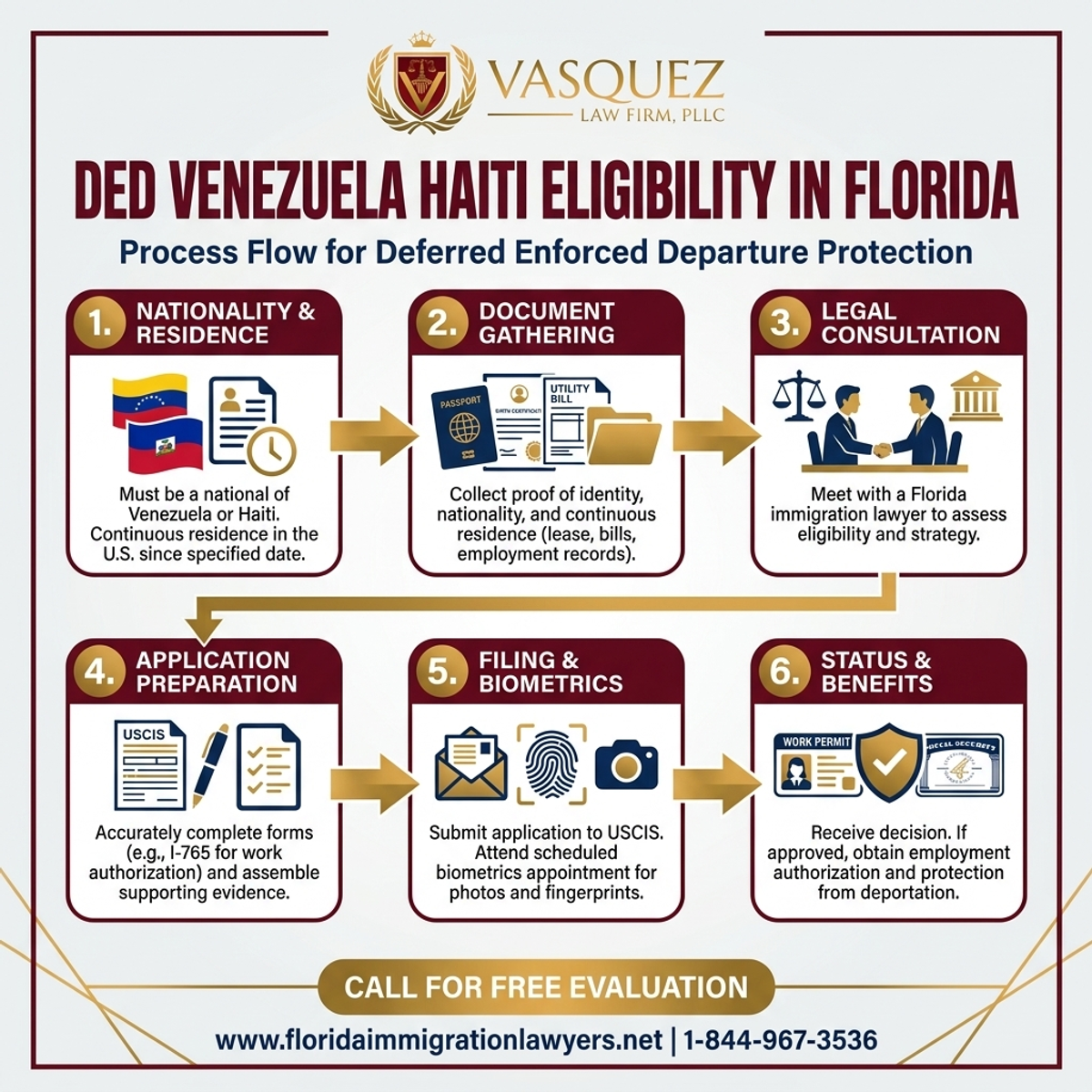
Step-by-Step Process — DED Venezuela Haiti Eligibility in Florida
DED Document Checklist
When applying for DED, ensure you have the following documents ready:
- Passport or other government-issued ID: Essential for proving your identity and nationality. Ensure it is valid or provide a reasonable explanation for an expired document.
- Proof of residence in the U.S. (e.g., utility bills, lease agreements, bank statements, school enrollment records): These documents demonstrate your physical presence in the U.S. since the DED designation date.
- Form I-765 for work authorization: The application for an Employment Authorization Document (EAD), which allows you to work legally.
- Any notices or communications from USCIS: If you've had previous immigration interactions, these can be important for context.
- Proof of nationality (e.g., birth certificate, national ID, expired passport): Crucial for establishing that you are a national of the designated country.
Beyond this core list, consider preparing additional supporting documents that might strengthen your case. This could include marriage certificates, birth certificates of dependents, or affidavits from individuals who can attest to your identity and residency. Organizing these documents meticulously, perhaps in a binder with tabs, can significantly streamline the application process for both you and the USCIS adjudicator.
It is also prudent to keep multiple copies of all documents submitted, as well as proof of mailing. In case of any future inquiries or issues, having a complete set of your application materials readily available can save considerable time and stress. If you're unsure about what specific documents apply to your unique situation, Florida Immigration Lawyers can provide a tailored checklist and help you compile everything correctly.
Having a complete and organized set of documents will facilitate a smoother application process and help prevent requests for evidence (RFEs) that can delay your case.
Processing Times and Expectations
Understanding the timeline for DED processing is crucial for effective planning:
| Stage | Typical Timeframe | Notes |
|---|---|---|
| DED Designation Confirmation | Immediate upon announcement | Check official sources for updates, such as the USCIS website or presidential proclamations. |
| Application Preparation | 1-2 weeks | Gather required documents promptly, seek legal review if needed to ensure accuracy. |
| USCIS Processing | 3-6 months | Monitor case status online using your receipt number; delays can occur due to volume or RFEs. |
| Employment Authorization Issuance | Within 90 days of approval | Allows legal work in the U.S. once the EAD card is received. |
These timeframes are subject to change based on policy updates and application volumes. For instance, periods of high application volume or changes in government policy can significantly extend processing times. It's important to set realistic expectations and understand that while USCIS aims for efficiency, individual cases can vary.
If your application seems to be taking longer than the posted processing times, you may be able to inquire with USCIS. However, attempting to expedite a case without valid grounds is often unsuccessful. Maintaining open communication with your legal counsel at Florida Immigration Lawyers can help you understand when and how to follow up effectively. They can also advise on temporary measures or alternative strategies if delays impact your ability to work or remain in status.
Patience is key, but so is vigilance. Regularly checking your case status online and responding promptly to any USCIS requests for additional evidence (RFEs) are critical to keeping your application moving forward. A delay in responding to an RFE can lead to a denial, underscoring the importance of professional legal assistance.
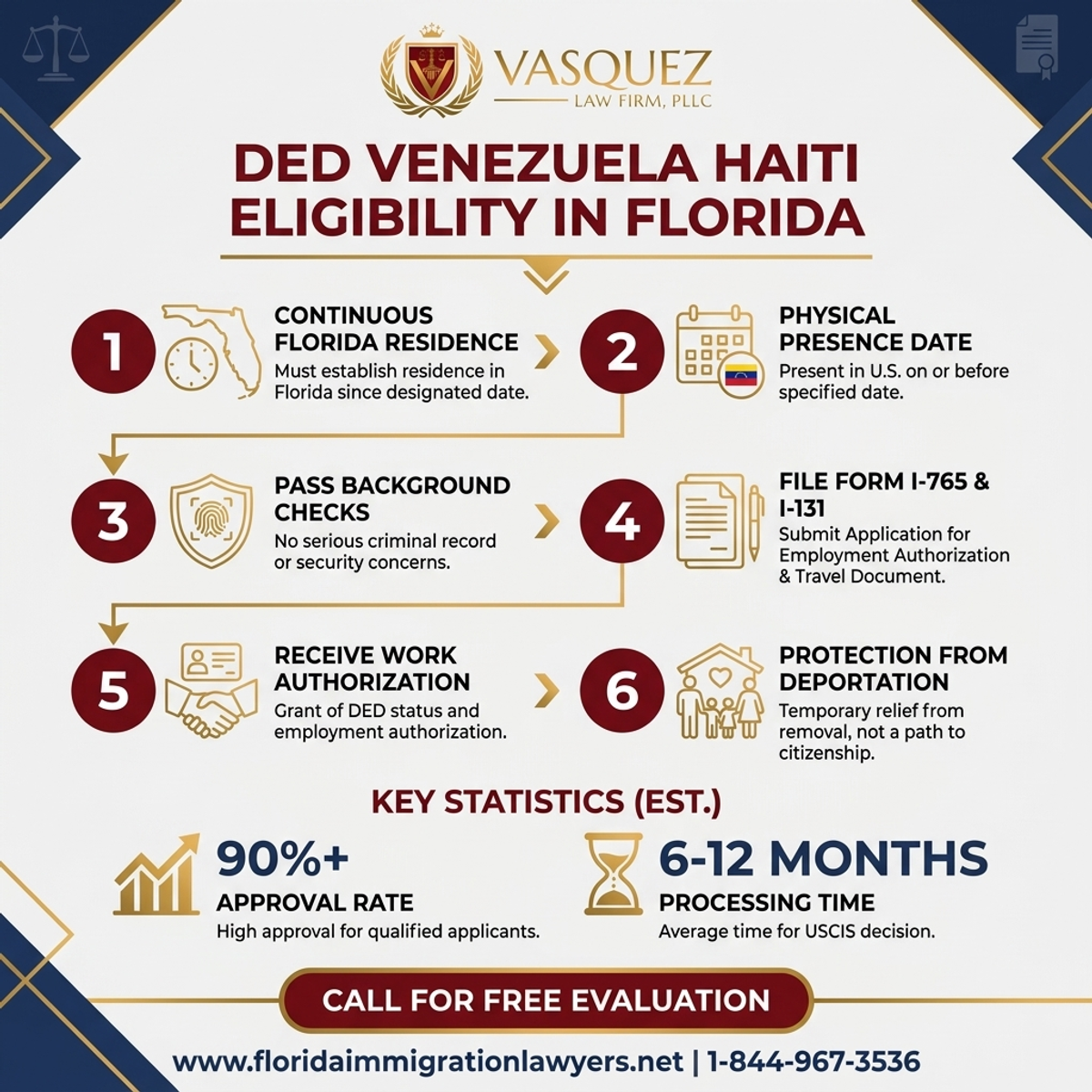
Key Statistics — DED Venezuela Haiti Eligibility in Florida
DED Cost Factors and Fees
While applying for DED, consider the following costs:
| Item | Typical Fee | Notes |
|---|---|---|
| Form I-765 Filing Fee | Varies | Fee waivers may be available for those who meet specific poverty guidelines. Check USCIS guidelines for eligibility. |
| Biometrics Fee | Varies | Required for identity verification and background checks. This fee is typically separate from the I-765 fee. |
| Attorney Fees | Varies | Consult for personalized assistance, which can cover application preparation, document review, and representation. |
Budget carefully and explore fee waiver options if necessary. It's important to understand that USCIS fees are non-refundable, even if your application is denied. Therefore, ensuring your application is meticulously prepared and eligible before submission is crucial to avoid unnecessary expenses.
Beyond the direct USCIS filing fees, applicants should also account for other potential costs. These might include fees for obtaining certified copies of documents (like birth certificates or marriage licenses), translation services for foreign-language documents, postage for mailing applications, and travel expenses for biometrics appointments. While some of these costs may seem minor individually, they can add up.
Investing in legal assistance from Florida Immigration Lawyers can often prove to be cost-effective in the long run. An experienced attorney can help identify potential issues that could lead to denials, assist with fee waiver applications, and ensure all forms are completed accurately, thereby minimizing the risk of wasted filing fees and delays. Don't let financial concerns deter you from seeking advice; discuss payment options and fee structures during your free consultation at 1-844-YO-PELEO.
Common Mistakes to Avoid
- Missing deadlines: Can lead to denial of DED benefits and work authorization, potentially leaving you vulnerable to deportation. Always mark your calendar for filing and renewal dates.
- Inaccurate information: Results in application delays or denials, and in some cases, can lead to accusations of misrepresentation. Double-check every detail before submission.
- Not updating address: Causes communication lapses with USCIS, meaning you might miss crucial notices or requests for evidence, leading to case abandonment. Update your address promptly online.
- Failing to apply for work authorization: Misses employment opportunities and forces you to work illegally, which can have severe immigration consequences. File Form I-765 concurrently with your DED application.
- Ignoring renewal notices: Risks losing DED status and work authorization, leaving you without protection. Be proactive in checking for renewal announcements and filing on time.
- Relying on unofficial sources: Leads to misinformation and potentially incorrect application procedures. Always consult the official USCIS website or a qualified immigration attorney.
- Not consulting an attorney: Misses professional guidance, increases the risk of errors, and can lead to missed opportunities for other immigration relief. Florida Immigration Lawyers offer advice tailored to your situation.
Beyond these common pitfalls, applicants sometimes fail to understand the difference between DED and other statuses, leading to confusion about their rights and responsibilities. For example, some might mistakenly believe DED is a pathway to permanent residency and neglect to explore other long-term options. A clear understanding of DED's temporary nature is vital.
Another mistake is not keeping thorough records of all submitted documents and communications with USCIS. This can become problematic if an issue arises later or if you need to prove past filings. Always keep copies of everything you send and receive. If you're unsure about any aspect of your DED application or status, contacting Florida Immigration Lawyers at 1-844-YO-PELEO can prevent costly errors and ensure your case is handled correctly.
When to Call a Lawyer
If you're unsure about your DED eligibility, facing complex immigration issues, or need assistance with your application, it's time to call a lawyer. Florida Immigration Lawyers offer guidance to navigate these challenges. Our team is well-versed in DED applications and can provide tailored advice to ensure your rights are protected. Contact us if you receive any USCIS notices or encounter difficulties with your application process.
Specific scenarios where legal intervention becomes critical include receiving a Request for Evidence (RFE) from USCIS, a Notice of Intent to Deny (NOID), or an outright denial of your DED application. These situations require a nuanced understanding of immigration law and a strategic response, which an experienced attorney can provide. Attempting to address such complex issues without legal counsel can often worsen your situation.
Furthermore, if you have a criminal record, prior immigration violations, or have been previously ordered removed, your DED eligibility might be complicated. A lawyer can assess the impact of these factors on your case and advise on the best course of action, including potential waivers or legal arguments. Don't jeopardize your temporary protection; reach out to Florida Immigration Lawyers for a comprehensive evaluation of your unique circumstances. We are here to help you understand your options and protect your future.
About Florida Immigration Lawyers
Florida Immigration Lawyers are dedicated to providing comprehensive immigration services across Florida. We focus on DED, TPS, asylum, deportation defense, citizenship, and family-based immigration. Our experienced attorneys are committed to offering personalized, compassionate legal support. Call us at 1-844-YO-PELEO or visit our website for a free consultation. We are available 24/7 to assist with your immigration needs.
With a deep understanding of the challenges faced by immigrant communities, particularly those from Venezuela and Haiti in Florida, our firm prides itself on delivering effective and empathetic legal solutions. We are not just lawyers; we are advocates committed to helping you achieve stability and pursue your American dream. Our track record of success in various immigration cases speaks to our dedication and experience.
From initial consultations to complex court proceedings, Florida Immigration Lawyers stand by our clients every step of the way. We believe everyone deserves access to quality legal representation, and we strive to make our services accessible and understandable. Whether you need help with a DED application, are fighting deportation, or seeking to reunite with family, our team is equipped to provide the highest level of legal support. Contact us today to experience the difference legal counsel can make.
Sources and References
- U.S. Citizenship and Immigration Services (USCIS)
- Executive Office for Immigration Review (EOIR)
- 8 U.S.C. Chapter 12 - Immigration and Nationality Act
Related services: immigration practice areas, family immigration services, citizenship and naturalization.
This article provides general legal information and is not intended as legal advice. Every case is unique, and outcomes depend on specific facts and circumstances. Contact an attorney for advice about your particular situation.
For guidance and support, call Florida Immigration Lawyers at 1-844-YO-PELEO. Se Habla Español - Estamos aquí para ayudarle.
If you need legal assistance, learn more about immigration case consultation, or call us at 1-844-YO-PELEO for a free consultation.
Do Not Navigate This Process Alone
Our experienced immigration attorneys are ready to fight for you. Get a free, confidential case review today.
Se Habla Español
Or leave your details and we’ll call you:
Free Evaluation in 24 Hours
Or talk to us right now

AI voice assistant — available 24/7
FreeFrequently Asked Questions

William J. Vásquez
Founding Attorney · Vasquez Law Firm
U.S. Air Force veteran and immigration attorney with years of hands-on U.S. immigration experience. J.D., NCCU School of Law. AILA member. Admitted to the 4th, 5th, and 11th Circuit Courts.
Available 24/7 - Free Evaluations
Reviewed for legal accuracy by William J. Vásquez
Licensed in North Carolina; U.S. immigration is federal practice.
Related Legal Services
Our Florida immigration attorneys can help you with citizenship and naturalization, immigration practice areas and free immigration consultation. Call today at 1-844-YO-PELEO for a free case review.
Related Links
Related Topics
Free Legal Case Review
Discuss your case with our experienced attorneys. We're available 24/7.
Se Habla Español - Estamos aquí para ayudarle.
Related Articles
EB-5 Investor Green Card in Florida: A 2026 Guide
Explore how to obtain an EB-5 investor green card in Florida. Learn about the investment requirements, processes, and benefits of participating in this program. Discover how Florida's economic landscape can be an ideal setting for your investment. Contact Florida Immigration Lawyers for a free case review.
Certificate of Eligibility for Expungement in Florida 2026
For non-U.S. citizens in Florida, understanding how a state expungement impacts immigration status is critical. A certificate of eligibility for expungement in Florida allows a criminal record to be sealed or expunged under state law. However, federal immigration agencies often disregard such state-level relief, still considering the original criminal offense as a conviction for immigration purposes. This can have severe implications for visa applications, green card eligibility, naturalization, and even lead to deportation. This guide clarifies the Florida expungement process, its limited effect on federal immigration law, and key steps to protect your status in 2026. Learn about common mistakes, required documents, timelines, and when to seek expert legal counsel from Florida Immigration Lawyers to navigate these complex issues effectively.
Immigration Lawyer Orlando Free Consultation in Florida
For individuals and families in Orlando, Florida, navigating the complexities of U.S. immigration law requires expert guidance. An immigration lawyer in Orlando offers crucial support for everything from visa applications and green card processes to naturalization and deportation defense. This comprehensive guide details what a free consultation covers, providing a step-by-step overview of immigration pathways, essential document checklists, and expected timelines in 2026. We also highlight common mistakes to avoid, discuss the critical role of legal counsel in deportation and asylum cases, and explain why choosing a local Orlando immigration attorney is beneficial. Florida Immigration Lawyers is dedicated to serving the diverse community of Orlando with compassionate, effective legal solutions, ensuring you receive personalized advice and robust representation for a successful immigration journey.
Florida Refugee Immigration Help: Resettlement Guide
Navigating refugee resettlement in Florida can be challenging. Learn about the process, required documents, and common mistakes to avoid. Florida Immigration Lawyers are here to help with personalized legal assistance. Contact us today for more information.